Local Government

City will incorporate Willoughby District into CBJ comp plan

Juneau’s long range plan for the Willoughby District will become part of the city and borough’s Comprehensive Plan.

The Juneau Assembly Monday night voted to include chapter five, which lays out the planning and design principles for future improvements in the area west of downtown and east of Gold Creek.

The new Willoughby District Land Use Plan is intended as a 25-year blueprint for investment and redevelopment. Including it in the CBJ Comprehensive Plan will support proposed changes to Title 49, CBJ’s land use code.

The State of Alaska and the city own a number of public facilities in the Willoughby District, including the state archives and museum that will be part of the future SLAM project – or State Library, Archives and Museum. The city owns Centennial Hall and the Juneau Arts and Culture Center.

CBJ Lands and Resources Manager Heather Marlow said the plan includes an energy district and centralized heating for public facilities, possibly through pellet boilers.

“We’ve taken a look at the square footage of public facilities in the district. We’re working with Bob Deering of the Coast Guard who’s working with the energy department and they’re trying to determine whether just from the public facilities side we have enough square footage to justify doing an energy district with distributed heat throughout the district,” Marlow told the Assembly.

Marlow said an energy district would reduce energy costs as well as Juneau’s carbon emissions.

The Willoughby District also will provide opportunity for a mix of residential and retail development, including 400 new housing units.

Juneau residents testify on operating budget proposal

Juneau residents kicked off two days of public testimony on the state operating budget before the Senate Finance Committee today (Wednesday).

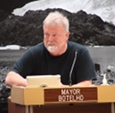
Mayor Bruce Botelho thanked Senators for including $60-million dollars in community revenue sharing in the budget proposal. The program divvies up a portion of Alaska’s oil tax revenue for use by local communities. Botelho says Juneau’s share is largely spent to keep rising energy costs in check.

“Even as we’ve taken steps large and small to deal with it,” Botelho said. “Such as our ground source heat pump systems in our newest facilities, the energy programs that particularly our school district has instituted, our use of LED lighting – all means to try and curb energy consumption – we have seen a 15 percent increase in our electricity costs over the last two fiscal years, and fuel costs in excess of 30 percent over that same period.”

Other testimony focused on education, with teachers and parents urging Senators to increase funding for local school districts through the Base Student Allocation.

School Board Member Andi Story says the Juneau School District is trying to close a $5.8-million dollar budget shortfall, and more than 65 jobs are on the chopping block.

“The board’s going through a painful process of deliberating over cutting nurses, music, art, middle school counselors and others, like many other districts,” Story said. “And these 65 jobs, they affect our community. The Juneau Economic Development Council estimated the job losses will result in a negative impact to Juneau of nearly $11.5-million.”

The Senate already passed a bill to increase the Base Student Allocation over the next three years. The amount each district currently gets per student is $5,680 dollars. The Senate plan would increase that amount by $120 dollars this year, with increases of $130 and $135 dollars in the next two years respectively.

The Senate’s $9.5-billion dollar operating budget is the same size as the version passed by the House earlier this month. But there are significant differences between the two plans in terms of allocations to departments and spending on specific programs. The differences will likely be resolved in a conference committee.

The Finance Committee plans to take public testimony from other communities this afternoon and tomorrow morning. The committee will begin considering amendments to the budget proposal on Friday.

Sanford intends to run for mayor

Merrill Sanford speaking last week at Southeast Conference Mid-Session Summit.
Photo by Ed Schoenfeld.

Former Juneau Assemblyman Merrill Sanford plans to run for mayor.

It’s been widely known that he was considering another run for office. Sanford says he decided to go public after participating in last week’s Southeast Conference Mid-Session Summit.

“The City and Borough of Juneau should be one of the leaders in Southeast and stand up and fight for basic infrastructure and jobs,” Sanford says. “So, I kind of got frustrated last week with some of the different organizations that are stalling some of these type of projects throughout all of Southeast, and just finally decided, well, instead of just being frustrated about it, you need to go and try to do something about it.”

He’ll have to wait until August 3rd to officially file. That’s the first day candidates can turn in nominating petitions.

Sanford served nine years on the Assembly, before being term-limited last fall. He was twice elected Deputy Mayor by fellow assembly members.

A retired career firefighter for Capital City Fire and Rescue, Sanford graduated from Juneau-Douglas High School and served in Vietnam with the U.S. Marine Corp.

Last year, the Juneau Chamber of Commerce named him Citizen of the Year.

This year’s municipal election will be held October 2nd.

CBJ moving forward with avalanche mitigation home buyout proposal

CBJ Emergency Programs Manager Tom Mattice. (Photo by Casey Kelly/KTOO)

The City and Borough of Juneau is moving forward with a plan that could lead to a buyout program for homes threatened by avalanches from Mt. Juneau.

About a dozen people attended a public hearing last night (Monday) on a recent report that recommended the buyout. Last year’s study was conducted by the Swiss Institute for Snow and Avalanche Research. It concluded the best way to reduce risk in the Behrends Avenue neighborhood would be to remove the most at-risk homes. The consultants said hillside diversion systems could be effective above the White Subdivision, but further study is needed.

CBJ Emergency Programs Manager Tom Mattice fielded questions on how a buyout would work. He said it could be funded through the Federal Emergency Management Agency’s Hazard Mitigation Grant Program. The buyout would be completely voluntary, and homeowners would get fair market value for their property – to be determined by the price of similar homes throughout the community.

“So if homeowners were interested in doing buyouts, we would determine the fair market value on a handshake, we would put together a cost-benefit-analysis, we would submit that to FEMA,” Mattice says. “If FEMA approves the grant funding stream, then we would come back. That grant funding stream helps pay for your move, it helps buy your new house, obviously. Once you’ve moved out of the affected area, they would remove the houses and structures, and then that land gets turned into open park space, permanently.”

None of the homeowners who attended the meeting expressed opposition to the city’s plan to apply for the FEMA grant.

Mattice says he’ll be re-writing the city’s All Hazards Mitigation Plan, and seeking approval for the changes from the state and federal governments. Once that’s done, the application process can begin.

Several homeowners declined KTOO’s requests to comment on the report at the conclusion of the meeting.

Avalanche mitigation public hearing tonight

Mt. Juneau

An avalanche mitigation study for the neighborhoods at the base of Mt. Juneau says the best way to manage risk is to have the city buyout homes in the area.

Juneau Emergency Programs Manager Tom Mattice says that’s not the answer the city was hoping for when it commissioned the study. He’ll hold a public hearing tonight on the report.

We were hoping that we could build big diversion dams above the houses, and put in some kind of mitigation systems on the hill that did active avalanche control,” Mattice says. “Our goal was not to create a finding that we had to buy everything out and move it. But the reality is we asked the best people in the world to give us their assessment and that’s what they came up with.”

The study – conducted last year by consultants from the WSL Institute for Snow and Avalanche Research in Switzerland – says hillside diversion systems might work above the White Subdivision, but further study is needed.

Mattice will describe the research and proposed solutions, and take questions at tonight’s public meeting. Then he plans to rewrite Juneau’s All Hazards Mitigation Plan to incorporate the study’s findings. Changes to the plan must be submitted to the state and federal governments for approval. Once that happens, Mattice says the city could get funds for a potential buyout through the Federal Emergency Management Agency.

“Basically, anytime there is a disaster in the State of Alaska, if it is a federally declared disaster, there is a certain amount of money that is spent. At the same time, they earmark a percentage of that dollar figure, and set it aside for mitigating against future disasters,” he says.

Mattice stresses that any buyout program would be voluntary for homeowners.

“The city can’t just say, ‘This is what we want to do,’ without getting buy-in from other parties, including the public,” says Mattice. “So having this public hearing is one of the many steps that’s needed to gain approval of an update to the All Hazards Mitigation Plan.”

Mattice says he’s talked to some residents of the White Subdivision about the mitigation report, but has yet to discuss it with anyone who lives in the Behrends neighborhood.

Tonight’s public hearing starts at 7 p.m. in CBJ Assembly Chambers at City Hall.

CBJ funds local schools to the cap

The City and Borough of Juneau will contribute nearly $26-million toward school district operations for the next fiscal year, expected to total more than $76 million.

State law sets a cap on the amount local districts can contribute toward school operations. As in previous years, the city will fund the maximum amount; it’s already in CBJ’s proposed FY 2013 budget.

Juneau School Board members and administration officials met with the CBJ Assembly last night (Wednesday) to lay out the school district spending plan. David Means is district administrative services director.

“The 25-million, 693-thousand dollars is roughly one-third our operating fund budget, our main budget for general school operations,” Means explained. “One-half of our budget is funded basically from the state foundation program through the Department of Education.”

The state of Alaska also covers teachers’ retirement, which is about one-sixth of the Juneau district budget next year.

Law requires school districts complete their budgets by the end of March, though they won’t know the total amount of state funding for several weeks. Even so, Means says the school district will not ask CBJ for more, even if the state increases the cap.

“In the event that the legislature elects to increase the base student allocation, why is it a good idea not to come back to the City and Borough of Juneau, this Assembly, and ask us to fund to the cap?” asked Assembly member Jesse Kiehl.

Superintendent Glenn Gelbrich said the decision was prompted by the school-funding timeline that “screams to be fixed. And the question is how long can the ambiguity continue?”

If the legislature increases the base student allocation, Gelbrich said, the district would likely seek the adjustment in FY 14, since the city is also trying to set its budget.

Gelbrich says superintendents across the state find the legislature’s timetable for education funding “exasperating.”

Outside of school district operations, the city helps fund student transportation, community schools, high school and other activities. The FY 13 contribution is $770,000 dollars, also already in the CBJ draft budget.

Site notifications
Update notification options
Subscribe to notifications