Local Government

Conference critical of regional energy plan

A roadmap for Southeast Alaska energy development is meeting some resistance from the Southeast Conference.

The regional organization’s Energy Committee passed a resolution Tuesday supporting parts of the state-funded Southeast Alaska Integrated Resource Plan. But it called for continued work toward a regional electrical grid, which the draft plan calls too expensive.

Merrill Sanford chairs the Southeast Conference Energy Committee. Photo by Ed Schoenfeld.

Committee Chairman Merrill Sanford of Juneau said the Alaska Energy Authority plan lacks some important elements.

“This is not a fix-all by any means. But I think we’re at a crossroads here and we have to do something. We have to move forward with something,” Sandford said.

The resolution calls for construction of five hydropower plants – Sitka’s Blue Lake, Ketchikan’s Whitman Lake, Hydaburg’s Reynolds Creek, Angoon’s Thayer Lake and Hoonah’s Gartina Creek.

It also supports two new powerlines – one from Petersburg to Kake, the other from Metlakatla to Ketchikan.

But many at the meeting objected to its emphasis on wood-powered space heaters as a way to reduce electrical demand.

Wrangell's Paul Southland speaks as Juneau's Bill Corbus,center, and Angoon Mayor Albert Howard listen during debate over the Southest energy plan. Photo by Ed Schoenfeld.

Angoon Mayor Albert Howard said biomass energy should not replace long-planned, much-needed powerlines and plants.

“You talk about a Johnny-come-lately project, biomass is it. Where did that come from? Southeast Conference has talked about interties for years and all of a sudden, we’ve got biomass,” Howard said.

The resolution supports wood-powered energy, especially as part of Southeast’s timber industry.

But it makes other projects a higher priority.

It also calls for full funding for studies of other hydroprojects. And it emphasizes the need to build regionwide electrical interties, including a cross-border link to Canada’s power grid.

The Southeast Conference is holding its mid-session summit in Juneau. Its board of directors will take up the resolution before the plan’s March 19th comment deadline. The draft plan was developed by an Alaska Energy Authority contractor.

Hear a report on the SEIRP.

Taku River task force draft report

Courtesy Rivers without Borders

A task force looking at the health of the Taku River and impact of future development should come up with recommendations for more river protections.

That’s the sentiment of much of the public testimony on the draft report of the Taku River Fact-Finding Task Force. The task force took comments on Saturday.

The transboundary river runs from British Columbia, Canada, to Juneau, and is Southeast Alaska’s top salmon producer.

Rosemarie Alexander has more on the work of the task force.

The draft report outlines what the volunteer group learned over a month of hearings with federal and state agencies, Canadian mine owners, and other officials.

It was tasked with reviewing Taku River fish stocks, habitat and game resources; the agencies responsible for monitoring industrial vessel traffic and spill response; and the effectiveness of state and federal laws and regulations on the river.

The catalyst for the task force was legislation drafted a year ago, but never introduced, which would have declared the river critical habitat. The volatile idea evolved into a bill calling for a legislative task force, but that ran aground when sport and commercial fishermen, property owners, and conservationists could only agree to disagree.

Juneau legislators then created the Taku River Fact-Finding Task Force outside of the legislative process.

The group of volunteers represents river users, and they’ve stuck strictly to the facts.

“We were hoping that this task force would be assigned the responsibility of what array of options might be available to protect the Taku,” said Alaska Trollers Association Executive Director Dale Kelley. She echoed others who found what they called gaps in the report and a lack of analysis.

“I think to a lot of people it only seems logical to then discuss what are the next steps, what are the ways to address these shortcomings,” said Chris Zimmer, of the conservation group Rivers without Borders.

Only a handful of people testified at Saturday’s hearing. Some suggested the task force identify the strengths and weaknesses of laws and regulations affecting the river. Others want more water quality information, oversight on barging, or direction in working with the Canadians.

Taku River watershed. Courtesy Ed Jones, Alaska Department of Fish and Game

Chieftain Metals plans a 2,000-ton per day operation at the old Tulsequah Chief Mine by 2015. The Canadian-owned mine at the river’s headwaters has been dormant since the 1950s, and many Southeast Alaskans are wary of any company promising no impacts on the Taku. Chieftain told the task force that it hopes to build an access road, rather than barge up the river. Even if it does, Zimmer reminded the task force, another proposed Canadian mine – the Big Polaris –plans to barge up the Taku.

“B.C. has very aggressive mining plans in the transboundary region, both in the Taku and the Stikine, and right now, I don’t think DNR, F & G have the funds and ability to engage with that make sure our downstream interests are protected,” Zimmer said.

Taku River property owner Neil MacKinnon has been on the river for more than 50 years. He remembers the days when the old Tulsequah Chief was operating. But after reading the reports and studying the statistics collected by the task force, he doesn’t see the problems others are so worried about.

“Where’s the habitat problem if we need to worry about habitat, and where’s the problem with fish?”

Errol Champion has also owned property on the Taku for decades.

“The people who are living up there don’t agree with what we’re being told and what’s being reported in this report,” he said. “One of the goals here is to discuss the status of all habitat for all species, and there’s no effort put in toward game. I think I read one sentence where game is mentioned,” he said.

Champion told the task force that there’s too much concern about barging, prompting this response from member Mike Peterson:

“What concerns me on this task force is the potential for barge traffic that’s going to be coming up over the next two, three, four, if no road 14 / 20 years. That’s what concerns me,” Peterson said.

Alaska has no jurisdiction over the Tulsequah Chief Mine or any other development on the B.C. side of the Taku. The state also has no authority over barging on the river.

“To me, personally, barging is the issue,” said Juneau Senator Dennis Egan.

He has been watching the task force process carefully and looks forward to recommendations from the group, especially on dealing with the Canadians.

“It’s really tough to control what happens north of the border, and we’re just trying to get a good working relationship with the government of Canada, British Columbia especially, and make sure they understand how valuable this resource is not only to us but to them as well,” Egan said. “I think we can come up with some recommendations and I think we can come to an agreement with the province.”

The Taku River Task Fact-Finding Task Force is still collecting comments then it will begin hashing out the gaps in the report and, perhaps, come up with some recommendations.

But Juneau legislators have made it clear the group should not draft legislation – that’s their job.

Hoonah dock project sparks controversy

Cruise ship passengers board a tendering vessel at Huna Totem's Icy Strait Point facility. (Photo by Ed Schoenfeld/Coastalaska)

The City of Hoonah is feeling pressure from cruise lines and local Native village Corporation Huna Totem to build a multi-million dollar dock at the corporation’s popular Icy Strait Point tourist destination.

The Hoonah City Council wants the dock located on city land near Icy Strait Point, and so far has refused to give in to the companies’ demands.

The state-funded project can’t move forward until the dispute is resolved. Casey Kelly has more.

Click here for iFriendly audio

Huna Totem Corporation approached the City of Hoonah last year with a proposal to partner on a new dock. It would serve cruise ships during the summer, and other vessels – such as barges, yachts, state ferries, and Coast Guard cutters – year round.

“With Huna Totem, the city added this project to its Capital Improvements Project list and designated it a community priority,” says Marlene Duvall, Hoonah’s City Administrator.

The project received $17-million dollars in last year’s state capital budget – a large amount for the Chichagof Island village of 750 residents, located about 40 air miles west of Juneau.

Two sites were identified in the request: One at Icy Strait Point – a former fish plant-turned-tourist-stop owned by Huna Totem – and another called Outer Point just north of the facility. The city hired PND Engineers to analyze those locations and a third site on city land just south of the old cannery.

Duvall says all the sites are within a quarter mile of each other.

“If you were to line up a cruise ship – a thousand foot cruise ship – at each one of these proposed locations, bow to stern they would essentially touch each other,” she says.

Last September, the Hoonah council unanimously chose the third site – known as Shaman Point.

About ten days before the decision, Craig Milan – senior vice president for Royal Caribbean Cruises – wrote to the city expressing concerns about the Shaman Point location. Thanks to a deal with Huna Totem, Royal Caribbean and its subsidiary Celebrity Cruises account for more than 80 percent of Hoonah’s growing number of cruise ship ports of call. The city is scheduled to get 62 cruise ship visits this summer.

In his letter, Milan said, quote: “Direct, immediate access to Icy Strait Point preserves the guest experience that we and our passengers value.” He went on to say that if the Shaman Point location resulted in increased costs to the cruise lines and their customers, Royal Caribbean and Celebrity would continue the current practice of anchoring ships offshore and tendering passengers to Icy Strait Point.

That caught the attention of Scott Ruby, director of the state Division of Community and Regional Affairs, the agency responsible for administering Hoonah’s $17-million dollar grant.

“If the cruise industry says they’re not going to use it, the majority of the operation and maintenance money for this would come through landing taxes on the cruise industry,” says Ruby. “So that indicates a problem.”

Ruby says the state also has concerns about the two sites backed by Huna Totem and the cruise lines. The PND report says one location – Outer Point – is subject to tidal and wave action that might reduce the lifespan of a dock. The site also lacks a road, and building one would put the project over budget. The other site is right at Icy Strait Point.

“The intent of this is that it’s a multi-use dock. The existing buildings that are in the upland would not really work at all for a freight dock,” Ruby says.

Last month, two legislators whose districts include Hoonah – Representative Bill Thomas and Senator Albert Kookesh – went to the community to meet with the city council about the dock project. The meeting quickly turned contentious.

“Just sounds to be me like we’re having a hammer held over our heads, that we either got to do this, or this, or we’re not going to have it. And I disagree with that,” said Councilman Chris Erickson.

“What’s the hammer?” Kookesh asked. “You think Bill and I are threatening you?”

“That’s my impression,” Erickson responded. “We’re hearing that if we don’t go for A or B that we’re not going to have it.”

Kookesh says he and Thomas did not go to the meeting to pressure the council. He says their only goal was to make sure a dock gets built in Hoonah.

“If I put any pressure on them it was to spend $17-million dollars to build a dock, so the City of Hoonah can get money from wharf-age fees,” Kookesh says. “So, I said in the meeting, ‘Why don’t you guys sit down and talk? Why don’t Huna Totem sit at this end of the table, the City of Hoonah Council right here, and cruise ships right there, and you guys decide. I don’t care where you build it.’”

Representative Thomas could not be reached for comment.

Huna Totem CEO Larry Gaffaney declined an on-tape interview, but says the corporation takes issue with PND’s site analysis and the city’s selection process.

Icy Strait Point Director Johan Dybdahl attended the same council meeting as Kookesh and Thomas, where he said Huna Totem was not allowed to comment at the site selection meeting.

“So we had no chance to say anything about this report done by PND,” Dybdahl said.

Hoonah City Administrator Duvall says the report was first made available at the meeting. By that point, the city already had received Royal Caribbean’s letter outlining concerns about Shaman Point. She says cruise line officials never requested a copy of the engineering analysis.

On February 28th, Community and Regional Affairs Director Ruby notified the city of his decision to put the grant on hold. Hoonah Mayor Seferino Villarreal responded a day later that the council’s decision was made in the best interests of the public. Duvall says the city’s position is firm.

“The city’s decision on location hasn’t wavered at all,” Duvall says. “They’re still in agreement and it’s unanimous that Shaman Point is the location for this facility.”

Ruby has not responded to the mayor’s letter.

As for Kookesh’s suggestion that the city council, Huna Totem and cruise lines sit down and figure things out, officials from the village corporation did meet with the city’s Planning and Zoning Commission last week. But the commission unanimously backed the city council. Duvall says another meeting with the council and the corporation may be scheduled, but she didn’t know when.

Documents:
PND Engineers’ site analysis
Scott Ruby letter to City of Hoonah, 2-28-12
City of Hoonah response, 2-29-12

Eaglecrest Master Plan is out for public comment

Hooter Lift at Eaglecrest

The Eaglecrest Master Plan is out. Now it’s time for public comments.

The plan will be used by the Board of Directors to guide development for the city-owned ski area over the next 20 years. It summarizes results of a telephone and an Internet survey, public comments, and consultant research.

Jim Calvin of the Juneau-based McDowell Group research firm was the lead consultant. He says development opportunities laid out in the plan are filtered through several fundamental realities.

“Eaglecrest is first and foremost a wintertime recreation area and we don’t want to do anything in the way of development, either summer or winter, that jeopardizes that basic mission,” he says. “There are other guiding forces we have to keep in mind such as Juneau has relatively limited access and limited potential for significant population growth.”

The draft plan includes other “cautionary messages of let’s not get ahead of ourselves in terms of what we’d like to do,” he says.

It outlines summer and winter activities and facilities identified through the planning process. They include a mountain trail network, remote cabins, and a mountain-bike skills park in summer as well as lodge improvements, a winter terrain park, and night skiing in winter.

The area used to offer night skiing, but it became an expensive operation for few users. Calvin says the ideas laid out in the master plan would enhance users’ experience at Eaglecrest, but all have cost implications.

“It’s something for the board and management to consider, going very slowly and thinking of creative ways to test the markets for these kinds of things,” he says.

A public meeting on the draft Eaglecrest Ski Area Master Plan plan is scheduled for March 28th. Calvin says consultants will not be making a presentation; instead they’ll be there to listen.

Written public comments will be accepted through March 30th.

City wants public comments on AJ Mine Water Study

The public comment period on the AJ Mine Water Study ends March 28th.

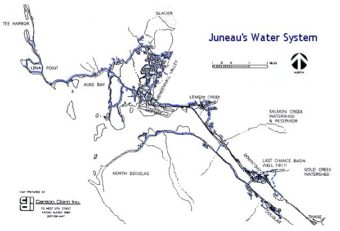
The report is an overview of Juneau’s water system, and identifies several scenarios and management concepts, with and without a nearby operating gold mine.

For the past year, the CBJ Assembly has been investigating whether to pursue re-opening the old AJ Mine near downtown. The ore body is partially owned by the city and is in Last Chance Basin – the main source of Juneau’s water.

A mine advisory task force in May urged the city to conduct a comprehensive analysis of the water supply – hence the report. Released late last month, CBJ Engineering Director Rorie Watt has been holding a series of meetings around Juneau on the draft report. Wednesday night he told about 25 gathered at city hall that public comments are important.

“What we’re looking for is comments about the substance of the report,” he said. “We’re not really interested at this time in opinions about whether mining is a good or bad idea. The task at hand really is to thoroughly vet the water issue.”

The water study offers several scenarios, ranging from no action to leasing the AJ property to a mining company.

“Upgrading Salmon Creek or abandoning Gold Creek, or finding a new water supply or diverting the drain tunnel, or improving the mine draining system or reducing the water that flows into the mine drainage system,” Watt said.

Watt says public comments on the draft will be submitted to the Assembly with the final report.

The AJ Mine Water Study and a comment form are available on the city’s website.

The Assembly set $250,000 aside for various tasks associated with the feasibility of re-opening the AJ Mine, including the water study. Watt told the Assembly recently that about $80,000 has been spent on the project so far.

Assembly members are expected to discuss the issue on April 9th at a Committee of the Whole meeting.

Site notifications
Update notification options
Subscribe to notifications