Federal Government

Sullivan and Murkowski vote with Democrats to support failed health subsidy extension

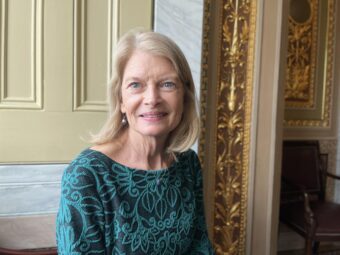
U.S. Sen. Dan Sullivan and U.S. Sen. Lisa Murkowski.
U.S. Sen. Dan Sullivan and U.S. Sen. Lisa Murkowski. (Alaska Public Media)

WASHINGTON — Both of Alaska’s U.S senators crossed the aisle Thursday to vote to advance a Democratic bill that would’ve extended health insurance subsidies for three years.

The Alaskans and two other senators were the only Republicans to back the plan, which failed to get the 60 votes needed.

Sen. Lisa Murkowski’s vote was not a surprise. She’s known for often voting with Democrats, and she’s been saying for months that Congress needs to extend Affordable Care Act enhanced subsidies beyond the year-end expiration date, to avoid a massive price hike for Alaskans who buy their own insurance plans.

Sen. Dan Sullivan, on the other hand, rarely bucks GOP leadership or President Trump. He has said in recent months that he’s working on a plan for “extending and reforming” the enhanced subsidies. But Sullivan has voted repeatedly against extensions and, over the course of his Senate career, argued strenuously that “Obamacare” should be repealed entirely.

Sullivan did not respond to an interview request, but his office issued a statement in which he castigates “Obamacare” as unaffordable and portrays the enhanced tax credits as partisan, Democratic slapdashery.

“Nevertheless, there is little doubt that a lot of hard-working Alaskans, families, entrepreneurs and small business owners will be negatively impacted if these enhanced premium tax credits expire,” Sullivan’s statement says, adding that he’ll continue to try to forge a compromise.

Alaskans already face some of the highest insurance premiums in the country, and Sullivan is up for re-election next year.

“He’s feeling the heat,” said Alaska Democratic Party Chair Eric Croft.

Nationally and in Alaska, the Democratic Party has been hitting Sullivan hard on this point.

“Over 24,000 Alaskans will see their health care premiums skyrocket next year if Dan Sullivan does not stand with working families and vote to extend these lifesaving credits,” the Democratic National Committee said in one recent media blitz.

Croft said that Alaskans shouldn’t mistake Sullivan’s vote for a true change of position.

“He’s voted, I think, seven times in the last two months against it, and now, when he knows it’s going to fail, votes for it. Are you kidding me?” Croft said.

A Republican plan to substitute Health Savings Accounts for the expiring tax credits also failed to advance Thursday, despite the votes of both Alaska senators.

Murkowski took to the Senate floor after the votes and declared that the Senate failed.

“We failed to work together. We failed to reach consensus,” she said. “We failed to help all those who are facing these shockingly, completely unaffordable increases in their health care premiums as they’re looking at the new year.”

She says there’s still time to pass an extension before open enrollment for insurance plans closes on Jan. 15.

In Alaska, about 24,000 people buy subsidized insurance plans and those who earn as much as $78,000 can qualify for the enhanced tax credits. If the subsidy expires, which they are set to do at the end of this year, Alaskans will be among the hardest hit. A 60-year-old with a silver-level plan would see a 295% increase in premiums, according to independent health policy research group KFF.

Murkowski tries again to change mountain’s name to Denali

Denali viewed from Talkeetna on March 8, 2025.
Denali viewed from Talkeetna on March 8, 2025. (Dave Bass)

WASHINGTON — The federal government’s official name for North America’s tallest peak is Mount McKinley.

President Trump reinstated the moniker on Day 1 of his second term with an executive order entitled “Restoring Names that Honor American Greatness.”

But Sen. Lisa Murkowski is trying to re-restore a much older name.

“We have called it, this mountain, Denali in Alaska for decades, generations,” she said at a Senate hearing Tuesday. “The Koyukon Athabascan have called it, referred to it, as Denali for millennia.”

Murkowski has sponsored a bill that would nullify Trump’s name change, and change the official name back to Denali, which is often translated as “The Great One.” Alaskans feel strongly about it, she said.

“This is about respecting the original stewards of the land who gave this fitting name,” she said.

President William McKinley has no particular connection to Alaska and never visited, Murkowski noted.

A prospector named the mountain for him, and the government adopted it officially in 1901. The appellation stuck for the rest of the 20th century, despite a petition from the state of Alaska in the 1970s in favor of Denali. Murkowski and the rest of the Alaska delegation to Congress sponsored Denali bills year after year but the delegation from McKinley’s home state —Ohio — blocked them. President Obama finally stepped in and ordered the name changed in 2015. That held for a decade, until Trump changed it back.

Murkowski said her Denali bill is not meant to diminish President McKinley or his contributions to the country. And, she said, he won’t go un-honored.

“You’ve got the McKinley national memorial, the National McKinley Birthplace Memorial, the McKinley Presidential Library Museum,” she said. “You’ve got statues in Ohio, Hawaii, Illinois, among others. So this is nothing against our former president.”

An Interior Department witness at the hearing said the administration opposes the name restoration because it conflicts with Trump’s executive order on the mountain’s name.

Sen. Dan Sullivan co-sponsored Murkowski’s bill, as did three Democratic senators. Its prospects are uncertain. It could be negotiated into a package of bills containing the home-state priorities of other senators. Or it could be added to must-pass legislation. But if Trump insists on keeping the name McKinley, it’s not clear a sufficient number of Republicans in Congress would cross him.

Hepatitis vaccines credited as life-saving for Alaska children may be upended

Dr. Brian McMahon, medical and research director of the liver and hepatitis program at the Alaska Native Tribal Health Consortium. stands outside at the constortium's campus on Oct. 8, 2025. McMahon tried to convince members of the federal Advisory Committee on Immunization Practices to keep in place a recommendation for universal Hepatitis B vaccination of newborns. McMahon has spoken of his experiences treating patients in Western Alaska, which in the 1970s had the world's highest rate of hepitiatis-caused childhood liver cancer. Newborn vaccinations have been critical to stopping the spread of Hepatitis B among Alaska Native children, McMahon said.
Dr. Brian McMahon, medical and research director of the liver and hepatitis program at the Alaska Native Tribal Health Consortium stands outside at the constortium’s campus on Oct. 8, 2025. McMahon tried to convince members of the federal Advisory Committee on Immunization Practices to keep in place a recommendation for universal Hepatitis B vaccination of newborns. McMahon has spoken of his experiences treating patients in Western Alaska, which in the 1970s had the world’s highest rate of hepitiatis-caused childhood liver cancer. Newborn vaccinations have been critical to stopping the spread of Hepatitis B among Alaska Native children, McMahon said. (Yereth Rosen | Alaska Beacon)

Western Alaska, where almost all the residents are Indigenous, used to have the world’s highest rate of childhood liver cancer caused by Hepatitis B. After decades of screenings and vaccinations, that problem has been eliminated; since 1995, only one person under the age of 30 has been diagnosed with hepatitis-caused cancer.

Now the Trump administration is seeking to end one of the key tools credited with accomplishing that goal: Hepatitis B vaccinations of newborns.

The federal Advisory Committee on Immunization Practices on Friday voted to drop a longstanding recommendation for universal hepatitis vaccines for newborns. That is in accordance with the controversial views of U.S. Health Secretary Robert F Kennedy Jr., a vaccine skeptic who fired all members of the previous committee and appointed like-minded members to replace them.

Current federal childhood Hepatitis B vaccination guidelines recommend one dose of the vaccine at birth, followed by additional doses at intervals through 18 monthsThe recommendation for newborn vaccinations has been in place since 1991.

The advisory committee, part of the U.S. Centers for Disease Control and Prevention, determined that children under 2 months should not be vaccinated unless their mothers are infected or could be infected by Hepatitis B.

Some vaccine critics in the administration, including Kennedy and President Donald Trump themselves, argue — contradicting medical experts and years of medical research — that Hepatitis B vaccines for young children are unnecessary, claiming that it is spread primarily or exclusively through adult behavior like sex and sharing of needles for illegal drug use.

“Hepatitis B is sexually transmitted. There’s no reason to give a baby that’s almost just born Hepatitis B. So I would say wait till the baby is 12 years old and formed and take Hepatitis B,” Trump said at a Sept. 22 news conference.

Those claims are false, said Dr. Brian McMahon, medical and research director of the liver and hepatitis program at the Alaska Native Tribal Health Consortium.

There is no credible evidence of a link between the vaccine and autism of any other health problem, McMahon said.

And sexual transmissions accounted for only a tiny percentage of Alaska’s Hepatitis B cases, he said.

Aside from mother-to-infant transmissions, which occur during childbirth, Hepatitis B was predominantly spread in Western Alaska through normal daily activities. That is because, unlike the HIV virus or other hepatitis viruses, the Hepatitis B virus can live for seven days on surfaces in schools and homes, like tables and personal-grooming items.

“The virus can be found all over, on school luncheon tabletops, counters and homes,” McMahon said. “Kids have open cuts and scratches from bug bites or anything else, and then they shed millions of particles of the virus on environmental surfaces. And then another kid comes along with an open cut or scratch.”

Such risks are exacerbated in rural Alaska, he said, where homes can be crowded and people pursue traditional subsistence lifestyles with a lot of outdoor activities.

“They’re hunting, fishing, cutting up meat, etcetera, and mosquito bites are real prominent,” he said.

Hepatitis B virus particles, in orange, are seen in this microscopic image captured in 1981.
Hepatitis B virus particles, in orange, are seen in this microscopic image captured in 1981. (Dr. Erskin Palmer | U.S. Centers for Disease Control and Prevention)

Nationally, only 12.6% of chronic Hepatitis B cases recorded from 2013 to 2018 were attributable to sexual transmission, according to a 2023 CDC study. Transmissions of all forms of hepatitis, including Hepatitis B, are possible through contact sports like football, rugby and hockey, researchers have found.

Alaska’s disease and vaccination success

Before the past decades of vaccination and screening, Hepatitis B was so prevalent in Western Alaska that it was classified as endemic there. It was the only part of the United States with such a classification. In some villages, 20% to 30% of the residents were infected, McMahon said.

Geography and ancient migration patterns accounted for historically high rates of the disease in Western Alaska, as well as other Indigenous regions of the Arctic.

Various strains have been carried from Asia to Alaska over millennia, according to scientists. And the remoteness of Indigenous communities meant isolation from medical services, making early diagnosis difficult in the past, allowing infections to linger and be passed down through generations, according to scientists.

In Alaska, children infected with the virus early in life had a high likelihood of winding up with chronic infections that caused serious complications latersuch as liver failure. The worst cases resulted in cancer, and even death.

For McMahon, now in his 80s, treating cancer-stricken children in the Yukon-Kuskokwim region, where he worked in the 1970s, was harrowing.

One of his patients was a 17-year-old high school valedictorian. A few months earlier, she started having abdominal pains, but she ignored them.

“She was really busy with school, and she’d gotten a full ride scholarship and was excited about going to the University of Alaska, representing her community,” McMahon said.

The pains turned out to be cancer, caused by a hepatitis B infection that she had not known she had. Too sick to be flown home, she died in the Bethel hospital.

“It was horrible,” McMahon said.

Another patient was an 11-year-old boy, also diagnosed after he complained of similar abdominal pain. McMahon visited him at home, where the boy was “in horrible pain” and yellow from jaundice.

“He was just crying. He said I know I’m going to die. Just help me with my pain,'” McMahon said.

“My wife was with me. She was a public health nurse. She was in tears. The community health aid practitioner was in tears. I was fighting my tears and pulling everything I could out of my bag to try to help this patient sedate. It was just something I’ll never forget. Never.” McMahon said.

He has relayed these and other experiences to the vaccine advisory committee in hopes of persuading members to keep the infant recommendations in place.

“I said, ‘Do you want to be responsible for children getting liver cancer because of this decision?'” McMahon said. “So I’m probably not very popular right now.”

Alaska was one of the first places in the world where the Hepatitis B vaccine was used as soon as it became available in 1981.

Epidemic Intelligence Service Officer, Victoria Balta of the U.S. Centers for Disease Control and Prevention prepares to ride a snowmachine between villages in rural Alaska in 2024. She and other epidemiologists traveled to villages to draw blood from participants in a long-term study of the Hepatitis B vaccine. Use of the vaccine began in Alaska in the early 1980s. Alaska was one of the first regions in the world where the vaccine, then newly developed, was administered. The Alaska study is the world's longest-standing cohort study of this vaccine.
Epidemic Intelligence Service Officer, Victoria Balta of the U.S. Centers for Disease Control and Prevention prepares to ride a snowmachine between villages in rural Alaska in 2024. She and other epidemiologists traveled to villages to draw blood from participants in a long-term study of the Hepatitis B vaccine. Use of the vaccine began in Alaska in the early 1980s. Alaska was one of the first regions in the world where the vaccine, then newly developed, was administered. The Alaska study is the world’s longest-standing cohort study of this vaccine. (Jonathan Steinberg | U.S. Centers for Disease Control and Prevention)

The pilot vaccination project was at the insistence of Alaska Native organizations, along with the state government and the Alaska congressional delegation. Under that pilot program, according to newly published study by McMahon and other researchers from the ANTHC and the CDC’s Arctic program, tribal health organizations and their partners screened 53,860 Alaska Native people for infection and gave vaccines to 43,618 Alaska Native people who tested negative, along with starting the universal newborn vaccinations.

Health officials have followed the outcomes since then, and the new study lists several achievements 40 years after universal newborn vaccination started.

Since 1995, according to the study, there have been no new symptomatic cases of Hepatitis B among Alaska Natives under 20 anywhere in the state. Since 2000, no new cases of hepatitis-related liver cancer have been identified among Alaska Natives of any age in the Yukon-Kuskokwim Delta, a region where prevalence was concentrated in the past, the study said. And follow-up surveillance has revealed that childhood Hepatitis B vaccinations remain effective for at least 35 years, the study said.

Successes are also reflected in the trend of acute hepatitis, the form of infection that is short-lived and can be cleared from the body.

There have been no identified cases of acute hepatitis among Alaska Native children since 1992, according to Johns Hopkins University. The rate of acute hepatitis among Alaskans of all ages and ethnicities dropped from 12.1 cases per 100,000 people to 0.9 per 100,000 in the 2002-2015 period, according to the state Department of Health’s epidemiology section.

Alaska’s rate of chronic hepatitis B – the long-term and persistent infection that can lead to serious liver problems – remains higher than the national average. As of 2020, Alaska’s rate of chronic Hepatitis B was 14.2 cases per 100,000 people, nearly triple the national rate of 5 cases per 100,000 people, according to a report by the state Department of Health’s epidemiology section.

McMahon said that is partly because of the legacy of infections in the older Native population, people whose childhood predated widespread vaccination, and prevalence among foreign-born residents who come from countries without widespread vaccination.

Debate over Hepatitis B risks

This year, vaccine skeptics who are members of the Advisory Committee on Immunization Practices, however, along with people who are advising the committee, have argued that the risks of Hepatitis B among children are too low to justify universal infant vaccination.

One of the officials making that argument at Thursday’s committee meeting was Dr. Cynthia Nevison, a vaccine skeptic hired as a CDC consultant. She contradicted McMahon’s description of children spreading the virus through casual contact with contaminated surfaces – a process known as “horizontal transmission.”

“There’s very little evidence that horizontal transmission has ever been a significant threat to the average American child, and the risk probably has been overstated,” she said at the meeting. Also overstated, she said, are the risks of “vertical transmission,” the viral transmission between mothers and their newborns.

The committee’s new recommendation must be approved by the CDC administrator before it becomes federal policy.

McMahon said that no matter how national policy might change, Alaska Native tribal health organizations will continue administering Hepatitis B vaccines to newborns.

“I know they’re not going to stop. Even if they have to pay for it. They’re so aware of this,” he said.

His fears, he said, are for low-income families who depend on free vaccinations through state programs that might lose funding and for parents who are getting conflicting messages that may lead to conclusions that the vaccine is not necessary.

“It could be a real mess,” he said.

Changes in the incidence rate of acute Hepatitis B from 1980 to 2015 are shown in thjs graph. The rate is for all Alaskans and based on state health data. The graph notes key dates in the development and use of the Hepatitis B vaccine.
Changes in the incidence rate of acute Hepatitis B from 1980 to 2015 are shown in thjs graph. The rate is for all Alaskans and based on state health data. The graph notes key dates in the development and use of the Hepatitis B vaccine. (Graph provided by Epidemiology Section of the Alaska Division of Public Health/Alaska Department of Health)

Murkowski says a military strike on shipwreck survivors would be a war crime

Sen. Lisa Murkowski in her Washington, D.C. office on Dec. 4, 2025.

WASHINGTON — U.S. Sen. Lisa Murkowski said she was deeply troubled by a Washington Post report alleging that the military launched a second strike on Sept. 2 to kill survivors clinging to the wreckage of their suspected drug boat.

“That effectively makes you a war criminal,” she said. “I mean, there are rules of war. We don’t do that.”

Some of her colleagues on Thursday viewed a video of the Sept. 2 attack. Murkowski said the situation is far from clear.

“I have heard from two different individuals who viewed that same video, that they viewed it differently,” she said.

The White House and Defense Secretary Pete Hegseth confirmed this week that there was a second strike, though they say it was legal and dispute key parts of the Post story. Hegseth said he watched the first strike live and then left the room.

“I did not personally see survivors but I stand – because that thing was on fire,” he told reporters after a White House Cabinet meeting. “It was exploded. Fire and smoke … This is called the fog of war.”

The Pentagon Law of War Manual says “Persons who have been incapacitated by wounds, sickness, or shipwreck are in a helpless state, and it would be dishonorable and inhumane to make them the object of attack.”

Hegseth and President Trump say they stand by the commander of the operation. Adm. Frank Bradley was at the Capitol Thursday to brief a select group of Congress members, which did not include the Alaska delegation.

Several Republicans watched the video in a closed-door briefing and emerged sounding confident the strikes were legal and justified. But Democrats had a different take. One House member called the footage “one of the most disturbing things I’ve ever seen in my public service.”

The chairman of the Senate Armed Service Committee is calling for an inquiry into the “double-tap” incident, and this could prove to be a rare moment when a number of Senate Republicans publicly disagree with Trump.

Murkowski is already there. She has been critical of the strikes and voted with Democrats in October on a measure that would have curtailed military attacks on suspected drug boats without congressional approval. She also crossed the aisle to vote on a similar war powers resolution last month. The strikes, she said, have now killed more than 80 people without trials.

“I have questioned the legality, and I wanted to know specifically, what’s the end goal here,” she said.

Sen. Dan Sullivan declined an interview request this week but his office sent a statement saying he’s seeking more information.

U.S. Department of Energy lab, active in Alaska, drops ‘renewable’ from name

Solar panels at the Cold Climate Housing Research Center campus in Fairbanks are seen on June 5, 2025. The Cold Climate House Research Center, which became part of the National Renewable Energy Labortory system in 2020, is focused on designing sustainable and energy efficient housing that is resilient to climate change in the far north.
Solar panels at the Cold Climate Housing Research Center campus in Fairbanks are seen on June 5, 2025. The Cold Climate House Research Center, which became part of the National Renewable Energy Labortory system in 2020, is focused on designing sustainable and energy efficient housing that is resilient to climate change in the far north. (Yereth Rosen/Alaska Beacon)

The federal government research organization that has been devoted for half a century to renewable energy development has had the word “renewable” stripped from its name.

The Trump administration, which broadly opposes renewable energy projects, changed the name of the Colorado-based National Renewable Energy Laboratory to “National Laboratory of the Rockies.”

The U.S. Department of Energy announced the name change on Monday, effective immediately.

“The energy crisis we face today is unlike the crisis that gave rise to NREL,” Assistant Secretary of Energy Audrey Robertson said in a statement. “We are no longer picking and choosing energy sources. Our highest priority is to invest in the scientific capabilities that will restore American manufacturing, drive down costs, and help this country meet its soaring energy demand. The National Laboratory of the Rockies will play a vital role in those efforts.”

NREL has a prominent presence in Alaska. The agency in 2020 joined into a partnership with the Cold Climate Housing Research Center at the University of Alaska Fairbanks. The UAF facility is one of four NREL centers; two campuses are in Colorado and there is an office in Washington, D.C.

Jud Virden, the laboratory’s director, said the new name “embraces a broader applied energy mission entrusted to us by the Department of Energy to deliver a more affordable and secure energy future for all,” according to the statement.

However, the name change is a troubling sign to one Alaska organization involved in projects promoting renewable energy and energy affordability.

“Removing ‘Renewable’ and ‘Energy’ from NREL’s name raises concerns. Renewables are key to affordable, secure energy and deliver long-term economic benefits, especially for rural communities,” Bridget Shaughnessy Smith, communications director for the Alaska Public Interest Research Group, a non-profit consumer advocacy group, said by email.

“While it’s not yet clear if this name change signals a broad mission shift, any refocus cannot come at the expense of renewable energy or by prioritizing already well-funded fossil fuel industries. Remote microgrid communities in Alaska are working with NREL to innovate toward affordable, reliable energy, and this name change must not disrupt that critical work,” Shaughnessy Smith continued.

NREL’s history started in 1974, when the organization was established as the Solar Energy Research Institute. In 1991, President George H.W. Bush elevated it to national lab status and changed the name to the National Renewable Energy Laboratory.

The Cold Climate Housing Research Center was established in 1999 with a mission of improving housing and building conditions in Alaska’s extreme climate. The center has focused on renewable energy, along with energy efficiency, structural integrity for buildings on permafrost, indoor air quality and designs that are sustainable in the far north. The center headquarters is the world’s farthest-north building with a platinum rating, the highest possible, bestowed by the U.S. Green Building Council Leadership in Energy and Environmental Design.

The NREL-Cold Climate Housing Research Center partnership has participated in numerous recent energy and environmental innovations, including the development of non-plastic housing insulation made from a fungi-wood pulp blend.

The NREL name change adds to a list of government agencies and geographic sites changed by the Trump administration this year to align with the president’s agenda.

On the day he was inaugurated for his second term, President Trump issued an executive order directing that the Gulf of Mexico be renamed “Gulf of America” and that Denali, North America’s tallest peak, revert to its previous federal name, Mount McKinley.

The Denali name comes from the traditional name for the Alaska peak used by the Koyukon people, the region’s Indigenous residents. The name, which translates to “the high one,” has been the official state of Alaska name since the 1970s. The McKinley name, for former president and Ohioan William McKinley, has been widely panned in Alaska, and state lawmakers passed a resolution asking for the Denali name to be restored for federal government use.

In September, Trump issued an executive order directing that the U.S Department of Defense be renamed “Department of War.” That resurrected a department name that was dropped in 1947.

Congress overturns Biden restrictions on leasing in Arctic Refuge

The U.S. Capitol, as seen from the East Plaza. (Liz Ruskin/Alaska Public Media)

Update, 9:30 a.m. Thursday:

The repeal resolution passed the Senate Thursday by a vote of 49-45. It goes next to the president’s desk.

Original story:

WASHINGTON — The U.S. Senate is about to vote on a resolution to toss ex-President Biden’s limits on oil and gas leasing in the Arctic National Wildlife Refuge and ensure nothing like it is imposed again.

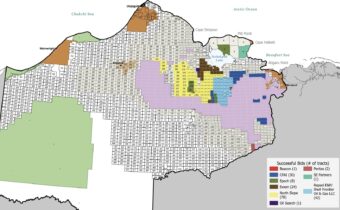
The measure would expand the area available for leasing to the entire coastal plain of the refuge, in the northeast corner of Alaska. It is part of a strategy to dismantle Biden’s environmental legacy, much of which took place in Alaska, the state with the most federal land.

The sponsor of the repeal, Sen. Lisa Murkowski, described it as removing Biden’s barriers to resource development in Alaska.

“We opposed their central Yukon Resource Management Plan, their integrated activity plan for our National Petroleum Reserve, and their decision to shut down any potential development on a very small part of the coastal plain,” she said on the Senate floor Wednesday.

Congress and the Trump administration have already nullified the Biden limits on leasing in the Arctic Refuge. But the latest nullification method uses the Congressional Review Act. That means a future president could not impose substantially similar limits without an act of Congress.

Sen. Martin Heinrich, D-N.M., spoke against the resolution. An outdoorsman who has travelled to the region, Heinrich described the refuge as a breathtaking wilderness that’s vital for hundreds of species of birds and wildlife.

“”The Arctic Refuge is the crown jewel of our National Wildlife Refuge System, and it belongs to every single American,” he said. “It deserves our protection.”

Market forces may, in effect, provide that protection. No major oil companies bid when the first Trump administration held an ANWR lease sale in 2021. A lease sale during the Biden administration, with more restrictive conditions imposed, drew no bids at all.

The resolution cleared a Senate procedural vote largely along party lines Wednesday, with only Sen. Susan Collins, R-Maine, crossing the aisle to vote with Democrats. It’s expected to pass the Senate on a final vote Thursday. The House has already passed an identical resolution so it would go next to the president for signature.

Site notifications
Update notification options
Subscribe to notifications