Government

ACMP initiative sponsors exceed signature goal

Backers of a citizens’ initiative to re-establish an Alaska Coastal Management Program have submitted nearly 34,000 signatures to the state Division of Elections. The Alaska Sea Party held a news conference in Anchorage on Tuesday to announce the total, which is about 8,000 more than the group needs to place the measure on this year’s statewide ballot.

But as Casey Kelly reports, the Sea Party hopes the legislature is able to resolve the issue before it goes to a vote.

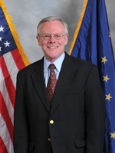
Bruce Botelho. Photo courtesy Alaska Municipal League.

Alaska Sea Party Chairman and Juneau Mayor Bruce Botelho says about 250 volunteers spread across the state collected the signatures in record time.

“We received our booklets 27 days ago, and the task that we had before us was an arduous one,” says Botelho.

The Division of Elections now has 60 days to determine if there are at least 25,875 signatures of valid Alaska voters. The Division will also make sure the Sea Party collected signatures from at least 7 percent of registered voters in 30 of the state’s 40 House districts. Botelho expressed confidence that both thresholds will be met.

“I would put it this way: We would not have filed if we thought that we did not have the requisite distribution,” he says.

The Sea Party set out to collect the required signatures before the legislature convened, in order to give lawmakers an opportunity to pass “substantially similar” legislation during the 2012 session. Botelho – a former state attorney general – said Lieutenant Governor Mead Treadwell will make the initial decision on what “substantially similar” means. But the Sea Party expects any bill would have the same basic elements as the initiative.

Botelho said that includes a policy board made up of coastal residents.

“Which makes sure that there’s a role for local districts in the formulation of that statewide policy,” he says.

The initiative also would make the Alaska Department of Environmental Conservation part of the coastal management structure. Former Governor Frank Murkowski removed DEC from the program to make the regulatory process easier on industry. Botelho said the Sea Party wants a comprehensive program.

“We would expect all regulatory agencies that work within the coastal zone to be a part and at the table in the implementation of coastal management,” says Botelho.

Before closing down last year, coastal management helped developers navigate the complicated state and federal permitting process. It also allowed the state to comment on proposed federal regulations or projects that affect Alaska residents and businesses. Initiative co-sponsor and Kodiak Island Borough Mayor Jerome Selby said Alaska’s small businesses suffer most from the lack of a program.

“I found it pretty interesting the number of people that I talked to – contractors, small business people, others – who are already encountering difficulty in getting their federal permitting and the coordination that’s missing without this program,” says Selby.

If the legislature adjourns in 90 days without passing a similar bill, the measure will go on the August primary ballot. If the legislature takes longer than 90 days to adjourn, the initiative will appear on the November ballot.

Last year, the Parnell administration and some House Republicans fought efforts by rural lawmakers and Democrats to give local communities a voice in the program when it came up for reauthorization. House Speaker Mike Chenault – a Nikiski Republican – isn’t sure about the prospect of “substantially similar” legislation passing this session.

“We can make decisions today based on if there’s enough signatures or if there’s not enough signatures. But what decision can we make?” Chenault says. “There may be two or three different ways to go at coastal zone, and we’ll just have to look and see what options are available.”

But Juneau Democrat and House Minority Leader Beth Kerttula, says lawmakers need to recognize the Sea Party’s impressive feat and the 34-thousand Alaskans who signed the petition.

“It’s going to be to people’s detriment if they don’t recognize that. So, I hope that we do our job and lead on this issue and bring the program back,” she says.

Governor Parnell’s Spokeswoman Sharon Leighow said the administration would have no comment on the initiative today. In the past, Parnell has said the state can live without a coastal management program.

The administration estimates it would cost about 5-million dollars a year once it’s up and running. A significant portion of that would be paid for by federal grants. Any program requires federal approval, a process that could take up to two years after it is submitted by the state.
90 days and counting

The second session of the 27th Alaska State Legislature begins Tuesday. The House of Representatives will gavel in at 1 p.m. The Senate comes in at 1:30.

Juneau will formally welcome legislators Wednesday at a Centennial Hall reception from 5 to 6:30 p.m. At 7 p.m., Gov. Sean Parnell will deliver his annual State of the State Address.

Juneau Republican Rep. Cathy Munoz says she’s glad to be back to work.

“Looking forward to having everybody back in town,” she says. “We’ve developed really good camaraderie with people from all over the state and I’m really looking forward to seeing them again.”

Munoz, Rep. Beth Kerttula, and Sen. Dennis Egan, both Democrats, work well together. At the start of the session, Kerttula says, they have a lot of optimism.

“It’s one of the great things about Juneau and one of the great things about the beginning of session,” she says. “Everybody does come in, I think, with a sense of optimism for the next year. You know that we really can join together to do good things for the people.”

Kerttula is beginning her sixth year as leader of the House Democratic Minority. She expects oil and gas and retirement issues will be major policy arguments this session.

Kerttula has introduced one bill – HB 257 – which would give the Violent Crimes Compensation Board more flexibility to help cold case victims.

“That kind of pain doesn’t go away and it shouldn’t matter whether the case gets resolved one week after the crime has happened, or 10 or 20 years later,” she says. “It’s still important that the state and Violent Crimes Compensation Board can be there to help victims.”

Kerttula says she was inspired to sponsor the bill after getting to know the mother of a victim of a case that was not resolved for many years.

Munoz also has introduced legislation this session inspired by Alaskans – naturopaths, pharmacists, realtors and homebuilders.

One bill sounds like it was written expressly for Juneau, with its lack of affordable housing. Munoz says HB 264 would let municipalities defer property tax increases after lots are subdivided.

“Once a developer comes in and subdivides land and puts in all the improvements – the sidewalks, water and sewer, — the city then reassesses that land at fair market value, according to state law,” she explains.

Munoz calls that a disincentive. “The developer is taxed with this higher assessment immediately, even before the lots have sold,” she says.

She believes if cities could defer the tax, it would encourage housing development.

Munoz and Kerttula’s bills are among those filed prior to the start of the session and will be assigned to committees today.

Lawmakers now have 90 days to complete their work.

Petition drive nets 30,000 signatures

Organizers of a citizen’s ballot initiative to restore Alaska’s coastal management program have well over the number of signatures required to put it on the statewide ballot.

“We’ve exceeded 30,000 and in terms of overall numbers it’s approaching my level of comfort,” Juneau Mayor Bruce Botelho says.

Twenty-six thousand are required. Volunteers started gathering signatures less than a month ago. The signatures must be filed with the Alaska Division of Elections today.

Botelho says volunteers stopped the petition drive at 6 p.m. Monday to determine if they have the required district distribution, which is 7 percent of registered voters who voted in the last election in each of 30 of 40 house districts.

Botelho and Kodiak Island Borough Mayor Jerome Selby are among several local officials who formed the Alaska Sea Party to bring back a coastal management program. The Parnell administration shut down the program last summer, after the legislature and governor’s office failed to reach a compromise to renew it.

Sea Party organizers will hold a news conference today to update the initiative’s progress.

If the Legislature enacts substantially similar legislation this session, the initiative would not appear on the statewide ballot this fall.

Juneau Representative Beth Kerttula believes the Legislature will take it up. She says collecting more than 26,000 signatures in record time is a powerful message.

“Legislators will sit up and take notice that the state’s pretty much spoken on it and we need to get back to work and get our program back,” she says. “We lost it by one vote last session and now we’re the only coastal state in the union not to have a coastal zone program.”

Alaska has nearly 40 percent of the entire coastline of the United States and has no program to coordinate management.

Egan in middle of oil tax debate

The legislative session begins in Juneau today (Tuesday), with a lot on the plate of lawmakers. Casey Kelly spoke with Juneau Senator Dennis Egan and has this preview.

Sen. Dennis Egan. Photo courtesy State of Alaska.

Juneau Senator Dennis Egan is feeling good heading into the 2012 legislative session.

He’s in the second year of his first full term, after being appointed to the seat on the last day of the 2009 session. More importantly, Egan starts off the year with a clean bill of health, after undergoing heart surgery just two and a half months before the start of last year’s session.

“I didn’t have a medical procedure this year,” says Egan. “I feel great.”

In addition, Egan is the only Senator who won’t have to run for re-election this fall due to redistricting, or the redrawing of legislative boundaries every 10 years according to the U.S. Census.

Under the Alaska Redistricting Board Plan, Egan won’t run again until 2014, though next year his district will pick up several new communities, including Skagway and Petersburg. Egan says the extra time will help him to get to know those communities a little better, but he doesn’t expect it to change the way he serves.

“I’ve always represented Southeast, and people from those communities have always come in to our office, and we’ve worked very hard in trying to get their issues resolved, and their requests for capital projects and issues that directly affect their communities,” he says.

Egan is squarely in the middle of the biggest issue facing the Senate this year: The governor’s proposal to cut taxes on oil companies. The bill ended last session in the Senate Labor & Commerce Committee, which Egan chairs. During the interim the committee held four days of hearings on the bill in Anchorage and Fairbanks. Egan says the Senate still has concerns about the lack of Alaskans employed on the North Slope.

“The people own the resource,” says Egan. “And we as a Senate Bipartisan Working Group think that we should get something in return. We’re not opposed to providing some kind of an incentive for the industry. But we need something in return.”

To get a better handle on employment in the oil industry, the Senate hired Juneau-based McDowell Group to do a study. Egan expects the analysis to get at least one hearing early in the session.

“It shows there is a lot of non-resident hire, and we want to address that issue,” he says.

Egan is one of six co-sponsors of a bill that would exempt a proposed natural gas pipeline from property taxes during construction. He says the idea came from discussions Senators had with the industry.

“Trying to reach some sort of a conclusion to providing an incentive for industry and Alaskans to increase our portfolio,” Egan says.

Another bill Egan worked on during the interim would give public employees the option of choosing either a defined benefit or defined contribution retirement plan. Alaska was the first state to do away with a traditional pension, or defined benefit for state workers. Since 2006, all new hires have been set up with a defined contribution plan, similar to a 401(k) savings account.

Egan’s bill has 10 co-sponsors – including two Republicans – who feel the defined benefit is a better deal for Alaska’s retired public employees, because it guarantees them a pension check every month.

Egan’s office is currently trying to get the Parnell administration to agree on a cost estimate for the bill. The administration’s actuary says it would cost the state more to offer a defined benefit option. Unions and other backers of the bill hired their own actuary, who says it would not increase costs. At a hearing during the interim the two actuaries were asked to work together to settle the discrepancy.

“We’re trying to make it as close to revenue neutral as we can,” Egan says. “We want people to retire in Alaska, and I think Senate Bill 121 allows those folks to do that.”

Egan says he’s happy with Juneau projects in Governor Parnell’s proposed capital budget, especially ongoing funding for the State Library Archives and Museum, or SLAM project, as well as renovations or repairs to the Douglas Island Office Building, the State Office Building parking garage, and the Juneau Pioneer Home.

He says other priorities for the Senate Bipartisan Coalition will be affordable energy, expanding Alaska’s infrastructure and pre-kindergarten through post-secondary education.

Assembly members to rank state funding requests

Another item has been added to a list of possible state funding requests the Juneau Assembly plans to submit to the legislature this year. Meanwhile, another item is a candidate to come off the list.

City Manager Rod Swope distributed his draft suggestions to the assembly on Monday. It was only later – he told the Finance Committee last night (Wednesday) – that Police Chief Greg Browning suggested adding the Police Crisis Intervention Specialist to the list.

Federal funding for the two-year-old position in the amount of 111-thousand dollars a year is due to expire on June 30th. Swope said he thought it was worth having the assembly consider it as part of its package of state funding requests.

“It’s been really valuable,” Swope says. “The person works with victims of domestic violence directly after an incident of violence and until that person can get back to normal and get in a safe situation. We’ve never had one in the past. There are no funds. The federal program has been eliminated. And I thought, since it is I think a good community service, fairly important particularly to victims, that I would ask you if I could go ahead and add that onto the list.”

The assembly agreed to add the position to the list.

Meanwhile, Assemblyman Jesse Kiehl – an aide to state Senator Dennis Egan – expressed concern about a possible request of 1.3-million dollars for Centennial Hall roof replacement. A 2009 assessment concluded the roof needed to be replaced immediately, and while the legislature has funded it three times in recent years, Governors Palin and Parnell have vetoed it each time. Kiehl says it’s time for the city to move forward on its own.

“Despite the fact that we absolutely need to do it, I have concerns about going around for a fourth try,” said Kiehl. “I think it may be time for us to look within the city’s own capital improvement project, and sales tax, or whatever other fund sources we need to look at. Just the history of this convinces me, that despite the best efforts of all concerned, this one’s going to have to be funded elsewhere.”

The list of funding requests needs to be finalized by the end of the month. Each assembly member will rank the projects on the draft list and submit their recommendations to the city clerk who will prioritize them based on those rankings. Further discussion will be held before the assembly submits the list to the legislative delegation.

Juneau Assembly hears latest budget forecast

Seven-point-eight million dollars… That’s the latest two-year budget deficit forecast for the City and Borough of Juneau by Finance Director Craig Duncan.

It hasn’t changed much since the last projection Duncan gave the CBJ Assembly more than a year ago. In December 2010, he predicted the city would be facing a 7.5-million dollar shortfall, spread across fiscal years 2013 and 2014.

As KTOO previously reported, Duncan says much of the shortfall will come from losses in federal funding and lower than expected returns on the city’s investments. But he admits a lot is still unknown right now, three months before the assembly starts crafting the biennial budget.

“We do know some more now, but certainly there’s a lot to go through still before we actually get the budget process in April,” Duncan said during his annual presentation on the city budget to the Assembly Finance Committee last night (Wednesday).

City Manager Rod Swope, who’s job it is to craft a proposed budget for the assembly to start with, also sounded a note of caution. Two years ago, when the assembly was crafting the budgets for fiscal years 2011 and 2012, the forecast was for a deficit of about 8-million. But in the last two years the city hasn’t seen anywhere near that level of shortfall.

“We ended up cutting about $4.5-, $5-million, and then you assisted us with some tobacco tax and also gave us the opportunity to use money from the budget reserve, which it turns out we didn’t have to use the majority of that,” Swope said. “But I think at least in the last two to three years, even though we were projecting things and we did have some windfalls, we haven’t grown. And I think staffing levels – if you look in the budget book – staffing levels and budgets will verify that. We really haven’t increased at all.”

The Finance Committee, which includes every member of the assembly, scheduled two meetings for February. The committee typically starts hearing budget requests from individual city departments in April. The full assembly has until June 15th to approve the final two-year budget, but it sometimes finishes that process in May.

Site notifications
Update notification options
Subscribe to notifications