Government

Eaglecrest master plan survey online

Eaglecrest wants to hear from you.

The city-owned ski and snowboard area is conducting a survey to gauge community interest in future development. The survey is part of a long-range master plan being prepared to guide the course of the area over the next 20 years.

The online survey can be found at skijuneau.com. Topics include a range of development from controversial motorized use of the mountain to hiking and biking trails, lodge expansion, alcohol sales, even building condos and cabins.

A public meeting on the master plan is scheduled for Wednesday, from 7 to 9:30 p.m., at Centennial Hall.

New D.C. staffer hired by Governor Parnell

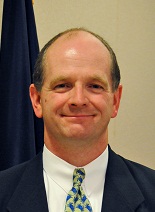
Kip Knudson photo courtesy of SOA
The Parnell Administration has named Kip Knudson as the state’s new director of state and federal relations in Washington D.C.

The 47-year old Knudson, currently the external affairs manager for Tesoro Alaska, will take over from John Katz when he retires at the end of the year. Knudson also worked as a legislative aide, director of marketing for Era Aviation, and deputy commissioner of aviation for the state Department of Transportation

The 68-year old Katz earlier this year announced that he was leaving after nearly 30-years as the director of state and federal relations.

Stone reappointed deputy commissioner

David Stone (Photo courtesy City and Borough of Juneau)

Juneau Deputy Mayor David Stone is back in his old job at the Alaska Department of Labor.

Commissioner Click Bishop today (Tuesday) renamed Stone deputy commissioner, a position he held prior to last fall’s state election. In December, Stone accepted a job as chief of staff for newly-elected Lieutenant Governor Mead Treadwell. He rejoined the Labor Department earlier this year as an assistant commissioner.

Greg Cashen – who had been executive director of the Alaska Workforce Investment Board – will take over Stone’s assistant commissioner job, Bishop announced.

Jeff Selvey is the new director of the Workforce Investment Board, which helps plan employment training programs in Alaska. Selvey is a longtime educator in Alaska, and previously worked as the board’s career and technical education coordinator.

AWARE hopes CBJ backing will help secure shelter funds

AWARE’s effort to build a new extended stay shelter for victims of domestic violence and sexual assault could get a boost from the City and Borough of Juneau.

The CBJ Assembly Human Resources Committee last night (Monday) recommended the city partner with AWARE to apply for up to 850-thousand dollars in federal pass-through money for the project.

Since 2007, the Juneau nonprofit has been planning a six-unit residential shelter, with four 2-bedroom apartments and two efficiencies. Executive Director Saralyn Tabachnick says the facility would serve as transitional housing for women and families who utilize AWARE’s emergency shelter. “Transitional” meaning four months to two years.

“We say that we’re a 30 day program, and the reality is for people trying to find housing in Juneau, it’s very difficult no matter what your means are. So we often extend the 30 days,” says Tabachnick. “And it would be helpful to have transitional housing – some longer term safe shelter where they can continue to build stability and safety.”

If approved by the full assembly, the city would partner with AWARE to apply for a grant through the state’s Community Development Block Grant program.

The grant – combined funds already secured by the organization – would help AWARE complete planning and start construction, estimated at 3.5-million dollars.

Tabachnick says a long-term domestic violence shelter has been a need in Juneau and all of Southeast for as long as she can remember.

“This is a regional need. There is not a transitional housing facility for domestic violence survivors in all of Southeast Alaska,” Tabachnick says. “Our service area is Juneau and then nine northern communities in Southeast Alaska: Haines, Hoonah, Klukwan, Skagway, Gustavus, Elfin Cove, Pelican, Yakutat, and then Tenakee Springs.”

Community Development Block Grant applications are due in December 2nd. Proposals from around the state are judged by the Alaska Department of Commerce, Community and Economic Development, and funds will be awarded early next year.

Federal appeals court upholds Clinton-era “Roadless Rule”

A federal appeals court on Friday upheld the so-called Roadless Rule in a case brought by the State of Wyoming.

The 10th Circuit Court of Appeals ruling means the controversial decade-old policy, which prevents road construction on certain federal lands, remains in place nationwide.

Wyoming argued that federal agencies violated the 1964 Wilderness Act and the National Environmental Policy Act in implementing the Roadless Rule.

The State of Alaska is currently challenging the rule on two fronts. A lawsuit filed in the District of Columbia argues that the rule itself violated the Alaska National Interest Land Conservation Act and the Tongass Timber Reform Act. Meanwhile, another suit filed with the 9th Circuit Court of Appeals seeks to reverse a lower court ruling that removed an exemption for the Tongass National Forest.

Assistant Alaska Attorney General Tom Lenhart says Friday’s decision won’t stop the state from moving forward with those suits.

“We made some of the same claims that was made by Wyoming. But in addition to that we have ANILCA and we have the Tongass Timber Reform Act, both of which apply only in Alaska,” says Lenhart. “And we feel strongly that the Roadless Rule, in fact, violates both of those federal statutes in Alaska.”

Earthjustice Attorney Tom Waldo says it’s unlikely the D.C. court will overrule the other circuit courts, even when it comes to the Alaska-specific arguments.

“The forest service thoroughly considered the application of those laws when it adopted the Roadless Rule,” says Waldo. “And we’re very confident that for the same reason that the 9th and 10th Circuits have rejected all the other challenges to the Roadless Rule, we think the D.C. court will also reject those Alaska-specific challenges to the Roadless Rule.”

Waldo and Lenhart agree that the 10th Circuit decision shouldn’t have any bearing on the Tongass exemption case, since that’s a separate issue from challenges to the rule as a whole.

Legislation sponsored by Alaska’s Congressional delegation would exempt the entire state from the rule.

The Roadless Rule was implemented in 2001, in the last days of the Clinton Administration. The Obama Administration has defended it.

Site notifications
Update notification options
Subscribe to notifications