Military

Alaska Public Media, ADN reach agreement with state over public records request

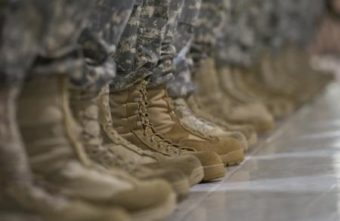
Military boots (DVIDS)

Alaska Public Media and the Alaska Dispatch News have reached an agreement with the state of Alaska in their lawsuit to obtain records related to the Alaska National Guard scandal.

The agreement signed Tuesday says the Department of Law will assign a team of attorneys to process the request for public records and produce the documents as soon as possible.

The state also agrees not to destroy any relevant documents. The pact specifically covers emails on the personal email account of Mike Nizich, chief of staff to Gov. Sean Parnell, that concern problems at the Guard.

Alaska Public Media first filed a public records request in May to determine how Parnell and his executive staff responded to reports that Guard leaders were mishandling sexual assault complaints.

The media outlets filed a lawsuit after the state rejected their requests.

Three top National Guard leaders fired

Alaska National Guard logo

Three leaders of the Alaska National Guard have been fired from their positions.

The removal of Brig. General Catherine Jorgensen, Brig. Gen. Donald Wenke, and Col. Edith Grunwald was announced Monday night, and came at the direction of Gov. Sean Parnell.

In an appearance on Talk of Alaska Tuesday morning, Parnell declined to give specifics on the staffing change, citing personnel confidentiality. He did say the decision related to an investigation done by the National Guard Bureau’s Office of Complex Investigations. The findings were released in September, and they described cronyism, fraud, and the mishandling of sexual assault.

“The report was pretty scathing with respect to the troops and the airmen not having confidence in their leadership. And clearly that played a role in this,” said Parnell.

Two of the leaders targeted for removal were already fired earlier this month, only to be rehired within a day.
Jorgenson, who has served as chief of staff for the Alaska National Guard, and Grunwald, who directed human resources, were slashed from their positions by Acting Adjutant General Mike Bridges. At the time, Bridges said were reinstated at Parnell’s direction to avoid the perception of impropriety because both – along with Bridges – had applied for the Guard’s top position.

All three of the removed leaders had applications in with the Governor’s Office for the position of Adjutant General as of Friday. They are no longer under consideration for the post.

Anchorage Press: Leaked investigations detail ‘rampant sexual misconduct’ in National Guard

Image from the Anchorage Press' story "The Three Headed Monster."
Image from the Anchorage Press’ story “The Three-Headed Monster.”

The Anchorage Press is reporting that leaked investigation reports detail “rampant sexual misconduct” in the Alaska Army National Guard since 2007. The Press obtained the reports unofficially.

The investigations tell of four sexual assaults and many incidences of sexual harassment against “fellow soldiers, new recruits, and civilian women, including high school JROTC cadets.” Three Army National Guard recruiters are named as the main perpetrators of the crimes; they were known as the “Three-Headed Monster.” They reportedly bragged about their connections to high ranking officers, intimidated subordinates and claimed to be “untouchable.” The Press story includes details of when and how some of the sexual assaults happened.

“None of the former recruiters named in the reports have been arrested or charged with any crimes by military or civilian law enforcement agencies based on the findings,” the Press reports.

The Alaska National Guard responded shortly after the story was posted on the Press’ website. The Guard said that the reports were leaked in violation of Army policy and that the documents were not supposed to become public until after the Guard took administrative action.

David Holthouse, the reporter who received the leaked documents, says that he was unable to contact the accused men but that he is still trying to reach them. According to Holthouse, the report says the men–whose names are published in the story–were offered opportunities by the National Guard to issue public statements through their attorneys but the men declined. Holthouse says more stories based on the leaked reports will be published.

Alaska Public Media and Alaska Dispatch News have sued Governor Sean Parnell for records related to how his administration dealt with the problems in the Guard since he was first made aware of them in 2010. Parnell released a video statement Wednesday in which he defended himself against accusations that he failed to do anything about the reports of sexual assault, fraud and abuse of power in the Alaska National Guard.

“To have the critics say that I would know about something that’s gone on in the National Guard and not done something for four years, that’s just not true,” Parnell said. He also talked about the efforts he’s made against domestic violence and sexual assault since his time as a lawmaker.

An audit team from the National Guard Bureau arrived in Anchorage over the weekend and is looking into allegations of embezzlement and misuse of funds.

You can read the entire story on the Press’ website. The Press has also published a timeline provided by Alaska National Guard head Chaplain Lt. Col. Rick Koch detailing his attempts to bring the guard’s problems to Parnell’s attention.

Alaska National Guard officers fired, rehired

Gov. Sean Parnell ordered Brigadier Gen. Mike Bridges to rehire two officers he had fired. (Courtesy Dept. of Military and Veterans Affairs)
Gov. Sean Parnell told Brigadier Gen. Mike Bridges to rehire two officers he had fired. (Courtesy Dept. of Military and Veterans Affairs)

The acting top official of the Alaska National Guard fired two high-ranking officers last week but reversed the action a day later at the direction of Gov. Sean Parnell.

Brigadier Gen. Mike Bridges on Thursday asked for the resignations of Brigadier Gen. Catherine Jorgensen and Col. Edie Grunwald. Parnell’s spokeswoman Sharon Leighow tells the Alaska Dispatch News that the officers had applied for the same leadership job that Bridges is seeking.

She says by email that Parnell wanted to avoid any appearance of impropriety on behalf of Bridges and directed him to rescind the terminations.

A federal investigation released Sept. 4 found ethical misconduct in the guard.

Parnell fired its adjutant general and the civilian deputy commissioner

On Thursday, Parnell said three others would be fired.


Gov. disputes reports of inaction on National Guard abuse

Last month, Gov. Sean Parnell released a brutal federal report on misconduct in the Alaska National Guard. Sexual assault reports were mishandled, and alleged perpetrators were promoted. Military aircraft were used for personal reasons. Two state officials have already resigned as a result of the abuses.

Now, the governor is playing defense, too. With only a few weeks left before Election Day, Parnell is rejecting claims that he did not respond to the problems quickly enough.

At 9:15am, Gov. Sean Parnell announced he was holding a press conference to take questions about the Alaska National Guard alongside Brigadier General Jon Mott, who had come in from Connecticut to help with the reform effort.

Less than two hours later, Parnell stood at the podium alone, and with First Lady Sandy Parnell in the audience instead. He explained the catalyst for the appearance was a headline in Thursday’s Alaska Dispatch News.

“‘Parnell Took Years To Act On National Guard Misconduct.’ I believe that statement was false and misleading,” Parnell said.

Parnell directed his remarks to Guard members, even though none were in the room and the brigadier general wasn’t there because of federal rules preventing him from holding press conferences. Parnell asked guardsmen to question news coverage that is critical of his response to their concerns, and reiterated that he checked in with recently ousted Adjutant General Thomas Katkus after each complaint his office received.

“Every time we got an allegation of misconduct, we investigated that with Guard leadership,” Parnell said.

For the next 30 minutes, Parnell mostly played defense. He offered that there will be further leadership changes within the National Guard, but he would only say he knew of three instances of this and wouldn’t name names.

Parnell also told reporters that he did not anticipate any changes to his own staff.

“To my knowledge, everybody in my office acted in good faith,” Parnell said. “They acted reasonably. They did it timely. I do have complete faith and confidence in my staff.”

Parnell called for an investigation into the force this spring, but National Guard chaplains first approached his office with concerns in 2010. He says the reason for the lag time was that he trusted Katkus that the appropriate processes were being followed.

“I think I was misled on a number of occasions about how well the system was working,” Parnell said.

When asked by reporters why he trusted the very leadership that was the subject of complaints, Parnell said there are some things he wishes he could have done differently. But he takes umbrage at news coverage that suggests he did not do enough.

“I took full responsibility for not discovering what I discovered in February and it taking that length of time to get there,” Parnell said. “But I will not take responsibility for a headline that says Parnell failed to act.”

A half hour after Parnell cut the press conference short to catch a flight, a group of a dozen protestors gathered outside his Anchorage office.

“Hey Ho! Sean Parnell has got to go!”

They were with Alaska Women for Political Action, and they waved signs that said “Stop the Violence” and “Hold Parnell Accountable.”

Barbara McDaniel is with the Alaska Chapter of the National Organization of Women, and she doesn’t think Parnell’s response went far enough. She believes Parnell has not released enough information on how his office handled National Guard complaints. She says the administration’s stance seems to be “trust me”

“When someone says that to you, you need to watch out,” McDaniel said.

McDaniel says she’s disappointed that the governor has turned down multiple records requests into how the Office of the Governor responded to complaints made about the Guard, including a request that was made by APRN.

She’d like to see some of those documents come out before the November election, but she doesn’t believe that will happen.

“Well, if I was running for office, I would definitely want to slow it down and have everything come out after I possibly won,” McDaniel said.

Parnell and his staff have listed privacy of victims as a reason for rejecting requests into office e-mail wholesale and not releasing even redacted information.

Icebreaker Healy wraps up summer research

This summer’s Arctic Ocean research aboard the U.S. Coast Guard icebreaker Healy has come to end. The vessel has returned to it’s homeport in Seattle and researchers are now analyzing data they collected from a variety of projects conducted in the Chukchi and Beaufort Seas.

Civilian scientists hunted down phytoplankton blooms under the ice pack and studied subsurface ocean currents, while Coast Guard researchers tried out possible technological improvements for vessels operating in the far north, and tested unmanned vehicles for monitoring a potential oil spill in the harsh Arctic environment.

The Healy made a port call Sept. 4th in Juneau on its way home after a summer of research off the northwest coast of Alaska. The vessel’s crew held a free open house for Juneau residents to tour the ship and get a glimpse into the operation of one of the country’s two operational icebreakers.


Arctic ice pack now vs. then

Captain John Reeves, the Healy’s commanding officer, said he’s spent a total of nine seasons in the Arctic over the course of his Coast Guard career, and he said the ice looks different than when he was first assigned to the icebreaker Healy about twenty years ago.

He said they did a lot more icebreaking than usual because they arrived in the Arctic earlier this year for follow-up research on phytoplankton blooms under the icepack.

“Further south, I think there was a lot more ridging and rubble than we’re normally used to seeing,” Reeves said. “Just because further south, the ice is more mobile and it moves around.”

“The ice pack is very dynamic. It’s moving around all winter. Leads are opening up and closing.”

But Reeves said the ice is clearly thinning.


Excerpt of interview with Capt. Reeves about the condition of the ice.

The Arctic Sea ice minimum summer extent has been documented as trending down at least 12% for each decade since the 1970s, and the thinning of the ice coverage has accelerated within the last seven years. Recent research by University of Washington and NASA showed that the snowpack on top of that ice in the western Arctic Ocean, Beaufort and Chukchi Seas has also thinned 30% to 50% since the 1950s.


[vimeo 96533464 w=645 h=362]

Backing & Ramming from Ben Harden on Vimeo.


Reeves said he’s stopped taking pictures of the Arctic because photographs really don’t capture the scene very well. But he said he keeps coming back to the Arctic because it’s ‘very cool’.

The awesome, beautiful days are when it’s blue sky and all you can see to the horizon is ice, and maybe some water leads here and there. Just kind of that innate feeling, knowing that you’re up there where very few people have ever gone.”


Excerpt of interview with Capt. Reeves on navigating through the pack ice.

Operating an icebreaker is different than running a regular vessel in open water.

“Normally, you avoid running into things,” Reeves said. “With an icebreaker, that’s kind of your job. (It is) to run into things and break a path through to get from Point A to Point B.”


[vimeo 98376844 w=645 h=363]

We’ll Get There Eventually from Ben Harden on Vimeo.


Future of United States in the Arctic

With thinning sea ice and more marine traffic expected in the Arctic Ocean, why does the U.S. need more icebreakers?

Reeves points to the Altan Girl incident as an example. Back in July, the Healy had to break away from science research off of the northwest coast of Alaska and make its way out of the pack ice before traveling east in open water at full speed. A lone sailor was traveling from Vancouver to the east coast of Canada through the Northwest Passage when his 36-foot sailboat became trapped in the pack ice. Before embarking on the rescue, Reeves said they consulted with the National Science Foundation since the scientists’ work and a large portion of the vessel’s operating expenses is funded by the organization.

Reeves expects it will be at least ten years before a new U.S. icebreaker is deployed to the Arctic because of the government’s purchasing process.

Meanwhile, marine traffic and ecotourism will increase in the Arctic, and demand will develop for undersea resources.

“In one study, I heard we need three medium and three heavy icebreakers to fully supply all the needs that have been articulated,” Reeves said. They include responding to potential spills or other search and rescues of trapped vessels.


Excerpt of interview with Capt. Reeves on future icebreaker presence.

Science of Arctic Spring 2014

This past summer in the Arctic Ocean, civilian scientists spent their summer on board the icebreaker Healy tracking subsurface currents and measuring phytoplankton populations under the thinning sea ice.

[vimeo 97872551 w=645 h=363]

Waiting For The Melt from Ben Harden on Vimeo.


Other related links:

Arctic Spring: Exploring Life Under the Sea Ice, features more videos produced by Ben Harden and Amanda Kowalski plus photographs, art, dance, and other stories that documented the research and other activities aboard the USCGC Healy this summer.

Coast Guard general website for their icebreakers features information on mission planning, instrumentation, real-time vessel tracking, and more.

Coast Guard webpage for USCGC Healy features a 2014 crew blog under Mission Updates.


Coast Guard Arctic Research and Development

USCGC Healy hove to its first on-ice science station of mission 1401 (Courtesy photo by USGC ENS Carolyn Mahoney)
USCGC Healy hove to its first on-ice science station of mission 1401 (Courtesy photo by USCG ENS Carolyn Mahoney)

Coast Guard officials say new equipment and procedures like loading in icy waters and small vessel propulsion for operating in the Arctic are tested on a regular basis.

Rich Hansen, chief scientist at the Coast Guard’s Research and Development Center in New London, Connecticut, said this year they focused on other technologies such as making test modifications to the Coast Guard icebreaker Healy and its small boat for operating in a cold weather climate.

“This year’s effort had to do with system improvements: better ways of defogging windows which tend to fog up in the Arctic, better heating systems, systems to keep the engines more readily available for easier start-up,” Hansen said.

Hansen said they also experimented with using the shore-based Automated Information System (AIS) to pass on navigational safety information to vessels, and they tested alternate modes of long-range communication because of the difficulties inherent with high frequency radio and traditional communication satellites at high latitudes.

Most communication satellites are in easy view for those in southern Alaska and the Lower 48. But Hansen said they’re not reliable when you get closer to the poles.

“As you proceed to high latitudes, you soon run out of the (satellite) footprint,” Hansen said. “So, you don’t have any communications or reduced capability.”

High frequency radio is also subject to interference and other atmospheric anomalies in the Arctic.


Interview with Rich Hansen of the Coast Guard’s Research and Development Center.

Coast Guard researchers also experimented with the use of unmanned aerial vehicles and other technologies to monitor a potential oil spill in the Arctic Ocean.

HEALY small boat crew retrieve a PUMA UAV using the Arctic Survey Boat (Courtesy photo USCG LCDR Kennedy and BMCM Sullivan)
Healy small boat crew retrieve a PUMA UAV using the Arctic Survey Boat (Courtesy photo USCG LCDR Kennedy and BMCM Sullivan)

Kurt Hansen (no relation to Rich), project manager in the Environment Waterways branch at the Coast Guard’s Research and Development Center, said they used environmentally-safe vegetable dye and five cases of oranges to simulate an oil spill. He said they deployed tracking buoys plus unmanned aerial vehicles, an unmanned surface vehicle, an autonomous underwater vehicle, and an aerostat or tethered balloon.

“We found out that the operating conditions essentially limits us,” Hansen said. “You get some fog and weather, and you could have some difficulty with some of these systems.”

Hansen’s job was to determine how various remotely operated monitoring and tracking devices would work in an Arctic environment, especially if it was too dangerous for manned aircraft. They wanted to know if the vehicles could they gather the necessary information, and could that information be compiled and presented in a way that is useful to an incident commander during an actual spill.

“If it gets too windy, then that means the fog goes away. But then, when it’s not windy, the fog comes back.”

Interview with Kurt Hansen of the Coast Guard’s Research and Development Center.

Hansen said it may be several months before they finish analyzing the data from their projects.

Site notifications
Update notification options
Subscribe to notifications