Adelyn Baxter

Digital Content Director, KTOO

"I help inform KTOO listeners, viewers and readers by finding creative ways to bring our content to our audience wherever they are."
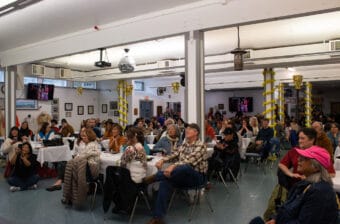
Voting in Juneau’s election ends Tuesday night. What happens next?

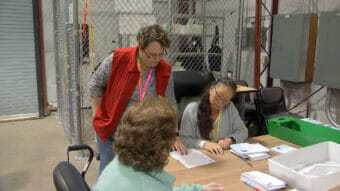
City Clerk Beth McEwen supervises workers at the Juneau ballot processing center on Monday October 2nd, 2023. (Photo by Mikko Wilson/KTOO)
City Clerk Beth McEwen supervises workers at the Juneau ballot processing center on Monday, Oct. 2, 2023. (Photo by Mikko Wilson/KTOO)

Voting in Juneau’s municipal election will wrap up Tuesday when vote centers and drop boxes close at 8 p.m. 

Four Assembly seats, two school board seats and a voter proposition asking whether to fund a new city hall are all on the ballot this year. 

But since by-mail elections take longer to tally, we won’t know who won for up to two weeks. That’s because the city’s election staff needs to allow time for all of the mailed ballots to arrive. They also need time to verify ballot signatures and to go through multiple rounds of tabulation to ensure accuracy. 

What happens

All of the ballots submitted before Election Day will be scanned and counted on Tuesday night, after voting ends. 

“Starting on Election Night at 8 p.m., we will actually start to scan those ballots and adjudicate them,” said City Clerk Beth McEwen. “Adjudication means we’re going to actually have human eyes on those ballots, looking to make sure the machine counted the vote the way the ballot appears to have been cast.”

The city expects to post those preliminary election results after 10 p.m. on Tuesday. 

After that, election workers will continue processing ballots that were submitted on Election Day or that continue to arrive by mail. They’ll also address any issues with the ballots. 

“If there are issues – like it’s missing a signature or there’s no reference signature, or there’s no personal identifier – if there’s any reason for a challenge, then that goes into a separate process,” McEwen said.

That process involves sending a cure letter to a voter with instructions on what they need to do to get their ballot counted.

The city will post updated results a few times until the Canvass Review Board certifies election results on Tuesday, Oct. 17. 

Last year’s Election Night results included 4,834 ballots, compared with 9,137 ballots in the final results.

How to submit your ballot on time 

Voting has been taking place since mid-September, when ballots were mailed out to voters. If you haven’t voted yet, McEwen recommends dropping ballots off in one of the city’s drop boxes — at Statter Harbor or the Douglas Library — or at the City Hall or Mendenhall Valley Library vote centers. 

If voters still plan to mail their ballots on Tuesday, McEwen says they should do it early. Ballots returned by mail must be postmarked by Election Day to get counted. 

“It could be the post office isn’t going to actually process that until the next day, and your postmark isn’t going to be until the next day,” she said.

And if Juneau voters plan to vote in person on Tuesday, McEwen said, “go early.” 

“You may be waiting in line,” she said. “We had a lot of time with nobody coming during the two weeks leading up to Election Day, but we anticipate long lines, maybe a longer wait, on Election Day. That tends to be the Juneau trend.”

If you make a mistake while filling out your ballot, you can visit a vote center to request a replacement. The same thing goes if you’ve completed your ballot and want to change something but have not yet returned it. But if you’ve already sent in your completed ballot, it’s too late to change it now. 

How to witness the count

Anyone who wants to witness the ballot counting process can visit the city’s ballot processing center at 1325 Eastaugh Way off of Thane Road. The center opened last year so ballots could be tabulated in Juneau instead of going to Anchorage. Visitors must remain in the public viewing area. 

Find stories on all the races on this year’s ballot along with candidate profiles and other election information at ktoo.org/elections


Candidates for Juneau School Board say education funding is top priority

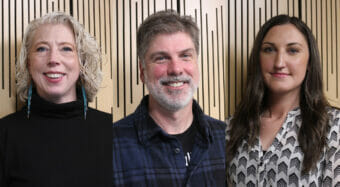
Britteny Cioni-Haywood, David Noon and Paige Sipniewski are running for two Juneau school board seats. (Katie Anastas/KTOO)

All of the candidates running for Juneau School Board this year cite state education funding as a top concern. 

Budget cuts and stagnant funding at the state level have burdened school districts in Alaska for years. This year, the Juneau School District found itself with a $758,000 shortfall when Gov. Mike Dunleavy vetoed half of an expected one-year funding boost

Meanwhile, the state education department notified the district that it could not use supplemental “outside the cap” funding from the city to fill budget holes — a practice it’s relied on for years.

Two seats with three-year terms are open on the school board. Two of the candidates are educators, and all three have children attending Juneau schools. 

Britteny Cioni-Haywood is an administrative operations manager for the state and an adjunct professor of economics for the University of Alaska Southeast. She said the district’s struggles with teacher recruitment and retention all tie back to state funding, which is becoming a “critical mass issue.”

“It is also somewhat outside of the school board’s power, per se, but given our proximity to the state capitol, I think it will be important for us to advocate and encourage all of our friends and family to advocate as well for that funding,” Cioni-Haywood said in an interview. 

David Noon is a history professor at UAS and served as faculty senate president two years ago. In that role, he responded to budget cuts to the state’s university system. He said inadequate funding for public education has brought teachers and staff to a breaking point.

“We’ve endured a lot of cuts beyond the point at which the district can successfully fulfill its mission to our students, which is the most important job our community has before it,” Noon said in an interview. “So addressing the funding crisis, resolving the budget deficit is obviously going to be a top priority.”

Paige Sipniewski also works for the state and is a lifelong Juneau resident. She said while the district needs to address issues like lower enrollment and rising costs, she also wants to focus on improving student achievement in math, reading and writing. And she says any increase in state funding needs to be tied to that.

“An increase also needs to increase our children’s test scores, and we need to see an improvement along with any funding that’s going to be increased in the test scores,” she said in an interview. 

One area where this year’s candidates differ is in allowing transgender students to use bathrooms and play on sports teams that match their gender identity. In interviews, Cioni-Haywood and Noon both said they believe students should be able to express themselves as they wish, while Sipniewski said she believes in “protecting girls’ innocence” by not allowing transgender children to use the same bathrooms or locker rooms as them. 

“Little girls should not have a transgender girl in the bathroom or on their sports teams because there is a biological difference, and I don’t think it’s appropriate for kids to be changing in locker rooms or using bathrooms with girls,” Sipniewski said. 

During a Juneau Chamber of Commerce candidate forum earlier this month, the school board candidates also differed on the district’s policy regarding which books should be available in school libraries. Cioni-Haywood and Noon said they support the current policy. Sipniewski said she opposes “anything regarding gender, sex, religion, profanity, drug use, race — as far as literature for kids in school.” 

Longtime school board member Brian Holst originally filed to run for reelection this year, but later withdrew his candidacy. He told the Juneau Empire he wanted to give other people a chance to serve on the board. Board member Martin Stepetin Sr. did not file to run for reelection.

Voting in this year’s local election ends Oct. 3. 

KTOO’s Katie Anastas contributed to this story.

Áakʼw Rock Indigenous music festival starts Thursday in Juneau

Qacung Stephen Blanchett performs with Pamyua during a closed filming of their set for Rock Aak’w on Friday, Nov. 5, 2021, in Juneau, Alaska. Juneau’s first Indigenous music festival is streaming online Nov. 5-6. (Photo by Tripp Crouse/KNBA)

An event billed as the only Indigenous music festival in the country begins Thursday in Juneau.

Áak’w Rock kicks off Thursday afternoon at Elizabeth Peratrovich Hall. It’s the first time the festival has been held in person since it began virtually in 2021. Organizers held a side stage fundraiser last year.

Indigenous performers from across Alaska, the U.S. and the world will play over the course of three days.

Organizers visited Juneau Afternoon on Tuesday to talk about the lineup and the buzz the festival is creating in the music world. Qacung Blanchett says their team has received invitations from people in other countries who want to hold similar events.

“They’re looking at us, what we’re doing, because it’s like ‘Oh wow, this festival’s happening.’ And it’s something that’s unprecedented right now,” Blanchett said.

He’s also a member of Inuit-soul band Pamyua, and has performed all over the world.

“Thirty years of me being in this scene, in this music business, there’s been nothing like this – ever,” he said.

Áakʼw Rock began virtually in 2021. Headliners this year include Snotty Nose Rez Kids, Halluci Nation and Ya Tseen. Local acts like Air Jazz and Daniel Firmin will also perform.

Tickets are still available for all three days or for individual day passes. Performances take place at Centennial Hall and Elizabeth Peratrovich Hall. Nightly open jams will take place at the Juneau Arts and Culture Center from 7 to 9 p.m.

Organizers say they want youth to be involved in the festival too. A free youth jam at Elizabeth Peratrovich Hall on Wednesday from 6 to 9 p.m. is open to youth between 13 and 20-years-old. Adults with tickets to the festival can also bring one child age nine or younger with them.

Editors note: KTOO is contracted to produce parts of the festival.

Introducing Mga Kuwento — a podcast, museum exhibit and community celebration


For the better part of this year, our newsroom has been working on a podcast series about the Filipino experience in Juneau. We’re very excited to share it with you.

Mga Kuwento — “the stories” in Tagalog — is the brainchild of Executive Producer Tasha Elizarde. Tasha grew up in Juneau and spent a lot of time thinking about her own experience as a Filipino American in Juneau when she started working with us as a community engagement fellow. In order to tell that story and the larger story of how Filipinos came to be Juneau’s largest immigrant population, she conceived not only a podcast series, but an exhibit at the Juneau-Douglas City Museum recognizing the history and contributions of a community that is too often overlooked and a community event bringing Juneau together to celebrate.

Here is the inspiration behind Mga Kuwento in Tasha’s own words:

“I was young when my grandmother passed, but it’s through Mga Kuwento that I have learned how she scolded kids causing mischief in the Hall and helped Filipino families settle in Juneau when they first migrated. Her story, as well as the stories of the thousands who’ve shaped Juneau over the last century, are quickly being forgotten.

Mga Kuwento is an effort to dig up these stories and bring them to light again. Our podcast, exhibit and weekend celebration are a declaration of our dynamic identity, and an invitation for the greater Juneau community to celebrate our part in history.”

For the podcast, we delved into different aspects of the Filipino experience — the economic and social reasons people came to Alaska in the first place; the relationship between the Alaska Native and Filipino communities; the role of Juneau’s Filipino Community Hall as a place to celebrate and remain connected to home; efforts to maintain cultural connections to the Philippines today.

We’re extremely proud of this project, and grateful to Tasha for her leadership and vision. We’re also grateful to the many people who shared their time and experiences to help inform the project, and to the community partners who helped make it a reality.

I hope you’ll listen and join us in lifting up the stories of our neighbors and fellow Alaskans during Filipino American History Month.

Here are the dates to remember: 

NEW PODCAST LAUNCH | Oct. 6: The newest KTOO podcast, Mga Kuwento, premieres. Listen on your favorite podcast app or find it on ktoo.org.

EXHIBIT OPENING | Oct. 6 from 4 to 7 p.m.: An exhibit showcasing photos from the 1920s, parade and dance costumes, family mementos and art runs through November 22 at the Juneau-Douglas City Museum. Join us for a First Friday celebration featuring Filipino desserts by local chefs.

COMMUNITY CELEBRATION | Oct. 7 from 12 to 5 p.m.: The entire community is invited to join Filipino Community, Inc. for food incorporating Filipino flavors, cultural workshops, live music and a historical installation at the Filipino Community Hall, 251 South Franklin Street.

Juneau celebrates newest US citizens with naturalization ceremony

Chief Magistrate Judge Matthew Scoble poses with Ernie, Emma, Clare and Ernest Punongbayan after Clare’s naturalization ceremony on Sept. 13, 2023. (Photo by Adelyn Baxter/KTOO)

Ten people officially became United States citizens this week in Juneau. 

On Wednesday, immigrants from the Philippines, Mexico, Canada, Chile and the Netherlands took the oath of allegiance in front of their families and friends at a naturalization ceremony at the Robert Boochever U.S. Courthouse. 

Clare Punongbayan is originally from Aklan in the Philippines. She’s been in the U.S. for more than three years and began her citizenship process about six months ago. Her husband Ernest Punongbayan and his parents Emma and Bernie were there to cheer her on. They posed for a picture with Chief Magistrate Judge Matthew Scoble after the ceremony. 

“I want to have the freedom to vote, to help America,” Punongbayan said. “And I’m the only one in the household that’s not an American citizen yet, so might as well get it to be on board with everyone.”

Chief Magistrate Judge Matthew Scoble poses with Benthe Mertl-Posthumus and her family after her naturalization ceremony on Sept. 13, 2023. (Photo courtesy of Chris Mertl)

Some of the new citizens have been in Juneau for decades already. Benthe Mertl-Posthumus has lived in Juneau for 25 years after first arriving as an exchange student from the Netherlands. She ended up meeting her husband and raising four kids. She wore an American flag scarf for the ceremony. 

“I’m sort of at the halfway point and I realize now this is the place I’m gonna stay,” Mertl-Posthumus said. “My future is here, my children are here, and they’re staying here.”

She said her friends and family were planning to throw a party to celebrate. 

Juneau residents who want to become U.S. citizens often have to travel to Anchorage for the official ceremony, but staff from U.S. Citizenship and Immigration Services say they’re making more trips to outlying communities in Alaska to host ceremonies, workshops and other citizenship processing. 

ACS says fiber cut in Washington is affecting Juneau customers

Internet and phone provider Alaska Communications, or ACS, says a damaged fiber-optic cable in the Lower 48 was affecting customers statewide on Friday. 

ACS wrote on its Facebook page that a cable belonging to another provider in Tacoma, Washington was the source of the outage. The company says customers are experiencing slower-than-normal internet speeds as a result, especially in Juneau. 

ACS says it’s working to restore service as quickly as possible. 

The company did not immediately respond to a request for more information about the extent of the outage.

Site notifications
Update notification options
Subscribe to notifications