Adelyn Baxter

Digital Content Director, KTOO

"I help inform KTOO listeners, viewers and readers by finding creative ways to bring our content to our audience wherever they are."

Assembly grants $1.8 million to Phase II of Housing First

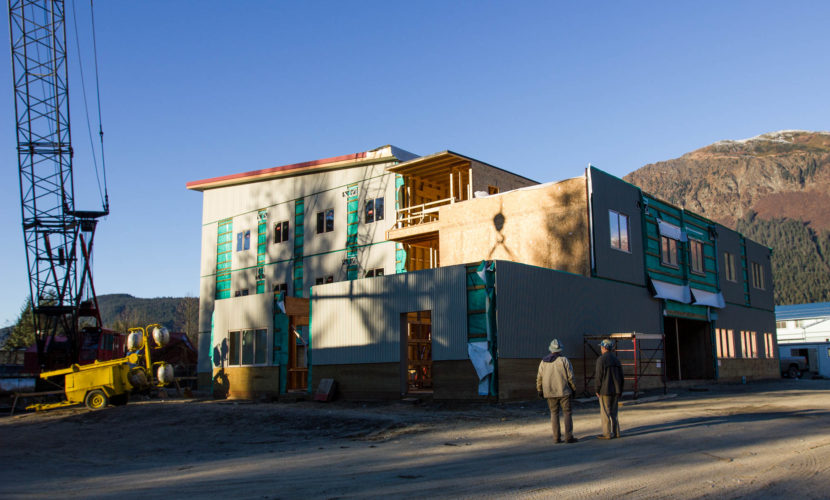
The Housing First Project under construction on November 17, 2016. (Photo by David Purdy/KTOO)
Phase I of the Housing First Project under construction on Nov. 17, 2016. (Photo by David Purdy/KTOO)

The Juneau Assembly unanimously approved funding for Phase II of Housing First on Monday night.

The Assembly’s $1.8 million grant to the Juneau Housing First Collaborative brings them closer to expanding. The collaborative wants to more than double its capacity to provide permanent, supportive housing for the homeless.

Mariya Lovishchuk, one of the administrators for the Juneau Housing First Collaborative, was emotional outside the Assembly chambers after the vote.

“This is just — I’m so proud to live in this city.”

She said they currently have a list of 67 people eligible for housing in the Phase II complex.

“And we still, we still have a lot of work to do until that happens, but … if we started building this spring, it would take a year to build so we could potentially open in the spring of 2020.”

The city’s funding makes Housing First eligible for up to $2.8 million more in grants from the Alaska Housing Finance Corp. Lovishchuk said they will apply immediately to meet the Oct. 5 deadline.

They expect the new facility to cost $7 million.

The city’s end of funding will come from a mixture of sales tax, tobacco tax and general funds.

The city contributed more than $2 million to the project’s first phase.

Since the 32-unit apartment complex opened last September, researchers studying the impact on residents have noted a sharp decline in police calls and emergency room visits.

Bruce Denton, a member of the Housing First board of directors, told the Assembly the funding will be a gift that keeps on giving.

“The grant requirements include maintenance reserves and provide funding for operation, so your $1.8 million is basically going to be doing what it’s doing and has done up to this point for the life of that building.”

In other housing business, the Assembly also unanimously approved an ordinance accepting more than $16,000 in grant funding from the Alaska Mental Health Trust Authority.

It’s to cover what the city paid in rent to operate an emergency cold weather shelter last winter.

The city leased space in a building downtown owned by the trust last year. The cold weather shelter began operating in December to give the homeless a warm place to sleep on nights when temperatures dipped below freezing.

The shelter operated from Dec. 1 to April 15. According to the city, it was open 70 nights total and served nearly 160 individuals.

The trust later offered to sell the building to the city for about $488,000. The city plans to tear the building down after operating the emergency shelter out of it again this winter.


Early voting starts ahead of Juneau’s municipal election

Early voting has begun for the Oct. 2 municipal election.

There are two locations where registered voters can cast ballots — downtown at City Hall or the Mendenhall Mall.

Voters cast ballots in the Aug. 21, 2018, primary election at Glacier Valley Baptist Church in Juneau.
Voters cast ballots in the Aug. 21, 2018, primary election at Glacier Valley Baptist Church in Juneau. (Photo by Andrew Kitchenman/KTOO)

Hours for early voting are:

  • Mendenhall Mall Annex: weekdays from 11 a.m. to 6 p.m. and the next two Saturdays from noon to 4 p.m.
  • City Hall: weekdays 8 a.m. to 4:30 p.m. (upstairs in room 224)

Any qualified voter can choose to vote early up until the day before the election.

Absentee ballots by mail can also be requested from the city clerk’s office and online. The deadline to apply for a by-mail ballot is Tuesday, Sept. 25.

Mailed ballots must be received at least seven days before the regular municipal election.

A total of 15 candidates are running in the Oct. 2 election.

Four are running for mayor, eight for the Juneau Assembly and three are running unopposed for the school board.

UA regents to meet in Juneau this week

The University of Alaska Board of Regents will meet in Juneau on Thursday and Friday to discuss the university system’s budget and programs.

The meeting agenda includes updates on the university’s compliance with federal requirements for handling sexual discrimination, harassment and assault. It also includes progress on Strategic Pathways, the university’s comprehensive cost-cutting plan now in its third and final phase.

At the University of Alaska Southeast campus, regents will begin discussing their budget request to the Alaska Legislature for next year.

Tuition for most UA students increased 5 percent this fall. Regents approved that hike last November. Tuition will rise another 5 percent next school year as well.

The board plans to hold a public reception Thursday evening at the UAS Recreation Center.

The meeting will be livestreamed at alaska.edu.

The full board meets regularly every two months at alternating campuses.

Alaska Native organizations receive federal grant for safe and healthy housing

Three Alaska Native tribal organizations have won nearly $3 million in federal housing grants to improve living conditions in more than 100 homes.

The U.S. Department of Housing and Urban Development announced the Tribal Healthy Homes Production grants Monday in Juneau. The recipients hope to use the money for home repairs, education and to deal with mold and mildew issues.

The Organized Village of Kake and the Tlingit-Haida Regional Housing Authority each received $1 million. The Alaska Native Tribal Health Consortium won almost $870,000.

Housing Authority Executive Director Joyce Niven said the organizations will work together and with partners to improve living conditions in their regions.

“We all have different skill sets that we’ll need to use to execute the grant … because it’s ‘Healthy Homes,’ it’s not just going in and repairing homes,” Niven said. “It’s educating people about managing their homes in a healthy manner.”

One issue she said they frequently deal with in Southeast is mold and mildew. With the area’s wet climate, respiratory issues can result from poor ventilation in people’s homes.

Niven said the Healthy Homes grant funding will help the organizations address those problems more thoroughly.

“When we’re in the homes there’s often so much to be done that we have to set priorities and figure out what’s the most critical thing to get fixed. These funds will help us not have to set so many priorities and maybe get the entire home fixed,’” Niven said.

Niven said she and her staff will start work on an implementation plan due back to the federal government in 90 days.

The Healthy Homes grants are the first of their kind. HUD awarded $12 million in total to 13 tribal organizations across the country.

Alaska Airlines union workers picket for better wages

Alaska Airline employees and supporters picket outside Juneau International Airport Monday, Sept. 10, 2018 over slow-moving contract negotiations with the airline. (Photo by Adelyn Baxter/KTOO)
Alaska Airlines employees and supporters picket outside Juneau International Airport on Monday over slow moving contract negotiations with the airline. (Photo by Adelyn Baxter/KTOO)

From Fairbanks to San Diego, Alaska Airlines workers picketed at airports across the West Coast Monday.

They’re upset over slow moving contract negotiations.

In Juneau, clerical workers, ramp staff and customer service agents represented by the International Association of Machinists and Aerospace Workers sported neon green t-shirts that said “Show us the money!” as they waved signs on the plaza across from the airport’s drop off area.

John Walters works on the ramp for Alaska Airlines at Juneau International Airport. He and about 20 other union employees and supporters demonstrated for most of the day.

“Job security is number one. Our job is not guaranteed, we live contract to contract, so job security is huge,” Walters said. “Pension, raise — our starting pay is $12/hr. We don’t get paid much to do this job.”

According to union representatives, Juneau’s demonstration was one of 10 in cities across the West Coast. About 20 workers picketed in Anchorage and a handful in Fairbanks.

All of the participants took part before or after work or on their day off.

President of Local 2202 Kaleb Rosa said they first approached the airline in August 2017 about opening up contract negotiations.

“It’s going, but it’s going slowly. We’re doing it as clean as possible,” Rosa said. “We love the place we work, we love our work group. We love our coworkers and the company we work for.”

Rosa explained that the union cannot strike without congressional approval due to the Railway Labor Act. Instead, they’re hoping to put public pressure on Alaska Airlines.

“We’ll take all the support we can get,” Rosa said. “But if Alaska doesn’t start moving this process quicker then we’re going to have to start engaging the public on a daily basis.”

In a statement, Alaska Airlines confirmed it is in the process of negotiating two labor agreements with the union.

The airline said it does not talk about specifics during union negotiations, but it supports paying employees fair, competitive wages and offering quality benefits.

Family legal dispute progresses over future of Harris street house

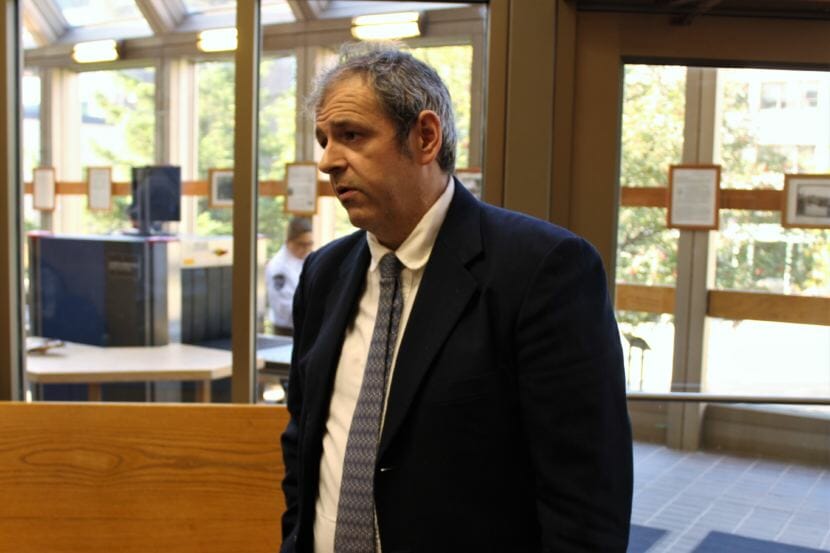
James Barrett talks outside the courtroom at the Juneau Superior Court on Sept. 6, 2018. (Photo by Adelyn Baxter/KTOO)
James Barrett talks outside the courtroom at the Juneau Superior Court on Thursday, Sept. 6, 2018. (Photo by Adelyn Baxter/KTOO)

The outcome of a court case between a mother and son over ownership of a home in downtown Juneau may come as early as next week.

The home has developed a certain reputation over the past year due to a number of police calls and complaints over safety from neighbors. Now, the mother is trying to get legal control in order to evict her son.

James Barrett, co-owner of the home in question, appeared in Juneau Superior Court Thursday morning to defend his right to stay in the home, where he currently lives.

James’ mother, Camilla or Kathleen Barrett, is attempting to take possession of the home at 401 Harris St.through a legal process called partition.

She co-owns the home with her son, but is arguing she should be given full ownership so that she can evict her son, move him to another residence and sell the home.

Camilla has granted power of attorney to David D’Amato, who said they have already located a condo where they can move James.

“In many partition cases, it’s not really incumbent upon one party or the other to provide housing for the opposing party”, D’Amato said. “However, Mrs. Barrett has, you know, generously agreed to provide housing for James.”

But James doesn’t want to give up his house.

This house at 401 Harris Street in Juneau. pictured here on Monday, June 18, 2018, is the frequent subject of police calls, the Juneau Uptown Neighborhood Association says.
This house at 401 Harris Street in Juneau. pictured here on Monday, June 18, 2018, is the frequent subject of police calls, the Juneau Uptown Neighborhood Association says. (Photo by Tripp J Crouse/KTOO)

He said he thinks the case is being driven by D’Amato and the city, not his mother.

“I haven’t spoken to my mother, unfortunately, in a long time,” James said, “and actually that’s the worst tragedy of all of this, because all of a sudden, well, she told me she wasn’t allowed to talk to me.”

On Thursday, he told the court the long list of police calls and complaints from neighbors were caused by a man who was staying at his home as a guest.

Later, outside the courtroom, James said it took a long time for him to kick Mark “Margo” Brown out. He said health problems got in the way.

“We’re working on trying to get things back to normal,” he said. “It just was out of control and I wasn’t really in a position to fix it.”

James has failed to appear at other hearings for the case.

At the previous hearing on Aug. 21, Judge Jude Pate of Sitka said that if James didn’t appear at Thursday’s hearing, he would send an Alaska State Trooper to bring him to the court house.

Pate also ordered an inspection by City and Borough of Juneau officials and D’Amato to check on the condition of the house.

D’Amato testified Thursday that they found a number of electrical and plumbing violations when they walked through the house.

They also found people living in the garage and in a shed on the property, despite the lack of plumbing available in those structures. D’Amato said that violated city code.

“So they said those guys, those two houses, those two dwelling units or sheds — however you want to characterize that — are not fit for human occupancy and those folks had to clear out within 24 hours,” D’Amato said.

The city later issued a condemnation order effective in 30 days if all of the violations are not addressed.

In his defense, James said the people living in the garage and shed have left. He said it’s now just him and two other people in the main house.

He also blamed a settlement agreement reached between the city and his mother in August over another Barrett property, the Gastineau Apartments, demolished by the city in 2016.

In the settlement, Camilla agreed to pay $1.5 million and continue efforts to evict James and sell the Harris Street property.

“Things would be quite different if, if the city hadn’t made a stipulation with my mother in her settlement agreement,” James said.

Judge Pate set the next hearing for Thursday, Sept. 13.

He also warned James that there is a high likelihood he will grant partition to his mother.

Site notifications
Update notification options
Subscribe to notifications