Alaska Public Media

Alaska Public Media is one of our partner stations in Anchorage. KTOO collaborates with partners across the state to cover important news and to share stories with our audiences.

Johnson will lead Alaska House minority after a shakeup that has conservatives crying foul

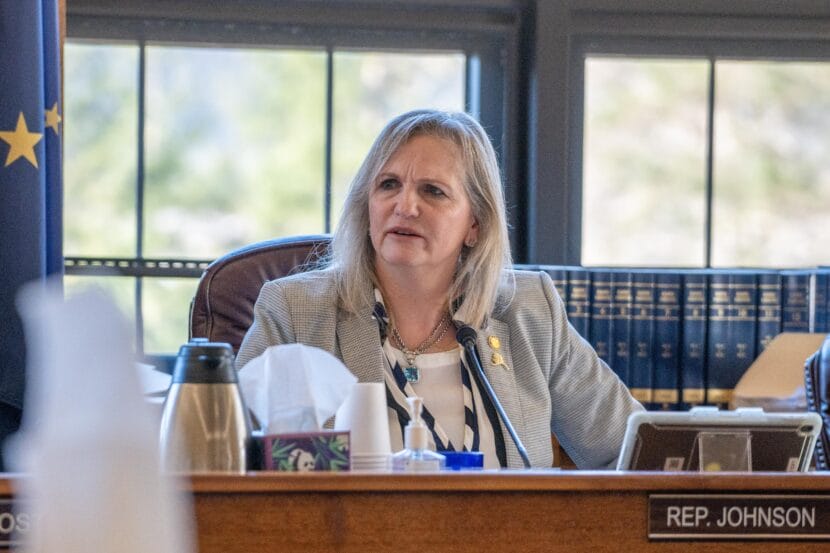
Woman in committee room
Rep. DeLena Johnson, R-Palmer, speaks during a House Finance Committee meeting on March 28, 2024. (Eric Stone/Alaska Public Media)

Republicans in the Alaska House have a new leader. Palmer Rep. DeLena Johnson replaced Anchorage Rep. Mia Costello as minority leader on Saturday after a hastily-called vote. And some members of the caucus are crying foul.

Alaska Public Media’s state government reporter, Eric Stone, joined Alaska News Nightly host Casey Grove to break down the transition.

The following transcript has been edited for clarity.

Casey Grove: So, Eric, what happened over the Thanksgiving holiday?

Eric Stone: Well, the story starts a little before that. In mid-November, a couple of Republican lawmakers approached Mia Costello. One of those was DeLena Johnson. She was a little hesitant to tell me exactly how that meeting went, but she told me she did not go into it looking to force Costello out.

Shortly after that, Costello stepped down as minority leader. Here’s what she told me about why.

Mia Costello: I stepped aside because it was clear that I was not able to unite the caucus, and I felt that it was time for somebody else to give it a shot that everyone could unite behind

ES: That, of course, left the House minority caucus without a leader. And it’s a big task to unite a pretty ideologically diverse Republican caucus that has struggled with internal divisions. Some are staunch allies of Gov. Mike Dunleavy, and some have voted on several occasions to override the governor’s vetoes.

But into that vacuum stepped DeLena Johnson. On Saturday, she called a caucus meeting over Zoom, basically just to talk about the way forward. By the end of it, there was a vote, and Johnson won.

Johnson says she wasn’t planning to call a vote. But she says the subject came up organically, so the caucus went ahead and voted. Here’s how she put it.

DeLena Johnson: I’m looking at it thinking, “Well, if the votes don’t change, and they’re not going to change, well, let’s just take the vote now, and then we can just start moving along.”

ES: But here’s the thing: not everybody was there. In fact, six Republicans were absent — basically, the most conservative members. Folks like Big Lake Rep. Kevin McCabe, Homer Rep. Sarah Vance, Anchorage Rep. Jamie Allard and Fairbanks Rep. Frank Tomaszewski.

CG: Not to mention two districts that don’t have any representatives at all.

ES: That’s right — after Reps. Cathy Tilton and George Rauscher got kicked across the Capitol to the Senate to replace Sens. Mike Shower and Shelley Hughes, two districts don’t have anyone in the House, at least not yet. And all of that is a major sticking point for conservatives like McCabe — not least because he’d like to be minority leader himself.

Kevin McCabe: If I had been there — I was also in the running, there were some folks that were supporting me — we could have maybe at least had a debate instead of just a coronation.

ES: Of course, it might not have changed the outcome of the vote. It does not sound to me like McCabe had the votes to lead the House Republicans. But he says the decision to hold the vote — without telling the caucus it was coming — robbed him and other conservatives of a chance to make their case and possibly change some minds.

Johnson says she wanted to have the vote sooner rather than later, actually in part because of those two vacancies.

DeLena Johnson: There’s some desire to have some leadership as we move through the next month, because we have two new members that we’re going to have to interview, and then we will have to go through a mini-reorganization process for our new members, shuffling around committees and assigning committees.

ES: Gov. Mike Dunleavy appoints the replacement representatives, but they are subject to a confirmation vote by House Republicans. And Tilton’s elevation to the Senate along with Costello’s stepping aside left the caucus without any leadership — Tilton was the minority whip, the number two in the caucus.

In any case, Johnson says she’d be happy to hold more discussions and votes about caucus leadership.

CG: So the Republican caucus has a new leader. What does that mean for how the legislative session will go this year?

ES: That’s a little harder to say. If you ask McCabe, he says the leadership transition is a move towards the center for the Republican minority.

Kevin McCabe: There is a push from inside our caucus to do that, mainly because they think it will allow them the ability to elect representatives — more moderate representatives that are least Republican in name — from Anchorage. I think that’s a mistake. But yes, there is a push to to drive us to a more centrist position

ES: Johnson rejects that view — she does not see it as a move towards the center. And she says she’s excited about the work ahead. She calls this a “rough patch” but says she’s hoping the House minority can push some Republican priorities forward this session.

DeLena Johnson: There’s a lot of different things out there. We’ve got the movement on the gas line on the national front — we have a lot of eyes on Alaska. And I hope, and I want our house minority, our Republican minority (to have) the opportunity to really be a part of a solution on a number of those things.

ES: But this might not be over. I asked McCabe whether the move has him considering whether to leave the minority caucus. Here’s what he said.

Kevin McCabe: You just never know what’s going to happen in in the legislature

CG: I’ve got to say, that doesn’t sound like a no.

ES: It does not. So there might be some more turbulence ahead.
Ten years after Alaska-B.C. mining agreement, environmental group says state is falling short

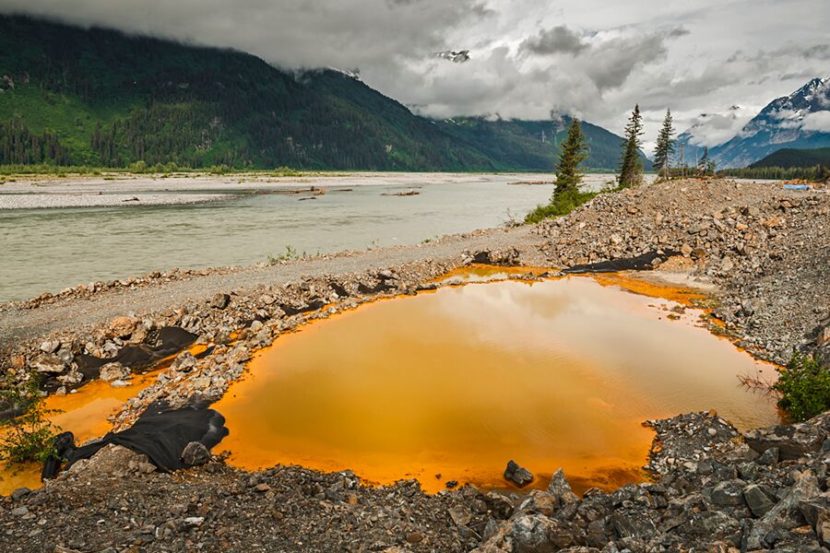
Acid drainage from the Tulsequah Chief Mine, discolors a leaking containment pond next to the Tulsequah River in British Columbia in 2013. (Photo courtesy Chris Miller/Trout Unlimited)

Ten years ago, the state of Alaska signed an agreement with British Columbia that sought to give Alaskans a say in the development of mines upstream of Southeast Alaska. Environmental advocates say Gov. Mike Dunleavy’s administration has walked away from key pillars of that agreement — but state officials say they remain committed to keeping cross-border rivers clean.

It’s a boom time for mines in British Columbia. There are a few reasons for that — the rise of renewable energy and the growing importance of microchips, and, of course, President Trump’s trade war. Provincial leaders have fast-tracked a variety of resource development projects — including some proposed mines upstream of communities in Southeast Alaska.

“The majority of this region is staked with mining claims,” said Breanna Walker with the group Salmon Beyond Borders, which has campaigned for stricter limits on mines near rivers that cross into Southeast Alaska.

Ten years ago, Gov. Bill Walker signed an agreement with the premier of British Columbia that he said would give Alaskans a greater voice in the future of B.C. mines. It led to the creation of a working group where senior officials from Alaska and B.C. would meet twice a year to discuss mining and the environment.

Breanna Walker says that was a reason for optimism — but she says in the years since, the Dunleavy administration has failed to live up to its commitments.

She pointed to a variety of issues, including the Dunleavy administration’s decision to discontinue water quality monitoring on cross-border rivers in 2021. Walker said she’d also like to see the meetings between provincial and state leaders include other stakeholders, like Alaska tribes and fishermen.

Additionally, Walker said the Dunleavy administration has failed to keep up the pressure on B.C. to clean up the Tulsequah Chief Mine upstream of Juneau that’s been polluting the Taku River for decades. And she said the state has failed to keep Alaskans informed about other mining activity and pollution upstream of Southeast — despite a portion of the agreement that says Alaskans should be notified.

Walker points in particular to pollution at a mine near Hyder, at the state’s southeastern tip.

“Alaskans learned about that pollution through the media. They did not learn about that from the state or from the province of British Columbia,” she said. “That’s a clear example, in my opinion, of how the state is abdicating the responsibility that they have to Alaskans.”

The Dunleavy administration disagrees. State officials point to webpages maintained by the state and B.C. detailing the ongoing work between the two governments. And they say the water quality monitoring that ended in 2021 duplicated similar efforts at the federal level.

Sam Dapcevich of the state Department of Environmental Conservation said the state has continued to advocate for Alaskans’ interests at working group meetings.

“DEC is fully engaged and working with our B.C. counterparts on activity awareness and status of projects,” he said.

Just last month, at the most recent cross-border meeting, Dapcevich said the Alaska delegation asked for an update on the cleanup of the Tulsequah Chief Mine. And in response, the company working on cleanup is planning to hold a public webinar on Wednesday.

“I just want people to understand that our agencies are deeply involved between the two governments, advocating for cleanup, and we’re using shared science to protect these rivers,” he said.

Dapcevich said the state remains committed to ensuring Alaskans’ voices aren’t lost in the process.

For many Alaskans seeking addiction treatment, help starts with someone who has been there

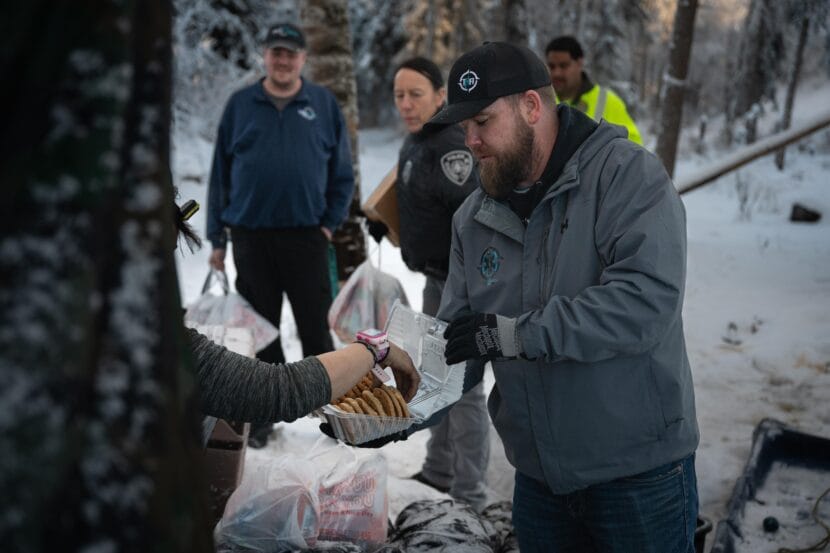
A man in a grey jacket offers a plastic box of cookies to a person out of frame.
Josh Engle, manager and peer support specialist at True North Recovery in Wasilla, gives out cookies as part of homeless outreach efforts in Anchorage on Tuesday, Nov. 25, 2025. (Matt Faubion/Alaska Public Media)

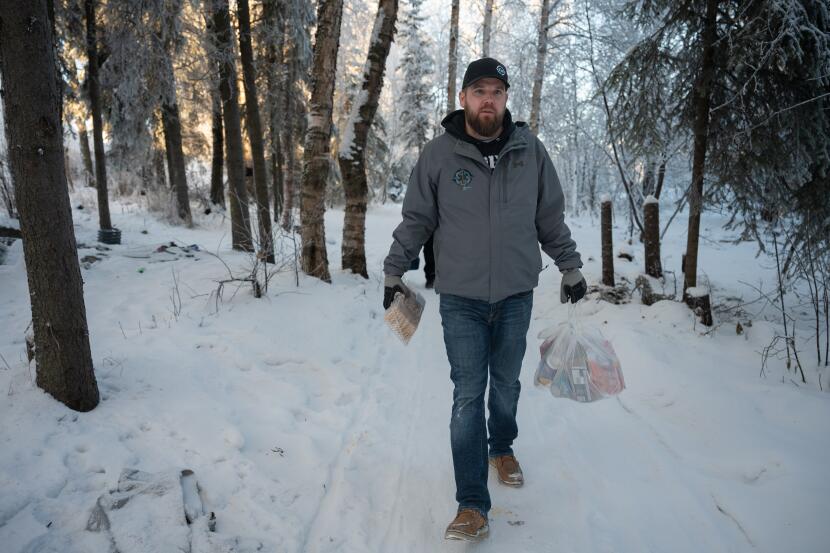
Josh Engle was bundled up on one of the first frigid days in October, walking along a forest path to do outreach in a homeless encampment in Anchorage. He approached a man in a weathered coat near several tents and a makeshift structure.

“How long you been out here on the streets?” Engle asked.

“Too long,” the man said.

“You connected with any resources?” Engle asked. The man described the tarp and blankets he’d been able to get.

Engle, a manager and peer support specialist at True North Recovery in Wasilla, hoped to guide people into recovery, if they showed interest. It’s a path Engle knows well because he’s in long-term recovery himself, so he understands how fleeting the window of opportunity can be when someone decides to seek treatment.

Engle supports people in ways that go well beyond what a more traditional therapist or psychiatrist can do. He may text with clients outside business hours, help them find work or get connected with benefits–anything that might lead to recovery. Peer support specialists like Engle — people in recovery themselves— can help people recover from both serious mental illness and substance use disorders, and can reduce healthcare costs.

“I personally really enjoy being able to connect with them on a personal level (as) someone that has walked their path and been in their shoes and ultimately have struggled the way that they’re currently struggling,” Engle said.

Josh Engle carries bags of food to an encampment for outreach in Anchorage on Tuesday Nov, 25, 2025. He hopes to talk to people who are interested in recovery. (Matt Faubion/Alaska Public Media)

True North Recovery, where Engle works, aims to hire people with lived experience in recovery not just as peer support specialists, but for every role–from receptionists to health care providers. Research shows that when patients interact with workers with lived experience, it aids recovery.

Peers can sometimes say and see things people without lived experience can’t.

Aaron Surma, executive director of the National Alliance on Mental Illness, or NAMI, in Juneau, trains peer support associates. Surma also experiences mental illness himself. He said psychiatrists and mental health professionals play an important role in supporting recovery and treatment, but there is a strong power difference.

“You’re in a small room, you’re making intense eye contact, and the dynamic is that you have the expert and the person who needs help, and the experts are taught to not really share about themselves,” Surma said. “Which makes it feel really one sided. It makes you feel like you’re being judged and evaluated.”

Surma said he was arrested multiple times during high school and was court-ordered to go to Alcoholics and Narcotics Anonymous meetings. He said hearing peers in those groups was awesome, but things felt different when talking with his formal providers.

“When I was a teenager, I was lighting stuff on fire and buying garbage bags of weed,” Surma said. “So then to go into a small room and talk to somebody who- imagine the counselor from South Park who’s saying ‘Drugs are bad, mkay?’ and it’s a million miles from what you know.”

He said it’s easier for peers to bridge those gaps in early recovery. Peer support specialists speak the language of addiction and mental illness and also understand the more traditional language of behavioral health professionals.

He said typically those professionals–like therapists and psychiatrists–dole out care in ways that are convenient for the health care system. But peer support is different.

“Recovery isn’t just supported in small doses from paid professionals, but it can also happen on our own time, in places that are comfortable to us, in settings that feel more accessible and from people who feel more approachable,” Surma said.

He said peer support relationships don’t have to be formal and the role can also be incredibly healing for the person providing the support. The hard times and challenges someone has faced suddenly have value, if those experiences help someone else.

“The sense of purpose is incredible,” Surma said. “I talk openly about having been suicidal and how to address depression, and people come out of the woodwork because they know that the door is open.”

That sense of purpose is also something peer support specialist Engle has felt deeply in his work.

“There is no way you could have convinced me 10 years ago that all of the damage and chaos that I was causing in people’s lives, my loved ones, people I just would cross paths with, that I would be able to use any of that for good,” Engle said. “I thought that was just going to be like a stain on my soul for the rest of my life.”

Instead, now his struggles are a tool to help people and do his job.

At the Anchorage encampment, Engle approached a couple’s tent. They said they were interested in a detox program but wanted to go together.

“It’s gonna be tough,” Engle said. “But what we can do is we can line it up so, like, beds on the same date. They’re just going to be different programs.”

But the couple said they had more to do before committing to detox.

“I swear, every single time we talk: ‘almost there, almost there.’ I know you are,” Engle said, his voice taking on the loving but firm tone of an older brother.

It wasn’t enough to get them into a program, but he’ll be back working to make their next steps in recovery as easy as possible when they’re ready.

Murkowski defends Democrats Trump accuses of ‘seditious behavior’

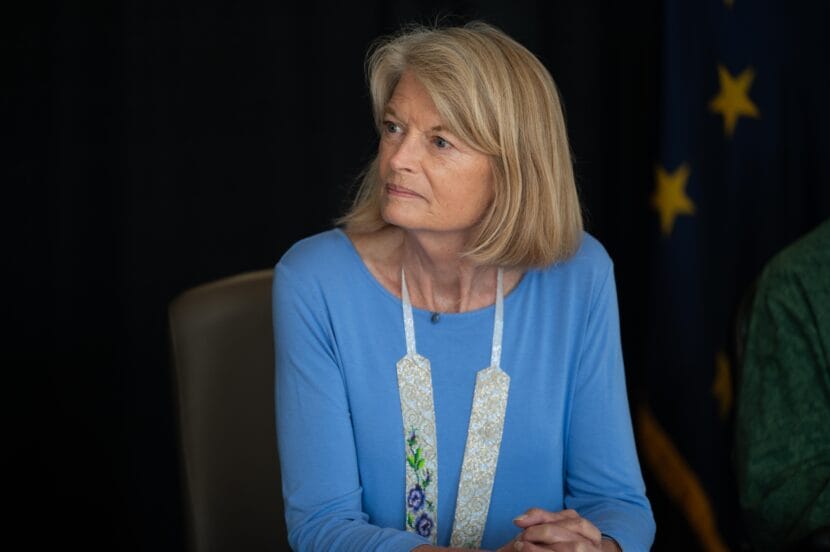
A woman in a blue shirt attends a press briefing.
Sen. Lisa Murkowski in Anchorage on Aug. 5, 2025. (Matt Faubion/Alaska Public Media)

WASHINGTON — Sen. Lisa Murkowski is sticking up for six Democratic members of Congress whom President Trump has called traitors for a video they made aimed at military members.

On the video the Democrats face the camera and tell servicemembers they can or should refuse orders that are illegal.

The Pentagon now says it’s investigating one of the six, Sen. Mark Kelly of Arizona, a retired military officer. Nearly all Republicans in Congress have stood by the president, or stayed quiet, as Trump accused the six of “SEDITIOUS BEHAVIOR, punishable by DEATH!”

Murkowski, though, bucked the partisan norm with a social media post Tuesday that defends Kelly and the other Democrats and says their message is accurate.

“Senator Kelly valiantly served our country as an aviator in the U.S. Navy before later completing four space shuttle missions as a NASA astronaut. To accuse him and other lawmakers of treason and sedition for rightfully pointing out that servicemembers can refuse illegal orders is reckless and flat-out wrong,” her post reads. “The Department of Defense and FBI surely have more important priorities than this frivolous investigation.”

Sen. John Curtis, R-Utah, also issued a statement that, while less specific, praises Kelly’s public service.

House members who filmed the video say they’ve been told the FBI is investigating them.

Trump said Friday he was not threatening the six Democrats with death but said they’re in serious trouble.

State official sues Alaska Landmine over suggestion she stole state money

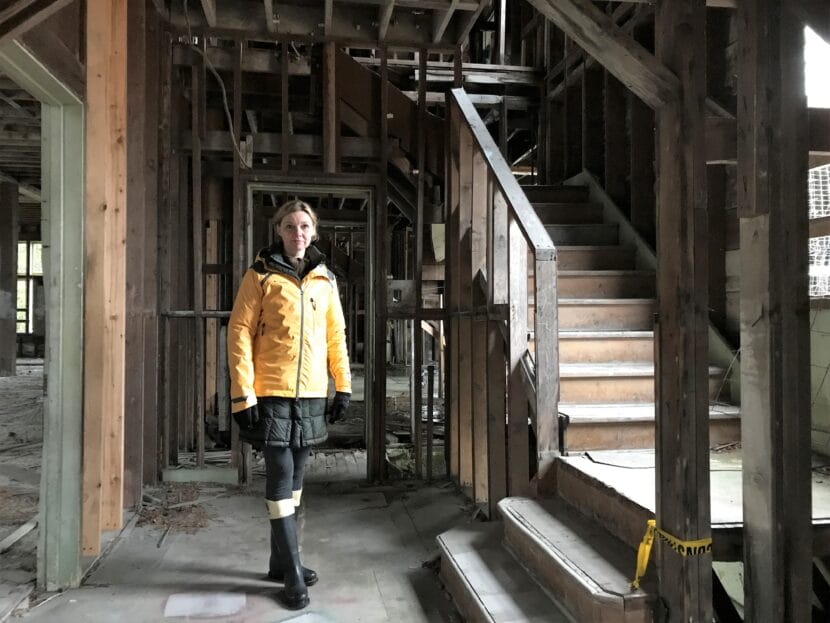
woman standing in unfinished house
Dorene Lorenz stands inside the Jesse Lee Home in Seward in 2018. (Casey Grove/Alaska Public Media)

Alaska State Commission for Human Rights chair Dorene Lorenz sued blogger Jeff Landfield of the Alaska Landmine on Friday. Lorenz accuses Landfield of defaming her by implying she stole state funding intended to preserve a historic building in Seward.

Landfield, whose irreverent blog often breaks significant political news, recently poked fun at a land acknowledgement Lorenz read at a United Nations gathering in Switzerland. In a social media post, he called the statement “super loose and bizarre” and labeled Lorenz an “absolute nut.”

“Nobody really wonders what I think, because I usually tell them,” Landfield said in an interview.

For her part, Lorenz said she gets it — as a public official, criticism comes with the territory.

“You can call people names, that’s fine. You can suggest that they did horrible things, that’s fine,” she said.

But the post went further. Landfield pointed to an episode in her past: “Remember when she got in trouble for using … state money for the Jesse Lee Home for herself?”

Landfield was referring to a 2015 move by Gov. Bill Walker’s administration to cancel a grant to a group Lorenz chaired seeking to restore the now-demolished Jesse Lee Home in Seward.

The state found the Friends of the Jesse Lee Home spent grant money on a wide variety of “disallowed and questionable” items — everything from stereo equipment, unapproved travel and an office remodel to a tub of bikini wax. A state official said that despite about $7 million in public funding spent on restoring the home, it was “painfully apparent that this project will not be successful.”

But Lorenz insists that she did not use the money for herself — and she said Landfield’s post crossed a line.

“You cannot say that a public figure stole public money when you know for a fact that they didn’t,” she said.

Proving defamation can be an uphill battle. For so-called “public figures,” including many government officials, a plaintiff has to meet a high standard — they have to show that the speaker either knew what they were saying was false, or willingly looked away from evidence that it was.

Lorenz said she thought she had a good shot at meeting that high bar.

In subsequent posts and livestreams, Landfield pointed to a 2018 Alaska Public Media article detailing the grant cancellation. But notably, in that article, a deputy commissioner with the department said he did not believe Lorenz or anyone else involved had pocketed the money.

“Obviously he’s aware that that is the statement and the conclusion of the state of Alaska,” Lorenz said.

Lorenz also named Alaska Landmine co-owners Paxson Woebler and Scott Jensen in the suit. Lorenz is representing herself and is requesting unspecified damages, a retraction and a correction.

“It’s a very open-shut case,” she said. “It’s not something that’s heavily nuanced.”

In an interview, Landfield stood by the statement. He called Lorenz’s use of state funds a “scam” and a “grift” that wasted millions of dollars.

He said he had yet to be served, but it was the first time anyone had followed through on a threat to sue him — and he said he was looking forward to fighting it in court.

“I’m going to be spending my immediate future … getting every single document, every single grant reimbursement request, and I’m going to show just what this woman did,” he said. “She really messed with the wrong one.”

Alaska state agencies are increasingly struggling to comply with the law, auditor warns

The Alaska State Capitol on March 25, 2024. (Eric Stone/Alaska Public Media)

Alaska’s state government is increasingly failing to keep up with requirements in state and federal law, the state’s nonpartisan auditor told a group of lawmakers on Wednesday.

Legislative Auditor Kris Curtis said she identified dozens of accounting and compliance issues in her agency’s most recent audit. Those range from the Department of Corrections overspending its budget to the Division of Public Assistance failing to process SNAP and Medicaid applications on time.

Curtis told the Legislative Budget and Audit Committee that the issue has gotten progressively worse over the past decade. All told, Curtis said her team identified 85 issues in the 2024 fiscal year audit. That’s about double what her team found a decade ago.

She offered a few reasons why.

“What we’re seeing is vacancies, we’re seeing turnover, we’re seeing poor training, we’re seeing a lack of written procedures,” Curtis said in an interview.

Employee turnover and hiring have been areas of particular interest for legislators seeking to reinstitute a pension system for state employees.

Among the issues Curtis spotlighted are errors in the state’s procurement process. She said her team pulled samples of state purchases across various departments and found that roughly a third failed to comply with state rules. That means they either didn’t follow state law, or didn’t maintain the documentation backing up those purchases, Curtis said.

“I think one of the biggest concerns is making sure the state is obtaining the best possible price,” she said.

Curtis found the state also failed to bill the federal government for nearly $280 million in pandemic-era federal aid funding in a timely manner — and that means the state lost out on more than $9 million worth of interest it could have earned in the meantime.

Gov. Mike Dunleavy’s administration disputes some of the auditor’s findings, chalking them up to differences in interpreting state and federal law. Curtis says the report is meant to help state agencies improve and spotlight areas that lawmakers can help them do so.

Site notifications
Update notification options
Subscribe to notifications