Alaska Public Media is one of our partner stations in Anchorage. KTOO collaborates with partners across the state to cover important news and to share stories with our audiences.
Opioid prescription pills. (Creative Commons photo, cropped from original. | K-State Research and Extension)
Alaska is set to receive up to $12.2 million over the next 15 years after signing onto a settlement with Purdue Pharma and the Sackler family
The Sacklers’ former company, Purdue Pharma, made the prescription opioid pill OxyContin. According to lawsuits and company documents, Purdue aggressively marketed the highly addictive drug, downplayed addiction concerns to doctors and ignored evidence that prescriptions were diverted to the black market – all of which heavily contributed to the first wave of the opioid crisis that started in the 1990s.
A spokesperson for the state Department of Law wrote in a statement that the settlement “ends the Sacklers’ control of Purdue and their ability to sell opioids in the United States.”
Settlement payouts will require further court approvals.
“Our first lawsuit addressing the opioid crisis was against Purdue Pharma, and it is great to bring the saga to an end,” Alaska Attorney General Treg Taylor said in the written statement.
The state is also set to receive about $1.8 million from a separate settlement with eight other opioid manufacturers, to be distributed over 10 years.
Settlement funds go to Alaska rehabilitation programs for those with substance use disorders, according to the Alaska Department of Health, and some funds from past settlements have already been distributed.
Alaska needs more support to face the opioid crisis, said Willy Dunne, president of Kachemak Bay Recovery Connection in Homer.
“There’s a huge, huge need for prevention, treatment, harm reduction and recovery support, and the funds that we have gotten have helped us reach out and help a few individuals, but there’s a lot more work to do,” Dunne said. “We’re literally just scratching the surface of the need.”
Settlement funds helped the organization open a brick-and-mortar facility in downtown Homer, and Dunne said they hired three peer support specialists, trained to work with people in early recovery.
In total, the state is set to receive over $100 million in opioid settlements over almost two decades, according to the Department of Law.
That’s still considered small when compared to the actual cost of the opioid epidemic to the state. According to a report from the Alaska Mental Health Trust Authority, the opioid crisis’ actual cost to Alaska was more than $400 million in 2018 alone.
Dunne said the settlement amounts are relatively small once distributed to programs, but every dollar toward helping those affected by the opioid crisis is important.
“It sometimes feels a bit ironic to be funded by big corporations that caused the problem, but that’s why the settlements were negotiated, to help those who had been harmed,” Dunne said. “But we’re never going to bring back the thousands and thousands of people who have died and families that were destroyed.”
Hundreds of Alaskans die each year from opioid overdose, and while overdose death rates have declined over the past two years in much of the country, Alaska’s rates remain high.
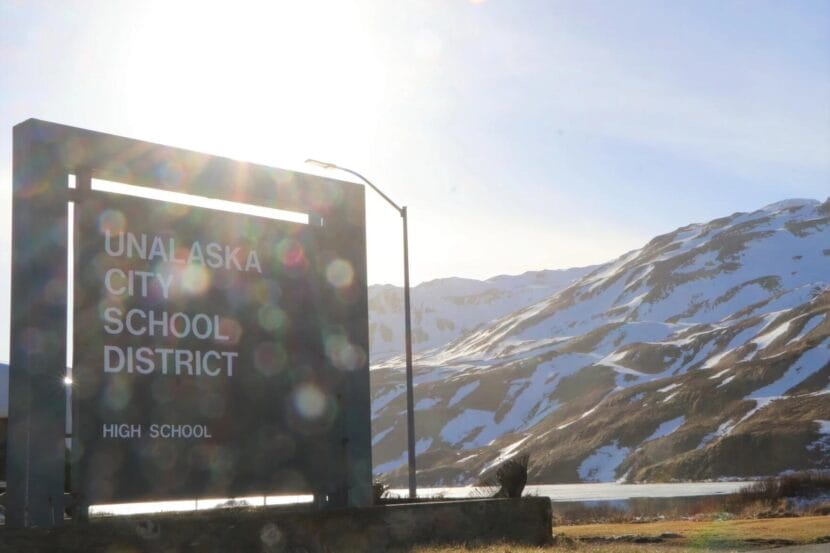
The Unalaska City School District sign. (Maggie Nelson/KUCB)
The Trump administration will release millions in federal education funding for Alaska that had been frozen since June 30. Alaska schools will now receive over $46 million that they included in their budgets for the upcoming school year. The money supports programs for migrant education, professional development for teachers, adult English learner services, as well as before-and-after-school programs.
Kimberly Hanisch is the Unalaska City School District Superintendent. Earlier this month, she was preparing to cut staff after learning that over half of their funding from the federal programs was frozen.
“Without those programs, it is just impossible to meet all students’ needs,” Hanisch said. “So, much relief for our students and for our staff to know that we have those opportunities back.”
Districts learned on June 30 that the money would not be released, just a day before it was to be sent out to states. About 60% of Unalaska students qualify as English Language Learners. Hanisch is glad the funds will now be available, but said the process has been chaotic.
“The quickness of it just seems to be part of the chaos that seems to be embedded in everything related to education funding right now,” Hanisch said. “It’s good that they unfroze it, but it’s just unsettling that we’re never really sure what’s going to happen next.”
Sen. Lisa Murkowski signed onto a letter with nine other U.S. senators asking Office of Management and Budget Director Russell Vought to release the $6.8 billion in federal money for schools and adult learning programs.
In a Friday press release, Murkowski called the funding thaw a win.
“Local communities have the best understanding of the unique needs of their students and how best to serve them,” Murkowski wrote. “But the anxiety, disruption, and extra work to figure out how to serve students without this funding should never have been necessary.”
A coalition of schools and advocacy groups filed a lawsuit over the frozen money earlier this week. The Anchorage School District — one of three Alaska districts named in the suit — said they had to lay off five employees due to the federal and state funding cuts to their already-approved budget for the upcoming school year.
Districts are still dealing with the impacts of Gov. Mike Dunleavy’s line-item veto of state formula funding. Legislators are set to convene a special legislative session Aug. 2 to discuss education funding and reforms. They will have five days once they begin to vote on an override of Dunleavy’s vetoes, but Dunleavy has asked several lawmakers to skip the first part of the session.
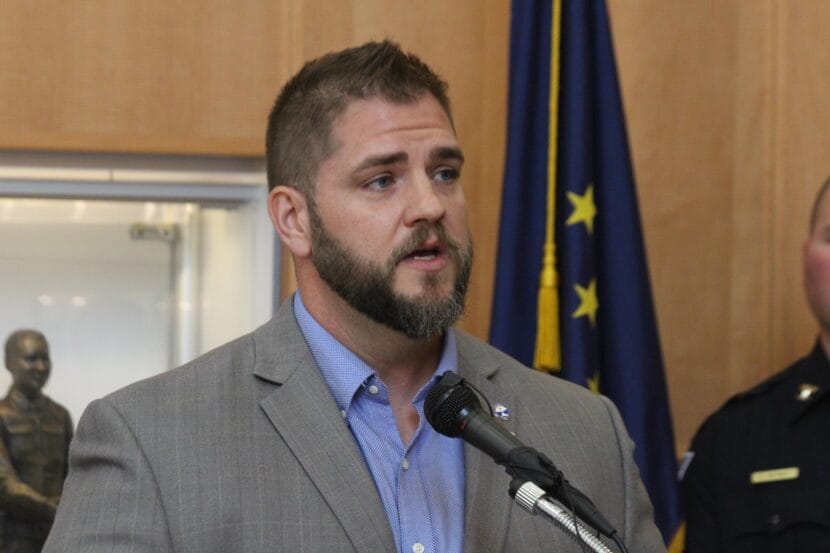
Adam Crum speaks to reporters on Oct. 4, 2022 at the Alaska Scientific Crime Detection Lab in Anchorage. (Wesley Early/Alaska Public Media)
Gov. Mike Dunleavy announced Friday that Department of Revenue Commissioner Adam Crum plans to resign Aug. 8.
Reached by phone, Crum read a statement saying he had “accomplished a lot to put Alaska on sound economic footing” and said he would have more to say on his last day.
“It has been an honor serving Alaskans alongside dedicated colleagues and under Governor Dunleavy’s leadership,” Crum said in a statement shared by the governor’s office. “I am deeply grateful for the opportunity to contribute to Alaska’s prosperity and am excited to see the state’s continued success.”
Crum said he had not been asked to resign. He is widely seen as a possible candidate for governor. Alaska law restricts the use of state time and resources for political campaigns.
In a prepared statement, Dunleavy said Crum had prioritized the state’s economic wellbeing, public health and fiscal stability during his time in the administration. Crum served as the commissioner of the Department of Health and Social Services before Dunleavy appointed him revenue commissioner in 2022. Dunleavy’s office did not immediately respond to an interview request.
“Commissioner Crum has been an exemplary leader whose unwavering dedication and innovative approach have significantly benefited Alaskans,” he said.
In late May, the heads of the state House and Senate sent a letter to Dunleavy calling attention to what they called “a persistent pattern of obstruction within the senior ranks of Alaska’s Department of Revenue.” The letter came alongside a bill that lawmakers said would strengthen the legislative auditor’s ability to examine oil tax data.
Dunleavy vetoed the bill and said claims the administration was acting “illegally or unethically” were “unfounded and unsupported by any evidence.”
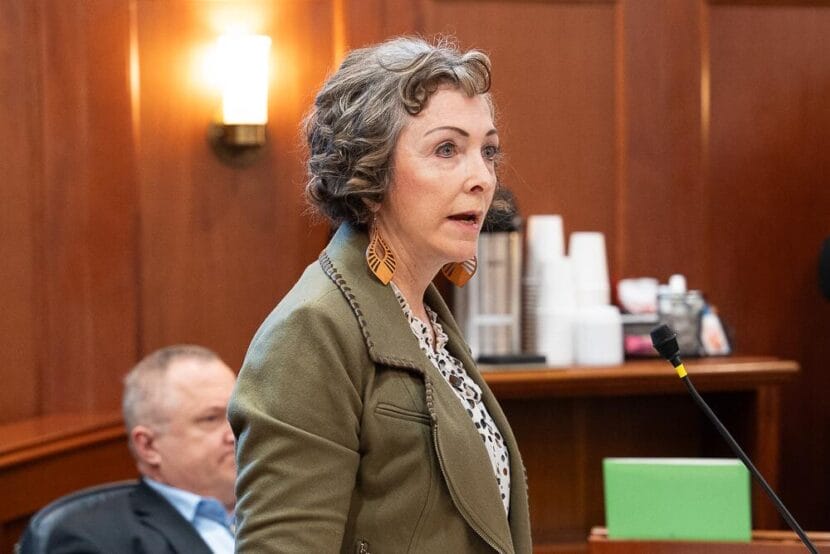
Palmer Republican Sen. Shelley Hughes speaks on the floor of the Alaska Senate in 2024. (Eric Stone/Alaska Public Media)
Palmer state Sen. Shelley Hughes, a Republican, announced Thursday that she’s running for governor.
Hughes has served in the Legislature for more than a decade and has been a member of the Senate since 2017, including a two-year stint as Senate majority leader.
Hughes is a staunch conservative and is currently a member of the all-Republican Senate minority. At a campaign launch event at a barn in Palmer, Hughes touted her work on a variety of issues, emphasizing energy, education, agriculture and technology.
Hughes said as governor, she would be willing to work with legislators of all stripes. She recounted her work on the Alaska Reads Act, a literacy initiative put forward by Republican Gov. Mike Dunleavy and by Democratic Sen. Tom Begich.
“I think the good Lord gave me the gift of being able to build consensus without forsaking my values and my principles,” she said. “That is a skill set that is very, very important for a governor to have, because you’re not always going to be given the legislature that you would maybe hand-pick yourself.”
At the same time, though, Hughes said she was willing to make unpopular decisions to address what she called a “rough patch” in the state’s financial situation driven in part by declining oil and gas revenue. Alaska governors play a key role in determining the state’s budget. Hughes described herself as a “limited government gal” and said artificial intelligence could play a role in streamlining the state’s operations.
“We do have to look at our budget and be very strategic and prioritize, and I am willing to take the heat, and it will take heat,” she said. “Because when you do that, you can have people on all sides not happy with you, but you’ve got to have someone with a vision that will hold the line.”
Hughes said she was concerned by the large number of able-bodied Alaskans who rely on Medicaid, saying she wanted to provide them with job training. She said that would reduce the number of employees that contractors would need to import from Outside to work on megaprojects like the Susitna-Wantana Dam and the Alaska LNG pipeline, which she said was “real” and “closer than it’s ever been.” President Donald Trump has repeatedly touted the 800-mile, $44 billion pipeline as a priority, though the long-dreamed project, now shepherded by developer Glenfarne, has yet to say whether it has the investors and customers needed for it to move forward.
Hughes also said she would continue Dunleavy’s push to expand the state’s role in promoting agriculture by elevating the state Division of Agriculture to a cabinet-level department. Lawmakers narrowly rejected Dunleavy’s proposal to do so earlier this year.
Hughes has in the past supported Dunleavy’s proposals to expand alternatives to traditional neighborhood schools, including homeschool and charter schools, though she did not address school choice in her campaign announcement. In prior interviews, she expressed support for school choice ideas like “backpack funding” and education savings accounts, which parents could use to subsidize private school tuition.
Hughes joins an increasingly crowded, all-Republican field for the 2026 governor’s race. She’s the seventh candidate to join the race. No Democrats have formally joined the race. The deadline to file is June 1, 2026.
Correction:An earlier version of this story misstated Sen. Tom Begich’s title. He served in the state Senate.
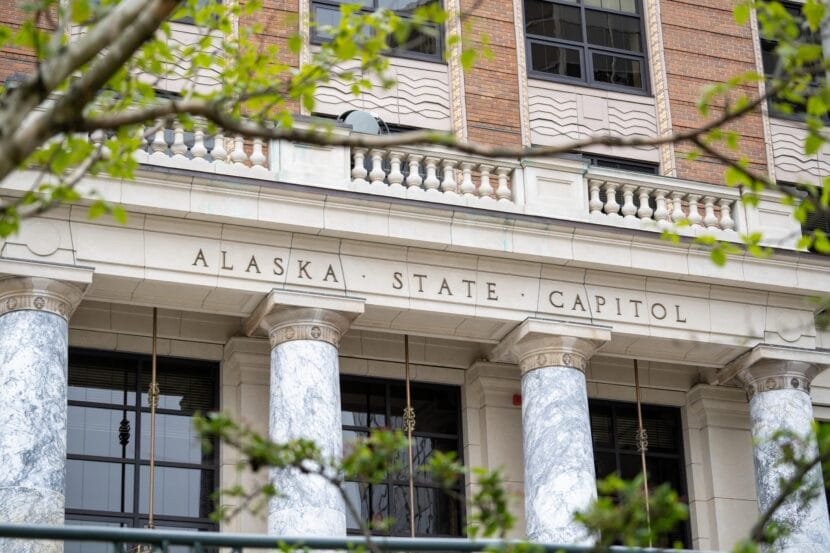
The facade of the Alaska State Capitol in Juneau on May 22, 2024.
Lawmakers are planning to gather in Juneau in just over a week for a special legislative session called by Gov. Mike Dunleavy. The governor put two items on the agenda: education reform and the creation of a state Department of Agriculture. It’ll also be an opportunity for lawmakers to try to override some of Dunleavy’s vetoes — and the governor even went so far as to ask minority Republicans to stay away from the Capitol during the start of the session to prevent his vetoes from being overridden.
Alaska Public Media’s Capitol reporter Eric Stone joined Alaska News Nightly host Casey Grove to discuss what to expect from the session.
The following conversation has been lightly edited for length and clarity.
Casey Grove: Eric, what are you hearing from lawmakers?
Eric Stone: Well, for now, most lawmakers are planning to be there — and that includes some that we weren’t sure about. Anchorage Democratic Sen. Forrest Dunbar, who’s serving with the National Guard in Poland, announced this week that he’s been granted leave to attend. That’s a pretty big deal — lawmakers had essentially taken it as a given that he wouldn’t be able to be there. But he ran it up his chain of command and got the OK, so Dunbar is planning to fly back at least for the start of the session.
Sen. James Kaufman, an Anchorage Republican who has spent some of the summer in Southeast Asia with his wife, tells me he’ll make it back for the first day of the session, too. He was another question mark.
And those two are pretty important. Back in May, they both voted to override Dunleavy’s veto of a bill boosting the formula that says how much the state should spend on public schools.
Of course, Dunleavy vetoed some of that increase from the budget, and it takes a three-quarters majority for the Legislature to override a budget veto.
Senate President Gary Stevens, a Kodiak Republican, says an attempt to override that veto will be on the agenda for the first day once lawmakers gavel in on Saturday, Aug. 2.
He says he’s expecting nearly perfect attendance from the members of the upper chamber.
“I just can’t stress how important it is that, if the governor calls a special session, our job, our duty, is to be there for that opening day,” Stevens said. “And so, anybody who chooses not to be there opening day, I would hope they have a really good reason, because they will be accountable to their public, to their constituents on why they would miss such an important vote.”
ES: Stevens says in addition to the vote on the education funding veto, he’s expecting to try and override Dunleavy’s veto of a bill that clarifies the legislative auditor’s authority. Lawmakers have questions about whether the state is getting all the money it should from oil companies, and they passed a bill by a wide margin that seeks to help answer those questions. Dunleavy said he thought it was unconstitutional and vetoed it.
Those are the two big priorities for Stevens. He says there might be some additional override votes if those are successful — Dunleavy has vetoed a handful of other bills since the Legislature adjourned.
CG: Do you think those veto overrides will succeed?
As you said, Gov. Dunleavy has asked minority Republicans to stay away to prevent them from overriding his vetoes, and some House Republicans have said they’re not coming. Those include some conservatives, like Homer Rep. Sarah Vance and Anchorage Rep. Jamie Allard. But I haven’t heard anyone who’s a plausible yes vote say they’re not coming.
House Republican minority leader Mia Costello says she’s going to be in Juneau when the special session begins. But she says she hasn’t made up her mind on how she’ll vote. She says she’s going door-to-door in Anchorage asking her constituents what she should do. But she says many of her minority Republican caucusmates are likely to at least show up in Juneau.
CG: So, the veto overrides are up in the air. Aside from that, what else are you expecting?
ES: I think it’ll probably be pretty short, maybe even one day. That could change, of course, but legislators seem like they don’t have a whole lot of interest in spending a month of the summer in Juneau. Stevens says he hasn’t decided whether lawmakers will end the session after one day or remain in session for a while longer.
Dunleavy has been pretty light on specifics as far as what he wants lawmakers to work on. Education reform and the governor’s proposal for a new Department of Agriculture are the two things on the agenda. Of course, he could add to that until lawmakers come into session. He says he’ll unveil the actual bills he wants lawmakers to address on the first day of the session.
Stevens says the governor’s office is telling him he wants to again revisit letting the state Department of Education authorize new charter schools. That’s an idea lawmakers have rejected in the past, saying it would reduce local control for school districts. But Stevens says the governor has some new ideas, too, on teacher retention and boosting teacher training. The governor’s office wouldn’t provide any details.
But even Costello, whose caucus is usually aligned with the governor, says she’s not optimistic they’ll make much progress. Dunleavy could also withdraw the call for a special session at any time up until they actually gavel in, and Costello says that actually might be good for his policy agenda.
“If the governor decides not to have the special session right now, then I imagine that it improves the chances that some of the policy and the outcome-based measures that the governor is looking for would actually happen,” Costello said. “So, you know, I think it’s something that has to be considered.”
ES: I asked the governor’s office whether Dunleavy is considering canceling the session, though, and they wouldn’t say.
So for now, I’m planning to be there at 10 a.m. Saturday, Aug. 2. And if that changes, I’ll let you know.
Alaskans protest potential federal and state funding cuts March 4, 2025 in Anchorage. (Matt Faubion/Alaska Public Media)
The Alaska Department of Health said Wednesday it is still assessing how President Trump’s so-called One Big Beautiful Bill Act will affect the state’s Medicaid program. State officials say they do not have reliable estimates of how many Alaskans could lose coverage or how much the new law will reduce federal health care spending.
On Monday, the Department of Health shared a document with the Anchorage Daily News saying the bill could reduce Medicaid spending in Alaska by $300 million to $500 million per year. But the Department of Health retracted the estimate Wednesday, with a spokesperson saying the document overestimated the impact and that the figures were “not correct at all.”
“Unfortunately, some of the information it contained was based on national models that had not yet been updated and did not account for the final version of the bill passed by the Senate,” Communications Director Shirley Sakaye said.
Emily Ricci, the deputy health commissioner in charge of Alaska’s Medicaid program, said in an interview that the department’s earlier projections didn’t account for exemptions that will apply to many Alaskans that the state’s congressional delegation inserted into the bill in the final days before it passed.
“There’s a lot of research that we have to do on our end to really think about how these exemptions that are in the bill, how they align with our Medicaid population, and what our projections are,” Ricci said.
The bill creates what it calls “community engagement requirements” that require able-bodied Medicaid recipients ages 18 to 64 to work, volunteer or study 80 hours per month. Advocates say those will likely push some recipients off the program, in part because they make applying for benefits more complicated.
But Ricci said the state plans to apply for waivers that would move the effective date of the work requirements to 2029. The department plans to launch an “integrated eligibility enrollment system” in 2028 that should simplify benefits applications, Health Commissioner Heidi Hedberg said.
In addition, many Alaskans are likely to qualify for exemptions even once the work requirements take effect, Ricci said.
People with serious mental illnesses, including substance abuse
People who have another serious or complex medical condition
Residents of boroughs and census areas with high unemployment will also be exempt. Fifteen Alaska regions currently qualify for that exemption, though that could change by the time the work requirements take effect. There are additional flexibilities for seasonal workers, like fishermen, construction workers or people who work in tourism.
Alaska is insulated from some other Medicaid cuts included in the bill because it’s the only state that does not finance its program using so-called provider taxes or state-directed payments, Ricci said.
Hospitals and medical providers raised concerns in the leadup to the bill’s passage, saying Medicaid cuts could force some hospitals in rural areas to close or cut back services.
But Hedberg, the health commissioner, said in an interview that the last-minute addition of a $50 billion fund for rural health should blunt the impact on Alaska’s medical system. Over the next five years, half will be distributed equally to all 50 states, and Hedberg said the other half will be distributed at the discretion of the Centers for Medicare and Medicaid Services.
“We are one of the most rural states, and the healthcare delivery system is very different in Alaska compared to the Lower 48 so I think that we are well-positioned with this funding,” Hedberg said.
One in three Alaskans is enrolled in Medicaid. The Kaiser Family Foundation estimates that the final version of the bill will reduce federal Medicaid spending in Alaska by 11%, or $1.5 billion to $2.5 billion over the next decade.
Hedberg said the state is working with a contractor to get a more accurate estimate.
Close
Update notification options
Subscribe to notifications
Subscribe
Get notifications about news related to the topics you care about. You can unsubscribe anytime.