Alaska Public Media

Alaska Public Media is one of our partner stations in Anchorage. KTOO collaborates with partners across the state to cover important news and to share stories with our audiences.

Alaska senators split vote on first step to passing $9B clawback bill

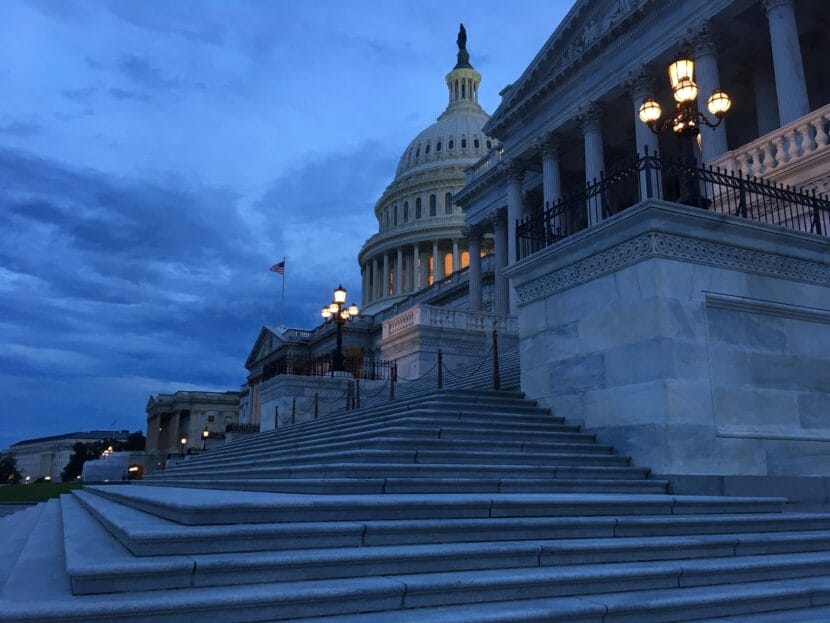
Photo of U.S. Capitol by Liz Ruskin
U.S. Capitol (Liz Ruskin/Alaska Public Media)

A bill to defund public broadcasting of about $1 billion and claw back more than $8 billion in foreign aid has cleared its first hurdle in the U.S. Senate.

Fifty Republican senators voted yes on a procedural motion to consider the bill Tuesday evening. With the tie-breaking vote of Vice President JD Vance, the bill has enough support to get to the Senate floor for debate and possible amendment.

Sen. Dan Sullivan voted yes on taking up the bill. Sen. Lisa Murkowski is one of of three Republicans who voted against the preliminary measure. She said public broadcasting is vital, particularly for rural areas.

“It’s not just your news,” she said, just before Tuesday’s vote. “It’s your tsunami alerts. It is your landslide alert. It is your volcano alert. It is the weather to let you know it’s safe to go out and get on the fishing grounds. It’s your educational programming. I am going to continue to be an advocate for the Corporation for Public Broadcasting.”

More importantly, Murkowski said, it’s Congress’s job to appropriate money, and the White House hasn’t even specified which specific programs would be rescinded.

Next, the Senate will vote on a long series of amendments, a process referred to as “vote-a-rama,” which can stretch on all day and night. A final vote is expected late Wednesday or Thursday.

Senate Republican leaders have already made changes to bring a few Republican holdouts on board. They ditched a plan to cut an international AIDS program known as PEPFAR. They’re also restoring other specific overseas health and nutrition programs.

So far, the bill still rescinds roughly $1 billion dollars — two years of funding — for the Corporation for Public Broadcasting. To win over Republican Sen. Mike Rounds of South Dakota, the administration promised to use other funds to keep 28 tribal stations in nine states going. It’s not clear that any of those are in Alaska.

About 4,000 miles from the Capitol, in Bethel, Kristin Hall was following the action closely. She’s the interim general manager of KYUK, a radio and TV station that’s not tribally owned.

“Truly, we’re all kind of on pins and needles. It feels almost surreal,” she said.

KYUK broadcasts across the vast Yukon-Kuskokwim delta, reaching an area roughly the size of South Dakota. About 70% of its funding comes from the federal government, through the Corporation for Public Broadcasting. Hall said the rescission would decimate the station.

“We would have to cut a majority of our staff,” she said. “Our services would be just really stripped down to the bare minimum.”

In addition to saving money, the rescission achieves long-standing policy ideals for conservative Republicans who want to shrink America’s role in international aid and feel public broadcasting doesn’t reflect their perspectives.

The U.S. House narrowly passed the bill last month, with the help of Alaska Congressman Nick Begich. If the Senate makes changes, it will have to go back to the House. The bill has to become law by Friday or the rescissions measure expires.

Editor’s note: Alaska Public Media receives funding from the Corporation for Public Broadcasting. This story was written and edited within the Alaska Public Media newsroom. No Alaska Public Media corporate officials read it before publication.

Anchorage podiatrist joins all-Republican field in 2026 Alaska governor’s race

man sitting at desk in medical office laughing
Matt Heilala. (Campaign photo)

Retired Anchorage podiatrist Matt Heilala filed to join the 2026 Alaska governor’s race Friday. So far, he’s the sixth Republican to join the field.

Heilala, born in Anchorage and raised on the Kenai Peninsula, has never held elected office. But in an interview, the 55-year-old said his experience as a doctor and business owner make him well-suited for the top job in state government.

“The more I get to know candidates and other people that are in office, as much as I admire them, I think I have something unique to offer to help with a lot of the divisiveness without having to compromise on critical principles,” he said.

Heilala said he’s especially adept at working with people with whom he disagrees, an approach he said would lend itself well to collaborating with lawmakers.

“When’s the last time we had an overwhelming majority in our Legislature in Alaska?” he said. “It’s always kind of razor-thin, back and forth, and you become stymied and dysfunctional when people aren’t able to get through the contempt and recognize and align that with common goals.”

For decades, Heilala has donated tens of thousands of dollars to Republican candidates, including Gov. Mike Dunleavy, Congressman Nick Begich and U.S. Sen. Dan Sullivan, according to campaign finance data aggregator OpenSecrets.

Heilala, though, cast himself as straddling political fault lines.

For example, Heilala said he’d like to expand school choice options like charter schools and homeschool — priorities that Republicans, including Dunleavy, have emphasized — but Heilala also emphasized the state’s obligation to ordinary neighborhood public schools. The government is obligated to “defend the defenseless and care for those in need,” Heilala said, adding that he’d like to expand opportunities for businesses to create jobs.

Like Alaska politicians on both sides of the political aisle, Heilala says he’d like to expand resource development in the state.

As the state faces a budget crunch, Heilala said the state government has a “spending problem.” He said he’d like to make the state’s spending more transparent in an effort to build trust with the public. That, he said, could help lawmakers find a compromise on annual Permanent Fund dividends the state can afford.

“You can’t sustain $2 billion deficits every year,” Heilala said. “That just compounds problems.”

Heilala’s most recent experience in government comes as a Dunleavy appointee to the State Medical Board, which made headlines this spring when it asked the Legislature to restrict gender-affirming care for minors. Lawmakers did not act on the request.

Heilala joins a field of six Republicans running for governor in 2026, so far. No Democrats or independents have filed to join the race. Dunleavy cannot run for a third term.

The deadline to file is June 1, 2026.

Trump’s EPA could revive controversial Pebble Mine in southwest Alaska

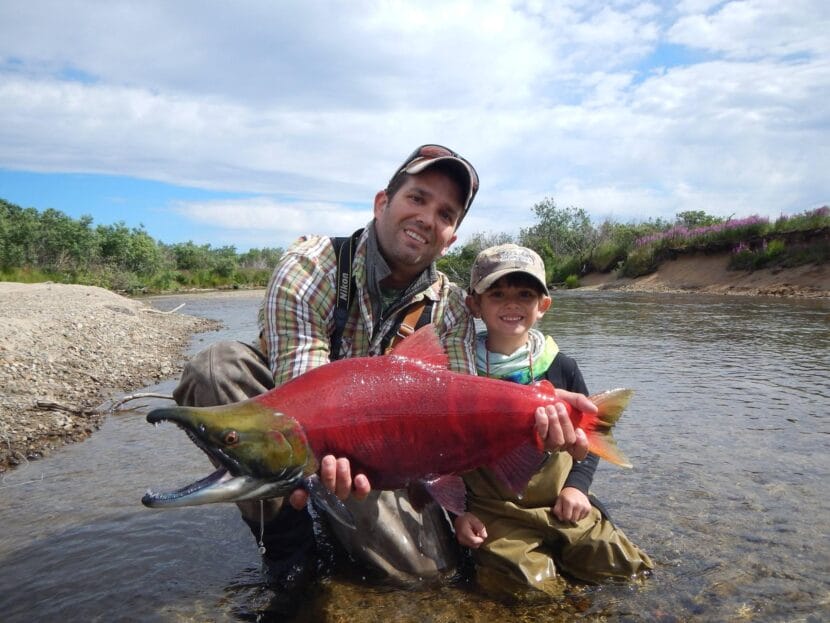
Donald Trump Jr. and his son in river shallows. Trump jr. holds in front of him a sockeye salmon that is bright red with a green head.
Donald Trump Jr. is among the opponents of the Pebble Mine. He posted this photo of himself on Facebook in 2014. (Photo via Facebook)

The Trump administration is reviving the hopes of the company behind the proposed Pebble Mine in southwest Alaska.

Vancouver, B.C.-based Northern Dynasty, the parent company of the Pebble Limited Partnership, says it’s in talks with the Environmental Protection Agency and hoping the agency will swiftly withdraw its veto of the project.

The proposed open-pit copper and gold mine would be upstream from Bristol Bay and is widely opposed in Dillingham and the region, where it is seen as a threat to the bay’s prolific salmon runs.

Environmental studies found it would damage or destroy miles of salmon streams and more than 2,000 acres of wetlands.

National sportfishing groups have also campaigned against the mine.

Northern Dynasty has a pending lawsuit in U.S. District Court in Anchorage to get a prior EPA veto of the project thrown out. A document filed in that case says the company and the agency are discussing a possible settlement and expect to reach an agreement by July 17.

In his first term, President Trump seemed to run hot and cold on Pebble. His first EPA administrator in 2017 let the project move forward, then reversed course a few months later. The mine proposal seemed to get back on track, but then the U.S. Army Corps of Engineers denied Pebble’s permit application in 2020.

That came after Donald Trump Jr., a sportfisherman who visited the region, publicly announced his opposition.

Bill requiring car rental apps to collect Alaska taxes avoids second veto

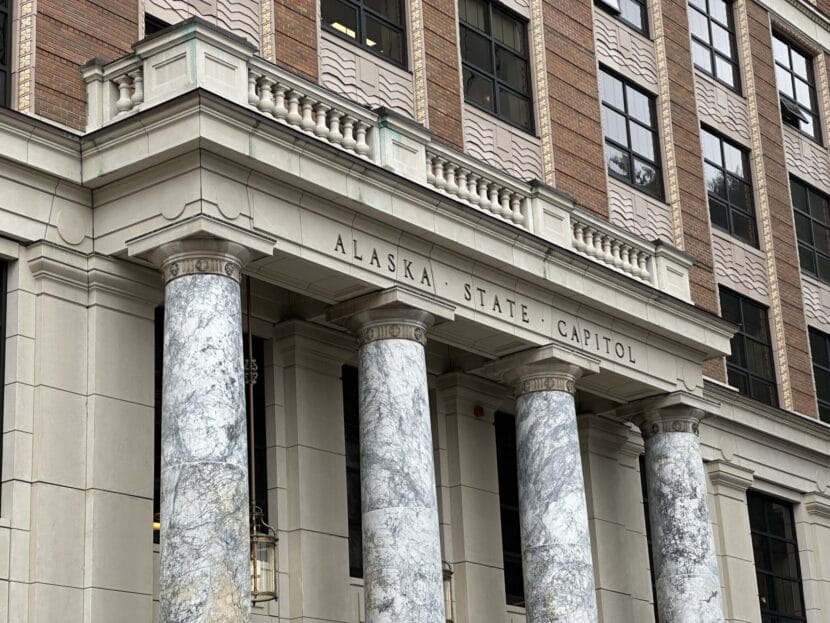
The Alaska State Capitol on March 25, 2024. (Eric Stone/Alaska Public Media)

Alaskans who rent out their cars on platforms like Turo and Getaround are no longer required to collect and submit state rental car taxes themselves.

Earlier this year, the state Legislature passed a bill mandating that the car-rental platforms collect the tax on the vehicle owners’ behalf. On Thursday, the bill became law without Gov. Mike Dunleavy’s signature. Bills that the governor fails to sign or veto within a set period of time automatically pass into law.

Last year, Dunleavy vetoed a very similar bill, calling it “unnecessary taxation.” His press office declined to explain why he allowed the new bill to become law.

Sen. Matt Claman, an Anchorage Democrat who sponsored last year’s vetoed bill, said the bill does not impose new taxes, it just changes who’s required to collect them.

“They own no cars, so Turo has taken the position that historically, that they don’t have a duty to collect the tax,” Claman said. “The interest was to make adjustments to the existing laws to make it so that Turo does collect the tax.”

Alaska has charged an excise tax on rental cars since 2004, but platforms like Turo were not collecting the tax. Few car owners were following the law and collecting the taxes themselves, the Department of Revenue told lawmakers.

As of mid-2023, Revenue officials said approximately two dozen car owners were delinquent on roughly $470,000 in back taxes.

House Bill 123 wipes the slate clean, preventing the Department of Revenue from going after Turo hosts for back taxes. That’s in the interest of fairness, said Big Lake Republican Rep. Kevin McCabe, who sponsored the bill.

“You sign up as a Turo host, and there’s nothing on there that says you’re supposed to collect taxes … outside the platform and send it to the state of Alaska,” he said. “You don’t even know how to do it. You’re just a guy that wants to rent out his car for the two weeks when you’re on the (North) Slope.”

The bill also cuts rental car taxes. Traditional rental agencies like Hertz, Avis and Enterprise will see their tax rate cut from 10% to 9%. Turo rentals get an additional 2% tax break on top of that, making it a 7% rate, through mid-2028.

Turo and Enterprise both submitted letters supporting the bill. Lawmakers said during committee hearings that they hoped the tax cut would prevent Dunleavy from vetoing it.

The Department of Revenue estimated the brick-and-mortar rental tax cut will reduce tax revenue to the state by at least $1.5 million per year. It’s unclear how much of the market Turo accounts for, but Revenue officials said that if it amounts to more than one-eighth of the total rental car market, the change will bring in more money overall. Claman said a similar ordinance in Anchorage was a boon for local rental car tax revenue.

Anchorage ICE detainee recently transferred to Tacoma hospitalized with tuberculosis

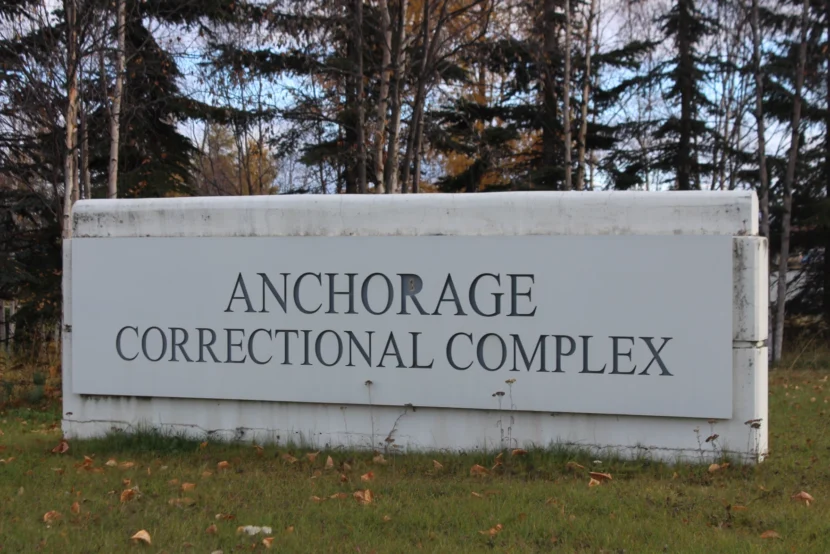
Anchorage Correctional Complex in 2020. (Photo by Lex Treinen/Alaska Public Media)

An immigration detainee originally from Peru and recently held at the Anchorage jail was later hospitalized in Washington state with tuberculosis, his attorney said.

According to the American Civil Liberties Union of Alaska, detainees held in Anchorage in the care of the state Department of Corrections were told by federal Immigrations and Customs Enforcement officials that they were exposed to tuberculosis, a contagious bacterial infection of the lungs that, if left untreated, can be fatal.

State Corrections officials said claims that ICE detainees were exposed to TB at the Anchorage jail are false.

The Peruvian man, who was seeking asylum in the United States, was among 35 immigration detainees transferred from the Anchorage Correctional Complex to Tacoma, Washington on June 30, according to the man’s Washington D.C.-based lawyer, Sean Quirk. The detainees were part of a group of 40 men that had been transferred to Anchorage from Tacoma on June 8.

The man missed two scheduled calls after he was transferred back to Tacoma, Quirk said. An official with the GEO Group, which operates the Northwest ICE Processing Center in Tacoma, told Quirk his client was at a hospital, but they wouldn’t tell him which one, he said.

“We ended up cold-calling hospitals in which I found him at Tacoma General Hospital in the ER, and he had tested positive for tuberculosis,” Quirk said. “However, I was not able to speak with him because the GEO officer, who operates at the behest of ICE, refused access to my client.”

Quirk said he doesn’t know where his client contracted TB or how severe his client’s case was. He said his client was discharged from the hospital Wednesday afternoon.

In response to a written statement the ACLU sent reporters Wednesday, Betsy Holley, a spokesperson for the state Department of Corrections, said no one there were no documented cases of TB among the men in custody in Anchorage.

In her statement, Holley called the ACLU’s claims “categorically false and dangerously misleading.”

“All ICE detainees were thoroughly screened for tuberculosis upon admission into our care, not by ICE, but by our own qualified medical staff,” Holley wrote. “Out of an abundance of caution, one individual underwent additional testing due to symptoms; all subsequent tests for active TB came back negative.”

Holley added that latent TB is not contagious, and that active TB is typically transmitted over a longer period of time than the 23 days the detainees were held in Anchorage.

“It requires prolonged, close contact, typically months, not mere days,” Holley wrote.

But Meghan Barker, a spokeswoman for the American Civil Liberties Union of Alaska, said when the detainees got to Tacoma they were told by ICE that they had been exposed to TB back in Anchorage.

The ACLU had been assisting ICE detainees held in Anchorage. Detainees told them there wasn’t a consistent medical check when they arrived in Anchorage, Barker said. Two men had tested positive for a latent form of TB, she said.

“Some folks who are detained told us that they just had a casual conversation with a nurse when they were, you know, brought in and transferred to (the Anchorage jail),” Barker said. “But then some, like the two that reported that they were tested for tuberculosis, they obviously had a different level of testing than what others got.”

Barker said the ACLU is concerned that ICE detainees, as well as correctional officers and staff at the Anchorage jail, might not have been properly screened for TB. They also questioned whether TB cases were reported to the state Department of Health.

After his client’s release from the hospital Wednesday, Quirk said he remained concerned that ICE officials are not allowing him and other attorneys to communicate with their clients, which he said violates the U.S. Constitution.

A spokesman for ICE did not immediately respond to questions over whether officials at the Tacoma facility told the transferred detainees that they were exposed to TB in Anchorage, or whether ICE was barring detainees from communicating with their lawyers.

Alaska lawmakers plan rare use of subpoenas to get oil tax data

The Trans-Alaska Pipeline is pictured at pipeline mile 709.7 along the Richardson Highway south of Copper Center, Alaska on August 13, 2024.
The Trans-Alaska Pipeline is pictured at pipeline mile 709.7 along the Richardson Highway south of Copper Center, Alaska on August 13, 2024. (Eric Stone/Alaska Public Media)

Alaska lawmakers plan to compel the administration of Gov. Mike Dunleavy to release data on oil taxes through a rare use of the state Legislature’s subpoena power.

It’s the latest development in a long-running dispute between the Legislature and Dunleavy administration over whether the state is getting all the tax revenue it should from its most lucrative natural resource.

Sen. Elvi Gray-Jackson, an Anchorage Democrat who chairs the Legislative Budget and Audit Committee, a joint House-Senate panel overseeing audits of state government, said subpoenas were the next logical step in completing an oil tax audit that’s been ongoing since 2020.

“We want to work with the Department of Revenue, period,” she said. “But the auditor has been trying to get this information for a very, very long time.”

Gray-Jackson’s committee unanimously authorized a $50,000 contract with outside attorneys to draft and send subpoenas to the administration to move the audit forward.

They’re looking for data that shows whether the Dunleavy administration has been properly enforcing the state’s oil tax laws. So far, the legislative auditor – the official the state Constitution puts in charge of examining the state’s books – hasn’t been able to get the data, at least, Gray-Jackson said, not in a format that the auditor can analyze.

“She’s trying to get the information she needs to complete her audit, but in the format … that’s understandable, in the format that has been done in the past,” Gray-Jackson said.

The most recent audit of that oil tax data was in 2018, and it showed that the Department of Revenue had raised $1.3 billion over six years by identifying underpayments from oil companies.

But more recently, the auditor told legislators at hearings this spring that the Department of Revenue has provided only raw data and contends that the department is not required to compile the data into a summary table similar to what state officials provided in 2018.

“That interpretation overturns longstanding precedent, and it essentially limits the oversight of the Legislature,” auditor Kris Curtis told lawmakers in May. “The fear is that state agencies from here on out will refuse to provide or compile data in any type of format for future legislative audits.”

In a letter to legislators earlier this year, Revenue Commissioner Adam Crum said his department’s Tax Division “has always been transparent” with the Division of Legislative Audit, the organization that the auditor leads, but said that compiling the data in the format requested by legislators would be time-consuming. Crum attached a 2020 letter from former Attorney General Kevin Clarkson outlining the state’s position that certain oil tax records are protected by attorney-client and other legal privileges.

Crum’s letter expressed “concerns” with Senate Bill 183, which would make it a crime for state officials not to provide data in the form or format requested by the legislative auditor.

“I think we’re dealing here with hundreds of millions and into the billions of dollars,” Sitka Republican Sen. Bert Stedman said at a committee hearing earlier this year.

The bill ultimately passed by a wide margin, but Dunleavy vetoed it, saying it raised constitutional issues.

Whether the Legislature can override the veto is unclear — not least because Dunleavy called a special session for next month and told some lawmakers to stay away from the Capitol for the first few days to prevent the rest from overriding his vetoes.

Anchorage Democratic Sen. Bill Wielechowski said he thinks the governor’s request to skip the beginning of the session isn’t just about upholding Dunleavy’s veto of $50 million in education funding.

“This is all about protecting billions of dollars in taxes, likely tax evasion, to the oil industry, and it’s about benefiting the rich and the privileged at the expense of the rest of Alaskans,” Wielechowski said.

Dunleavy and legislators have traded barbs over the bill and the dispute behind it.

As the bill came to the governor’s desk in late May, the House speaker and Senate president sent a letter to Dunleavy saying Senate Bill 183 had been an “unfortunate but necessary response” to what they called a “persistent pattern of obstruction within the senior ranks of Alaska’s Department of Revenue.”

After vetoing the bill, Dunleavy fired back with a letter of his own, saying claims the administration was acting “illegally or unethically” were “unfounded and unsupported by any evidence.”

Dunleavy said he was open to working with the legislative auditor to get the data lawmakers seek.

Asked Tuesday when the data would be turned over, Dunleavy’s office said the governor’s letter and the revenue commissioner’s earlier statement to legislators were its only response.

Rep. Will Stapp, a Fairbanks Republican, said even if lawmakers get more insight into how the administration has handled oil taxes, there’s no certainty on whether that would result in a windfall for the state.

“It’s important that we audit the functions of our executive branch and especially our oil tax structure,” he said. “I would just be very skeptical that they owe us a billion dollars.”

Stapp said he’s planning to be in Juneau for the start of the special session next month, but he said he’s not convinced that the bill would make a difference in resolving the long-running dispute.

Site notifications
Update notification options
Subscribe to notifications