Alaska Public Media

Alaska Public Media is one of our partner stations in Anchorage. KTOO collaborates with partners across the state to cover important news and to share stories with our audiences.

Alaskans divided on bargain Murkowski struck on GOP megabill

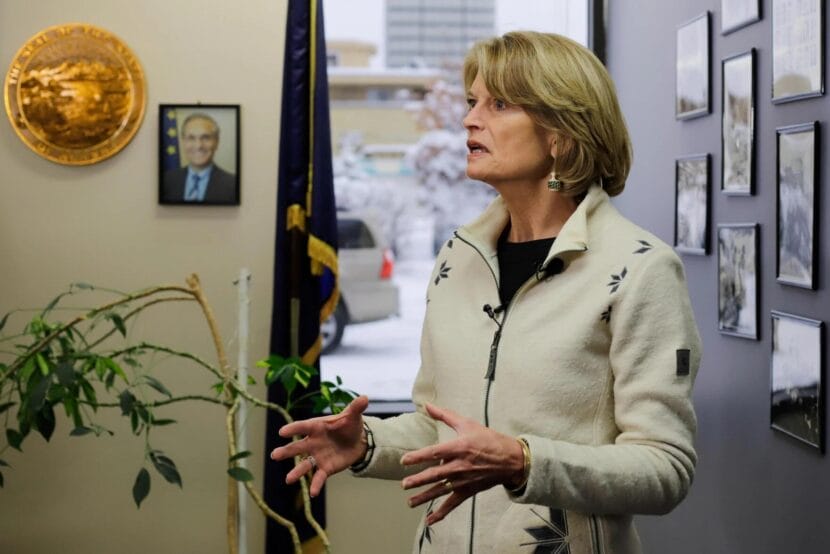
Lisa Murkowski
Alaska U.S. Sen. Lisa Murkowski in 2023. (Jeff Chen/Alaska Public Media)

Shortly after the U.S. House passed the Republican megabill, continuing tax breaks and cutting Medicaid, about two dozen protesters gathered on the street outside the Anchorage offices of Alaska’s congressional delegation.

Kim Anderson said she was devastated, especial by Sen. Lisa Murkowski’s vote.

“I flew all the way to D.C. I talked to Murkowski personally,” said Anderson, a caregiver who has relied on Medicaid for the therapy needs of the former foster children she adopted. “She said she understood, that she was going to fight for us.”

Alaska is in a special position in the budget reconciliation bill that cleared Congress Thursday without a vote to spare. Murkowski was the pivotal vote in the Senate, and she voted for it only after extracting special concessions for her state. But the bill is predicted to leave nearly 12 million Americans without health insurance, and many Alaskans don’t like the bargain Murkowski struck.

Congressman Nick Begich called the bill “a transformative victory” for Alaska. He issued a statement lauding the bill’s mandate to offer millions of federal acres in the Arctic and Cook Inlet for oil and gas lease sales.

Sen. Dan Sullivan also spoke of it as an Alaska success, with, among other things, substantial funding for the Coast Guard and 16 icebreakers.

“I think it’s safe to say that no state fared better from this bill than our state,” he told Alaska reporters.

The bill is a top priority for President Donald Trump, too. Among its approximately 1,000 pages are large sums for defense and border security as well as tax breaks and spending cuts that disproportionally benefit wealthier households.

Murkowski is the only one of Alaska’s congressional delegation who expressed substantial uncertainty about the bill. She said she made a bad bill better for Alaska

“I tried to take care of Alaska’s interests,” she said after the Senate vote Tuesday. “But I know … that in many parts of the country there are Americans that are not going to be advantaged by this bill. I don’t like that.”

State Rep. Genevieve Mina, an Anchorage Democrat who chairs the House Health and Social Services Committee, said it’s a national misconception that the concessions Murkowski won make the bill a net-positive for Alaska.

“There’s a lot of talk about how there’s Alaska carveouts or a Kodiak kickback or a polar bear provision. These were not good deals for the state either,” she said. “They’re provisions that would risk so much to the rest of the nation.”
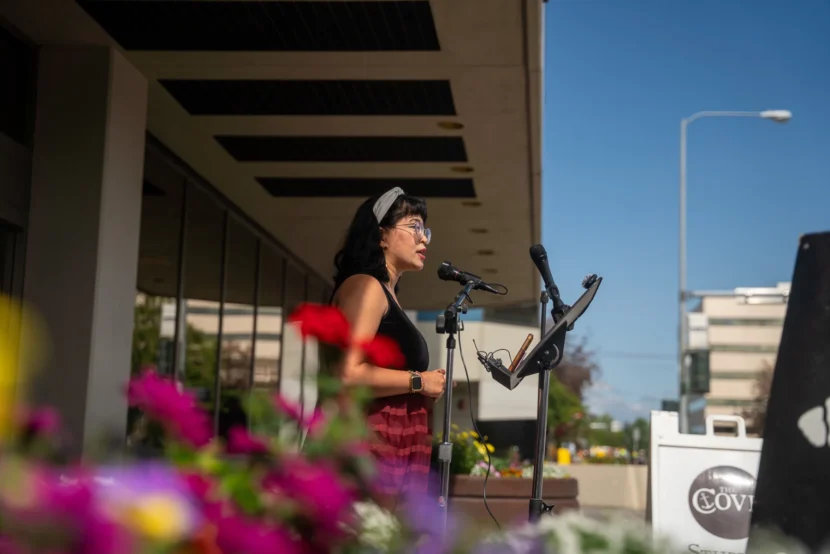
Alaska Rep. Genevieve Mina, D-Anchorage, spoke July 3, 2025 at a small protest outside the Anchorage offices of Alaska’s U.S. senators. (James Oh/Alaska Public Media)

Nationally, the bill would reduce Medicaid spending by more than $1 trillion over a decade. It would also shift some of the cost of food assistance to the states. Murkowski got a two-year delay in some of that burden-shifting.

Mina said she didn’t think that would solve Alaska’s longstanding challenges processing Medicaid and food assistance applications. The bill will require the state to take on even more administrative work by verifying eligibility more often and tracking that beneficiaries meet new work requirements or have waivers.

Maybe the biggest win Murkowski got was boosting a fund for rural health care to $50 billion.

” I don’t want to sound ungrateful, because that’s better than the alternative,” said Jared Kosin, president of the Alaska Hospital and Health Care Association.

It’s impossible to know how much of that $50 billion Alaska will get, Kosin said, after studying the bill’s requirements.

“The State of Alaska is going to have to have an application approved by the federal government by Dec. 31 of this year, and it’s got to be a ‘detailed rural health transformation plan,'” Kosin said.

Then, hospitals and clinics would apply to the state, not knowing how much they’ll get.

Meanwhile, Kosin said, thousands of Alaskans are going to lose Medicaid coverage and will be forced to use hospital emergency rooms — either for primary care at essentially the highest cost to Alaskans as a whole, or because they are in crisis for lack of primary care.

“They’re going to show up in our facilities, and we’re going to do our best to take care of them,” he said. “But at the end of the day, that is a terrible model of health care in our state and any other state, regardless of how much money is flowing in.”

Rev. Elizabeth Schultz, who works for the regional Presbyterian organization, was among thousands of Alaskans who urged Murkowski to reject the bill.

She felt “deep disappointment and anger” when Murkowski helped the Senate pass it.

Schultz said she does not doubt that many groups in Alaska will benefit from the tax breaks and the special carveouts Murkowski won.

“And I don’t disparage that, but I’m not sure it was worth what it will mean for the rest of the country,” she said. “And I think when you’re in a position of that much power that she had at that moment, she could have used it for the benefit of the country.”

Other Alaskans are singing Murkowski’s praises. Ann Brown, former chair of the Alaska Republican Party, wrote an op-ed for the Anchorage Daily News saying Murkowski was an artful negotiator.

“Alaska owes her gratitude for delivering a good deal,” Brown wrote. “Those complaining in other states should start delivering for their own voters.”

Murkowski’s willingness to defy Trump has often alienated her from the Alaska Republican Party. Now it’s another bloc she’s relied on for support — the middle and left — who feel betrayed. Hundreds of angry Alaskans have posted on social media, vowing to never vote for Murkowski again.
To stymie veto overrides, Dunleavy asks Republicans to skip beginning of special session

Man in grey suit standing behind microphones
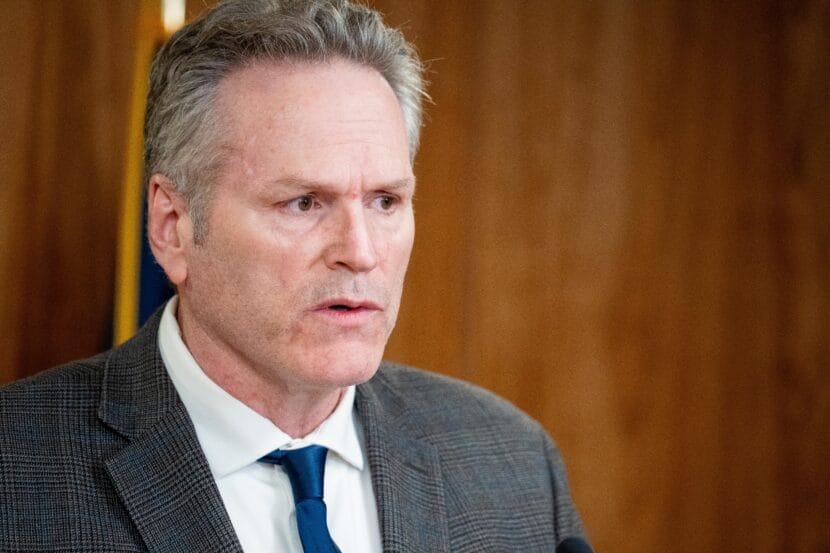
Gov. Mike Dunleavy speaks to reporters during a news conference on May 19, 2025. (Eric Stone/Alaska Public Media)

Gov. Mike Dunleavy asked Republican lawmakers in the state House on Wednesday not to show up for the beginning of a special session he called for next month, to prevent his vetoes from being overridden.

Dunleavy made the request in a meeting with House minority members Wednesday. Officially, the Republican governor called the special session, set for Aug. 2, to address education reform and the creation of a state agriculture department.

“Governor Dunleavy asked House minority members to not show up for the first five days of session because like any governor, he does not want his vetoes overturned,” Dunleavy spokesperson Jeff Turner said in a statement.

Turner said arriving on the sixth day of the session would allow lawmakers to begin with a “clean slate for conversations on public education reform policies.”

In June, Dunleavy struck $150 million in general funds from the state budget using his line-item veto power, including more than $50 million lawmakers set aside for public schools. The vetoes also included $25 million for school maintenance and nearly $27 million for wildland firefighting.

Dunleavy also vetoed three other bills after lawmakers adjourned in May — one that would sharply limit payday loans, another that would address a shortage of housing for rural teachers, and a third that would bolster the Legislature’s oversight of oil and gas tax revenue.

The state Constitution requires lawmakers to consider veto overrides within five days of the start of their next session. Large, bipartisan majorities approved much of what Dunleavy vetoed, and if House Republicans decline to attend the beginning of the session, that would make it nearly impossible for lawmakers to override him.

Turner said Dunleavy was willing to “reinstate” the funding he vetoed “if he and lawmakers can reach an agreement on the education bill he will introduce next month.”

The leaders of the state House and Senate’s bipartisan majority caucuses said they were shocked at the governor’s request that lawmakers not attend the start of the session he called.

“You’ve got to be kidding me,” House Speaker Bryce Edgmon, a Dillingham independent, said in an interview.

“Really, a governor would do that? Call a special session and then inform some members not to show up? How bizarre is that?” Edgmon said. “I have to tell you that from every appearance, it would seem like the special session is, at least in some way, compromised before it even begins.”

“That is just absurd, really,” said Senate President Gary Stevens, a Kodiak Republican. “I think it’s honestly unconscionable to the governor to call a special session and tell a minority not to show up.”

Neither leader said they could recall a similar move from a governor in their decades-long careers in state politics.

Dunleavy declined an interview request.

Big Lake Republican Kevin McCabe, though, said he thought the governor’s move was fair game — just one of many political maneuvers used by both parties to get their way using any tool at their disposal.

“Should it work like this? No. In a perfect world, it never would work like this,” McCabe said. “But we don’t live in a perfect world.”

McCabe compared Dunleavy’s request to a vote House leaders called to reduce the Permanent Fund dividend this year, leveraging the absence of three Republicans to overcome internal divisions that threatened to derail progress on the state budget.

McCabe blamed the Senate’s bipartisan, Democrat-heavy majority caucus for not compromising with the governor on policies that Dunleavy argues would boost the state’s bottom-of-the-nation test scores.

McCabe suggested that a generation of Alaska children would suffer “because the Senate doesn’t like the governor.”

“He has no other political agenda — he’s a lame duck governor, right? — other than to get his policy changes through,” McCabe said.

Stevens, the Senate president, said his requests to meet with the governor to find common ground had been repeatedly rebuffed.

Several House minority Republican lawmakers said in interviews Thursday they did not plan to heed the governor’s request to stay away from the Capitol during the first five days of the special session, including Soldotna Republican Rep. Justin Ruffridge.

“It struck me as being asked to not represent my district, and I think that’s a request that I don’t intend to honor,” he said. “I don’t think that the people of my district would appreciate very much their representative not showing up to do the work when the work is being called to be done.”

Rep. Jeremy Bynum, a Ketchikan Republican, said he, too, planned to be in Juneau for the start of the special session, as did Fairbanks Republican Rep. Will Stapp. All three have said on multiple occasions that they’re willing to override vetoes from Dunleavy, subject to a few caveats.

“I signed up to be in the House of Representatives. That includes special sessions,” said Rep. Bill Elam, Republican of Soldotna. “I’m going to do my job, and I’m going to be where I need to be for the work, so my plan right now would be to be down in Juneau.”

Elam voted to override Dunleavy’s veto of the key bill that raised the amount schools are supposed to get from the state under its public school funding formula, House Bill 57. But asked whether he’d support a vote that would restore the education funding Dunleavy cut, Elam said he was undecided.

Rep. Sarah Vance, a Homer Republican, said the request was “unusual” but said she did not plan to attend the start of the session unless her constituents asked her to.

“I agree with (Dunleavy) in that I believe we should be focusing on (education) policy right now,” she said. “Since I will be a no vote, my absence also counts as a no vote, and it will save Alaskans money by my presence not being there until day six, when I’m ready to work.”

McCabe, who has consistently opposed the education funding increases that have won over some of his fellow minority Republican caucus members, said he would not attend the start of the session. He said he’d be in Coeur d’Alene, Idaho at the conference of a pro-life nonprofit group.

“It would be helpful if our team stayed together, but we haven’t proven that we’re very good at that through the last year,” McCabe said. “Everybody’s got their own agenda. Typical Republicans.”

Lawmakers raised the foundation of the funding formula, the base student allocation, by $700 per student in a 46-14 vote in May, overriding a veto from Dunleavy to do so. But Dunleavy vetoed roughly 30% of the funding necessary for the increase.

Even if every minority Republican attends the session, it’s unclear whether lawmakers would have the 45 votes necessary to undo Dunleavy’s line-item veto. One, Democratic Anchorage Sen. Forrest Dunbar, is abroad on a National Guard deployment.

Stevens said he did not anticipate making significant progress on the governor’s two listed priorities during the special session. He said he expected lawmakers would gavel in as scheduled, consider one or more veto overrides, and gavel out in time for lawmakers to make the evening flight out of Juneau that same day.

Stevens said hoped enough lawmakers would attend in order to override the governor’s line-item veto of education funding. If the effort failed, Stevens said lawmakers would seek to address the issue when they return for the regular session in Juneau. But he warned that minority Republicans could face backlash from their constituents if they follow the governor’s request.

“If they stay away and we only meet for one day, and education funding fails because they’re not there, I don’t think that bodes well for them in future elections,” he said.

Republican Nikiski Sen. Jesse Bjorkman said the episode did not bode well for the future of Dunleavy’s legislative priorities.

“Unfortunately, what this means is it’ll be really hard for him to get anything done further,” he said.

KDLL’s Ashlyn O’Hara contributed reporting.

Correction: An earlier version of this story incorrectly said that a House vote reduced the Permanent Fund dividend to $1,000. That particular vote cut it to roughly $1,400.

Group of ICE detainees held for weeks at Anchorage jail are transferred out of state

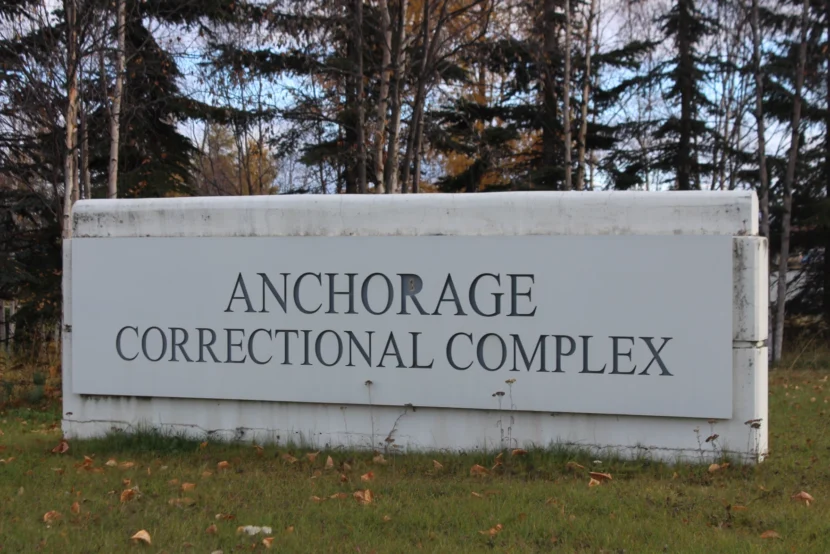
Anchorage Correctional Complex in 2020. (Photo by Lex Treinen/Alaska Public Media)

Thirty-five men who were detained by Immigrations and Customs Enforcement in the Lower 48 and held for weeks in an Anchorage jail have now been transferred out of state, officials say.

Last month, the state Department of Corrections announced that it had taken in 40 men who were arrested and detained in the Lower 48, and housed them at the Anchorage Correctional Complex, under a deal with the federal government. The move triggered backlash, as immigration attorneys raised concerns about conditions in the Anchorage jail.

In a statement Monday, DOC spokeswoman Betsy Holley said the remaining 35 men held in the state were recently transferred back into the custody of the federal Department of Homeland Security. She declined to say where the men were transferred to, citing security reasons.

“Alaska DOC is a holding facility for the federal government,” Holley said in an email. “It was never intended that the detainees would be in Alaska for long-term.”

Announcement of the transfer came two days after the American Civil Liberties Union of Alaska sent a letter to state Attorney General Treg Taylor, demanding that the state not hold ICE detainees at the Anchorage Correctional Complex for more than 72 hours until conditions improved at the facility. In June, ACLU attorneys testified at a state House Judiciary Committee hearing that detainees were being held in “punitive conditions,” which they claimed violated ICE standards. At the same hearing, state DOC Commissioner Jen Winkelman acknowledged several “bumps in the road” in the detention process.

ACLU spokeswoman Meghan Barker said in an email that attorneys with her organization were alerted to the transfer after they tried to confirm pre-scheduled meetings with some of the detainees.

“We’re unsure where they were sent and if safe and humane transport was provided, which was one of the demands we made in our letter,” Barker wrote.

Holley said there is currently one man in custody in the state who’d been detained by ICE officials in Alaska. She said he was arrested before the group of 40 detainees were flown to Anchorage.

Regional ICE spokespeople did not immediately respond to questions Tuesday regarding the transfer, including where the men were sent and why they were transferred to Alaska in the first place. In at least one instance, a man arrested by ICE officials in Anchorage was transferred out of state to an immigration facility in Tacoma, Washington.

Murkowski helps win Senate passage of Republican megabill

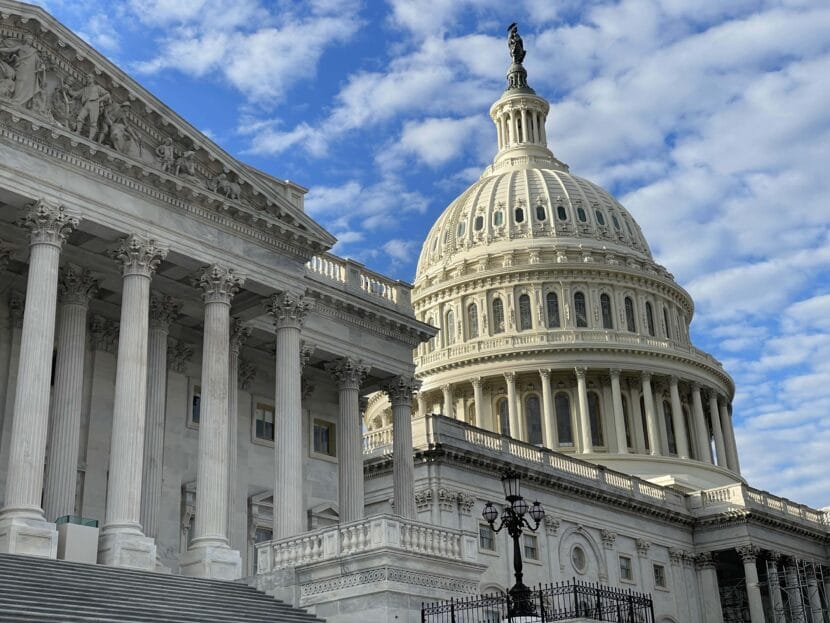
U.S. Capitol dome
The U.S. Capitol, viewed from the east side. (Liz Ruskin/Alaska Public Media)

With Sen. Lisa Murkowski’s help, Senate Republicans passed a sprawling budget reconciliation bill that contains much of President Trump’s domestic policy agenda.

The bill’s passage followed intense negotiations overnight between Murkowski and Senate leaders, aimed at retooling the bill to overcome her objections to removing benefits from Alaskans on Medicaid and food assistance.

“Did I get everything that I wanted?” Absolutely not,” she told reporters outside the Senate chamber.

Murkowski said she decided to vote yes because Republicans made adequate changes to rural health care and food assistance. But she also said she hopes the House makes more changes, the New York Times reported.

Only three Senate Republicans joined Democrats in voting against the bill: Susan Collins of Maine, Rand Paul of Kentucky and Thom Tillis of North Carolina. The vote was 51-50 after Vice President JD Vance cast the tiebreaker.

Murkowski, like Collins, was one of the “Medicaid moderates” who didn’t want to see big cuts to the government-funded health care coverage for low- and middle-income Americans. Senate leaders crafted a slew of special Alaska carveouts to win Murkowski’s support.

Murkowski also held out to support better tax treatment for wind and solar energy. The final bill dropped a proposed excise tax on clean energy.

The bill also includes new oil lease sales in the Arctic National Wildlife Refuge and the National Petroleum Reserve Alaska. Murkowski has championed those for years.

The bill goes next to the House, where a different version passed in May without a vote to spare.

The House could pass the Senate bill, which would be the quickest option and might allow Trump to sign it on his July 4 deadline. Lawmakers from both chambers could also meet in a conference committee to work out the differences.

Any changes would have to be approved again in the Senate.

Murkowski’s vote uncertain as GOP wrangles support for budget megabill

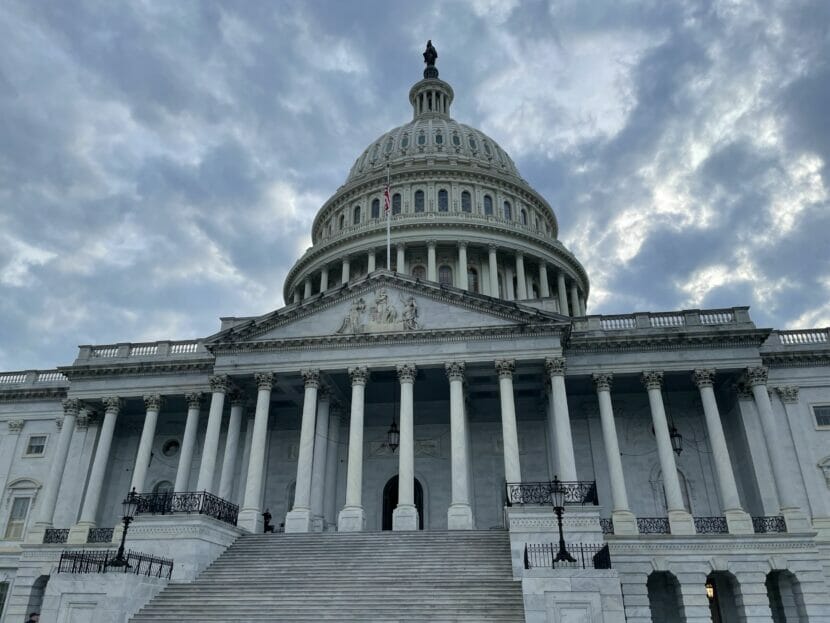
The U.S. Capitol building
The U.S. Capitol. (Liz Ruskin/Alaska Public Media)

The U.S. Senate is voting on amendments and negotiating behind the scenes Monday, trying to get enough Republican votes for the megabill containing tax cuts and many of President Trump’s priorities.

Sen. Lisa Murkowski is one of several Republican holdouts.

Republican leaders added special carveouts for Alaska to try to win her support. But on Sunday the Senate parliamentarian determined that at least two of them — enhanced Medicaid and Medicare payments in Alaska and Hawaii — wouldn’t comply with Senate rules for this type of bill. That might mean they have to be modified or dropped from the bill.

The official’s ruling further complicates the Republican scramble to pass the giant bill, which weighs in at more than 900 pages.

Murkowski helped Republicans get enough votes to open debate late Saturday. Before she did, Senate leaders added a collection of items to make the bill more appealing to her. Those include an increased tax deduction for whaling captains, favorable tax treatment for community development fishing organizations in the Bering Sea and Aleutians and a provision that could relieve Alaska from having to pay some of the costs of SNAP, a federal food assistance program. It would also allow Alaska to seek waivers from new work requirements for SNAP recipients.

Many of the amendments the Senate is considering are from Democrats and have little chance of passing. But Murkowski, along with both of Iowa’s Republican senators, has co-sponsored an amendment to slow the phaseout of tax credits for wind and solar projects. Other Republicans with many pending renewable projects back home have voiced support, too. On the other side, Trump is pressing to kill the clean energy incentives, which were part of President Biden’s Inflation Reduction Act.

The Senate could take a final vote as early as Monday night. The bill would then go back to the House. It’s still possible that both chambers could pass the bill by President Trump’s deadline of July 4.

The proceedings are dashing lawmakers’ plans for what was expected to be a week away from the Capitol ahead of Independence Day. Murkowski was supposed to attend a book launch at the Anchorage Museum Monday night for her new memoir, but that event has been cancelled.

Legislators argue cuts in GOP megabill would mean ‘chaos’ for Alaska

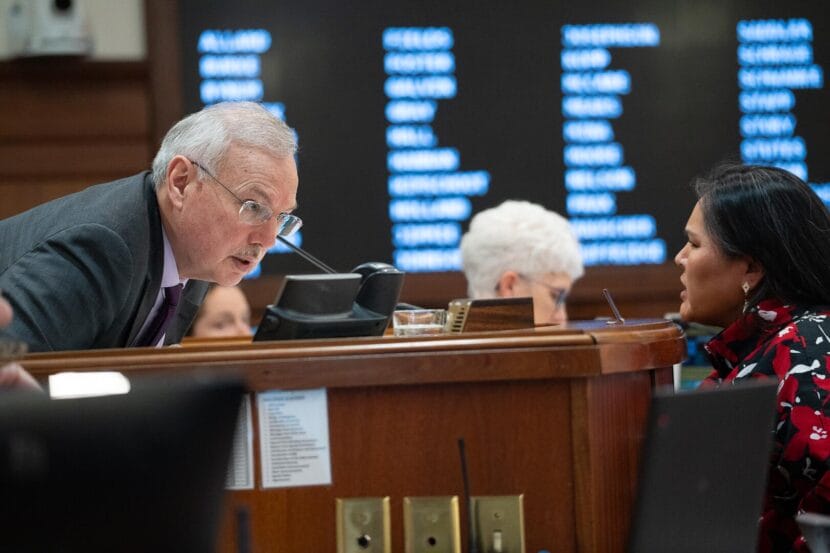
Rep. Nellie Jimmie, D-Tooksook Bay, speaks with House Speaker Bryce Edgmon, I-Dillingham, during a floor session on Monday, March 10, 2025.
Alaska House Speaker Bryce Edgmon, I-Dillingham, speaks with Rep. Nellie Jimmie, D-Tooksook Bay, during a floor session on Monday, March 10, 2025.

Some key Alaska state legislators are pushing back on the Republican budget package known as the “big, beautiful bill.”

With U.S. Senate votes coming soon, state Senate Majority Leader Cathy Giessel, R-Anchorage, said she and House Speaker Bryce Edgmon, I-Dillingham, thought it was time to ring the alarm bells.

“Bryce and I … have been astonished and dismayed at what we’re seeing Congress looking at doing to our Medicaid program,” Giessel said in a phone interview Friday.

In a New York Times opinion piece Friday, the pair of legislative leaders argued the tax- and spending-cuts package would “throw state budgets into chaos” for rural states like Alaska.

Roughly one in three Alaskans has Medicaid coverage. Edgmon, who represents Bristol Bay and other rural Southwest Alaska communities, said the program props up communities throughout rural Alaska.

“It’s so interwoven as a whole into our entire economy out here — everything from air taxis to restaurants to transportation to certainly health care itself,” Edgmon said in a phone interview from Dillingham.

The New York Times piece he co-authored with Giessel is headlined “Alaska Cannot Survive This Bill.”

Changes to Medicaid and the federal food aid program known as SNAP could push some families into bankruptcy and leave others without enough food on the table, Edgmon said. He and Giessel wrote that cuts to SNAP could force village grocery stores to close.

“The SNAP program, I’d characterize as one of the sleeper programs in Alaska, because it does provide a lot of benefits to people that sort of escapes … the average person’s comprehension of how important it is,” Edgmon said.

SNAP, the Supplemental Nutrition Assistance Program, pays for food for roughly 70,000 low-income Alaskans. All of the money for that food currently comes from the federal government, though the state shares half of the cost of administering the program.

The House-passed version of the One Big Beautiful Bill Act would, for the first time, require states to pay part of the cost of benefits.

A Senate proposal would push up Alaska’s SNAP costs by roughly $50 million, according to data Giessel shared from the state Division of Public Assistance.

The status of that provision in the Senate bill is in flux. It was recently stripped out of the bill under the rules the Senate is using to avoid a filibuster, but Republican leaders say they plan to push it back in as the bill approaches procedural votes, amendments and a final Senate vote, a process that could start as soon as Saturday.

Giessel says the changes couldn’t come at a worse time for Alaska’s already-stressed state budget. Lawmakers approved an austere spending plan this year as low oil prices sent them scrambling.

“It’s going to be hard to find that money,” she said. “How much more are we going to cut from the Department of Transportation? How much more are we going to cut from the Department of Corrections? How much more are we going to have to reduce our commitment to education?”

The impact of Medicaid changes on the state budget is less clear. The House-passed version of the bill would reduce federal spending on Alaskans’ health care by roughly $200 million per year and leave tens of thousands of Alaskans without health coverage, according to the Kaiser Family Foundation and health care groups.

Giessel argues that would force some costs indirectly onto state and local employees’ health insurance, since more uninsured Alaskans would forgo primary care and instead show up at emergency rooms — federal law requires them to treat everyone, even if they can’t pay.

Defenders of the tax and spending cuts package, though, say opponents vastly overstate the impacts on Alaska’s budget.

Much of the projected loss in Medicaid spending is linked to a proposed work requirement for adults without children. But the most recent Senate draft has exemptions for Alaska Native people covered by the Indian Health Service, people with serious mental health conditions, including substance abuse, people living in areas where the unemployment rate is above 8%, pregnant and postpartum mothers, and people receiving major medical care outside their home community.

The state’s chief Medicaid administrator, Department of Health Deputy Commissioner Emily Ricci, said those broad exemptions mean it’s tough to anticipate just how many Alaskans might lose Medicaid coverage.

“Many national estimates don’t reflect Alaska’s unique circumstances or the exemptions in the bill that apply here, so they may overstate the impact on our state,” she said in a statement. “The bill is not complete, the Department is closely tracking as it develops.”

House Minority Leader Mia Costello, an Anchorage Republican, said in a statement that the bill “protects our most vulnerable while ensuring that benefits are targeted and sustainable.”

“It is narrowly focused on the subset of adults who are fully able to work but choose not to,” she said.

Gov. Mike Dunleavy, in a statement on social media, pointed to a broad range of energy-related provisions in recent Senate drafts that would ease drilling on federal land and direct more oil and gas tax revenue to the state, and another that would provide $300 million to homeport an icebreaker in Juneau.

Costello said the bill, which also extends and expands tax cuts passed in 2017, would give the state’s economy a boost.

“To claim Alaskans can’t ‘survive’ a federal budget bill that is due to unleash so many aspects of our economy while maintaining benefits to our most vulnerable is misguided,” she said.

But Giessel, who is a family practice nurse practitioner, questioned whether Alaskans would truly benefit from the bill’s carve-outs.

“What does it take to get an exemption? It takes someone applying for that exemption,” she said. “I can tell you that people applying right now, even for Medicaid benefits, are waiting months.”

Another Republican legislative leader, Senate Minority Leader Mike Shower of Wasilla accused Giessel and Edgmon of fearmongering and questioned the pair’s commitment to reining in costs in the state budget.

“The leadership in the Alaska Legislature refuses to entertain anything along the lines of a balanced and realistic fiscal policy. Instead, it’s how to protect government, no discussion of protecting and encouraging the private sector, and how we are going to tax Alaskans to pay for a state government that — by their own tacit admission in the (opinion piece) — we can’t really afford,” Shower said in a statement.

As of Friday afternoon, Senate leadership has yet to unveil the final text of the bill, even as they plan to vote as soon as this weekend. Edgmon says that makes it difficult to assess what it would mean for the state in any appreciable level of detail.

The bill is likely to span hundreds of pages, and Edgmon says the race to pass the fast-changing bill by the president’s July 4 deadline makes it hard to anticipate the consequences.

“I don’t think anybody, even ourselves as long term legislators, have a full understanding of what those impacts could be as they trickle down the entire economy,” he said.

The Congressional Budget Office, which analyzes the impact of federal legislation, said last month that the House’s version of the megabill would on average, accounting for both the tax and benefit cuts, increase the resources available to the average American. But the highest-income households would come away with more — while those in the bottom 10% would be worse off.

Edgmon and Giessel closed their opinion piece with a warning.

“Alaska is one of the most amazing places in our country,” they wrote. “Congress is risking our way of life to give money to the rich.”

Site notifications
Update notification options
Subscribe to notifications