Alaska Public Media

Alaska Public Media is one of our partner stations in Anchorage. KTOO collaborates with partners across the state to cover important news and to share stories with our audiences.

Gov. Dunleavy vetoes bill that would strengthen oversight of oil tax collection

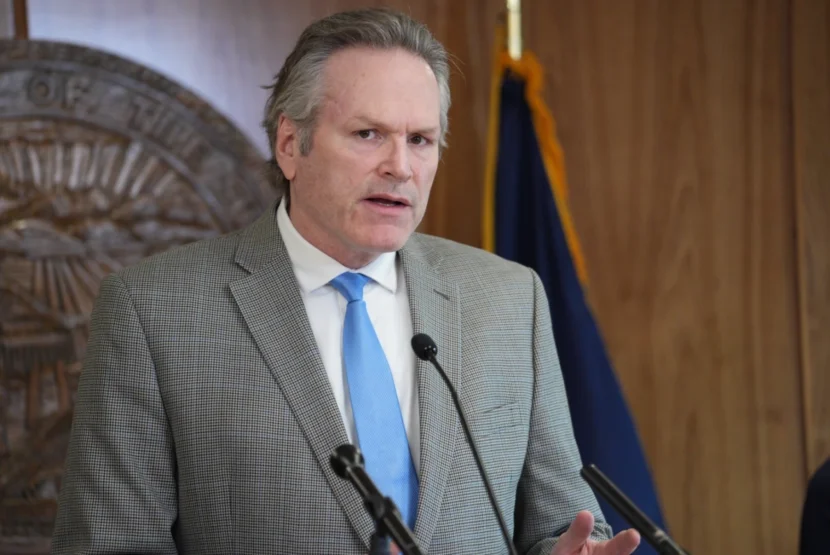
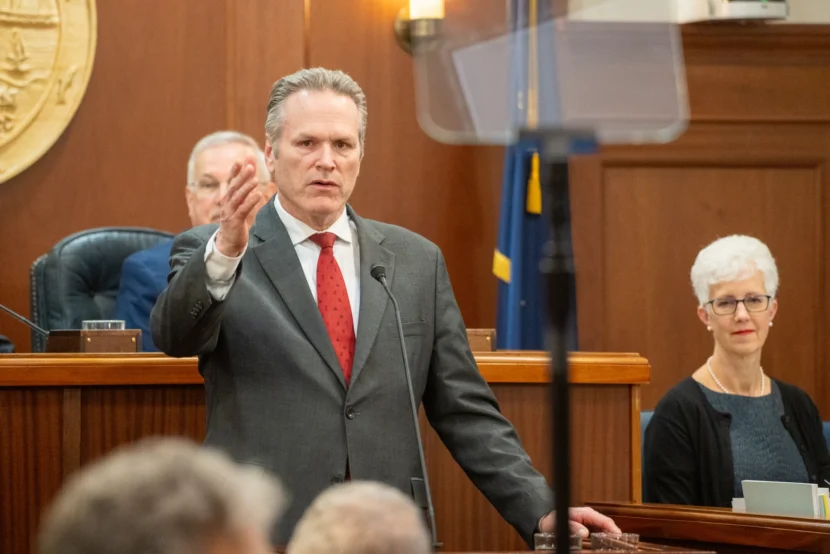
Gov. Mike Dunleavy speaks to reporters during a news conference on April 17, 2025. (Photo by Eric Stone/Alaska Public Media)

Gov. Mike Dunleavy told legislative leaders Monday that he had vetoed a bipartisan bill that the heads of the state House and Senate say was necessary to address what they described as a “persistent pattern of obstruction within the senior ranks of Alaska’s Department of Revenue.”

Backers of the bill say it’s an effort to get to the bottom of why certain types of oil tax revenue have fallen precipitously in recent years by clarifying the authority of the Legislature’s auditor.

Bill sponsor Sen. Bill Wielechowski, D-Anchorage, said Monday that the veto was “shocking.” The administration’s failure to turn over usable information means lawmakers can’t effectively perform oversight, he said.

“This is information that has been provided to the auditor ever since the auditor has been able to recollect. This information has never not been provided to the state,” he said. “The question the Legislature should be asking right now, and the people of Alaska should be asking is, what is the governor hiding?”

Dunleavy and Revenue Commissioner Adam Crum declined interview requests.

The amount of money deposited in the state’s main rainy-day fund from so-called tax and royalty settlements dropped from $281 million in 2020 to just $3.1 million in 2024, according to documents from the Department of Revenue.

Meanwhile, the Dunleavy administration has cut back on the information it provides to auditors seeking to examine tax payments by oil and gas companies, Legislative Auditor Kris Curtis told lawmakers earlier this year.

Instead of summary tables provided by past administrations as recently as 2018, Curtis said, the Department of Revenue last year sent her office what she described as a “data dump” — an unintelligible collection of raw data that her office could not assess. She said the department refused to turn over the data in a usable format.

“The most recent reason that they provided was that they were not required to do so by law,” she said at an April hearing. “This interpretation overturns longstanding precedent, and it opens the door for all state agencies to refuse to provide or compile information in the format requested, therefore preventing legislative oversight.”

The bill was the subject of a letter from Senate President Gary Stevens, R-Kodiak, and House Speaker Bryce Edgmon, I-Dillingham, who urged the governor not to veto it.

“Without timely access to complete and usable information,particularly as it pertains to oil and gas production taxes, oversight is impaired, public trust is undermined, and the integrity of our state’s governance is imperiled,” they wrote.

In his veto message, Dunleavy said the bill was an unconstitutional delegation of the Legislature’s authority. The state Constitution gives the state auditor the authority to look over the state’s books, but Dunleavy said the Constitution doesn’t allow the auditor to specify the format for data it requests.

“The Alaska Constitution does not grant to the Auditor or to (the Legislative Budget and Audit Committee) discretion to command the activities of the executive branch by ordering state agency employees to produce work product at their whim and under threat of criminal sanction, nor may the Legislature delegate such an expansive and unchecked authority,” he wrote.

Wielechowski said legislative attorneys had written the bill and had not flagged any constitutional issues.

The bill passed the Senate unanimously and by a 30-10 vote in the House.

Rep. Kevin McCabe, R-Big Lake, who voted against the bill, said the problem was overblown. He said he saw the bill as a “politically motivated” attack on Revenue Commissioner Adam Crum, a possible candidate for the 2026 governor’s race.

“I think that the governor has issues now and again, and I have issues now and again, but I know Mike Dunleavy to be a pretty honest guy,” he said. “I don’t think he is intentionally telling the Department of Revenue (or) Adam Crum to hide anything, or to tell any of his departments to hide anything.”

McCabe said he agreed with lawmakers’ desire for transparency on tax issues, but said the bill was the wrong way to accomplish the goal.

Lawmakers could override the veto with a two-thirds vote when they return in January.
Dunleavy cuts Legislature’s education funding increase by $200 per student

Alaska Gov. Mike Dunleavy gestures to his wife, Rose Dunleavy, during the opening moments of his seventh annual State of the State address in Juneau on Jan. 28, 2025. (Eric Stone/Alaska Public Media)

Alaska’s public schools likely won’t get all the money lawmakers approved in a bipartisan vote last month after Gov. Mike Dunleavy unilaterally reduced education funding with a line-item veto.

Dunleavy cut $50.6 million from formula funding for public schools, equivalent to $200 in basic per-student funding, known as the base student allocation, trimming back a $700 increase lawmakers approved last month.

Dunleavy also made other significant cuts to education spending approved by the Legislature: $5.7 million for early intervention and infant learning programs, $490,000 for teacher recruitment and $554,000 in incentives for teachers who receive a national certification.

Dunleavy also vetoed $25.1 million set aside for school maintenance and repairs, despite a KYUK, NPR and ProPublica investigation this year that found many rural schools in disrepair.

“The oil situation has deteriorated. The price of oil has gone down, therefore our revenue is going down, and, basically, we don’t have enough money to pay for all of our obligations,” Dunleavy said in a video posted to social media.

The veto is essentially a funding cut for districts, since it’s a significant reduction from the $680 one-time base student allocation equivalent approved last year. School leaders across the state immediately condemned the veto.

“It is unprecedented. It is going to cause chaos in districts around the state,” said Kelly Lessens, the head of the Anchorage School Board’s Finance Committee. “It is going to require local school boards and superintendents to make some very hard decisions, really a few weeks from the start of the new fiscal year.”

The Anchorage School Board, anticipating the vetoes, scheduled a special meeting for 6:30 p.m. Thursday. Lessens estimated the board would have to find more than $4 million in cuts.

The Kenai Peninsula Borough School District will face even deeper cuts, Superintendent Clayton Holland said, since it budgeted for funding equivalent to what it received last year.

“We’ve already been, over the years, cutting and cutting away…It’s across the board. And so we are having impacts that really are devastating to our communities,” he said.“I just worry what that’s going to do to everyone — what that does for our students, what that does for the future of Alaska as people look to choose to have options elsewhere.”

Senate President Gary Stevens, R-Kodiak, said it was unlikely lawmakers would seek to quickly reconvene to attempt to override Dunleavy’s line-item veto, saying that it would be difficult to gather enough lawmakers in a special session to muster the three-quarters vote necessary to override a budget veto.

Stevens said he was disappointed by the cut, saying the budget lawmakers approved in May anticipated declines in revenue from oil and the federal government.

“It’s not as if we don’t have the money. We planned for it. We have the funds,” he said. “We came up with a good budget that could afford to … increase $700, and I’m sorry the governor has vetoed it down.”

Leaders of the Republican minorities in the state House and Senate did not immediately respond to requests for comment. A spokesperson said Dunleavy had gone home to his family and was not available for an interview.

The veto of education funding is one of more than $128 million in general-purpose state spending reductions Dunleavy made using his line-item veto power, which allows him to reduce spending approved by the Legislature when signing the state budget into law.

But the school funding veto in particular is a blow to lawmakers’ top priority from this past legislative session. School districts across the state have pleaded with lawmakers and the governor to increase formula funding, saying they’ve been forced to slash their offerings for Alaska’s students.

Lawmakers increased the so-called base student allocation by $700, adding roughly $185 million to annual state education spending, by overriding Gov. Dunleavy’s veto of a bill that paired a funding increase with some policy reforms. The override vote was bipartisan, garnering support from 46 of the 60 members of the Alaska House and Senate.

It was the first substantial increase to the funding formula since 2017. Though lawmakers added nearly as much in one-time funding for education last year, school leaders continued to push lawmakers to boost the base student allocation, the amount in state law that directs how much districts receive on an ongoing basis, to eliminate uncertainty.

“When the veto override happened with the $700 going through, I think that was our burst of optimism,” said Holland, the Kenai superintendent. “Even though we knew that the governor would be looking to line-item veto, we thought … he’d reconsider and uphold what’s in law right now.”

House Bill 57, the bill that increased the funding formula, also made a number of education policy changes — from restricting student cellphone use to easing charter school approval — most of which are unaffected by Dunleavy’s veto of education funding.

Dunleavy has vetoed education funding before — he cut a one-time funding increase approved by the Legislature in 2023 in half — but Thursday’s veto was the first time in recent memory, and perhaps longer, that the governor had reduced long-term funding specified by state law.

It’s the first time a governor has reduced the amount of funding schools receive since the state started using the current version of its funding formula in 1999.

Gov. Bill Walker, Dunleavy’s predecessor, twice vetoed basic education funding approved by the Legislature in the face of revenue shortfalls. But in both cases, the veto had no practical effect on the amount of money schools received from the state.

In 2015, when Walker issued wide-ranging line-item vetoes after the failure of a supermajority vote necessary to spend from savings, the Legislature, at Walker’s request, reconvened and restored education funding before the cuts took effect. A second veto in 2016 simply changed the source of funding, not the amount.

Sen. Bill Wielechowski, D-Anchorage, suggested the veto could run afoul of the Alaska Constitution’s mandate that the state establish and maintain a public school system.

“There, I think, is a legitimate question about whether or not we are getting into that area where we are not following the constitutional and (state) Supreme Court mandate to adequately fund education. I think that’s an open question at this point,” he said. “I wouldn’t be surprised if there was a lawsuit.”

Correction: A photo caption in an earlier version of this story incorrectly stated the year the photo was taken. It was captured Jan. 28, 2025.

Who has beef with the Republican mega-bill? Alaska’s solar industry, among others.

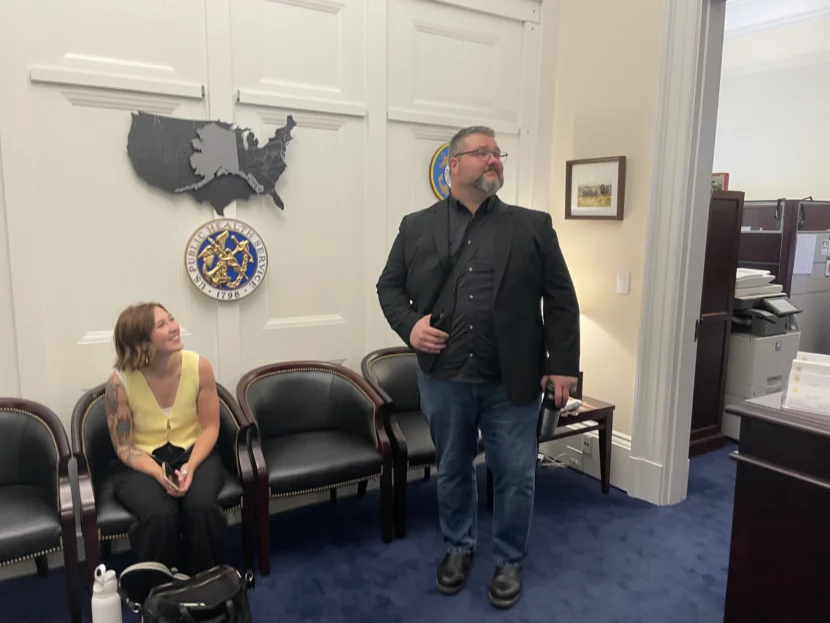
Josh Craft, an Alaska energy consultant, was in Washinton, D.C. on June 11, 2025 to advocate for renewable energy tax credits. He waited with Caitlin McLennan, who helped organize the visit, in the office of Congressman Nick Begich. (Liz Ruskin/Alaska Public Media)

WASHINGTON — The U.S. Capitol complex is crawling with citizen advocates these days, mobilized by one part or another of the “One Big Beautiful Bill” pending in the Congress.

A cluster of anti-hunger champions took a breather Wednesday afternoon in a stairwell of the Cannon House Office building.

“We have 500 advocates on the Hill today, from almost every state in the nation, and we have 200 Hill meetings,” said Cheri Andes, an organizer for Bread for the World, from Massachusetts.

Proposed cuts to SNAP and Medicaid have captured most of the attention since the reconciliation bill emerged in the House in May, but in its more than 1,000 pages are sections that have all kinds of interest groups knocking on congressional doors. They’re asking lawmakers to block the bill, or blunt some of its provisions.

Alaskans are walking the marbled halls, too. Chase Christie, development director for Anchorage-based company called Alaska Solar, flew to Washington to defend renewable energy tax credits that the House-passed bill slates for extinction. Josh Craft, an energy consultant and project manager from Wasilla, was on the same mission.

man in a checked shirt. Behind him a sign reads "Experts in the Field."
Chase Christie is development director of Alaska solar. He was at the U.S. Capitol June 11, 2025 to advocate for tax credits that have helped advance the renewable energy industry. (Liz Ruskin/Alaska Public Media)

Wednesday they went to Alaska Congressman Nick Begich’s office. Begich, a freshman Republican, voted for the reconciliation bill, and with it the cancellation of renewable energy credits that have boosted Christie and Craft’s industry.

Christie honed his message for the freshman Republican.

“Solar and renewables in general are unnecessarily politicized in this country,” he said, enroute to his appointment with a Begich staffer. “Nobody from our contingent is saying ‘solar only.’ We’re saying ‘solar and.’ Fill in the blank: Natural gas, oil, whatever. We’re part of the energy solution for this country.”

At stake are several kinds of tax credits. Some help homeowners install solar panels, heat pumps and the like. Thousands of Alaskans have claimed them. Other credits give utilities incentives to install large-scale solar or wind generation. And, utilities could sell their credits to investors.

Craft says together they’ve made for an effective financing tool.

“You can’t go to a bank and ask them for $500 million to do a wind project because they don’t have the underwriting capability. The banks don’t have the programs in place,” Craft said. “So the investment firms are the ones that have stepped up and provided the capital for local folks to go out and build these projects … because they get the credits.”

Eliminating the clean energy producer and investment tax credits would save about $250 billion over 10 years. The Congressional Budget Office estimates they’ve increased private investment in the renewables industry by about 30%.

Another Alaskan on Capitol Hill, advocating against specifics in the reconciliation bill, is Laurie Wolf. She’s president of the Foraker Group, a non-profit that supports other Alaska non-profits. Wolf is focused on tax provisions in the bill that would tend to suppress charitable contributions and philanthropy.

“Specifically, calling out areas that would deeply impact Alaska’s nonprofits and the people that we serve,” she said.

As she talks to the congressional delegation, Wolf said she can’t overlook the proposed cuts to Medicaid.

“Every rural (and) every urban health care system in Alaska relies on that, the equation of Medicaid,” she said. “And you can’t take that equation out and expect there to be health care for all Alaskans.”

Republican leaders in Congress had hoped to pass the reconciliation bill by July 4. But Republican senators have been slow to reach agreement among themselves about the bill, which is projected to add $3 trillion to the deficit.

As Alaska’s schools struggle, lawmakers announce task force to study why

Students walk off a bus to the Thunder Mountain Middle School entrance for the first day of school on Thursday, Aug. 15, 2024. (Clarise Larson/KTOO)

A group of state lawmakers is set to meet this summer and fall to study and discuss ways to improve Alaska’s public schools.

Lawmakers passed a bill last month boosting the base of the state’s school funding formula by $700 after overriding Gov. Mike Dunleavy’s veto. The bill also made a variety of education policy changes aimed at boosting student performance. Alaska’s schools have consistently lagged near the bottom in national rankings, and school leaders have advocated for larger funding increases, saying the public school system is in crisis.

Debates over school funding have dominated the past two legislative sessions, each culminating in vetoes by Gov. Mike Dunleavy, who told lawmakers he wasn’t convinced a funding boost would improve student performance.

Some lawmakers in the largely Democratic bipartisan coalitions called for a significantly higher funding boost — a more than $1,800-per-student increase in base funding, with future increases tied to inflation — but scaled back their efforts in the face of the state’s funding crunch, vowing additional funding increases in the future.

Sen. Jesse Kiehl, D-Juneau and one of the six lawmakers appointed to the task force, said the Legislature’s work isn’t done.

“This is one of the biggest expenses that state government has in Alaska,” he said. “It’s really important to do the best we possibly can for our kids, and also, always, to do the best we can with the public dollar.”

The Task Force on Education Funding created by House Bill 57 includes three Democrats, one independent and two Republicans, all of whom voted to override Dunleavy’s veto.

It comes with a sprawling mandate. The law tasks the group with analyzing state education funding, health insurance, student absences, school maintenance and ways to hold schools accountable for poor performance, among other things.

Lawmakers included the task force in the bill in an effort to win bipartisan support from lawmakers and — unsuccessfully — from Dunleavy.

Rep. Rebecca Himschoot, I-Sitka, who will co-chair the task force alongside Sen. Loki Tobin, D-Anchorage, said the monthly meetings will give lawmakers a chance to look at some ideas, like Dunleavy’s proposal for inter-district open enrollment, without the pressure of a fast-approaching deadline and the many demands of the legislative session.

“We needed to bring folks along who had ideas that are definitely worthy of a look but were too big to take on in the legislative session,” Himschoot said. “Rather than say no to something that could be a good idea, a task force is an opportunity to study that idea with experts over time and give it a more thorough vetting.”

One of the two minority Republicans on the task force, Soldotna Rep. Justin Ruffridge, said he’s hoping to hear a wide variety of perspectives during the task force’s two years of meetings. He said he’d like to hear from University of Alaska economists, federal Education Department officials and teachers to examine the reasons Alaska’s public school system languishes near the bottom in national rankings.

“I think some of that is due to, you know, reduced funding over the course of the last decade or so. But at the same time, it can’t just be, you know, a money-only solution,” Ruffridge said. “I think you have to start looking at some of the reasons why Alaska is struggling to keep up with other states.”

Ruffridge said he hoped the task force would research and suggest changes to elements of the public school funding formula, including funding for correspondence homeschool and factors that compensate smaller schools and those in high-cost areas.

The task force also includes Rep. Andi Story, D-Juneau, and Sen. Mike Cronk, R-Tok.

The Legislature’s task force announcement comes as Dunleavy weighs whether to reduce education formula funding in the state budget. He said at a Fairbanks Chamber of Commerce luncheon Tuesday that he’s planning to release his line-item vetoes this week, public radio station KUAC reported.

The task force is scheduled to convene in August and meet once a month during the legislative offseason. It’s required to produce a report with its recommendations by early 2027.

ICE officials send 40 immigration detainees to Alaska correctional facilities

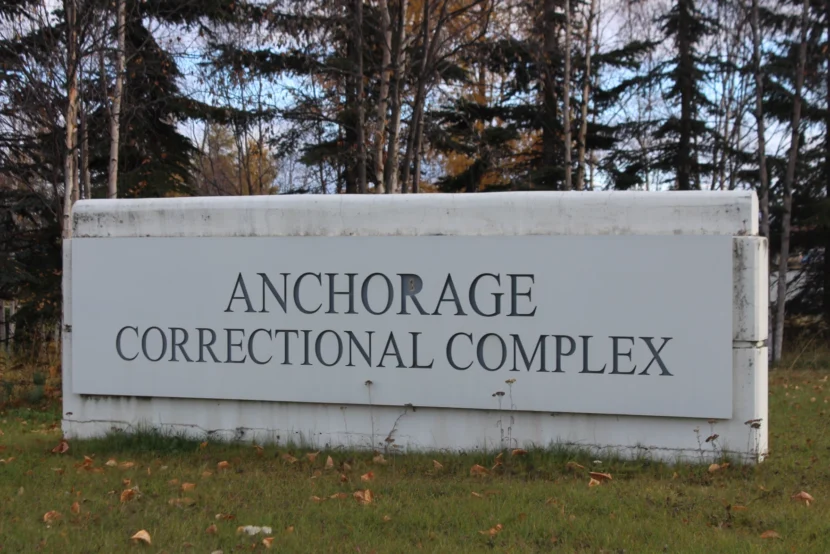
Anchorage Correctional Complex in 2020. (Photo by Lex Treinen/Alaska Public Media)

The Alaska Department of Corrections, which handles the state’s jails and prisons, has taken in 40 people who were detained outside of the state by U.S. Immigration and Customs Enforcement. The move comes amid a national crackdown on immigration by the Trump administration.

In a statement, Alaska Deputy DOC Commissioner April Wilkerson said all 40 of the detainees are men, and they were taken in under an “existing contract for federal detainees.” Wilkerson said the state is being reimbursed $223.70 per man per day, and DOC anticipates the men will be held in the state for about a month. She said the state’s prison population is at about 83 percent bed capacity, as of Monday.

Wilkerson declined to answer additional questions, including what facilities the men are being held at, and where they were originally detained.

Anchorage-based immigration attorney Nicolas Olano called the move “unusual” and said he hasn’t seen transfers like this in his decade as a lawyer in Alaska.

“This is like sending people, I think, almost like trying to send them to El Salvador, to somewhere far remote,” Olano said. “And it’s just the same idea of punishing the immigrant and punishing their families and creating fear and distress upon everybody.”

Olano said he’s been made aware that at least some of the detainees are being held at the Anchorage Correctional Complex. He said conditions are “very poor” at the Alaska facilities, and detainees aren’t able to leave their cell for very long or go outside.

“The food is terrible, and the medical attention is subpar,” Olano said, comparing conditions in Alaska to the next closest ICE facility in Washington. “This is different, and I’m not saying that it’s a great camp, but my understanding of what the clients have told me, the treatment, the food, the space in the facilities, are much better in Tacoma.”

Olano said Alaska also has a shortage of interpreters. He said he’s been contacted by the attorney of one of the detainees who was moved to Alaska, but as of Monday afternoon he was not representing any of the 40 men.

“I’m going to find out what we can do for him, try to get in contact with these other people and just pass out the information that we are going to try to help and see what we can do,” Olano said.

A regional spokesman for ICE did not immediately respond to a request for comment. As of the end of May, 11 people in Alaska have been detained by ICE officials.

Alaska legislative leaders call on governor to end ‘obstruction’ by Revenue Department

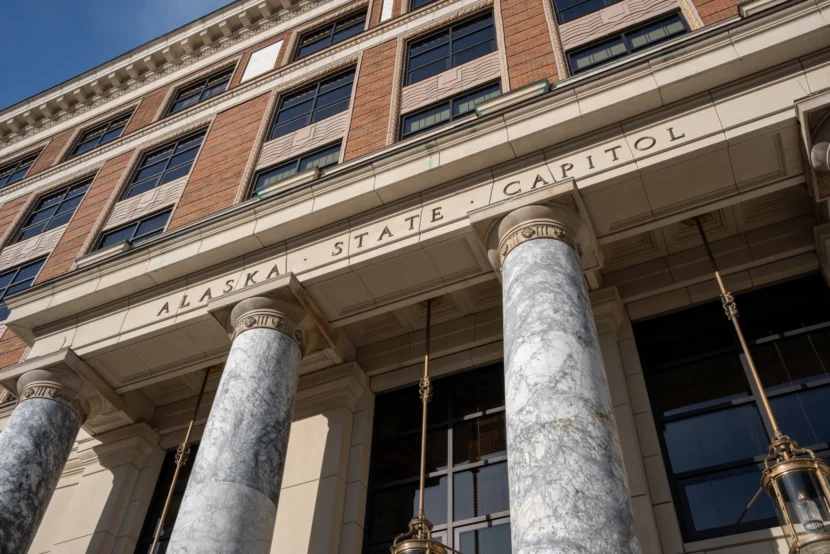
The Alaska State Capitol is illuminated by sunlight on Feb. 14, 2025. (Eric Stone/Alaska Public Media)

The legislative session ended last month, but tension persists between the governor and state lawmakers.

In late May, legislative leaders sent Republican Governor Mike Dunleavy a letter criticizing the Department of Revenue for, as the letter put it, obstructing the Legislature’s access to information on oil and gas taxes. Specifically, lawmakers have been trying to figure out if the state is getting the tax money it is owed.

According to the Anchorage Daily News, the last such review covered a time period from 2006 to 2011 and found the state was owed more than a billion dollars in taxes.

That review was in 2018. Dunleavy has been governor since then, and the administration has refused to give legislators the same information that previous administrations gave up willingly.

ADN reporter Iris Samuels wrote about the letter and says it’s just the latest chapter in a long-running saga spanning pretty much the entire Dunleavy administration.

Below is the transcript of an interview with Samuels on Alaska News Nightly. It has been lightly edited for length and clarity.

Iris Samuels: These numbers are pretty basic, and what the legislative auditor has said is, if the Department of Revenue is not collecting this information in this particular easily digestible form, that in itself is cause for concern, because we should really know, pretty offhand, pretty easily, how much the state is assessing in extra taxes every year.

Casey Grove: Right. So, I mean, there’s this letter, but then this past practice of the Department of Revenue willingly providing this information to the Legislature is also now the subject of a bill that seeks to compel the administration to do that. And I guess part of this is also that those legislators are concerned that the governor might veto that bill, right?

IS: Right. So lawmakers basically got together this year and passed this bill that is meant to underscore existing powers that the state, that the legislative auditor has. So it’s really not giving the legislative auditor new powers. It’s just a bill that says these are the authorities of the legislative auditor, whose role is defined in the state Constitution, and basically asking in a new form, the administration of the governor, to comply with requests that come from the legislative auditor.

And then going to this letter, the letter accompanied the bill. And so the goal there from the House Speaker and the Senate President was to send a message to the governor, who is no stranger to the veto pen, “Hey, please don’t veto this particular piece of legislation.”

CG: Tell me more about the extraordinary nature of that, because I think, you know, some people might look at it and say, “OK, well, they sent him a letter. So what? It’s just a letter.” But that’s actually pretty rare for this kind of a circumstance, right?

IS: Yeah, to be fair, I haven’t been covering the Legislature for that long, but I’ve never heard of the presiding officers sending a letter directly to the governor to accompany a piece of legislation. And what this letter says is basically that this goes to the very heart of state government in Alaska, and this idea that we have a legislative branch, we have an administration, and they should really be working together for the benefit of the people of Alaska, not working as sort of opposing sides.

So it remains to be seen. He could actually, you know, take the letter to heart. And we really don’t know what’s behind all this. Again, in theory, the gravest concern is that the state has been leaving some money on the table, that it could be collecting from oil and gas companies in taxes. But we don’t know if that’s the case. Maybe the state is actually performing the audits as it has in the past. It’s collecting all this extra revenue, and we just don’t know.

CG: I guess, I mean, we also don’t know why, right? Speaking of Gary Stevens, Senate President Gary Stevens, his quote in your story was something about, you know, “We don’t know if this is incompetence, or, you know, these folks are incapable of doing this work.”

What do you think about that? I mean, have you gotten any indications that it’s just, it’s too much of a burden to put this together, people are not doing their jobs, or is the information actually being, like, withheld for some reason?

IS: I reached out to the Department of Revenue with questions for this story, and I did not get a response. But one thing that is worth pointing out is that several pretty high-up officials within the Department of Revenue have left under the tenure of the current Commissioner of Revenue, and that’s Adam Crum.

Adam Crum is actually the third Revenue Commissioner under Gov. Dunleavy. He really has not spoken publicly about this. He was invited to address a legislative committee hearing when the Legislature was still in session, and he didn’t show up, and that caused a lot of House members who were in that committee to be quite upset. The legislative leaders really were wanting to hear directly from the source about what was behind all of this, again, under the assumption that potentially there is a perfectly reasonable explanation.

CG: Which we’re still waiting to hear, right?

IS: Right.

CG: So where does this go from here? We’re just sort of on a veto watch?

IS: Yeah, I think we’ll wait to see what happens with this piece of legislation, and then, regardless of what happens, we’re still waiting for the results of this audit. We still, we really just want to know, bottom line, is the state collecting the tax revenue that it is owed?

Site notifications
Update notification options
Subscribe to notifications