Alaska Public Media

Alaska Public Media is one of our partner stations in Anchorage. KTOO collaborates with partners across the state to cover important news and to share stories with our audiences.

Alaska lawmakers’ session is over. Here are 9 things they did.

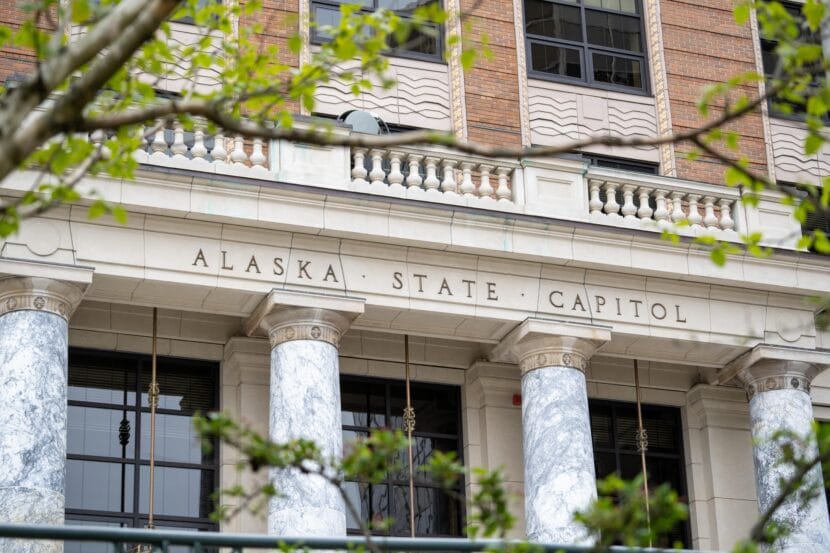
The facade of the Alaska State Capitol in Juneau on May 22, 2024.
The facade of the Alaska State Capitol in Juneau on May 22, 2024. (Eric Stone/Alaska Public Media)

After four months, lawmakers have finished their yearly legislative session. They passed dozens of bills and resolutions, a budget with a $1,000 Permanent Fund dividend and teed up several proposals for next year’s session.

Here’s some of what they did.

1. Passed a budget with a $1,000 PFD and very little new spending

With oil prices lower than forecast and widely expected to fall further — the federal government says tariff-induced economic uncertainty and rising global oil production are to blame for that — passing a budget was an especially challenging task this year.

“When we started, we were a billion and a half (dollars) underwater, and then after some adjustments, we were $2 billion underwater,” said Sen. Bert Stedman, R-Sitka, referring to the governor’s budget. “We navigated through the process here, and we ended up with a small surplus.”

The $1,000 Permanent Fund dividend is an all-time low for the state’s annual oil-wealth check, when adjusted for inflation. Dividends typically go out to Alaskans in the fall.

The Senate passed an especially austere budget, refusing nearly all of the governor’s requested additions and the vast majority of those added in the House’s version of the budget.

The unrestricted portion of the budget — the portion that lawmakers squabble over, excluding federal funds and other restricted revenue — is $6.2 billion this year, down about 5%, $369 million, from last year.

But in the end, some key areas saw spending increases. Education is by far the largest one — especially a boost to K-12 funding, more on that in a minute. But there’s also $5.5 million for child advocacy centers, $13.7 million in behavioral health grants, $7.7 million for child care, $2.5 million for senior centers and $880,000.

The head budgeter for the House, Rep. Andy Josephson, D-Anchorage, said lawmakers saw those as essential needs.

“Some of these investments are not enormous, but they have vast benefits downstream, and that’s why we think they’re warranted,” he said. “In a competition with that and the dividend, folks need to understand that when we spend this $50 million, that would amount to very, very little extra money in a dividend.”

An additional $50 million, if put towards the dividend, would come out to $80 per Alaskan.

Lawmakers tried to draw roughly $200 million from savings to fill an oil slump-induced budget deficit in the current fiscal year, but minority Republicans successfully blocked the three-quarters majority necessary to draw from the Constitutional Budget Reserve. Instead, the money will come from accounts for the state’s investment agency, the Alaska Industrial Development and Export Authority, and a state scholarship fund.

“I have, am having a hard time myself — this is, personally, no one else — drawing from savings to fund the budget right now, when I’ve had no negotiations with the Senate majority or the House majority,” Rep. DeLena Johnson, R-Palmer, said ahead of the vote.

2. Overcame a veto and increased public school funding

Lawmakers have sought for years to substantially increase basic state funding for public schools by raising the base student allocation, part of the state’s education funding formula. This year, they succeeded.

A joint session of the Legislature voted 46-14 to override Dunleavy’s veto of House Bill 57, which increases basic per-student funding by $700, bans student cellphone use and makes a variety of changes to laws surrounding charter schools aimed at making them easier to create and renew. Eleven House and Senate minority Republicans joined the bipartisan majority coalitions to approve the bill.

Proponents said the funding would ease, but not eliminate, budgetary pressures that have led school systems across the state to reduce their offerings. They said additional funding would help reduce class sizes and, since the bill changes the state’s funding formula indefinitely, prevent them from having to prepare to lay off many teachers in staff while funding remains in flux, as as been the case in recent years.

Opponents, including the governor, said the bill didn’t make enough meaningful changes to education policy.

Because the governor has line-item veto power, the veto override is not the final word — Dunleavy said he has not decided whether to reduce education funding in the state budget.

3. Eased access to tablet computers for prison inmates

One bill that passed this year, House Bill 35, would allow prisoners to use tablet computers for things like classes, telehealth appointments, even virtual visits when people can’t travel long distances.

Backers say that tablets can also help make prisoners familiar with today’s very electronics-heavy world. Sen. Robb Myers, R-Fairbanks, was the primary advocate for the bill in the Senate.

“I think it can be a significant influence, both to help lower our recidivism rates and to help get some of our costs under control within the prison system,” he said.

Support for the bill crossed party lines. It passed the Senate unanimously and the House by a 28-12 vote.

4. Looked to out-of-state corporations for additional tax revenue

Members of the Senate’s bipartisan majority caucus spent much of the session calling for the state to raise new revenue to alleviate the fiscal crunch. Only one of those bills passed either the House or Senate.

That’s Senate Bill 113, which passed both chambers and is headed for the governor’s desk. It’s a change to corporate income taxes that aims to raise more money from out-of-state companies by changing how the tax code looks at sales over the internet to Alaska consumers.

“It doesn’t tax a single Alaskan. In fact, it lowers taxes on Alaskans,” Sen. Bill Wielechowski, D-Anchorage, said. “It raises taxes on Outside tech billionaires.”

The bill could face a veto from Gov. Mike Dunleavy, who said Monday he isn’t interested in signing tax bills until lawmakers come up with a comprehensive plan for the state’s fiscal future. That’s a goal that has eluded lawmakers and the governor for years, though Dunleavy said he’s hoping to get together with a small group of lawmakers this summer to hammer out some proposals.

It passed largely along caucus lines, 14-6 in the Senate and 26-14 in the House, with seven minority Republicans crossing over to support the measure.

5. Passed a new version a app-based rental car tax bill vetoed last year

Last year, lawmakers passed a bill that would have required peer-to-peer car rental companies like Turo to collect rental car taxes. Currently, the car owners are required to keep track of their taxes and file with the state, but many don’t, state officials say.

Dunleavy vetoed the bill, with a spokesperson calling it “unnecessary taxation.” That’s despite the fact that the bill did not change whether the tax was owed — just who was responsible for collecting it and sending it to the state. In fact, the bill cut taxes on Turo and similar platforms.

This year, lawmakers passed the very similar House Bill 123 in a near-unanimous vote.

There’s one significant change: It would cut rental car taxes for traditional agencies like Hertz and Avis by 1%, to 9%. Last year’s bill did not change the rental car tax rate. The rate for Turo and similar rental platforms would be lower, at 7%. This year’s bill, like last year’s, would not be retroactive, meaning Turo owners would not be liable for back taxes they haven’t submitted to the state.

Dunleavy has not said whether he’ll sign the bill this time around.

6. Sought to limit the interest rates payday lenders can charge

One bill lawmakers passed this year places strict limits on so-called “payday loans,” short-term, high-interest loans.

“These loans, often marketed as quick solutions, come with interest rates that average 421% in Alaska, according to the Alaska Public Interest Research Group, and frequently trap borrowers in cycles of debt,” sponsor Sen. Forrest Dunbar, D-Anchorage, said at a hearing earlier this year.

Senate Bill 39 caps the interest rate payday lenders can charge to 36%, the maximum rate for most other loans. Opponents said the bill was rushed and argued it could reduce low-income residents’ access to credit.

“This is government overreach,” said Rep. Jamie Allard, R-Eagle River. “Individuals should be able take loans as they wish at whatever percentage rate.”

It passed largely along caucus lines with the bipartisan majority caucuses in support: 14-6 in the Senate and 24-16 in the House.

7. Re-passed bills passed last year after midnight, and another challenged on constitutional grounds

Last year, Dunleavy vetoed five bills passed after midnight on the last day of the legislative session, which he said violated the state Constitution.

This year, lawmakers passed new versions of three of them:

  • House Bill 31, removing what sponsor Rep. Louise Stutes, R-Kodiak, said was a duplicative registration requirement for commercial fishing vessels
  • House Bill 69, also from Stutes, which authorizes $75 million in bonds for a cruise terminal upgrade in Seward
  • Senate Bill 15, sponsored Sen. Kelly Merrick, R-Eagle River, which allows 18-20-year-olds to serve alcohol under some circumstances and requires a new sign warning patrons that alcohol can cause cancer.

Lawmakers also re-passed elements of another bill from last year combining several unrelated proposals, which was the subject of a constitutional lawsuit. The state Constitution requires bills to be limited to a single subject. This year, lawmakers passed the four proposals as separate bills in an attempt to resolve the dispute.

8. Issued a variety of requests to the federal government and others

Lawmakers use resolutions to send messages, often to the federal government. This year, they passed a wide variety of resolutions. Here are a few:

  • House Joint Resolution 4, urging the federal government to keep the name Denali for North America’s highest peak
  • House Joint Resolution 5, asking Congress to extend the expired Secure Rural Schools program, which provides education funding in areas with large amounts of federal forest land
  • House Joint Resolution 11, opposing tariffs on Canada and affirming the nation’s sovereignty as an independent nation
  • House Joint Resolution 13, calling on the president to resume evacuation flights and expand visas for Afghans who helped U.S. forces
  • Senate Joint Resolution 10, urging Congress to issue the Congressional Gold Medal to Hmong veterans who assisted the U.S. in the Vietnam War
  • Senate Joint Resolution 12, requesting repairs and better maintenance of federal weather buoys
  • Senate Joint Resolution 15, asking the state’s congressional delegation to oppose cuts to Medicaid.

9. Left a few issues on the table for next year

Lawmakers also left legislation in three key areas unfinished.

An election reform bill, Senate Bill 64, stalled in the final days of the legislative session amid opposition from Republicans who said it made elections less secure. Lawmakers decided to hold the bill — and a separate bill that would reimpose limits on how much can be donated to candidates for state office, House Bill 16 — for next year.

A bill that would reinstate a pension system for state employees, which both the House and Senate’s bipartisan, Democrat-heavy majority caucuses said was a top priority, also did not cross the finish line this year. Though House Bill 78 passed the House on a caucus-line 21-19 vote, the primary pension advocate in the Senate, Sen. Cathy Giessel, R-Anchorage, called the pension bill a “two-year project.”

Also left unfinished were reforms to the structure of the Alaska Permanent Fund. Though there’s roughly $80 billion in the fund, managers have warned repeatedly that its antiquated two-account structure threatens its ability to pay for state services. They asked lawmakers to consider a constitutional amendment that would combine the two accounts into one, similar to a university endowment. They also asked that the amendment ensure that lawmakers cannot draw more than 5% of the fund each year. Though the 5% draw is part of state law, legislators can ignore it by a simple majority vote.

Though amendments were proposed in the House and Senate, they did not pass either body this year.

Because this is the first year of a two-year Legislature, bills don’t die at the end of the session — lawmakers can attempt to pick up where they left off next year.

The second session of the 34th Alaska Legislature is slated to gavel in on January 20, 2026.
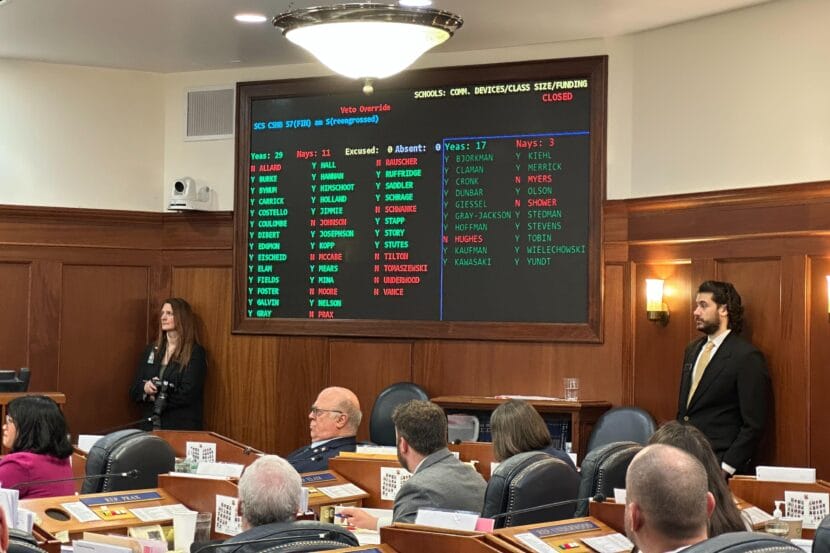
Alaska legislators override Dunleavy’s veto of education bill

a meeting room
Alaska legislators vote to override Gov. Mike Dunleavy’s veto of a bipartisan education funding bill. (Eric Stone/Alaska Public Media)

Alaska lawmakers on Tuesday voted to override Gov. Mike Dunleavy’s veto of a high-profile education bill that will increase long-term funding for public schools. A joint session of the Alaska Legislature voted 46-14 in support of House Bill 57 a day after Dunleavy announced he had vetoed the bill, lawmakers’ top priority for this session.

It’s the third time in two years that lawmakers have passed a bill increasing the base student allocation, but until Tuesday, they failed to overcome vetoes from Dunleavy.

The bill increases basic per-student state funding for public schools, the so-called base student allocation, by $700. It’s a key part of the formula that determines state funding for school districts, and increasing the figure was a key issue in lawmakers’ election campaigns last fall.

It’s the first substantial increase to the education funding formula since 2017, aside from a 0.5% increase that came alongside the Alaska Reads Act in 2021.

The bill also includes a number of education policy reforms, including limits on student cellphone use, changes to state laws surrounding charter schools and a grant program that would offer performance incentives to school districts based on student reading proficiency. The bill also creates a task force to study additional reforms, including an open enrollment system that would allow students to attend schools outside of their home districts.

Whether the funding ultimately flows to school districts, though, is uncertain. Alaska’s Constitution gives the governor the power to unilaterally reduce or eliminate line items from the budget. Dunleavy said Monday he’s considering whether to veto a portion of school funding from the budget but has not made a final decision.

This is a developing story. Check back for updates.

ANSEP cancels summer acceleration academy after loss of federal grant

ANSEP's building on the University of Alaska Anchorage campus.
ANSEP’s building on the University of Alaska Anchorage campus. (Wesley Early/Alaska Public Media)

The loss of a federal grant has forced the University of Alaska’s ANSEP program to cancel its long-running summer academy, less than two weeks before rural students were scheduled to arrive.

ANSEP, the Alaska Native Science and Engineering Program, operates the yearly Summer Acceleration Academy, allowing high school students in rural communities to come to Anchorage for a five-week program in various STEM courses.

Michele Yatchmeneff, chief operating officer for ANSEP, said many of these students don’t get a chance to take similar courses in their local schools.

“So what we do is offer the course here at the university, so that they can get dual credit,” Yatchmeneff said. “So they can get credit for graduation from high school and then also graduation towards a degree.”

Yatchmeneff said ANSEP officials were informed last week that the federal government had terminated their $2.5 million grant from the National Science Foundation, forcing the last-minute cancellation of the Summer Acceleration Academy. The program was set to begin May 24 and serve 47 students.

“The National Science Foundation right now has been told that they’re getting a 50% cut,” Yatchmeneff said. “They’re mainly supporting a lot of research; I also have had research projects with them. So nationally, this has become an issue, and ANSEP is part of that.”

Yatchmeneff said she’s hopeful the program will return next year, and she doesn’t anticipate any further cuts.

“Right now, we still have federal funding coming in from example, like the National Park Service and a few others, and we don’t foresee any more cuts,” Yatchmeneff said.

Other summer ANSEP programs, including the Summer Bridge internship program and middle school academies, were not impacted by the funding cut.

This is not the only recent impact to the ANSEP program from changes at the federal level. The program recently removed the term “Alaska Native” from many parts of its website, citing compliance with federal guidelines on DEI-related language related to race. The change sparked widespread pushback. In the United States, Native American and Alaska Native tribal members are legally considered a political class, as opposed to just a racial group.

Correction: This story has been corrected to reflect that ANSEP is still referred to as the Alaska Native Science and Engineering Program, despite the removal of “Alaska Native” from different parts of its website.

Dunleavy vetoes compromise education funding bill, setting up override vote

a man on a screen in a suit
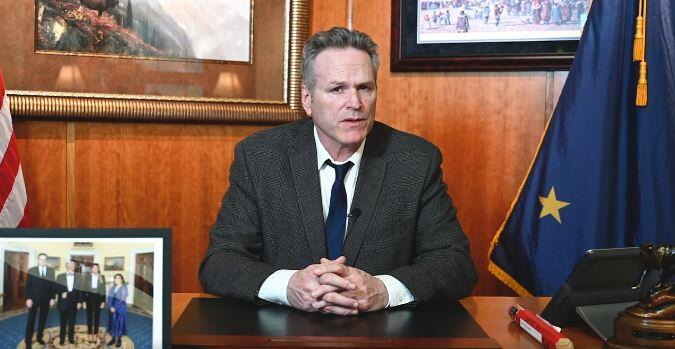
Gov. Mike Dunleavy announces his veto in a video posted on his social media accounts on Monday, May 19, 2025. (Facebook screenshot)

Gov. Mike Dunleavy vetoed a bill Monday that would substantially boost long-term education funding. House Bill 57 would have increased the base of Alaska’s public school funding formula, the base student allocation, by $700, increased student transportation funding and made several policy reforms.

“There is no evidence that a permanent increase in the Base Student Allocation will improve educational outcomes,” Dunleavy wrote in his veto message to legislative leaders. “Therefore, this bill in its current form does not serve the best interest of Alaskans.”

Parents, school leaders, local elected officials and business leaders have long said that the state’s public school system is in crisis after years of flat long-term funding in the face of inflation.

Some legislators said Monday that they’re hopeful they can override Dunleavy’s veto. A vote is scheduled for Tuesday morning.

“Our schools need relief. They need it soon. Many of them are right on the cusp of, basically, insolvency,” House Speaker Bryce Edgmon, I-Dillingham, said.

In recent years, lawmakers have provided one-time funding boosts for schools but have failed to come to terms with Dunleavy on a long-term increase.

In an effort to find compromise, lawmakers included several reforms in the bill — a ban on student cellphone use, targets for the maximum number of students in each classroom, and a variety of reforms aimed at making it easier to create and maintain charter schools, a key priority for the governor.

“It’s really a shame, because I think, in many ways, we gave the governor many wins on education,” Senate President Gary Stevens, R-Kodiak, said. “A lot of the things that he wanted are in there.”

But in the end, Dunleavy said it was not enough.

“We all agree that our schools need some funding. It did not contain the other half, as we say, of the coin,” Dunleavy said in a video posted to social media. “We worked hard on trying to get policies in there that we believe would help kids, would help families, and would help teachers.”

The veto was not unexpected. Earlier this month, Dunleavy told school superintendents he planned to veto the bill unless lawmakers passed additional bills with more of his priorities.

In the video, Dunleavy objected to a few omissions. He said he wanted lawmakers to implement a statewide open enrollment system, which would allow students living in one district to enroll in another.

Lawmakers said the system the governor envisioned would make it difficult for some families, especially military families who move to Alaska midyear, to enroll in the school closest to their home. The bill would have required a legislative task force to study the issue.

Dunleavy also said the bill didn’t do enough to improve student reading performance.

The bill lawmakers sent to Dunleavy sought to create a reading proficiency incentive grant program for school districts — for each student in grades K-6 who read at grade level or demonstrated improvement, districts would get $450.

But, with the state facing a budget crunch because of low oil prices, lawmakers sought to fund the grant program with an expansion of corporate income taxes aimed at capturing more revenue from out-of-state companies who do business in Alaska over the internet. Additional revenue from the tax bill was planned to bolster career and technical education.

But Dunleavy said he opposes new taxes without a comprehensive fiscal plan, which has eluded lawmakers for years. Dunleavy said lawmakers’ decision to tie the reading and tax proposals together was a sign legislators didn’t see the reading program as a priority.

“There was a game played with the tax, is what’s happening here,” he said at a news conference.

Dunleavy also sought additional changes to charter school policies in an effort to improve student achievement, though lawmakers said Dunleavy’s proposals could intrude on the authority of local school boards.

“We couldn’t get agreement on those policies. So in essence, in the end, this became a spending bill that we believe we could have done a lot better with,” Dunleavy said.

But underfunding schools has its own consequences, said Rep. Chuck Kopp, R-Anchorage and the House majority leader.

“Starving our schools also will not produce increased educational outcomes,” he said.

It’s the second year in a row Dunleavy has vetoed a compromise package aimed at boosting funding for public schools. Last year, lawmakers fell one vote short of overriding his veto.

Dunleavy also vetoed a larger standalone funding boost earlier this year that did not include policy reforms. Lawmakers failed to override him by a wide margin.

An override vote on the newly vetoed bill is scheduled for 9 a.m. Tuesday, and lawmakers have said they’re optimistic it could garner the two-thirds majority necessary. Thirteen minority Republicans joined the bipartisan majority caucuses to approve the bill by a combined vote of 48-11, and five would need to favor an override for it to succeed.

It’s unclear whether lawmakers have the votes. But Rep. Justin Ruffridge, R-Soldotna, said he planned to vote to override Dunleavy.

“I think people have been hearing from their constituents over and over and over again that education funding and outcomes are important to them. It’s their No. 1 priority. It’s why many of us are here,” he said.

But in a reversal, Rep. Sarah Vance, R-Homer, said she would vote to sustain the veto. Shortly after the bill passed, Vance said she was willing to override the governor, but she said Monday she had reconsidered.

“I changed my mind,” she said, because “the majority was absolutely unwilling to give him a couple of more of his policy asks.”

But even if an override succeeds, Dunleavy could still veto education funding from the state budget, which would require a three-quarters majority to reverse.

Lawmakers must adjourn their regular session by midnight Wednesday, though legislators say they’re optimistic they may finish their work Tuesday night.

14,000 Alaskans could lose health insurance with Medicaid work requirement

Besuited man at a table, surrounded by photographers.
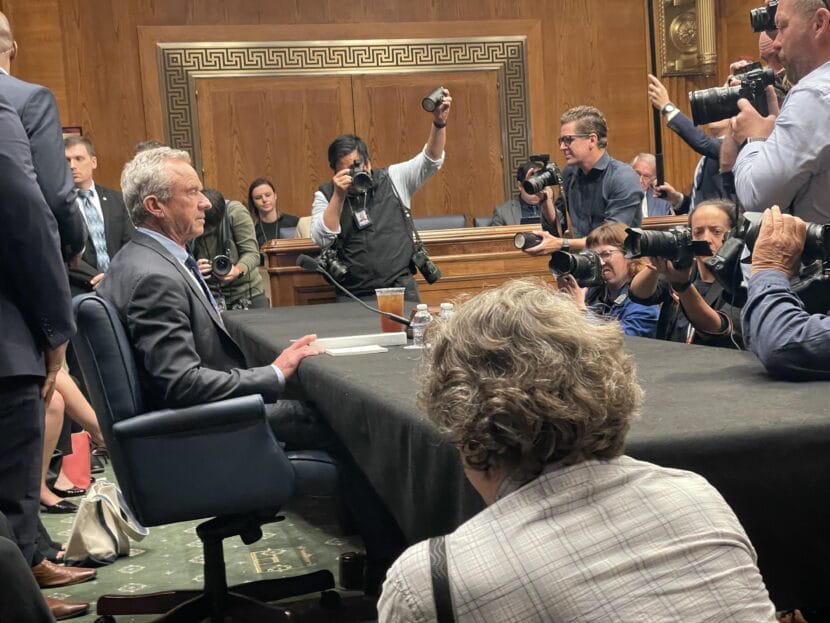
Health and Human Services Secretary Robert Kennedy Jr. prepares to testify Wednesday to the Senate Health, Education, Labor and Pensions Committee. (Liz Ruskin/Alaska Public Media)

WASHINGTON — An estimated 14,000 Alaskans, and millions of Americans, would lose their health insurance from one feature of the Republican budget reconciliation bill now pending in Congress.

That element is a requirement that certain Medicaid recipients prove that they worked at least 80 hours each month.

U.S. Sen. Bernie Sanders confronted Health Secretary Robert Kennedy about it Wednesday at a Senate hearing.

“Is throwing 13 million Americans off of the health care they have, poor and working class people, keeping America healthy?” Sanders asked.

“Well, I haven’t seen that number. I’ve seen the number 8 million, and … the cuts are not true cuts. The cuts are eliminations of waste, abuse and fraud,” Kennedy said, and he started to explain how at least one million people would lose Medicaid coverage but Sanders cut him off.

The idea of requiring poor people to work to receive public benefits like food assistance has been around since at least the 1980s. The first Trump administration encouraged states to require it for Medicaid.

The Robert Wood Johnson Foundation funded a study of what happened when Arkansas and New Hampshire added a Medicaid work requirement in 2018 and 2019. Katherine Hempstead, senior policy officer at the foundation, said most people who lost their coverage actually did work or were exempt but failed to report it properly.

“That’s the really sort of cruel and sad thing about work requirements is the way that it creates savings for the federal government is really this collateral damage of people who, you know, are unable to successfully document what they’re doing,” she said. “A lot of people don’t have computers. They have to do everything on their phone. They don’t always have internet.”

The work requirement in the bill would apply to adults in the so-called Medicaid expansion population, whose incomes are slightly higher than the regular Medicaid population.

Amber Lee, director of Protect Our Care Alaska, said most of the 76,000 Alaskans in this category are working already, or qualify for one of the exemptions, because they’re raising a child, are disabled or are entitled to care through the Indian Health Service.

But documenting that monthly work would be a burden for the recipient and for the state, Lee said, and it would fall on the same department that had such a hard time dealing with applications for SNAP, or food assistance.

“I think most Alaskans remember that Alaska almost lost our SNAP benefits because of the enormous backlog that they had. So work requirements are going to be a huge lift for the state,” Lee said. We’re going to have to build out the infrastructure to be able to do that.”

Having fewer insured Alaskans means higher cost for the entire health care system and everyone who relies on it, she said.

“It goes up for everybody, because people will wait to get health care until it’s an emergency situation. They end up in the emergency room, and that increases costs for everybody, because those are uncompensated costs,” she said.

The bill would also require copays for people who are in the Medicaid expansion population of up to $35 per medical service.

The reconciliation bill is still in House committees. It’s not certain to pass. Some Republicans don’t like the Medicaid changes and some don’t like that it would add to the deficit by continuing tax breaks that were due to expire.

State legislators reject two of Gov. Dunleavy’s board nominees, one unanimously

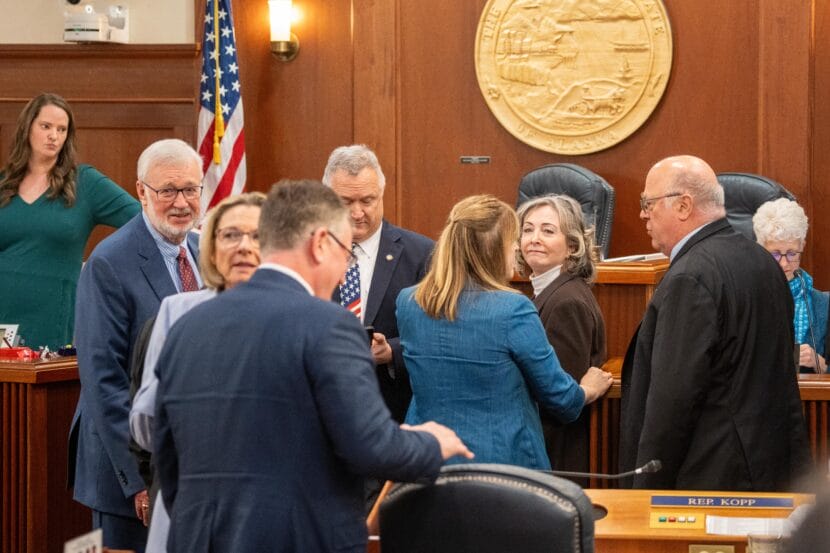
Senators and representatives speak with one another on the floor of the Alaska House of Representatives during a joint session on May 14, 2025.
Senators and representatives speak with one another on the floor of the Alaska House of Representatives during a joint session on May 14, 2025. (Eric Stone/Alaska Public Media)

Lawmakers rejected two of Gov. Mike Dunleavy’s nominees for state boards and commissions in a joint session of the state House and Senate on Wednesday.

One of Dunleavy’s nominees for the State Medical Board, physician assistant Sam Smith, was rejected in a remarkable unanimous vote. Several lawmakers said they’d never seen a nominee rejected on a 0-60 vote.

The State Medical Board writes regulations for medical providers in the state, handles licensing and serves as a disciplinary body for providers who violate licensing laws.

Rep. Genevieve Mina, D-Anchorage, and chair of the House Health and Social Services Committee, said lawmakers across the political spectrum were unimpressed during Smith’s confirmation hearings earlier this year.

“I think as a body, we all collectively agreed that we want someone who knows the state’s issues, and even if they don’t have the breadth of experience, show a willingness to learn,” Mina said shortly after the vote. “Unfortunately, that open-mindedness was not reflected in the hearings of her appointment in the Senate and in the House.”

Smith said by text message she was unavailable to discuss the rejection Wednesday afternoon, saying she was busy working with patients.

At a confirmation hearing this spring, Smith said she had heard the state’s medical care was “subpar,” which led her to move to the state after graduating from school in 2019 and later apply to join the medical board.

“Seeing the malpractice that occurs, and seeing the misjustice of patients, and them simply not knowing what their medical rights are, I couldn’t sit by in the wings anymore and just kind of treat quietly,” she told the House Health and Social Services Committee during a March 25 hearing.

Dunleavy appointed Smith in early March. His office did not respond to a request for comment.

The board of the Alaska Academy of Physician Assistants, a professional organization for PAs, unanimously urged state lawmakers to reject Smith’s nomination. The group sent lawmakers a letter with a number of objections to Smith’s appointment to the one seat on the medical board reserved for physician assistants.

“While we recognize PA Smith’s enthusiasm and dedication, we believe she does not possess the breadth of experience nor the objectivity required for this critical role,” the letter said.

The group cited Smith’s limited experience with rural Alaska, her niche specialty of regenerative medicine and what they described as “unwillingness to collaborate” with other Alaska physician assistants. The group also said it was concerned about Smith’s “lack of discretion and professional judgment.”

Palmer Republican Sen. Shelley Hughes said Smith’s experience working alongside chiropractors rather than in primary or emergency care made her a poor fit for the board.

“Right now, she’s not representing the kind of medicine that physicians assistants are practicing,” Hughes said. “She is not doing the typical physical exam, she is not doing the diagnosis, she’s not doing the treatment, which often includes prescribing.”

Lawmakers also rejected the reappointment of correspondence school program manager Kim Bergey to the Professional Teaching Practices Commission. That vote was much closer, 26-33. Opponents said state law required commissioners to be selected from a list submitted by a professional organization, and that Bergey was not on that list. Lawmakers did not object to Dunleavy’s appointment of Bergey to the state Board of Education and Early Development.

The Legislature confirmed dozens of other Dunleavy appointees, almost all by unanimous consent.

Lawmakers also unanimously confirmed the state’s acting ombudsman, Jacob Carbaugh, for a five-year term. He succeeds the prior ombudsman, Kate Burkhart, who resigned in April. The ombudsman’s office investigates complaints against state agencies and provides recommendations for improvement.

Site notifications
Update notification options
Subscribe to notifications