Alaska Public Media is one of our partner stations in Anchorage. KTOO collaborates with partners across the state to cover important news and to share stories with our audiences.
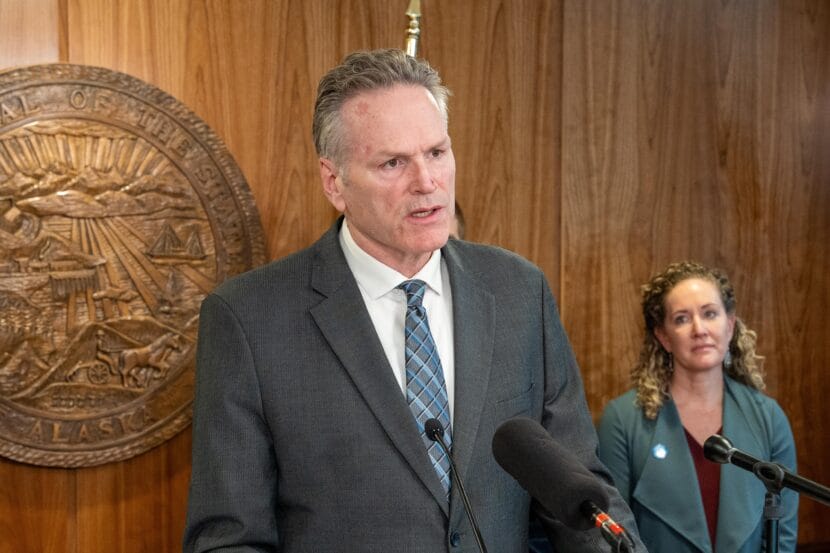
Gov. Mike Dunleavy, R-Alaska, speaks during a press conference introducing his budget for the next fiscal year on Dec. 12, 2024. (Eric Stone/Alaska Public Media)
Gov. Mike Dunleavy told lawmakers Wednesday he had vetoed a bill that would have sharply limited payday loans in Alaska.
Senate Bill 39, which passed the Legislature on a bipartisan vote of 38 to 22, looked to cap interest rates for so-called “deferred deposit advance” loans at 36%. Backers of the bill, including the Alaska Public Interest Research Group, a nonprofit consumer advocacy organization, say it’s an effort to curtail what they describe as “predatory” loans.
“We know that payday loan customers in Alaska are taking out over five payday loans per year, even though they’re marketed as one-time emergency assistance,” Claire Lubke, the group’s economic justice lead, said in an interview. “We know that this causes cycles of debt in which people are taking out one loan and then another, trying to get out from what they originally borrowed.”
Sen. Forrest Dunbar, D-Anchorage, sponsored the bill, which passed along caucus lines in the Senate. Three minority Republicans joined the Democrat-heavy multiparty coalition controlling the House to pass the bill in the lower chamber.
In a presentation to lawmakers, the group said the fees for payday loans equate to interest rates in the hundreds of percent per year. State law allows lenders to charge up to $15 per $100 borrowed, up to $500, typically for two or four weeks. Lenders can roll over the balance into new payday loans twice.
Opponents of the bill say it would unnecessarily limit consumers’ choices and reduce loan options for borrowers with poor credit.
Andrew Duke leads the Online Lenders Alliance, a financial technology group that opposed the bill.
“The proponents were trying to paint a picture that if you enact this bill and put more restrictions in place, lenders will just keep making loans to the same borrowers at lower cost. That is patently false,” he said in an interview.
Dunleavy declined an interview request but made a similar case in his veto message.
Duke also said the bill could restrict small businesses’ access to credit, though public interest researcher Lubke said the bill would not affect commercial lending. The head of the state Division of Banking and Securities did not immediately return a phone call and email seeking comment.
A variety of other states have similar limits on payday lending. The federal government also restricts it for active-duty military members.
Lawmakers can override Dunleavy’s veto with a two-thirds majority vote. That could prove difficult, since proponents would have to pick up at least two more Republican votes to override the veto.
Anchorage residents held a protest outside of Representative Nick Begich’s office Wednesday afternoon, urging to help protect Medicaid. May 21, 2025. (Matt Faubion/Alaska Public Media)
If you ask the chief advocate for Alaska’s hospitals and nursing homes, Jared Kosin, there are plenty of ways to improve health care in the state. He said reducing the number of people with health insurance isn’t one of them.
This is terrible health care policy,” said Kosin, who heads the Alaska Hospital and Healthcare Association. “The predominant issue with it is it’s premised on achieving a savings target, that’s what they’re after, to fund these tax cuts.”
The Republican megabill making its way through Congress would make significant changes to benefits programs like Medicaid and SNAP, which would affect Alaskans across the state. The so-called “big, beautiful bill” with tax and spending cuts is changing fast, and it’ll likely keep changing right up until the bill passes.
The Congressional Budget Office, Congress’s official scorekeeper, estimates that the version of the bill that passed the House would push 16 million Americans off of government-funded or -subsidized health insurance. Divide that by Alaska’s population, and you get somewhere in the neighborhood of 30 to 40 thousand Alaskans at risk of losing insurance, either from Medicaid, which the state calls DenaliCare, or the federal health insurance marketplace.
That doesn’t mean those Alaskans won’t need health care.
But Kosin said they won’t get it until it becomes urgent. Hospital emergency rooms have to see everyone, even those who can’t pay. That would push up the cost of healthcare for everybody else, he said.
“What you can expect from that is there’d probably be a pretty significant cost shift over to private insurance, and so you’d see an increase in premiums for everyone else to offset these massive losses,” Kosin said.
Kosin said the drop in the number of insured people, especially in low-income rural areas with many Medicaid patients, would force hospitals to cut back on services or even close their doors.
The bill House Republicans passed includes new work requirements for Medicaid. That means that every six months, you have to prove to the state, which administers the program, that you have a job and that you’re working at least 80 hours a month. Or that you’re exempt.
Right now, though, the state is already struggling to keep up with the paperwork it’s tasked with and has a well-documented backlog.
Billy Stapleton Jr. is a state benefits processor and union representative who went to Washington to push back on the bill, and said new paperwork requirements would make things worse.
“That would cripple us because Medicaid is renewed once a year,” he said. “Now we have to focus on one case and put eyes and hands on it twice a year.”
The Alaska Division of Public Assistance is already way behind. He said he’s currently, in June, processing applications for the Supplemental Nutrition Assistance Program, or SNAP, that have been pending since November.
The House version of the bill has provisions that would require Alaska to pay tens of millions of dollars for the SNAP program. And whether the state could afford to pick up the tab is unclear, said state House Finance Committee co-chair Andy Josephson, an Anchorage Democrat.
“Will the Legislature, writ large, and the governor support back filling those items? I don’t know. That’s an open question,” he said.
Another open question is whether the SNAP provisions make it into the final bill at all. And that’s a lot of what Alaska’s Senate delegation is saying right now: The bill is in flux.
A spokesperson for Republican Sen. Dan Sullivan said he’s working hard to ensure the final bill doesn’t reduce Alaskans’ access to Medicaid or SNAP benefits.
She said Sullivan generally supports work requirements for Medicaid and doesn’t see them as a cut. But, she said Sullivan has pushed for a variety of “exemptions and carve-outs to protect vulnerable Alaskans.”
“He will continue to work during implementation to ensure that paperwork and administrative burdens do not prevent people from accessing the critical safety net programs they rely on,” Sullivan’s communications director, Amanda Coyne, said by email.
The bill exempts most Alaska Native people, people in high-unemployment areas, parents, veterans, pregnant women and people with mental health conditions, including substance abuse issues.
At the same time, opponents say that just applying the exemptions would be challenging for the state and the applicants.
But another thing to note: the Senate’s working copy of the bill allows the federal government to exempt states like Alaska from implementing the work requirement through 2028, as long as the state makes a good faith effort to upgrade its systems to handle the new paperwork requirements. But there are no guarantees the state would get that exemption.
A spokesperson for Republican Sen. Lisa Murkowski said she continues to have concerns about the bill and its impact on Alaskans who depend on Medicaid and SNAP.
“The landscape is rapidly evolving and discussions are ongoing,” spokesperson Joe Plesha said in a statement.
It’s unclear when the Senate will take up amendments and start voting on the bill. But President Donald Trump is pushing for the final bill to be passed by the Fourth of July.
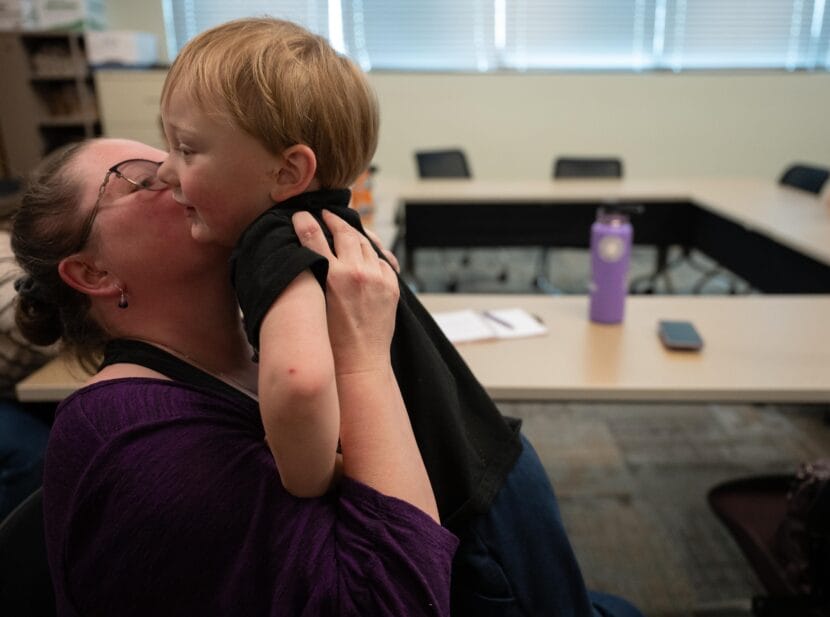
Michelle Love gives a hug and kiss to her two-year-old son Christopher at Mat Su Services for Children and Adults in Wasilla on June 18, 2025. (Tim Rockey/Alaska Public Media)
Four of Michelle Love’s children who have developmental delays have received services from the Infant Learning Program in Wasilla. On a recent Thursday, her 2-year-old son Christopher ran back and forth between his mom and his older brother Michael, giggling and squealing.
Love and her four children were at an appointment with Mat-Su Services for Children and Adults, or MSSCA, a nonprofit that serves Matanuska-Susitna Borough residents with developmental disabilities. Christopher was born with symptoms of drug withdrawal, and Love began the process of adopting him at just two months old. She said the program helped Christopher make progress when she felt stuck as a parent.
“He was just on a plateau, standstill, it was like I had an infant for months and months,” Love said. “We brought infant learning in, and they were able to help me understand what I was seeing with what he was doing and his behavior.”
Among the line-item vetoes issued by Gov. Mike Dunleavy earlier this month was a $5.7 million cut to expand a program that serves infants and toddlers like Christopher with developmental delays. Advocates have said that a funding increase is long overdue, and needed to help more families. They also argue that expanding the program will save the state money in the long run.
Without the fund, many young kids with developmental delays don’t qualify for services. That’s what happened to Christopher. Love says as soon as he started making real progress, the state stopped covering his services because he no longer had a delay of more than 50% compared to his peers. That’s the standard for the state to provide assistance to infants and toddlers, unless they have a specific diagnosis. Love said as soon as the services stopped, Christopher regressed.
“He was excelling, he was speaking, he was doing all this stuff, and then all of a sudden, he’s nonverbal and really behind in a lot of areas,” Love said. “I’m frustrated that he lost that time he could have had, which would have been very valuable.”
Thirteen-year-old Michael Love plays with his two-year-old brother Christopher at Mat Su Services for Children and Adults in Wasilla on June 18, 2025. (Matt Faubion/Alaska Public Media)
This on-off cycle is just one of several issues families and providers have with the state’s current Infant Learning Program. Alaska is one of just five states that doesn’t provide treatment to infants below a 50% delay. MSSCA Interim Executive Director Stephanie Tucker said that makes Alaska stand out when she and her staff attend conferences for developmental specialists.
“It’s embarrassing, because they talk about the kids they serve, and we’re like, ‘Yeah, we don’t serve those kids.’ It’s embarrassing because we’re behind the grade on the research, we’re behind the grade compared to the rest of the nation,” Tucker said. “It’s kind of shameful for Alaska. We should do better because we can.”
State lawmakers considered Senate Bill 178 during this year’s legislative session, which would’ve expanded eligibility for the program down to a 25% delay, but didn’t pass. Lawmakers included the money in the state’s mental health budget anyway, but Dunleavy vetoed that funding. Dunleavy’s spokesperson Jessica Bowers said in an email that “given the state’s current fiscal outlook, further increases in funding are not sustainable at this time.”
But specialists working in the program disagree. They say providing early intervention for infants saves money in the long run. Tucker said the yearly cost for one child to receive infant services is about one-tenth of the cost to provide those services to children once they turn three.
Two-year-old Christopher Love plays with a highlighter pen at MSSCA in Wasilla on Wednesday, June 24, 2025. (Matt Faubion/Alaska Public Media)
Mark Lackey is the executive director for Child Care Subsidy Early Learning in Wasilla, where children with developmental delays receive services. He said developmental specialists work with the families of delayed infants during in-home visits, teaching them how to help their child develop without the specialist. Lackey said children in the program can often grow out of the need for special education before they turn three.
“That kid with a 40% delay currently can’t receive services from infant learning, but the moment they turn three, it’s going to cost us a lot of money,” Lackey said. “We could have avoided many, many of those cases if we could have served that family and that child earlier.”
Michael Love walks with his younger brother Christopher into the lobby of Mat Su Services for Children and Adults in Wasilla on June 18, 2025. (Matt Faubion/Alaska Public Media)
The Mat-Su is the fastest-growing region in the state, and one of the only regions that has seen continued population growth in recent years. Lackey said that growth exacerbates the issue of providers trying to serve all the children who qualify, especially given that the program has not had a funding increase in over a decade.
“That really puts them in a difficult position. Their caseloads just go up and up and up. So they’re caught in this, between a rock and a hard place of not having enough staff to do all the things that they’re required to by law,” Lackey said.
Filmmakers Laura Norton-Cruz and Joshua Branstetter released a documentary early this year about the Infant Learning Program in the Mat-Su that was screened for legislators in Juneau. Tucker got excited when legislators responded by adding money to the budget to expand the program weeks later. She says her organization reached out to the governor’s office to offer a private screening, but never got the chance. Dunleavy used his line-item veto to cut the funding that would’ve allowed providers to hire more staff and offer services to more kids.
“It was just utterly disappointing, because I know that if you understand the services we provide and what kind of prevention they can lead to down the line for other kinds of services, there’s no way you would say no to this,” Tucker said. “It’s disappointing, because to me that just speaks to, they don’t know. They don’t know, and they need to know.”
Tucker said she’ll redirect her frustration into advocacy for the bill when the next session starts in January.
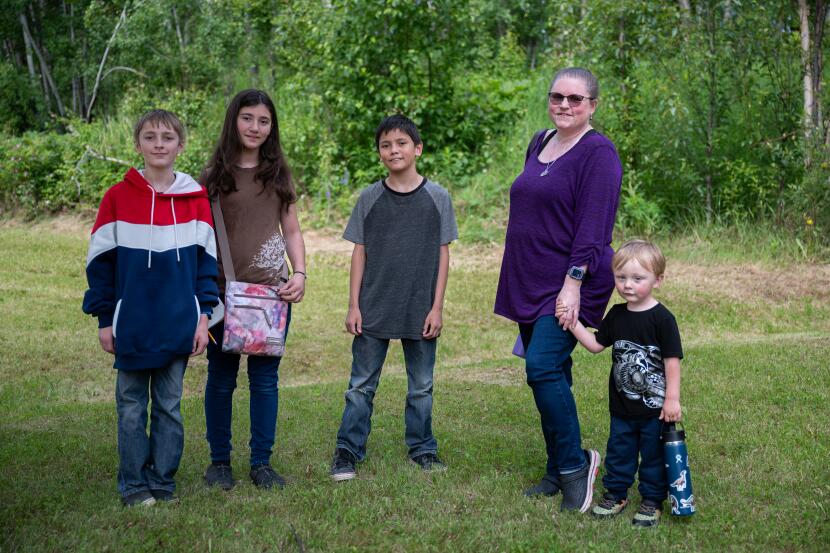
The Love family, from left to right: 13-year-old Michael, 11-year-old Katie, 10-year-old Owen, Michelle Love and 2-year-old Christopher on June 18, 2025. (Matt Faubion/Alaska Public Media)
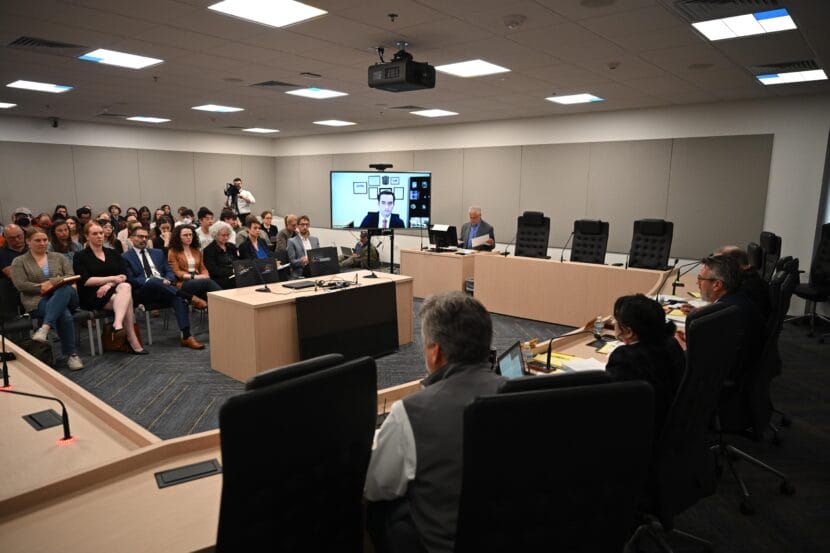
Rep. Andrew Gray called a hearing in Anchorage on June 20, 2025 on allegations that 41 ICE detainees transferred to the Anchorage Correctional Complex were subjected to pepper spray, denied access to their attorneys and subjected to long lockdowns. Attorney Sean Quirk (on screen) testified that he wasn’t allowed to call his client for days, contrary to federal law. (Matt Faubion/Alaska Public Media)
The Alaska Department of Corrections is holding dozens of immigration detainees in Anchorage under conditions that violate federal standards for humane treatment, a trio of lawyers told Alaska legislators at a hearing Friday.
Rep. Andrew Gray, D-Anchorage, called the hearing of the House Judiciary Committee. He said that the state has assumed a new role since June 8, when it agreed to take in 41 men from an Immigration and Customs Enforcement facility near Tacoma, Wash. The Department of Corrections regularly houses a few federal detainees picked up in Alaska, but for the first time ever, Gray said, it is holding people transferred from the Lower 48.
“We Alaskans would be on the hook for financial damages if we are sued and lose,” he said. “So it’s our duty as a committee to understand why these people are here, what we are doing with them, and what financial liabilities we Alaskans may be responsible for.”
Three immigration lawyers said the men were denied phone access to their attorneys and consulates, held in lockdown for long periods and, in one incident, subjected to pepper spray.
Immigration attorney Cindy Woods of the ACLU of Alaska said the men at the Anchorage Correctional Complex have legal rights as civil detainees and are just waiting for officials to decide if they can remain in the country.
“In fact, at least four of them have been granted immigration relief in the form of asylum, or withholding of removal by an immigration judge after a full hearing on the merits,” she said. “Yet all of these individuals are being held in punitive conditions.”
Testimony at the hearing suggests that Alaska prisons, set up to separate criminals from society, aren’t easily remade into facilities that can relieve overcrowding as the Trump administration ramps up migrant arrests and deportations.
Members of the public filled every available seat in the Anchorage Legislative Information Office. They sat quietly, other than occasional scoffing as Alaska Corrections Commissioner Jen Winkelman testified.
Winkelman said the detention was going well after a number of “bumps in the road” during the first few days. She cited one deployment of pepper spray, which she said was used to overcome a “verbal demonstration” and enforce a lockdown order.
Gray said he’d heard about that from several people, including relatives of the men.
“It seemed, from the story that I heard, that there was one detainee who was asking for permission to access his property so that he could get the contact information for his consulate representative,” Gray said. “And the result was that all the detainees were pepper sprayed. Is that your understanding of the event?”
Winkelman disagreed.
“Nobody was ever sprayed,” she said. “It was deployed in the area to get individuals to move to their individual cells and lock down.”
That didn’t sound right to Rep. Andy Josephson, D-Anchorage.
“I mean, the nature of pepper spray is to move and drift,” he said.
Gray said he’d heard that several men reported respiratory distress afterward and that they weren’t allowed to shower or change their clothes.
He cited federal standards, updated during the first Trump administration, saying that ICE detainees are entitled to daily changes of socks and underwear, access to all their belongings including paperwork, confidential phone calls with their attorneys, outdoor time and visitors — conditions that he or the attorneys said have not been consistently met.
At the start of the hearing, Winkelman sounded confident that the men were being properly treated. She said Corrections staff had medical information on each detainee and were able to supply them with telephone PIN codes.
“Our kitchen prepared bag lunches so the influx of detainees were immediately given food upon arrival,” she said.
She sounded less sure as she heard more from the legislators and the attorneys.
Winkelman repeatedly told legislators she was unaware of specific complaints and alleged violations of federal standards.
“I will commit to this committee to look into that,” she said. “This is the first I’ve heard of this.”
Josephson and Gray questioned why the state agreed to accept the ICE detainees, given the liability.
“All we’re doing is getting refunded for our costs,” Josephson said. “Why are we doing this at all?”
Winkelman said the state is trying to be a good partner to the federal agencies, including ICE.
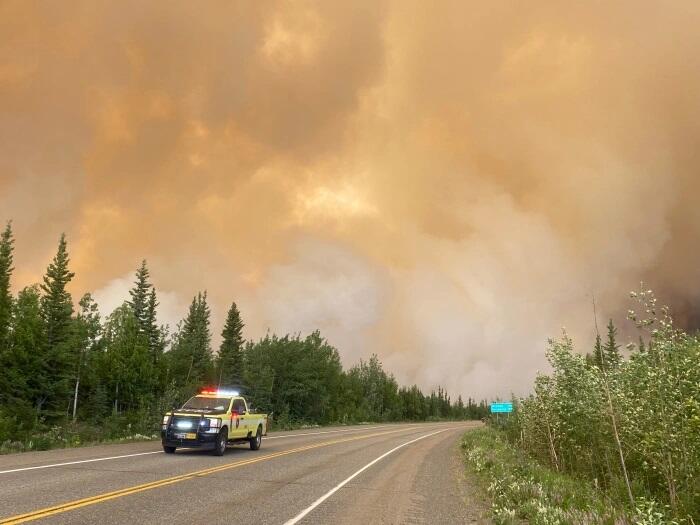
Smoke from the Bear Creek Fire near Mile 270 of the Parks Highway on Saturday, June 21, 2025. (Photo courtesy of Alaska Interagency Coordination Center)
A surge in wildfire activity across Interior Alaska following the summer solstice has left crews facing several massive blazes, including major fires in the Interior that briefly closed the Parks Highway and prompted evacuations.
According to a situation report from the Alaska Interagency Coordination Center, 28 new wildfires were discovered statewide Saturday and Sunday, with a total of 181 active Sunday. The fires are burning on about 98,000 acres in total. About 350 firefighters are actively fighting 21 fires.
In an overview posted online Saturday night, staff with the federal Bureau of Land Management’s Alaska Fire Service said all Alaska crews have been assigned to fires, with assistance being requested from the Lower 48.
“With firefighting resources stretched thin, BLM AFS and the Alaska Division of Forestry & Fire Protection are working together to prioritize responses where firefighter and public safety are most at risk,” officials said. “The two agencies are coordinating closely to share resources.”
The division said on Facebook Sunday morning that the Bear Creek Fire near Anderson, along with two other fires in the area, had reached 20,000 acres. By 4 p.m. Saturday the blaze had burned across the Parks Highway, prompting its closure near Mile 270, but by 9 p.m. one lane was open to intermittent traffic.
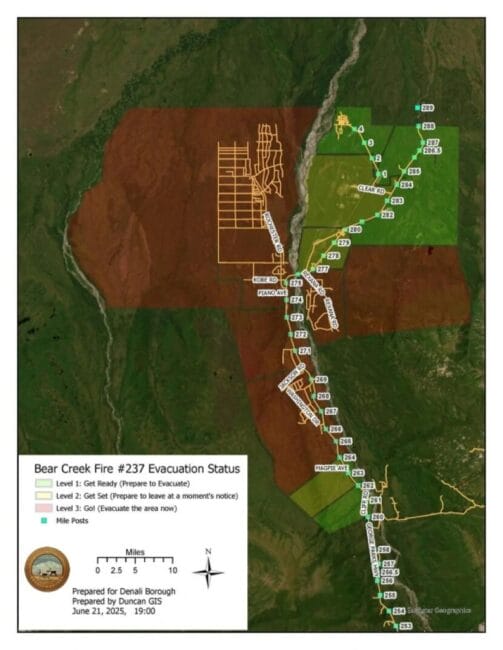
An evacuation map for Parks Highway areas near the Bear Creek Fire as of 9 p.m. Saturday, June 21, 2025. (Denali Borough)
“The pilot car may have multiple hours between the north and south routes,” federal officials said. “Expect long delays.”
Evacuation orders were issued for several nearby residential areas, including the Bear Creek and June Creek subdivisions west of the highway.
Farther north along the Parks, the division said the Nenana Ridge complex of fires was burning about 15,000 acres between Mile 322 and 332. Along the Elliot Highway north of Fairbanks, the Himalaya Road complex was burning about 30,000 acres. Evacuation orders have been posted for parts of the region by the Fairbanks North Star Borough.
Division officials said more restrictions on Parks and Elliott Highway traffic were likely Sunday. They urged Alaskans in wildfire areas to sign up for wildfire alerts, prepare defensible spaces around their homes and be ready to evacuate.
In addition, they asked people not to fly drones in wildfire areas, which threatens air support from tanker aircraft and helicopters.
“Flying drones or UAS (unmanned aircraft systems) within or near wildfires could cause injury or death to firefighters and hamper their ability to protect lives, property, and resources,” state officials said. “If you fly, we can’t!”
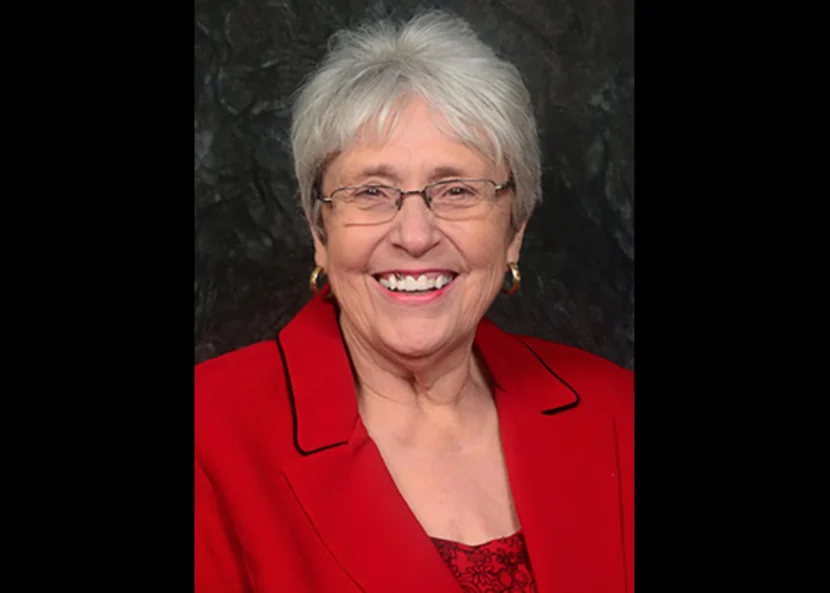
Edna DeVries, seen in a photo for a meritorious service award from the University of Alaska Anchorage. (Photo courtesy of UAA)
The field of candidates for Alaska governor grew to four last week after Matanuska-Susitna Borough Mayor Edna DeVries filed a letter of intent saying she’s considering a run for governor.
The letter allows her to start raising money for her campaign. DeVries, a Republican, said in an interview on Thursday she’s “90 to 95% sure” she’ll file to actually run.
DeVries turns 84 next month and has a long history in the state. She moved to Palmer in 1969. In the years since, DeVries said she’s spent more than 30 years working in real estate and has also worked in postsecondary education and job training programs.
DeVries said she believes in limited government and is a supporter of large Permanent Fund dividends in line with a decades-old formula.
“The state has to live within its means, and I know that’s going to be shrinking, probably, the size of government that we have in the state of Alaska,” she said.
Paying a full statutory dividend would require drastic cuts to state services or raising vast amounts of new revenue. Lawmakers haven’t approved a formula dividend since oil prices crashed in the mid-2010s and the state started relying on the Permanent Fund to pay for state services.
DeVries said she’d like to examine reports by Gov. Mike Dunleavy’s first budget chief, Donna Arduin, for ideas on how to cut back state spending.
DeVries also echoes some of Dunleavy’s priorities when it comes to education. She says she’s proud of the work her borough has done expanding charter schools in the Mat-Su. And she says she wants to see schools held accountable for poor performance.
“The biggest decision right there is, how do we continue to fund (education), but also get the accountability and the results that we want?” she said.
DeVries said she’s been a “Trumper” since President Donald Trump‘s 2016 campaign. Like the president, she says she’d like to expand resource development in the state.
“I appreciate him loving Alaska and speaking out on behalf of Alaska, in comparison to what challenges we’ve had in the last four years regarding developing our resources,” she said.
DeVries joins an all-Republican field for the 2026 governor’s race. Candidates include Lt. Gov. Nancy Dahlstrom, former Sen. Click Bishop and businesswoman Bernadette Wilson. Gov. Mike Dunleavy is in the second-to-last year of his second term and cannot run for another.
Close
Update notification options
Subscribe to notifications
Subscribe
Get notifications about news related to the topics you care about. You can unsubscribe anytime.