Alaska Public Media

Alaska Public Media is one of our partner stations in Anchorage. KTOO collaborates with partners across the state to cover important news and to share stories with our audiences.
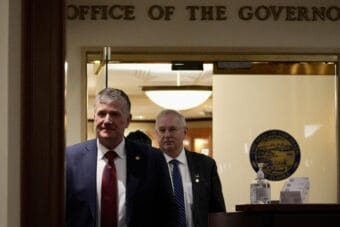
Crum deviated from state law and policy when investing Alaska’s savings, review finds

Adam Crum speaks to reporters on Oct. 4, 2022 at the Alaska Scientific Crime Detection Lab in Anchorage while serving as health commissioner.
Adam Crum speaks to reporters on Oct. 4, 2022 at the Alaska Scientific Crime Detection Lab in Anchorage while serving as health commissioner. (Wesley Early | Alaska Public Media)

Former Alaska Revenue Commissioner Adam Crum deviated from state policy and failed to perform the necessary due diligence before committing millions in state savings to a private equity fund, according to an outside review ordered by Gov. Mike Dunleavy after Crum’s decision came to light last summer.

In its report, the D.C.-based law firm WilmerHale said its investigation had raised “significant concerns” about whether Crum met his fiduciary duties under state law. Investigators also found Crum engaged outside lawyers to represent the state in the investment without obtaining the approval of the attorney general “in apparent contravention” of state law, according to the report.

“Mr. Crum’s process for selecting the DigitalBridge fund and the two other private funds in which he intended to invest did not involve rigorous due diligence, and Mr. Crum did not follow Department of Revenue protocols designed to assist him in meeting his fiduciary duties in connection with the investment,” the report states.

The state ultimately invested some $50 million from its primary rainy-day fund, the Constitutional Budget Reserve, with the private equity firm DigitalBridge. The investigation found that Crum intended to invest $75 million with the firm.

The investment came to light shortly after Crum left office to run for governor. The state ultimately sold the investment to an Israeli insurance company and lost roughly $859,000, according to a letter sent to the state House and Senate’s finance committees. A portion of the $50 million sent to DigitalBridge that was not invested yielded $325,000 in interest, offsetting a portion the loss, according to the letter.

“Clearly, this was an unsuitable investment for the (Constitutional Budget Reserve). No question about it,” said Sitka Republican Sen. Bert Stedman. “The ex-commissioner broke his fiduciary duty to execute it.”

Shortly after the legislative session began in Juneau this month, Stedman introduced a bill that would bar the state from doing business with DigitalBridge.

The report, which cost the state an additional $350,000, found no evidence of criminal wrongdoing or self-dealing. And it said Crum had the authority as revenue commissioner to commit money to the private equity fund. But that’s only if he had done the requisite due diligence, and the report says there’s reason to believe he didn’t.

In a phone interview, Crum said he tried his best to keep everything above board. The private equity investment was an effort to simultaneously boost the returns of the savings account and spur investment in Alaska, and he kept in touch with the Department of Law and the governor’s office about the investment, he said.

“I actually had multiple communications with (the Department of) Law, even with Treasury staff, trying to actually figure out what — I would send emails and ask the questions that say, have we met all of the legal duties in order to actually fulfill this?” Crum said.

But according to the investigation, he chose not to inform the governor’s budget office, the legislative auditor, or members of the Legislature as state policy requires. He wrote on a checklist outlining the policy for so-called “non-routine investments” — created after a state investment misadventure in 2015 — that “Treasury must not abdicate its statutory authority.”

Crum also failed to inquire with the Department of Law whether the investment met his fiduciary obligations under state law, according to the investigation.

Crum casts the issues the investigation raises as “procedural.” Details, he said, were not his mandate as revenue commissioner.

“It’s not about being technically proficient on all that stuff. It’s knowing the overall concepts,” he said. “Making sure that you actually are the expert on the actual delivery of that thing — no, that is not the case. That’s why you have staff. Otherwise, why do you have staff?”

The report included four recommendations aimed at avoiding similar issues in the future. As it was released, Gov. Mike Dunleavy issued an administrative order implementing many of the recommendations by placing additional checks on the revenue commissioner’s authority to invest in unconventional assets.

In the order, Dunleavy said the changes were intended to “enhance the transparency of investment decisions.”

Exciting and daunting: Eight Alaska nordic skiers will compete in Italy Olympics

Gus Schumacher skis on the hillside trails in Anchorage on Jan. 12, 2026. Schumacher will be competing in the Winter Olympics in Italy in February.
Gus Schumacher skis on the hillside trails in Anchorage on Jan. 12, 2026. Schumacher will be competing in the Winter Olympics in Italy in February. (Matt Faubion | Alaska Public Media)

Eight cross-country skiers from Alaska are going to the 2026 Olympics in Italy next month. U.S. Ski and Snowboard announced the team Thursday morning.

Alaskans make up one half of the 16-skier U.S. cross-country ski team. All eight of the athletes ski with Alaska Pacific University’s team in Anchorage. APU coach Erik Flora said it’s unusual for so many cross-country skiers on Team USA to come from one state, and one club. He said APU is one of the biggest, strongest ski clubs in the country.

Flora said the team has been steadily improving over the last decade. This year, he said, it’s very likely that Alaskans will bring home some medals for the United States.

Gus Schumacher, Hunter Wonders, Zanden McMullen and JC Schoonmaker are skiing for the U.S. men’s team.

Rosie Brennan, Kendall Kramer, Novie McCabe and Hailey Swirbul are skiing for the U.S. women’s team.

It’s Gus Schumacher’s second Olympics. He said the skiers themselves already knew who’d made it since the criteria is pretty clear, but he’s glad the news is out.

“Fun to share with everyone, officially,” he said. “Nice to tell people and just being sure about it.”

He’s feeling good, he said, because he thinks this year he and his teammates have a real chance to help Team USA bring home a men’s cross-country medal. The only other time the U.S. men’s team medaled at the Olympics was 50 years ago, in 1976. Earlier Friday, Schumacher earned a third-place podium result in a World Cup relay sprint race with teammate Ben Ogden in Switzerland.

“It’s exciting to be feeling good, and have a big opportunity to do something that hasn’t been done in a long time,” he said. “And yeah, it’s exciting. It’s a little daunting, but just got to go there and experience it and realize how lucky we are to be able to do this.”

It’s 37-year-old Rosie Brennan’s third Olympics. But this year is different for her. Brennan has been struggling with what she calls “mysterious health issues” for over a year.

Now, she’ll have what is likely her last chance to compete in the Olympics, she said. It’s bittersweet, since she had hoped to contend for medals in Cortina but she said that’s not her reality anymore. Now, she’d just love to have a race where she feels like herself again.

“It’s been a long time since I felt like the Rosie I’m accustomed to racing with for the last 15 years,” she said.

There were times she wasn’t sure she was even going to make it to this year’s Olympics.

Now that she’s going, she’s thankful her teammates are with her, helping her stay focused.

“They’re the people that have seen everything that I’ve gone through and have been there to help me through it,” she said. “So that just gives you such a sense of comfort on the road, and especially like in big events like the Olympics.”

Hailey Swirbul competes in the 2025 Alaska SuperTour in Anchorage's Kincaid Park on Dec. 6, 2025.
Hailey Swirbul competes in the 2025 Alaska SuperTour in Anchorage’s Kincaid Park on Dec. 6, 2025. (Hailey Swirbul)

Hailey Swirbul didn’t have a straight path to the Olympics this year either. She quit skiing in 2023 because she wanted to experience life outside a stressful ski racing career – she was burned out.

Then, this summer, she started coaching for APU. She was skiing and feeling strong and thinking about the limited time she has to do the things she loves. The idea of competing at the Olympics bumped around in her head for a few months until she eventually decided: Let’s do it, take the risk, go for something big.

But she said she’s thinking about the Olympics differently than she did when she competed four years ago in Beijing. Taking a couple years away from competitive racing has really given her a perspective about what’s important in life.

“Sports are important but what really matters is the people that you know are there through the ups and downs,” she said.

She’s talking about her teammates, and friends and family, but also her role coaching at APU.

When the news came out that she’d made the Olympic team, a big group of her middle school skiers made a video for her, cheering and chanting her name. She said it made her heart swell when she got it.

They inspire her to work harder, she said. The real inspiration in an endurance sport like cross-country skiing comes from seeing someone’s grit, she said. It comes from watching athletes as they dig deep to push through the suffering.

“Those kids are watching and they notice and they pay attention,” she said. “And I think it’s so important to try to lead by example with your effort.”

This year, she said, her goal at the Olympics is to race in a way that inspires the kids back home.

Gov. Dunleavy reviews his record and touts final-year agenda in State of the State speech

Gov. Mike Dunleavy delivers his final State of the State speech at the Alaska State Capitol in Juneau on Jan. 22, 2026.
Gov. Mike Dunleavy delivers his final State of the State speech at the Alaska State Capitol in Juneau on Jan. 22, 2026. (Eric Stone | Alaska Public Media)

Gov. Mike Dunleavy reviewed his seven years in office and outlined his agenda for his final year during his annual State of the State address on Thursday.

“I believe the people in this room can accomplish big things, whether it’s in public education, public safety or stabilizing our fiscal situation,” Dunleavy said. “We’ve got the time to do it. We’ve got the smarts to do it. We just have to have the desire to do it.”

Dunleavy spent much of his 79-minute speech presenting a long list of accomplishments from his first seven years in office.

He highlighted the state’s recovery from an economic downturn after emerging from a recession in early 2018. Dunleavy said his administration had enabled six consecutive years of job growth.

“I know there’s a feeling that things can be better, and of course, they can,” he said. “But our economy has been getting stronger and stronger every year under my administration, and diversifying as well.”

Dunleavy also called out a significant drop in crime across Alaska. The number of crimes reported to police dropped by more than 40% between 2018 and 2024, according to the state Department of Public Safety, and violent crime fell nearly 20% over that period.

He also previewed a new “quality of life” initiative that would seek to reduce crime in Anchorage. He said he was working with Anchorage Mayor Suzanne LaFrance on the effort.

Dunleavy said the first phase is already underway, focused on retail theft, illegal camping, disorderly behavior and drug use. He says later phases will focus on drug smuggling and violent crime.

The governor also used the speech to highlight progress on the Alaska LNG project, which would bring natural gas from the North Slope to Southcentral Alaska. He applauded an announcement from project developer Glenfarne saying it had secured nonbinding commitments from ExxonMobil and Hilcorp to provide gas for the pipeline, a nonbinding commitment to purchase gas by Southcentral utility Enstar and the planned Donlin Gold mine, and a variety of other deals with other companies to provide materials and support for the project.

Glenfarne CEO Brendan Duval said the series of announcements indicated the project was “progressing from planning to building,” though the company stopped short of saying it had made a final investment decision.

Dunleavy said the progress on the gas line was only one piece of good news from his tenure.

“Today, we are on the cusp of realizing a decades-old dream of delivering abundant, affordable energy that will benefit all Alaskans,” he said. “Today, unlike seven years ago, oil production is increasing, reading scores are improving, and the Permanent Fund has reached record highs thanks to steady and strong leadership.”

Dunleavy also said he would work to expand the supply of housing across the state in his final year in office.

Senate President Gary Stevens, a Kodiak Republican leading a bipartisan caucus that has often found itself at odds with Dunleavy, said many of the accomplishments the governor touted were in fact items lawmakers had worked on, too.

“I noted down a whole lot of them, all things that we were involved in, and we appreciate the governor’s leadership on those things, but (those are) things that we have worked hard on,” he said.

Dunleavy also pitched a forthcoming fiscal plan that he said would stabilize the state’s turbulent budget, though he stopped short of outlining what the plan would include. He outlined the goal of his plan — to reduce volatility in the state budget in order to make the state a more attractive place for investment — but stopped short of providing specifics.

On Friday, he introduced two measures in that vein: a cap on government spending and a constitutional amendment that would combine the Permanent Fund into a single account and set up a new formula for dividends. On Wednesday, he said his plan would also include a “temporary, seasonal sales tax concept.”

But lawmakers in the bipartisan, Democrat-heavy House and Senate majorities said they were not optimistic the governor’s plans would pass this year. Even if they did, Sitka Republican Sen. Bert Stedman said he did not expect them to provide immediate relief.

“Even if we move forward with a fiscal plan, it’s going to take a couple years to engage it and get the revenue collected,” he said. “So this year, I would tell the people around the state to expect something very similar to last year.”

Bristol Bay fisherman and retired educator Bill Hill enters U.S. House race

(Bill Hill for Alaska campaign)

Alaska U.S. House Rep. Nick Begich III has a new challenger.

Bill Hill, a Bristol Bay fisherman and retired teacher and school administrator, filed to run for the congressional seat as an independent candidate.

He cites the late Alaska Congressman Don Young as an inspiration.

“That’s kind of who I hope to, in some respect, mold myself after,” he said. “What’s good for Alaskans first and, you know, we need to start putting distance between politicians that are just cozying up to billionaires and special interests. And we need people that are going to work for Alaskans.”

A day after launching, Hill’s campaign announced he’d raised $200,000.

Hill has retained the campaign consulting firm Ship Creek Group, the same agency that brought early success for Mary Peltola when she launched her bid for U.S. House in the 2022 special primary election.

If elected, Hill isn’t committing to joining either the Republican or the Democratic House caucuses.

“I think that decision needs to be done thoughtfully, and that needs to be done at the appropriate time with whatever the structure of Congress looks like at that time,” he said.

Public records show he made small donations last year, through the ActBlue platform, to Rep. Alexandria Ocasio-Cortez, D-N.Y., and Sen. Bernie Sanders, I-Vt., and larger ones to Democrat Les Gara for his campaign in 2022 for Alaska governor.

Hill is Athabaskan, raised on Lake Iliamna and now lives in Naknek. He worked as a teacher in Naknek and Juneau, an administrator in the Lake and Peninsula School District and as superintendent of the Bristol Bay district. He’s also lived in Fairbanks and worked in construction jobs and ran a small business.

Begich, a freshman Republican, has raised more than $2 million for his re-election campaign. Democrat Matt Schultz, a Presbyterian minister from Anchorage, is also campaigning for the seat. He hasn’t had to file a fundraising report yet.

Alaska lawmakers fail to override Dunleavy’s veto of corporate income tax bill

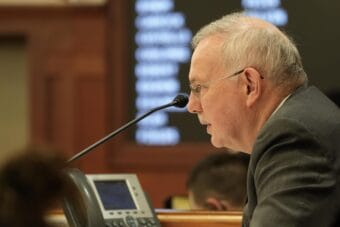
Legislators watch during an vote seeking to override Gov. Mike Dunleavy's veto of a bill that would have expanded Alaska's corporate income taxes to capture more revenue from Outside businesses.
Legislators watch during an vote seeking to override Gov. Mike Dunleavy’s veto of a bill that would have expanded Alaska’s corporate income taxes to capture more revenue from Outside businesses. (Eric Stone | Alaska Public Media)

Alaska lawmakers failed Thursday to override Gov. Mike Dunleavy’s veto of a bill that backers said would have modernized Alaska’s corporate income tax system.

The override failed 35-25. It would have required a 45-vote majority to become law.

Senate Bill 113 would have expanded the state’s corporate income tax to capture revenue from so-called “highly digitized businesses” that sell to Alaskans over the internet but may not have a physical presence in the state. Some of the money raised by the tax change would have gone toward reading programs in public schools.

After the vote, House Speaker Bryce Edgmon, a Dillingham independent, said the debate over the bill illustrated how difficult it would be for lawmakers to agree on ways to raise new revenue as the state deals with a fiscal crunch.

“I’d also say it’s a preview of the debate that we’re going to undergo on a fiscal plan,” he said.

Some Republicans who voted against the override said they were concerned that the bill could increase costs for Alaskans, including Big Lake Republican Rep. Kevin McCabe.

“It’s disingenuous to think that we are not going to pay for this tax one way or the other,” he said.

Supporters of the bill rejected McCabe’s characterization, saying that the bill would simply give Alaska a share of similar taxes companies already pay in other states.

Sen. Bill Wielechowski, an Anchorage Democrat who championed the bill last year, said the idea that the bill would raise consumer costs was “wildly inaccurate.”

“In fact, there’s been research on this,” he said. “The National Bureau of Economic Research did a working paper titled Corporate Taxes and Retail Prices, and found null — zero — effects on prices for firms subject to a single sales factor.”

Gov. Mike Dunleavy said Wednesday that he planned to introduce a temporary sales tax as part of a larger fiscal plan. Wielechowski said the corporate income tax change was a better option.

“How dare we go to Alaskans and say, ‘We want to tax you. We want to take your dividend,’ before we’re going to tax collect revenue from tech billionaires,” he said. “Really? Is that where we’re going with this?”

Some lawmakers who voted against overriding the bill said they supported the law in concept, including Fairbanks Republican Rep. Will Stapp, who voted for the bill when it passed in May.

But he said the complexity of the tax change— and the fact that the bill would take effect immediately if the veto was overridden — gave him pause.

“(If) you vote to override this bill, Mr. Speaker, you’re going to create a new type of corporate tax structure for people that there’s no regulatory guidance on how to pay,” Stapp said. “I would argue we probably shouldn’t do that.”

Wielechowski said he was confident the state would have been able to put out regulations before taxes would be due in 2027.

Even so, Stapp said he planned to introduce a new version of the bill this session addressing that and several more technical objections he raised on the floor.

“There are a lot of questions with the bill that we should probably know the answer to,” he said.

Gov. Dunleavy says his fiscal plan will include a ‘temporary, seasonal sales tax’

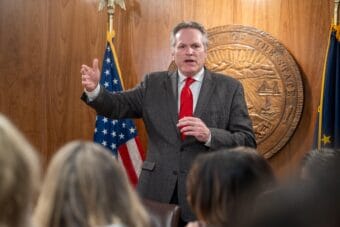
Gov. Mike Dunleavy gestures while speaking to reporters during a meeting of his 15 department commissioners on Wednesday, Jan. 21, 2026.
Gov. Mike Dunleavy gestures while speaking to reporters during a meeting of his 15 department commissioners on Wednesday, Jan. 21, 2026. (Eric Stone | Alaska Public Media)

Gov. Mike Dunleavy says he’ll soon propose a statewide sales tax as part of his larger plan to stabilize the state’s finances.

“There will be a temporary, seasonal sales tax concept put forth for discussion with the Legislature,” Dunleavy said during a cabinet meeting livestreamed on his Facebook page Wednesday in which he and the state’s 15 department commissioners outlined their accomplishments over the past seven years.

Dunleavy said a fiscal plan — along with moves to advance a natural gas pipeline from the North Slope — are his top two priorities for the legislative session that began Tuesday.

Dunleavy has been tight-lipped about the specifics of his plan. The political news site the Alaska Landmine reported Tuesday it would include a seasonal sales tax, a limit on government spending, changes to oil taxes and a new formula for the Permanent Fund dividend. Dunleavy’s communications director, Jeff Turner, declined to confirm the Landmine report and said by email, “the bills are still being finished.”

During Wednesday’s meeting, Dunleavy said he would start rolling out his fiscal plan next week. A required ten-year plan released alongside his budget in December identified some $1.6 billion in unspecified new annual revenues starting in July 2027. Dunleavy said he expects the plan to raise revenues “pretty close to that mark.”

“The proposal and the fiscal plan has multiple components,” he said. “It’s a road map to inject stability, especially over the next five years, when revenue is not quite what will be in the years out.”

Dunleavy emphasized that most of the measures he’d propose would serve as a temporary, half-decade bridge. After five years, Dunleavy said he expects state revenues to rebound thanks to increased oil production, growth in the Permanent Fund and the possible natural gas pipeline.

Lawmakers have said they’ll consider Dunleavy’s proposals, but it’s unclear if a sales tax and other components of Dunleavy’s plan will have enough support to pass the state House and Senate.

Dunleavy privately told lawmakers in 2023 he planned to introduce a sales tax, but he ultimately did not.

Site notifications
Update notification options
Subscribe to notifications