Andrew Kitchenman

State Government Reporter, Alaska Public Media & KTOO

State government plays an outsized role in the life of Alaskans. As the state continues to go through the painful process of deciding what its priorities are, I bring Alaskans to the scene of a government in transition.

Senate passes bill drawing from Permanent Fund

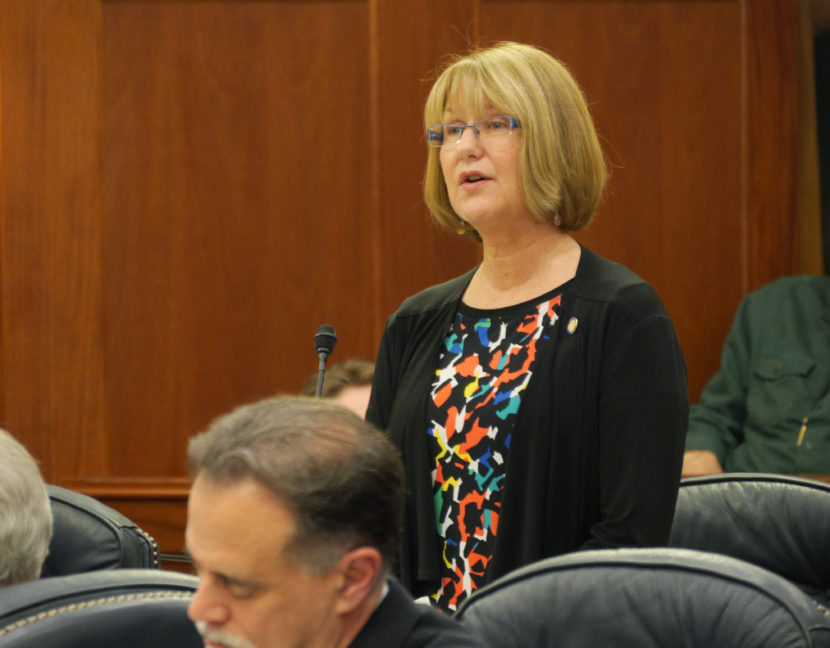
Sen. Anna MacKinnon, R-Anchorage, on the Senate Floor during debate about CSSB-26 (fin), March 15, 2017. (Photo by Skip Gray/360 North)
Sen. Anna MacKinnon, R-Anchorage, on the Senate Floor during debate about a bill that would draw money from the Permanent Fund. (Photo by Skip Gray/360 North)

The state Senate passed a bill Wednesday that would draw money from the Alaska Permanent Fund to pay for the state government’s budget. The bill also would limit Permanent Fund dividends, as well as the overall amount the state can spend.

Thirteen senators voted for Senate Bill 26, while seven voted against the measure, introduced by Gov. Bill Walker. It’s similar to legislation the Senate passed last year. But that bill died in the House.

Eagle River Republican Sen. Anna MacKinnon said it’s a challenge to close the state’s budget gap in a way that receives support from both legislative chambers and Walker. She said she would like to cut state government further before making changes to the Permanent Fund. But she said the state is limited in how much more it can cut.

“The services in Alaska are more expensive than most places in the U.S. certainly, but even in other parts of the world,” MacKinnon said.

The bill would draw 5.25 percent annually from the fund, with a quarter of that money going to dividends.

Dividends would be set at $1,o00 for the next three years – similar to their amount last year, after Walker vetoed half of dividend funding.

Under the bill, dividends are projected to go up slightly after the first three years.

Bill supporters say it’s necessary to help close the $2.7 billion gap between the amount the state spends and the amount it raises in oil royalties, taxes and fees.

Kodiak Republican Sen. Gary Stevens noted the original ballot question that created the Permanent Fund said that after oil could no longer pay for government, the Permanent Fund would.

“No one relishes making tough decisions that are also unpopular with many, many people in Alaska,” Stevens said. “But it is time to vote for what we as individuals, as elected responsible representatives believe is best for our districts and for Alaska. It’s time to support the governor’s bill.”

Eleven Republicans and two Democrats supported the bill, while three Republicans and four Democrats opposed it.
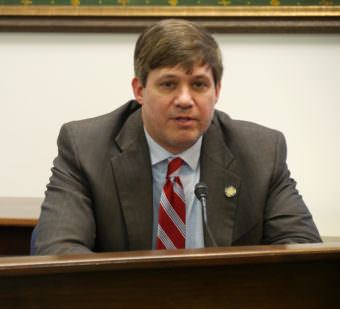
Sen. Bill Wielechowski, D-Anchorage, during a Senate Minority Press Availability, March 15, 2017. (Photo by Skip Gray/360 North)

Anchorage Democrat Sen. Bill Wielechowski opposed the bill.

He said the Alaskans’ ownership of the state’s natural resources under the Statehood Act means the Legislature shouldn’t cut PFDs.

“We have a unique constitution in that regard, and a unique obligation to ensure that that money is disbursed fairly and equitably to all Alaskans,” he said.

Wasilla Republican Sen. Mike Dunleavy said he’d like to see deeper cuts to government and that the Permanent Fund draw in the bill is too large.

“In the end, who do we want to win here: government or the people?” he asked.

It’s not clear whether the House and Senate will agree on changes to the Permanent Fund.

Unlike last year, the House has been debating its own Permanent Fund bill. But the House bill includes an income tax, which many senators oppose.

In a separate bill as part of the annual state budget, the House has proposed drawing more than $4 billion from the Permanent Fund this year – much more than the Senate bill would draw.

This would allow the House majority to avoid negotiating concessions with the House minority over drawing money from the Constitutional Budget Reserve.

The House Finance Committee is scheduled to debate its Permanent Fund bill, House Bill 115, on Friday.
Alaska state senators scour budget in hopes of $300M in cuts

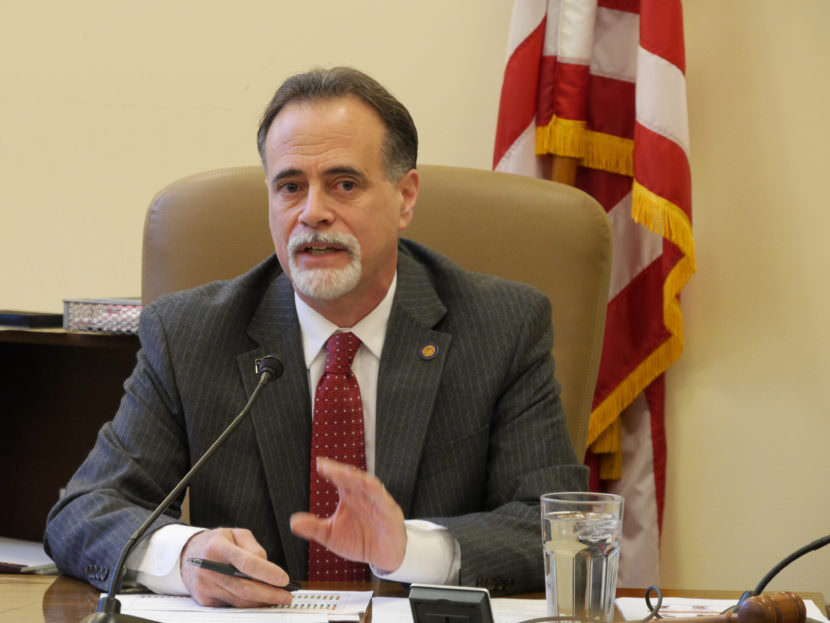
Sen. Peter Micciche (R-Soldotna) at a Senate Majority press availability, Feb. 24, 2017. (Photo by Skip Gray/360 North)
State Sen. Peter Micciche, R-Soldotna, shown here at a Senate Majority press availability on Feb. 24, says cuts to the Department of Health and Social Services were difficult. (Photo by Skip Gray/360 North)

The state Senate is looking to make up to $300 million in cuts to the state budget. But the Senate subcommittees looking to trim state agencies’ budgets are finding much smaller cuts.

The subcommittees planned to finish their work Tuesday.

The biggest recommended cuts were to the Department of Health and Social Services, which saw a $55 million cut, and the University of Alaska, whose budget was cut by $16 million.

Sen. Peter Micciche, R-Soldotna, said it was difficult to make the Health and Social Services reductions.

“It was certainly easier a couple of years ago, when perhaps there was some fat,” Micciche said. “I think we’re past those days. We don’t have the perpetual benefit of continued cuts. At some point, there will be someone that is going without a constitutionally required service.”

Sen. Gary Stevens, R-Kodiak, said of the university budget cut that Alaskans may not understand the effect of deeper cuts.

“I hate to see this happen, but I think the problem is the public is just not aware of the horrible situation we are in,” Stevens said. “And although all of these budget cuts are painful and we’re sorry to see them happen, we just have got to get the public awareness out there that we’ve got a serious problem — and the inclination of the public to do something about it.”

Anchorage Democratic Sen. Berta Gardner said cutting the university budget is unwise at a time when the state’s need for a better educated workforce is large and growing.

Gardner doesn’t believe $300 million in cuts will make it into the final budget, she said.

“I don’t see where it’s coming from,” Gardner said. “I think the House wouldn’t tolerate it either.”

The House has rejected a series of amendments proposed by the Republican minority caucus over the past two days. The House Finance Committee cut the budget by $31 million.

The Senate Finance Committee plans to hear public testimony on the budget Friday.

Editor’s note: A previous version of this story said the Senate Finance Committee would hear public testimony on Wednesday. The story’s been updated to reflect a scheduling change to Friday that was announced after publication.

House passes bill to provide benefits to survivors of police, firefighters

Rep. Chuck Kopp (R-Anchorage) during a House Floor session, January 25, 2017. (Photo by Skip Gray/360 North)
Rep. Chuck Kopp, R-Anchorage, during a House Floor session in January. He supported a bill that would provide health insurance to survivors of police officers and firefighters who die in the line of duty. (Photo by Skip Gray/360 North)

The state House passed a bill Monday that would provide health insurance to the families of police officers and firefighters who die in the line of duty.

House Bill 23 was prompted by the shooting deaths of Trooper Sgt. Patrick “Scott” Johnson and Trooper Gabe Rich in 2014. State law didn’t require that their dependents continue to receive health insurance.

While Governors Sean Parnell and Bill Walker have ordered that survivors continue to receive coverage, lawmakers want to make it permanent.

Anchorage Rep. Chuck Kopp, a retired police officer, said officers would appreciate it if the bill becomes law.

“It’s hard to imagine what a spouse and what children go through every day when they see their father or their mom gearing up to go to work because the unknown is always there,” Kopp said. “Will this be the last time?”

The House passed a similar bill last year, but the Senate didn’t pass it. Supporters are hopeful that its early progress this session will lead to it becoming law.

The current bill passed after a debate over a series of amendments. Six amendments were defeated. They would have applied the benefits to a wider range of public workers or would have made them voluntary.

North Pole Republican Rep. Tammie Wilson supported an amendment that would have allowed municipalities to opt out of paying for the benefits.

“We’re going to make the municipalities come into it, whether or not they want to or not,” Wilson said. “I think most of them will do it in some form or another. But why are we forcing them to do it?”

Bill sponsor Anchorage Democratic Rep. Andy Josephson said it’s necessary to pay the benefits.

“This is about the soul of the state of Alaska,” Josephson said. “This is about saying to the dependents: ‘You have suffered the unimaginable and we’ve got your back.’ ”

The Senate State Affairs Committee passed its version, Senate Bill 48, on Friday. It’s been referred to the Senate Finance Committee.

Committee sends budget to full House

Rep. Paul Seaton, R-Homer, (center) chairs the House Finance Committee shortly before the body passed it's version of the state budget to the House of Representatives March 10, 2017. (Photo by Skip Gray/360 North
Rep. Paul Seaton, R-Homer, (center) chairs the House Finance Committee shortly before the body passed it’s version of the state budget March 10, 2017, to the House of Representatives. (Photo by Skip Gray/360 North

The House Finance Committee has proposed cutting $31 million from the state budget.

That’s a little less than 1 percent of the annual amount the Legislature directly controls.

As the full House considers the spending plan next week, clear differences have emerged over whether those cuts are deep enough.

The budget is similar to the one proposed by Gov. Bill Walker.

Most of the changes that the House Finance Committee made were to areas outside of the agencies that provide government services.

For example, the committee’s proposal includes a $37 million cut to oil and gas tax credits.

Committee co-chairman Paul Seaton noted the Legislature has already cut hundreds of millions of dollars from state agencies over the last few years.

Seaton is a majority-caucus Republican from Homer.

“When you go in and try to nickel-and-dime agencies and pull threads out of the fabric, all of a sudden, you just make so the agencies can’t work to deliver the service that people want,” Seaton said.

The Department of Transportation would see the largest cut. Education and Early Development would see the largest increase.

Finance Committee member Cathy Tilton, a Republican from Wasilla, said the cuts don’t go far enough, at a time when residents are looking at cuts to their Permanent Fund dividends.

“What I’m hearing from my constituents is that they wanted to see some true reductions in agency operations,” Tilton said. “And there was none of that.”

Tilton also said the committee shouldn’t have increased funds to areas like the Alaska Marine Highway.

“There are a lot of things that we wish that we could do,” Tilton said. “When you have dollars in your budget, and in your home budget, you’re able to do more things. But when you’re looking at a $3 billion deficit, you have to take into consideration that we’re not going to be able to do all of things that we did before.”

The Finance Committee minority proposed about $150 million in cuts to individual line items, plus another $75 million in cuts to the amount schools receive based on the number of students who attend.

But Seaton noted the minority would actually have increased the budget.

That’s because it wanted to reverse Walker’s veto of half the Permanent Fund dividends paid out last fall.

Some of the biggest differences are over how to handle the Permanent Fund.

The Finance Committee majority proposes drawing $4.2 billion from Permanent Fund earnings this year to fund the budget. Of that amount, $1.7 billion would go to the state’s education fund.

“We’ve passed a fully funded budget for 2018 and out of the House Finance Committee, I anticipate that being fully funded as it leaves the floor,” Seaton said.

The full House is scheduled to debate amendments to the budget on Monday.

Senate majority members have said they want to cut roughly $300 million from the budget.

Now in minority, House Republicans fail to cut budget

Rep. Lance Pruitt (R-Anchorage) during a discussion about HB 115 in the House Finance Committee on Feb. 13, 2017. (Photo by Skip Gray/360 North)
Rep. Lance Pruitt, R-Anchorage, during a discussion in the House Finance Committee in February. He wants further budget cuts. (Photo by Skip Gray/360 North)

The Republican House caucus is pushing to cut the state government budget. But they no longer hold the majority. Instead of shrinking, the House version of the budget has actually grown.

The House Finance Committee has been working through $150 million in proposed cuts by minority-caucus Republicans. So far, the mostly Democratic majority has turned down the reductions.

Anchorage Republican Rep. Lance Pruitt expressed concern Thursday that the majority isn’t making any cuts.

“At some point in time not every single thing in this budget can be a sacred cow we can’t touch,” Pruitt said.

The committee did vote to add to the budget. They include adding $2.1 million to the Alaska Marine Highway to increase service.

Overall, House Finance subcommittees and the full Finance Committee have added more than $200 million to Gov. Bill Walker’s proposed budget of $4.2 billion. Most of the change was to increase Permanent Fund dividends, by $98 million and to “inflation proof” the Permanent Fund, by $120 million.

North Pole Republican Rep. Tammie Wilson said she’s disappointed there hasn’t been more discussion on the more than 200 cuts she proposed.

“We have to look inside each and every budget to see where we can decrease the budget,” Wilson said.

But Anchorage Democratic Rep. Les Gara said many of the cuts would hurt the most vulnerable residents.

“You know, to toss people to the side just because they don’t have money or because they have difficulty, that’s not what I would do as a legislator,” Gara said.

The Senate Finance subcommittees are finishing their work over the next week. The Senate majority is looking to make up to $300 million in cuts.

The gap between state spending and oil royalties, taxes and fees is $2.7 billion.

Rep. Wilson seeks deeper budget cuts, to no avail

Rep. Tammie Wilson, R- North Pole, reads through a series of amendments to the state’s budget during the House Finance Committee meeting on Tuesday in Juneau. (Photo by Rashah McChesney/Alaska’s Energy Desk)

Conflicts over the state budget are rising as the spending plan advances through the House Finance Committee.

Committee member Tammie Wilson introduced more than 200 of 330 amendments to the budget, including a group of separate 38 cuts to overtime and other types of work that pay state employees additional money.

The North Pole Republican wanted to debate each amendment individually. But the committee combined most of her amendments into two groups, then voted down both. Wilson objected.

“Well, it doesn’t allow the discussion: the discussion we owe Alaskans,” Wilson said. “Are we really looking at each line and seeing where we can cut, just as they would in their own business or in their own home? And by adding it all together makes it to where somebody can say, ‘well, I didn’t like one or two of them.’”

As a form of protest, Wilson read from her amendments for nearly an hour.

It’s particularly important to look to cut the budget at a time when the House is weighing whether to introduce an income tax, Wilson said.

Anchorage Democratic Rep. Les Gara argued against cutting much more than the state has already eliminated over the past four fiscal years.

“I get the urge to cut the budget even more,” Gara said. “It’s been cut by over $3.3 billion dollars since FY ’13. But at some point, you just can’t ask for blood from a stone. And you can’t make fewer people, who are serving Alaskans, do more by further cutting their ability to do work.”

The committee voted to reverse a vote it took last week, to cut school debt reimbursements by nearly $50 million. Instead, it would fund the full amount. It also voted down Wilson’s proposal to cut the Base Student Allocation the state pays schools by 5 percent.

The committee is scheduled to discuss the budget more Wednesday and Thursday.

Site notifications
Update notification options
Subscribe to notifications