Andrew Kitchenman

State Government Reporter, Alaska Public Media & KTOO

State government plays an outsized role in the life of Alaskans. As the state continues to go through the painful process of deciding what its priorities are, I bring Alaskans to the scene of a government in transition.
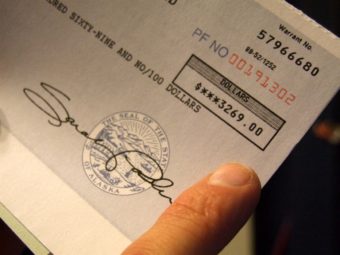
Three pitches for closing state budget deficit with the Permanent Fund

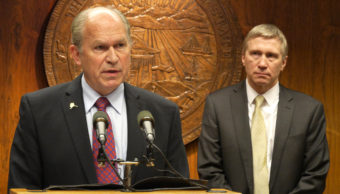
Gov. Bill Walker has proposed using the Permanent Fund to pay for much of the state’s annual budget. But Walker isn’t alone in eyeing the $50 billion account.

Lawmakers have introduced two other bills to pay for part of the budget using the fund.

Sen. Lesil McGuire, an Anchorage Republican, introduced Senate Bill 114 in April.

Sen. Lesil McGuire, R-Anchorage, in the Senate State affairs committee, Jan. 28, 2016, during discussion of SB 128. (Photo by Skip Gray/360 North)

While Walker’s plan proposes to pay out a set amount – currently $3.3 billion – each year, McGuire’s would pay out 5 percent of the Permanent Fund’s market value.

The idea draws on models used by universities and other endowments throughout the world.

Walker also would combine oil and gas production taxes and state budget reserves with the Permanent Fund to pay for the annual budget.  McGuire’s bill doesn’t do that.

She said there’s room for compromise.

“Generally speaking, there’s already more cooperation than I’ve ever seen,” McGuire said. “And I think it’s the fact that people recognize how serious this problem. That we all have to put set aside  and focus around achieving a result.”

Both McGuire and Walker would use oil and other natural resource royalties — instead of the Permanent Fund — to pay for dividends.

McGuire’s bill would aim to provide at least a $1,000 dividend every year, although it doesn’t require it.

State Revenue Commissioner Randall Hoffbeck is skeptical of creating a floor for the PFD.

Randall Hoffbeck, Comm. Dept. of Revenue, governor’s press conference, January 22, 2016. (Photo by Skip Gray/360 North.)
Revenue Commissioner Randall Hoffbeck at a press conference in January. (Photo by Skip Gray/360 North)

“Largely the dividend needs to be responsive to the state’s economic health, just like the state’s budget is, and so a floor would be a hard thing to achieve.” Hoffbeck said. “Impossible? No, but it would actually make the model a lot more difficult to achieve.”

Rep. Mike Hawker, another Anchorage Republican, wrote the other Permanent Fund bill that’s drawn attention, House Bill 224. It has a lot in common with McGuire’s bill. It would appropriate an annual percentage of the Permanent Fund for the budget.

But Hawker’s measure allows for much lower dividends, $250 or less in years where there’s a budget shortfall.

Hawker said Alaska shouldn’t pay out large dividend checks from royalties.

2008 PFD Check
An Alaska Permanent Fund Dividend check from 2008. (Creative Commons photo by Travis)

He cited a provision of the Alaska Statehood Act that says the state’s natural resources should benefit communities, not individuals.

Rep. Mike Hawker.
Rep. Mike Hawker addresses the Alaska House of Representatives in March 2014. (Photo by Skip Gray/360 North)

“Direct, indiscriminate redistribution of that money, from the resource to people … that is pure socialism,” he said. “It’s confiscating wealth and redistributing it without any public purpose, and that’s just simply wrong.”

Hawker said both he and the governor are trying to accomplish the same thing by drawing on the Permanent Fund: Create a more sustainable mechanism for funding the state budget.

But Hawker opposes combining state budget reserves with the Permanent Fund.

“My bill respects the Permanent Fund for what it was intended for when it was established,” Hawker said. “My bill respects the constitution, it respects the Statehood Act, and it utilizes our existing budget reserve funds for the purposes they were established. I don’t believe we need to re-engineer everything just to give it a different name, just to get the same outcomes.”

Another key difference between the governor’s and the legislators’ proposals is revenue. The legislators want to see at least $500 million in budget cuts, while Walker has proposed $100 million in cuts. And lawmakers are more willing to draw down budget reserves as a step toward a long-term budget solution.

Walker wants to permanently resolve the budget shortfall this year; McGuire says she’s hopeful progress will occur, even if it takes more than one year.

“The success of this session after having served 16 years is so much more critical than any other session I’ve ever been a part of,” she said. “But the success of this session rides on us making some concrete steps towards eliminating the volatility of Alaska’s budget.”

The Senate State Affairs Committee is scheduled to hold a hearing on McGuire’s bill on Thursday. Hawker’s bill has been referred to the House Finance Committee.

Retired state workers sue over dental, other optional benefits

dentist teeth cleaning
(Creative Commons photo by Allan Foster)

An association of retired state workers has filed a lawsuit saying state cuts to dental benefits violate the Alaska constitution.

The Retired Public Employees of Alaska said changes in 2014 to optional dental, vision, audio and long-term-care insurance must be reversed.

On Friday, the association filed the lawsuit against Department of Administration Commissioner Sheldon Fisher in Superior Court in Anchorage.

The lawsuit lists eight changes that it said violate a provision of the constitution.

This provision says accrued retirement benefits for public employees shall not be diminished or impaired.

The lawsuit seeks to reinstate benefits similar to those before 2014, when Moda Health began operating the dental plan.
Anchorage resident Brad Owens is a plan beneficiary through his wife, a retired state worker. He said the changes affect annual fluoride treatments.

“The Moda plan basically took away the fluoride treatment from a determination by the dentist as to whether or not it was appropriate or necessary, and just said it’s no longer available, it’s just something you have to pay for by yourself,” Owens said. 

State officials said that a move by the state last week to put Moda under supervision due to the company’s poor financial condition won’t affect the dental plans.

Bill would provide immunity for giving heroin antidote

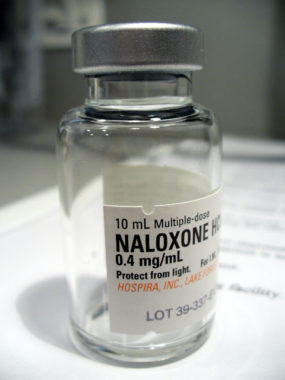
Nalaxone Narcan
(Creative Commons photo by Punching Judy)

Thirty-three Alaskans died from heroin overdoses last year, a dramatic increase from just five years ago, when only four died. Another 54 Alaskans died of prescription pain-reliever overdoses in 2015.
Some of those deaths may have been prevented through the use of an opioid antidote, which can rapidly reverse overdoses.

Lawmakers are weighing a bill to make it easier for overdose victims to get the life-saving drug naloxone.

Some doctors feel comfortable prescribing naloxone. But others are wary of facing lawsuits related to drug overdoses.

That’s why state lawmakers are considering Senate Bill 23, which would provide civil immunity to doctors who prescribe naloxone, also known by the brand name Narcan.

Family members of overdose victims are urging legislators to act.

Juneau resident Gary Miller’s daughter died last May from an overdose after taking heroin.

Juneau resident Gary Miller, whose daughter died from a heroin overdose, testifies before the Alaska House Health and Social Services Committee, January 26, 2016. He was showing his support for Senate Bill 23 which would provide immunity for prescribing, providing, or administering opioid overdose drugs. (Photo by Skip Gray/360 North)
Juneau resident Gary Miller, whose daughter died from a heroin overdose, testifies in the Alaska House Health & Social Services Committee on Tuesday. He was supporting Senate Bill 23, which would provide immunity for prescribing, providing and administering opioid overdose drugs. (Photo by Skip Gray/360 North)

“I kept asking myself, what if I had done this, or what if I’d done that. Would she still be alive today?” Miller said during a hearing on the bill. “I finally had to stop doing that. I was driving myself insane doing that. But I can ask what would happen if this bill passes. There’ll be other parents who don’t have to go through what my wife and I went through. There’ll be other drug users who will get another chance at life.”

The bill would also give immunity to pharmacists who provide the medication, and people trained to administer it to overdose victims.

But bill sponsor Sen. Johnny Ellis, a Democrat from Anchorage, is considering widening the immunity to cover more people who could help overdose victims.

Naloxone can be injected easily into a person’s muscles. The federal Food and Drug Administration also approved a nasal spray form in November.

Naloxone is considered safe, which is one reason advocates for the bill want it to be widely available.

Christina Love is an advocate at Aiding Women in Abuse and Rape Emergencies, a shelter in Juneau. She said the legislature should act immediately.

Christina Love, a Recovery Coach from Juneau, testifies before the Alaska House Health and Social Services Committee, January 26, 2016. She voiced her support for Senate Bill 23 which would provide immunity for prescribing, providing, or administering opioid overdose drugs. (Photo by Skip Gray/360 North)
Christina Love, a recovery coach from Juneau, testifies in support of Senate Bill 23. (Photo by Skip Gray/360 North)

“Expanded access to this life-saving drug would send a statement to the public: We are worth it, and every life matters,” Love said. “The only side effect of this drug is life. I can’t help but think if this bill would have been passed last year how many precious lives would still be with us.”

The bill also allows doctors to prescribe what’s known as a standing order to a pharmacy. This would allow the person who’s been prescribed the drug, a family member, or friend to pick up a prescription.

Dr. Jay Butler, the state’s chief medical officer, noted that in Rhode Island, pharmacies can dispense naloxone prescriptions to anyone who needs them.

Rep. Paul Seaton, a Homer Republican, encouraged Butler to do something similar in Alaska.

“The goal of everybody is to make sure that we have something safe and effective and available throughout the state, not just dependent on what … a local doctor and a local pharmacist would do,” Seaton said.

The Senate passed the bill 19-1 last April. The House Health & Social Services Committee recently held a hearing on the bill. The committee is scheduled to discuss the bill again on Thursday, and potentially vote on it.

Bill sponsor Ellis praised Seaton, the chairman of the committee, for focusing on a bill sponsored by a member of the other party.

“Rep. Seaton, to his credit, and his committee realize that this isn’t about normal procedure, or partisan politics,” Ellis said. “It’s a life-or-death, literally, a life-or-death situation.”

Ellis is hopeful the House will pass the bill and Gov. Bill Walker will sign it before the legislative session ends.

Walker taps corrections critic to be new corrections chief

Dean Williams appointment announcement
Gov. Bill Walker announces the appointment of Dean Williams (background middle) as commissioner of the Department of Corrections. Outgoing Commissioner Walt Monegan is in the background to the right. (Photo by Skip Gray/360 North)

Last year, Dean Williams found many problems with the state Department of Corrections that contributed to the deaths of dozens in Alaska’s prisons and jails.

Now he will be in position to do something about it.
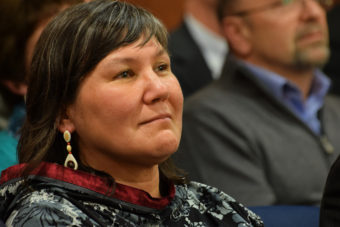
Gov. Bill Walker on Thursday nominated Williams to be corrections commissioner.

Williams expressed an interest in changing how the department handles people who are detained when they’re severely intoxicated.

Putting high risk individuals who are intoxicated by alcohol or drugs, who have committed no crime, in a jail cell with other people in the same condition, is not acceptable,” Williams said. “We do need other alternatives.”

In August, Walker asked Williams and former FBI agent Joe Hanlon to conduct a review of the department after several high-profile inmate deaths.

Williams and Hanlon found problems, including inconsistent investigations, a lack of adherence to rules by officers, and the use of solitary confinement for minor infractions.

Their report recommended investigations of deaths that take place in corrections facilities be handled through an external review.

Williams worked in the juvenile justice system for more than 30 years. He has served as a special assistant to Walker since July.

Walker said the fact that Williams wrote a report critical of a department he will now lead is not a problem.

“He’s the best person for this, to take on this task, and so I don’t see a conflict on that,” Walker said. “Actually, in some respects, I see a bit of a benefit as far as when he said he’s going in eyes wide open … that couldn’t be truer.”

Former Corrections Commissioner Ron Taylor resigned after the report was issued.

Both Walker and Williams praised the service of interim Commissioner Walt Monegan, who also had applied for the permanent job.

New Medicaid reform committee strives for savings

As lawmakers look to trim the state’s budget shortfall, their attention is focused on one of the biggest areas of the budget: Medicaid.

Eagle River Republican Sen. Anna MacKinnon announced Wednesday that a new Medicaid reform subcommittee will focus on the issue over the next month.

The subcommittee will look at two separate bills: one proposed by Gov. Bill Walker’s administration and another from Fairbanks Republican Sen. Pete Kelly to change how healthcare is delivered to low-income Alaskans.

Both bills encourage the use of case management.

In the state’s version, a contractor assigns a primary care provider to each patient.

The provider would help coordinate the health care that the patient receives, with an eye toward preventing problems that cause unnecessary hospital stays and emergency room visits.

Valerie Davidson, commissioner designee of Alaska’s Department of Health and Social Services listens to the State of the State Address, Jan. 21, 2015. (Photo by Skip Gray/360 North)

State Health Commissioner Valerie Davidson says patients benefit from closer attention.

“What we found is they love it, because, you know, maybe for the first time in their life, somebody is contacting them and saying, ‘Hey, it looks like you’re having some health issues,'” Davidson said. “Based upon what you have been seen for, you might benefit from seeing a primary care provider, who can work with a … cardiologist or some other specialist. And based upon what we know about the services that you’ve received, we can set up an appointment for you.”

Both bills also seek to reduce pharmacy spending by pointing patients toward generic prescription drugs rather than name brands.

Senator Kelly is also interested in exploring privatizing some state healthcare services.

Kelly says he’s looking forward to quick and bold action:

“We haven’t done it well enough over many, many years,” Kelly said. “There’s no finger being pointed at the Health and Social Services Committee or this commissioner. This has been a cumulative problem that I think we are just so forced  into dealing with it now because of the other budget considerations that face us, that we’re actually going to do it this time.”

The new subcommittee will meet three times a week.

Republican Senators Kelly and MacKinnon, along with Peter Micciche and Cathy Giessel will serve on the subcommittee, along with Democrat Donny Olson.

MacKinnon says she’s interested in possibly taking pieces from both the administration’s bill and Kelly’s bill and making a recommendation to the full Senate Finance Committee by the end of February.

Public Integrity Unit would aim to improve trust in government

Alaska Attorney General Craig Richards announced a plan Friday for a new Public Integrity Unit aimed at improving trust in government.

Craig Richards, Ak. Attorney General, at a governor’s press conference, January 22, 2016. (Photo by Skip Gray/360 North.)

Richards says the unit would focus on shootings and other cases in which law enforcement officers used force, as well as deaths in jails and prisons and allegations of corruption.

“Just in a post-Ferguson world, I think in general that the public side is increasingly looking to make sure that officer-involved shootings are scrutinized appropriately,” Richards said. “We certainly aren’t suggesting that they aren’t now, this just ensures, with a criminal investigator, that Law has its own resources to do some independent investigation.”

Richards says the administration wants the public to know there’s an independent unit devoted to these issues.

The current budget for the Department of Law would pay for the unit. It would include two attorneys, a forensic auditor, an investigator and a staff member.

But the fate of the plan depends on how much money is included in the state budget. If the legislature cuts Governor Bill Walker’s budget proposal, state officials would decide whether they can afford the unit.

Site notifications
Update notification options
Subscribe to notifications