Andrew Kitchenman

State Government Reporter, Alaska Public Media & KTOO

State government plays an outsized role in the life of Alaskans. As the state continues to go through the painful process of deciding what its priorities are, I bring Alaskans to the scene of a government in transition.

In close races, results in Alaska not expected for at least a week after Election Day

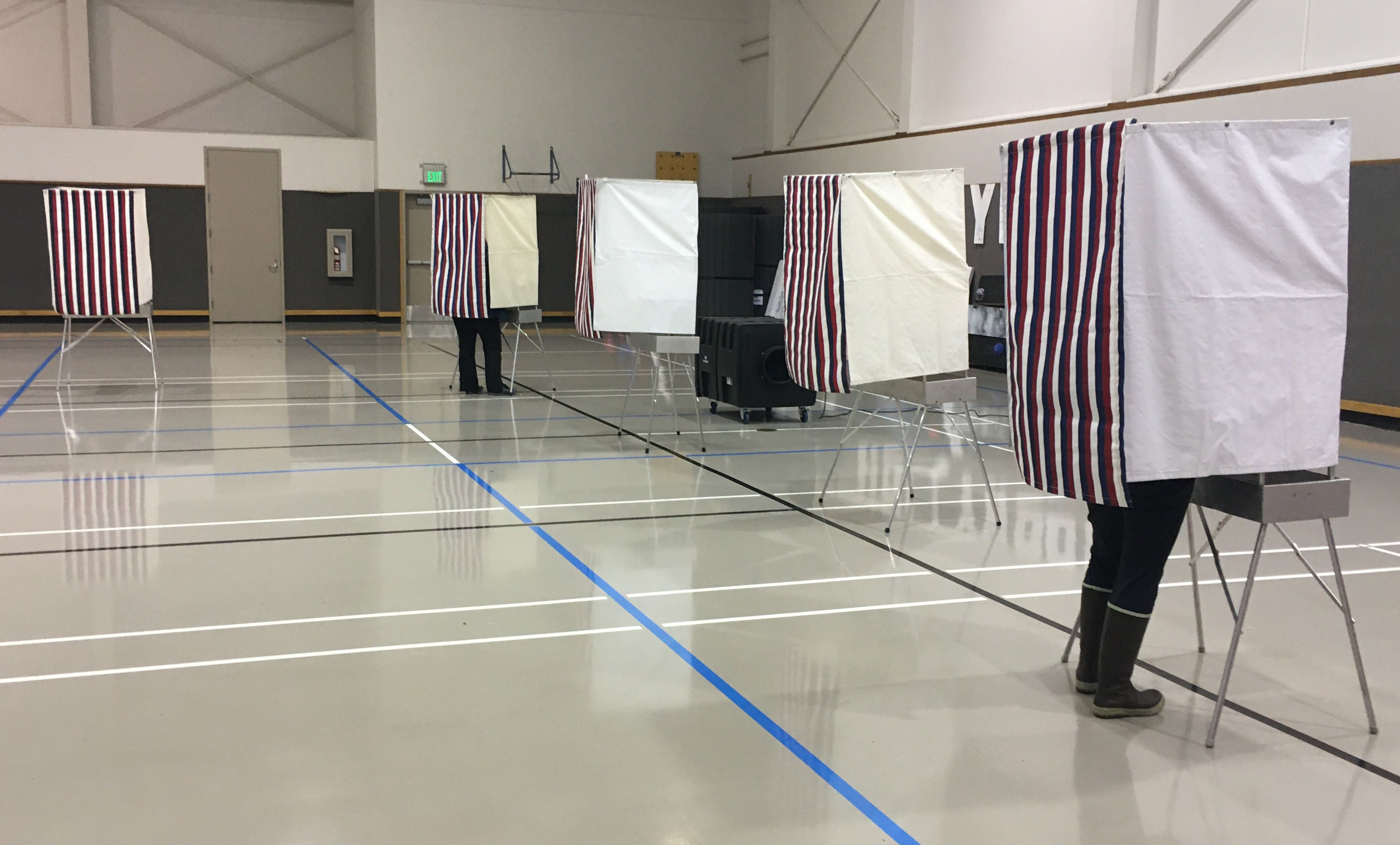
Voters make their choices during Alaska's primary election on Aug. 18, 2020, at Juneau-Douglas High School Yadaa.at Kalé. The booths are kept more than six feet apart as a COVID-19-related safety measure. (Photo by Andrew Kitchenman/KTOO and Alaska Public Media)
Voters make their choices during Alaska’s primary election on Aug. 18, 2020, at Juneau-Douglas High School Yadaa.at Kalé. The booths are kept more than six feet apart as a COVID-19-related safety measure. (Photo by Andrew Kitchenman/KTOO and Alaska Public Media)

Alaska is the last state in the country to begin to count absentee ballots, and so the outcome of close races in the state this year likely won’t be known for at least a week after Election Day.

Having a long wait to know the final results of an election isn’t unusual for Alaska. During this year’s primary, for example, the state wasn’t able to reach poll workers in Diomede on election night at all due to phone problems.

But with an absentee vote count that begins later than other states, combined with a record-high number of absentee votes due to COVID-19, the long wait may be particularly noticeable this year.

The New York Times has reported that Alaska is one of only two states that begin counting absentee ballots after Election Day. New York is the other state, and it begins counting absentees three days after the election.

Division of Elections Director Gail Fenumiai recently explained why the weeklong wait is necessary.

“We need to make sure that we have all of the in-person history that’s done from voters who go cast a ballot on Election Day at the polls, to be able to account for any voters who may have voted in person at their polling place and also by mail or voted in another manner. And to do the best to ensure that only one vote for a voter is counted in the general election,” she said.

In 2016 and 2018, the state started counting absentee ballots sooner. That’s because, it relied on a different system back then to ensure voters didn’t vote more than once. Poll workers were notified when voters had requested absentee ballots. If a voter who had requested an absentee ballot tried to vote in person, they were required to vote using a questioned ballot, unless they brought their absentee ballot to the polling place to destroy it. The questioned ballot would only be counted if the voter hadn’t voted absentee.

This year’s approach returns the state to the vote-count schedule it followed before 2016.

Fenumiai said this year has been unique.

“Well, the election in general has been more challenging, because of COVID: finding election workers, doing our best to assure the public that we’re keeping workers and voters safe,” she said. “Of course, having a record number of vote by mail is challenging.”

The vote counts announced on election night in Alaska will only include those cast earlier in the day, as well as nearly 38,000 early votes cast in person by Thursday at one of 10 designated locations.

A state law says state election workers’ counting of absentee ballots “shall begin at 8 p.m., local time, on the day of the election.” Fenumiai didn’t immediately respond to a question about how the state’s absentee vote counting schedule is in keeping with the law.

It’s not yet clear how many votes will be counted after Election Day. But it will be a large amount, including nearly 90,000 absentee votes the state reported through Friday morning.

In the primary in August, 40% of all votes were counted later. And it could be a similar share in the general election, based on the number of absentee ballots that could still be returned and the number of early and questioned ballots cast in previous elections.

In the primary, seven communities voted entirely by absentee ballot when poll workers weren’t available at the last minute due to COVID-19. And some voters in Mertarvik weren’t able to vote at all.

Fenumiai said on Oct. 19 that the division was aiming to have a polling place open in each precinct, though she was talking with communities that faced COVID-19 outbreaks.

“We are in daily contact with our chairpeople and the local leaders there to see … how they think things are going,” she said.

And she said that in-person absentee ballots would be available in Mertarvik, as well as a polling place open in nearby Newtok.

The timeline for updates on vote counts after the absentee counting has begun isn’t clear. The division has until Nov. 18 to complete the count. Absentee ballots that are postmarked by Election Day will be accepted until Nov. 13 for those mailed inside Alaska and until Nov. 18 for overseas ballots. Since the postal service forwards mail from around the state to be postmarked in Anchorage, Alaskans who still plan to mail in their ballot should ask a postal clerk to postmark it.

Another thing to keep in mind on election night: When the Division of Elections reports that precincts have reported their results, those results won’t include the absentee votes and others that won’t be counted that week. So, when, say, 99% of precincts have reported, that doesn’t mean that 99% of the votes have been counted.

Fenumiai emphasized one last point: All results are unofficial until the votes are certified. The target for that is Nov. 25.
Lawmakers vote to require face coverings and COVID-19 screenings in the Capitol

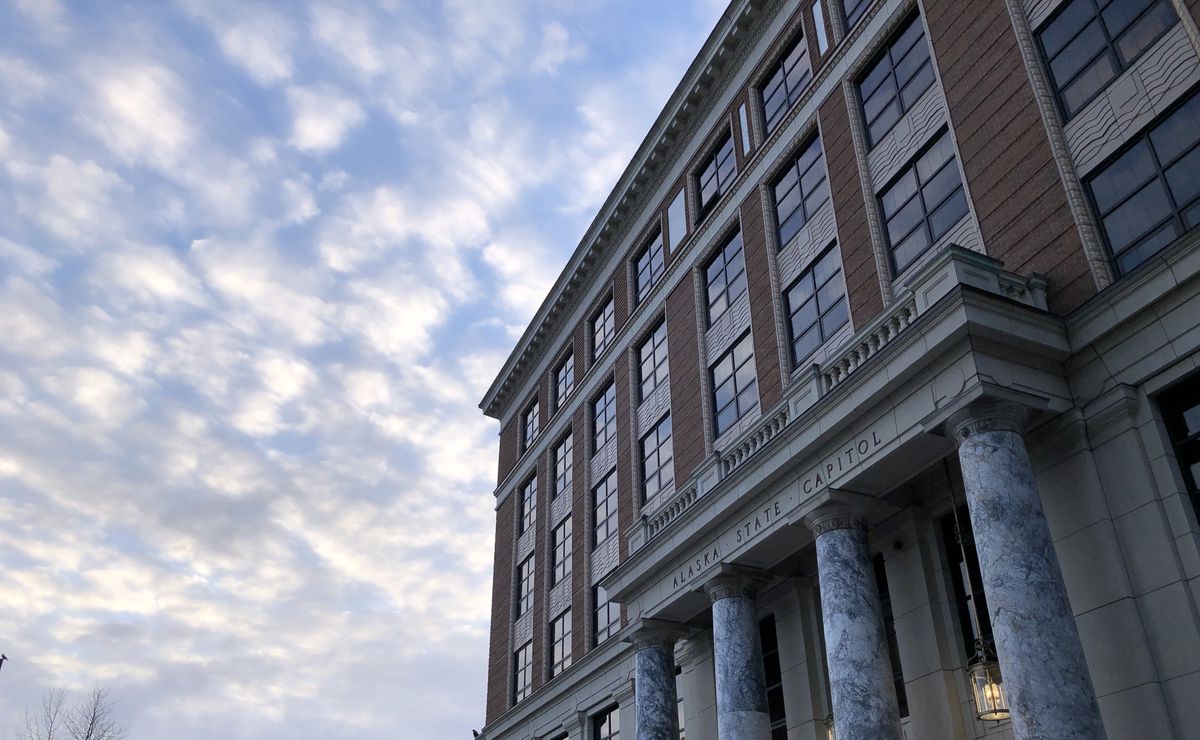
Alaska State Capitol
The Alaska State Capitol as seen on Friday, March 6, 2020. (James Brooks / Anchorage Daily News)

The Alaska Legislative Council voted on Thursday to keep the Capitol closed to the public, at least until the next Legislature convenes in January. Legislative staff and the news media will still be allowed in the building.

The council also voted to require that lawmakers, staff members and reporters wear face coverings in the Capitol and legislative offices, and that they be screened for COVID-19 when they enter the Capitol each day.

Kodiak Republican Sen. Gary Stevens, the council chair, said that while the next Legislature could change the policies, he anticipates that as long as pandemic remains a threat, lawmakers would continue with similar policies.

“I think the goal, of course, is to make sure that all legislators, staff feel safe, they feel that coming into the Capitol is a safe place for them to be,” Stevens said in the council meeting.

Stevens said the policies allow the council to prepare for the next session, including hiring a contractor to conduct the screenings.

The council decided against voting on a third policy that would institute a code of conduct that would ask legislators to make every effort to quarantine for 14 days before arriving in Juneau and to arrive with either a negative test result or to get a test upon arrival and to isolate pending results. It would also require legislators and staff to avoid all non-essential trips outside of Juneau during the session. The council plans to consider this policy again before January.

Another proposed change would require lawmakers who want to fund any trips with their state funds to receive approval from each chamber’s presiding officer.

The council voted 9-1 to mandate face coverings and 8-2 to require screenings to enter the Capitol. Palmer Republican Representative DeLena Johnson was the only person to vote against both measures. She said the mask mandate wouldn’t be enforceable against legislators.

“There’s nothing to this,” she said. “This is kind of the worst of the worst. It’s a great suggestion, but it’s not particularly meaningful.”

Stevens suggested that legislators who refuse to wear masks be required to stay in an area enclosed by plexiglass during floor sessions.

Stevens said keeping those who have to be in the Capitol safe means lawmakers can’t return to their pre-pandemic habits.

“If that means if we become heavy-handed and say, ‘Everyone wear a mask,’ I think that’s what we have to do,” he said.

Megan Wallace, the top attorney for the Legislature, said the Legislature could change its rules to allow legislators to attend floor sessions and committee meetings remotely. Sitka Republican Sen. Bert Stedman said it’s important that any change be limited to when lawmakers are unable to attend in person due to the pandemic.

Wallace also said the Legislature could consider rule changes to limit the amount of time spent in floor sessions, or to limit the length of this year’s session.

In the Mat-Su and on the Kenai Peninsula COVID-19 case rates are doubling every week

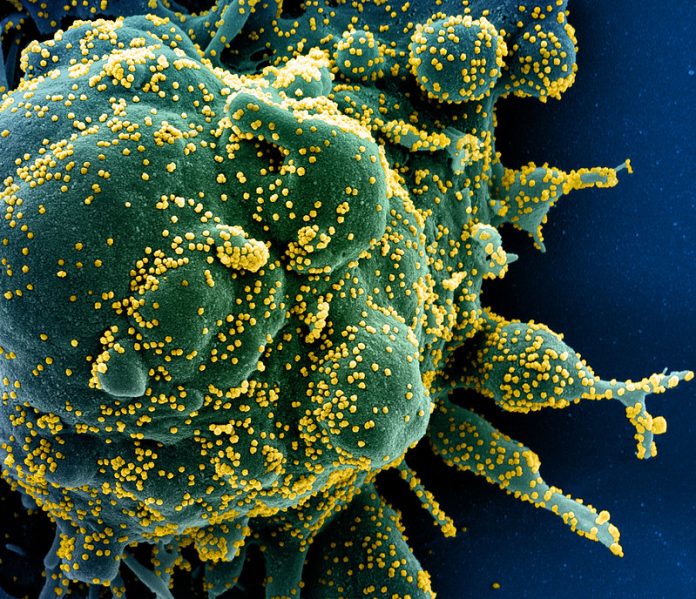
A scanning electron micrograph shows a cell (green) heavily infected with particles (yellow) of SARS-COV-2, the virus that causes COVID-19. (National Institute of Allergy and Infectious Diseases)

The Matanuska-Susitna and Kenai Peninsula boroughs are seeing the most rapid increase in coronavirus cases in Alaska. 

Alaska Chief Medical Officer Dr. Anne Zink said that Anchorage and Fairbanks have the highest number of cases. 

“However, the areas that are in the fastest growth upward right now are the Mat-Su and Kenai, with doubling rates between seven to eight days,” she said during a news conference with Gov. Mike Dunleavy on Wednesday. 

Wednesday was the fifth straight day that Alaska health officials announced more than 300 new cases. 

Zink added that Mat-Su residents have had the highest rate of testing positive for the virus, at 15.7% of those tested in recent days. The World Health Organization recommends that governments aim to keep local positivity rates below 5%.

Zink said the Fairbanks region has succeeded in flattening the COVID-19’s spread. She said the rate of residents testing positive has fallen in half in recent days, from 12 percent to 6 percent. 

“I think it really highlights the fact that this pandemic does not happen to us,” she said. “This virus can only spread when we give it a chance to spread from person to person. It can’t actually replicate without human cells. And so, really, the work that we all do collectively to slow the spread makes a gigantic difference. 

Dunleavy and other state leaders described steps the state is taking to try to reduce the recent surge in cases. More rapid testing machines and tests are expected soon. The state is adding more people to work on contact tracing. 

Dunleavy said he hasn’t been surprised by the increase in cases, since the administration always knew that Alaskans would interact more. But he also said he didn’t want to sound “nonchalant” about the spread. And he said the state would work to ensure hospitals aren’t overwhelmed. 

“The next two months could be difficult months, but they don’t have to be, again, if we all work together. ” Dunleavy said.

Dunleavy responded to continued calls for him to introduce a statewide mandate to wear masks in public by saying mask mandate decisions should be made locally. 

“We would support that, if that’s what they wish to do,” Dunleavy said. “I believe that that’s best done at the local level and, again, would support the decision by the local communities to do that.”


State blames obsolete technology on delay in $300 weekly unemployment payments

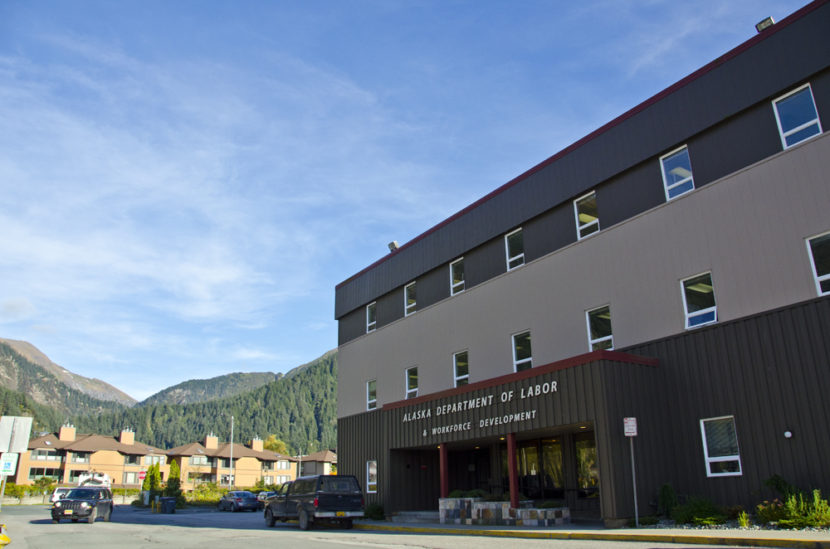
The Alaska Department of Labor and Workforce Development building in Juneau. (Photo by Heather Bryant/KTOO)

Obsolete technology has prevented the state government from distributing additional money to Alaskans who are unemployed due to COVID-19, according to Gov. Mike Dunleavy.

“We’re having a problem with it,” Dunleavy said of the system. “It’s outdated. It’s outmoded. And, in the manner that the feds want us to distribute the money, it’s right now — it’s not working with the system.”

Dunleavy said the state is aiming to have an answer to the problem by Thursday or Friday. 

Dunleavy announced the state plan for the money on Aug. 13, shortly after President Trump announced the program. But residents are still waiting for the payments.

The Lost Wages Assistance program is intended to pay up $300 per week for a six-week period, for a total of $1,800, on top of regular unemployment insurance payments. 

The federal CARES Act provided an additional $600 per week for people who were unemployed due to the pandemic from early April until late July. 

The U.S. House passed a bill in May that would have extended the $600 weekly payments through January. In September, Senate Republicans proposed reducing the payments to $300 per week. But the Senate didn’t pass the proposal. And the two chambers haven’t agreed on a compromise.

Watch: Dunleavy administration to give an update on the state’s response to COVID-19

Gov. Mike Dunleavy’s latest COVID-19 press conference is scheduled for 5 p.m. today.

Alaska Gov. Mike Dunleavy speaks about the state's COVID-19 response from the Atwood Building in Anchorage on March 20, 2020.
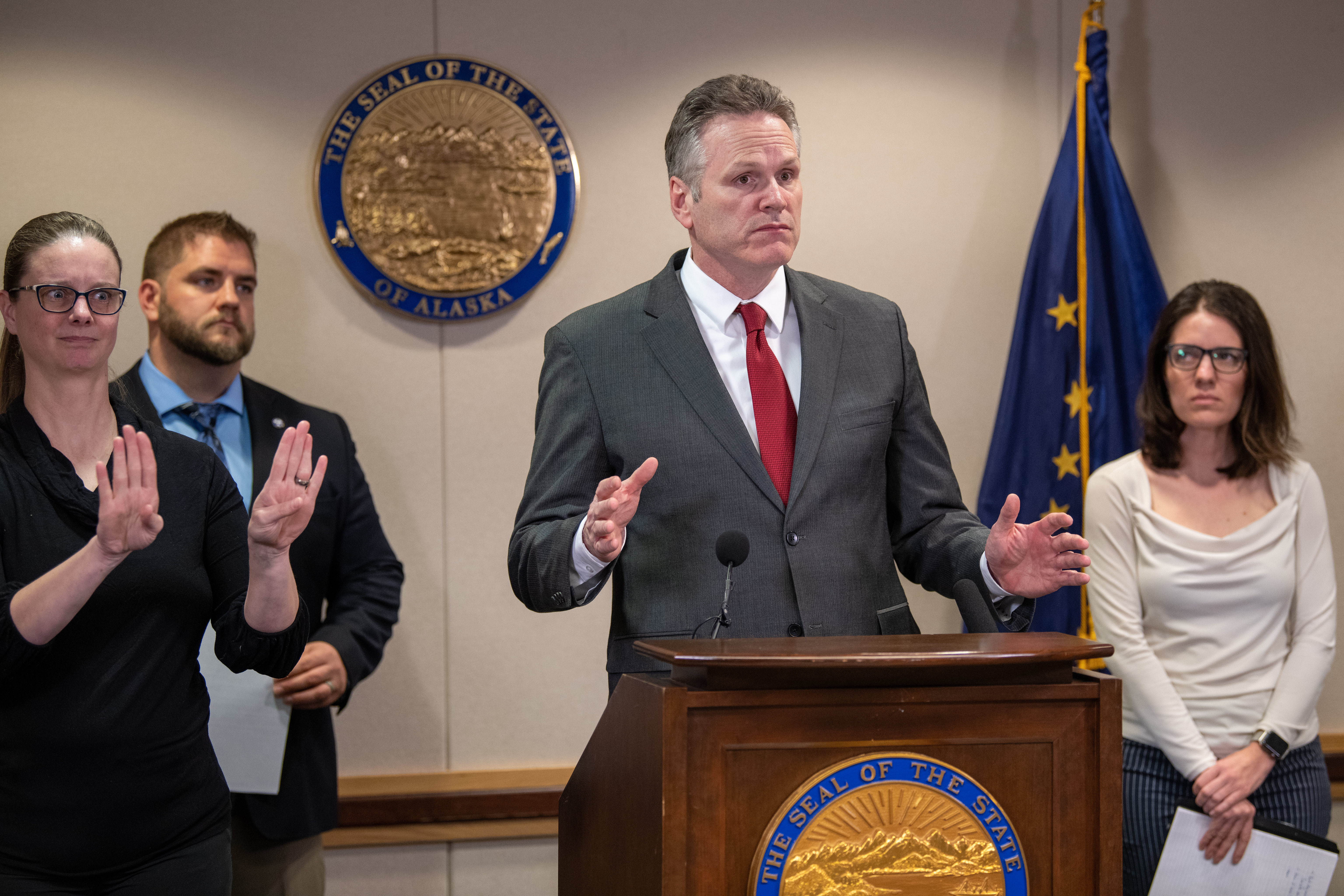
Alaska Gov. Mike Dunleavy speaks about the state’s COVID-19 response from the Atwood Building in Anchorage on March 20, 2020. Also pictured: Department of Health and Social Services Commissioner Adam Crum, Chief Medical Officer Dr. Anne Zink, and an unidentified sign language interpreter. (Creative Commons photo courtesy Alaska Governor’s Office)

The governor, Alaska Department of Health and Social Services Commissioner Adam Crum, Chief Medical Officer Dr. Anne Zink, Chief Epidemiologist Dr. Joe McLaughlin and DHSS Public Health Director Heidi Hedberg are scheduled to appear.

In previous conferences, they have shared updates on the number of people in the state with confirmed cases, announced public health mandates, and explained the administration’s strategy and rationale.

Alaska-specific COVID-19 resources and information are available at coronavirus.alaska.gov.

You can watch today’s press conference live on this post, and on the governor’s Facebook or Livestream pages.

Health care providers, municipalities call for Dunleavy to extend disaster declaration

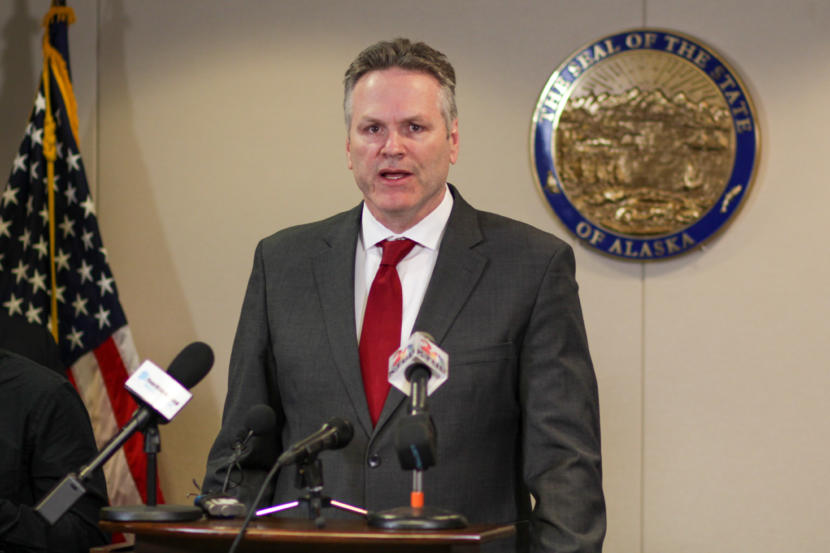
Alaska Gov. Mike Dunleavy briefs reporters at his Anchorage offices on March 11 on the state’s preparations to fight the coronavirus. Dunleavy announced an emergency declaration at the briefing. The declaration is expiring on Nov. 15, and health care providers, municipalities and some lawmakers want the governor to extend the declaration. (Photo by Nat Herz/Alaska Public Media)

Gov. Mike Dunleavy’s public health emergency disaster declaration is set to expire on Nov. 15. Health care providers and local governments say they need that declaration, which allows them to better respond to the pandemic. 

It’s not yet clear whether Dunleavy will extend the declaration

The Alaska Native Health Board represents regional health organizations and advocates for Alaska Native health. It sent a letter to Dunleavy and state Health and Social Services Commissioner Adam Crum on Oct. 21, asking them to extend the declaration.

Winn Davis, a policy analyst for the health board, explained why the organization sent the letter.

“The crisis of COVID-19 is not over for rural Alaska and it’s not over for Alaska Native communities,” Davis said. “In fact, it’s really just beginning. And we’re seeing that in the really large number of cases that have been coming out from rural Alaska.”

Davis noted that Alaska Natives are disproportionately affected by the pandemic. Alaska Natives and Native Americans are 31.7% of COVID-19 hospitalizations and 33.8% of pandemic deaths, while they are roughly 19% of the state’s population.

Davis pointed out that the Native communities of Chevak, Stebbins, Buckland and Gambell have all had massive outbreaks recently.

Davis said the mandates Dunleavy and state health leaders issued under the disaster declaration in the spring slowed the spread of the virus in rural Alaska. And he said the disaster could worsen if the state ends the declaration. 

“It only stands to make the outbreak of COVID-19 worse in our hard-hit rural locations and it stands to exacerbate disparities we’re already seeing in how COVID-19 is affecting Alaska Native communities,” he said.

Every state in the country has operated under some form of emergency order and it doesn’t appear that any state has intentionally ended its order. However, the status of Michigan is unclear after its state supreme court ruled that its governor didn’t have the power to extend a state of emergency. 

Keeping Alaska’s declaration aligns the state with federal waivers that hospitals and nursing homes need, according to Jared Kosin, president and CEO of the Alaska State Hospital and Nursing Home Association. He also sent a letter to Dunleavy, urging him to extend the declaration. 

Kosin said it’s not certain whether the federal government will continue to waive federal rules if the declaration ends. These waivers have allowed Alaska hospitals to do things like screen patients for COVID-19 outside of emergency rooms or treat COVID patients in outside, alternate sites if there’s a surge in patients. 

“That is a major issue because if we lose those flexibilities our ability to deliver care quickly and creatively in the middle of a pandemic is really up in the air,” Kosin said.

Kosin said the hospitals are looking for Dunleavy’s administration to clear up the uncertainty.

“The last thing we need right now in trying to deliver health care is determining whether or not we’re even legally allowed to do so,” he said.

The Alaska Municipal League also sent a letter urging Dunleavy to extend the disaster declaration. The letter said: “navigating through a public health emergency and economic crisis without an emergency declaration in place may be calamitous. Local governments cannot do this on their own, nor should they.”

A group of  Democratic and independent House members sent a letter to the Republican governor asking to work together to extend the declaration. They wrote that the recent surge in cases “should be a call to action.”

Dunleavy spokesperson Jeff Turner said Dunleavy hasn’t decided whether to let the declaration expire. Turner said Dunleavy is assessing the situation and will decide by Nov. 15. 

Dunleavy discussed the disaster declaration in a phone call with local officials on the Kenai Peninsula last week. They differ over the details of the call — Homer Mayor Ken Castner said Dunleavy said he wasn’t renewing the declaration, while Kenai City Manager Paul Ostrander said the governor said he hadn’t decided.

Under state law, the Legislature must vote to extend disaster declarations beyond the first 30 days. Dunleavy issued the original declaration on March 11 and the Legislature voted in late March to extend it to Nov. 15. Legislative leaders have said that there aren’t enough votes to hold a special session to extend the declaration. 

It’s not clear what form an extension would take if the Legislature doesn’t reconvene.


Site notifications
Update notification options
Subscribe to notifications