Claire Stremple

"I support KTOO reporters and guide coverage that informs our community and reflects its diverse perspectives."

When she's not editing stories or coaching reporters, you can find Claire outside with her dog Maya.

‘It’s a risk either way’: Pregnant women in Alaska grapple with vaccine decisions

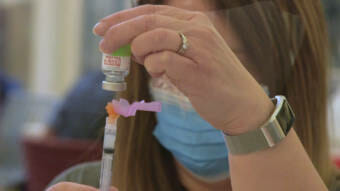
A nurse fills a needle with the COVID-19 Vaccine in Anchorage, AK on Jan. 7, 2021.
A nurse fills a needle with the COVID-19 vaccine in Anchorage on Jan. 7, 2021. (Jeff Chen/Alaska Public Media)

Pregnant women are considered at high risk for serious medical complications from COVID-19. But the vaccines haven’t been tested on pregnant women because they’re a vulnerable population. It’s kind of a Catch-22, and it’s the reason some moms-to-be are hesitant to get the shot.

“It’s a risk either way. It’s not a fun position to be in, I will tell you,” said Makenzie Rose.

She had only known she was pregnant for two days when she got a call that said there were extra vaccine doses in Anchorage, if she moved fast. She got in the car and got the shot.

All Alaskans 16 and older are now eligible for the COVID-19 vaccines. But there’s limited vaccine testing data on pregnant women. So even though they can get vaccinated, many are wrestling with the question of whether or not they should.

Rose had thought about her decision already. She had talked to friends and doctors about the vaccine while she was trying to conceive. Even so, she says she still doubts her choice sometimes.

“Everyone is saying, ‘well, just make your own decision.’ It’s really hard to make your own decision because you care so much about the health of your kid, of your unborn child,” she said.

Rose also has a two year old at home.

“I just feel like nothing can happen to me right now,” Rose said. “Like, I have a kid I have to take care of. It’s a doozy.”

Rose has been fully vaccinated for about two weeks. Her recent ultrasound came out normal and healthy, with a strong heartbeat. She says she’d make the same decision again, but the uncertainty is hard — she wanted a clear green light from a medical professional, and it just wasn’t coming.

“It’s a little bit of a tricky subject, there’s not a really good straightforward answer,” said Dr. Emily Rosenfeld, an OB-GYN in Juneau.

Rosenfeld says she talks her patients through their risk level to help them make a choice. They discuss things like preexisting conditions, age and occupation. But she said she doesn’t feel comfortable making recommendations.

“It kind of becomes more of a kind of benefit, risk conversation with the patient,” Rosenfeld said.

The Centers for Disease Control and Prevention are tracking the pregnancies of about 2,000 women who have been vaccinated for COVID-19. Of those, 275 have given birth. It’s a really small sample size, but CDC says there haven’t been any issues.

That stands out for nurse consultant Sherrell Holtshouser. She’s worked for the state health department’s maternal and child health division since the 1970s.

“I have a favorite niece. And she asked me this question, because she is six weeks pregnant,” she said.

Holtshouser told her to get the shot.

“We don’t have any evidence that would cause us to be hesitant or have concern. But we certainly have information, more and more, that’s telling us that pregnant women are at high risk,” she said.

Holtshouser says there’s a good reason pregnant women are typically left out of clinical trials. They are more vulnerable. But for her, the reward outweighs the risk when it comes to the vaccine.

Pregnant women who get COVID-19 are more likely to need intensive care or get put on a ventilator than their not pregnant peers. In certain age groups they are twice as likely to die. Holtshouser says she’s also concerned that severe illness could result in problems for the baby, like preterm birth.

The American Academy of Obstetrics and Gynecology and the Society for Maternal Fetal Medicine say it’s unethical to withhold vaccines from pregnant or lactating women, even though safety data is lacking.

Makenzie Rose, the pregnant woman with the toddler at home, says for her it was a crash course in risk assessment.

“I think for a lot of women, it just it feels really high stakes. Because it is high stakes. It’s your kid,” she said.

KTOO talked to a number of women who didn’t want to speak on the record but were too nervous to get the vaccine.

The state of Alaska doesn’t track whether or not women are pregnant when they get vaccinated, so we don’t know how many have gotten it. But women can choose to self report to the CDC. More than 30,000 women in the nation have done that.

Editor’s Note: Makenzie Rose  is an employee of CoastAlaska, an organization that provides business services for KTOO and other public media stations in Southeast Alaska.

Alaska Fish and Game is selling raffle tickets for big game permits to boost its budget

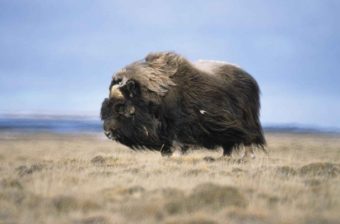
Musk ox near Nome (Neal Herbert/National Park Service)

Tickets are already on sale for what’s called “Alaska’s Super Seven Big Game Raffle.” If it sounds kind of like buying a lottery ticket for musk ox — or another one of the seven most sought after species in the state, like a brown bear or a caribou — it is.

Alaska’s Department of Fish and Game is raffling off permits for some of the state’s most desirable hunts. Officials hope the earnings will help make up for a decrease in hunting license sales during the pandemic.

“We saw close to $2 million revenue loss in the wildlife division this last year because of COVID, primarily because of the significant or steep decline in nonresident license sales this last year,” said Tony Kavalok, the assistant director of Fish and Game’s Division of Wildlife Conservation.

Kavalok said COVID-19 travel restrictions and the closure of the spring brown bear hunt meant nonresident hunting license sales were way down this year.

He said another reason the division wants to raise money is to be able to match some federal money. States get cash from a tax on firearms and ammunition sales and firearms and ammunition sales are trending way up. But states only get the money if they can match one dollar for every three federal dollars.

“So it’s a very important situation right now because with license revenue flat or declining and our federal match dollars going up, it’s gonna be really important to have that additional funding,” Kavalok said.

The raffle is the first of its kind in Alaska. But other states like Arizona and Wyoming have similar systems. In Wyoming, the raffle raised more than a million dollars this year.
The Alaska raffle is open to residents and nonresidents. Avid sportsmen said these are once-in-a-lifetime hunts.

“If you’re really looking for a really, really nice animal for that species, these areas are the premium areas in the state to have,” said Louis Cusack, a lifelong hunter who lives in Chugiak.

Cusack is the executive director of the Alaska chapter of Safari Club International. It’s one of the nonprofits that’s partnered with the state to run the raffle. It donated a tag and will sell tickets — most of the money goes back to Fish and Game, but Safari Club International can spend 30 percent on a conservation project of its choice.

For most of these hunts, only a tiny percentage of the hunters who usually put in for a tag get one. And those tags often show up on auction for big money. But a raffle ticket is only twenty bucks. That’s important to Cusak.

“You don’t have to own a Learjet, you know, have to be able to afford to spend 1000s of dollars,” he said.

Raffle tickets are on sale through mid-April. Winners will be announced May 1. Hunters age 10 and older are eligible.

Lost kitten tours Juneau before good Samaritans fly her home to Haines

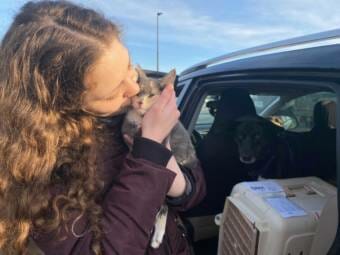
Cassidy Timm kisses Spot the kitten, who returned home by plane after getting lost on the ferry. (Claire Stremple/KTOO)

The small, borrowed cat carrier sat on a chest freezer in the Alaska Seaplanes office in Haines. Spot the kitten was the only passenger waiting when Cassidy Timm and Blake Ward arrived to pick her up.

“She’s so excited. Hi, Spot!” Timm bent over the carrier where Spot rolled over.

“Her siblings are going to be so excited to see her and her mom. Her mom has been so sad lately. It’s been awful. She just runs around crying all the time,” Timm said.

It’s been over a week since Spot clawed out of the sunroof of their vehicle and got lost somewhere on the car deck of the Matanuska.

The mainline ferry run from Bellingham, Washington through Southeast Alaska covers more than 1,000 miles over several days with multiple stops. So when Timm and Ward lost their 4-month-old kitten within hours of departure, they didn’t expect her to return home on a regional flight 10 days later.

“They’re pretty little still. And they never weaned off their mom. She was actually the worst that was still nursing on her mom, so I was so surprised when she left the car,” Timm said.

The couple was moving back to Haines from the Lower 48 with all their pets, including Spot’s mom and siblings.

Timm said she looked for Spot everywhere — even in the wheel wells of other cars. They made announcements on the ferry. She set kennels out with food and Spot’s mom and even left one of the dogs Spot usually snuggles with tied up outside in hopes that she’d return.

But she didn’t. When they got home to Haines, Timm posted on Facebook. She knew Spot could be anywhere along the route — Ketchikan, Petersburg, Wrangell, Juneau or Skagway.

A few days later her phone blew up with calls, texts and notifications. Spot was in Juneau, about 6 miles from the ferry dock. A couple heard her crying under their porch and took her in, then took to social media to see if she already had a home.

“I cannot imagine what she’s been through though in these last couple of days. I mean, they stayed inside their whole lives. They never went outside. And then now she was all exploring all of Juneau which is a new place,” Timm said.

Timm’s boyfriend pulled the car around so they could load Spot up. Their dogs jostled in the backseat for a welcome sniff. She hesitated for a moment, before putting Spot down.

“She’s everything to us. All of them are. We’re, we love our animals. They’re like our kids. So we’re so happy to have her back,” she said.

No money was exchanged; they never met the folks in Juneau who found Spot or the volunteers who donated a kennel and drove her to the airport. The regional airline even flew Spot home for free.


Site notifications
Update notification options
Subscribe to notifications