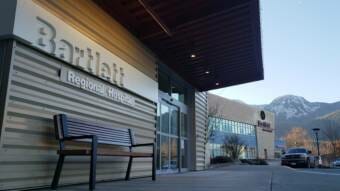
A nearly empty critical care unit at Bartlett Hospital on April 7, 2020, in Juneau, Alaska. on (Photo by Rashah McChesney/KTOO)
Bartlett Regional Hospital in Juneau is seeing a return of revenue after a year of pandemic losses.
Kevin Benson is the chief financial officer for the city-owned hospital. Benson said that even before the hospital started seeing revenue again, Bartlett was breaking even, thanks to federal relief money.

“About $6 million in CARES [Act] dollars were used to prop up the operations of the hospital and financially keep us whole,” Benson said. He said that $6 million is about equal to how much money the hospital made in the last year before the pandemic.
“But we’ve exhausted all of the funds that we had received. So unless there’s more forthcoming we’ll be probably incurring some losses.”
Bartlett had to spend a lot of money on the pandemic, and at the same time, patient volume was down. Things like personal protective equipment, oxygen, and ventilation upgrades for the building cost a lot of money. The hospital also kept staff employed in case COVID-19 hospitalizations spiked.
Financial losses are due to a six-week closure to non-elective and non-emergency procedures, and the loss of the tourism season. Tourists — mostly from cruise ships — accounted for more than 1,500 patients in 2019.
There have also been some positive changes due to COVID-19. Chief Operations Officer Billy Gardener said telehealth has been an unexpected boon.
“When you think ‘telehealth service’ in a community like Juneau, you really want to also think ‘specialty services’ because the COVID-19 pandemic forced a lot of specialty services onto telehealth platforms to keep their businesses whole. Well, that opens up a new menu for Juneau where traditionally, you know, we were bound by who would come to town,” Gardener said.
Hospital administrators hope to catch some of the more than $8 billion in federal money Congress has pledged to fight the coronavirus. But when that money comes — and how much Bartlett gets — is still a question mark.
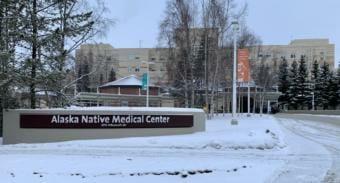
The Alaska Native Medical Center in Anchorage. (Photo by Joey Mendolia/Alaska Public Media)
A new study from Alaska Native Tribal Health Center shows that cancer rates among Alaska Native people have gone up over the last half-century. Researchers say the data points to opportunities for prevention.
The most common cancers among Alaska Native people are breast, colorectal and lung cancer. With screenings like mammograms and colonoscopies, they can be detected and treated early.

Yet cancer remains the leading cause of death for Alaska Native people — and it has been for decades.
“This is outrageous. Why are we not at war with this thing? Why are we not doing more?” asked Eric Fox, who lost his mother to cancer in 2017.
Within months, Fox was serving on the state’s advisory board to the American Cancer Society. He said you’d be hard-pressed to talk to anyone in the Alaska Native community that hasn’t lost someone close to them to cancer.
“It’s happening every day. You know, 1/5 of our deaths in the Alaskan Native community are attributed to cancer,” he said.
Fox’s mother died after a long battle with colorectal cancer. Data collected by the Alaska Native Tribal Health Consortium show that Alaska Native people have the highest rates of colorectal cancer in the world.
That rate of that cancer has been constant over the last half-century — while the incidence among white people has gone down. It’s a growing disparity.
“This disparity has persisted for the entire time that we’ve had a cancer registry,” said Sarah Nash, the cancer surveillance director at Alaska Native Tribal health Consortium. She and her team collect cancer information in a “tumor registry” for all Indigenous people living in the state of Alaska.
“These data provide a baseline from which we can then go away and ask other questions. And we can use this for the base of public health programming and research,” Nash said.
Screening for cancer is one element of prevention. Lifestyle choices like a healthy diet, exercise and quitting smoking can significantly reduce the risk. But she says cancer is a tough problem to solve; each case has more than one contributing factor.
“Every cancer is a different jigsaw puzzle. So for one person, the jigsaw puzzle may look like smoking, and historical trauma, and lack of activity. And for another person, it might look like genetics and diet, and some kind of chemical exposure,” Nash said.
It’s rare to have cancer data that spans 50 years, but the tumor registry at ANTHC does. This year the data team released a report that compiles that data. Researchers say the findings are crucial to addressing higher rates of certain cancers and health disparities.
For example, physicians usually recommend anyone over 50 years old to be screened for colorectal cancer. But the registry showed Alaska Native patients tended to get the cancer at a younger age — so ANTHC changed the recommendation to people 40 and older.
Ayyu Qassataq, a breast cancer survivor, says she’d like to see more Alaska Native-specific protocols like that one.
“At the time that I went through cancer as a young woman, younger than so-called normal, there were a number of other Alaska Native women who I was going through treatment with at the same time, who were having the exact same experience. Younger than, you know, the recommended age for annual mammograms and those kinds of things,” Qassataq said.
Qassataq found her cancer by chance in her late 30s and has been cancer-free for a few years, but she’s still managing long-term health effects from treatment. She says if cancer messaging had been targeted to her demographic, she would have been more likely to pay attention and perform monthly self-checks.
She says Indigenous knowledge should also be incorporated into cancer treatment. Things like plant medicine and ceremony helped heal her whole person. She says it’s important to take a holistic approach when talking about health disparities, too.
“We need to be able to really look at those things and be able to talk about them, and not look at the statistics in isolation from the context that created them. I want to have those conversations about how we talk about health equity and the root causes of the inequities that we experienced,” Qassataq said.
The data highlights a hard reality, but Eric Fox — the advocate working with the American Cancer Society — says it’s one that can change with more awareness. He says medical recommendations are just one part of the solution. The other is changing what he calls a generational mindset of toughing things out.
“We’ve got to make it okay in our community to have these conversations, to bring awareness, and ask the people that we love and care about to go and get these screenings,” he said.
Colonoscopies and mammograms can be a delicate subject, but Fox wants to eliminate those taboos. A little bit of discomfort can save a life.
Dr. Lisa Rabinowitz is a staff physician for Alaska’s public health division and serves on its COVID-19 task force. She says the announcement helps doctors make recommendations for pregnant women.
“We were very excited this week to have more concrete data that helps kind of, we feel more confident talking to women and help them make this decision,” she said.
Pregnant women and children are considered vulnerable populations and were not included in vaccine trials. But early data from the CDC’s Vaccine Pregnancy Registry shows “no evidence that antibodies from COVID-19 vaccination cause any problem with pregnancy, including problems with the placenta.”
In a White House briefing last Friday, CDC Director Dr. Rochelle Walensky said pregnant people who were vaccinated showed no unusual side effects in an agency study. Further, no safety concerns were observed for the more than 800 people who completed their pregnancies after getting the vaccine in the third trimester.
The CDC continues to advise women to make a decision in consultation with their doctors.
Passengers from the mega ship Norwegian Joy disembark in May 2019 at Ketchikan’s Berth 3 downtown. (Photo by Leila Kheiry/KRBD)
Alaska will join Florida in a federal lawsuit challenging the current cruise ship regulations in the U.S. The lawsuit says the Centers for Disease Control and Prevention is overstepping its authority with the Conditional Sailing Order, which imposes strict COVID-19 safety precautions on the cruise industry.
Gov. Mike Dunleavy’s office released a statement and a video Tuesday afternoon, urging the agency to withdraw or amend its order so the cruise industry can operate in Alaska this season. The Governor says he is fighting for Alaska families and small businesses.
In non-pandemic years, most tourists arrive in Alaska on a cruise ship. The cruise industry is responsible for more than $1.2 billion in direct spending and more than 20,000 jobs, according to a Federal Maritime Commission report.
The Governor’s office says the Conditional Sailing Order doesn’t make sense in Alaska, where vaccination rates are high and COVID-19 hospitalizations are low compared to the rest of the nation.
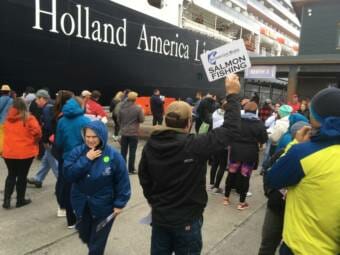
Even if the CDC were to drop its requirements, there’s another major obstacle to cruising in Alaska this season: Canada’s waters are closed to large vessels through early next year and large foreign cruise ships have to stop in Canada on their way to Alaska. Alaska’s federal delegation is pushing for exemption.
The announcement comes just days before the cruise season typically begins in Alaska.
Gustavus Airport terminal (Photo by Mike Castleman/Creative Commons)
Concerned residents in the Southeast Alaska town of Gustavus pushed state agencies to do more testing for contaminants before major construction at the city’s airport. And the state found more toxic “forever chemicals” at the site. Now, the City of Gustavus and a local advocacy group want the state to stop work until their safety demands have been met.
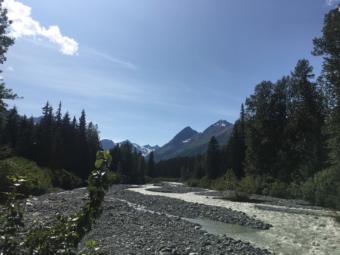
The state had already broken ground on a big federally funded airport upgrade project when test results revealed previously undocumented PFAS contamination on asphalt at the site.
PFAS are a group of toxic chemicals found in firefighting foam that used to be required at defense sites — and airports like the Gustavus airport. They’re known as “forever chemicals” because they don’t break down. There’s evidence they’re linked to cancer, thyroid problems and other health effects.
The asphalt thing was a big surprise — environmental regulators don’t typically ask for tests on asphalt. It’s not really absorbent like soil is. But citizens were concerned because the agency plans to scrape up the asphalt and grind it up to make new material. The state Department of Transportation, who is leading the project, responded to their request and found that there was PFAS present in the sample it tested.
Kelly McLaughlin is among the concerned citizens that asked for a full stop to the construction earlier this month.
“What we are asking for basically is just for the preventative measures to keep these PFAS from spreading further into the community,” McLaughlin said.
She found out her well water was too contaminated to drink in 2018. Her chickens and their eggs tested positive for PFAS. It’s in the soil where she kept a garden.
She founded the Gustavus PFAS Action Coalition to organize on behalf of her community.
“I don’t wish that lack of sleep and amount of worrying and lack of access to everything that you have worked for … I don’t wish that on anybody. And that that could come to many, many more people if the PFAS spread,” McLaughlin said.
The request was followed by a similar letter from the City of Gustavus. It asked the state to pump the brakes on a $20 million dollar upgrade at the airport. It cited “grave concerns” with the agency’s “lack of response” at the ongoing project. The city asked for a series of safeguards against public health before the agency continues work.
State regulators at the Department of Environmental Conservation threw out the project’s soil mitigation plan in response to the findings. The Department of Transportation & Public Facilities took more asphalt samples. The two agencies were scheduled to meet Monday morning to review the most recent test results and revise the soil mitigation plan. As of Monday afternoon, they had yet to comment on what was decided at that meeting and whether or not construction has been stopped.
McLaughlin said she realizes DOT is in a tough spot but said she thinks a solution is possible.
“If we can all work together and share information and help each other, I think we can get to a point where PFAS could be remediated at the airport in tandem with this project, and then it’s a win across the board for everybody. And that’s the ultimate goal,” she said.
The State of Alaska joined a lawsuit against certain PFAS manufacturers earlier this month. Sen. Jessie Kiehl represents Gustavus and is among lawmakers sponsoring a bill to regulate the use of PFAS in firefighting foams in the state.
A drill site at the Palmer Project north of Haines. (Photo courtesy of Constantine Metal Resources)
Exploratory drilling will resume this season at a controversial mine project in Southeast Alaska. Constantine Metal Resources announced one of its biggest work seasons yet after a slow year in 2020.
Drillers will be back on the mountain around the clock after a year-long hiatus at a mining project near Haines and Klukwan.
Canadian company Constantine Metal Resources announced its Japanese partner, DOWA Holdings Company, will finance the $8.8 million work season. The Canadian metals company will give up its majority stake in the project in exchange for that cash.
Constantine’s CEO Garfield MacVeigh says that shift won’t have much impact on surrounding communities.
“DOWA was happy with Constantine as operator — we’ll continue to be office operator for the foreseeable future. You know, go up, DOWA is keen to keep the project moving ahead towards feasibility, which is why they were prepared to fund the program this year,” he said.
The Palmer Project is in the advanced stages of exploration for a large-scale copper, zinc, sliver, gold and barite mine. Critics in the region say mining risks harm to the nearby Chilkat River’s salmon run and have spent years fighting the project. But many residents hope a metals mine could bring high-wage jobs to the region.
A federal appeals court upheld the mine’s permits last summer after a legal challenge brought forth by the Chilkat Indian Village of Klukwan and environmental groups.
Fieldwork this year will include 6,000 meters of drilling and a seismic survey — work the company says is required to make a decision on whether or not to mine.
The company has had permits to build a large underground tunnel at the site since 2019, but it will not begin that construction this year. The permits were contested by environmental groups, but are valid while under review by the state Department of Environmental Conservation.
The company plans to employ up to 50 workers for the 2021 season and is advertising jobs with plans to hire locally when possible. MacVeigh says the company will strongly recommend all workers be vaccinated for COVID-19.
Close
Update notification options
Subscribe to notifications
Subscribe
Get notifications about news related to the topics you care about. You can unsubscribe anytime.