Claire Stremple

"I support KTOO reporters and guide coverage that informs our community and reflects its diverse perspectives."

When she's not editing stories or coaching reporters, you can find Claire outside with her dog Maya.

New construction at Gustavus airport digs up old concerns about toxic chemicals

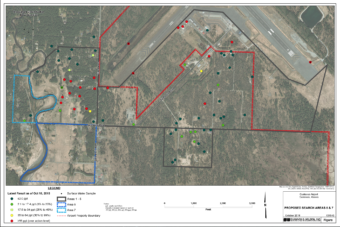
PFAS levels in Gustavus. (Image courtesy of the Alaska Department of Transportation)

Contractors plan to break ground on a multimillion dollar airport project in Gustavus  this month. But newly discovered toxic chemicals at the site make the state-run project more complicated, and some residents don’t think the environmental oversight goes far enough to keep them safe.

The upgrade at Gustavus’ state-run airport is a decade in the making, but in 2018 contaminants were discovered at the airport — and in water, soil and wells around the Southeast community.

The contaminants are called PFAS, a group of toxic chemicals found in firefighting foam that used to be required at airports and defense sites. They’re known as “forever chemicals” because they don’t break down. There’s evidence they’re linked to cancer, thyroid problems and other ill health effects.

In Gustavus, some residents are speaking out because equipment is already showing up for the $20 million federally funded project that is scheduled to break ground this month — but state agencies are still gauging the PFAS risks.

“I would like to trust the state government to do the right thing at the airport, knowing that there is a contamination present and that it has been impactful to the community, but I don’t have that confidence,” said Nicole Grewe.

The House Health and Social Services Committee listens to testimony from invited witnesses about toxic chemicals sometimes referred to as PFAS or “forever chemicals" in state waters on March 9, 2020, in Juneau. Facing away from the camera, from left to right: Kelly McLaughlin from the Gustavus PFAS Action Coalition, attorney and author Robert Bilott, and Pamela Miller of Alaska Community Action of Toxics.
The House Health and Social Services Committee listens to testimony from invited witnesses about toxic chemicals sometimes referred to as PFAS or “forever chemicals” in state waters on March 9, 2020, in Juneau. Facing away from the camera, from left to right: Kelly McLaughlin from the Gustavus PFAS Action Coalition, attorney and author Robert Bilott, and Pamela Miller of Alaska Community Action of Toxics. Bilott is portrayed in the movie “Dark Waters,” a story based on his 20 year battle against Dupont. (Photo by Skip Gray/KTOO)

She is among a number of residents leery of a project that will move contaminated soil. And to be clear, the state has done what it’s legally required to do. There just aren’t many legal requirements.

More than a dozen Gustavus households have been drinking bottled water for years after learning their wells are poisoned with PFAS from runoff. Grewe lives across the street from the airport. She’s worried the contamination could spread.

She and members of Gustavus PFAS Action Coalition are pushing for more accountability from the state.

“There is no permanent disposal plan for the contaminated ground. There, there is no permanent solution to this. They found the contamination, there are plumes across the community,” said Grewe.

The state Department of Transportation runs the airport and is responsible for the contaminants, but there’s no current requirement to clean them up. It does have a plan to keep contaminated soil from spreading toxins in Gustavus, which state regulators approved in early March.

Grewe says the plan doesn’t go far enough because it doesn’t test the airport runways for PFAS or sample enough of the surrounding soil.

“I never thought I would be at a place where I have to advocate on behalf of myself and the community to ensure the state does not do further harm,” she said.

DOT spokesperson Sam Dapcevich says the agency takes community concerns seriously.

“We’re not going to do any construction work until we resolve those issues,” he said.

The agency even tested some of the asphalt at the contaminated site after Grewe voiced her concern. That’s a step beyond what they’re required to do. State regulators say it may be a first.

“It is a rather new issue that we have to deal with. And we’re figuring it out as we go,” said Dapcevich.

DOT officials point to regulation by another state agency — the Department of Environmental Conservation — that signs off on their safety measures.

State environmental regulators don’t typically inspect construction at contaminated sites that they’ve already checked out. It’s up to DOT to comply with state regulations. And there’s motivation to do that because the agency is responsible for any further contamination.

PFAS are known to be toxic, but they aren’t considered a hazardous waste substance. There are federal guidelines for how to manage PFAS, but no regulations. And the state is actually out in front of the federal government on this one.

But State Senator Jesse Kiehl says Alaska’s regulations aren’t enough to keep residents of Gustavus safe.

“The state of Alaska has some very, very weak regulations. They really only cover two of these forever chemicals. And at surprisingly high levels,” he said.

Kiehl says Alaska’s agencies typically go farther than they have to, but it still isn’t far enough. He’s introducing a bill this legislative session that would significantly tighten state restrictions. It would limit the use of firefighting foams with PFAS in them and create stricter protective standards for people. He says it’s a start.

“Unfortunately, nothing in my bill can create the kind of instant understanding and and solidly defensible cleanup standards that we need to to get these contaminated water plumes cleaned up under the ground,” said Kiehl.

There’s federal legislation in the works this year that could set nationwide regulations for PFAS. But until any of these bills become law, folks from Gustavus are pretty much left to advocate for themselves. Nicole Grewe says state regulators have responded to some of her requests for additional testing at the airport, but not all of them.

“So does it allay all my fears? No. Am I hoping for a good outcome? Yes. And I hope that we’ve created enough noise of the DOT is going to double down on making sure there’s no additional risk at Gustavus,” she said.

Until more regulations are set, making noise is about all she — or anyone — can do.

Editor’s note: This story has been updated to clarify that the state Department of Transportation doesn’t have to clean up the contaminants at this time. While there is no plan for full PFAS clean up in Gustavus now, Department of Environmental Conservation officials have not ruled out cleanup in the future.

Alaska House of Representatives passes cruise ship resolution, with last hurdle before heading to Congress

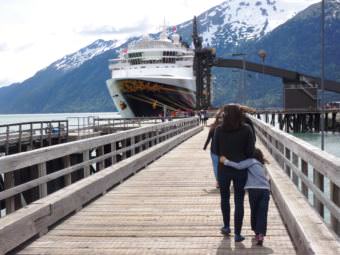
A Disney cruise ship tied up at Skagway’s ore dock. (Photo by Emily Files/KHNS)
A Disney cruise ship tied up at Skagway’s ore dock in 2017. (Photo by Emily Files/KHNS)

The Alaska House of Representatives passed a resolution on Wednesday that urges Congress to allow an exemption for cruise ships to bypass Canada and sail in Alaska this year.

Currently, federal law requires foreign-flagged ships to make an international stop between Washington state and Alaska, but Canada has closed its waters to cruise vessels. So, the bill is part of a last-ditch effort for coastal communities to get a month or two of cruise ship tourism in 2021.

“So, the bill passing the House was the last serious hurdle before it gets sent off to the federal government,” said Sen. Jesse Kiehl, one of the bill’s sponsors.

Sen. Jesse Kiehl, D-Juneau, listens during a Senate Judiciary Committee meeting in Juneau on March 22, 2019. Assistant Attorney General William Milks was laying out some details of Senate Bills 23 and 24, which would compensate Alaskans for past cuts to the Alaska Permanent Fund dividend.
Sen. Jesse Kiehl, D-Juneau, listens during a Senate Judiciary Committee meeting in Juneau on March 22, 2019. (Photo by Skip Gray/KTOO)

Now it’s up to Alaska’s congressional delegation to make it happen. Kiehl said it’s an uphill battle since other states don’t have as much to gain as Alaska does. But he’s hopeful.

“I’ve read legislation for a long time. Don Young’s bill is one of the cleverest pieces of drafting I’ve seen in a while. It’s really well put together: very short, very succinct, very elegant,” Kiehl said. “And I’ll just hit it again, very temporary.”

Even if Rep. Don Young and Sens. Lisa Murkowski and Dan Sullivan could get an exemption for Alaska, it would still be a herculean task for cruise companies to mobilize. They’d have to comply with strict restrictions from the Centers for Disease Control and Prevention.

“There is no chance that right now we’ll have a full cruise ship season. That ship has sailed — if you’ll pardon the pun,” Kiehl said. “But the hope is that we can get some movement and some precise guidelines on how to meet the CDC requirements out of Washington, D.C., in time for cruise companies to make a commercial decision and bring a month or two of sailings to Alaska waters.”

It’s an incremental step in the solution to a complicated issue, but it shows the Legislature supports communities that are hurting without cruise tourism this summer.
The resolution goes to the Alaska Senate next for final review.

Alaska’s billion-dollar cruise season in the balance as CDC resists industry pressure to lift restrictions

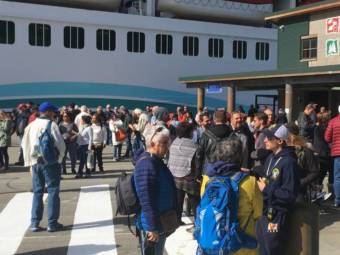
Passengers from the mega ship Norwegian Joy disembark in May 2019 at Ketchikan’s Berth 3 downtown. (Photo by Leila Kheiry/KRBD)

The federal government held its ground on Wednesday against calls to roll back restrictions on cruise ship sailings. In Alaska, the rapidly approaching cruise season, and its billion dollar industry, is still at stake.
There are two major roadblocks when it comes to large cruise ships returning to Alaska waters. One of them is Canada’s closure to large foreign ships.

The other is the federal Conditional Sailing Order, a set of rules laid down by the Centers for Disease Control and Prevention aimed at curbing major COVID-19 outbreaks on cruise ships. It replaced the stricter No Sail Order from March 2020, but has proved stringent enough to delay cruises so far.

On Wednesday a major cruise industry group called on the CDC to lift those rules. Cruise Lines International Association wants U.S.-cruising to resume by early July, citing accelerated vaccine rollouts in the U.S. and examples from Europe and Asia of outbreak-free limited cruising as reasons to open up the industry.

Last week Alaska Senator Lisa Murkowski pushed the CDC to give a timeline for when Alaska businesses can expect cruising to resume. In a hearing of the U.S. Senate Committee on Health, Education, Labor and Pensions on the federal government’s COVID-19 response, she said the state is moving fast on vaccinations and ready for tourists, but the guidance coming from CDC does not reflect that preparedness.

“We’ve been struggling and trying to get the economy back on track when 60% of [our] tourists that come to the state of Alaska come by cruise ship,” she said. “We’ve got a conditional sail order in place. It’s effectively a no sail order.”

But in an email to Trade Winds News, a shipping trade publication, the CDC said its guidelines will remain in effect until November — that is, after the 2021 season.

Before the pandemic, Alaska had some of the busiest cruise ports in the nation. Cruising contributed more than $1.2 billion in direct spending and more than 20,000 jobs, according to a Federal Maritime Commission report.

But, loosened CDC restrictions alone won’t bring large cruise ships back to Alaska ports. There’s still the issue of Canada’s cruise ship ban.

One small cruise line’s vaccine requirement means passengers can visit Southeast Alaska businesses

The Wilderness Adventurer docked in Juneau
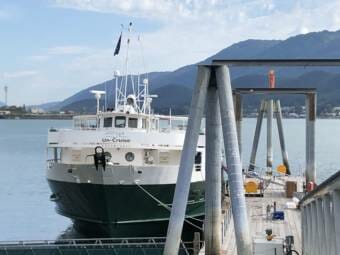
The Wilderness Adventurer, an UnCruise Adventures boat, tied up in Juneau on July 31, 2020. On Aug. 1, the ship was the first tourism passenger ship to sail in Southeast Alaska during the COVID-19 pandemic. (Photo by Jennifer Pemberton / KTOO)

One small cruise company will require all its passengers and crew to be vaccinated before making any trips to Alaska this year. That means passengers will be able to mingle and shop at port calls, which could be helpful for some struggling Southeast Alaska towns.

It’s a complete turnaround from the company’s policy just a month ago when UnCruise Adventures planned to keep passengers in a bubble away from Alaska communities. But CEO Dan Blanchard said widely available vaccines mean more freedom this summer.

“It brings back a measure — far from all — but it brings back a measure of normalcy,” Blanchard said.

It’s also a hopeful sign for coastal towns that rely on seasonal travelers for income.

Blanchard said he would be remiss in his responsibility to his crew if he didn’t require passengers take every available precaution against COVID-19.

“Our choice is, we have to be as safe as possible. And that means that if you’re 18 or older, you need to be vaccinated,” he said.

He said the requirement hasn’t diminished interest — fewer than 1% of his clients can’t get the vaccine and will wait to sail until 2022.

UnCruise Adventures attempted sailings last year but turned back to port when a passenger tested positive for the coronavirus. Blanchard said for his company going another summer without sailings is unfathomable.

Cruising is one of Southeast Alaska’s main industries. Last year, UnCruise’s boat was the only cruise that came to the region and it only had 36 passengers. This year the company said it will bring 4,300 people to Alaska. That is orders of magnitude less than a typical year, but Juneau Mayor Beth Weldon said it’s still a good sign for local businesses.

“In our CARES Act funding, we gave lots of money to our business community to try and help businesses survive a summer without cruise ships,” she said.

“So hopefully, they have survived and they’ll be open to business. And we’ll look forward to seeing visitors walking on our streets and sidewalks shortly.”

Weldon said Alaska in general and Southeast Alaska, in particular, are safe places to visit and she’s supportive of the UnCruise decision to require vaccinations.

“We have done great in general to get ourselves vaccinated here, and to have folks coming in the community that are already vaccinated seems like an easy way to continue to keep general safe,” she said.

In the past two weeks, the bulk of COVID-19 cases in Juneau have been from out-of-state travelers. Juneau still offers testing for travelers and requires five days of strict social distancing upon arrival — unless you’ve been vaccinated.

Federal COVID-19 relief dollars are coming to Alaska’s economy. Here’s where the money is going.

Anchorage streets are noticeably emptier, as many businesses have closed or reduced operations during the COVID-19 pandemic. (Photo by Abbey Collins/Alaska Public Media)

The State of Alaska will receive a huge influx of money from the latest federal COVID-19 relief package. Some of that money is going straight to individuals. But it remains to be seen how the state and local governments will use the almost $1.4 billion coming their way.

Money from the American Rescue Plan will come to Alaskans directly and indirectly. The plan includes both aid to individuals and nearly $1.4 billion to Alaska’s state and local governments.
“Yes, it’s significant. Yes, it touches every facet of the economy,” said Mouhcine Guettabi, an associate professor of economy at the University of Alaska Anchorage. He said the money can help get Alaska back on track after the pandemic but warns that it should be taken in context.

“It doesn’t resolve Alaska’s structural problems. As big as the numbers we’re talking about,” Guettabi said. “I don’t want to say that a drop in the bucket because it’s not. But Alaska is still in a tough spot.”

Let’s break the money down. First, there’s direct aid. Individual payments of $1,400 are already popping up in Alaskans’ bank accounts. Unemployed Alaskans will also receive more money.

Then, there’s the expanded child tax credit. It’s a substantial piece of aid, but it’s also temporary. Qualifying families could get up to $250 a month per child from July to December of this year. Guettabi estimates that at least 90,000 families in Alaska are eligible.

“We’ve never had something this grand, this broad, and this targeted towards lower-income individuals in particular,” Geuttabi said. “Think about a family that has two children, potentially receiving an additional $500 a month, right?”

It has the potential to lift over 12,000 kids out of poverty in Alaska, according to The Center on Budget and Policy Priorities. Again, that’s money those families will only get this year.

Then, there’s the roughly $1.4 billion the state and local governments will have to spend. Guettabi puts that into perspective.

“I think the most Alaskan answer I can give you is that the PFD in a typical year is more than a billion dollars. So that’s one way of thinking about it. The other way of thinking about it is that we have a bit more than a billion-dollar budget gap,” Guettabi said.

Most of that money goes to the state. About $230 million at the discretion of local governments.

State economist Neal Fried with the Department of Labor said the two pandemic stimulus packages so far are unprecedented in his decade-spanning career. And he said there are some economic indicators that the last stimulus bill, the CARES Act of 2020, had a positive impact.

“One sort of very dramatic thing that has happened, that’s very unusual, given the fact that we’re in this recession — you know, we lost over 20,000 jobs, lots of payroll business activity — but we look at income. Income actually grew last year, in 2020. Despite that, that would never happen in your typical recession. Which this, of course, is not,” Fried said.

Both Guettabi and Fried say the sooner Alaskans get past COVID-19, the sooner we can see a meaningful shift in the economy.

The takeaway is that families and individuals should see money in their pockets between now and the end of the year. The direction the state and local governments go with their relief dollars — and how that will help individual Alaskans and the state’s economy in general — remains to be seen.

More babies are being born too early in Alaska, health department says

Baby Jack Sleeping
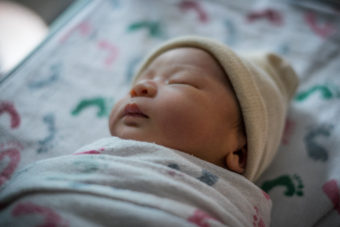
In 2019, almost 1 in 10 births in Alaska was preterm. That’s as high as it’s been in the last two decades, according to a bulletin released from the state Department of Health and Social Services on March 16, 2021. (Creative Commons photo by Dru Kelly)

The rate of preterm births is creeping up nationwide and in Alaska. That’s according to a bulletin released Tuesday from the Department of Health and Social Services.

Babies are considered preterm if they’re born more than three weeks before their due date. In 2019, almost 1 in 10 births in Alaska was preterm. That’s as high as it’s been in the last two decades. Preterm birth and low birth weight can cause infant death or developmental problems.

It’s hard to nail down one cause of preterm birth or why numbers are going up, but it can be an indicator of other health problems in play.

“When you look at the data, we’ve also seen increases at the same time of pregnant women with diabetes, hypertension, obesity. Those types of chronic conditions are also going up at the same time. So we suspect that probably could be part of the contribution to the increase,” said Rebekah Morisse, who leads the section of Women’s Children’s and Family Health for the state.

The kinds of preterm births that are going up aren’t what are called “spontaneous” births when a woman goes into labor before her due date. What’s on the rise in Alaska is when doctors decide to initiate a preterm birth — you’ve probably heard this described as “inducing labor.” Doctors can only do this if the health of the mother or baby is in jeopardy. Morisse says an important part of preventing those is connecting expectant mothers to prenatal care early on in their pregnancy, or even before they become pregnant.

Health officials say poverty is a significant factor that can lead to a delay in care or contribute to underlying health issues. All of these contributing factors are a bigger issue for expectant mothers in remote regions of the state, which means the problem disproportionately affects Alaska Native women.

Pediatrician Matthew Hirschfeld leads Maternal Child Health Services at Alaska Native Medical Center in Anchorage.

“The way to address big public health issues like this, like preterm birth, which really is an indicator for all sorts of different things that could be happening in families, it really takes everybody in the state to work together to make that happen,” he said.

He’s talking about providers, the public health system, and families. He emphasizes that the best way to have a healthy birth is to get good prenatal care.

For this latest report, the state analyzed data up until 2019. Hirschfeld says at ANMC he’s seen a small jump in preterm birth in 2020. He thinks that could be due to stress from the pandemic.

Site notifications
Update notification options
Subscribe to notifications