Clarise Larson

City Government Reporter, KTOO

"My mission is to hold Juneau’s elected officials accountable for their actions and how their decisions impact the lives of the people they represent. It’s rooted in the belief that an informed public has the power to make positive change."

When Clarise isn't working, you can find her skijoring with her dog, Bloon, or climbing up walls at the Rock Dump.

Parking fines are about to get more expensive in Juneau’s downtown garages

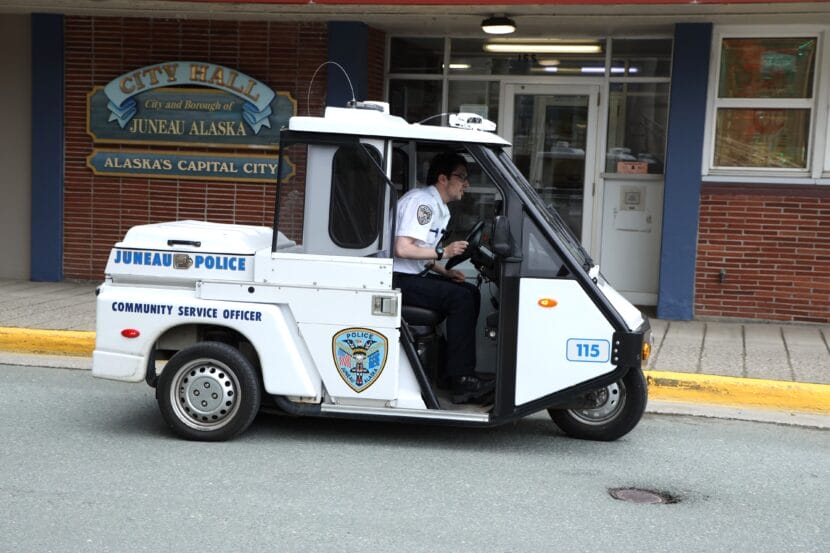
Juneau Community Service Officer Nico Burris drives past City Hall while on duty in July 2024. (Clarise Larson/KTOO)

Juneau Police Department’s parking enforcement vehicles don’t look intimidating at first glance. The three-wheeled Go-4s look like they could roll over if they took too sharp of a turn.

Community Service Officer Nico Burris is one of the officers in charge of parking enforcement downtown using those vehicles. 

“It’s kind of like a golf cart on steroids — it goes 40 miles per hour,” he said. “They’re basically custom-built for little patrol-type tasks and they’re pretty well suited to the narrow downtown streets and alleys here in downtown Juneau.”

Soon, Burris and the other officers will be doling out more expensive tickets for vehicles that they catch violating laws in downtown parking facilities. On Monday, the Juneau Assembly voted to increase parking penalties in city-owned garages using a tiered penalty structure.

That’s despite some members like Mayor Beth Weldon, who during an earlier meeting admitted she sometimes pushes the limits of her allotted parking time. 

“I’m sure everybody else is very well organized and leaves lots of room between their times that they have to get there, but sometimes my life doesn’t allow that and so I may hit a little bit of a yellow line every once in a while,” she said.

Juneau Parks and Recreation Director George Schaaf said the new structure is aimed at deterring repeat offenders. It’s the first rate hike since 2013. 

“What we’re proposing is an escalated fine structure so that we still understand people make mistakes we still issue warnings, but after two or three offenses people should understand what’s going on and we would like to try to get those folks to follow the rules by getting parking permits,” he said. 

Starting on Aug. 28, the current $25 ticket for a first parking offense will bump up to $35. If you get two of those tickets, the third one will increase to $100, followed by $200, then $300. This applies to city-owned parking garages and facilities, but on-street parking fines will remain the same at $25 per violation. 

Parks and Recreation recently rolled out a new parking system for the downtown area earlier this spring. 

The upgrades include new electronic pay stations, security cameras, a parking app and an online permitting system. It also added new cameras on the parking enforcement vehicles that can scan license plate numbers.
Juneau residents call for more accountability as investigation into deadly police shooting continues

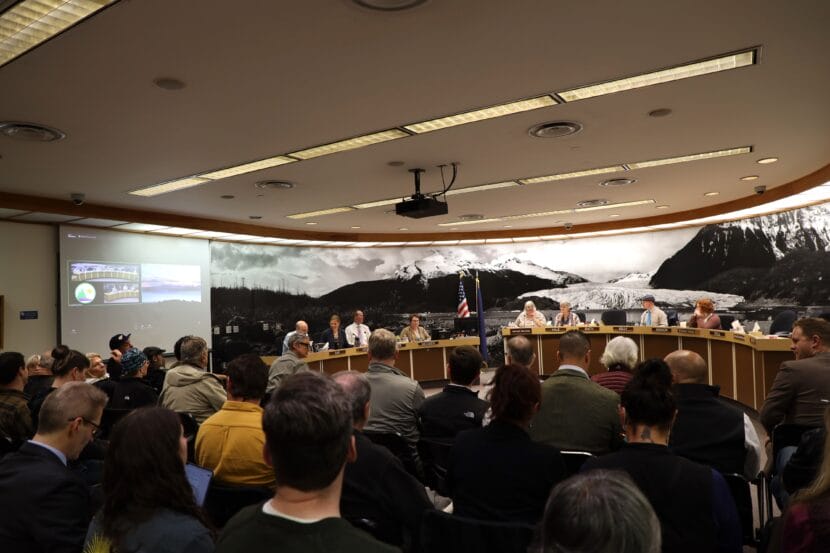
People fill the Assembly Chamber at Juneau’s City Hall on Monday, July 29, 2024. (Clarise Larson/KTOO)

Nearly a dozen residents testified in front of the Juneau Assembly Monday night calling for more accountability from local law enforcement in the wake of a deadly shooting earlier this month

Many testifiers, like Bonilyn Parker, asked the Assembly and Juneau Police Department for more transparency about what occurred when police shot and killed Steven Kissack downtown, and what’s being done to stop similar situations from happening again. 

“This event was traumatizing for everyone involved — Steven’s friends and family, the many eyewitnesses and the officers involved,” she said. 

Juneau police officials say they plan to release the body camera footage, but not until the investigation is complete.

In an interview, Deputy Chief of Police Krag Campbell said it would be shared with the public after the state Office of Special Prosecution gives a determination about whether the shooting was justified. 

“The timeline that we’re looking at is going to be no later than 30 days after the Office of Special Prosecutions has released their final report on the review of the shooting,” he said. 

Kissack was unhoused, and he and his dog, Juno, were familiar faces to those who live and work in the downtown area. Multiple videos of the midday shooting were captured by witnesses and have been shared on social media and by news outlets.

Since his death, there have been vigils, petitions and protests held by people sharing their sadness and anger about the handling of the situation. 

At the Monday night meeting, testifiers presented a community letter with more than 300 signatures from individuals and businesses calling the shooting “unacceptable” and asking the city and police to ensure it doesn’t happen again. 

Jessica Gray with the National Alliance on Mental Illness Juneau asked the Assembly to take action to increase support for mental health services for the local unhoused population. 

“We know the path forward isn’t going to be easy, but there has to be a systemic change to ensure that this tragedy does not happen again,” she said.

Fatal police shootings are not common in Juneau, but Anchorage police have shot five people since mid-May. Three of them died. 

Similar public outcry there prompted the Anchorage police department to enact a new body camera policy just two weeks ago. The new policy mandates the release of footage of police shootings within 45 days of the incident. 

JPD’s current policies do not outline a timeline for when body camera footage is released to the public. But, Campbell said the department plans to review and potentially revise its policies on body cameras in the next few months. 

The Office of Special Prosecutions has not provided an expected timeline for its investigation.

Correction: Anchorage police have shot five people since mid-May, but only three people have died.

Plans to build Juneau’s fifth cruise ship dock can move forward after appeal attempt fails

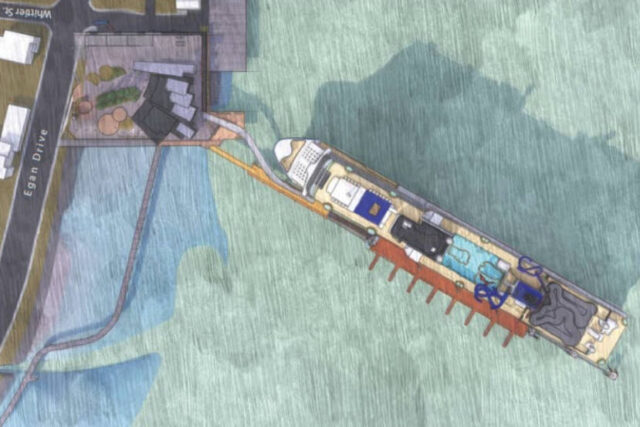
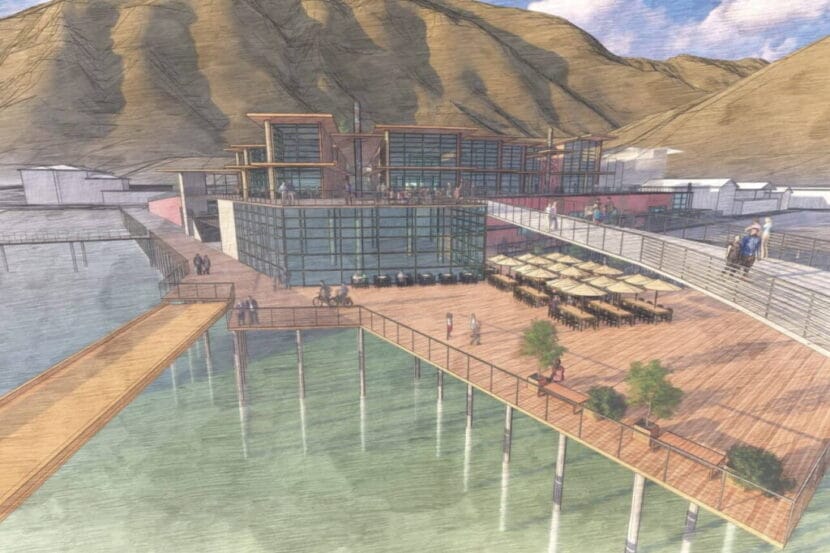
This rendering depicts Huna Totem Corp.’s proposed new downtown development project. (City and Borough of Juneau)

Plans to construct a fifth cruise ship dock in downtown Juneau crossed a major hurdle Monday night. That’s when the Juneau Assembly sided with a state ruling that the project could legally move forward, despite health and safety concerns brought forth by a local activist.

But, Assembly member Christine Woll explained that the Assembly’s vote to accept the ruling doesn’t mean the project has the Assembly’s full stamp of approval. 

“Please do not interpret our decision tonight as a policy decision around the Huna Totem dock,” she said. “This decision tonight is simply about whether we are legally allowed to.”

The proposed floating steel dock would be located along the Gastineau Channel next to the U.S. Coast Guard station. The project is proposed by Huna Totem Corp, an Alaska Native village corporation. 

Along with the dock, Huna Totem has also proposed underground bus and car parking at the site, retail space and a welcome center. They’ve named the project Aak’w Landing. 

Norwegian Cruise Lines originally purchased the waterfront property in 2019 but gave it to Huna Totem in 2022.

This rendering depicts Huna Totem Corp.’s proposed new cruise ship dock downtown. (City and Borough of Juneau)

Juneau resident Karla Hart filed the appeal challenging the Juneau planning commission’s permitting of the dock last summer. She’s a longtime activist who has been at the forefront of several recent attempts to slow down the growth of cruise ship tourism in Juneau.

“I don’t know what I expected when I originally filed it I just felt as if we didn’t have a fair public process in the very beginning and I think we need one,” she said.

The main arguments in her appeal were that building the cruise ship dock would endanger public health and safety and that it did not abide by the city’s existing plan for the downtown waterfront. 

But the hearing officer with the State Office of Administrative Hearings ruled that the permitting of the proposed dock will not “materially endanger public health and safety” and that it generally conforms with the waterfront plan. 

After the meeting on Monday, Hart said she won’t challenge the ruling, but she will continue to follow the project’s next steps as it goes through the Assembly. 

“I think that it’s good that now we move on with the real community discussion on whether we have a dock or not,” she said. 

The dock and waterfront development plan still has a long way to go before breaking ground. The Assembly needs to approve a lease of the city-owned tidelands before Huna Totem can build it. 

Huna Totem’s president and CEO Russell Dick said he is excited for that process to begin.

“As far as the appeal that was filed this was the appropriate decision by the Assembly. I think the administrative law judge got it right and we’re ready to move on to the next step,” he said. 

The Assembly is expected to take up that issue in the coming months. 

Eaglecrest board to interview candidates for general manager this week

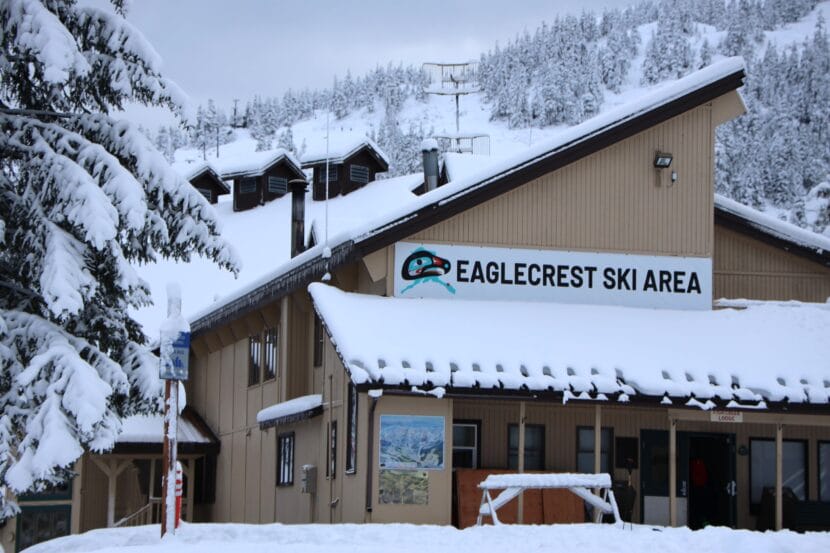
Snow covers the Eaglecrest Ski Area’s Fish Creek lodge on Dec. 10, 2023. (Clarise Larson/KTOO)

Juneau’s Eaglecrest Ski Area has some big plans underway, and they’re looking for a new leader to help bring them across the finish line. 

On Friday, the Eaglecrest Board of Directors will hold a public meeting at City Hall to interview two finalists for general manager. And on Saturday, skiers will get a chance to chat with the candidates at a meet and greet at the Eaglecrest Lodge.

This comes after the ski area’s previous manager of seven years was abruptly asked to resign by the board in late May.

Both finalists are from out of state. According to the city’s human resources director Dallas Hargrave, the city received 17 applications for the position. 

Craig Cimmons is the director of the Ski & Ride School at Jay Peak Resort in Vermont. He’s held the position since 2012. According to the city, he’s also held various roles related to ski and snowboarding education, environmental education and adventure recreation. 

Cimmons holds a Bachelor of Adventure Recreation from Green Mountain College.

Julie Jackson Piper is the recreation manager for the City of Richland, Washington. She’s been in that role since 2018. Before then, she was the aquatics manager for the City and Borough of Juneau, and the youth and community outreach coordinator and snow sports school supervisor at Eaglecrest. 

Piper holds a Bachelor of Science in Ski Area Business Management from Northern Michigan University.

The interviews on Friday will be held in the Assembly Chambers. The first one will start at 1:30 p.m. and the second at 3:30 p.m. The board will head into executive session with each candidate during a portion of the interviews.

Saturday’s meet and greet is from 10 a.m. to noon. And, on Monday, the board will also hold a special meeting at 5:30 p.m. at the lodge to consider the finalists in executive session.

The public can submit comments about what they think of the finalists to eaglecrestboard@juneau.gov. 

Newscast – Friday, July 26, 2024

In this newscast:

  • Suicide Basin, a glacial lake tucked behind the Mendenhall Glacier, is a looming flood threat for Juneau residents this time of year. Glacial outburst floods or jökulhlaups have happened in the Mendenhall River every year for the last decade when the basin fills up with rain and meltwater throughout the summer until it drains downstream. Last year’s flooding was catastrophic. As the basin fills again, scientists at the University of Alaska Southeast are keeping a close eye on it.
  • A number of bears have been spotted in Dillingham in the last few weeks. KDLG’s Meg Duff shares tips for keeping bears away.
  • Three Anchorage police officers will not face criminal charges for shooting and killing a man they say drew a gun on them last month after their accounts were backed up by body cameras.

Juneau’s hospital closes its crisis care unit less than a year after opening it

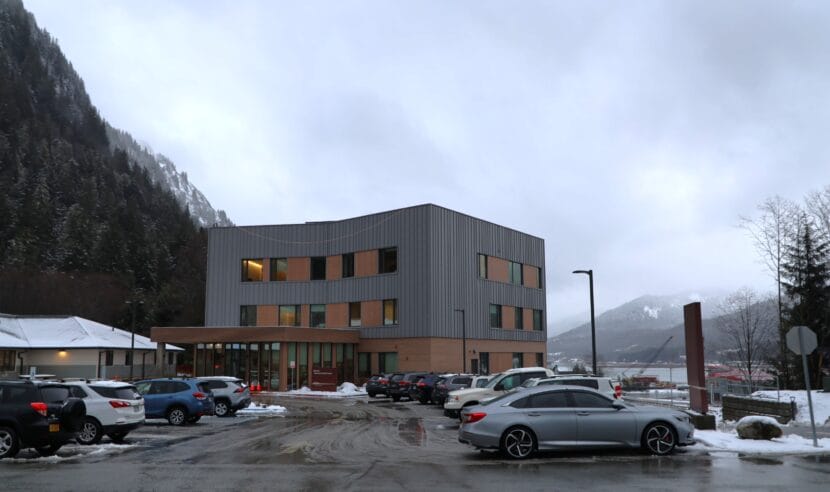
Bartlett Regional Hospital’s Aurora Behavioral Health Center opened its doors to adolescent crisis care patients on Dec. 18, 2023. (Katie Anastas/KTOO)

A program designed to offer immediate care to adolescents in crisis at Juneau’s city-owned hospital closed last week after opening eight months ago.

In an interview, Bartlett Regional Hospital spokesperson Erin Hardin said the closure is due to a lack of funding and staff. 

“There is no dedicated subsidy funding available, and we don’t have the staff to keep the unit open,” she said. “So knowing both of those factors, the decision was made to close that particular program.”

This comes as the hospital faces a major budget crisis. Its board of directors is seeking financial help for a handful of services it says are draining money. The crisis stabilization service was one of those programs and was expected to lose $1.2 million next year. 

The hospital only started offering the service last December after the new Aurora Behavioral Health Center was completed. It was built specifically to house the program and the hospital’s psychiatric services program. 

At the time of its opening, the crisis stabilization unit was seen as a groundbreaking service to help youth in Juneau — and across Southeast Alaska — get the mental health and substance use care they need. 

According to data from the state, suicide was the leading cause of death for Alaska Native youth aged 10 to 19 and all youth aged 10 to 14 in 2020. It was the second leading cause of death that year for Alaskans aged 15 to 34.

Aaron Surma, the executive director of the National Alliance on Mental Illness Juneau, said that the demand for crisis services in Juneau is high, and the closure will be devastating for the people who need it the most. 

“People aren’t going to get what they need — and that has all kinds of negative reverberations. And I think you can draw some easy parallels to some other tragedies that have happened in our community,” he said. “So people are going to struggle more, and it’s very hard to live in crisis and be successful.”

Surma said that, in the absence of adequate crisis care services in Juneau, it’s vital that people learn how to support one another’s mental health. 

“I want and hope to help people become more comfortable supporting one another’s mental health because I think individuals can be more reliable than systems and services,” he said. 

Hardin said people in crisis can still receive care at Bartlett. But they will get it from the hospital’s emergency department rather than the crisis center. She said the hospital’s board continues to look for other more financially sustainable ways to offer crisis care in the future. 

The Aurora building will continue to remain open and house outpatient psychiatric services. Hardin said the portion of the building that housed the crisis program will likely be repurposed for other hospital programs.

Site notifications
Update notification options
Subscribe to notifications