Clarise Larson

City Government Reporter, KTOO

"My mission is to hold Juneau’s elected officials accountable for their actions and how their decisions impact the lives of the people they represent. It’s rooted in the belief that an informed public has the power to make positive change."

When Clarise isn't working, you can find her skijoring with her dog, Bloon, or climbing up walls at the Rock Dump.

Juneau School Board passes district budget with school closures, staff reduction

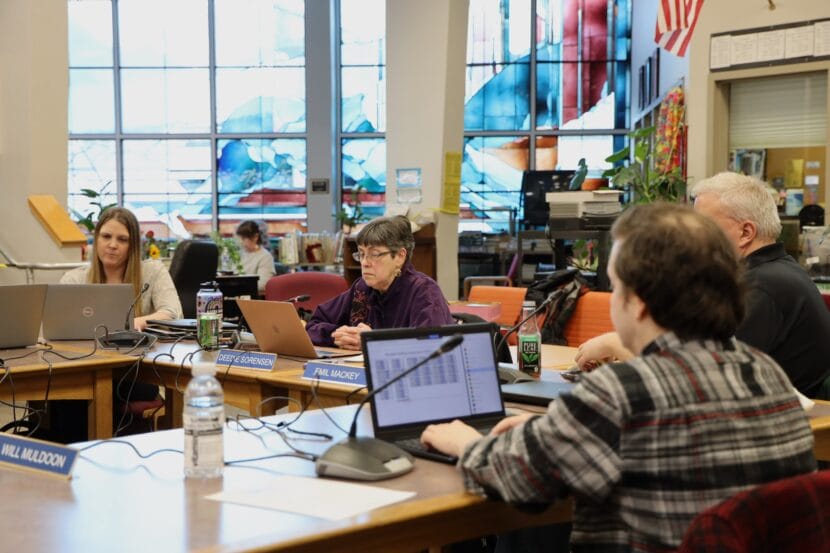
The Juneau School Board meets in the library of Juneau-Douglas High School: Yadaa.at Kalé on Thursday, March 14, 2024. (Clarise Larson/KTOO)

The Juneau School Board unanimously agreed Thursday night to adopt a budget for next school year that relies on school closures and a reduction of staff to address a nearly $10 million budget deficit.

The approved budget is built on the assumption that state education funding will not increase and the district’s student enrollment will decline. 

Just minutes after the meeting adjourned, the board learned that Gov. Mike Dunleavy had vetoed a bipartisan education bill that would have given the district more than $5 million in additional state funding.

After finding out the news, Juneau Superintendent Frank Hauser said though he was disappointed in the governor’s decision, the budget passed by the board wasn’t relying on those funds anyway. 

“We’re going to be moving forward. We have a balanced budget that was based on a BSA, of  $5,960, did not and include a BSA increase. I’m sad that we had to go there,” Hauser said. 

The $85 million budget passed on Thursday is largely based on a school closure plan that moves seventh and eighth grades to Thunder Mountain High School and all high schoolers to Juneau-Douglas High School: Yadaa.at Kalé.

The district will close three buildings: the district office, Floyd Dryden Middle School and the Marie Drake building, which houses the alternative high school and Montessori Borealis. 

The closures are just a piece in the district’s puzzle to reduce costs and zero out the $9.7 million budget deficit for next year, caused by dropping enrollment, an end to one-time state funding and state funding that hasn’t kept up with inflation. 

“There has not been a significant increase in the base student allocation since 2017. And when you look at the inflationary prices, I’ll just leave it at that,” Hauser said. 

The budget also relies on other cost-cutting measures like reducing the number of staff positions in the district and a loan for building maintenance and utilities from the city. 

The district’s pupil-to-teacher ratios next year will increase across all grade levels — which likely means bigger class sizes. 

The board also unanimously adopted a reduction in force plan, which will eliminate nearly 50 staff positions next year. The district hopes to do that through natural turnover, but it could resort to layoffs. The district has to send out layoff notices to teachers by May 15.

In public testimony, Juneau resident Melissa Cullum said the impacts of that will have a ripple effect for years to come. 

“You are going to have teachers leave because you are stretching them you are increasing the student count and minimizing the number of people in the buildings that can support these students,” she said. “You are going to have an exodus.”

The budget also doesn’t have much room for error, because it doesn’t put any money into savings. 

Some members, like Board Vice President Emil Mackey, saw the budget’s passing as a major milestone after a hasty race to balance it before important deadlines. 

“This is the first meeting and several months where I feel like it’s normal – and that’s a good feeling,” he said. “It tends to tell me that we’re on the backside of this headed downhill, rather than walking up that mountain. I really hope that stays the case.”

However, other members like David Noon cautioned the board and said the road ahead won’t be easy. 

“I think the next few months are going to be extremely difficult for students, for staff, for members of this community. So I’m not taking a whole lot of comfort right now,” he said. 

The bipartisan bill Dunleavy vetoed would have raised state education funding significantly for the first time in years. Several school districts across the state face multimillion-dollar deficits. Hauser has said an increase in funding would allow the district to revise its budget, potentially saving more staff positions. 

Hauser said he still has hope that an education funding increase will eventually come through, but his priority is to focus on moving the district forward with the changes that will come from the adopted budget. 

“I don’t think anyone can say that the Juneau School District hasn’t done its part,” he said. 
On-site consumption pot shop slated for Juneau gets OK from city

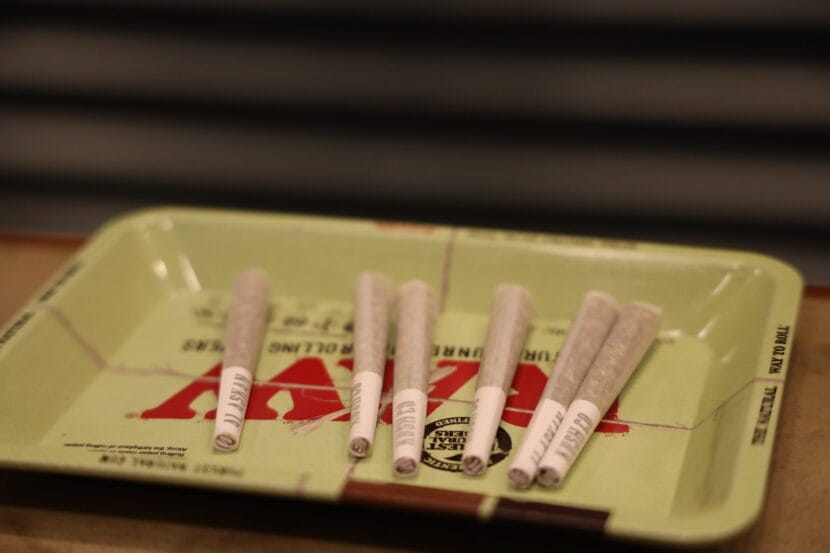
Pre-rolled marijuana joints at the Alaskan Kush Company on Wednesday, March 13, 2024. (Clarise Larson/KTOO)

A new marijuana business in the Mendenhall Valley where customers can smoke or consume edibles on site received the greenlight from the Juneau Planning Commission Tuesday night. 

The plans for the business, Alaska Vibes, have been long in the making — so long that this was actually the second time the commission granted approval after its previous permit expired. 

Speaking on behalf of the business, Director of Operations Tara Smith says that the process of opening an area for people to enjoy marijuana products is taking much longer than anticipated.

“With this business, it’s not like we can just open up a restaurant — we have to deal with the legal side of everything and that’s where we get out roadblocks and our timelines can get pushed back because of some of those things,” she said. 

In 2019, Alaska approved on-site consumption laws allowing customers to smoke marijuana and consume edibles at cannabis retailers that have permits for it. So far, only a few permits have been approved across the state. 

To offer on-site consumption, the state requires the area to have a separate ventilation system or be outdoors, and only products purchased on site can be consumed. Juneau also has additional requirements like ensuring the odor doesn’t leave the premises.

The recently approved permit allows for a retail and cultivation facility and outdoor consumption area. The business will be located in the Valley near Pavitt’s gym and will be a sister location to the downtown Alaskan Kush Company. 

State law prohibits cannabis products from being consumed in public areas, and tourists aren’t allowed to take them aboard a cruise ship. Smith says having an area for people to enjoy their products will allow the business to tap into the tourism industry. They plan to shuttle visitors from downtown to the store.

“Tourists want a place to go, our locals want a place to hang out. It’s cool, it’s fun and it gets us out of the bars,” she said

Smith says the retail area of the business will open first, followed by the outdoor consumption patio and cultivation area, but the timeline of when that will happen is still up in the air. The business will still need approval from the state Marijuana Control Board before it can open its onsite consumption area. 

Juneau may relocate its city-run campground after influx of illegal activity

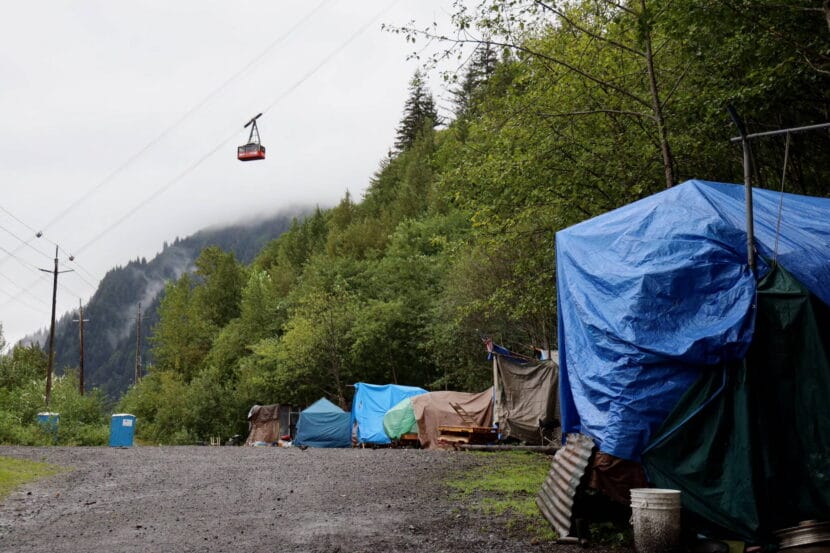
A Goldbelt Tram car rises up Mount Roberts above the Mill Campground in August, 2023. (Clarise Larson for the Juneau Empire)

Juneau is considering moving its city-owned campground primarily used by people experiencing homelessness following an escalation of reported illegal activities there last summer.  

Deputy City Manager Robert Barr said moving the campground next to the city’s indoor cold weather shelter would make it easier to provide maintenance and emergency services to campers and ease the campground’s impact on nearby neighborhoods.

“The overall tenor at the campground has really been challenging – last year in particular – but it has been deteriorating over the past couple of years,” he said.

At a committee meeting on Monday, the Assembly unanimously agreed to move forward with the plan and take public comment on it next month. If approved, the new location would open to campers in mid to late April. 

For many years the city has run the Mill Campground, a place where people can camp free of charge between April and October. It’s located south of downtown underneath the Goldbelt Tram’s path. 

The new location would move campers further south on Thane Road and further away from residential neighborhoods downtown. But, they would still be near many commercial businesses. 

Barr cited issues like drug use, vandalism and break-ins and transactional sex as some of the reported criminal activities to be happening at the campground. 

“The public impact on this one — I don’t really want to sugarcoat this —  I think that the public impact is going to be significant in a geographic vicinity wherever the campground is,” he said.

Assembly member Michelle Bonnet Hale said Juneau is not alone in its struggle to meet the needs of people experiencing homelessness in the community. This winter, the cold-weather emergency center has seen between 40-50 patrons each night. 

“This problem is happening across the country in all kinds of places in the country,” she said. “So I think it’s just a very difficult situation and I don’t think we have any good or easy answers right now.”

Currently, it costs the city about $70,000 each year to operate the campground during the summer. Most of the cost comes from clean-up and garbage removal at the site.

Barr said it would cost about $110,000 to move the campground to the new location. He said the city does not plan to provide transportation between the new location and downtown if it is approved. 

The new site would have 19 platforms for campers to pitch tents. 

Former Juneau hospital administrator accepts plea deal

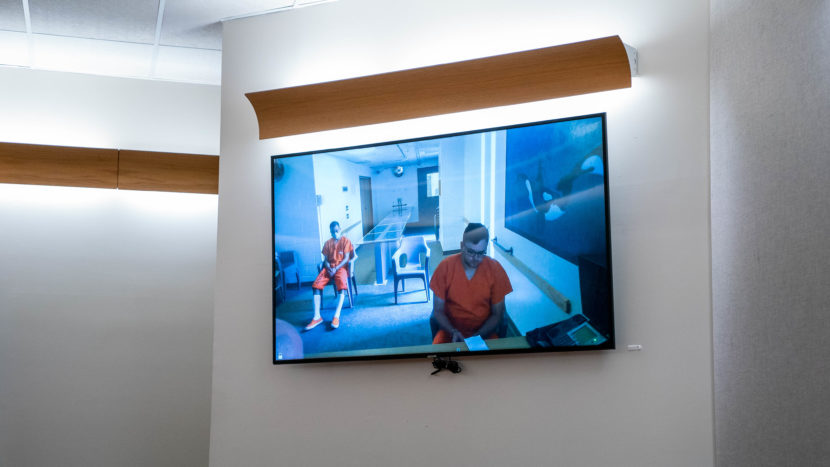
Bradley Grigg, former Bartlett Regional Hospital senior employee, under oath at his preliminary hearing on Aug. 26, 2022 after being arrested for allegedly stealing $108,000 from Bartlett Regional Hospital. (Photo by Paige Sparks/KTOO)

A former top-level employee at Juneau’s city-owned hospital who was accused of stealing $108,000 has accepted a plea deal. 

Bradley Grigg, the former chief behavioral health officer at Bartlett Regional Hospital, pleaded guilty to a lesser felony theft charge last month, allowing him to avoid prison time. 

Bradley Grigg in his office on April 15, 2021. (Claire Stremple/KTOO)

Grigg was originally arrested in 2022 on two counts of first-degree theft after an investigation by the City and Borough of Juneau discovered he had made fraudulent travel claims and online purchases over several years. Those felony charges each carry potential jail time of up to 10 years.

Grigg worked at the hospital for four years before abruptly resigning in 2021 just hours after the resignation and firing of former CEO Rose Lawhorne. 

In February, Grigg was sentenced to three years in prison with two years suspended. He received a year’s credit for house arrest and is out on probation in supervised custody.

He was also ordered to pay $108,844 in restitution. 

Newscast – Friday, March. 8, 2024

In this newscast:

  • A majority of Alaskans support a large increase to state education funding, according to a new poll from the progressive group Data for Progress
  • KTOO’s Curious Juneau segment explores the original Lingit names for Juneau’s mountains
  • Leading Alaska legislators said on Tuesday that there is little appetite for spending from savings to pay a super-sized Permanent Fund dividend this year

Property assessments in Juneau rose by less than 2% from last year

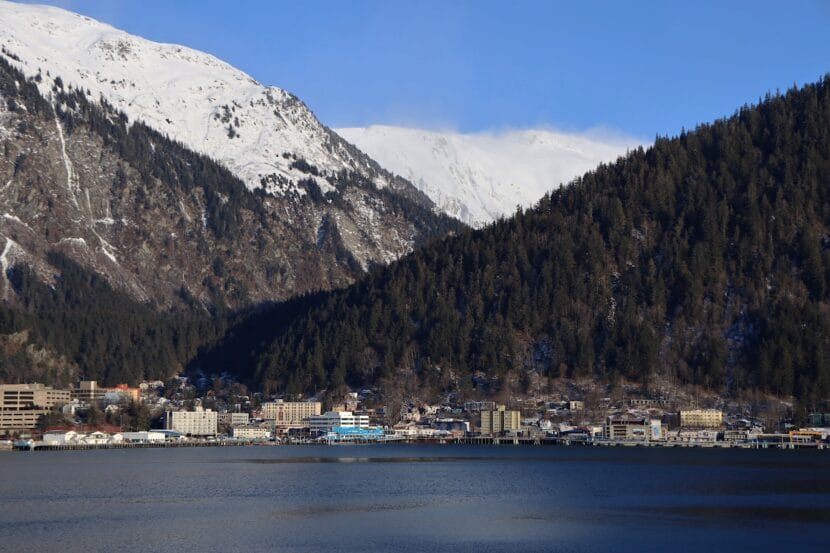
Downtown Juneau in January 2024. (Clarise Larson/KTOO)

Most property assessments in Juneau did not change much from this year to last, according to preliminary data recently shared by the city. 

Both residential and commercial property assessments rose by less than 2% on average. Residential property assessments saw an average rise of just about 1.66% overall and commercial assessments rose 1.24% compared to the year before. The value of vacant land rose by less than 1%.

City Finance Director Angie Flick said that reflects a cooling housing market. 

“Homes are staying on the market longer,” she said. “We still have a housing crisis in Juneau — that’s not to say that’s no longer an issue —  but the market seems to have cooled substantially compared to last year, a couple of years before that.”

Last year, the residential assessed property value increased by an average of about 16% — and some residents reported a more than 40% rise. Commercial property assessments rose by about 6%. 

City assessors rely on retail sales data to make their assessments, but that data has become harder to get. Alaska is one of only several states that doesnʼt require disclosure of real estate sale prices. In 2020, the Juneau Assembly mandated disclosure, but that was repealed by voters in the 2022 local election. 

Flick said that change has made it more difficult for Juneau’s assessors to do their job. 

“Our assessor’s office is working to an end without full data. So, they use the data that they have and they use tools and processes in the trade, and they follow all of the standards. Certainly having full information would create better results,” she said. 

Though property assessment notices were recently shared with residents, property tax bills won’t be released until June. 

Property taxes are calculated by multiplying a property’s assessed value by the city’s mill rate. The Assembly will decide on a mill rate this spring.

The deadline to file a petition for an assessment to the city is April 1. More information can be found on the city’s website. 

Site notifications
Update notification options
Subscribe to notifications