Clarise Larson

City Government Reporter, KTOO

"My mission is to hold Juneau’s elected officials accountable for their actions and how their decisions impact the lives of the people they represent. It’s rooted in the belief that an informed public has the power to make positive change."

When Clarise isn't working, you can find her skijoring with her dog, Bloon, or climbing up walls at the Rock Dump.

Juneau is launching a new online parking app for downtown

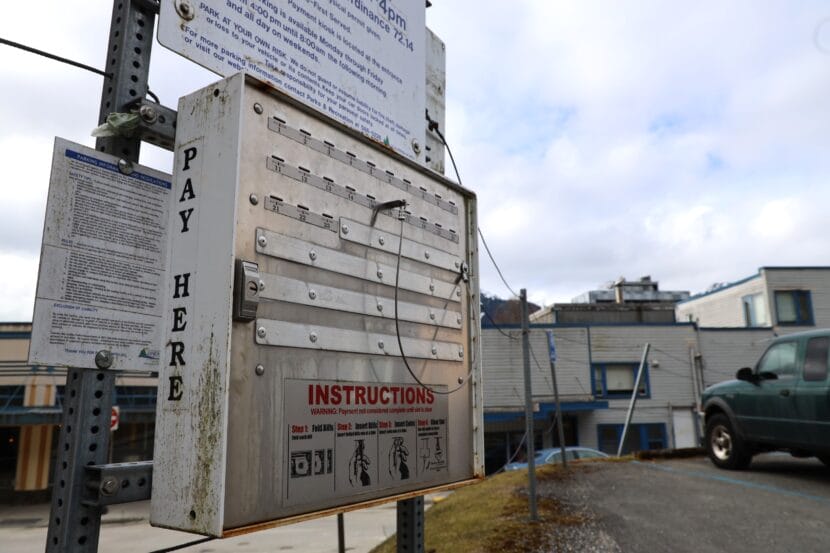
An hourly cash box sits at a city parking lot downtown on Tuesday, March 26, 2024. (Clarise Larson/KTOO)

Drivers in downtown Juneau will soon be able to pay for parking at city lots using a new online app that goes live Wednesday. 

Juneau Parks and Recreation Director George Schaaf said the app is just one of many changes coming to the city’s parking systems. 

“The way we currently and have run parking really hasn’t changed in many decades. And it requires a huge amount of labor on the staff side, and it’s not very convenient for the public,” he said. “So, we’re trying to bring our system up to a more modern standard.”

The app is called ParkSmarter, and it’s free. It lets customers pay with a credit or debit card — and even add time to a parking session. The app will work for downtown lots starting on Wednesday. In May, the city’s public harbors  will also use the app. 

The cash boxes where customers put coins or bills into slots to pay for parking will go away in the coming weeks. They’ll be replaced with electronic pay stations that accept both coins and cards.

Schaaf said that should be a relief to both customers and the city, as the old boxes are notorious for getting jammed. 

“Those boxes required somebody to go and check them every few hours during the day – they were prone to vandalism,” he said. “So now we will be able to accept credit cards, people will be able to extend their parking sessions, from anywhere using their phone, they’ll be able to get receipts and the app will actually notify you and let you know if your parking is about to expire.”

The city is also updating its permitting system. Right now, Juneau residents have to go to City Hall to buy a physical parking permit.

Soon drivers will be able to buy permits online, and they won’t need placards anymore. Instead, cameras will scan license plate numbers as cars enter and exit the parking garages. 

The Juneau Police Department’s three-wheeled parking enforcement vehicles will have new cameras on them, too. They’ll be able to note the license plate numbers and location of vehicles parked downtown. 

Congress bought a stopgap icebreaker for the Arctic, but its $1.2 trillion bill has no money to build a new one

The Aiviq anchored in Unalaska in August 2016. (Sarah Hansen/KUCB)

The U.S. Senate passed a $1.2 trillion spending bill this weekend, and President Biden signed it. Tucked into the sprawling bill is a big item for Juneau, and for the owner of a ship with some Alaska history.

The legislation includes $125 million to buy a privately owned icebreaker that the U.S. Coast Guard plans to base in Alaska’s capital city.

Sen. Dan Sullivan said he’s “pretty darn excited about it.”

“This is really good news for Alaska. Really good news for America. And certainly good news for Southeast and the Juneau area,” he said in a call to reporters Thursday.

Alaska’s congressional delegation has tried for years to get the money to buy the icebreaker, called the Aiviq. But the Coast Guard needs many more.

The Aiviq is intended to serve as a stopgap while the Coast Guard builds a new fleet of icebreakers, called Polar Security Cutters, and this year’s spending bill does not help with that. President Biden requested $170 million in this year’s budget to build those ships, but Congress eliminated the funding.

Still, Sen. Lisa Murkowski cast the bill as good news for the program to build America’s future icebreaking fleet.

“They did cut it, but they didn’t kill it. And that’s what we were up against,” she said.

Murkowski said she’s secured federal money for the polar-class vessels since 2017 and the program now has $1.8 billion, to build the first three icebreakers. But COVID-19 and supply chain disruptions delayed the construction timeline, and Murkowski said the money was at risk. Congress could have clawed back some of the icebreaker construction fund and diverted it to other priorities. She said she was able to protect all but $150 million.

“Given the work that they can do in this next fiscal year, they’re able to do that with the funds that they have and not get setback,” she said.

A new icebreaker could bring 190 Coast Guard personnel and their families to Juneau. The Coast Guard estimates that the Aiviq could be ready for use in 18 months, but it could take up to seven years to make it fully operational.

The Aiviq is owned by a subsidiary of Louisiana-based Edison Chouest. The company built it to tow a drilling rig to the Arctic as part of Shell’s offshore project in the Chukchi Sea. The endeavor suffered multiple mishaps in 2012, culminating with the rig breaking free of the Aiviq in the Gulf of Alaska and running aground. When Shell gave up on drilling in the Chukchi, the Aiviq needed a new job.

The Coast Guard leadership in 2016 refused requests to buy or lease the Aiviq, saying it wasn’t suitable. But now, the Coast Guard commandant says the ship would be useful while the service builds the Polar Security Cutters.

“In the near term, the purchase of a commercially available icebreaker would increase U.S. presence in the Arctic,” Admiral Linda Fagan said Wednesday in an annual address.

She said her “top acquisition priority” this year is to begin construction of the polar cutters.

This story has been updated to show that the Senate passed the bill and the president signed it.

Juneau’s Forget-Me-Not Manor gets $2M to build more housing for vulnerable residents

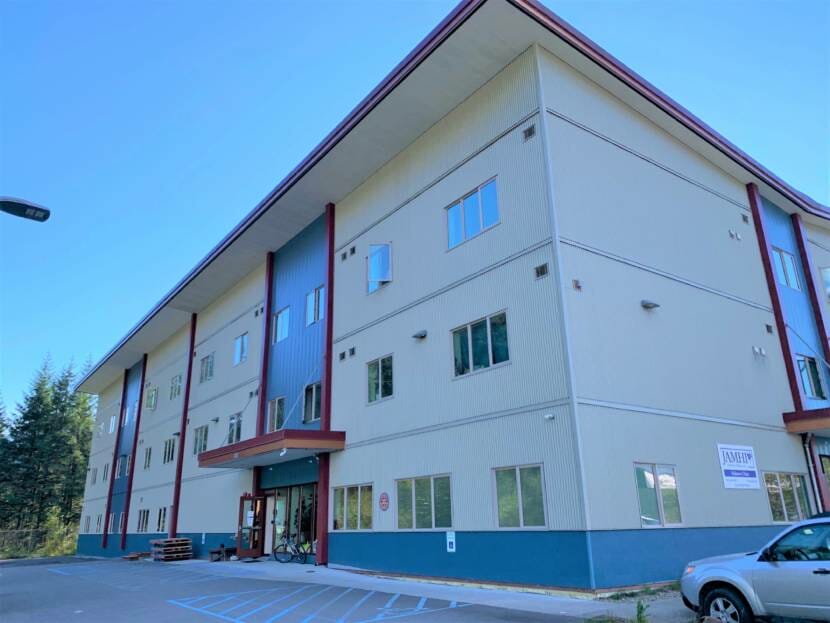
Phase two of Juneau’s Housing First project in Lemon Creek doubled the size of the existing Forget-Me-Not Manor. (Photo by Adelyn Baxter/KTOO)

A facility in Juneau that offers permanent housing for people who are experiencing homelessness is slated to receive $2 million in federal funding to expand its reach.   

Mariya Lovishchuk is the executive director of the Glory Hall, which runs the facility in Lemon Creek. She said the money was the final piece in the puzzle they needed to pay for a new phase of construction that will add 28 new units at Forget-Me-Not Manor, bringing the total number of units to 92. 

“This was the missing piece. And now we can start construction and so yeah, we are rolling along full speed ahead,” she said. “We’re just so grateful. And I’m so happy that this is moving forward.”

The money was included in a $459 billion pending bill approved by Congress and signed by the president earlier this month. 

Among its pages are hundreds of projects for Alaska that U.S. Sen. Lisa Murkowski requested, through a process that used to be known as earmarking. It’s now called “congressionally directed spending.” 

Forget-Me-Not-Manor serves people experiencing homelessness who also live with a disability or chronic health issues condition. Along with offering permanent supportive housing, it has physical, behavioral and addiction treatment services on-site.

Lovishchuk said creating low-barrier housing options that are tied to onsite medical services is a crucial step in addressing the root causes of homelessness.

“Juneau is in the middle of a housing crisis. And so what this will mean is that there’ll be 28 more homes for people who really need them the most,” she said. 

Research from the University of Alaska Anchorage School of Social Work found that people who moved into Forget-Me-Not Manor had fewer emergency room visits and police encounters. They also reported better physical and mental health. 

Now with the funding secured, Lovishchuk said they plan to begin construction as soon as late April. 

Other projects in Juneau will receive funds as well, including nearly $100,000 to AWARE — Juneau’s domestic violence support organization — for facility and safety improvements at the shelter. The City and Borough Juneau will get $2 million to upgrade its first responder radio system.

In a statement, Murkowski said the funding is much needed.

“Juneau is getting critical investments that will improve public safety in our state’s capital,” she said. 

Projects in other Southeast Alaska communities — like Gustavus, Pelican and Angoon — also received millions of dollars that Murkowski requested. 

Many of the projects were on Rep. Mary Peltola’s request list, too. Sen. Dan Sullivan doesn’t make requests for congressionally directed spending.

In its 75th year, Juneau’s Gold Medal Basketball Tournament transcends the court

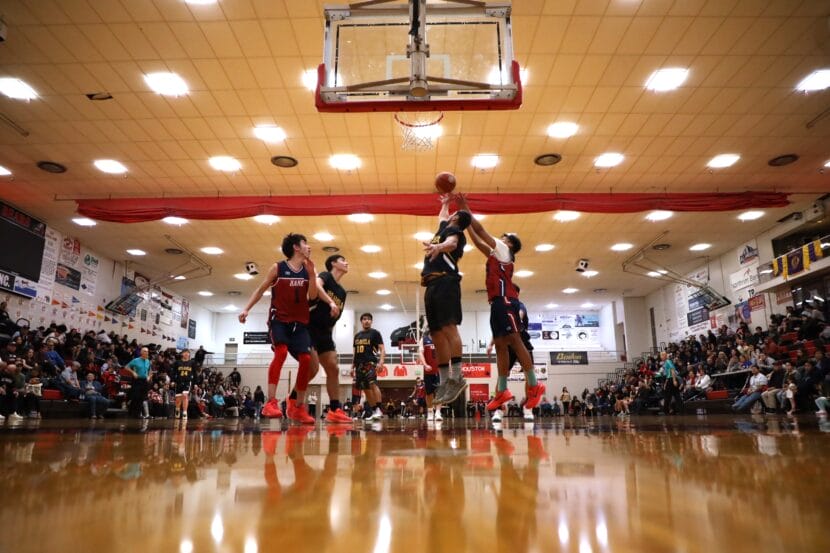
Kake and Metlakatla teams face off at a game during the Gold Medal Basketball Tournament on Tuesday, March 19, 2024. (Clarise Larson/KTOO)

Marcelo Quinto was just six years old in 1947, when the first-ever Juneau Lions Club Gold Medal Basketball Tournament took place in Juneau. He’s in his 80s now. On Tuesday, he was one of hundreds in the stands to watch this year’s tournament, which kicked off last weekend. 

Throughout this week, more than 500 people from across Southeast Alaska will attend to watch nearly 50 games. Quinto said he doesn’t remember much about that first tournament — beyond one very clear thing:

“It was jammed. Because there was no TV back then,” he said. 

The location of the tournament has changed since then. Instead of the cramped Capital School, it’s now at the Juneau-Douglas High School: Yadaa.at Kalé gymnasium. He said other things have changed too.

“These kids are faster I think. You know they’re faster and a lot of the rules have changed,” he said.

This year’s tournament is special. It marks 75 years of competitions, disrupted only by the COVID-19 pandemic, which hit the pause button for a few years. For Quinto, the tournament — which is older than the state of Alaska — represents decades of memories. 

“The greatest thing about this tournament really is being able to see all your friends from all of Southeast — from Ketchikan and all the way up,” he said.

The first game kicked off Sunday morning, and games will continue daily throughout the week. Twenty-five regional adult teams will play a total of 48 games, competing for titles in four brackets.

Tim Wilson, a Lion’s Club co-chair for this year’s tournament, said for many, this tournament represents something much greater than the game of basketball. In 1947, it started as a way to raise money for Boy Scouts. But now, Wilson said it transcends the court. 

“For it to be in the 75th year is really special to us — I don’t think when they started 75 years ago, I don’t know if they envisioned it lasting 75 years,” he said. “I always say that the Gold Medal is one big, huge family. I honestly believe that.”

Orion Dybdahl is a player on the Hoonah B-Bracket team this year. He recently graduated from JDHS, where last year he was selected by coaches around the state as a senior all-star. Now, he’s playing basketball at Centralia College in Washington, but he says he couldn’t resist coming home for spring break and playing on his home court again. 

“Probably since birth, I’ve been here at these games, watching my dad play, and just watching all these teams battle,” he said. “It’s kind of a dream come true — been waiting to play for Hoonah for a long time.”

Dybdahl said Gold Medal’s roots run deep — not just for his family, but for Southeast Alaska. His family is from Hoonah. Many teams have players who don’t actually live in the communities they represent. But they still have close connections to them. 

For many, Gold Medal is the one time of year they can connect with loved ones. 

“It means everything just to see family members and friends from other communities,” Dybdahl said. “It just I don’t know, this tournament is more than basketball. It’s kind of like a reunion.”

The tournament’s schedule can be found on the Juneau Lion’s Club’s website. 

Protesters rally at state Capitol for Gaza ceasefire and against Dunleavy’s protest crackdown bill

Around 100 people rallied the Alaska Capitol to call for a ceasefire in Gaza on Monday, March 19, 2024. (Clarise Larson/KTOO)

Around 100 people faced the Alaska Capitol on Monday evening, chanting in support of a ceasefire in Gaza and in opposition to Gov. Mike Dunleavy’s proposed bill that would crack down on unpermitted street protests.  

Speaking through a megaphone, Salim Theo Houck said Dunleavy’s bill is an attack on First Amendment rights for Alaskans.

“We have a right to protest, and he’s trying to take that away,” they said. “This bill is wrong, it shouldn’t exist and that’s why we say, ‘Respect the right to protest! Respect the right to protest!’”

The governor’s bill, introduced last month, would criminalize unpermitted street protesting and other actions that block highways and access to public places.

If passed, the bill would create a new misdemeanor crime called “obstruction of free passage in public places,” which would carry a maximum penalty of up to a year in prison and a $25,000 fine.

On Monday night, the ralliers chanted for lawmakers to take action against the bill’s passing — and to publicly call for a permanent ceasefire in Gaza.

Juneau for Palestine organizer Sonia Kumar said the group has been meeting with Juneau’s delegation and others in the state about the war between Israel and Hamas. She said the group will continue rallying to raise awareness on both topics.

“I think it’s really important for people to learn about things like this. And I mean, chanting at the building isn’t really going to do that, but I think it’s hopefully bringing more awareness to it and showing people that Juneau does care,” she said.

Local resolutions calling for a Gaza ceasefire have been considered by a few cities across Alaska, but no legislation has been introduced at the state level. 

The House Transportation Committee plans to hear Dunleavy’s bill on unpermitted street protests on Tuesday afternoon.

Dozens of Juneauites rallied for an override of Dunleavy’s education veto. It didn’t happen

Dozens of Juneau residents and educators lined the halls at the Alaska State Capitol on Monday, March 18, 2024. (Clarise Larson/KTOO)

Dozens of Juneau educators and residents flooded the Alaska Capitol Monday afternoon in hopes of convincing legislators to support an override to Gov. Mike Dunleavy’s veto of millions in state education funding.

They lined the hallway outside the Alaska House of Representatives chamber, chanting “Override! Override!”

The bipartisan bill Dunleavy vetoed last week would have raised state education funding significantly for the first time in years. But lawmakers came up one vote short of overriding it. 

Juneau Education Association president Chris Heidemann said he’s disappointed in the outcome.

“Super disappointed. You know, especially to miss it by one vote,” he said. “I know there was a lot of statements made that everybody in that room supports schools and supports kids, but that’s not what they’re showing people today.”

Last week, the Juneau School District adopted a budget for the next school year that relies on school closures and a reduction of staff to address a nearly $10 million budget deficit. 

It was built on the assumption that state education funding would not increase, but the bill that Dunleavy vetoed would have given the district more than $5 million in additional state funding.

Juneau Sen. Jesse Kiehl voted in favor of the override. The Democrat said not providing that additional funding to Juneau and other school districts across the state will have lasting impacts. 

“We’re gonna close charter schools, we’re going to have a lot of problems keeping open our neighborhood schools. This is a bad day for education in Alaska,” he said. 

The Juneau School District plans to eliminate nearly 50 staff positions next year to reduce costs and zero out its deficit. But district officials said that if the additional state funding comes through, it could save some if not all the jobs slated to be cut. 

In addition, they said more funding could also alleviate other cost-cutting measures, such as lowering the district’s pupil-to-teacher ratios next year, which will increase across all grade levels — likely meaning bigger classes. 

Juneau Rep. Sara Hannan said though she’s disappointed in the failure to override, the conversation about education funding in Alaska is far from over.

“Education is not resolved, and it will continue to be a prime piece of dialogue and work,” she said.

With the remaining time left in the session, lawmakers have the ability to pass a one-time funding boost for education — like they did last year — though that funding could also be subject to another veto by Dunleavy. 

Site notifications
Update notification options
Subscribe to notifications