Clarise Larson

City Government Reporter, KTOO

"My mission is to hold Juneau’s elected officials accountable for their actions and how their decisions impact the lives of the people they represent. It’s rooted in the belief that an informed public has the power to make positive change."

When Clarise isn't working, you can find her skijoring with her dog, Bloon, or climbing up walls at the Rock Dump.

Juneau students stage walkout in protest of Dunleavy’s education veto

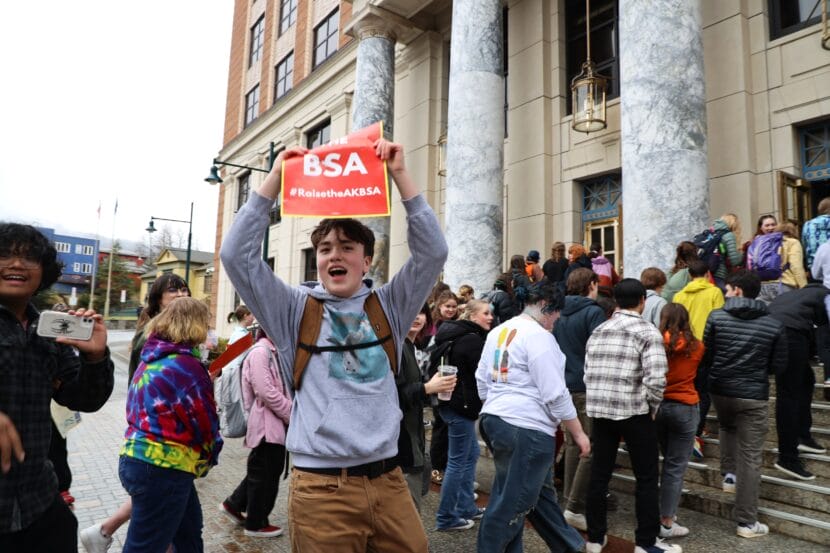
Juneau-Douglas High School: Yadaa.at Kalé student William Dapcevich holds a sign during a walkout to protest Gov. Mike Dunleavy’s education funding veto on Thursday, April 4, 2024. (Clarise Larson/KTOO)

Students from Juneau and across Alaska walked out of school on Thursday to protest Gov. Mike Dunleavy’s education funding veto last month

The bill would have raised state education funding significantly for the first time in years. But lawmakers came up one vote short of overriding the governor’s veto. 

Nearly 100 students from Juneau-Douglas High School: Yadaa.at Kalé left class to walk to the Alaska State Capitol.

JDHS senior Rachel Wood spoke into a megaphone, calling on the Governor and legislators who voted to sustain his veto to answer them. 

“We demand the 20 legislators who voted no to come out here and tell us why they did that. Where are you? Where are you? Where are you?” she said.
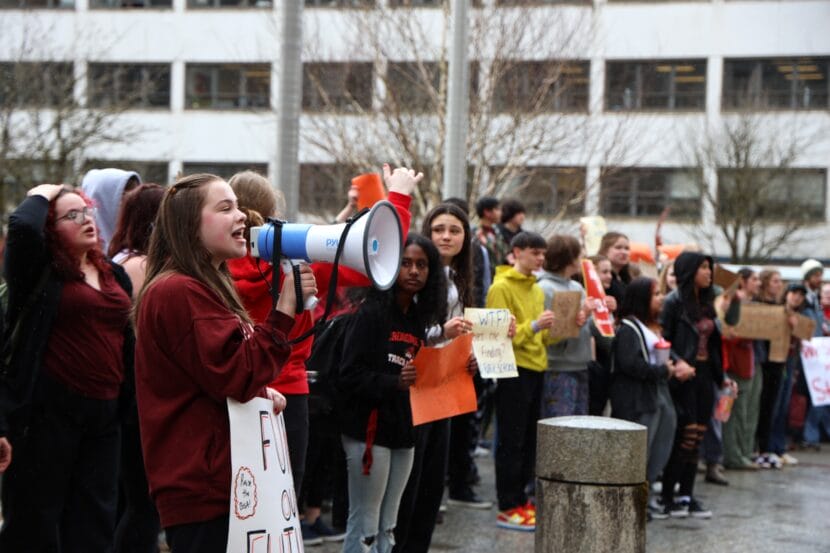
Juneau-Douglas High School: Yadaa.at Kalé Senior Rachel Wood speaks into a megaphone during a student walkout to protest Gov. Mike Dunleavy’s education funding veto on Thursday, April 4, 2024. (Clarise Larson/KTOO)

Students then flooded inside the Capitol to confront them. But Fairbanks Democratic Sen. Scott Kawasaki said they were nowhere to be found.

“I suspect they’re hiding in their offices right now,” he said.

Students eventually managed to speak to Rep. Julie Coulombe, R-Anchorage, according to the Alaska Beacon.

Amid the protest, JDHS Senior Carmen Farr held a sign that said “Remember Article VII Section 1.” That’s the section in the Alaska constitution that mandates that the Legislature fund public schools. 

“It’s the Legislature’s responsibility to maintain public school systems,” she said. “I think that the veto is kind of failing us there because we can see that it’s – everything’s kind of crumbling beneath us.”

The Juneau School District is facing a $10 million budget deficit next year. The bipartisan bill Dunleavy vetoed last month would have cut that in half, giving the district more than $5 million in additional state funding.

The district is relying on school closures and staff cuts to fill the budget gap. JDHS student Rain Bell said no matter what the Juneau School District did to fix the deficit, the quality of education was still going to decline without help from the state. 

“We’re still losing,” Bell said. “There are kids who aren’t going to be able to get the resources they need and aren’t going to be able to succeed.”
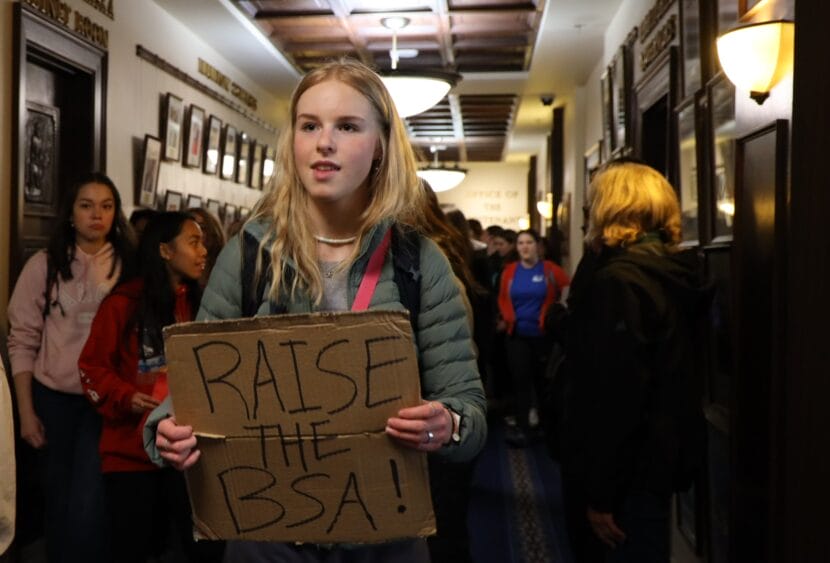
Juneau-Douglas High School: Yadaa.at Kalé student Ida Meyer holds a sign during a walkout to protest Gov. Mike Dunleavy’s education funding veto on Thursday, April 4, 2024. (Clarise Larson/KTOO)

Across town in the Mendenhall Valley, about 50 students walked out of Thunder Mountain High School.

The district’s school closure plan turns Thunder Mountain into a middle school and puts all ninth through twelfth graders at Juneau-Douglas High School: Yadaa.at Kalé.

Thunder Mountain freshman Harbor Whitton said increased state funding might have spared students from such drastic changes.

“It’s really heartbreaking, to be honest, because as a freshman here, I was planning to do my sports here, make friends here, graduate here like my friends and family have, and it’s just really upsetting because now we have to go to JD, the high schools are going to be combined, and it’s unfair, and we’re still going to be in debt,” she said. 

Students are already feeling the effects of budget cuts this year. The district has put limits on printing and other supplies, and senior Lauren Stichert said teachers are worried about their jobs.

“It’s important to keep schools open,” she said. “It’s important to have teachers keep their jobs. It’s important to have supplies – I mean, we’ve been limited to six sheets of paper this year because there’s no money.”

And Thunder Mountain freshman Dalnoi Keaton said she’s disappointed in state leaders.

“Personally, right now, I don’t want to raise my kids in a state that has really bad decisions that are being made. We need education funding. It’s just a must,” she said.

House lawmakers have set aside the equivalent of a $680-per-student increase in the latest draft of the state’s operating budget. But even if that passes and survives the governor’s veto pen, it’s another round of one-time funding for education.


What happened to the fast-food restaurants that used to be in Juneau, and why aren’t there more today?

Makenzie O’Halloran makes a sandwich at Subway in the Mendenhall Valley on Tuesday, March 12, 2024. (Clarise Larson/KTOO)

Fast-food restaurants have come and gone from Juneau for decades — but very few stick around for long. 

Beyond Subway, McDonald’s, Domino’s, Papa John’s and Papa Murphy’s, you won’t find any other national chains in the capital city. Sure, there are restaurants like Pel’meni’s or Crepe Escape downtown where you can get food fast, but that’s not what we’re talking about.

Do you have a Curious Juneau question? Submit it at the bottom of the page.

Some residents, like Ken Judson, who was grabbing a Subway sandwich during a recent lunch hour, wish they had more choices. 

“Oh you know, Taco Bell or Burger King. Arby’s,” he said. “We see the commercials, but we’re always stuck with the one McDonalds, and there used to be other stuff. I think there’s still room for more.”

He’s right — partly. Juneau once had popular chains like Taco Bell, Burger King and Wendy’s. Some even had multiple locations. But they came and went. Several Curious Juneau listeners asked KTOO why that is.

Any day of the week you can pull up to McDonald’s in Juneau and grab a Big Mac and fries. It’s right by the McNugget intersection. When it opened in 1982, corporate officials said it sold more hamburgers and fries in its first week than any other store in the company’s history. 

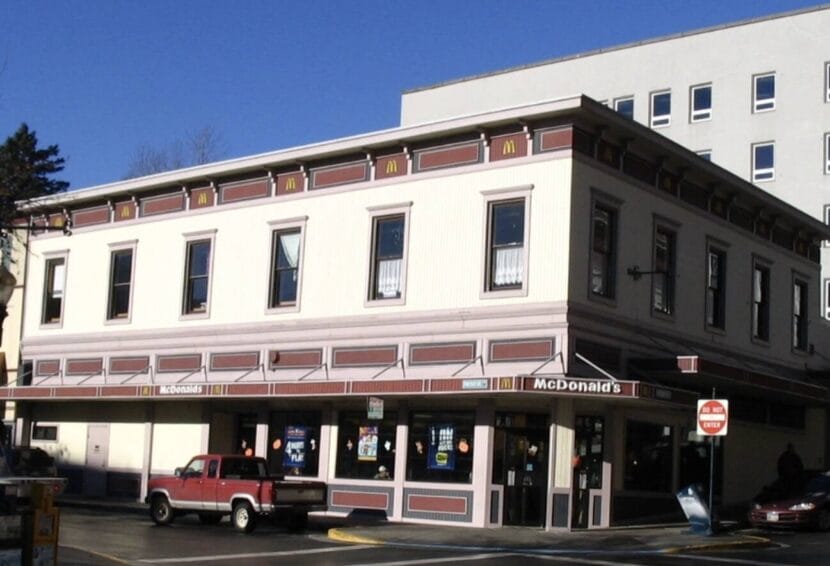
And at one point there were two McDonald’s in Juneau. A second one opened downtown, four years after the first one, where Heritage Coffee is now. That one closed in 2010.

The former downtown McDonald’s location in Juneau. (Photo courtesy of City and Borough of Juneau)

There’s no Taco Bell in Juneau today, but once there were two of those, too. Wendy’s, Kentucky Fried Chicken, Taco Time, Burger King and Baskin Robbins — they all came and went by the mid-90s. Burger King even had a food truck, but that shut down, too. 

Bruce Denton opened the Senate Building on South Franklin Street downtown in 1982 and still owns it today. Wendy’s and Burger King had locations there in the 80s. 

“It’s interesting when you look historically at Juneau,” he said. “I mean, we had a Kentucky Fried Chicken for years that isn’t here anymore. We had Taco Time and a Taco Bell. McDonald’s is kind of the sole success story.”

Denton said the downtown area is tough for restaurants in general — but especially fast food —  because you can’t put in a drive-thru, and there’s not enough foot traffic. 

“They clearly weren’t getting enough traffic,” he said. “Particularly in the winter. And you think about the cruise ship passengers, one thing about the cruise is that they’re royally fed. So there’s not a lot of tourists that are scrambling in to eat.”

One of the few fast-food restaurants in Juneau that has passed the test of time is Subway. Its owner is Assembly member Wade Bryson.

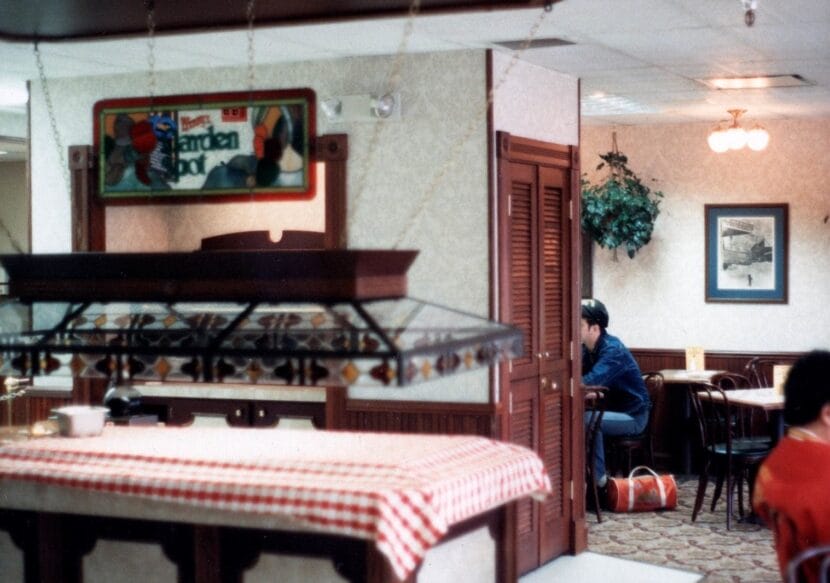
A photo of the old Wendy’s restaurant in the Senate Building downtown where the Bear’s Lair and Juneau Artist’s Gallery now reside. (Photo courtesy of Senate Mall)

He said owning any business in Juneau is tough, but trying to make money in fast food here is like walking a razor-thin wire. 

“What do you call a business without profit? You call it closed,” he said. “So, once a business doesn’t cross a profit threshold, it can’t continue to operate. It is hands-down one of the most challenging locations in the United States to operate a business.” 

Bryson took over the two existing Subway restaurants in Juneau in 2004, one in the valley and one downtown. The downtown location burned down less than a year later. He opened another one in Lemon Creek in 2010, but that closed in 2015. Then he opened yet another one downtown, but closed it in 2020. 

Like many businesses in Juneau, he said that fast-food restaurants deal with three big issues: inflated prices, lack of housing and a struggle to find workers. To make a profit, he said he typically needs to charge about 30% more than what a Subway sandwich would cost in the Lower 48.

“The cost of food is just escalating literally on a daily basis,” he said. “And in Alaska, the housing crisis, which led to the employment crisis, which led to the wage crisis, which has now compounded the housing crisis — I mean, it’s all just circling together.”

None of this is new. Even back in 1995, former McDonald’s owner and operator Mike White told the Juneau Empire that finding employees in Juneau was tough. Dale Martens, the former vice president of the Anchorage Taco Bell of Alaska was quoted in the story saying that staffing in Juneau “has always been a challenge.” 

Bryson said the demand for fast food in Juneau hasn’t gone away, but running a restaurant in Juneau often just doesn’t pencil out. 

“I wish I had a dollar for every time someone asked me to open a Taco Bell here in town — I would have had enough money to do it,” he said.


Curious Juneau

Are you curious about Juneau, its history, places and people? Or if you just like to ask questions, then ask away!

Juneau Assembly sticks with plan to relocate city-run homeless camp, despite pushback from business owners

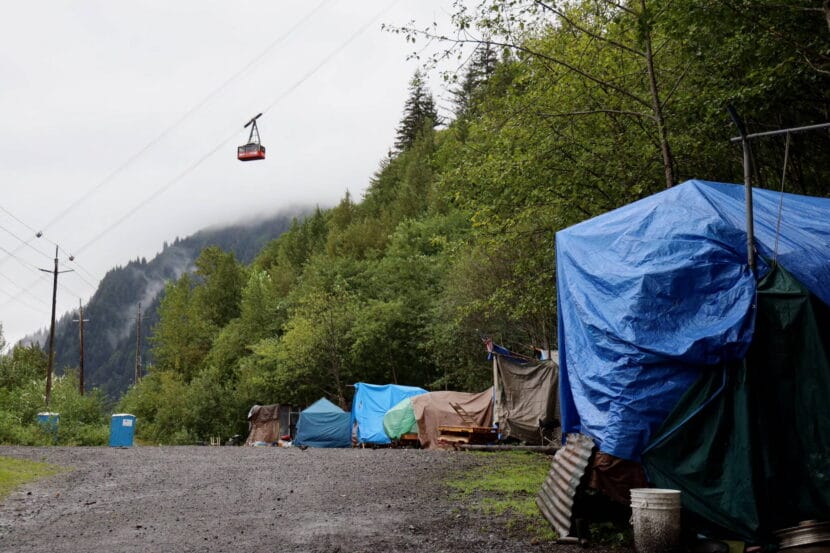
A Goldbelt Tram car rises up Mount Roberts above the Mill Campground in August, 2023. (Clarise Larson for the Juneau Empire)

The City and Borough of Juneau is moving forward with a plan to relocate its seasonal campground to a different site further from downtown, despite nearby business owners’ concerns. 

According to Mayor Beth Weldon, the Assembly is tasked with finding an option that is “the best of the very, very worst.” 

City officials proposed the plan to move the city-run campground for people experiencing homelessness last month, citing an increase in illegal activities there last summer. 

The new location is next to the city’s indoor cold weather shelter, in an area mostly populated by commercial businesses by the port. City officials say moving there would make it easier to provide maintenance and emergency services to campers and would ease the campground’s impact on nearby neighborhoods.

But last week, a group of business owners nearby wrote a joint letter in opposition of the plan. 

Kyle McDonnell with Alaska Coach Tours testified at Monday’s Juneau Assembly meeting. He said the city’s proposed location would put commercial businesses at risk of vandalism, break-ins and other criminal activities he said were associated with the indoor cold weather shelter.

“I recognize the difficult position the Assembly is in right now, and I recognize there are no easy solutions. We’ve seen it all winter long with break-ins in the buses, destruction of equipment and garbage scattered all around our property including used needles,” he said. “Putting this camp right in the middle of an industrial-zoned area, full of local businesses, is not ideal for anyone.” 

He and the group proposed a different location even further down Thane Road called the Little Rock Dump, which is owned by Docks and Harbor. The group said moving the campground further down Thane would be safer for both businesses and campers. 

But resident Kiernan Riley opposes the move. They’re concerned that the Little Rock Dump is too far away for campground users to walk to.

“Pushing the Mill campground to Thane, with no way to access it, will make it just that — inaccessible,” Riley said. “Without a shuttle, there’s not a lot of incentivization to walk all the way out the road to a tent when you can put that tent somewhere else that’s more accessible to Foodland or to other resources to get food.”

City officials said the city just does not have enough staff to shuttle people to and from the campground. 

The Assembly voted to move forward with the plan to move the campground next to the cold weather shelter for now. But multiple members said they have concerns. A final decision will likely come at the April 29 Assembly meeting. 

In the meantime, the cold weather shelter is set to close on April 15.

Correction: A previous version of this story misidentified the pronouns of Kiernan Riley. 

City and cruise lines agree to conceptual cruise visitor limits in Juneau

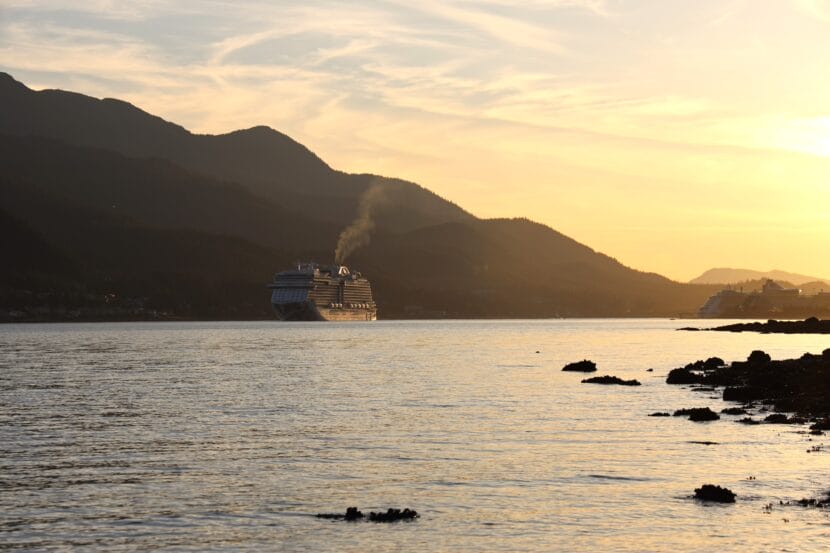
A cruise ship departs Juneau in July, 2023. (Clarise Larson/KTOO)

The City and Borough of Juneau has negotiated a conceptual agreement with cruise lines that could limit the number of daily passengers that come off their ships and into Juneau. 

At an Assembly meeting Monday night, City Tourism Manager Alix Pierce said the agreement is still far from final. If approved, the limits would go into effect during the 2026 season.

“We do not have a preliminary agreement on an MOA with specific numbers yet but we have agreed to the concept of a daily limit MOA, which is an important step in the right direction,” she said. 

Last season, a record 1.6 million cruise ship passengers visited Juneau. Next Tuesday, the arrival of the Norwegian Bliss will mark the start of the 2024 season. 

This year will be Juneau’s first with a limit of five large ships per day, but the overall number of passengers is expected to remain about the same.

Pierce said when the city and cruise lines met last week to negotiate the future limits, they did not settle on a specific number for the daily limit. But, she said it would likely be a decrease from the status quo and would make Saturdays the least trafficked day of the week.   

“They knew this conversation was coming, they knew this was the purpose of the meeting and we had asked them to come ready to discuss daily limits and the issues and challenges around that,” she said. 

She said the city is also in discussion with cruise lines about addressing the challenges with hot berthing – when one ship leaves and another takes its place later that day – and downtown congestion. 

This isn’t the first attempt to limit the number of cruise ship passengers visiting Southeast communities. Last summer, city officials in Sitka denied a citizen’s petition to put a visitor cap on the ballot. And in 2021, Juneau resident Karla Hart proposed a ballot initiative to set a ship size limit, no-ship days and no-ship hours. That initiative  didn’t get enough signatures to go to voters.

High school swimmer from Juneau qualifies for Olympic trials

PJ Foy competes at the Alaska Swimming State Championships in April, 2023. (Photo/Kevin Tuning)

For the first time in history, a Juneau high school swimmer has qualified to compete in the Olympic trials.

Thunder Mountain High School senior PJ Foy achieved the milestone after hitting a personal best in the 100-meter butterfly last month in Washington state. But according to Foy, at first he didn’t know he’d done it. 

“I’m not gonna lie — it took me a while to figure that out. Because I read the time wrong, so it took me a while. But I was just really happy,” he said. “All I wanted to do was get out of the pool and hug my parents and my coach, because, without them, I wouldn’t have been able to do this.”

In June, he’ll compete in Indianapolis alongside some of the best swimmers in the country.

Foy — who is just 18 years old — holds multiple swim records in the state. After graduating high school in Juneau this May, he will head to the University of North Carolina at Chapel Hill to compete on its swim team. 

Before Foy, the last Alaskan to make it to the trials was Seward’s Lydia Jacoby. In 2021, she became the first Alaska-born swimmer to win a medal in the Olympics

Foy said he worked hard to make it to the trials and feels extremely proud.

“It means a lot. I’ve been doing my best to represent the swim community since I started high school,” he said. “It’s been an honor to be able to represent everybody in this way.”

The Olympic trials will take place from June 15 to 23.

Juneau’s hospital to receive $4M in federal dollars to improve emergency department

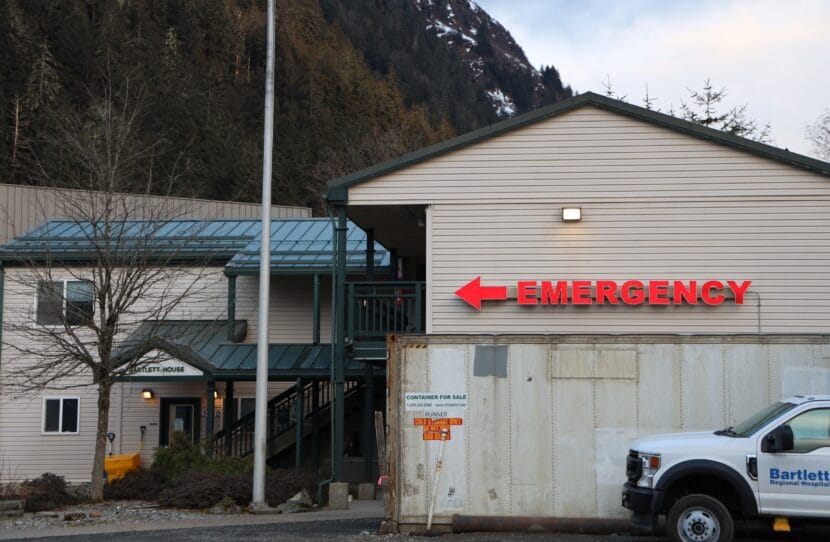
Bartlett Regional Hospital on March 26, 2024. (Clarise Larson/KTOO)

Congress recently passed a $1.2 trillion spending bill that the president signed into law last weekend. Buried inside it was $4 million for improvements to the emergency department at Juneau’s Bartlett Regional Hospital.

Nathan Rumsey, the hospital’s executive director of business development and strategy, announced the news to the hospital board during a meeting Tuesday night. 

“The primary objectives of the project are to improve patient access, to improve patient and staff safety and security, create more efficient and flexible space for ED operations, and to address emergency medicine best practices in response to the COVID-19 pandemic,” he said.

Rumsey said the project will expand and renovate the south side of the emergency department and include ventilation and electrical upgrades.

U.S. Senator Lisa Murkowski, a Republican, requested the funding through a process that used to be known as earmarking. It’s now called “congressionally directed spending.” Juneau’s hospital upgrades are just one project out of 72 in Alaska that received a total of almost $86 million from the spending bill.

In a written press release, Murkowski said one of Alaska’s biggest challenges is “combating the mental health crisis.”

Rumsey said this funding will help the hospital do just that and more. 

“This will give us the flexibility to have more space available and set aside for behavioral health patients in the [emergency department] specifically,” he said.

The hospital has been trying to gather the funds for the estimated $10.5 million expansion since 2021. Rumsey said the hospital originally asked Murkowski for $15 million, but has since changed the scope of the design to cost less. 

The hospital still needs to gather enough funding to cover the project’s full cost. Rumsey said the hospital has already set aside about $3 million in bond funds, and it’s seeking other grants to cover the rest. He said that process will determine the project’s timeline.

Site notifications
Update notification options
Subscribe to notifications