Clarise Larson

City Government Reporter, KTOO

"My mission is to hold Juneau’s elected officials accountable for their actions and how their decisions impact the lives of the people they represent. It’s rooted in the belief that an informed public has the power to make positive change."

When Clarise isn't working, you can find her skijoring with her dog, Bloon, or climbing up walls at the Rock Dump.

City seeks proposals to fill space in Juneau’s closing schools

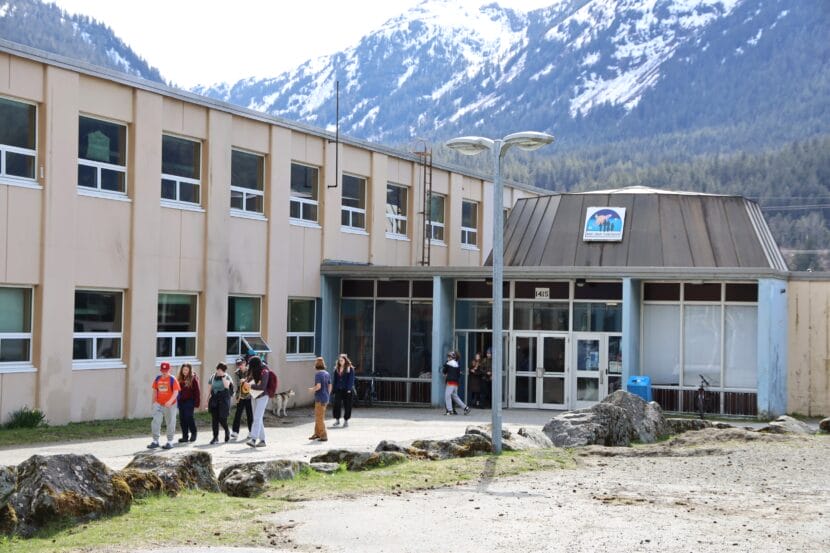
Students exit the Marie Drake building, which houses the Juneau School District’s alternative high school, Yaaḵoosgé Daakahídi, and Montessori Borealis, on Wednesday, April 24, 2024. (Clarise Larson/KTOO)

The Juneau School District’s plan to close schools and consolidate grades means some buildings will sit empty after the end of the school year. But the City and Borough of Juneau is seeking proposals from community organizations to fill that space. 

City Manager Katie Koester said that could mean using it for child care, housing or anything else that might benefit the community. 

“These are public facilities, and it’s quite a bit of square footage that’s available. The Assembly is really curious what public benefit these facilities could bring,” she said. 

The two buildings that will be open for proposals are Floyd Dryden Middle School in the Mendenhall Valley and the Marie Drake building downtown. Since voting to take over those buildings, the Juneau Assembly has openly discussed using one of them as a new home for City Hall.

Koester said that’s still an option, but the Assembly is currently leaning toward moving all City Hall employees to the building that houses the Alaska Permanent Fund Corporation instead. 

That plan still needs to be finalized and approved by the Assembly. 

“Those negotiations will take some time. So I don’t consider that like a final decision from the Assembly,” she said. “They definitely are leaning that way. But they also want to see what the other uses could be for Marie Drake and Floyd Dryden.”

Koester said the city will consider factors like how much the proposals for those buildings would cost the city — along with space and parking needs. She says those factors could also inform the Assembly’s decision on where it might move City Hall.

Interested organizations can submit proposals using a form on the city’s website. The deadline is May 20. 

The city will officially take over the buildings on July 1.
Tlingit and Haida unveils plans for new education campus in Juneau

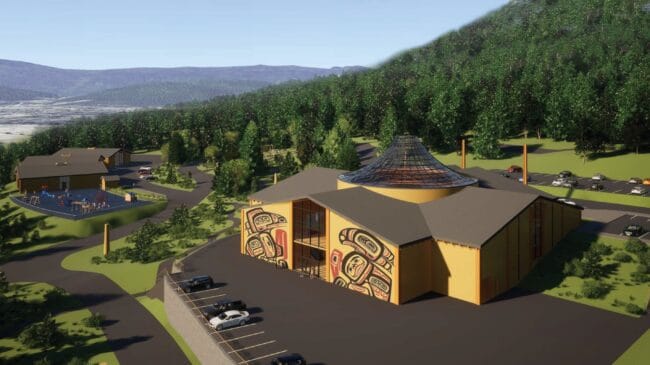
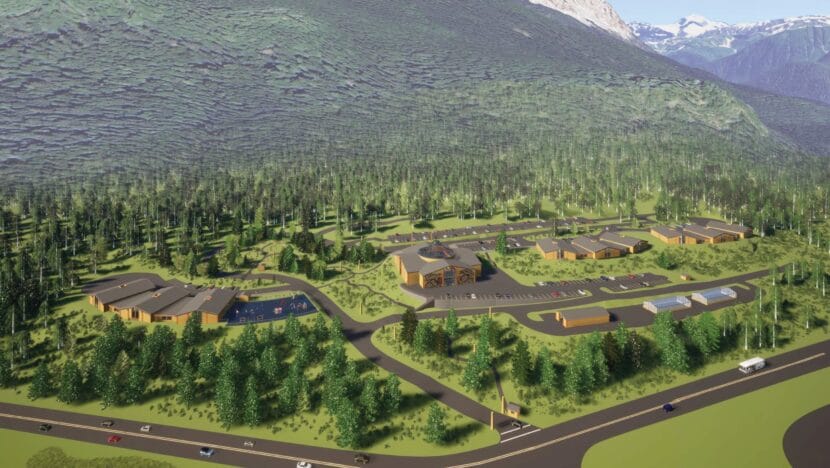
This is a rendering of the conceptual design of the Central Council of the Tlingit and Haida Indian Tribes of Alaska’s education campus. (Courtesy/Tlingit and Haida)

A new campus slated for Juneau will be dedicated to immersing children in Alaska Native culture and languages, according to the Central Council of the Tlingit and Haida Indian Tribes of Alaska.

Tlingit and Haida President Chalyee Éesh Richard Peterson announced the plans last week during his State of the Tribe address at the 89th Annual Tribal Assembly. The 12-acre tribal education campus would serve students from early childhood into college.

“We’re trying to build a village. To bring land back isn’t just a social movement — it’s our way of life,” he said. “It’s bringing the lands that were traditionally ours, and taking them and making them ours again, and giving our people the space to thrive.”

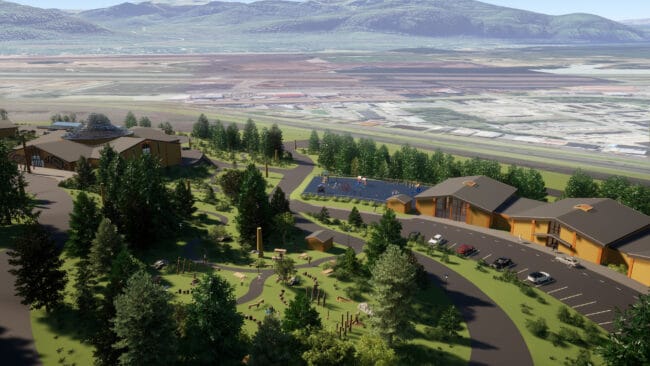
A walking path weaving through the property would connect the campus buildings. Current Tlingit and Haida education programs will come together on the site, and so will a new tribal college and K-12 school program. Last year, Tlingit and Haida was one of five tribal organizations to receive a state-tribal education compacting grant.

Education compact agreements allow tribes to develop their own K-12 curriculum and schedule. But, unlike charter schools, they’d be independent of existing public school districts. 

Peterson says the goal of the campus and the tribal schools program is to improve education outcomes for Alaska Native students by providing culturally relevant, place-based lessons.

“What we’re trying to do is give us a sense of ourselves. That our children can be grown up and raised surrounded by our own art, our own languages. That our languages float through the air every day,” he said. 

The campus will also have a space for a new event center. Peterson says he hopes it can be a gathering place for major events like Celebration, the Gold Medal Basketball Tournament and Native Youth Olympics. 

This is a rendering of the conceptual design of the Central Council of the Tlingit and Haida Indian Tribes of Alaska’s education campus. (Courtesy/Tlingit and Haida)

And there’s room to expand. The 12-acre property — located behind Fred Meyer — is just a portion of 42 acres of land on Glacier Highway that the tribe recently acquired. 

“Our goal is to grow it out. We’ve already gotten some feedback,” he said. “Classrooms need to be a little bigger, we need more parking — but we have the space for that.”

This is a rendering of the conceptual design of the Central Council of the Tlingit and Haida Indian Tribes of Alaska’s education campus. (Courtesy/Tlingit and Haida)

The tribe likely won’t break ground on the project for at least a few years, with fundraising happening over the next three-to-four years. Peterson says a lot could still change about the plan during that time. 

During the assembly last week, the tribe also unveiled a plan for a cultural immersion park on more than 450 acres of land near Tee Harbor. That project is in partnership with Allen Marine Tours.

Juneau mayor’s husband dies in accident in Arizona

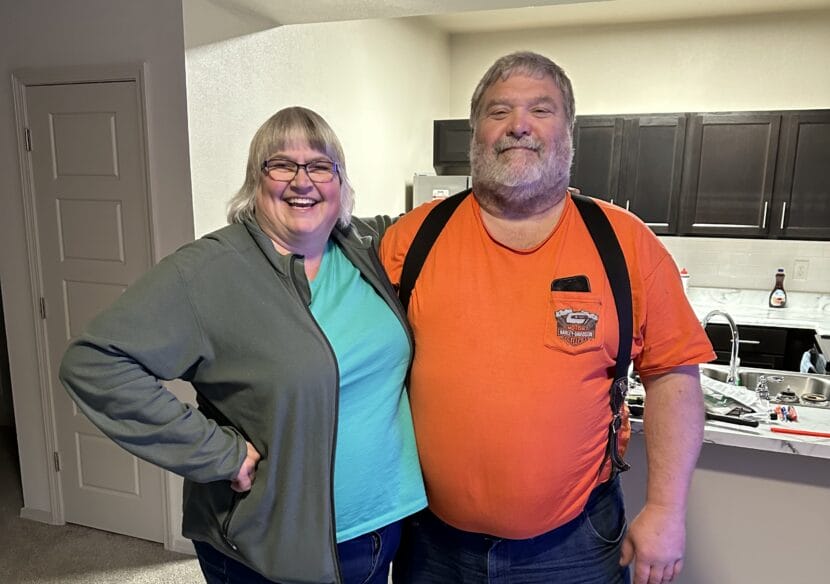
Beth and Greg Weldon smile for a photo. (Courtesy City and Borough of Juneau)

The husband of Juneau Mayor Beth Weldon died in a motorcycle accident in Arizona on Sunday, according to the city. 

Greg Weldon was 60 years old and a longtime Juneau resident. The Weldons have two adult children and owned Glacier Auto Parts together.  

City Manager Katie Koester said Deputy Mayor Michelle Hale will step in as acting mayor while Beth Weldon cares for her family.

The city’s release said the mayor and her family request privacy, but people can offer condolences through the city manager’s office.

Juneau forms a task force to tackle short-term rental regulations

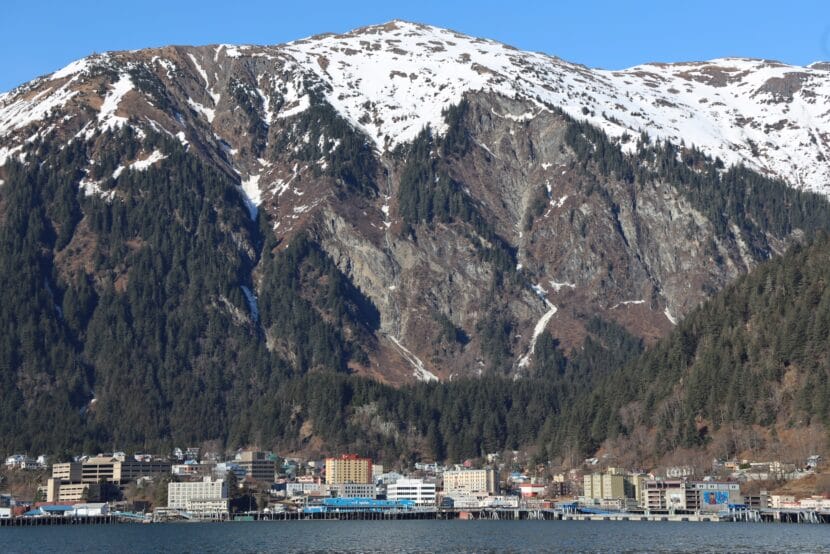
Downtown Juneau on Saturday, March 23, 2024. (Clarise Larson/KTOO)

In a bid to figure out what role short-term rental properties will play in Juneau’s future, the City and Borough of Juneau is creating a task force to tackle if — and how — those rentals should be regulated. 

On April 15, the Juneau Assembly agreed to allow the mayor to begin selecting residents who are interested in joining the task force, which will recommend regulations for the Assembly to consider.  

At the meeting, most Assembly members, like Michelle Hale, said they favor future regulations. Hale says she’s concerned about how short-term rentals affect the long-term housing in Juneau. 

“We have a lot of houses and apartments that have been converted to short-term rentals, and that means people can’t live in those that actually live and work here,” she said.

Last fall, the Assembly approved a program that requires people to register their short-term rentals with the city. At the time, city leaders said the free program would help ensure operators are paying sales tax and provide data on the growing short-term rental market — data that could eventually shape restrictions on them.

A little over 330 properties have been registered so far, but city officials believe there are still some operators that have not registered. And that’s likely the case. A recent point-in-time study reported nearly 600 active and intermittent short-term rental listings in Juneau. 

At the meeting, Assembly member Ella Adkison said introducing regulations now is a way to get ahead of any future growth in the industry. But she said she doesn’t think the city needs to rush to put them in place. 

“Even if we decide that we’re not interested in tamping down on this industry and that the numbers aren’t concerning yet, there’s no reason to leave an industry unregulated when we can get ahead of it and make sure that it’s growing in a way that we want to see it grow,” she said. 

Assembly member Alicia Hughes-Skandijs disagreed. She said she thinks the city is moving far too slowly. 

“We’re not ahead of this — it’s too late to get ahead of this,” she said. “So you can throw that out the window.”

Assembly member Wade Bryson said he’s hesitant to regulate short-term rentals. He said that could harm independent travelers who want to come to Juneau.

“While not everyone is in favor of short-term rentals, they do serve a purpose in the community and they do provide economic activity,” he said.

City officials said the task force likely will be created in the next month or so and will start meeting soon after. 

Juneau’s winter warming shelter has closed, but no summer campground has taken its place

On Monday, April 15, the last night before Juneau’s warming shelter closed, a man who gave the name Mikey said he and his partner did not know where they would go next. (Yvonne Krumrey/KTOO)

On Monday night, about 20 people slept on cots in the warehouse that served as Juneau’s warming shelter this winter. At its peak, the Thane shelter housed 63 people. 

A man who gave the name Mikey said that he and his partner had been staying in the shelter since losing their housing earlier in the winter. But he said it’s been hard for the two of them to keep uprooting their lives every day.

“I carry close to 50 pounds of stuff in my backpack. He’s walking with his walker with three hip surgeries,” he said. 

Now, those day-to-day problems are likely to get even harder. The warming shelter closed for the season on Tuesday morning. But unlike previous years, the people staying there could not move to a city-run campground.

Earlier on Monday night, at City Hall, the Juneau Assembly tabled a plan that would have relocated the city-run campground for people experiencing homelessness to a new location further away from downtown. 

“We really don’t see any good options — any, frankly — for the campground at this point,” Deputy City Manager Robert Barr said. 

He said the cost estimate for preparing the new location came in much higher than expected, and a nearby construction project made it unsuitable. But he said there aren’t any other better locations. 

The Assembly’s decision means there is no plan in place for a city-run campground, unless they can find a suitable location. That could still happen this summer, but it’s not clear where or when. 

Assemblymember Alicia Hughes-Skandijs said she will be pushing for the city to find a solution that isn’t dispersed camping. 

“I don’t think dispersed camping is any kind of solution,” she said. “So I will be pushing still for us to find something and try to overcome those obstacles.”

Dave Ringle is the executive director of St. Vincent de Paulʼs Juneau chapter, which ran the shelter this winter. He said some shelter patrons have found temporary housing at Juneauʼs year-round shelters, like the Glory Hall. But others would have to find a place to sleep in their cars or camp for the summer. 

“We donʼt have a good campground option,” he said. “And so we’re going to ‘camp where you can,ʼ which most cities have. And we’re going to monitor it.”

Ringle said that even if the Assembly does find a suitable location for a new campground, it’s still just a stopgap. He said what Juneau really needs is more affordable housing.

“Long term, we’ve been taking some steps in that direction, but in the short term we have to keep people alive,” he said.

Before going to sleep for his last night at the shelter, Mikey said he and his partner — and many others in the shelter — did not know where they would go next. He said he felt abandoned by the city.

“Take a look at what you’re doing to us right now,” he said. “Where are we gonna lay our heads for tomorrow night? We don’t know.”

Downtown Juneau’s outdoor food court is expanding, with more restaurants and longer seasons

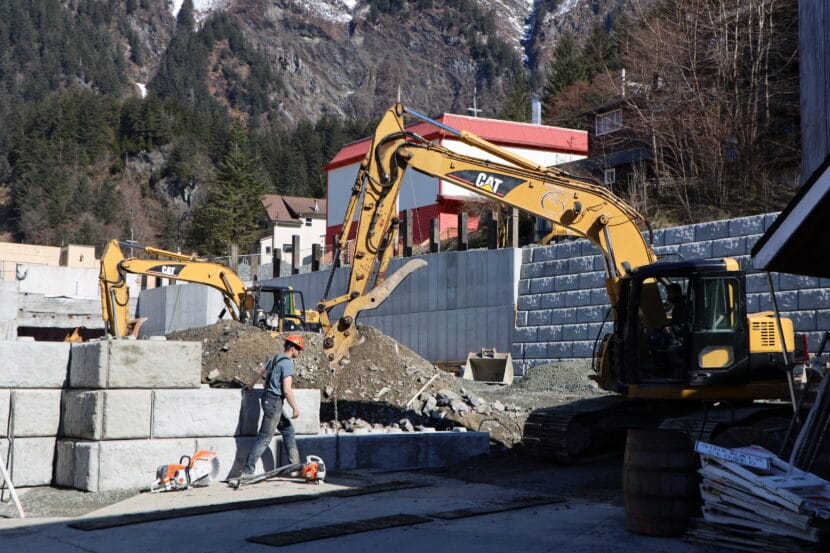
Workers construct a retaining wall at the outdoor food court location on Franklin Street on Monday, April 15, 2024. (Clarise Larson/KTOO)

An empty lot that once housed the now-demolished Elks Hall building in downtown Juneau will be getting a new life this summer. 

Last week, the Juneau planning commission unanimously agreed to allow David McCasland of Deckhand Dave’s, a fish taco stand, to use the site to expand his seasonal outdoor food court on Franklin Street. 

McCasland said he hopes to open the expanded food court by May. All of the staple restaurants from last year will be there, along with new food trucks like Pucker Wilson’s and Southeast Gold Mine Gourmet Popcorn. 

I’m basically doing exactly what I’ve been doing before for not quite a decade — it’s my ninth year in business — but it’s now just a little bit bigger,” he said.

McCasland bought the historic Elks Hall building last fall with hopes of restoring it to build housing. The hall was built in 1908 and hosted the first Alaska Territorial Legislature in 1913. But McCasland said that after buying it, he soon found it wasn’t financially feasible to salvage it. The hall was demolished last fall

At the meeting, McCasland told commissioners he still wants to turn some of the land into housing later down the line. 

“Right now, I’m like as broke as could be. So right now I’m just trying to make it,” he said. “But the long-term plan is to build housing.”

Planning Commission chair Mandy Cole said she’s excited about the food court project.

“I am grateful that there’s a business owner in this community who is willing to work on that site and make this area usable and lovely for the people of Juneau and for those who visit it,” she said. “And I think it’s high time and I’m pretty excited to eat a taco there.”

McCasland said he also hopes to keep the food court open for more of the year. In the past, it only operated in the summertime. He said he wants to keep it open during the spring, summer and fall seasons this year, and eventually maybe year-round.

Site notifications
Update notification options
Subscribe to notifications