Clarise Larson

City Government Reporter, KTOO

"My mission is to hold Juneau’s elected officials accountable for their actions and how their decisions impact the lives of the people they represent. It’s rooted in the belief that an informed public has the power to make positive change."

When Clarise isn't working, you can find her skijoring with her dog, Bloon, or climbing up walls at the Rock Dump.

Capital Transit temporarily suspends 2 routes amid worker shortage

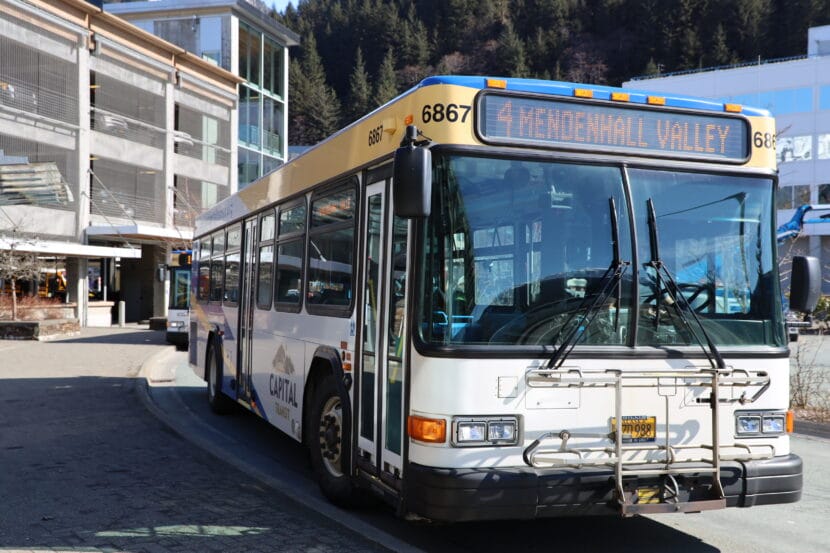
A Capital Transit bus bound for the Mendenhall Valley parks at the downtown transit center on Monday, April 15, 2024. (Clarise Larson/KTOO)

Juneau residents who ride Capital Transit buses to the airport, the University of Alaska Southeast and social service providers on Teal Street will need to find other means of transportation beginning Monday, April 22. 

Last week, the city announced it would temporarily suspend routes 5 and 6, citing a shortage of drivers and maintenance workers. 

Capital Transit Superintendent Rich Ross said they hope to restore service as soon as they can fill the positions. He said he hopes that can happen before July. 

“Our maintenance team has been experiencing staffing shortages for nearly two years now, so a lot of it has more to do with the availability of running buses we have,” he said. “Out of the 18 buses, I’d say on a daily basis three to four of them are down for repairs.”

Route 5, called the University Connector, runs from the Valley Transit Center to Auke Bay and UAS. Route 6, called the Riverside/Airport Connector, has stops at the airport, Nugget Mall and Teal Street.

This isn’t the first time the routes have been suspended in recent years. Ross said they typically have the lowest ridership. 

“The University of Alaska sees significantly reduced activity during the summer months, further decreasing demand for route five. Similarly, Route 6 hasn’t been super heavily utilized,” he said. 

This summer the city plans to start a new “tripper bus” service to help handle the added demand during cruise season. It’s essentially an extra bus that would follow the buses that already go from downtown to the Mendenhall Valley near the glacier.

Ross said the worker shortages won’t stop that new service from happening, but it will scale it down.

“I think we’ll be able to make it happen — right now with our fleet size, we just can’t do what we want to do,” he said. 

More information about the route suspensions — and job opportunities — can be found on Capital Transit’s website.

Juneau Assembly faces looming problems as it heads into city budget process

Bartlett Regional Hospital administrators chat with Assembly members during a break at an Assembly finance meeting on Saturday, April 6, 2024. (Clarise Larson/KTOO)

City officials in Juneau have proposed a municipal spending plan for next year that slightly raises the property tax rate to balance out the costs of taking over closing school buildings and maintaining current city services.

On Saturday, the Juneau Assembly met for a day-long meeting to begin building the framework for next year’s $440 million budget. The meeting was just the first of many before the budget will be finalized in June. 

This year, property values have gone up in Juneau, but not nearly as much as last year. Both residential and commercial property assessments rose by less than 2% on average. 

City Manager Katie Koester proposed a property tax rate for next year of 10.32 — a slight bump from last year. She said that an increase is needed to balance the cost of the city taking over the school buildings that will close under the school district’s consolidation plan. 

“We’ve worked really hard to maintain Assembly direction and have a flat mill rate, 10.16. We got a little gift late in the game with those three facilities, and that is the mill rate increase from 10.16 to 10.32. It really represents that,” she said.

Some Assembly members, including Mayor Beth Weldon, said they’d still like to see the rate stay flat. But that could mean cutting some services or using savings.

“I’m hoping, between filling those buildings and some creative pencil sharpening of the Assembly, we can bring that back down to 10.16,” she said. 

Each year the city budgets funds for things like schools, the city-owned hospital, the airport, Eaglecrest Ski Area and Docks and Harbors. This year’s budget essentially maintains the status quo — it isn’t cutting or adding any major services. But the Assembly does face some looming problems. 

Bartlett Regional Hospital’s proposed budget for this year projects a loss of $7.5 million. That budget dips into the hospital’s savings this year to cover the loss, but it can’t sustain that for much longer. If the hospital can’t cut costs enough, the hospital’s CFO Joe Wanner says it will essentially be out of money within the next three years. 

Bartlett interim CEO Ian Worden said these decisions won’t come easily for the Assembly or the public. 

“We’re in a very difficult position, and I think programmatic closure is not out of the realm of what most hospitals are doing these days,” he said.

Assembly member Alicia Hughes-Skandijs said making those major decisions doesn’t feel feasible during this budget cycle, but she thinks they will have to happen in the next year. 

Eaglecrest Ski Area is also facing a deficit heading into the budget process — more than $415,000 — due to rising costs, the effects of climate change, and a tight job market. 

At the meeting, Eaglecrest Manager Dave Scanlan said the ski area is seeking a five-year loan of nearly $900,000. He said that would address the deficit and help prepare for the summer season and the addition of a used gondola.

“We need to build staffing capacity,” he said. “It will help cover this bridge between where we’re at right now and where we’re going to get to as we open the gondola.”

It’s not clear yet whether the city will grant the loan. But it does plan to fund the Juneau School District as much as the state allows, as it has in years past. Along with taking over the buildings that will close, the city is also covering $1.6 million in “shared services” and giving $2.45 million in outside-the-cap funding.

Advocates want to ban large cruise ships from visiting Juneau on Saturdays, starting next season

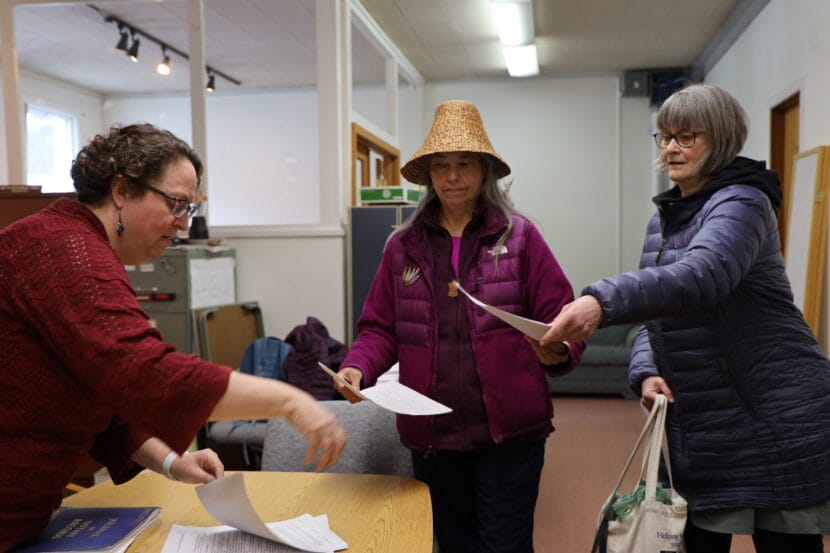
City and Borough of Juneau Clerk Beth McEwen (left) hands over paper work to Stacy Eldemar (middle) and Karla Hart (right) after filing a proposed ballot initiative on Tuesday, April 9, 2024. (Clarise Larson/KTOO)

A group of activists in Juneau filed paperwork on Tuesday in hopes of putting a question on the 2024 local election ballot about whether the capital city should begin enforcing ship-free Saturdays.”

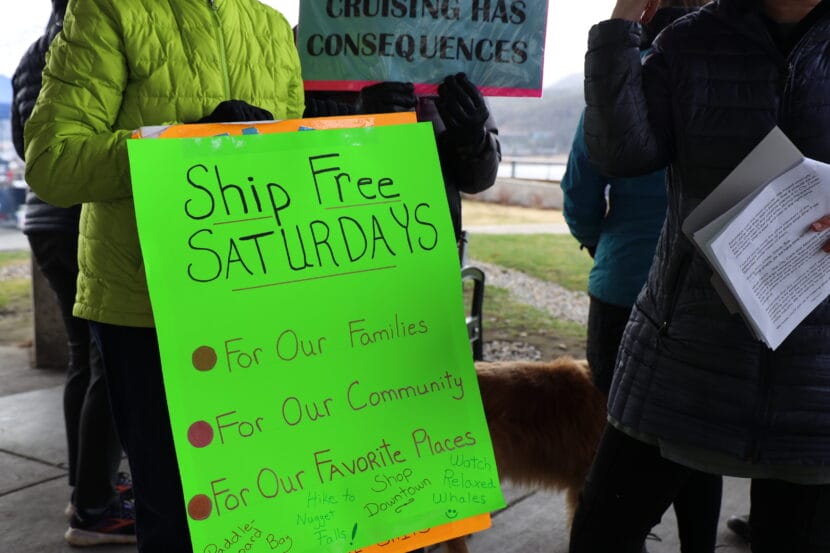
About 20 people gathered at Marine Park downtown to rally for the proposed ballot initiative as the season’s first cruise visitors were heading back to their ship after a few hours in town. Afterward, advocate Karla Hart and four other residents went to City Hall to file the initiative. It would ban all cruise ships that carry 250 or more passengers from visiting Juneau on Saturdays and the Fourth of July. 

“We want one day where we don’t have buses, where we don’t have helicopters, where we can go to Auke Bay,” she said. “One day a week.”

Hart has long been critical of the growth of tourism in Juneau and how it affects people who live here. She said the ballot initiative should be a wake-up call for city officials. 

“I decided that it seems that the city isn’t able to do things on their own, but that the citizens have the right to ask for these things. And since the city doesn’t seem to have the will to do negotiating on behalf of making life better for the residents, then we can,” she said.

A resident holds a sign at Marine Park in downtown Juneau on Tuesday, April 9, 2024. (Clarise Larson/KTOO)

At a tourism panel last week, Cruise Lines International Association Alaska spokesperson Renée Reeve said ballot initiatives are a big concern for cruise lines. She said negotiated agreements with the city often take longer but are better for the community.

“We don’t turn on a dime, and it may take a little bit longer for us to come to the decisions and for us to make decisions together. But it’s a far better way than litigation and ballot initiatives, in my opinion,” she said.

The city recently announced it had negotiated a conceptual agreement with cruise lines that could limit the number of daily passengers that come off their ships and into Juneau. But the agreement is still far from final, and no specific numbers have been shared with the public yet. If approved, the limits would go into effect during the 2026 season.

If the “ship-free Saturdays” ballot initiative is passed by voters, that could go into effect next year.

City Tourism Manager Alix Pierce said if that happens, it could have widespread impacts — including on all of the other Southeast communities that cruise ships visit. 

“When Juneau makes a move, even something like daily passenger caps that are kind of vetted and reasonable, it impacts everybody else up and down the chain,” she said. “And we need to be very cognizant of that as we move forward.”

Last season, city officials in Sitka denied a citizen’s petition to put a visitor cap on the ballot, saying the proposed legislation would be unenforceable under the Alaska Constitution. Pierce said she does not know if that would happen with the Juneau initiative. 

We’ll have something in front of the assembly as soon as we can on what the implications might look like,” Pierce said.

This isn’t the first time activists have tried to pass ballot initiatives to limit cruise ship traffic in Juneau. In 2021, Hart proposed three separate ones aimed at different aspects of cruise ships’ impacts. 

All three failed to get enough signatures to make it on the ballot, but Hart said she’s more confident this time around. 

Once the city clerk certifies the initiative, the group has 30 days to collect nearly 2,400 signatures.

Cruise ship season begins in Juneau

Jade Wang and Minhui Li smile for a photo in front of a sign in downtown Juneau on Tuesday, April 9, 2024. (Katie Anastas/KTOO)

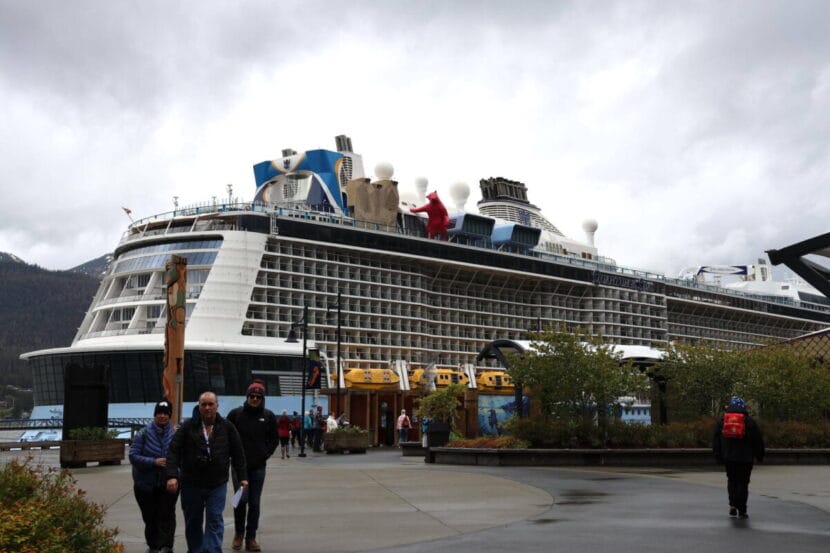
The Norwegian Bliss docked in Juneau Tuesday morning, marking the start of the 2024 cruise ship season. 

Jade Wang and Minhui Li set up their tripod to take a selfie in front of the “Welcome to Juneau” sign on the seawalk. They came from New York. Through a translation device, they said they think the snow on the mountains is beautiful. 

“Wǒ huì tuījiàn zǔguó de péngyǒu lái — I would recommend my friends from the Motherland to come here,” Li said.

Another couple, Jean and Rob Hands, said they came all the way from Scotland to celebrate their 50th wedding anniversary in Alaska. 

“We always talked about coming to Alaska, so it was one of those last-minute decisions ‘Let’s see if we can go,’” Jean Hands said. “Probably if we’d come later, we might have seen more of the wildlife.”

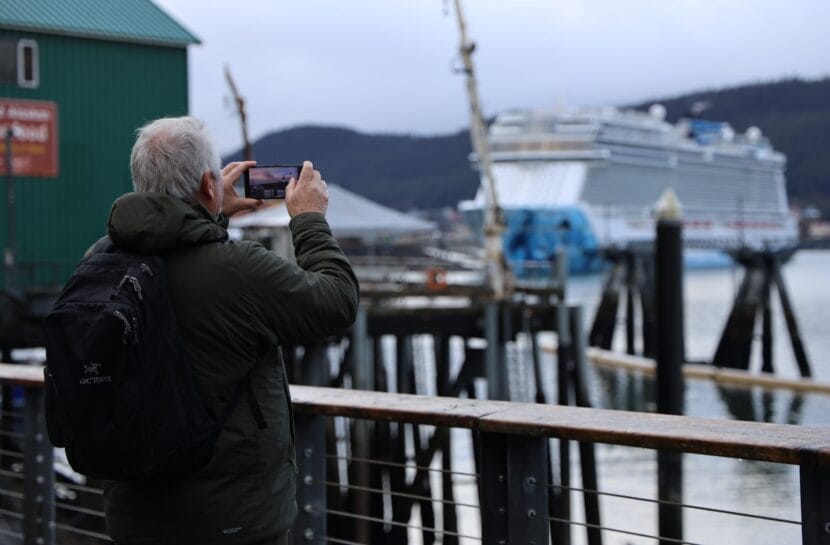
Jeff Reid from Campbell, Calif., takes a photo of a cruise ship in Juneau on Tuesday, April 9, 2024. (Katie Anastas/KTOO)

Rob Hands said he sees similarities between the tourism in Juneau and back home in Scotland.

“We get loads and loads of visitors. The roads become full of campers and caravans, and you can’t get a place for bed and breakfast unless you book ahead,” he said. “And, you know, it is busy but does well for the economy. So that’s a great thing.”

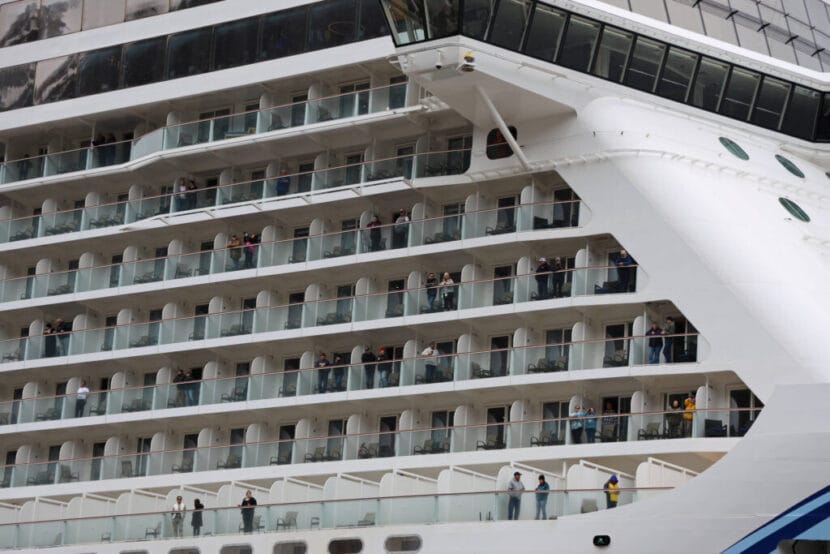
More than 1.6 million passengers are expected to arrive in Juneau from now until late October, when the season ends. On Tuesday morning, a steady stream of tourists walked down the seawalk and into stores downtown. 

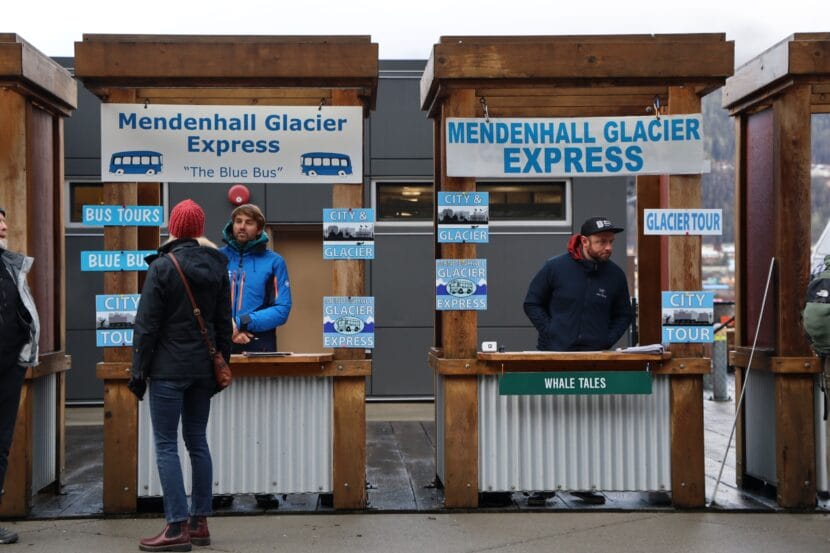
Tour operators offer tours at booths by the seawalk in downtown Juneau on Tuesday, April 9, 2024. (Katie Anastas/KTOO)

The familiar smell of grilled chicken filled the air from Bernadette’s barbecue stand, near Marine Park. Robert De La Cruz said he’d prepared 200 chicken skewers for the opening day, and he hoped they’d all get eaten by the time the ship left. 

“Hopefully, we sell them — as long as it’s not windy and rainy, that’s my fear. When it’s windy and rainy, people don’t get out,” he said. “It’s fun, I’m getting excited this year.”

Brandy Riggs, with Juneau Tours and Whale Watch, stood at a booth along the seawalk. She said visitors had been buying tours to the Mendenhall Glacier and for whale-watching trips throughout the morning. 

“There’s no guarantee that you’re gonna see whales — but we’re definitely offering it still,” she said. “We’ve got some glacier trips going on, and here in the next couple of weeks, we’ll have some city tours going on as well.”

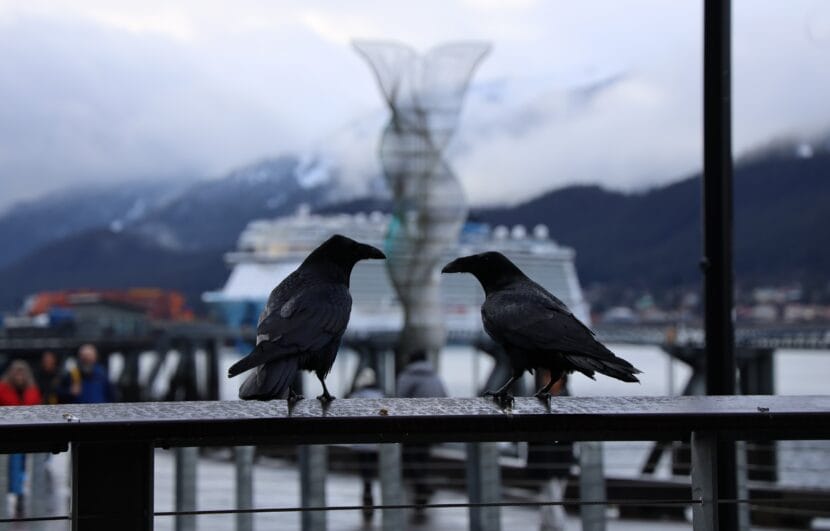
Ravens sit near the seawalk in downtown Juneau on Tuesday, April 9, 2024. (Katie Anastas/KTOO)

Down Franklin Street, Gary’s Fine Jewelry was also welcoming customers. Owner Gary Totwani keeps the store open year-round, and he said he’s happy to see the tourism season start.

“A lot of people are happy — locals and the people who work for the local stores, they’re happy also,” he said. “So far, so good. I’m excited to welcome the ship, and we’re ready.”

The next ship will arrive in a week.

Katie Anastas contributed reporting.

Cruise line officials object to Juneau’s plan for marine passenger fees

Cruise ship passengers walk around in downtown Juneau in May, 2023. (Clarise Larson/for the Juneau Empire)

Each year, the city collects a fee from each cruise ship passenger that comes to town. Those fees — expected to add up to more than $20 million this year — fund projects that serve visitors and ease the impacts of tourism. 

But this year, some of those projects could be in jeopardy. Last week, cruise line officials sent a letter to the city saying that nine of its proposed projects — including public Wi-Fi downtown and increased bus service to the Mendenhall Valley — don’t meet the terms of a 2019 settlement agreement that determines what the fees can pay for. 

The letter from Cruise Lines International Association Alaska, known as CLIA Alaska, said those projects “do not meet the necessary criteria set forth by either the law or the Settlement Agreement.”

But, at an Assembly finance meeting this weekend, Juneau Tourism Manager Alix Pierce said she recommends the Assembly move forward with funding the projects despite the objections.

“We talk a lot about collaboration with CLIA, and sometimes you need to have hard discussions. This is one of them,” she said. “But this feedback came late. It came outside of the established process, and I would recommend that the Assembly just move forward with its budget cycle.”

In 2019, Juneau and CLIA Alaska came to a settlement agreement after a three-year legal fight over marine passenger fees and how Juneau spends the money it collects from cruise ship passengers.

From that settlement, CLIA Alaska agreed to not to object to how the city spends the fee going forward, but both parties would meet annually to discuss those plans. And both parties also agreed to continue working together and to settle future disagreements outside of court.

Pierce said CLIA Alaska’s recent letter was sent far too late in the process outlined in the settlement agreement. She said the objections did not come up during the city’s annual meeting with the group earlier this year — and that the city had already built its proposed budget assuming that these projects could be funded.

“CLIA’s aware of that timeline,” Pierce said. “And we had a meeting where we discussed the budget. And then, very late in the process, they came forward with this letter that does not follow the timeline of our process.”

The Assembly will have the final say about whether the projects will be put into its budget for next year. They could consider the objections made by CLIA Alaska and take the projects out if they want to.

City Manager Katie Koester said it’s possible that the group could pursue another lawsuit if the Assembly does go through with funding the projects. But she said she’s not concerned with that possibility yet. 

CLIA Aalaska did not answer specific questions about their objections. But in an emailed response, spokesperson Renee Reeve says she’s confident the organization and the city will come to a resolution.

Pierce said she hopes to establish a better process with CLIA Alaska for next year. The Assembly will finalize its budget in the coming months.

Juneau had a record-breaking cruise season last year. This year should be about the same.

Passengers of the Norwegian Bliss look out across downtown Juneau as they wait to unboard the first cruise ship in April 2023. (Clarise Larson/for the Juneau Empire)

Juneau’s 2024 cruise ship tourism season is just around the corner as the first ship of the year — the Norwegian Bliss — is slated to arrive early Tuesday morning.

Last year, the capital city saw its busiest season ever — welcoming more than 1.6 million passengers. On the busiest days, Juneau welcomed upwards of 21,000 cruise visitors. 

Juneau Tourism Manager Alix Pierce said this year likely won’t top last year’s record-breaking season. She expects to see about the same number of visitors.

“I think it will run a lot more smoothly, and things will be better,” she said. “Generally, our tour operators know what to expect. They know what kind of volume to expect, and they’re gearing up and getting ready.”

In a survey conducted last fall, about 64% of Juneau residents said they wanted to keep the local tourism volume about the same or reduce it slightly. 

But some major problems did crop up during 2023’s record season — things like heavy downtown congestion, the Mendenhall Glacier reaching its tour capacity and business owners saying it was just hard to keep up.

One big change this year for controlling the traffic will be a new limit of five large ships per day. 

During a tourism panel on Thursday, Cruise Lines International Association Alaska spokesperson Renee Reeve said that agreement with the city will be key to flattening growth in the coming years.

“I think what that shows is industry’s commitment and CBJs commitment to making this place somewhere that visitors want to visit, and somewhere that the residents want to live,” she said.

A limit on the number of ships does not necessarily mean fewer passengers. But an even bigger change could be coming in 2026. Pierce said the city is in the early stages of negotiating with cruise lines to limit the number of passengers that come off their ships each day. 

“The best thing that we can come up with are daily passenger caps to keep our numbers relatively flat or decrease a little bit,” she said. “I’m looking forward to seeing some of these things come to fruition, and then seeing how it feels in terms of passenger volume, and numbers and what that means for us as a destination.”

Last season, cruise ship passengers spent a total of $320 million in Juneau, according to a report that came out last fall. To support that business, it’s estimated that more than 3,000 people in Juneau worked jobs that were directly related to tourism. 

Local tour operators faced a tough situation after they sold out on bus trips to the Mendenhall Glacier halfway through the season, which meant more tourists stayed downtown.

This year, the city plans to send extra buses to follow the city buses that carry people out to the glacier to handle the overflow. Pierce said local operators are also trying to balance their permits over the season to reduce congestion on buses and downtown.

“They’re offering more city tours that go to other sites where you can see the glacier from elsewhere. So they’re trying to pick up that volume in different ways,” she said.

In April, about one-to-three ships will port in Juneau per week before ramping up to three-to-five ships per day by the latter half of May. Ships will continue to port in Juneau nearly every day before winding down in late October. 

And as tourism kicks up for the summer, residents can send in complaints and concerns to the city’s tourism hotline.

Site notifications
Update notification options
Subscribe to notifications