Ed Schoenfeld, CoastAlaska

Political cartoonist’s book highlights Palin, Alaska

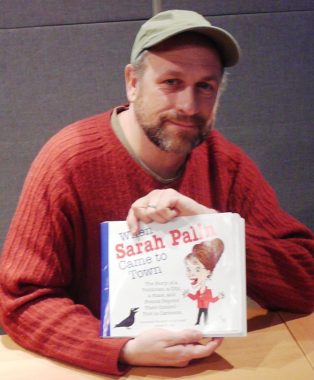
A capital city artist has just released a book of his Sarah Palin political cartoons.

Tony Newman’s work is as much about Juneau and Alaska as it is about the former governor and vice presidential candidate.

We sat down with the award-winning cartoonist, whose work is published in the Juneau Empire, to learn more about his political art.

Newman flips through his new book and stops at an editorial cartoon from the fall of 2009. It’s inspired by Palin’s appearance on the Oprah Winfrey Show, where she said Levi Johnston, the estranged father of her grandson, would be welcome at her family’s Thanksgiving dinner.

“It was at the same time that he was mulling over posing in Playgirl magazine. So I have him sitting down for Thanksgiving dinner with the Palin family, and he’s not wearing any clothes. And she’s thinking to herself, ‘Oprah, this is why I wasn’t sure having Levi over was a good idea’,” he says.

That’s just one of the many scenes set in Newman’s book, called “When Sarah Palin Came to Town.” (Click on cartoons for a larger image.)

It’s history as well as comedy, beginning with her 2002 try for lieutenant governor. That was the year Frank Murkowski topped the GOP slate, and the book also chronicles his administration.

“When Sarah Palin came in, I didn’t think there could be any more color than Murkowski provided. But obviously, as events turned out, it was a pretty exciting and dramatic time for Alaska,” he says.

Most of Newman’s cartoons first appeared on the editorial page of the Juneau Empire newspaper. Others were created just for this book, to fill gaps in the story.

He had no trouble coming up with the images.

“As far as being a subject to draw, she’s fun. She’s got big, big dark eyes and that mountain of hair that she likes to pile up on top of her head, surrounded by the thin-frame glasses,” he says.

Newman starts out portraying Palin as an outsider challenging the political establishment. That changes as she becomes more controversial.

“It seemed to me that as she got a little older, and a little harsher, and a little bit more well-defined in her views, I think that my lines that I used to draw her became a little sharper and a little more angular, a little more pointed,” he says.

Newman signs his political cartoons as “Toe,” his childhood nickname. And it was during his early years that he developed an interest in cartooning.

He loved to draw. And one day, when he was 4 or 5, he came across the cartoons published in the New Yorker.

He didn’t understand the magazine’s sophisticated and sometimes surprising approach to humor. So he took them to his mother.

“I watched her face as she read them to me, to try to look at her reaction to see if these were funny. They were clearly supposed to be funny, a dog talking to its master or something. And I remember asking her, ‘Is that funny?’ And she said ‘Yes.’ And I said, ‘Why aren’t you laughing then?’ And she said, ‘It’s not that kind of funny’,” Newman says.

He continued drawing as an adult, while pursuing other work, and eventually decided to freelance some cartoons. He penned images for three Juneau weekly newspapers before moving to the daily Empire.

“All of us are familiar with Tony’s work over the years and feel that he has a real good solid take on things,” says Nancy DeCherney of Juneau’s Arts and Humanities Council.

One of its artists’ panels awarded Newman a small grant to help him further his work. DeCherney reads from the panel’s award recommendation:

“In spite of our own Sarah Palin fatigue, and against our better judgment, we are pleased. If it can be a community event, laughter and healing will be wonderful to work through this,” she says.

Newman was at first reluctant to publish his work as a book. But he realized his Palin cartoons gave him a strong story arc, with a beginning, middle, and something of an end. He tried shopping it to agents, but ended up publishing it himself.

He knows a lot of people have written about, commented on, or parodied Palin. But he says he brings a different perspective.

“In wanted to make a book that I wanted to read based on reflections that I knew were real and the reactions that I knew were real based on being an Alaska citizen and based on being a Juneau resident,” he says.

Newman says he’s a moderate nonpartisan and didn’t set out to laud or bash Palin any more than the other politicians he draws. But he says he’s heard from people who think he’s too harsh – or too easy.

“That kind of pleases me. I didn’t set out to make a book here that was a screed one way or the other. I’m hopeful that whether you’re a Palin fan or critic you’ll find something to identify with here,” he says.

Newman is distributing his book in Alaska and through his website, sarahpalincartoons.com.

Listen to Tony Newman read from his book:

Click here to see other political cartoonists take on Sarah Palin.

More Toe cartoons from the Murkowski administration:


All cartoon images copyright 2011 by Tony “Toe” Newman.

Alaska political cartoonist

ANCSA: Assimilation or cultural survival?

Is the Alaska Native Claims Settlement Act a path to assimilation or a means of cultural survival?

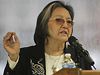
That’s the question posed by Sealaska Heritage Institute President Rosita Worl. She spoke Monday (this week) as part of a Juneau lecture series focusing on ANCSA, which has its 40th anniversary next month. (Watch a video of her speech.)

Rosita Worl

Worl, an anthropologist, is also vice-chair of the Sealaska regional corporation’s board.

“Congress enacted ANCSA to promote assimilation. But ironically, it also enacted into law a traditional value of sharing through a form of what I call corporate socialism,” she says.

She says that involves more than dividends.

Regional corporations share 70 percent of their logging and mining earnings. Many also offer special payments or extra shares to elders.

Worl says giving shareholders’ descendents stock and voting rights is a modern version of a traditional value. Arctic Slope, Doyon, NANA and Sealaska Corporation shareholders have approved such measures.

“In voting to give stock to Natives born after ’71, the individual shareholder is asked to choose between group rights of Native societies or individual rights of western societies,” she says.

Worl says ANCSA is not a finished work. While it is almost 40 years old, it has undergone a number of changes and she expects to see more.

Worl went through the history of efforts to resolve property and other disputes that led up to ANCSA. She says land transfers are one of the legislation’s most important elements.

“Congress really wanted to have clear title to Alaska because it was necessary for economic development. Native people, on the other hand, wanted ownership of their land, and they rejected BIA control of their lands,” she says.

Click here to watch videos of lectures from the five-part Native American Heritage Month series.

KTOO’s 360 North will commemorate the Alaska Native Claims Settlement Act in a seven-part television series ANCSA@40.

The half-hour programs begin Dec. 6 and will run weekly through Jan. 17. Nellie Moore hosts interviews with people who played a major role in the creation of ANCSA. Topics are Women Behind the Act, Politics and the Pipeline, and The Corporate Future.

New estimate could increase Alaska Class Ferry cost

The state is reexamining its cost estimate for the first Alaska Class Ferry. And it’s likely to come in higher than the total allocated to construction.

Earlier this year, the Legislature set aside $60 million for its next generation of ships. That brought funding to a total of $120 million.

Many thought it would be enough to design and build the first vessel.

“Unfortunately, numbers tend to stick and $120 million is the number that stuck. So everybody believes that’s full funding for the vessel,” says Captain Mike Neussl, who runs the Alaska Marine Highway System.

He says the estimate is several years old and may be low.

“That may or may not be the case because we’re not on contract with anybody for a vessel at that price,” he says.

The ferry system has asked Elliot Bay Design Group, its architectural engineering firm, to revise the numbers. Ketchikan’s Alaska Ship and Drydock will likely build the ship.

Neussl says a lot of factors affect the cost.

“The price of steel, the cost of labor and the design of the ship. There’s a lot of factors that play into that, and whether it’s higher or lower, I couldn’t really tell you,” he says.

He’s unsure when the new information will become available.

Officials have decided not to take federal funds for the Alaska Class Ferry. That would add environmental requirements and block an in-state contract preference.

State government is the other source of construction money.

“I think one of the issues we need to keep an eye on is replacement of the marine ferries,” says Sitka lawmaker Bert Stedman, who assembles the Senate’s capital budget as co-chairman of that chamber’s Finance Committee.

“I have been hearing we may have to put forward a little bit more money for the first one. That has me a little bit concerned,” he says.

“But clearly we need to have a discussion on when we want to start funding the second one. Because we need to build two or three of these ships and retire our older vessels because of the operational costs.”

The first Alaska-Class Ferry will sail Lynn Canal, linking Juneau, Haines and Skagway. A second is slated to travel between Ketchikan and Prince Rupert. A third would double up on the Lynn Canal route.

The ships will be about 350 feet long and carry up to 500 passengers and about 70 vehicles. They will have crew quarters but no staterooms and will not sail overnight.

Ferry system may make horse travel easier

The Alaska Marine Highway System plans to change a policy that keeps many horse-owners from taking their animals on ferries.
Currently, anyone transporting a horse or other large animal must make a $1,000 deposit. It’s most often returned after the trip ends. But if excrement leaks out of the animal’s trailer, clean-up costs are deducted from the deposit.

Horse-owners protested the policy, saying it was so expensive it kept young equestrians from showing and competing in other towns.

Ferry chief Mike Neussl says he’s working on a different system.

“We’re looking at not actually holding money, which is what we do right now. So we’re looking at the possibility of holding the credit card information and having customers be liable for that but not actually taking their money unless there’s a spill that necessitates a cleanup that generates an expense,” he says.

He says he hopes the new policy will be ready for the next Marine Transportation Advisory Board meeting, which is December 15th.

The advisory board heard from horse-owners and youth-group leaders at a September meeting in Skagway. Members were told that Juneau 4-H Club equestrians could not attend the state fair in Haines because of the cost.

Board members and others asked ferry managers to search for an alternate fee system.

“I’ve actually gotten a letter of interest from the Juneau legislative delegation that requested we look into that and try to resolve that issue. And that’s certainly what we’re doing,” he says.

Neussl says ferry staff can no longer hose excrement off the car deck and into the ocean. Recent federal environmental rules require more expensive clean-ups.

Kookesh challenges Stedman for Senate seat

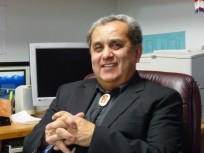
A pair of powerful Southeast lawmakers will face off in the 2012 election. Angoon’s Albert Kookesh and Sitka’s Bert Stedman will both run to represent a Senate district newly configured by redistricting.
Earlier this year, Kookesh predicted reapportionment would merge part of his Senate district into another one in Southeast.

The Angoon Democrat, Sealaska board chairman and Alaska Federation of Natives leader told a public forum in Juneau that the change would leave him little choice about his political future.

Sen. Albert Kookesh

“For me, if that’s what happens, it’s time for me to ride off into the sunset and say goodbye to everybody,” he said.

Reapportionment is taking away most of the 130 communities in his current Senate district, which stretches from Southeast, through Prince William Sound, and up into the Interior.

What’s left is combined with about three quarters of Sitka Republican Stedman’s existing district. But Kookesh has decided to run in 2012.

“You know what? I’m not going to roll over and just go away. I’ve been in the Legislature for 16 years, eight in the House and eight in the Senate. And I think that I’ve developed a wealth of information and a good background,” he says. “I don’t want to quit being in the Legislature. I enjoy it, it’s something I really have fun with, so I decided I’d give it a shot.”

In addition to Angoon and Sitka, the new district includes Ketchikan, Wrangell, Saxman, Metlakatla, Haines, Hoonah and Prince of Wales Island.

Sen. Bert Stedman

Stedman, who’s served in the Senate since 2003, faces a smaller challenge.

“So there’s about 26 percent of people that will be new. And I‘ll be spending a considerable amount of time going out and meeting with them and getting detailed understandings of their issues and try to resolve some of their stuff,” he says.

Stedman and Kookesh have worked together as members of the Senate’s bipartisan majority organization. Stedman co-chairs the chamber’s budget-writing Finance Committee. Kookesh heads up its transportation panel.

Both say they plan a clean campaign.

“I just want to concentrate on the merits of myself and I don’t intend to be negative at all. I have nothing negative to say about him. He’s a good guy,” Kookesh says.

“It always seems in politics in the end it gets a little bit messy with whoever happens to be behind, walking into the election the last few weeks,” Stedman says. “But I’m hoping this election will stay at the high road the whole way through. I fully intend to talk about the merits of my tenure in the Senate and not concentrate so much on my opponent.”

Stedman says he’ll campaign on his efforts to fund numerous projects throughout Southeast. That includes hydropower facilities and transmission line work.

He’ll also continue pushing for in-state construction of new Alaska Class Ferries.

“Expansion of Alaska Ship and Drydock in Ketchikan so we can build those vessels in Ketchikan. Along with working with the need for another 10 megawatts of power for the Niblack mine on south Prince of Wales. If we can do those two things, we’ll be looking at 200 to 300 jobs,” he says.

Kookesh says he’ll cite his relationships with community leaders. But he understands that means reaching out to new communities.

“I expect that I’m going to have to do a lot of door-to-door work. Especially in Sitka and Ketchikan and Wrangell where people haven’t had the occasion to get to know me. I don’t want to take any of the communities I’ve represented in the past for granted either. I’m going to have to do some campaigning there. I just think that’s going to be a lot of work, but a lot of fun,” he says.

Before facing each other, Stedman and Kookesh will have to clear their party primaries. So far, no one else has filed for what’s now called Senate District Q.

All but one of Southeast’s other six lawmakers have filed for re-election.

Redistricting, which still faces court challenges, is costing Southeast one House seat and half a Senate seat.

Hear a report on Stedman’s last campaign.

Listen to a report on Kookesh’s last campaign.

Multi-talented Jeff Brown wins statewide recognition

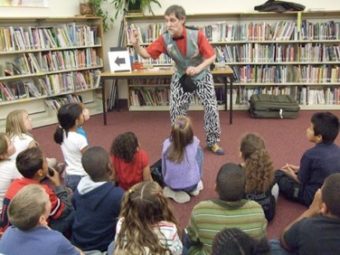
Jeff Brown performs magic.

What inspires a person to twist a balloon into the shape of a moose? Or take photos of someone vacuuming a glacier? Or run for mayor in a gorilla suit?

Those questions come to mind when you’re talking about Jeff Brown. The Juneau artist, musician, author and entertainer was recently recognized for his lifetime achievements as part of the Governor’s Awards for the Arts.

Jeff Brown is a longtime Alaskan, who entertains kids, produces radio shows, writes how-to books, puts out parody post cards and publications, volunteers with community groups … the list goes on.

“Where does he come up with those ideas? He’s constantly filled with funny ideas and constantly filled with just amazing connections,” says Juneau Arts and Humanities Council Executive Director Nancy DeCherney.

She’s known Brown for years, as have hundreds, even thousands, of others around the state.

“I don’t think there’s everybody in this town who can summarize everything that Jeff did. Because you know him from a different perspective and I know him from a different perspective,” she says.

But let’s try. (Link to Brown’s website)

Brown says it all started in high school when he heard the experimental comedy group Firesign Theatre.

“They made it possible for me to think it would be possible to go to a radio station and start volunteering,” he says.

He moved to Juneau as a Coast Guard medic in 1975. Soon, he came across fledgling public radio station KTOO.

“They were having a fund-raising marathon and I asked if I could help out and they said, ‘Sure.’ And they asked for volunteers to be on the radio and I said ‘Sure.’ And I’ve been saying ‘Yes’ ever since,” he says.

Brown went on to work for the station and its TV affiliate. He also became a key member of an improvisational theater group, a historical play for tourists and a news parody show.

As time passed, he also became a recognized artist, working with stained glass, manipulated photographs and assembling found objects. He’s even created museum exhibits of Alaska mazes and board games.(Read about the exhibit Vinyl Resting Place., which Brown created.)

“He’s one of those rare individuals who seem to have no boundaries in regard to medium. It’s Jeff. You can see it. His signature’s there,” says Bob Banghart, chief curator of the Alaska State Museums.

He’s also a musician and founder of the Alaska Folk Festival, another place Brown has been active.

“In any various year he was engaged in putting together programming or doing the newsletter or organizing the workshops or organizing M.C.s or being the M.C. or being on stage playing. He’s done everything there is to do, probably with the exception of selling of hot dogs, but we’ve never sold hot dogs,” he says.

Then there’s the kid-focused efforts. Brown’s produced a nationally-distributed children’s radio program, toured an Alaska magic show, and was half of the kids’ music duo The Wigglers.

He also became king of balloon animals, organizing a worldwide celebration. It brought him to the attention of then-Governor Wally Hickel.

“He would come down on a monthly basis to do his call-in show. And being a fresh balloonist, I thought, ‘Wouldn’t it be fun to have a title called balloonist laureate. And they agreed with me and gave me a certificate to prove that,” he says.

Following governors named him minister of merriment, commissioner of mirth, professor of play, and now, master of cheerful smiles.

One of Brown’s most recent efforts has been Real Alaskan Magazine. The 64-page, full color, glossy humor publication parodies images and stories from the north.

He says people have been more than willing to help.

“I can call up somebody up in Sitka and say, ‘Can you find a couple ballet students and put them up in tutus and rubber boots and have them posing at Swan Lake?’ and they say, ‘No Problem.’ I talk to people like Martin Buser, will you pose with a can of dog mush? ‘Sure, no problem,’” he says.

A third edition is due out on April Fools’ Day.

In fact, he took a side trip from his recent awards ceremony to create a new visual pun.

“When I was in Anchorage I convinced the head of the Alaska Zoo to have my friend Karl Ohls pose inside a cage as ‘The Wild Alaskan Bureaucrat.’ And I photo-shopped some kids looking at him as well as the executive director of the zoo,” he says.

Brown continues as program director of KTOO and its sister station KRNN. And his next project? A series of radio programs of Alaska poets and authors reading their own works.

Brown’s lifetime achievement award comes at a time when he’s having to slow down. He has Parkinson’s disease, a brain disorder that causes shaking, stuttering and makes movement difficult. But he’s still being creative.

“I can do the same things I’ve done before but it takes a lot longer. It’s kind of discouraging that way but you just have to muscle through,” he says.

He’s a little self-conscious about the lifetime achievement arts award, and says lots of other people have done as much or more. And it hasn’t changed his goal.

“I guess it all centers around making people happy. And that’s kind of what I’ve given myself as a job in life, is to make people’s lives a little bit better. And making them laugh, making them smile and making their lives just a little bit easier to live,” he says.

Friends and colleagues are planning a community celebration of his award and works. It’s from at the Juneau Arts and Culture Center, from 5 to 7 p.m., on Monday, October 31st.

Site notifications
Update notification options
Subscribe to notifications