Jacob Resneck, CoastAlaska

Jacob Resneck is CoastAlaska's regional news director based in Juneau. CoastAlaska is our partner in Southeast Alaska. KTOO collaborates with partners across the state to cover important news and to share stories with our audiences.

Juneau investors and CBJ eye AEL&P amid parent company’s buyout

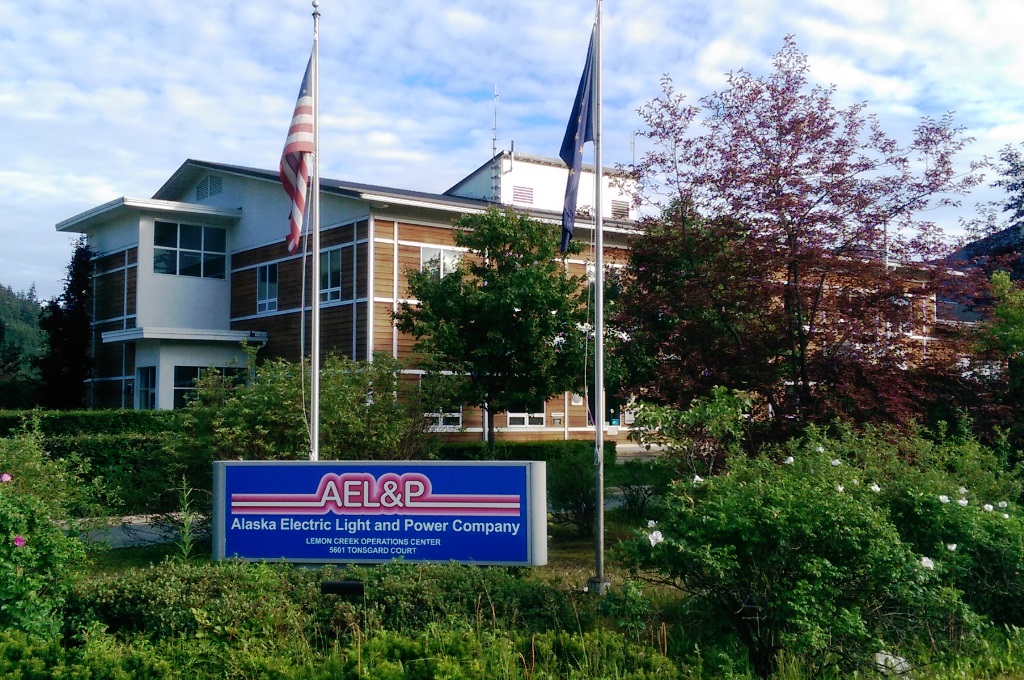
Alaska Electric Light and Power Company headquarters on Tonsgard Court in Juneau.
Alaska Electric Light and Power Company headquarters on Tonsgard Court in Juneau. (Photo by Rosemarie Alexander/KTOO)

A pair of businessmen is interested in raising funds to buy Juneau’s power utility and return it to local control. And they want the city’s help doing it. That revelation slipped out during Monday’s Juneau Assembly meeting.

After 120 years of local ownership, Juneau’s electric company, Alaska Electric Light & Power was sold to Spokane-based Avista Corp.

Now, Avista is being acquired by Hydro One of Canada in a complex deal that still needs to be approved by regulators in several states and federal agencies.

But before that happens a group of local investors plans to approach Hydro One with an offer to buy AEL&P. They’re in the process of raising at least $170 million to match what Avista paid for it in 2014.

None of this was public until Assemblywoman Debbie White proposed the mayor send a letter to Hydro One on behalf of the unnamed investors.

“I just think that this is a last-ditch effort to try to keep and retain local ownership of our utility,” White said at Monday’s meeting.

That caught a number of Assembly members by surprise. Especially as White asked that the names in her draft letter be kept confidential until the very last minute.

“This is the very first I hear of any of this so it’s hard to have an opinion,” Assemblywoman Maria Gladziszewski said. “And there’s some suggestion that we can’t name the names of the individuals.”

She was one of several who urged caution.

“It’s very premature to make any commitments or even a suggestion of commitments,” Gladziszewski  added.

The Assembly ultimately directed the city manager to draft a different letter of interest – without any explicit commitment to a deal.

But Debbie White’s original draft letter became a public record as soon as it was brought into open session; it named the investors as Duff Mitchell and Keith Comstock.

“What we were looking for was just an exploratory letter,” Mitchell told KTOO in a telephone interview after the meeting. “I mean, we do not know if Hydro One would be interested.”

Mitchell and Keith Comstock are behind Juneau Hydropower and Juneau District Heating, which for years have been developing a hydro plant and a heating plan for downtown Juneau. Both projects have yet to break ground.

“A lot of people in our community may think that this is so many zeros and so difficult – it’s not really,” Mitchell said. “We just want to put out to the community that there’s a will, there’s a way and it’s financially doable.”

Mitchell said the city could have a stake in a future investment group.

“If the city wants to have some of the profits and some of the dividends that are yielded to places outside our community,” he said, “there’s a way to keep those dollars circulating in our community.”

What role the city might have in a future deal is far from being decided or explored. Public discussion is only just beginning.
Juneau Assembly mining task force to add members

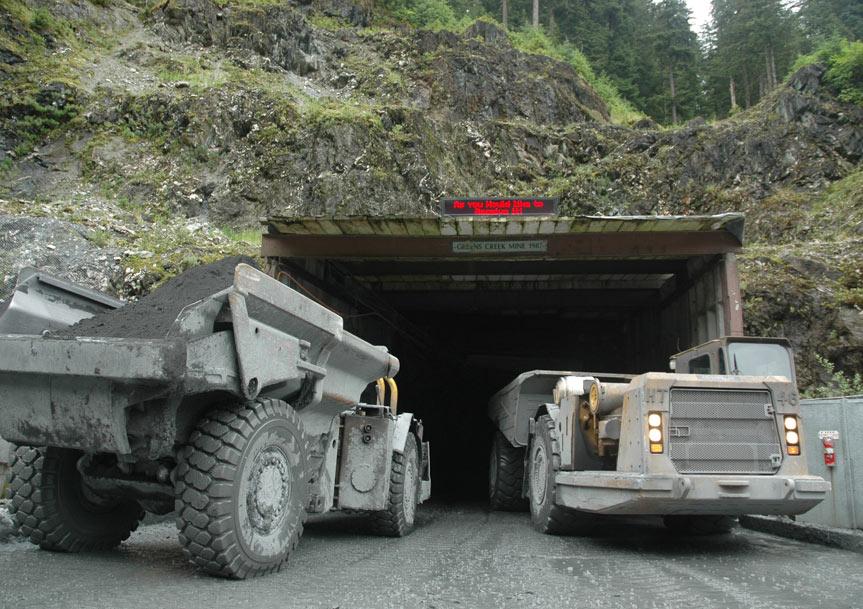
Greens Creek Mine
Greens Creek Mine. (Photo courtesy Hecla Mining Co.)

A task force appointed by Juneau’s mayor to re-examine the city’s mining ordinance met for the first time Friday. Its first decision is that the committee should be enlarged to include two planning commissioners and two members of the public.

That’s according to a press release from the City and Borough of Juneau.

A group of Juneau businessmen approached the Assembly in May arguing that the current mining ordinance duplicates state and federal review and should be streamlined.

In response, Juneau’s mayor named three Assembly members to a mining ordinance review task force.

Anyone interested in applying to fill the two open public seats on the mining committee should apply online or in person at the city clerk’s office by Aug. 7.

Appointments are scheduled at the Juneau Assembly’s Aug. 9 meeting. More information on the history of the city’s mining review process is here.

Gustavus Community Center gets a boost from the Rasmuson Foundation

Efforts in the small community of Gustavus to build a community center got a big boost from the Rasmuson Foundation.

Kathy Streveler is the president of a local nonprofit behind the effort. She said it began in 2008 when a parcel near the town’s most prominent intersection hit the market.

“There was 8 acres of property in the middle of town that went up for sale,” she recalled. “And so seven of us good friends would be driving by that field thinking, ‘What’s going to happen?’ It’s right in the middle of town, a beautiful spot, and we did not want to see it turn into who-knows-what.”

The Gustavus Community Center nonprofit was born.

“We started a big fundraising effort back then and we bought that property — $254,000 we raised locally, entirely locally,” Streveler said.

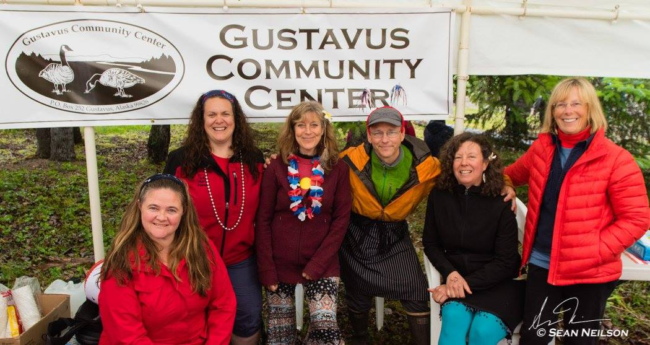
Members of the Gustavus Community Center board members pose at the July 4 “Pie For Breakfast” fundraiser booth in Gustavus. (Photo courtesy of Gustavus Community Center)

Flash forward nearly a decade and ambitions for a $1.4 million, 3,200-square-foot community center that seats 200 – about half of Gustavus’ year-round population – is closer to reality.

Streveler says there’s no public funding. The nonprofit still needs to raise about $300,000 in cash or equivalent in sweat equity by the end of the year for the Rasmuson Foundation to release the $400,000 grant.

“One of the ways we’re looking at closing that funding gap is that all the local contractors and carpenters, of which there are a lot, are willing to help do this project at reduced cost,” she said.

A community fundraiser concert at Sunnyside Market‘s beer garden will be held Tuesday. Juneau’s Annie Bartholomew is opening for Austin blues guitarist Jackie Venson.


Full disclosure: Annie Bartholomew is employed by KTOO.

Newscast – Friday, July 21, 2017

In this newscast:

  • Juneau city engineers: no contaminated soil at burned Twin Lakes Playground site
  • Sitka weighing proposals over community hospital’s future
  • Coast Guard says it spent $311,000 searching for an Alaska man who faked his own disappearance
  • Federal researchers uncover wreck of the doomed F/V Destination that sunk in the Bering Sea with six aboard

Why isn’t Gastineau Channel navigable all the way through?

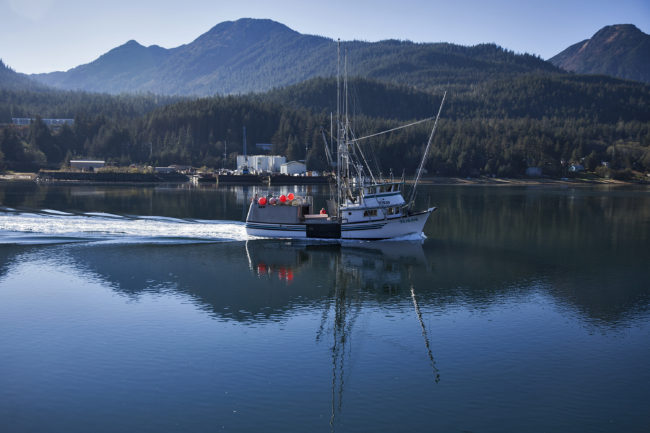
On a clear, sunny day, a boat makes down the Gastineau Channel way on Wednesday, Oct. 12, 2016, in Juneau, Alaska. (Photo by Rashah McChesney/Alaska’s Energy Desk)

For most mariners Gastineau Channel is a cul-de-sac. Vessels coming into Juneau almost always have to exit the way they came in. The Douglas Bridge isn’t the issue – it’s just too shallow for most boats except small craft running at high tide.

A pair of listeners recently wrote to Curious Juneau asking why Gastineau Channel is a dead-end for shipping.

“We’ve got a canal or a channel and it goes up toward other communities but people who use that can’t go through it,” Joann Flora, a resident of the Mendenhall Valley said. “They come into Gastineau Channel and they have to turn around and go back and come around Douglas Island and it just seems to me like a tremendous waste of time and fuel if there was a way to get there – directly.”

Curious Juneau stars you and your questions. Every episode we help you find an answer. Catch up on past episodes, or ask your own question on the Curious Juneau page.

Sharon Van Valin, a resident of Douglas for about three years, also wrote in: “I’m curious about the Gastineau Channel. I know when I first came to Alaska in 1964 it seemed like it was a little bit deeper with more going on.”

It probably was deeper back then since it had been recently dredged.

“It was dredged initially in 1959 and ’60, but by 1962 there was already enough shoaling issued to limit the ability of vessels to use the channel,” explained Julie Anderson, chief of operations for the U.S. Army Corps of Engineers in Alaska.

Shoaling is the natural process of sediment filling in a channel over time.

“The shoaling appears to be coming from the side slopes, they’re very unstable, so the material is slumping in and filling it back in,” Anderson said.

A process called isostatic rebound, caused by the retreating glaciers, is also causing the land to rise.

But Anderson said it’s the instability of the side slopes that’s the issue.

In 1977, engineers proposed constructing a continuous dike to stabilize the channel’s side slopes. But that plan was written off as too costly.

In 2000, the corps looked at it again. Cost estimates ran at about $16 million to build the dike and around $2 million a year for maintenance and dredging.

“It’s not cost-effective. It just, it fills in faster than we can clean it out,” Anderson said.

But dredging Gastineau Channel still had one true believer: Gov. Frank Murkowski. In 2006, he secured several million dollars from the legislature to try and resume dredging.

“There’s an open question on whether it was a serious a proposal or whether Gov. Murkowski had an epiphany that we should open up channels when he was sitting on his boat,” said Juneau attorney Joe Geldhof. He was involved because he’s a past president of a citizens group that advises Fish and Game on the Mendenhall Wetlands State Game Refuge.

Any dredging project would run straight through this protected area.

“The trouble is when you’re the governor, some people pay attention to notions and whims and I think that’s what really happened,” Geldhof said. “Some of the staff in the governor’s office overreacted to what was really a goofball idea.”

Jim Clark was Gov. Murkowski’s chief of staff. He said the governor supported dredging but the large expense and lack of support from the Army Corps of Engineers made attracting federal dollars difficult. So it never went anywhere.

“It cratered,” Geldhof recalled. “Like a lot of peculiar ideas that float around the political sphere, it just died a quiet death.”

These facts in hand, I circle back to our Curious Juneau question askers.

“Well, I’m not surprised,” Flora said. “It makes sense to me but I was just curious if anybody had taken a serious look at it.”

Van Valin was also pleased for the information: “I didn’t have an opinion on whether there should be dredging or not,” she said. “I was just curious and I really appreciate you looking into it and giving all this information about it.”

Here’s an historical footnote: about $3 million of the unspent dredging money secured by Gov. Murkowski was never returned to state coffers.

More than a decade later, the City and Borough of Juneau is using those funds to build a gravel road on the western part of Douglas Island. Work is just now wrapping up this summer.

First challenger emerges in Juneau Assembly race

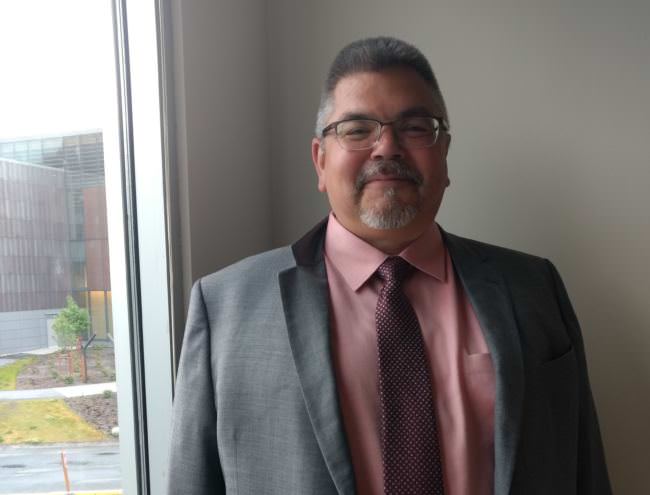
Rob Edwardson announced his candidacy for Juneau Assembly during a visit to KTOO on July 17. (Photo by Jacob Resneck/KTOO)

Three Juneau Assembly members will be up for re-election in October and already the first challenger has filed papers to run. Coast Guard veteran Rob Edwardson is a legislative aide for Juneau Rep. Justin Parish, a Democrat.  A resident of the Mendenhall Valley, he’s eligible to run in District 2 occupied by incumbent Debbie White. He’s a former senior manager who worked for several state agencies including the Department of Natural Resources and Department of Environmental Conservation.

Growing up in Ketchikan, the 52-year-old, his wife and two grown children have lived in Juneau off and on for about 20 years.

What made you decide to run for office?

Well, I’ve been watching the Assembly for the last couple of years through the newspapers, various articles and just this time around I think I have something to offer based on my experience, based on my aptitude and I wanted to offer that up to the voters.

There are a few hot button issues of late. First, where do you stand on the Juneau Access Project or the road?

I’m in favor of a road that leads out of Juneau to another road somewhere. I’m not necessarily in favor of the current plan because that just moves the ferry terminal 40 miles north. And I have some serious concerns about what are walk-on passengers going to do. I think it might actually curtail traveling rather than enhance it.

How about homelessness and specifically the Assembly’s anti-camping ordinance passed this winter?

The anti-camping ordinance I’m still a little bit confused about. I don’t know where the homeless were expected to go. Of course right now they’re across the street on Alaska Mental Health Trust land and that’s up for sale. So I don’t know what they’re going to go after that. I do know that the City and Borough of Juneau has organized a work group, and as far as I know they haven’t come out with a report or any comments on it but I’m still waiting to see.

What about the decision to reopen the city’s mining ordinance – what do you make of that?

I’d like to know what the reason that they’re reopening it. I don’t know that there was a problem that was looming that compelled the Assembly to address the mining ordinance. I do know that the 20 pages that it has now went through a pretty rigorous process and any effort to change it should go through an equally rigorous and public process.

And what do you make of the CBJ’s budget priorities? Anything that you’d like to see done differently?

Well, I think I would have to look at the history of the budget process. And I think a little bit, I’ll have more access to information if I’m elected and at that point I could speak to the budget priorities.

Site notifications
Update notification options
Subscribe to notifications