KHNS - Haines

KHNS is our partner station in Haines. KTOO collaborates with partners across the state to cover important news and to share stories with our audiences.

Year after deadly landslide, Haines plans memorial playground for lost kindergarten teacher

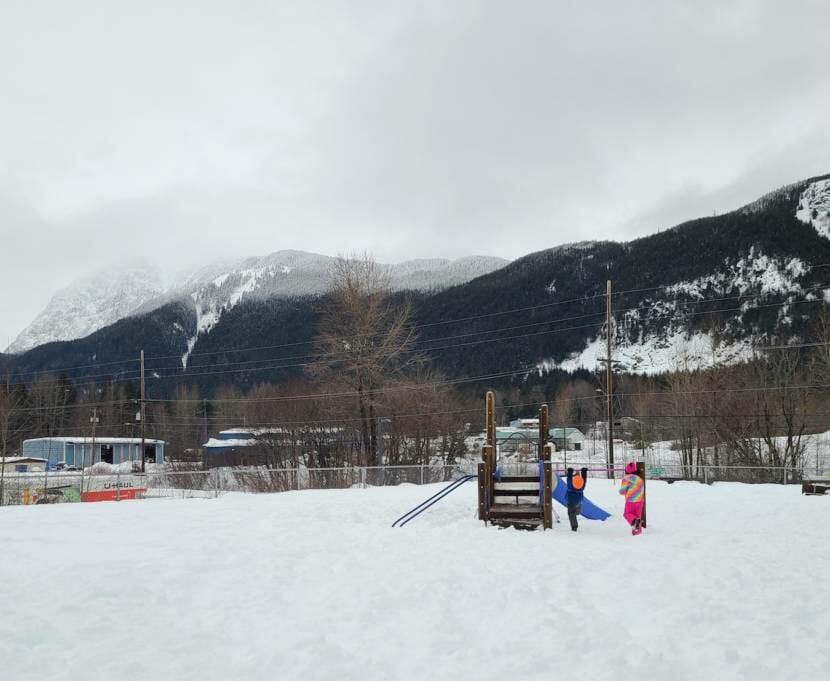
Children playing at a snowy playground with mountains in the background.
The memorial playground will renovate the current kindergarten-through-second-grade playground at the Haines school (Corinne Smith/KHNS)

This week marks the one-year anniversary of the extreme weather event in Haines that led to a deadly landslide and storm damage to dozens of homes and businesses. A playground project at the Haines school is one of several memorial projects planned to commemorate the disaster and honor those affected.

Jenae Larson had dreamed of improving the playground at the Haines School, where she was the kindergarten teacher. Shelly Sloper, a Haines school board member and alum, is part of a community effort to make that happen.

“I’m part of what we call Team Jenae, which is the group of folks that is helping to create this playground in Jenae’s memory,” Sloper said.

One small play structure stands at the current kindergarten-through-second-grade playground. At recess, kids clamber up its ladder and bound around. Beyond is a clear view of Mt. Ripinski’s snow capped peak.

“Play is such an important part of development, too,” Sloper said. “And, you know, Jenae, was just super passionate about teaching and supporting her students, in the classroom, but also out here.”
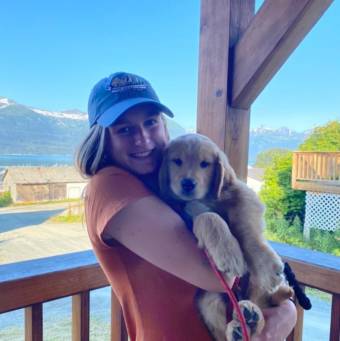
Jenae Larson holds a puppy on on the porch of the Port Chilkoot Distillery in Haines.
Jenae Larson on the porch of the Port Chilkoot Distillery in Haines. (Photo Courtesy of Jenae Larson’s family)

Jenae had grown up in Haines. She graduated in the class of 2016, with a desire to return to Haines and teach. In 2020, she landed her dream job as a kindergarten teacher.

Larson and David Simmons were killed on Dec. 2 in the Beach Road landslide. Her dog Red was also lost.

Sloper says it was Jenae’s mother’s idea to create the memorial playground, and the community quickly rallied to make it happen. They started a GoFundMe page. So far they’ve raised just over $31,000 toward a $110,000 goal.

“As you can tell, there’s just a couple of pieces of equipment,” Sloper said. “And it just needs to be updated. Basically, the idea is that the elements of the playground will represent, or sort of showcase some things we love about Haines, and some things that Jenae loved about Haines, like the ocean and the river and water sports and really just be a place for it will look beautiful, but also be a space for learning and development for the K-2 students.”

A landscape architecture firm in Juneau volunteered to create a design. The initial design features a variety of play and learning spaces, including a boat structure, tricycle trail, and outdoor classroom. It’s posted now on the Jenae Larson group facebook page. 
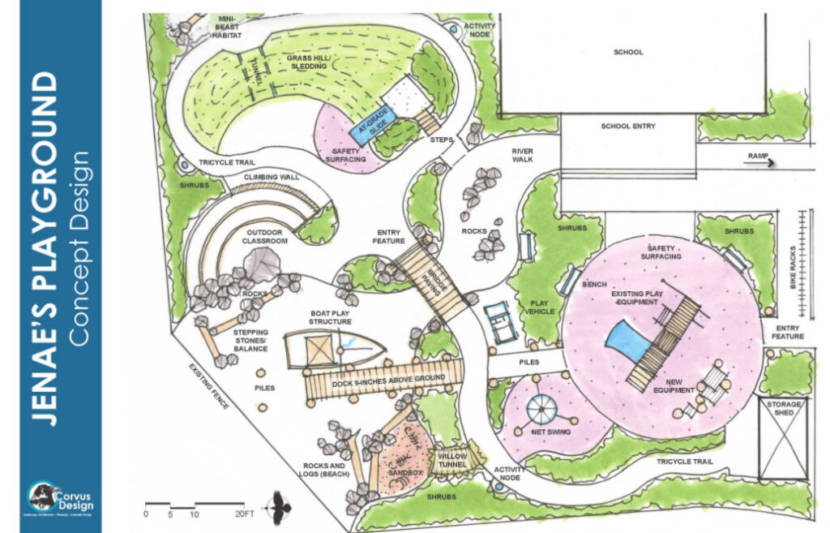
Corvus Design is a landscape architecture firm based in Juneau who volunteered to design the playground project pro bono (Corvus Design via Facebook)

“It’s been so wonderful. It’s so heartening to see the donations that are coming in,” Sloper said. “And folks are just really excited about the project. And we’re seeing that from the school community, from the broader community and from folks around the world who just saw the project and thought it was great or love Jenae, and just really are excited to see this in, you know, being done in her honor.”

Sloper says now they’re still fundraising, and the playground design will be finalized based on the funding.

Besides creating a beautiful and fun new space for students, sloper says working on the project has also been healing for the family, friends, and school community.

“I think it’s been something that we can put our energy towards, in a way that makes us it gives us a purpose, I think, in a lot of ways,” Sloper said, tearing up. “It’s not easy because it reminds us of Jenae all the time, but it’s good in a way for healing to be to have Jenae in our minds, and to think about the things she cares about.”

She says they hope it’ll be a place for play and to remember Jenae, as a space for community healing.
Chatham School District Superintendent Bruce Houck dies at 61

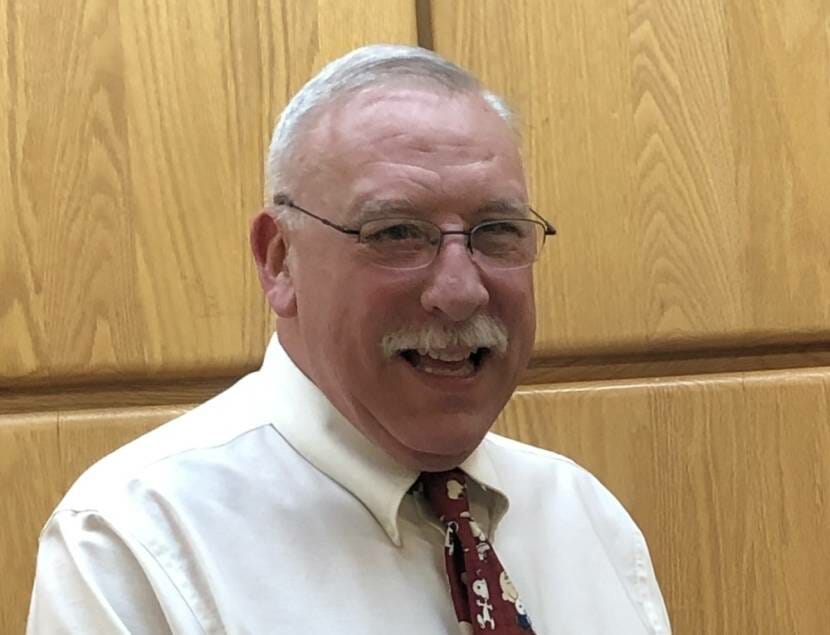
Chatham School District Superintendent Bruce Houck. Houck died Tuesday in Angoon. (Chatham School District photo)

Chatham School District Superintendent Bruce Houck died suddenly on Tuesday. The rural school district covers four village schools in Southeast Alaska.

An Alaska State Trooper traveled to Angoon on Wednesday to investigate the death, according to troopers spokesperson Tim DeSpain. He said the investigation revealed that the 61-year-old died of natural causes alone in his sleep. No foul play is suspected and the State Medical Examiner’s Office released the body to his family.

Houck lived in Angoon and was the head administrator for the district, which includes Angoon, Gustavus, Tenakee Springs and Klukwan.

The Chatham School District’s board of education is holding an emergency meeting at 7 p.m. tonight, Wednesday Dec. 1. Click here for the Zoom link.

The Chatham School District’s board of education has been debating whether to keep Klukwan’s school open despite low enrollment.

Canada relaxes COVID test requirements for residents returning from short trips to the US

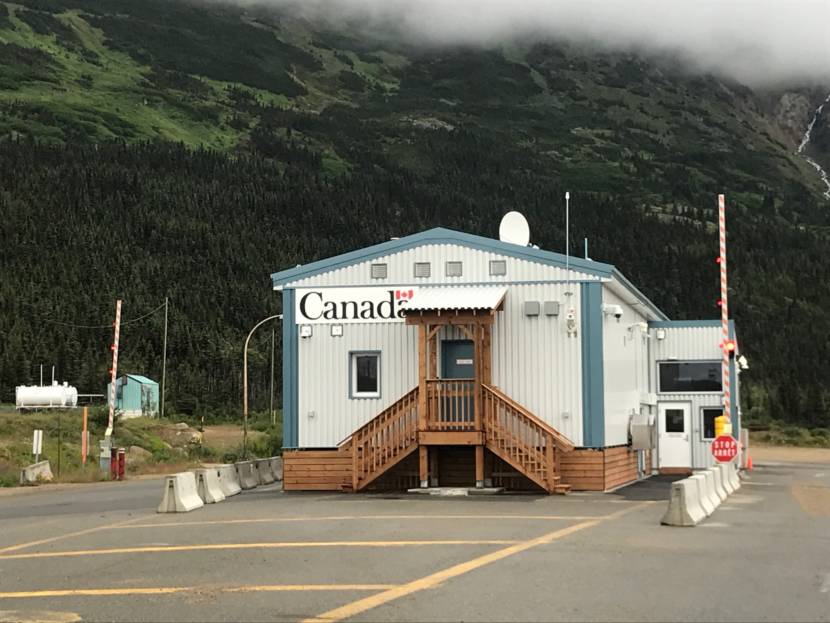
The Fraser Border Crossing in Fraser, B.C. (Mike Swasey/KHNS)

Canadians traveling to the U.S. for trips of three days or less no longer need to show proof of a negative COVID-19 test to cross back into their home country. The relaxed travel rules started Tuesday.

That’s good news for Whitehorse resident Aimee O’Connor, who said she’s long overdue for a visit to the upper Lynn Canal.

“My partner and I are super excited to go to be able to go to either Skagway or Haines, simply to just be by the water and soak up a little bit of ocean time,” O’Connor said.

O’Connor said she was “pretty excited to hit up the brewpub” in Skagway.

The U.S. border was opened to all vaccinated Canadian travelers in early November. But the Canadian government still required a negative test result for land travel between the two countries.

That made the trip costly for Canadian residents. Each test performed for recreational travel purposes in the Yukon Territory’s capital city of Whitehorse costs over $200 Canadian (about $155 U.S. dollars). For families, that can add up quickly.

Now that the Canadian government has eased the testing requirement for Canadian residents, O’Connor said she’ll visit soon if road conditions allow.

“We’ve been waiting, mostly just for the testing requirements to lift for a quick day trip,” she said. “I would justify it if I wanted to, you know, go to Alaska for more than a few days. But if we just want to go for a quick day trip, it just wasn’t really cost-effective. And it’s a couple more hoops to jump through, right?”

The Klondike Highway has seen hazardous driving conditions and road closures from avalanches over the past couple of weeks. The latest avalanche on the British Columbia side of the border was cleared Monday morning. The road from Whitehorse to Haines has also seen several recent travel advisories.

Still, two local lodges reported an uptick of bookings for this coming weekend, including The White House Inn in Skagway. Owner Chelsey Stone said her guests are excited to come to town to check on their boats and visit Skagway’s restaurants.

“In the wintertime, we go down from nine rooms to five rooms,” said Stone. “And four of those five rooms are booked with Canadians for the weekend.”

The relaxed requirements do not apply to U.S. citizens. Any fully vaccinated Alaskans looking to visit Canada will still need to present a negative molecular COVID-19 test and a completed ArriveCan app to cross the border.

Haines to hold remembrance gathering one year after deadly storms

The event is an opportunity to reflect on Haines recovery effort over the last year (Henry Leasia/KHNS)

Next week marks the anniversary of the deadly winter storms in Upper Lynn Canal that killed two people in Haines last year.

There will be a commemoration and dedication gathering on Saturday, Dec. 4 —  a service of memorial for David Simmons and Jenae Larson, who lost their lives in the landslide, and for everyone affected by the disaster.

Mayor Douglas Olerud says the event is spearheaded by the Haines Long Term Recovery Group and a team of dedicated volunteers. The event will start at 1:30 p.m.

“We’re going to meet at the boat harbor parking lot for a short remembrance, vigil,” Olerud said. “Kind of like the candlelight vigil, we thought that’d be a good starting point, because that was our candlelight vigil last December, immediately following the event. And so there’s going to be some short comments there.”

Then there will be a memorial walk to Picture Point, followed by a dedication event. Transportation will be available if needed.

“Then at 2:15 pm there will be a dedication of a couple benches and a table in remembrance of the event at Picture Point,” Olerud said. “There’ll be some light refreshments, provided we’re going to have bonfires there to keep people warm. So it’ll be a chance for people to gather, share their memories, kind of come together as a community.”

Olerud says a community table and the memorial benches for David Simmons and Jenae Larson were designed and created by the Haines High School’s wood shop class.

“Two distinct looking benches, one in remembrance of David one and members of Janae. And then as we continued the conversation, Ann Myron brought up, why don’t we have a third bench for the community. And I believe it was Sylvia Heinz that came up with the idea of doing a table instead. And having that as a feeling, you know, the community all coming around sitting down at the table working together, moving forward,” Olerud said.

Olerud says the event is an opportunity to commemorate the disaster, reflect on the recovery effort over the last year, and celebrate Haines resilience.

“I hope everybody has a good Thanksgiving this week. And throughout this next week that we all take a moment to kind of pause, remember what we went through last year,” Olerud said. “But it’s not our struggles that define us. It’s how we respond to them. And I think the response of Haines has been one of strength and resiliency and compassion for each other. I think as long as we keep going down that road, we’re going to be coming out of this just fine.”

Infrared photography reveals centuries-old formline paintings on Lingít bentwood boxes

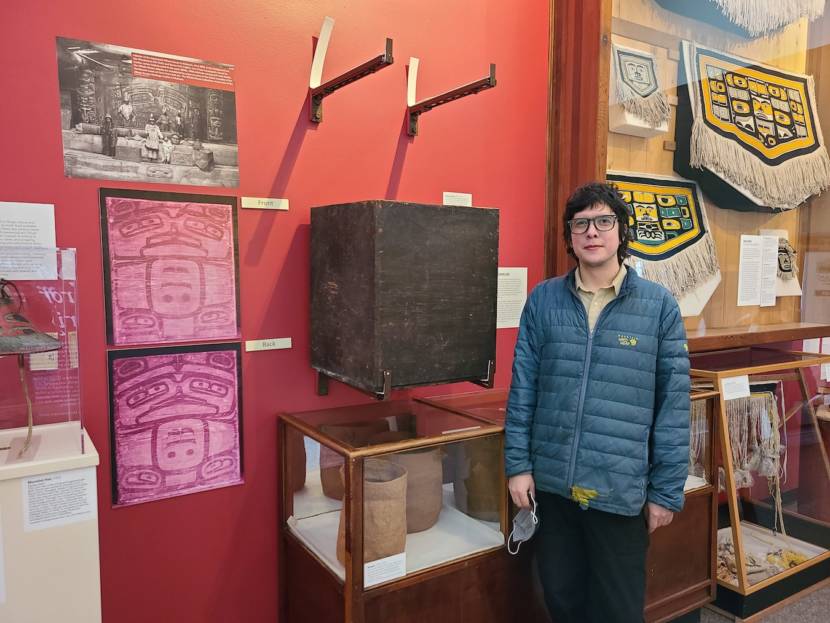
Zachary James standing by one of his museum displays of infrared images of formline paintings
Zachary James is the collections coordinator at the Haines Sheldon Museum (Corinne Smith/KHNS)

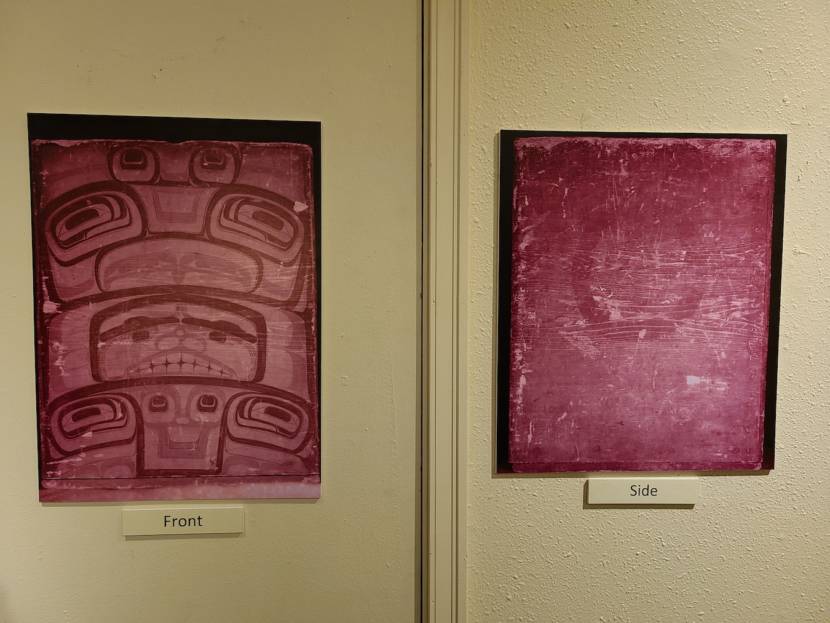
The Haines Sheldon Museum is showcasing a display of newly revealed Lingít formline images. The museum staff used an infrared camera to photograph traditional bentwood boxes to reveal paintings that have not been seen in perhaps 200 years.

Several traditional Lingít bentwood boxes make up part of the Haines Sheldon Museum’s 23,000 item collection. Handmade out of cedar wood and painted, the boxes were used for storage or traded goods, according to museum collections coordinator Zachary James.

“These ones I think were probably used for regalia, because they have really nice paintings on them,” James said. “But they were general purpose storage boxes, too.”

James is Lingít, with ancestry in Wrangell and the Stikine Basin as well as the Chilkat Valley. And he has an active interest in Lingít art and heritage, especially new ways of looking at pieces from the museum’s collection.

“It just basically looks like a black surface on wood, and then these amazing images are able to be pulled out of it.”

Traditional bentwood boxes come in various sizes. Large boxes stored blankets, clothing and ceremonial items like regalia. Medium-sized boxes stored food, and small boxes held berries, toys, sewing materials and special treasures, according to the museum exhibit.

Over time the outside varnish darkened, probably from soot or grime and storage conditions obscuring the original paintings. Some of the paintings were completely hidden. On others, you can see a faint outline.

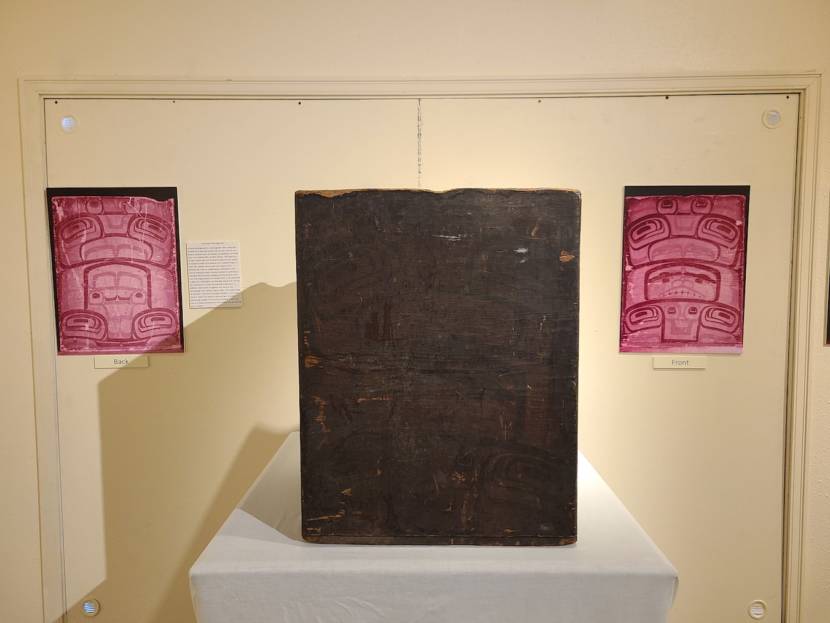
A museum display with an old, brown wooden box flanked by printed infrared images of formline paintings
James hopes the bentwood boxes’ designs can inspire present-day artists (Corinne Smith/KHNS)

“And if you look at it from the side, you can kind of see, or under certain light conditions, you can kind of see the design, but you can’t really make it out very clearly,” James said.

Using an infrared lens on a digital camera, James photographed the bentwood boxes, which date back to the 1800s, capturing the striking formline images underneath.

“Normal light reflects off of the very outside,” James said. “The infrared light penetrates through the varnish and then bounces off the pigment or off of the wood and then reflects back,” James said. “And so it has the ability to see through that kind of grime on the outside.”

Newly revealed formline paintings now on display in the Hakkinen gallery of the Haines Sheldon Museum (Corinne Smith/KHNS)

James says he got the idea from the book The Transforming Image: Painted Arts of Northwest Coast First Nations, a project of the University of British Columbia museum. The book features infrared photographs of many different Northwest Coast boxes and formline paintings.

“Things like killer whales, eagles and ravens and frogs and things like that are usually owned by a specific house or clan, so things with those kinds of designs weren’t generally traded amongst other people,” James said. “So they would make these abstract designs, and that way it was OK to trade amongst different people or use it for basically resale. This was before the adoption of currency or basically colonial culture or anything like that Western culture with money.”

For James, it was an exciting reveal.

“It’s probably the first time in a couple of hundred years that these designs and these pieces of art have even been able to be appreciated or looked at. So I felt like it was good to see it again.”

Haines Sheldon Museum board president Kelleen Adams says James’ initiative, and the project, is valuable for the Haines community.

“It’s such a treasure to have these in Haines,” Adams said. “And for Zach to come up with this idea, to bring this artwork to life, to show people what has been beneath that for hundreds of years, it’s amazing. So we are very fortunate to be able to witness this.”

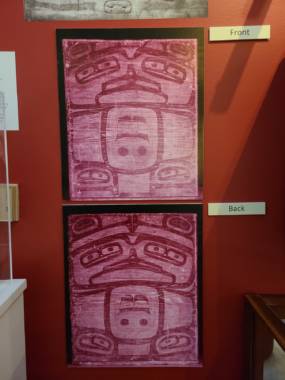
Side-by-side infrared images showing two formline paintings from one box
One side of this box was painted with a circle (Corinne Smith/KHNS)

James says the newly revealed designs are significant to the larger project of recovering and protecting the Lingít heritage of the Chilkat Valley, and Southeast Alaska.

“Constantly, Native art has been taken out of Native hands and put in European or American institutions. I mean, there’s Lingít art from this valley in Russia and Germany and all over, also University of Pennsylvania,” James said.

“We have no idea what’s in private hands, what was lost over the years,” James said “So every scrap of information about the Lingít art forms that we can draw from is important.”

Formline involves a complex and often subtle language of rules and motifs, so James says the recovered images are important for local Lingít artists to study the artform.

The exhibit is part of the museum’s “Six Week Spotlight” and will be on display through mid-December. Admission is free for Haines residents. Otherwise it’s $10, and the museum is open Wednesday through Saturday 10 a.m. to 4 p.m.

Haines lands $20M federal grant to replace its freight and fuel dock

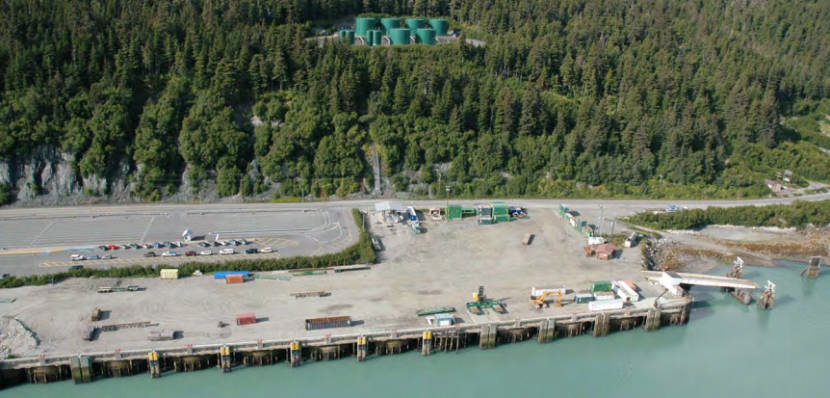
Lutak Dock. (Courtesy R&M Consultants)

The Biden administration has announced a $20 million federal infrastructure grant to replace Haines’ freight and fuel dock. It was one of only three projects in Alaska announced by U.S. Transportation Secretary Pete Buttigieg on Friday.

This year the Department of Transportation’s Rebuilding American Infrastructure with Sustainability and Equity grant program awarded nearly $1 billion to 90 infrastructure projects nationwide, including Haines Lutak Dock replacement project.

Haines Mayor Douglas Olerud says it’s an exciting development, and many years in the works.

“We always felt it was a long shot. But with the RAISE program, one of the things they’ve told us is that the more times you put in, the better chance you have of getting it,” Olerud said. “I think this is the fifth or six year that the borough has submitted an application.”

Lutak Dock is Haines’ only freight and fuel dock. It’s an essential transit point for supplies from Southeast Alaska and Seattle-area ports. The $20 million project would pay for demolition of a dock that’s outlived its 60-year life span.

In its place would be a modern bulkhead with fenders and mooring dolphins capable of 350-foot vessels.

“The reason we’ve been pushing this is the face of the dock, we’ve been told, is at the point of failure,” Olerud said. “And so if that was to fail, and impede barges docking, we wouldn’t be able to get our groceries and other goods that come in on the barge.”

The project would also relocate the boat launch ramp and create a new uplands area, Olerud says.

Fuel and freight delivery will not be interrupted while the new dock is under construction, as Alaska Marine Lines will continue to deliver via the roll-on-roll-off ramp.

Olerud says there’s no projected timeline yet, but he estimates the project could take up to five years.

“With engineering permitting, we’re probably two years out from being able to start digging in the ground. And so that’s my cautiously optimistic timeline,” he said.

The Lutak Dock redevelopment project has been the topic of controversy and years of public debate focused on whether it would include construction of an ore terminal.

Mayor Olerud says it doesn’t, as there is no supply from mines in Canada’s Yukon Territory.

“You need ore to have an ore terminal. Right now, in the Yukon, there is not enough ore that somebody’s willing to sign a contract to ship through Haines to make the investment in building an ore terminal a viable concern,” he said. “It would be irresponsible for the borough to build something just hoping somebody is going to use it at some point in time.”

Olerud says the Palmer Project, spearheaded by Vancouver-based Constantine Metal Resources and located in the upper Chilkat Valley, is still in the exploratory stages. And so not included in the current plans for the dock’s redevelopment.

“So until the Palmer Project by Constantine gets further along, and it looks like they would be willing to sign an agreement to export X number of tonnes of ore per year off of a facility. Or that there’s more mines in the Yukon that want to export any kind of material off of that. The ore terminal is waiting on all of those before anything would happen with that,” Olerud said. “But I don’t see that happening in the near future.”

The project is estimated to cost over $25 million. So the community will still need to borrow the $5 million difference or find some other way to pay for it.

Site notifications
Update notification options
Subscribe to notifications