KHNS - Haines

KHNS is our partner station in Haines. KTOO collaborates with partners across the state to cover important news and to share stories with our audiences.

With fewer students enrolled, Klukwan school faces possible closure

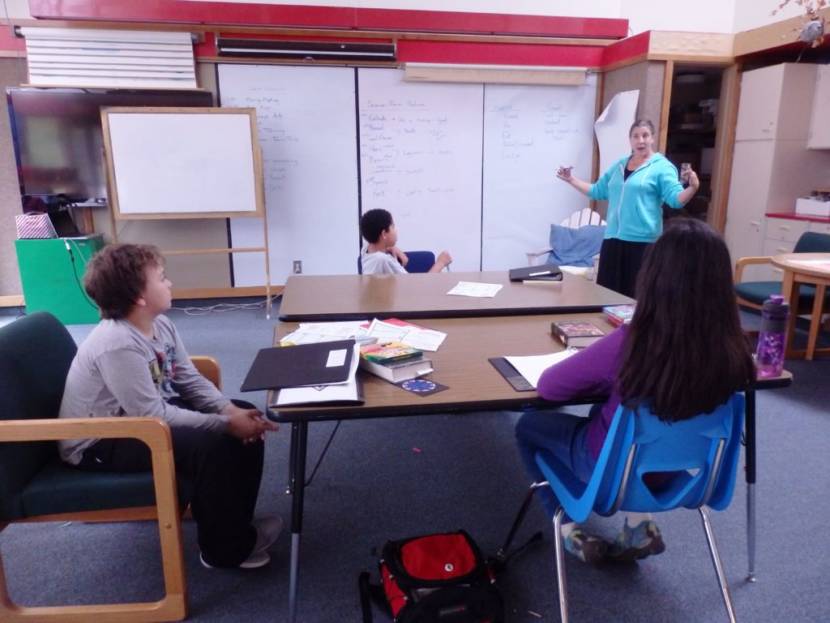
Klukwan school teacher Jessica Tipkemper with students at the start of the 2016-17 school year. (Emily Files/KHNS)

With declining enrollment, Klukwan’s public school is facing an uncertain future. The state only provides assistance to schools with 10 or more kids and this year there are eight at the elementary school 21 miles north of Haines.

Now, the Chatham School District’s board of education has called a public meeting for Thursday for administrators, faculty and families ahead of a decision on whether to shutter the school or keep it open.

Klukwan is connected by road to Haines but governed by the sprawling Chatham School District, which includes the communities of Angoon, Gustavus, and Tenakee Springs. That means most administrators live elsewhere and so do the elected school board members charged with overseeing the small campus.

On site, there is one full-time classroom teacher, three part-time teachers, and five part-time staff. Klukwan educator and grants coordinator for the STEPS program for Klukwan, Justina Hotch briefed the board at their Oct. 14 meeting via remote teleconference.

“It is clear that we will not have 10 students for the October count,” Hotch said. “In fact, we’ve had more students leave due to the circumstances at the school. And we feel that without having a representative on the board, without having an administrator on site nor having a head teacher, there’s an extra layer of responsibility for the school board and for the administration to have clear and honest conversation with the families and community of Klukwan and the staff. So they know what or can make some decisions based on what the future holds with the district and the school.”

The Klukwan community’s frustration with a school district that’s mostly based in other towns has been well documented. Teachers often leave their contracts early; the school lost its second teacher in 2019. And this year, the school district has been unable to hire a head teacher, and so Klukwan’s students are being taught by substitutes.

The Chatham School Board has called a special working session on Oct. 26 to discuss the school’s future. Board vice president Francis Viel argued for Klukwan school district employees and families to be a part of those discussions.

“I feel that how can we make a plan if we don’t hear from them?” Viel said.

The Chatham School Board mostly governs the small school from afar. Before the pandemic, it would rotate its meetings and board members or administrators would visit Klukwan at least once a year.

Angoon-based board member Albert Kookesh III says that was a useful exercise.

“It’s just tough not having site — site meetings anymore,” Kookesh said. “As I did in the past, when I was on the board before, I would look forward to that opportunity to be in the school, to be in the community, to meet with people.”

Kookesh agreed to set up a Zoom meeting with Klukwan school officials, to discuss options for students and families in the Chilkat Valley.

“I’m pretty sure the waters are pretty hot there. So I don’t need to gauge the waters,” he said. “So it’d be nice to try to talk to some folks and try to find a solution but definitely not for this year, hopefully for the future. It’s a big decision.”

That decision isn’t far off. The Chatham School Board is clearing the afternoon next Tuesday to discuss the fate of Klukwan’s school. A formal vote could follow at its Nov. 9 meeting.

In advance of the Chatham School District’s work session, the school district will host a meeting for the Klukwan community over the future of the school. It’ll be in-person and via Zoom at 5 p.m. Thursday.
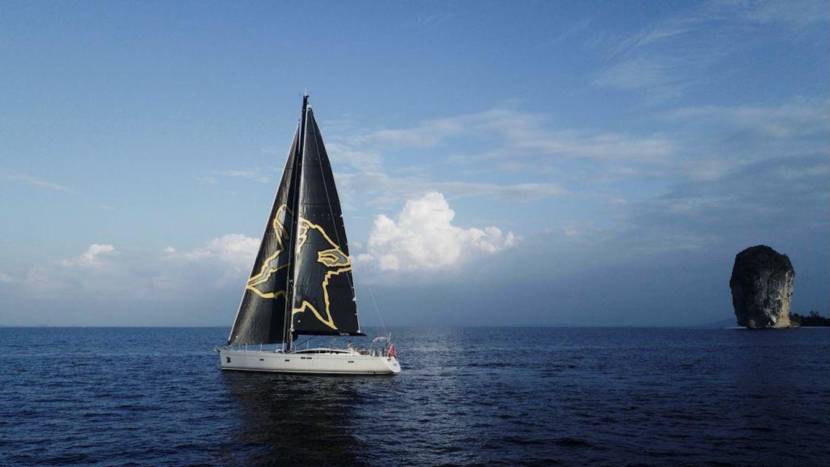
She-Ra is a sailboat and a malamute. They stopped in Haines on their way around the world

A sailboat with a dog's head on its sail, sailing in open water with a rock pillar in the background
Photo courtesy of Lars Zika

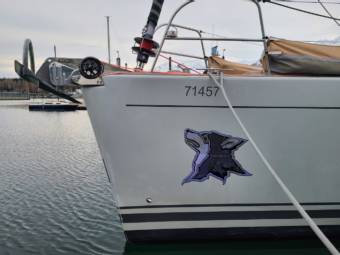
The 62-foot sailboat She-Ra visited Haines harbor over the weekend. It was the boat with an Alaskan malamute face printed on the bow. Captain Lars Zika is sailing around the world with his dog, and meeting friends along the way.

Zika says there wasn’t really a plan when he set sail in Bangkok, Thailand in June. He was solo, on the water, heading east.

“The best time to cross from Japan — cross the North Pacific or Bering Sea or whatever towards the Vancouver and Alaska area — would be July, August,” he said. “But coming up to Japan is the cyclone season there, so you’ve got to go through some s— to have a good blow across the north.”

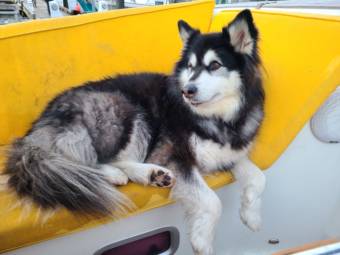
Zika’s not entirely alone. He’s accompanied by his seven year old Alaskan malamute, She-Ra. Yes, the boat is named after the dog.

With distinct black and white markings, She-Ra is from a line of malamute sled dogs in Juneau.

A malamute on a yellow bench on a sailboat
She-Ra is named after the 1980s animated superhero series “She-Ra: Princess of Power,” a childhood favorite for Zika. She’s from a line of Malamute sled dogs in Juneau. (Corinne Smith/KHNS)

“Seven generations ago, she was my lead dog on the sled in Juneau, when I lived on a farm for a bit there,” Zika said.

Zika is originally from Switzerland. He worked as a chef and owned several restaurants throughout Southeast Asia. He took up sailing two years ago while living in Bangkok.

“I don’t like people, so I went sailing,” he said.

Zika bought his 62-foot sailing yacht in 2018 and started racing.

“Did a lot of races with it, and we always did really, really good,” he said. “And she (the boat) is a beast.”

The dog She-Ra’s image is emblazoned across the yacht’s sail and bow.

“All the time, wherever I go, she’s always with me,” Zika said. “It’s fun. The boat gets known, and then wherever you arrive, somebody knows it.”

This summer, alone with his dog in the South China Sea, his auto-pilot system broke and he crossed 3500 nautical miles of storms, at one point staying up for 72 hours straight.

“I got into really, really bad weather for a very long time,” Zika said. “And naturally, because you can’t do multiple things at once when you’re alone, you can’t let go of the wheel for five seconds if the waves are big.”

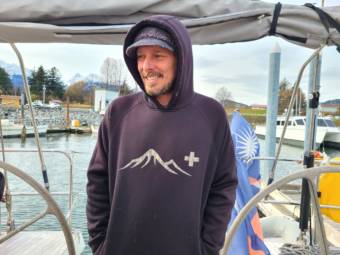
Lars Zika in Haines (Corinne Smith/KHNS)

In South Korea, he towed a broken-down Russian vessel and was welcomed to the port of Vladivostok, Russia, where he fixed up his boat and even competed in a three-day regatta.

“​​They were super nice,” Zika said. “They fixed the boat, everything, they were they were just amazing. I mean it was king crab and caviar every day.”

He crossed the Bering Sea alone, and a friend joined him in Kodiak. Then they visited Seldovia, Homer and Seward. They sailed the Gulf of Alaska together in six days.

But the real challenge was crossing through the Dixon Entrance into the Inside Passage.

“Then we had, really, Alaska’s angry,” he said. “And it started gusting fifties at us from the north, massive seas, so we spent 24 hours doing a f—— circle.”

Zika and friends are now sailing the Inside Passage.

“I mean, having orcas 360 degrees around the bow just joining you on your little journey for a few hours. That’s pretty ridiculous,” he said smiling. “And drinking champagne in front of a glacier by cracking through surface ice is also quite nice.”

They sailed up the Lynn Canal, making stops in Skagway and Haines.

“Even coming up here we just had some orcas pop out and play and leap, just from Skagway to here,” he said. “We had three up here and She-Ra gets all excited. She thinks he’s one of them because they share the same skin color.”

The bow of a white sailboat with a malamute's head painted on it
The bow of the She-Ra. (Corinne Smith/KHNS)

They spent the weekend in Haines, hiking Mt. Riley, visiting the Port Chilkoot Distillery and took a group of new friends sailing on Sunday. Though winds were light it was a rare blue sky sunny day.

“It’s hard not to extend everything here, it’s hard not to stay a bit longer.”

On Monday, he set sail down the Inside Passage, headed for Vancouver. But from there, it’s open.

“A few weeks ago I figured out it’d be a great idea to do the North America circumnavigation, like the continent itself,” he said.

So if you see the She-Ra — its the one with a Malamute face across the sail — say hello. You can also follow their journey online here.

Haines high school art students debut skate park mural project

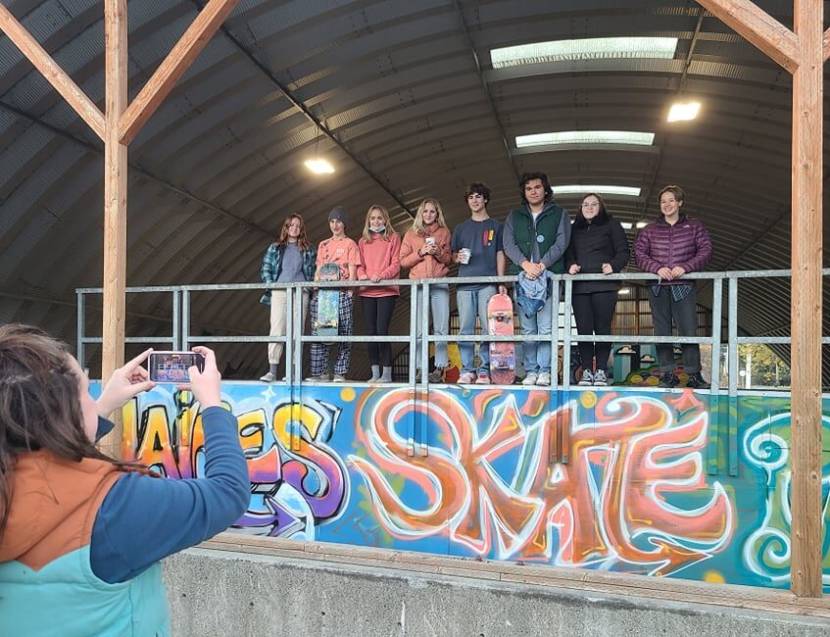
Haines art teacher Giselle Miller snap a photo of art students (Photo by Corinne Smith/KHNS)

There was a palpable excitement in the air, as students, families, teachers and friends gathered on a cool fall evening to view Haines’ art students’ skate park mural project. There was food, music and catching up, as it was also one of the first community events since a recent COVID surge last month.

“It’s so nice. I’m so happy people are coming out here to come look at our pieces,” said senior Trygve Bakky,  looking out over the large covered skate park, as skaters sail by and younger kids play on the ramps.

“We’ve been working on it since late August, early September. It was a whole class we all took, kind of describing the process of how do you spread artwork via graffiti, and how we do that legally? You know, write a proposal to the borough, kind of explain what we were doing,” Bakky said.

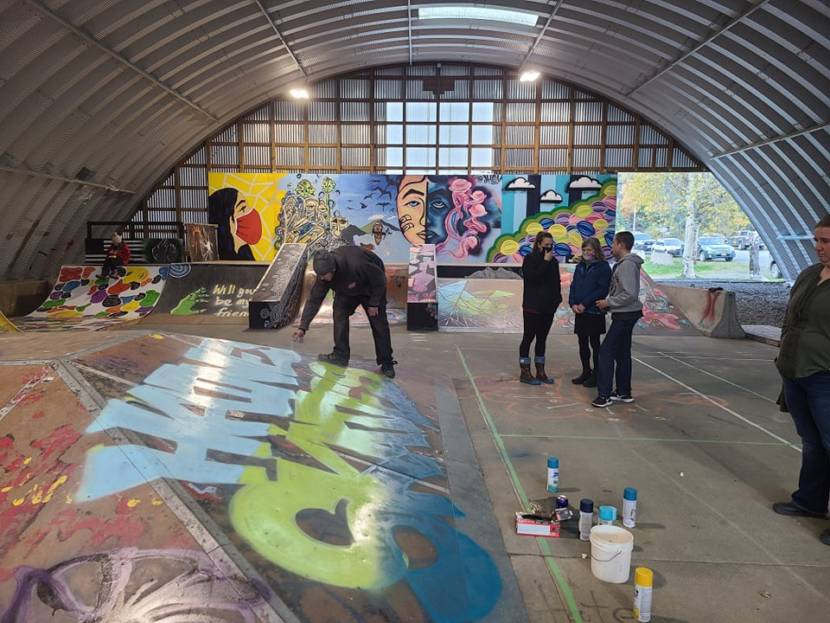
Artist Jeremy Settem paints during the community showcase event. (Photo by Corinne Smith/KHNS)

The class, led by art teacher Giselle Miller, and assisted by local artist Jeremy Setem, involved developing proposals with designs and budgets submitted to the borough. They studied the history of graffiti and street art, painting and spray-painting techniques, and executing their ideas.

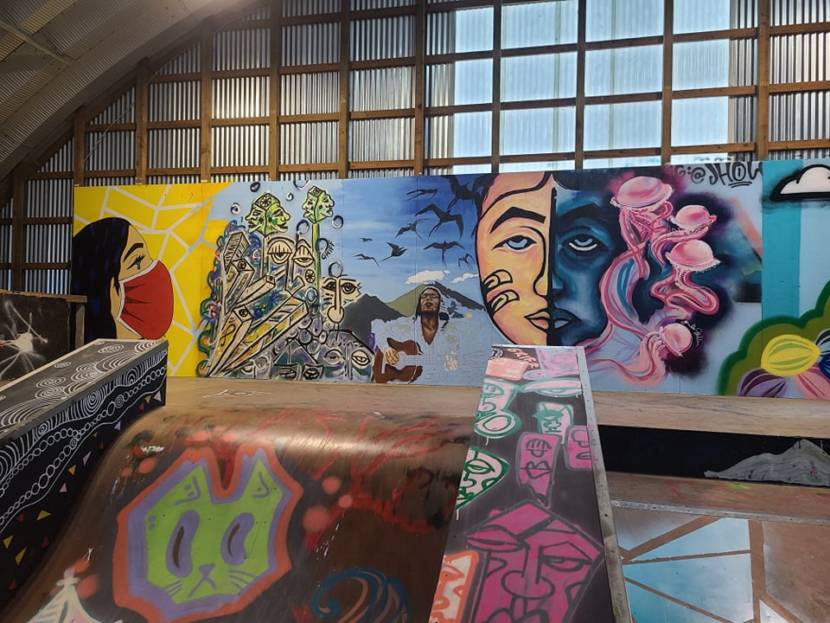
Now, the walls and ramps are graced with distinct colorful paintings in different styles and sections.

“I worked on the universe painting over there, that was a lot of fun,” Bakky said, pointing across to a large ramp.

Beside the planets in orbit, there’s a large formline killer whale. It’s one of several artworks that were there previously and have been incorporated, like a multi-colored face painted by a Haines youth, Mario Benassi Jr., who died tragically in a river accident in California several years ago. There’s a new mural of Benassi beside it now, singing and playing guitar.

Artwork at the skate park (Photo by Corinne Smith/KHNS)

Freshman Hayden Jimenez said before, the skate park was kind of forgotten. There was trash and a lot of penis drawings. It was maybe even intimidating to some. Now, he said, it’s a lot more fun.

“Better energy in general of the skatepark,” Jimenez said. “Yeah, there’s some pretty cool and talented artists and art pieces.”

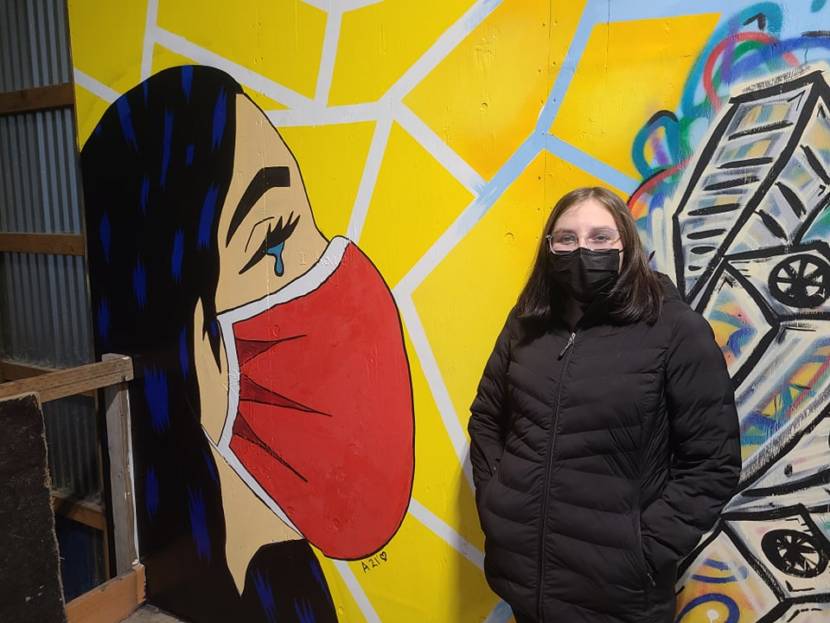
On one wall is a striking woman in profile, wearing a mask, shedding one dark blue tear.

“I really like pop art, so that was the inspiration for that,” said senior Aubrey Cook, the artist. She reflected on what it was like to display her work in a public space.

“I think it was so cool, I’ve never done any type of piece like this. Especially this big, I’ve never done a piece this big,” Cook said. “If you had come in here before, it was just a bunch of graffiti everywhere, with like inappropriate things, but now it’s like a really beautiful space. And we all learned that it’s a living, breathing space, which means eventually it’s going to get covered up by other peoples’ artwork, but we’re really thankful that we had this opportunity to paint.”

Aubrey Cook with her art piece. (Photo by Corinne Smith/KHNS)

And it was a tough lesson. During the course project, some pieces were partially vandalized and had to be repainted. Art teacher Giselle Miller said there were apologies and the class addressed the situation together.

“That’s part of street art. That’s part of graffiti, is that it changes and evolves,” Miller said. “I think that teaching students that impermanence is also really important. I’ve done a couple big pieces and they’re not around anymore, so documenting is also really important and part of the process.”

Miller said she’s incredibly proud of their personal and artistic growth.

The community can view the students’ artwork now at the Haines skate park.

Haines gillnetting season bounces back with late surge of sockeye

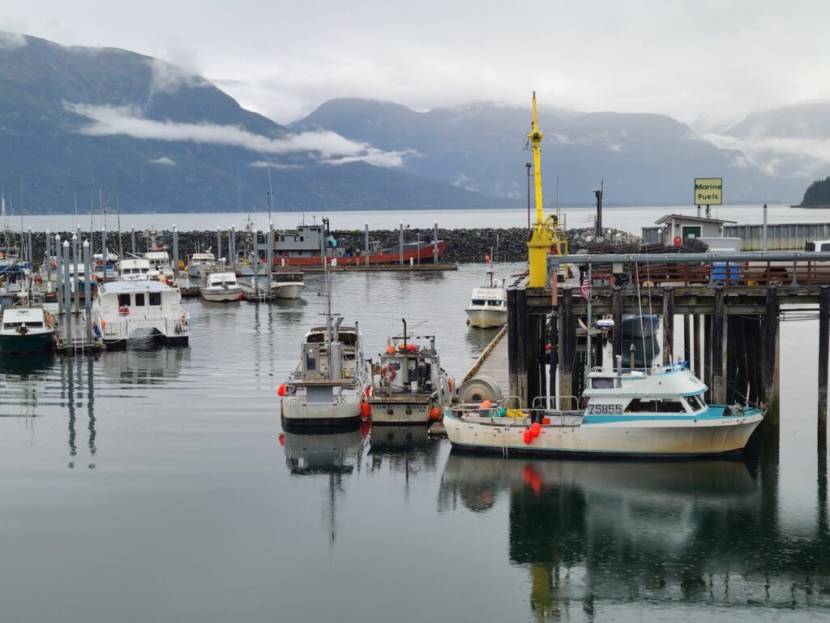
Fishing vessels fuel up for the crab and shrimp openers at the Haines harbor (Corinne Smith/KHNS)

Haines commercial fishermen saw a much better salmon season this year than last, with a surprise late summer surge of sockeye up the Chilkat Inlet.

Marty Smith mans the harbor crane, maneuvering gear onto the back of his pickup as he wraps up a summer season of gillnet salmon fishing.

“It was a little better than last year,” Smith said. “But the bar was so low last year that I hope we never see that again. Thankfully, we had some decent prices, so a guy could make a living.”

Last year, Haines gillnetters struggled with weak returns and low prices along with pandemic-related supply chain issues.

Smith says the restrictions are difficult, but the prices and harvest have bounced back.

“Mostly I was fishing dogs and chum and then sockeye. I didn’t get into the fall fisheries too much. And the late shot of sockeye really helped,” Smith said.

Alaska Department of Fish and Game area management biologist Nicole Zeiser manages the region’s commercial gillnet and shrimp fisheries. She says improvements were seen over last year, especially a late summer run of Chilkoot River sockeye salmon.

“The return was well above average this year,” Zeiser said. “Out of the blue, it was almost like a second run showed up. But you know, we can’t really verify that. It’s basically just a whole new surge of fish came through the Chilkoot River weir.”

She says sockeye escapement estimates exceeded sustainable escapement goals at 98,672, but she said that shouldn’t have any detrimental impacts to long term salmon returns.

Zeiser also noted that for the second year, Chilkat River sockeye returns were below escapement goals.

“There really wasn’t a reason to believe that, you know, it would have been a really well below average return. So that’s kind of an unknown thing. We just we don’t really know what what’s happening to Chilkat sockeye salmon stocks,” she said.

The District 15 gillnet fishery is open for one more week, until Oct. 6. And Zeiser says that because the commercial fishery is open, the subsistence fisheries at the Chilkat River and Chilkat Inlet have also been extended through that same period.

Haines chef shares mushroom harvesting tips

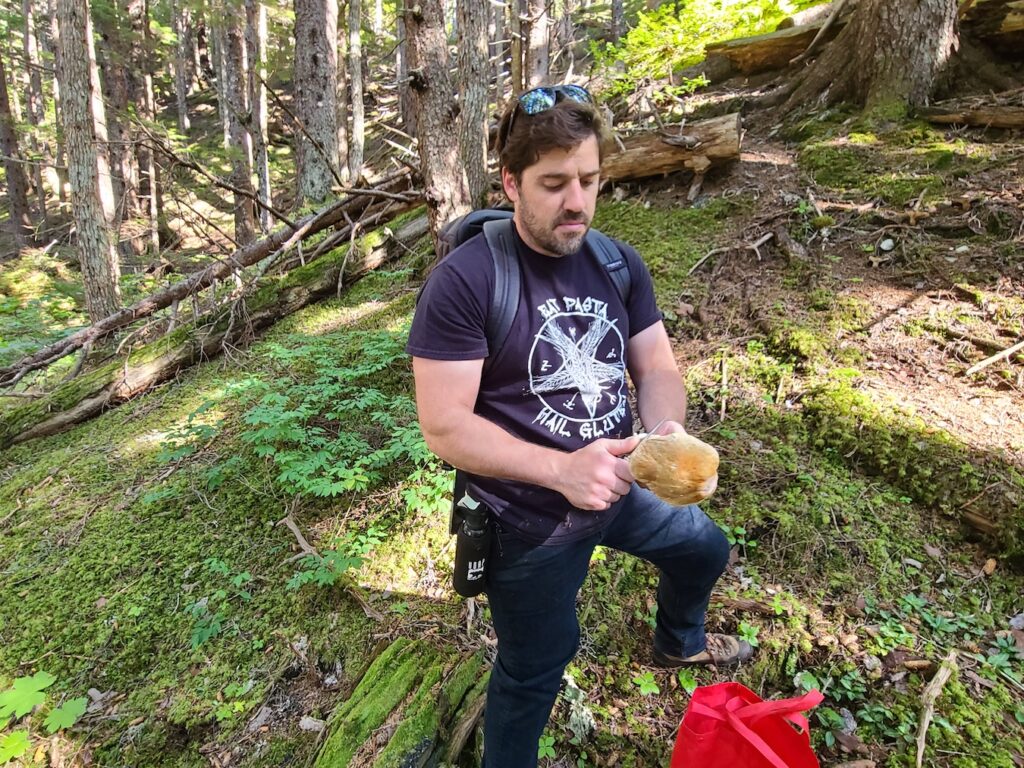
Haines chef Travis Kukull harvesting mushrooms. (Corinne Smith/KHNS)

Mushroom season is in full swing in the Chilkat Valley — or rather, full bloom. Despite a warmer summer, a mix of sunshine and rain has yielded a wide variety of edible mushrooms, if you know what to look for and what’s delicious.

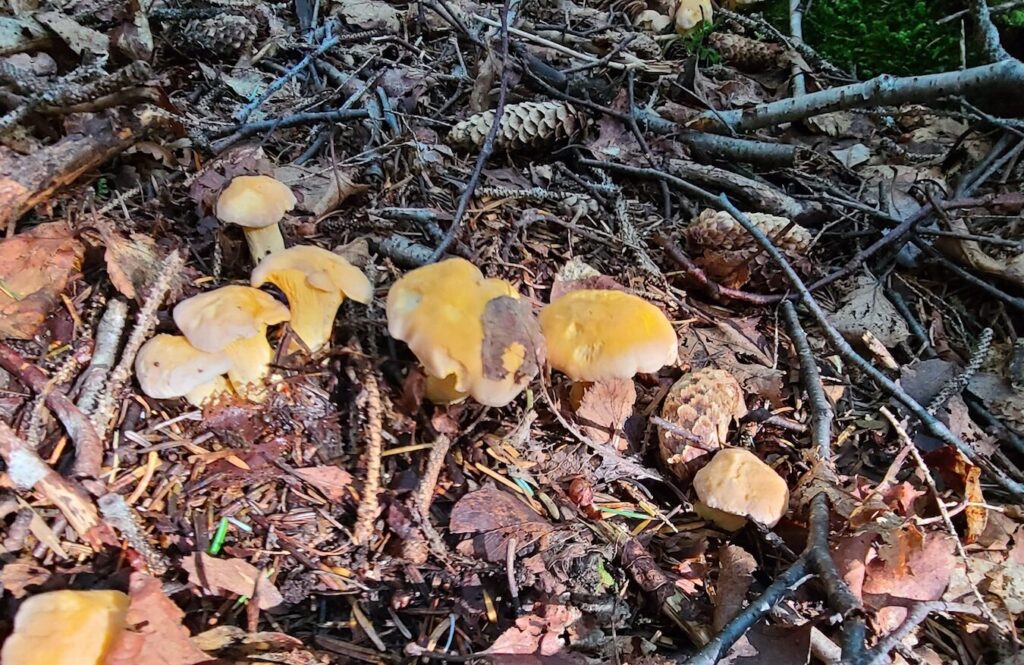
A few steps off the popular Mt. Riley Trail near Haines, Travis Kukull spots clusters of golden chanterelle buttons poking out of the understory. He takes out a knife and cuts the stem at the ground, then brushes soil and leaves carefully back over the hole.

Golden chanterelle mushrooms are delicious at this size, and can grow much larger later in the season (Corinne Smith/KHNS)

“These are beautiful too,” he said. “You can feel they’re slightly moist, but really solid.”

Kukull is Haines’ resident mushroom expert, both in exploring and harvesting varietals throughout the area and in delicious ideas. He’s a chef and runs a local catering company, Malo Nista, where he incorporates local foraged mushrooms throughout the menu.

“You gotta cook them so the water dissipates and it caramelizes, and you get this chanterelle water caramelized around the outside of the mushrooms,” he said. “Then you add a little bit of butter and a little bit of garlic and some salt.”

He goes out most mornings in mushroom season, August through mid-October. He’ll take just a few for breakfast — like a chanterelle omelette — or to sauté and stock his freezer for recipes year-round.

A hike on the Mt. Riley Trail could yield a mix of golden chanterelles, neon-orange chicken of the woods, or big, meaty king boletes, also known as porcinis.

Chantarelle duck egg scramble with roasted carrots, and fava bean pesto, all made with ingredients from Haines (Photo courtesy of Travis Kukull)

“Another one I see growing here is a blue night polypor, and they’re all white like this underneath and blue on top,” Kukull said. “And they’re really good too. Right here on the trail.”

Kukull says friends will be out hiking and send him questions and pictures of mushrooms. But even after 16 years in Haines, he’s still surprised by new finds.

“My friend Leah made me a soup the other day that was filled with yellow foots (chanterelles) and I was like, where are you finding these right now? And she’s like, none of your business,” he said.

Just like fishing, people keep their favorite mushroom spots under wraps.

But mushroom hunting is about knowing what to look for — and knowing the risks. Further up the trail, we stop and take a look at another white, button-like mushroom.

“This could be a destroying angel, which is deadly poisonous,” he said. “So best to just lay off.”

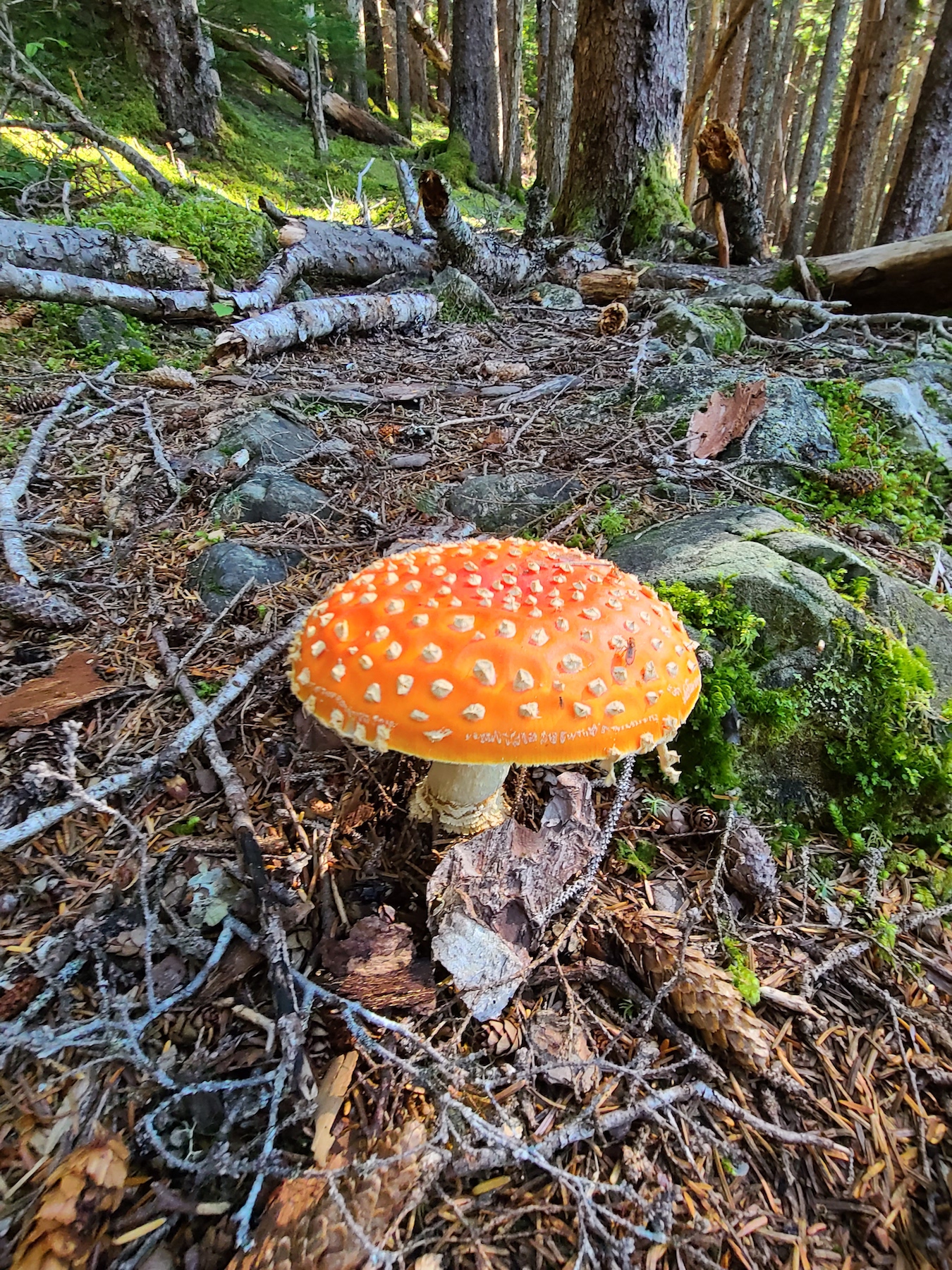
Fly amanitas are poisonous, unless prepared properly (Corinne Smith/KHNS)

Kukull says whenever in doubt, leave it alone. But of course, people have found creative workarounds too. Like for the fly amanita, which has an easily recognizable, fairy-tale-like red and white-spotted cap.

“Well they’re a trippy mushroom,” he laughs. “And can also be deadly poisonous, and completely shut down your nervous system, so why would you want to risk that? But the way most people have eaten them in the past is that they’ve already been processed through reindeer. And they pick them out of the reindeer stool, and then eat them. Or make tea out of them, so it’s like cooked.”

Some say that’s where the story of Santa Claus and his flying reindeer comes from, originating in the shamanic cultures of the Siberian and Arctic regions.

Kukull likes to stick to the known, delicious varieties. Besides, when foraging around Haines, there’s more to consider. As he cuts the soil from a king bolete stem, he looks up suddenly and scans the forest

“Another thing I like about mushroom foraging in Alaska too is there’s bears everywhere,” he said. “It adds to the excitement.”

Bears, like people, are also foraging this time of year. So if you do go out, be aware. Mushrooms will be blooming until the first frost.

Skagway will use most of its $2M Norwegian Cruise Line donation for small business relief

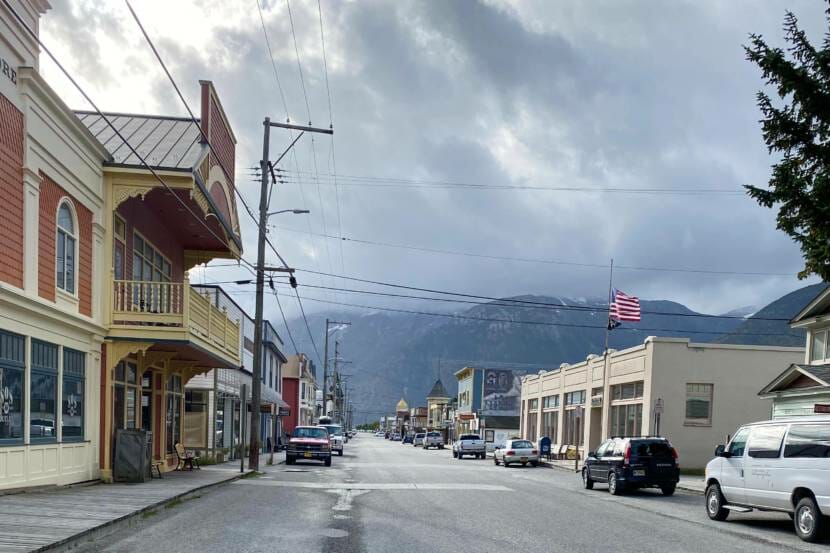
Quiet streets in Skagway. September 2020 (Claire Stremple/KHNS)

Earlier this year, Norwegian Cruise Line Holdings gave $2 million to the municipality of Skagway, calling it a goodwill gesture to help the community weather the pandemic. Now the Skagway Assembly has set aside $1.2 million of those funds for small businesses.

Norwegian Cruise Line executive Steve Moeller told KHNS back in May that the $2 million dollar gift had no strings attached.

“We want to make sure that Skagway is still there when we come back,” Moeller said. “Skagway is very critical to us.”

Some estimates show as much as 95% of Skagway’s economy was lost due to the pandemic-related shutdowns of 2020. Some cruise ships returned in 2021, but passenger counts remained less than a tenth of a typical tourist season.

On Friday, Skagway officials announced that three-fifths of the $2 million donation would be distributed to small local businesses through a small business relief grant program.

The $1.2 million in grants are being coordinated by the Skagway Development Corporation, a business resource center in Skagway that helps local companies through a variety of programs.

Executive Director Kaitlyn Jared says the application process is fairly simple and should only take 15-20 minutes.

“What they’ll need is a complete application, their 2021 state and local business licenses — because those all have to be up to date — and then I will also need a copy of their 2019 and 2020 tax returns to verify the numbers that they provided on the application,” Jared said.

The application period runs from now through Oct. 4.

Jared says the application for this program is very similar to the application for the state’s American Rescue Plan business relief program, and she hopes that will make it easier for local businesses to apply for both.

Business headquarters must be registered in Skagway, which would make operators with state licenses registered elsewhere, like Haines or Juneau, ineligible.

Still, Jared expects around 200 out of Skagway’s nearly 500 registered businesses to apply for their share of the $1.2 million. The most any single business could receive would be $40,000.

“Most businesses are hurting a lot still. So I think they will be more inclined to apply,” said Jared.

Jared also says that because the program is being administered by the Skagway Development Corporation, the contents of applications will be confidential.

The remaining $800,000 of the $2 million gift will be distributed in part to the local food bank, the local tribal government and a utilities assistance program. That leaves $450,000 for unemployment assistance, which the municipality plans to make available to Skagway residents over the winter. The details of that program haven’t been finalized.

Site notifications
Update notification options
Subscribe to notifications