KUAC - Fairbanks

KUAC is our partner station in Fairbanks. KTOO collaborates with partners across the state to cover important news and to share stories with our audiences.
Wind-farm developer assails GVEA’s refusal to buy more power

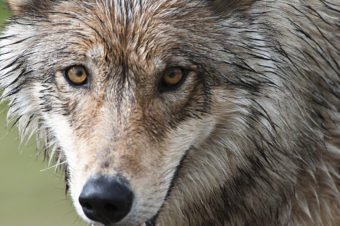
The Delta Wind Farm can produce up to 2 megawatt with its two 900-kilowatt and one 100-kilowatt wind generators. (File photo by Alaska Environmental Power)

Lawyers representing the Delta Wind Farm are asking state regulators to deny a tariff filed by Golden Valley Electric Association that argues the utility should not be required to buy more power from the wind farm.

GVEA said it should be exempt from state and federal regulations intended to promote use of renewable energy, because it can’t integrate more wind power now without incurring costs that would be passed along to ratepayers.

GVEA President and CEO Cory Borgeson said the utility’s leadership turned down Delta Wind Farm owner Mike Craft’s offer to produce an additional 13.5 megawatts because, Borgeson said, it would cost ratepayers more money.

“Right now, we are unable to accommodate any more wind power, because of the cost – significant cost – of backing up wind,” Borgeson said.

Utilities must “back up” wind power with conventional sources to replace the power lost when winds die down.

In GVEA’s case, it’s a couple of diesel-fired generators in North Pole that are kept idling – and are throttled up quickly, when needed.

“When you have to have other sources of generation prepared and ready to go for when wind cuts out, we have to have these turbines running at very slow speeds,” Borgeson said. “It’s just not very economical, at all.”

Borgeson said that inflicts a lot of wear and tear on the aging generators, and it increases Golden Valley’s fuel costs by about 15 percent, or some $20 million, according to a GVEA study. He said the offer was declined to keep those costs from showing up in ratepayers’ monthly bills.

“We told them that because of the significant cost of backing up their wind, that the financial harm to our members would be too great,” Borgeson said, “And (that) we’d be unable to purchase any of their power.”

That’s the basis of a tariff GVEA filed March 15 with the Regulatory Commission of Alaska, or RCA, that explains why Golden Valley should be exempted from state and federal regulations and policies requiring utilities to buy renewable power, whenever possible.

Craft and his attorney, Teresa Clemmer, say GVEA has failed to make that case.

“We think the assumptions that they use to kind of shoehorn that conclusion are totally without merit,” Clemmer said.

Clemmer and Craft say Golden Valley’s tariff is unlawful and “riddled with outlandish assumptions and false statements.”

Clemmer argued in a 527-page response she filed with the RCA last week that the utility’s leadership misinterprets and disregards state regulations that were established to help promote renewable-energy sources such as wind.

“It was really just a complete rejection of everything the regulations required,” Clemmer said.

Clemmer zeroed in on Golden Valley’s claim that it can only use the older diesel-burning generators to back-up the wind power that’s produced by the two-megawatt facility Craft presently operates in Delta, along with GVEA’s own 25-megawatt Eva Creek Wind farm, near Healy.

“We just think they are misleading the public by trying to say that it’s only the diesel-fired power that’s going to be backing up the wind,” Clemmer said. “It’s just ridiculous.”

Clemmer and Craft argue that GVEA can back-up intermittent wind power with facilities that burn, quote, “reasonably priced power,” such as coal.

She said the system should have even more capacity when the 50-megawatt coal-fired Healy 2 plant comes online sometime this year.

“They already have enough of their reasonably-priced power on the system to integrate the wind,” Clemmer said. “But even if they didn’t, they’re bringing on a brand-new coal-fired power plant that will free up a lot of that reasonably priced power to back up wind.”

Craft said the decision by GVEA’s board members to buy Healy 2 in 2013 and their failure to get the problem-plagued facility up and running after sinking some $175 million in to it, discredits their claim to be protecting members from rate hikes.

“That power plant has cost this community an incredible amount of money,” Craft said. “And we got nothing out of it.”

Craft said the 13.5 megawatts his expanded facility would produce would enable GVEA to reduce use of its diesel- and coal-fired generators around Fairbanks, which would help improve the area’s air quality.

The RCA commissioners must rule on GVEA’s tariff by May 1.

Fairbanks elementary school name voted out

Badger Road Elementary School (Photo by Badger Road Elementary School Parent Teacher Association)

The Badger Road Elementary school in North Pole will transition to a new name this summer.

The Fairbanks North Star School District board voted Tuesday to rename the school Midnight Sun Elementary, but as KUAC’s Robert Hannon reports, the board nearly backed away from changing the Badger name, which links the school to a man convicted of sexually assaulting a young girl.

The school is located off Badger Road, which was named for Harry Badger, a prominent strawberry farmer in the early 1900s.

In 1916 Badger was convicted of sexually assaulting a 10-year-old girl, a crime largely forgotten when he died in 1965 at the age of 96.

The Fairbanks Daily News-Miner reports the school board in November decided to rename the school.

The board considered two other names: Ursa Major Elementary School and Tr’enyaxde (tren-YAHK-tuh) Elementary School. Tr’enyaxde is a Minto Athabaskan word for “where we are growing.”

The Associated Press contributed to this report.

Slow Fairbanks snowmelt slows Canada geese migration

Canada goose on the Colville River Delta. (Photo by Ryan Askren, USGS.)

Sunshine is abundant this time of year, but cooler temperatures this week have slowed the melting of a well above normal snowpack in Fairbanks, which is affecting migratory bird’s arrival at a local refuge.

The first few Canada geese were spotted at Creamers Field Migratory Waterfowl Refuge in Fairbanks back on April 4. That’s among the earlier first arrival dates on record, but longtime Alaska Department of Fish and Game wildlife biologist Mark Ross said that can be deceiving “because it’ll always be certain individuals of the species that are pushing the envelope to get to their breeding sites as quick as possible.” 

The larger migration has been slow to build, Ross said, something he attributes to this spring’s late lasting snow cover.

”We’ve had a big snow year as everyone knows. It’s above average,” Ross said. “There’s still a lot on the ground.”

Ross said during his 21 years running education programs at the refuge, migration has typically peaked at about 1,000 geese from April 22 to 24.

“I’m hoping we’re on track for that ’cause that’s when we’ve got about 600 schoolkids scheduled to come out to witness this great migration,” Ross said. “This is the 50th anniversary of the community rallying to help purchase the field so there’s wildlife habitat. And it’s the 50th anniversary of the bird watch for fifth-graders.”

Ross noted that the peak abundance date is in line with the first arrival dates of 50 years ago. He cautions making assumption about why, noting that grain has been scattered for the birds at Creamers since the 1940s.

“These waterfowl are very long-lived,” Ross said. “And they’ve got a memory of this feed on the field.”

Ross says Canada geese, which can live 15 years or more, pass that experience on to successive generations.

University of Alaska moves forward with Title IX changes

The University of Alaska Fairbanks campus on Jan. 18, 2017. (Photo by Amanda Frank)

The University of Alaska is moving forward on Title IX initiatives stipulated under an agreement with Federal Office of Civil Rights to correct past mishandling of sexual assault and other offenses.

Recently hired University of Alaska Fairbanks Office of Diversity and Equal Opportunity director Margo Griffith said the office is writing up and disseminating information to help victims that she described as “resources that they can reference that give them clear information and that those resources are easily available and easy to find.”

Griffith said the information and outreach efforts are being developed through consultations within and outside the university community. Other UAF actions include filling a second case investigator position as well as hiring a case manager.

“That position will communicate quite frequently with individuals that may have complaints or have question about the Title IX process,” Griffith said. “We didn’t have that before. That was a big of the communication that was missing.”

Griffith said there are deadlines in the agreement with the Federal Office of Civil Rights, including May 1, when updated policy and regulation documents are due.

She said agreement required Title IX employee training is scheduled for the week of June 12.

April is sexual assault awareness month, and the UAF Nanook Diversity and Action Network is sponsoring a talk Tuesday night by Sophie Karasek, co-founder of the national group: End Rape On Campus.

Fairbanks International Airport evacuated after bomb threat Wednesday night

The FBI and Fairbanks International Airport police are investigating two bomb threats called-in to the airport Wednesday night.

The terminal was evacuated for a little more than an hour, but no bomb was found and no one was injured.

Two Alaska Airlines flights were delayed.

Airport spokeswoman Sammie Loud said the terminal was evacuated just after 9 p.m. Wednesday after a dispatcher with the airport communications center got the first of two phoned-in bomb threats.

“We received the threat at 9:04 p.m., and the terminal was reopened and operational after an extensive sweep, at 10:14 p.m,” Loud said.

Loud said the dispatcher got a second threat two minutes after the first.

By then, authorities had begun to evacuate the nearly 200 people in the terminal and launched a search for a bomb, with help from Fort Wainwright’s explosives ordnance unit.

Alaska State Troopers helped airport police handle traffic during the evacuation, which ended after no bomb was found.

Loud said due to an ongoing investigation, she could talk much about what the caller said – except to say the caller did not indicate that the bomb was targeted at anyone or any specific airline or agency at the airport.

“I can say that it wasn’t directed at any particular person in the terminal,” Loud said. “It was directed at the building itself.”

Loud said the evacuation delayed an inbound Alaska Airlines flight for about 15 minutes, and that the aircraft was parked on the south cargo apron, away from the terminal, while the evacuation was in progress.

An outbound Alaska Airlines flight was delayed by about 30 minutes, she said.

Loud said she believes this is Fairbanks International’s first bomb threat – or at least, neither she nor her boss could recall the airport receiving any such threat over the previous decade.

Loud said authorities haven’t increased the level of security at the airport as a result of the incident.

The FBI is helping airport police with the investigation, she said.

University of Alaska Regents schedule meeting to discuss Senate’s approved cuts

The University Of Alaska Board Of Regents is holding a special meeting 1-3 p.m. Thursday at the University of Alaska Fairbanks Butrvich Building, to discuss contingency plans in light of State Senate approved budget cuts.

Last week the Senate passed a budget that cuts $22 million from the $325 million in university funding supported by the House and Gov. Bill Walker.

”In the event that a number comes from the legislature that is less than that, the University needs to be prepared for those cuts,” university spokeswoman Roberta Graham said.

Regents anticipated the Senate reducing the level of funding, but not by $22 million, she said. University President Jim Johnsen is talking about additional budget options with campus chancellors.

”What they think would be likely cuts on those campuses,” Graham said. “And those will be options that come forward to the regents.”

Last week Johnsen called the Senate cut “devastating,” while noting that the UA budget has already been reduced by $53 million over the past three years, and that the university is in the process of downsizing, but needs time to carry out a plan to reduce reliance on state funds by 2025.

Graham said there’s also concern about a lack of capital funding for the university, noting a $1 billion backlog in deferred maintenance. The UA Regents meeting is scheduled for

The regents meeting will be live streamed.

Site notifications
Update notification options
Subscribe to notifications