Lisa Phu

Managing Editor, KTOO

"As Managing Editor, I work with the KTOO news team to develop and shape news and information for the Juneau community that's accurate and digestible."

Breaking new ground with the Mendenhall Valley Library

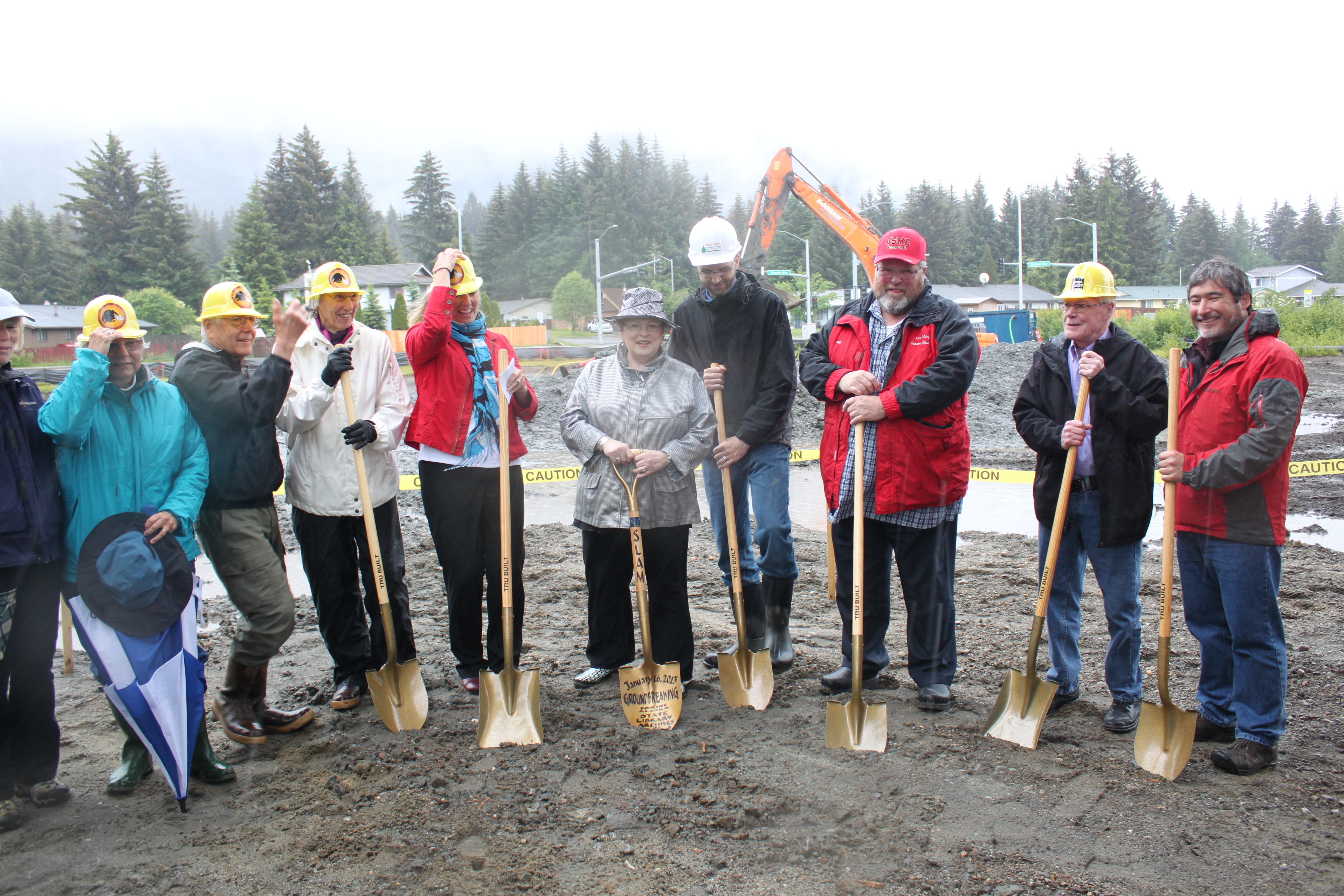
The City and Borough of Juneau and Friends of the Juneau Public Libraries held a ceremonial groundbreaking for the Mendenhall Valley Public Library at Dimond Park on Friday. (Photo by Lisa Phu/KTOO)

Donna Pierce says the groundbreaking of the new Mendenhall Valley Library at Dimond Park on Friday was a euphoric day for her.

“It’s a wonderful day for a whole lot of people who really thought this might never happen, but here it is,” she says.

Pierce was the librarian of the valley library when it moved out of Floyd Dryden Middle School and opened in the Mendenhall Mall in 1983. She later became the library director, then deputy city manager until she retired in 2006. Most recently, Pierce served as project manager for the new library.

She says the mall space has served the public well.

“But with the development of Dimond Park and all of the civic facilities we have here now, I think that it really is going to become the community center for the valley, which the valley hasn’t really had before,” Pierce says.

Former library director Barbara Berg says the valley has also grown.

“The valley is a more mature community now. It was sort of an outlier when we moved to that mall, but now it’s the most populous part of the city. It has the most kids,” she says.
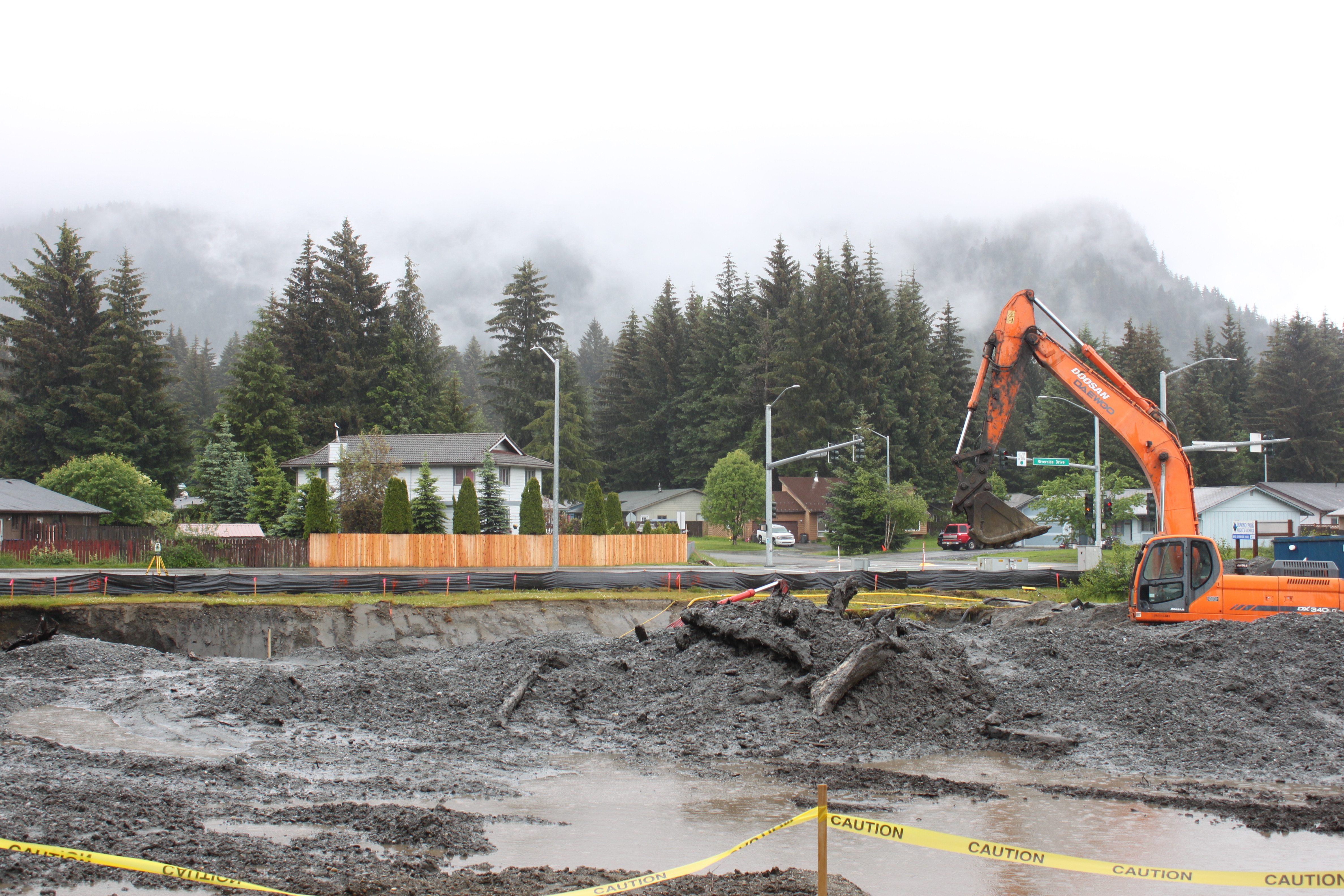
The ceremonial groundbreaking was on Friday, but the actual groundbreaking took place early June. The contractors are Dawson Construction, Inc. (Photo by Lisa Phu/KTOO)

As library director, Berg was responsible for securing most of the funding needed for the $14 million project. Half came from a state grant and another $4.7 million from a 1 percent city sales tax ballot measure. The Friends of the Juneau Public Libraries contributed another million.

Berg says having the library be a stand-alone facility is important.

“I think when people see a space that’s designed to be a library rather than just having a bunch of shelves in a box, which is essentially what we have with the mall, they’re going to have a completely different view of how the library functions,” Berg says.

The library system still devotes a large part of its roughly $2.2 million dollar budget to purchasing books and media. But current library director Robert Barr says the mission of libraries has shifted.

“We are a lot less about being gatekeepers for knowledge and a lot more about being a place where people can come together to learn new things, to gather together, to meet, to work on community projects, to collaborate around issues that are important to all of us that we really benefit best from doing in a face-to-face manner,” Barr says.

The new library will have one large meeting space and five smaller ones for things like board meetings and study groups. The large space can be used for all sorts of functions.

“It’s purposefully segregated from the rest of the library so that space can be opened without the main library being open, so if we have before hours or after hours meetings, events or activities, that’s a possibility,” Barr says. “It’s also separated from the rest of the library from a sound perspective so louder stuff can go on in there. Probably not like band practices and stuff, but, I don’t know, I’d be interested in thinking about it.”

The library will have a large children’s room and a teen room, the first in a Juneau library, which Barr says is appropriate being near Thunder Mountain High School.

The new space is 20,000 square feet, doubling what’s available in the current valley library. Barr says operational costs will remain the same though. The more than $200,000 spent now on renting space in the Mendenhall Mall will go toward things like maintenance, utilities and staffing.

Scheduled completion of the Mendenhall Valley Library at Dimond Park is fall 2015.
Gustavus to celebrate 100 years of pioneer spirit

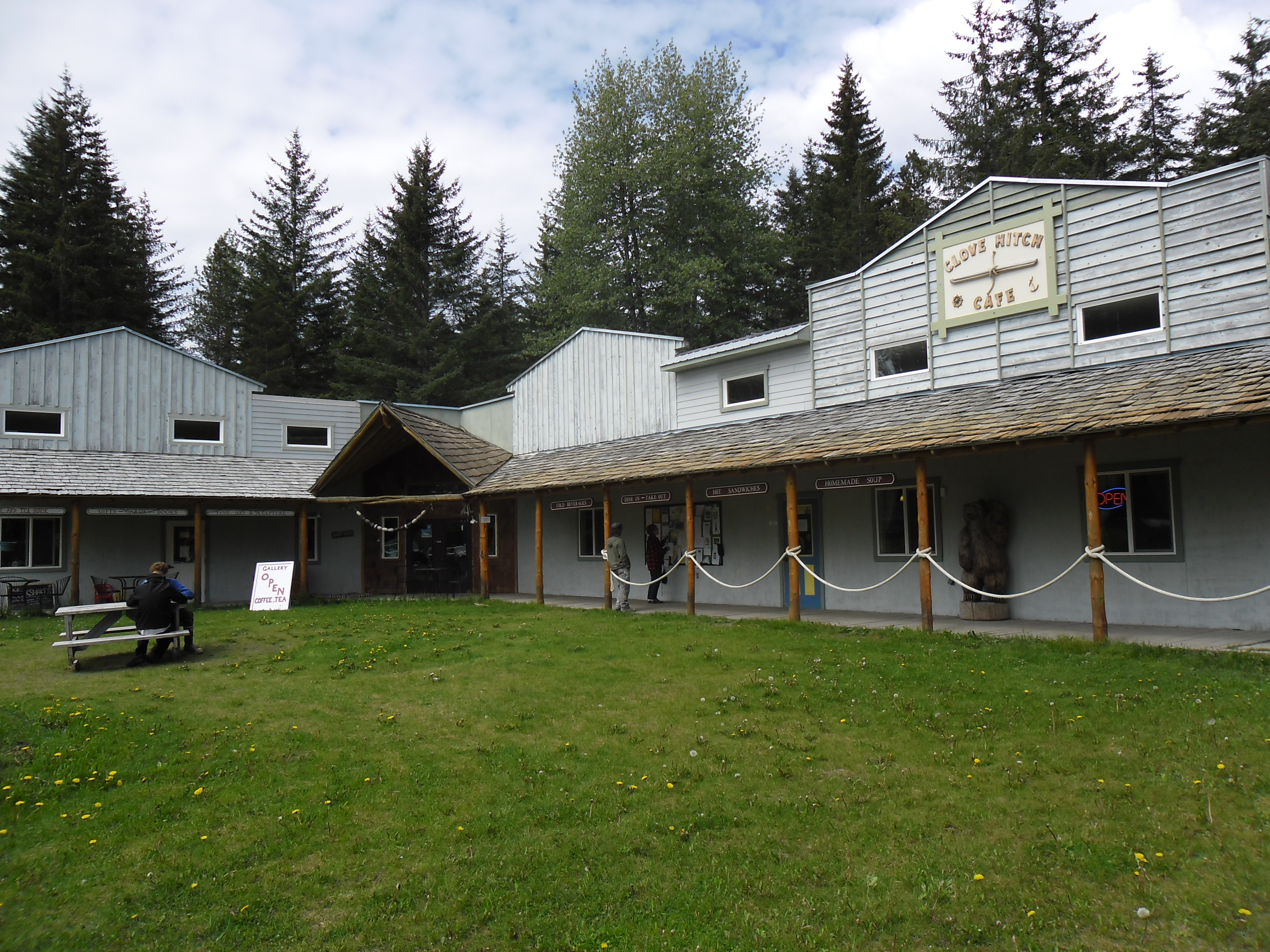
These shops are found at Four Corners, the main intersection in Gustavus. (Photo by Lisa Phu/KTOO)
These businesses are found at Four Corners, the main intersection in Gustavus. (Photo by Lisa Phu/KTOO)

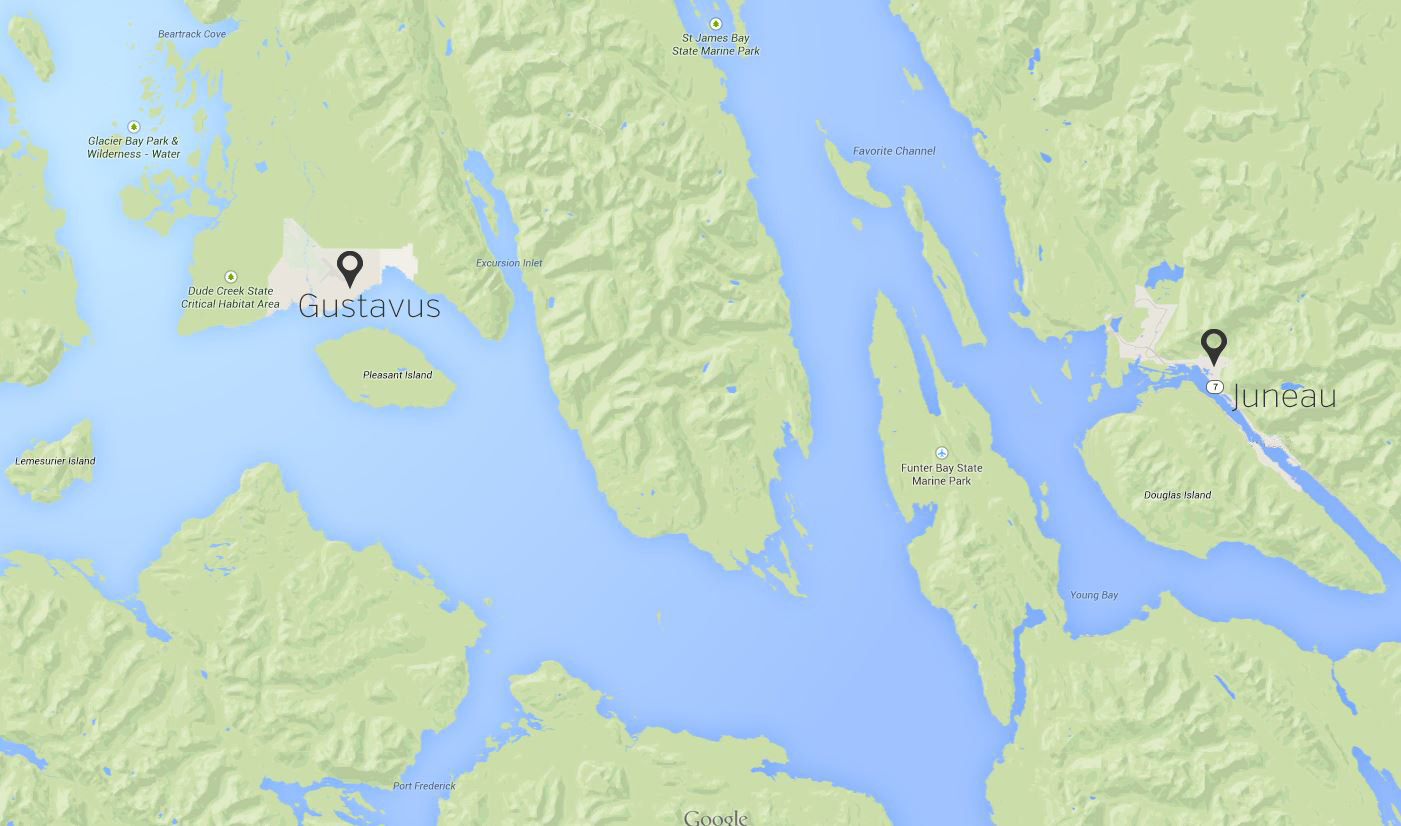
The community of Gustavus, near Glacier Bay National Park, is throwing a big party. Starting June 27, the small Southeast town of under 500 will hold three days of events and festivities in honor of the first settlers who arrived 100 years ago.

In the summer of 1914, three newlywed couples from Seattle decided to make their way to Southeast Alaska and find some flatlands they had heard about from a steamship captain.

“They were three couples that were friends that were looking for an adventure,” says Linda Parker, cofounder of Gustavus Historical Archives & Antiquities. “Homesteading was becoming the thing to do and they thought maybe they’d come up here and see what it was like, see if they could farm and make a living. The little voices of Alaska were calling them and they came.”

Parker’s organization is sponsoring the Gustavus Centennial Celebration.

Gustavus-labeled mapShe says the three couples – Verne and Janie Henry, Bill and Margaret Taggart, and John and Bernice Davis – traveled most of the way from Juneau in a hired fishing boat. The final leg of the journey up the Salmon River was in a skiff.

Tlingits lived across Icy Straight in Hoonah and had fish camps in the Gustavus area.

The three couples lived in tents at first. By fall, they built a log cabin where all three couples lived together. The structure no longer exists but is still referred to as the “honeymooner” cabin.

“The first winter, with nothing much else to do in a very small cabin, all three ladies got pregnant and that was a complication that they hadn’t foreseen,” Parker says.

It was tough for the young couples, Parker says. And homesteading proved more difficult than they expected.

The Gustavus of today has lots of trees and many residents grow vegetable gardens. A hundred years ago, Parker says, the land had very few trees and was boggy, oftentimes requiring hip boots. The only crop that grew was rutabaga.

“That was the big thing back then here in Southeast was rutabagas. Some of the homesteaders — the old stories — they got tired of rutabagas. It was rutabaga everything and then they would keep them in their cellars and eat them all winter,” Parker says.

The Taggarts left just after one year, the Davises after the second. Of the original three couples, Verne and Janie Henry stayed the longest. They hoped to make a living selling rutabagas to canneries elsewhere in Southeast. But crop after crop met with catastrophe and by 1919, the Henrys left.

Meanwhile, others arrived, like Abraham Lincoln Parker’s family in 1917. They were involved in the Gold Rush and had lived in Skagway and Douglas. Lee Parker, Linda Parker’s husband, is one of the grandchildren.

The Parker homestead was on Good River.

“It was quite large – two-story home, many outbuildings, barn, saw mill, a second or third cabin on the property. They had some horses to pull wagons and things, but they decided to do some cattle and they did that for their own meat and milk and also they butchered and sent the meat out to the various canneries that were around,” Parker says.

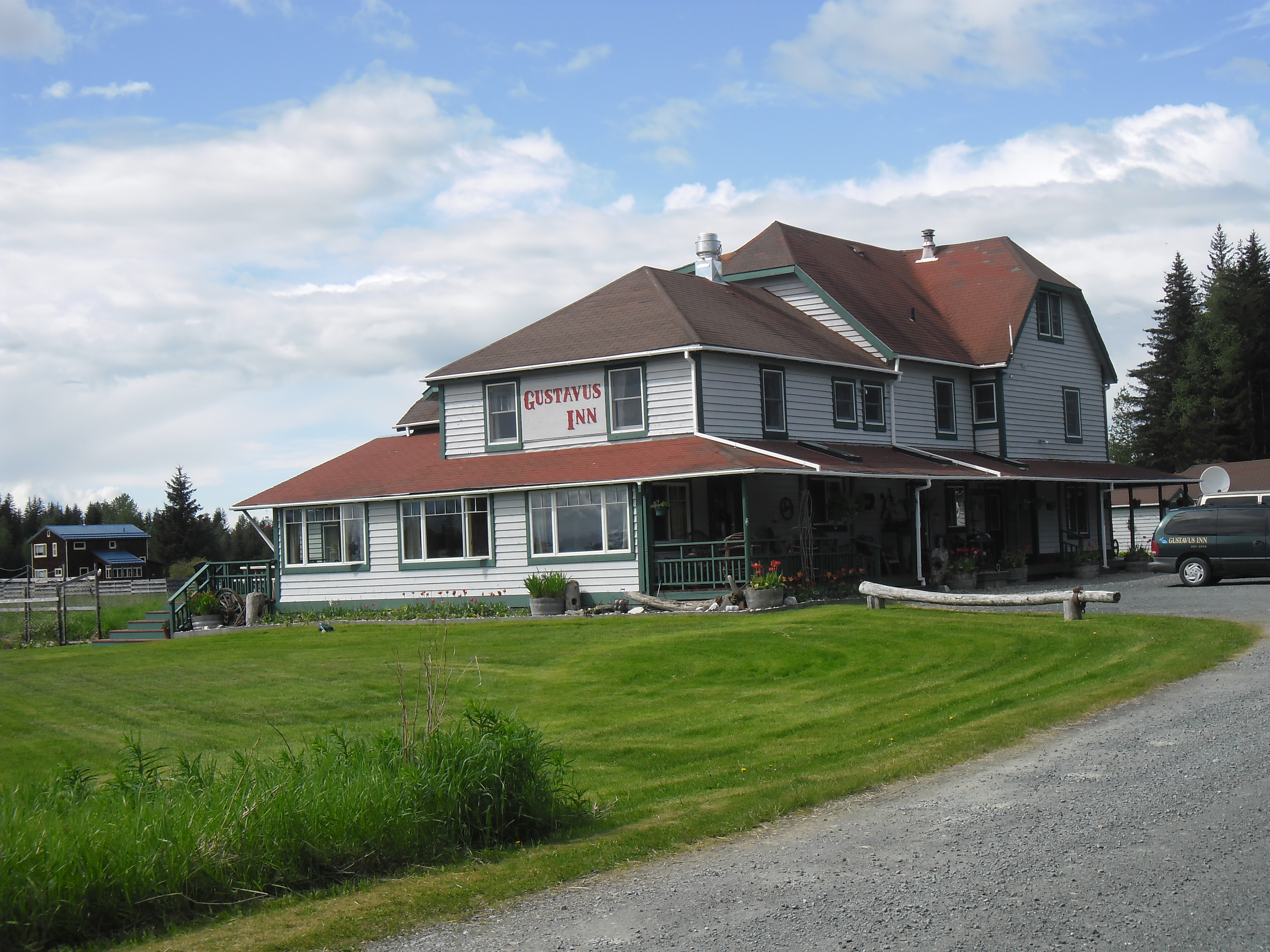
The Gustavus Inn will hold a sourdough pancake feed Sunday morning, June 29, for the Centennial Celebration. (Photo by Lisa Phu/KTOO)

Back then, the area was called Strawberry Point for its fields of wild strawberries. The name was changed to Gustavus in 1925, but many residents still call it Strawberry Point.

Parker says the homesteaders who stuck it out had an independent spirit.

“Many of them were looking for ways to be off on their own and pioneer a place that didn’t have a government looking over their shoulder for everything and they liked the isolation and freedom,” Parker says.

Local government only came in 2004 when Gustavus was incorporated as a city.

Paul Berry is a former mayor and city council member, and is the current manager of the city’s Disposal & Recycling Center. Since incorporation, Berry says the independent spirit of residents has only gotten stronger. As a city worker, he calls himself a “city apologist.”

“It’s been difficult. I have friends who don’t really want the city. They didn’t see it as a positive development. It’s kind of like, ‘Can’t we do better?'” Berry says.

Besides the disposal center, the city also runs the library, fire department, parts of the boat harbor and the bulk fuel facility. Gustavus has no local law enforcement. That idea failed in an advisory measure in 2012.

Berry says people are slowly getting used to the idea of Gustavus as a city. While some issues can divide the tight knit community, it’s the community that’s kept him around.

Berry moved to Gustavus from Fairbanks 30 years ago for the land. He arrived with his brother to build on property they got from a state land lottery.

“It’s a cool place. It’s a cool thing to be a part of. I like that sense of community. Some of my customers at the recycling center, I was landfilling their diapers and now they have kids. And to be a part of that is a one shot deal,” Berry says.

The first three couples that arrived in Gustavus didn’t end up staying, but they paved the way for many others who did.

The Gustavus Centennial Celebration kicks off next Friday evening. The Alaska Marine Highway System is running a special ferry for the celebration that departs Juneau the morning of Saturday, June 28 and returns Sunday afternoon.

Downtown parking system not a city priority

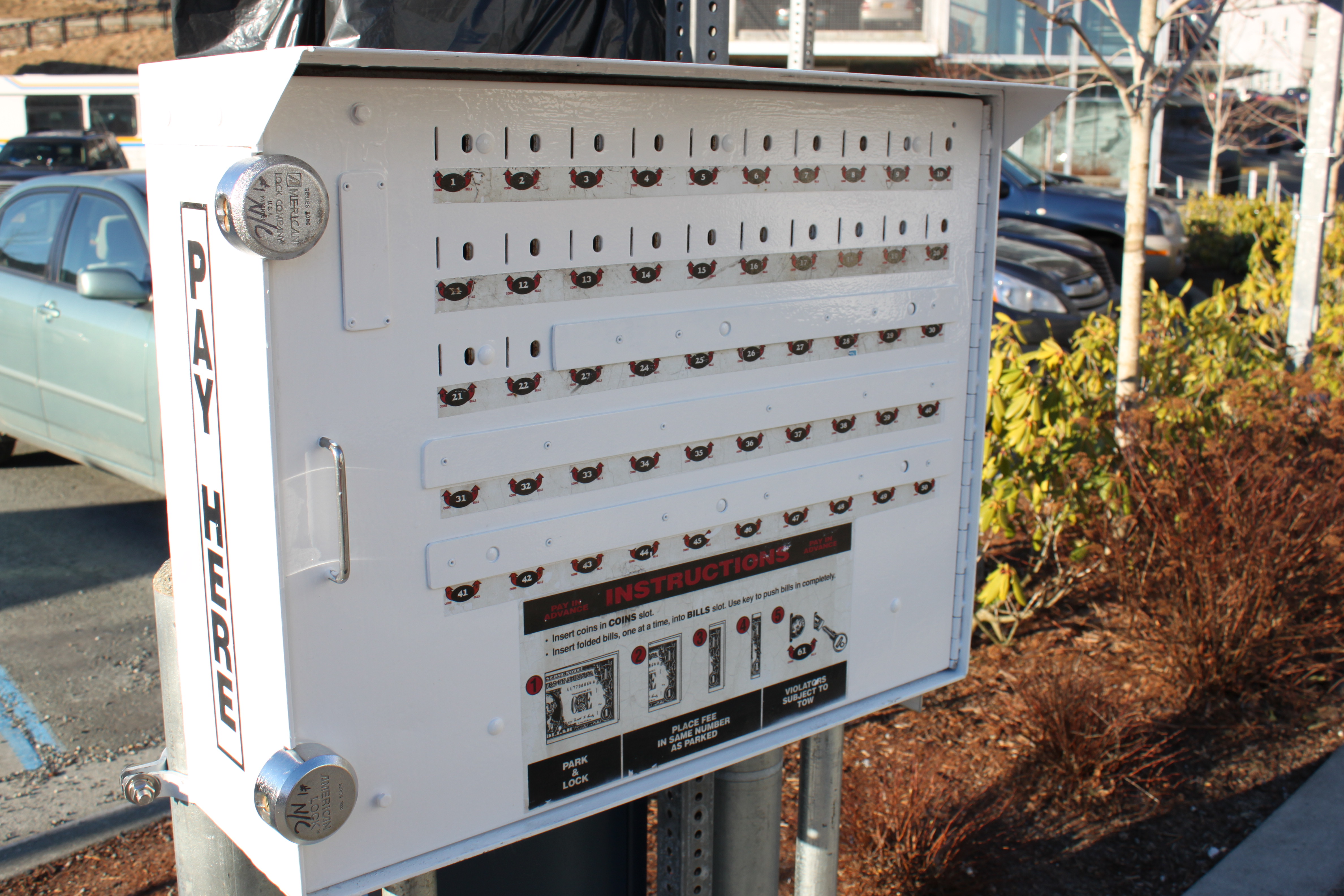
The city has no current plans to replace downtown coin-operated parking boxes. (Photo by Lisa Phu/KTOO)
The city has no current plans to replace the downtown coin-operated parking boxes. (Photo by Lisa Phu/KTOO)

Juneau city manager Kim Kiefer does not expect a resolution anytime soon in the city’s lawsuit with Nevada company Aparc Systems over faulty parking machines.

“We’re in the collection of all the information piece right now, and so I don’t anticipate, if it goes to court, it probably won’t go to court until mid to latter part of next year is my guess at this point,” Kiefer says.

The city terminated the contract with Aparc Systems last December and initiated a lawsuit after the city invested nearly a half million dollars in the problematic parking system. The Juneau Assembly approved $110,000 for legal fees to outside counsel for the litigation, and so far, about a third has been spent.

Kiefer says the low-tech coin-operated boxes for hourly parking are working. Motorists are paying 75 cents an hour to park in three downtown parking lots. The city still offers two free hours of street parking.

“The piece that we’ve lost now with the Aparc system not in place is that before people could go onstreet, they’d register their car and if they knew they were going to be there for more than two hours, then they could go ahead, pay that amount for an extra hour and pay it right then and have it taken care of. Or, maybe they’re shopping and realize, ‘Oh, it’s going to be longer than what I thought,’ they could have gone to any of those kiosks and put more money into in. So that’s the piece we don’t have now,” Kiefer explains.

The coin boxes were intended to be a temporary fix, but Keifer says the city has not determined a permanent parking system solution.

“Given that we had a $6 million budget deficit this last year and we have a $9 million budget deficit next year, that’s taken a back burner at this point,” she says.

Keifer anticipates a new system will cost the city at least $500,000.

Meanwhile, she says the Downtown Transportation Center and the Marine Parking Garage are heavily used. Both have waitlists for permit parking spots.

Front Street Community Health Center opens doors to all

The new Front Street Community Health Center sign. (Photo by Lisa Phu/KTOO)

Juneau’s Front Street Clinic is now providing service to the general public while also continuing care for the homeless.

Renamed the Front Street Community Health Center, it’s operating under a new business model after Southeast Alaska Regional Health Corporation severed ties at the end of April.

When SEARHC first announced the closure of Front Street Clinic last fall due to budgetary constraints, Front Street’s behavioral health specialist Mary Fitzgerald says the providers were worried.

“What are these homeless people going to do? The winter is coming on. They’re vulnerable. But then the community came forward and said, ‘No, this just can’t happen. What can we do?'”

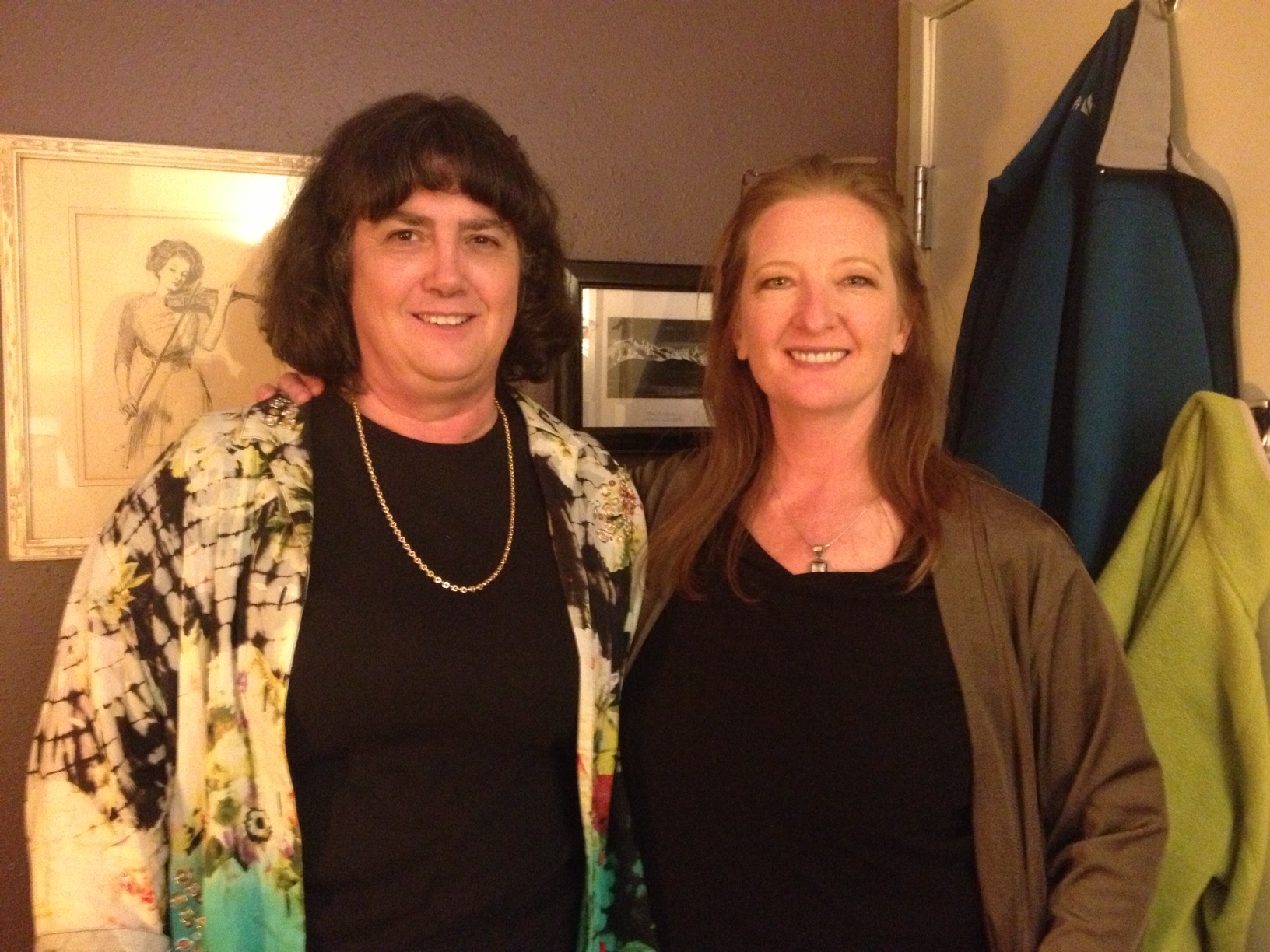
Janna Brewster is Front Street's main medical provider and manager. Mary Fitzgerald is the behavioral health specialist. (Photo by Lisa Phu/KTOO)
Janna Brewster is Front Street’s main medical provider and manager. Mary Fitzgerald is the behavioral health specialist. (Photo by Lisa Phu/KTOO)

Community donations kept the downtown clinic open while a new board of directors formed to take over for SEARHC.

Front Street Community Health Center is able to continue serving the homeless with the help of two major grants – one for $162,000 through the U.S. Health Resources and Services Administration and another for $121,000 through the Alaska Mental Health Trust Authority.

With a $500,000 budget, the difference will be made up by opening the doors to everyone – from the uninsured to the insured; even cruise ship passengers who have an urgent need.

Front Street has been known as a homeless clinic for ten years. Manager Janna Brewster is happy to continue that work but hopes Front Street can help others as well.

“We want people that don’t have insurance to have a place to go. That’s the biggest gap in services in any community – people who are working but they don’t have insurance,” Brewster says.

Brewster says they’ve had to turn away community members for years.

“Every day we get phone calls from people who are not homeless who can’t find a doctor in town or couldn’t find medical care and now we don’t have to say, ‘No,'” she says.

Front Street’s staff includes three full-time and three part-time employees. Brewster expects the staff will grow to meet demand.

“We have a pediatrician that might come join. We hope we can do more with kids and teens and really expand to just help out overall through the community,” Brewster says.

Throughout the seven-month transition, there was no interruption in medical service to the homeless.

Dean Smith suffered four strokes in 2010. He’s been going to Front Street for a couple of years for medical and behavioral health services.

“I’m not as nervous about my own health as I was prior to seeing them. Being diagnosed with arteriosclerosis in your head, that’s kind of an unnerving feeling. Basically that means you could have six seconds, six minutes, six hours – you never know,” Smith says.

Smith is happy he can still see Fitzgerald and Brewster now that Front Street is no longer in fear of closing.

Brewster says many patients were worried, especially when the old SEARHC sign was taken down at the end of April. The new sign wasn’t yet ready.

“During that time it was kind of quiet and the word was going around that we were not going to be here. In fact, someone even heard that we weren’t here anymore,” Brewster says. “But we put the sign back up and it’s like all of a sudden, everyone has calmed down. They know we’re here and they feel very happy that we’re still going to be able to help them. That’s the most wonderful part of all of this – there are people out there that are so grateful for what we do.”

The new Front Street Community Health Center sign is in place inviting new patients.

For more information or to make an appointment at the new Front Street Community Health Center, call 586-4230.

Still no leads on Juneau’s missing hiker

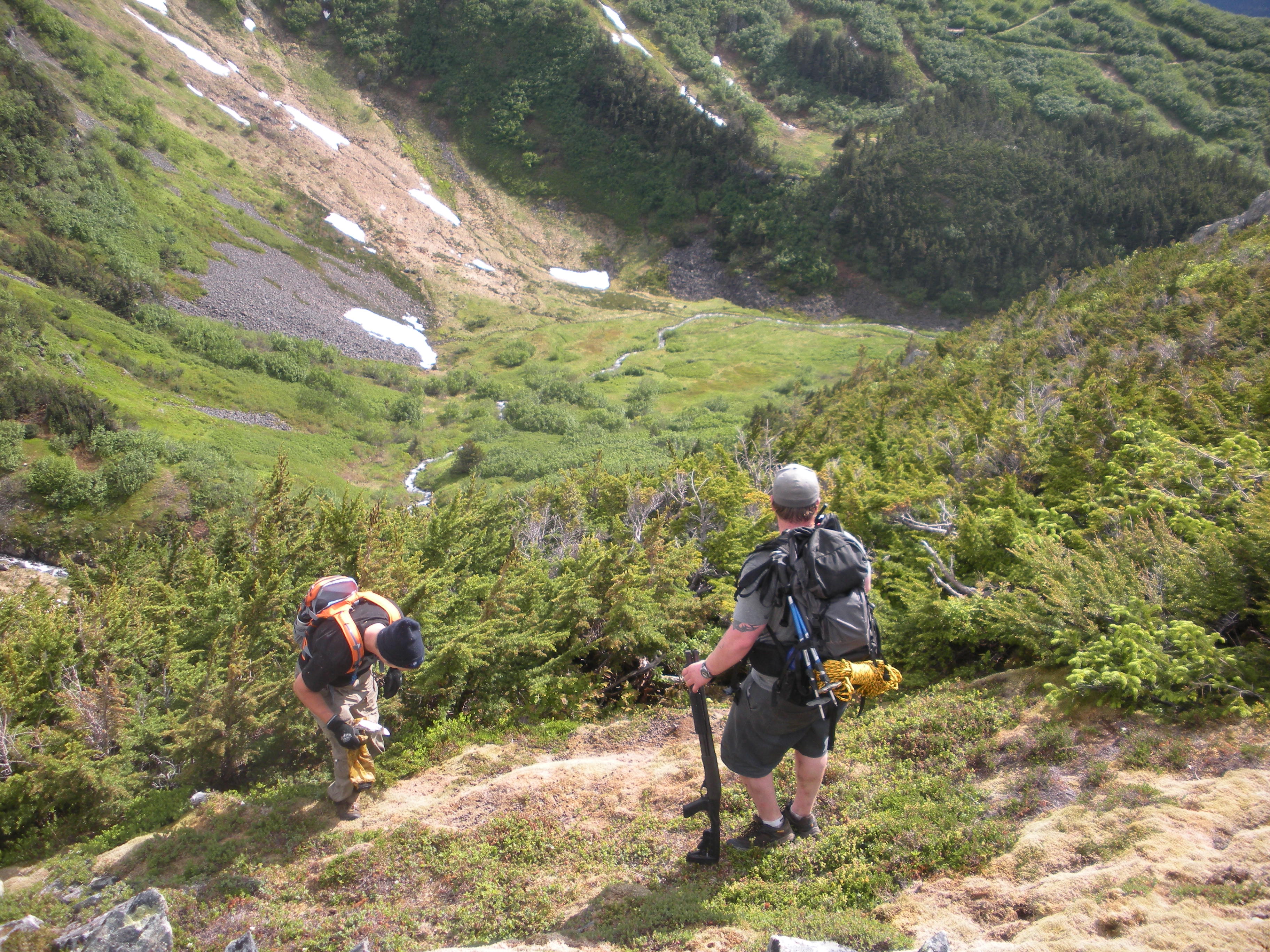
Volunteer searchers Devon Barrett and Luke Holton make their way to the top of Bear Ridge above Last Chance Basin on the Mount Roberts side Sunday, June 15. (Photo courtesy of Chelsea Karthauser)
Volunteer searchers Devon Barrett and Luke Holton make their way to the top of Bear Ridge above Last Chance Basin Sunday, June 15. (Photo courtesy Chelsea Karthauser)

The Juneau Police Department is reaching out to the community for information on still missing hiker Sharon Buis.

Detective Nick Garza is with the criminal investigations unit. He’s been working on the missing persons case since Alaska State Troopers exhausted the initial search May 29th.

Garza says there have been no developments or leads. 48-year-old Buis was last seen May 23 at Alaska Marine Lines.

“If anyone in the general public recollects seeing Sharon anytime on Friday the 23rd, or ran into her on the trail, has come across any camping equipment or anything on the mountain, or hiking equipment that seems to be abandoned or laying around, give us a call. We need those leads. We’re still searching. Anything as minute as someone may feel it is could help lead us to find Sharon or what happened to her,” Garza says.

There were no definitive sightings of Buis on May 23, Garza says, other than by staff at Alaska Marine Line. He says Buis ran a personal business, in addition to her job as a physical therapist, and was shipping two orthopedic office chairs to customers that day.

Garza says he has searched Buis’s home several times and has found nothing of note. He says Juneau Police Department still has no reason to suspect foul play, but isn’t closing the door on any possibility.

“These cases remain open for investigation until we can locate the person. This case is not going to be closed, is not going to go away until we can find out what happened to Sharon,” Garza says.

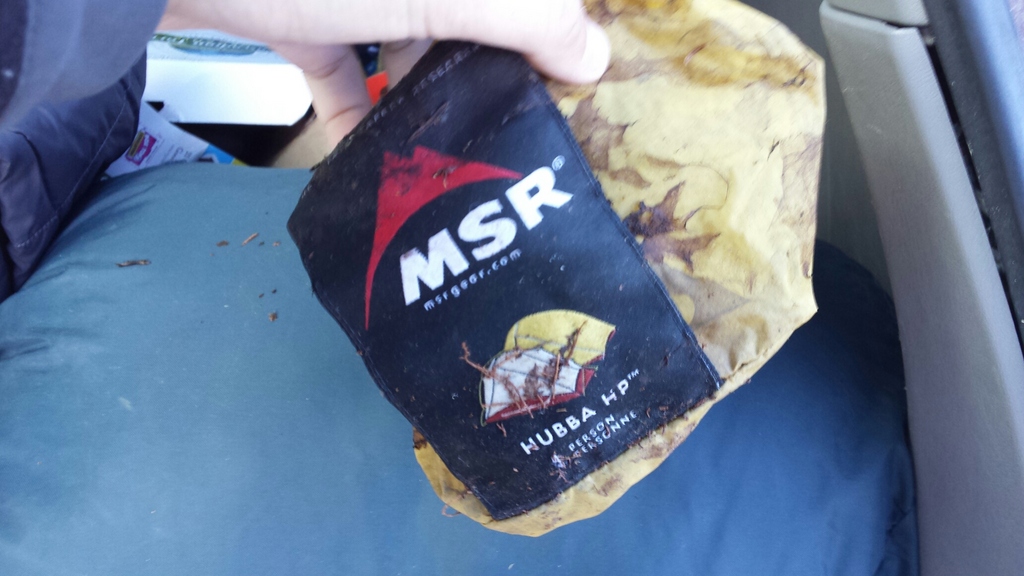
Volunteer searchers found this yellow tent bag on Sunday. A couple friends of Sharon Buis don't recognize it as hers though. (Photo courtesy of Chelsea Karthauser)
Volunteer searchers found this yellow tent bag on Sunday. A couple friends of Sharon Buis don’t recognize it as hers though. (Photo courtesy of Chelsea Karthauser)

Garza is in regular contact with those leading the ongoing volunteer search effort, like Luke Holton and Chelsea Karthauser. Karthauser says volunteers on Sunday scoured the ridge above Last Chance Basin, also known as Bear Ridge, and found a few items – a cup, a yellow tent bag and a tent stake. Karthauser says two of Buis’s friends don’t recognize the items, but she still plans on submitting them to Juneau Police.

No organized searches are scheduled yet this week due to weather. Karthauser and Holton are temporarily leaving Juneau soon and hope others will take the lead in organizing the volunteer search effort.

“We just want an organized effort to promote safety because it’s just not safe to go out there without any kind of precautions. It’s really necessary. I think that’s a lesson everybody has learned from this,” Karthauser says.

Anyone with any information on Buis should contact Juneau Police at 586-0600.

Previous Coverage:
Search underway for missing hiker
Scent of missing hiker found on trail but no cell phone trace
Update: U.S. Coast Guard takes another look for missing hiker
Update: Troopers call off search for missing Juneau hiker
Search ends for missing hiker
Volunteers still searching for missing Juneau hiker
Group asking for more volunteers to join search for missing hiker

Weaving a journey of change

In early 2011, Della Cheney started weaving a Ravenstail robe for her daughter in honor of her doctoral degree. She had weaved about a quarter of it, when she began to feel not right.

“I knew something was wrong but I didn’t know, so I went to get my yearly test and they found something abnormal,” Cheney says.

She was diagnosed with endometrial cancer. She stopped weaving and had to have surgery and chemotherapy.

A year later, Cheney went back to the robe and started over. This meant undoing 14 inches of weaving, more than a year’s worth of work.

“You don’t want to have bad feelings in the robe. You don’t want to be weaving while you’re thinking bad things or in a bad place,” Cheney’s daughter, Gail Cheney, explains. “So can you tell yourself, ‘No, I want to start again’? That’s hard when you’ve gone down as far as she did when she took it back. In the midst of all her challenges, she held herself to a very high standard.”

Gail was in the process of getting her Ph.D. in leadership and change from Antioch University, a program focused on bringing about change in workplaces and communities.

She was also the Human Resources Director at Sealaska Corp., a position she still holds. Her dissertation explored the future of Native values at an Alaska Native corporation.

Gail says Sealaska has been working on integrating Native values at a corporate level for the past few years. She uses Haa Aaní, meaning ‘our land,’ as an example:

“We have a sense of what Haa Aaní means at a community level – subsistence, maintaining our resources,” Gail says. “What does that mean at a corporate level? Perhaps it means figuring out sustainable uses because we do need to use our land, but we need to use it in way that it’s there for future generations and for everyone’s use.”

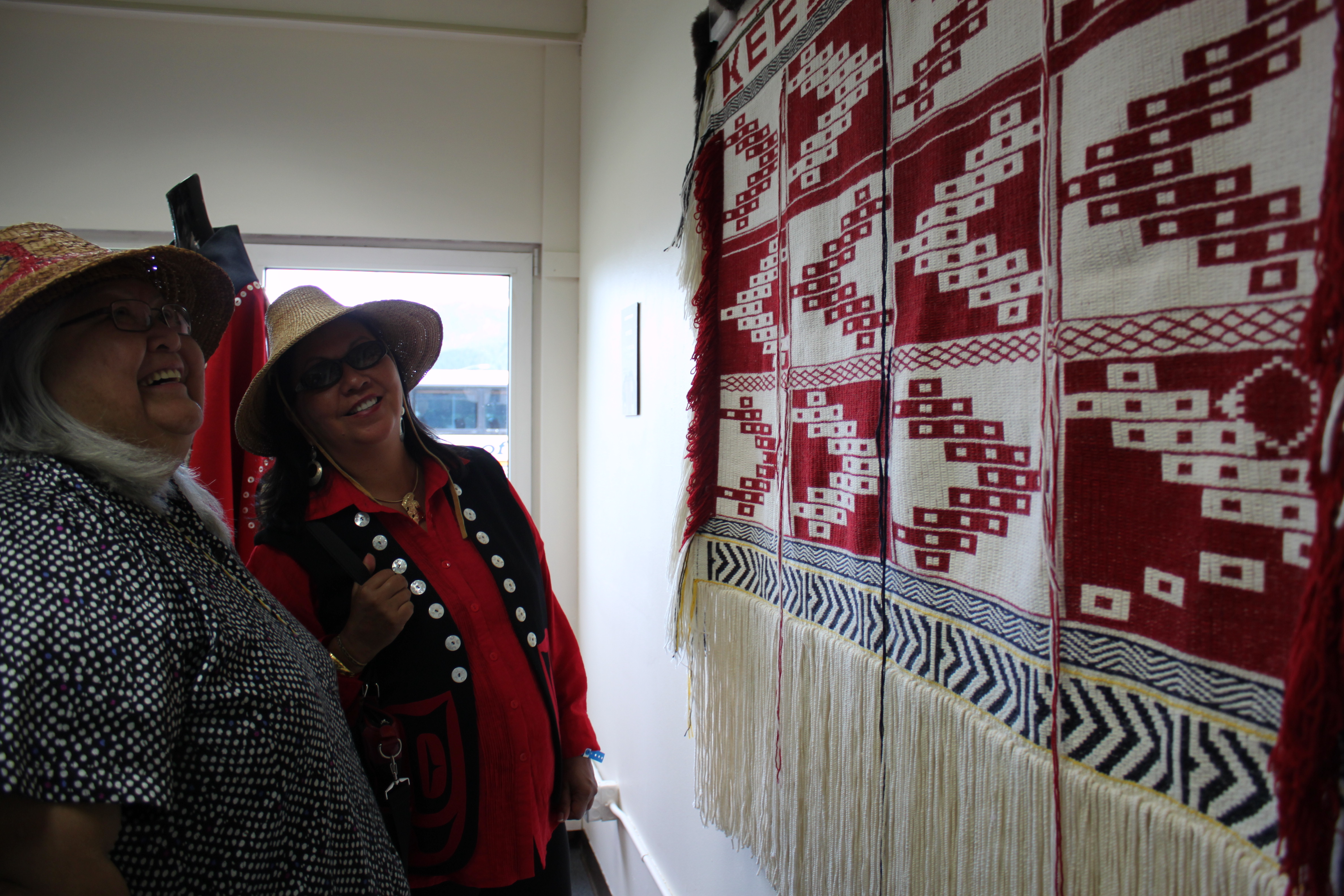
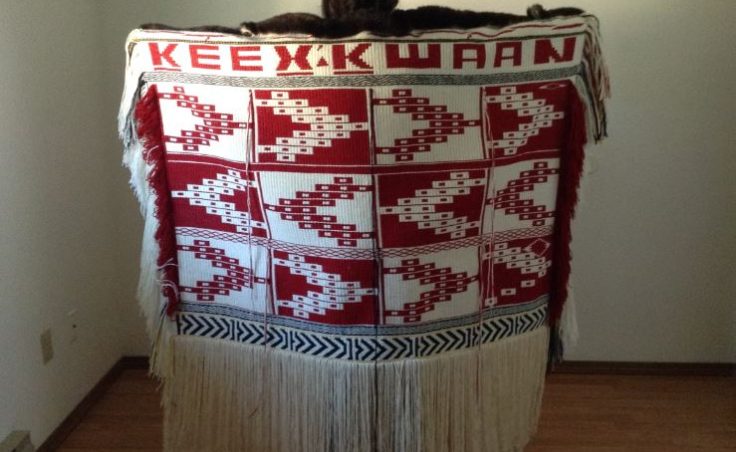
Cheney’s challenge was how to show leadership and change in her weaving. She had to work with shapes like rectangles, triangles and squares, characteristic of Ravenstail weaving.

“So I chose to do the pattern called the flying geese pattern to show the change with the geese arriving in the spring and leaving in the fall and how the leadership changes when they’re flying in a flock. They take turns leading,” Cheney says.

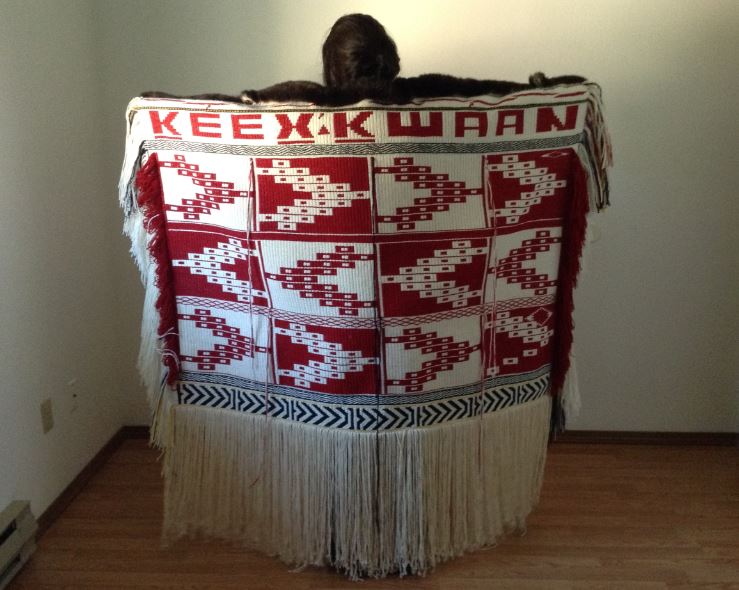
The robe shows three rows of geese changing direction, flying right and left, then right again. The prominent colors are red and white.

“The red color shows the power of change and the white color shows the integrity that needs to be followed in order for change to happen,” Cheney says.

On the bottom of the robe is a black design that Cheney calls, “All of Our Ancestors.” It’s the foundation of the robe.

“That’s where our lives started, was from our ancestors,” she says.

The black also represents loss.

“We had four of our family members pass away with cancer in the time I started the robe to the end,” Cheney says.

For Cheney, no evidence of cancer remains. She says weaving is a form of art therapy and helped her through the process of being OK again.

“There’s all that healing that goes on because of that long repetitive movement that you have across the 60-inch robe, going over and under. Each row is a long ways across, maybe 45 minutes to get across. And what do you think about during that time besides the pattern? Really it’s a healing time,” Cheney says.

On the top of the robe, Cheney weaved the words Keex’ Kwáan in big, bold letters, which is Tlingit for their home village of Kake. This was Gail’s idea.

“She has grown up with this love from our family in Kake, so every time she wraps the robe around her she is getting a hug from her family,” Cheney says.

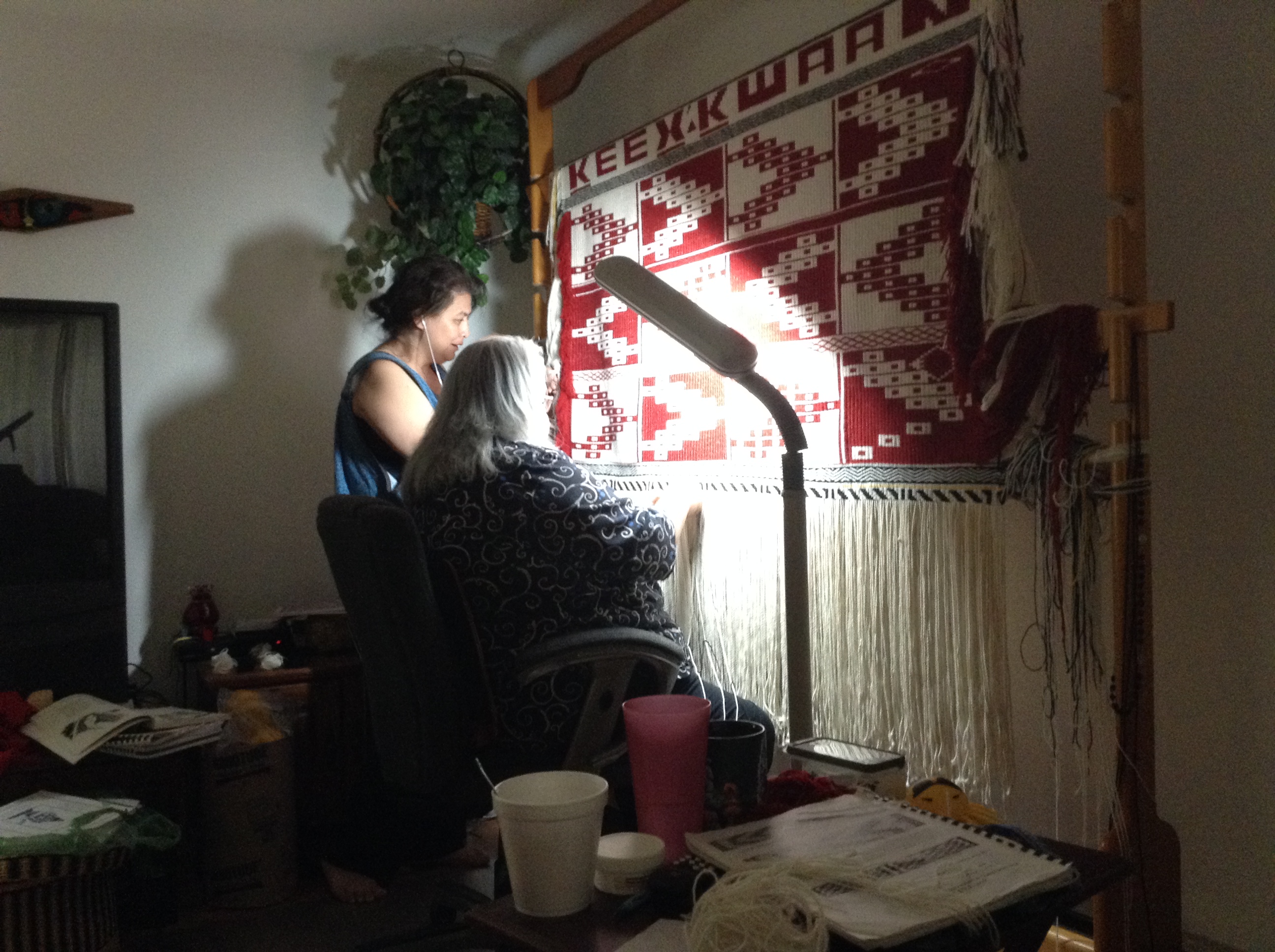
After seven years of studying, Gail received her Ph.D. this past February and had the graduation ceremony in Kake to thank the community. It took her mother three years to finish the robe. In the final year, she brought the loom wherever she went. She weaved in Juneau and Kake. She even brought it to Anchorage.

Gail says the robe represents journeys they both finished.

“When I look at this I think, ‘I’m done, I’m really done.’ I still have a lot of work to do, but the piece that’s kind of been nagging at me for seven years, the wait’s gone. It’s nice to see it finished. I think she feels the same, ‘Oh thank God, I’m done.'”

The robe will outlive both of them, Cheney says. In 500 years, the robe will continue to tell their woven stories of leadership and change.

Site notifications
Update notification options
Subscribe to notifications