Lisa Phu

Managing Editor, KTOO

"As Managing Editor, I work with the KTOO news team to develop and shape news and information for the Juneau community that's accurate and digestible."
Honsinger Pond property subject of Planning Commission appeal


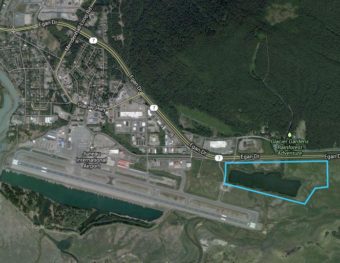
Owners of the Honsinger Pond property want to change the designation to Industrial, General Commercial, and Resource Development. View Honsinger Pond in a larger map.

The CBJ assembly will hear an appeal of a Planning Commission decision to not amend the Comprehensive Plan Map. The appeal was filed by Bicknell, Inc., owners of the 83-acre Honsinger Pond property near the Juneau Airport.
The former gravel extraction site is now a popular spot for water fowl. The property is surrounded by Egan Drive to the north and south, and the Mendenhall Wetlands State Game Refuge on the south and west

The site is currently designated as Resource Development in the 2008 Comprehensive Plan. Bicknell, Inc. requested an amendment to the Plan by changing the current designation to a mix of Industrial, General Commercial, and Resource Development.

The Planning Commission denied the request by Bicknell, Inc. at a hearing in April and issued a Notice of Decision in May. The appeal asks for the Planning Commission decision to be reversed and the amendment to the Plan approved.

At last night’s regular meeting, the assembly voted to accept and hear the appeal. Assembly member Mary Becker will serve as presiding officer.


Hartle is honored with award of appreciation, assembly hears from Glacier Swim Club

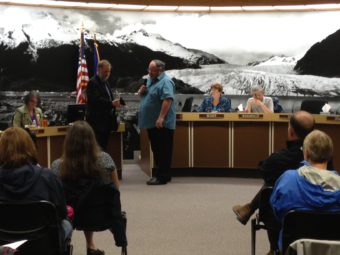
City attorney John Hartle accepts an award of appreciation from the CBJ assembly for his 20 years of service to Juneau. (Photo by Lisa Phu/KTOO)

City attorney John Hartle received a standing ovation in assembly chambers last night for his 20 years of service to the city of Juneau. CBJ assembly presented Hartle an Award of Appreciation.
Mayor Merrill Sanford recounted Hartle’s career before presenting the award. (Photo by Lisa Phu/KTOO)

Mayor Merrill Sanford recounted Hartle’s early career, “John worked for the Alaska State Legislature as a legislative aide to Senator Vic Fischer and Representative Brian Rogers in 1979 and 1984. He also was chief of staff to Representative John Sund from 1985-1988, so he has particular skill sets on handling the legislative people on the hill, for sure.”

Before starting his 20-year career in the law department for CBJ, Hartle also worked for the Civil Liberties Union in Boston, served as a legal intern to Alaska Supreme Court Justice Warren Matthews, and law clerked for Superior Court Judge Larry Weeks in Juneau.

Assembly member Jesse Kiehl gave a heartfelt thanks to Hartle for his many years of hard work.

“The best lawyers are good thinkers in addition to good writers and every time I have crossed paths with John Hartle doing work for Juneau, he just is a remarkable thinker and it has paid dividends for our community so I can’t say enough to thank him for those years,” Kiehl said.

A full assembly chambers gave John Hartle a standing ovation. (Photo by Lisa Phu/KTOO)

Hartle has held his current position of city attorney for ten years and this is his final week on the job.

CBJ is in the process of hiring Hartle’s replacement. The full assembly will interview four candidates. Karen Jennings is the administrative hearing officer for the Mat-Su Borough, Debra O’Gara is an Alaska Court System mediator and Planning and Development Director for SEARHC, Amy Mead is CBJ’s assistant city attorney, and Jane Sebens is CBJ’s deputy attorney.

One-hour interviews will be conducted with each candidate this Friday starting at 8:30 am.

Until the vacancy is filled with a permanent city attorney, the assembly appointed deputy city attorney Sebens to serve as acting city attorney.

In other assembly news, the body heard from JDHS ninth grader Sarah Mertz, a swimmer with Glacier Swim Club. Mertz spoke about the future early closures on Mondays at Dimond pool, a decision she heard was made due to budget cuts by the assembly.

“We were told that Dimond Park Aquatic Center on Mondays would not affect kids when it would be closing early and I want to say that’s not true. Closing the facility on Mondays will cut down every swimmers’ opportunity to take part in a sport they love,” Mertz said.

Mertz said the early Monday closure would cut practice time for swimmers impacting the performance of over 500 kids in Glacier Swim Club. During the school year, the pool at Dimond Park Aquatic Center is normally open Monday through Friday from 6 am to 8 pm, with additional weekend hours.

The Club also sent a letter to the assembly with signatures from around 60 students in grades K through 12. Several members of the club wearing GSC t-shirts were present during the assembly meeting.

According to city and borough manager Kimberley Kiefer, the parks and rec director will be negotiating with the Glacier Swim Club and the aquatics director on changes to the pool schedule. Kiefer says the pool would actually only be impacted by 2.5 hours on Monday.

Regarding the in-school swim program, Kiefer says the school district can adjust the morning hours, but not the afternoon hours. There are also plans, she says, to use Augustus Brown Pool to make up some lost swim time.

Currently, the Dimond pool has modified summer hours.


Stiff competition at Gold Rush Days

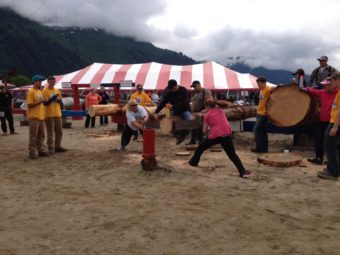
Thousands of people attended Juneau’s 23rd Annual Gold Rush Days at Savikko Park in Douglas, including some of the best logging competitors in Southeast, Alaska.

Alea Oien has been competing in Gold Rush Days for 17 years. Haines-resident Ashley Sage has been competing in logging competitions for 30 years. Together they make up the seventh pair in the women’s team hand bucking contest on Sunday morning.

This contest involves a two-man cross-cut M-tooth saw, otherwise known as a racing saw. This isn’t an ordinary saw. Most of these types come from a company in New Zealand. They cost over one-thousand dollars and, once you order one, it will take up to a year to get. People don’t buy this saw for logging.

“There are some people who are just die hard competitors in this and the best way to keep an edge on everybody is practice, practice, practice,” says Jesse Hay. He’s off to the side watching, waiting for his turn to compete later on. Hay owns three saws but doesn’t have an M-tooth race saw yet. He says it’s in the budget. “Both me and the wife are competing so it’s an investment”

Hay has been helping out with Gold Rush Days since 1992 and started competing ten years ago. His wife Anna has been competing for four. Together they’ve racked up substantial prize money in the past and they’re hoping for the same this year.

“You never know who’s going to show up. Some years it’s a little lean on competitors. Other years, there’s a bunch of them. It’s the luck of the draw and a lot of skill and a little bit of preparation,” says Hay.

According to Gold Rush Commission member Jerry Harmon, this year’s competition is stiff.

We have guys here that compete on the national circuit. They’re around. They’re here today. They come and go. They’ll compete for a while. Prize money is pretty good this year so they’re probably over here trying to get some of that and they will.”

But Gold Rush Days isn’t just about the money. It’s a celebration of mining and logging and of the people who do this work. “We let people know we have families, we drive cars, we fish, we cry, we laugh. We’re just like anybody else and it’s our job to mine and log,” Harmon explains.

Back at the women’s team hand bucking contest, Oien and Sage cut through a 13-inch log in 23 seconds. They get first place. Their secret, says Oien, is “experience.”

Sage says it’s about getting the right rhythm. “Back and forth, and back and forth, and faster, faster, faster and hopefully it’s done real soon.”

As first place winners in this event, Oein and Sage will share a prize of $150. That’s just one contest. There are six more logging events in the day and Oein is competing in all of them.

If Gold Rush Days doesn’t fulfill everyone’s thirst for winning, there’s always next month’s logging competition in Haines.

Kerttula respects Petersburg’s desire to leave district

Beth Kerttula
Representative Beth Kerttula speaks to the Petersburg Chamber of Commerce. (KFSK file photo)

Representative Beth Kerttula didn’t know Peterburg’s borough assembly was planning to ask again to get out of Juneau’s legislative district.
The small fishing community is sending a letter to the Alaska Redistricting Board requesting to be in a district with Sitka, Wrangell, and other smaller Southeast communities.

But Kerttula says she’s not surprised.

“I just respect Petersburg’s desire to be more of what they used to be in terms of the contiguity of their district. I don’t know that that will happen,” the democratic representative says. “As I’ve said, I love representing Petersburg. It’s a tremendous community. Senator Egan and I have great connections there and will continue to work our hardest for them frankly whether they’re in the district or not.”

Kerttula says she and Senator Egan had worked diligently on getting appropriation money for the community during the recent legislative session. Petersburg received 2.5 million for its police station and more than 2.1 million in state money for its elementary school. The airport got 3 million in federal money and another 3.3 million for Haugen drive and adjacent bike path.

Petersburg fought the inclusion in Juneau’s house and senate district last year. The Redistricting Board this week is beginning the process of redrawing Alaska’s legislative lines.

Kerttula thinks regardless of how the lines are drawn, there will likely be a smaller community placed in Juneau’s district.

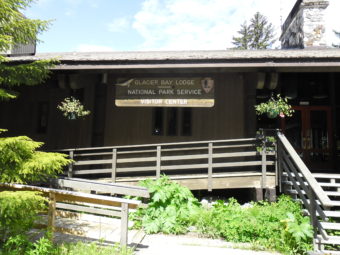
Glacier Bay Lodge may shut its doors next year

Glacier Bay Lodge may shut down after this season. Glacier Bay National Park and Preserve put out a prospectus for concession services in January but received no bids by the March 26 deadline. Closing Glacier Bay Lodge could have rippling effects on the economy of Gustavus.

For the past ten years, Glacier Bay Lodge has been run by a joint venture between food services company Aramark and Huna Totem Corporation. Aramark is headquartered in Philadelphia and also supplies concession services in Denali National Park and Preserve, among other parks around the country.

Besides running the Lodge and restaurant, Aramark and Huna Totem are responsible for providing day boat services, camper and kayak drop offs and pick-ups, marine fuel sales, ground transportation between Gustavus and Bartlett Cove, retail shop, and maintaining public showers on the Park campground. All these services are in danger of disappearing after this season.

Susan Boudreau is superintendent at Glacier Bay National Park and Preserve. She says she asked interested parties why none of them put in a bid to run the lodge.

“The bottom line is it’s just not financially feasible. It hasn’t been making money. It hasn’t been making money for the past 20 years. Right now with the economy, it’s just a risk for them. They all ran the numbers and it’s just not the right timing for them.”

Boudreau is not worried about the park losing visitors if the lodge closes.

“I don’t really see how it can affect the National Park at all because the visitors are so intrigued about coming to the park. It’s on their bucket list. It’s the top of the line,” she says.

According to the National Park Service, more than 400,000 people visited Glacier Bay in 2011, most by cruise ship, but 25,ooo flew or ferried into Gustavus before entering Glacier Bay.

Gustavus Mayor Lou Cacioppo says losing Glacier Bay Lodge would be devastating.

“It would be a very serious blow to the economy directly and indirectly. We can guess what the fallout’s going to be but I’m sure it even encompasses more than what I’m realizing at this moment.”

Glacier Bay Lodge contains 56 rooms, which accounts for about half the rooms available in all of Gustavus. Cacioppo says the closure of the lodge would be a revenue hit for the city in regards to bed and sales tax.

JoAnn Lesh is president of the Gustavus Visitors Association and owns Gustavus Inn with her husband Dave.

“If the lodge closes, we’ll lose half of the beds in town which will decrease our ability to support all of these activities like kayaking, whale watching, charter fishing,” Lesh says.

Boudreau says the park is exploring other options. The first is the feasibility of a temporary 2-year concession contract for day boat and camper drop-off services for the 2014 and 2015 seasons. A second is determining if the January prospectus can be revised to make the contract more financially feasible. According to the park service, if a new prospectus is issued, a new concession contract probably would not be in place until the 2016 operating season.

A third option is extending the current contract with Aramark and Huna Totem for another two years. Aramark declined to comment for the story but offers this statement:

“We continue to speak with the National Park Service about the possibility of managing the lodge beyond the current contract, however, there are a number of factors to take into consideration before a decision can be made. In the meantime, we are focused on providing a high level of service for guests this year.”

Huna Totem Corporation did not return repeated phone calls regarding Glacier Bay Lodge.

Alaska’s congressional delegation in Washington, D.C. has gotten involved in the issue. Letters have been written to Interior Secretary Sally Jewel and National Park Service Director John Jarvis urging the lodge stay open.

UPDATE: 

After completion of this story, Huna Totem Corporation contacted KTOO with a statement regarding the possible closure of Glacier Bay Lodge. Huna Totem, in a joint venture with Aramark, holds the concession contract for the lodge, which ends this year, and did not put in a bid to continue to run the lodge.

Speaking through Thompson & Co, a PR firm based out of Anchorage, Huna Totem CEO Lawrence Gaffaney releases this statement:

“Huna Totem Corporation is committed to working with the National Park Service in Glacier Bay and sharing the personal story of our ancestral homeland, Sit’ Eeti Gheeyi, with visitors. While it’s our intention to continue offering authentic cultural programming for travelers in the park, we don’t know yet how the concession contracts may change. We are still talking with the Park Service and others on how to maintain a cultural and professional presence in the park and provide an improved experience for non-cruise ship visitors.”

Ferry service to Gustavus draws mixed reaction

Gustavus has a year-round population of around 450. Many residents like to congregate at the town’s ‘Four Corners,’ where the Fireweed Gallery and Coffee Shop is located. (Photo by Lisa Phu/KTOO)

State ferry service between Juneau and Gustavus is in its third season. While most Gustavus residents are happy with the additional transportation option provided by the Alaska Marine Highway System, others aren’t sure the change is good for the small community.

The first ferry between Juneau and Gustavus sailed on November 23, 2010.

“I waited pretty much most of my life and just thought it was a dream that would never ever happen,” says Sylvia Pederson.

Passengers on the LeConte relax during their four-hour ride from Juneau to Gustavus.

Pederson has spent her whole life in Gustavus, a town with a year-round population of 450. She’s also spent most of her life in fear of flying, which used to be the only way to get to and from Gustavus. So whenever Pederson left home, she had to take anxiety pills.

“There was no other option so I mean I did it, because you have to, but I never liked it. All the pilots would humor me and say, ‘It’s a Sylvia day or not,'” she laughs.

Now Pederson doesn’t let six weeks pass by without traveling to Juneau by ferry. She goes for medical purposes and visits her mother in the Juneau Pioneer Home. On this particular journey, Pederson went with her mother to the Senior Ball, something Pederson would’ve never considered if it meant flying.

Gustavus residents Leslie Sirstad and Betty Markey are also traveling back home from Juneau.

Aboard the LeConte: Gustavus residents Leslie Sirstad and Betty Markey use the ferry to get supplies and to take a break.

“I’m working on family record kinds of thing, so I got some scrapbook things. That was the real reason why I went in,” says Sirstad.

Markey’s trip was for a similar purpose. “I went in to get supplies and just to look around.”

Markey went to Costco and Fred Meyer which are common stops for Gustavus residents who want to fill their vehicles, an option now possible because of the ferry.

Sirstad and Markey also go to Juneau to take a break, “to change the scenery, make home look better,” says Sirstad. Markey adds, “And to get to go to a restaurant, a different restaurant, different foods, ‘cause you’re limited in Gustavus. We’re not complaining. We’re happy the way it is.”

Barb Miranda Bruno is also happy with the way it is. In fact, she may have liked Gustavus better before the ferry. Bruno is co-owner of Sunny Side Market, a health food store and café that opened in 2007 and is geared toward locals. While the ferry does bring more people to her business, Bruno says inaccessibility is a key reason residents live in Gustavus. She calls herself a fence-sitter regarding the ferry.

“It’s just busier,” Bruno says. “It just changes the way Gustavus was. If you talk to the old timers, before the road was paved, that was a big deal, before electricity, that was a big deal, and now we have the ferry so there are these incremental changes that slowly have Gustavus become a little bit more like other places and I think a lot of us chose to live here because it was different.”

Toshco owner Toshua Parker says he opened his business based on the ferry coming to Gustavus.

Toshua Parker comes from a homesteading family in Gustavus. He’s the owner of Toshco, “which is a grocery, lumber, hardware, clothing and marine, and everything else store,” Parker explains.

It’s no coincidence that his store has been around for as many years as the Alaska Marine Highway has been going to Gustavus. Parker says he started his business because of the ferry.

“Without the ferry, there would be really no way for us to get these materials out here economically enough that we could pass the savings on to the customers and hit the price point that we need to hit to make this work. At this point I don’t know how we’d survive without it. It’s really been a godsend for us out here.”

An example of those savings – the price of a gallon of milk is $5.99. Parker says it was double that before his store opened. Toshco and Sunny Side Market are the only grocery stores in town.

Barb Miranda Bruno co-owns Sunny Side Market, a health food store and cafe.

Gustavus is the gateway to Glacier Bay National Park so residents are used to seeing tourists. But Kelly McLaughlin, owner of Fireweed Gallery and coffee shop, says the ferry has changed the type of people who come to Gustavus.

“We see a lot more of independent travelers who aren’t looking to spend a lot of money, who just want to come and see Gustavus. So there’s a higher traffic but maybe not as much money spent,” she says.

The ferry is also bringing in more vehicles.

“The traffic is a little bit difficult sometimes because we’re not used to quite so many cars. People haven’t quite figured out how to deal with all that, but it’s coming,” says Pederson.

Pederson is confident Gustavus residents will bend with the changes. They’ll need to – in October, the Alaska Marine Highway plans twice-weekly trips between Gustavus and Juneau year-round.

Site notifications
Update notification options
Subscribe to notifications