Matt Miller

Morning Host & Local News Reporter

I’m up early every weekday morning pulling together all the news and information you need to start your day. I find the stories unique to Juneau or Southeast Alaska that may linger or become food-for-thought at the end of your day. What information do you need from me to give your day some context?
Update: Family to expand search for hiker missing in Juneau

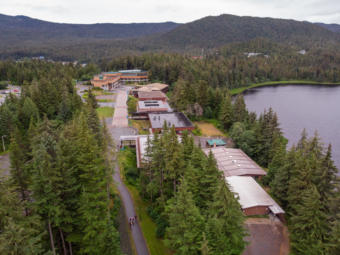
The University of Alaska Southeast campus in Juneau. Searchers found items belonging to Joseph Clayton, who has been missing since last Friday, in the wooded area commonly known as Back Loop, between the UAS main entrance and the Auke Bay roundabout. (David Purdy/KTOO)

Family members and volunteers are expanding their search for an Oregon man who is missing in Juneau.

Joseph Clayton was last seen Friday, Aug. 20 at 7:30 a.m. (Photo courtesy of Juneau Police Department)

Joseph Clayton, who goes by Joe, has been missing since he left for a hike last Friday. His keys, backpack and binoculars were found Tuesday in a wooded area off Mendenhall Loop Road, commonly known as Back Loop, between the University of Alaska Southeast main entrance and the Auke Bay roundabout.

Clayton’s niece, Adreann Randle, says SEADOGS, or Southeast Alaska Dogs Organized for Ground Search, were called to the area Tuesday. But she says the dogs were unable to find Clayton’s scent.

She says professional searchers have since advised the family to start searching outside of the Auke Lake area. She says they got a report of someone matching her uncle’s description trying to hitchhike. It’s possible he may have walked or gotten a ride elsewhere.

Randle says they’re putting up fliers and canvassing places from downtown Juneau and Sandy Beach in Douglas to Eagle Beach, out-the-road. That includes campgrounds, trailheads and places where homeless residents may gather.

Clayton is a 48-year-old, white male, about 6 feet 2 inches tall and 220 pounds. He was last seen wearing a T-shirt and jeans.

If anyone spots someone who they believe is Clayton, Juneau police ask that they be called right away at 586-0600 and stay within eyesight until an officer can arrive and verify his identity.

Clayton has a form of anxiety and may try to retreat if someone rushes up to help him.

This story has been updated with information about where the family is searching and what people should do if they see Joseph Clayton.

Gardentalk – Cleaning and curing your garlic harvest

Garlic
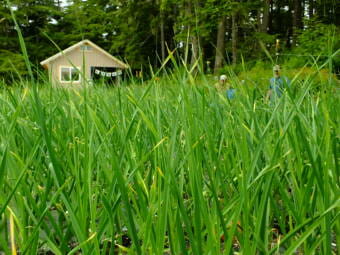
Sam Bertoni and Joe Orsi of Orsi Organic Produce harvest the scapes of nearly 2,500 garlic plants that are already 3-4 feet high. In this picture taken in early July, the tips of some of the leaves are just beginning to turn yellow. Orsi says when half of the leaves are yellow, then it’s time to harvest the entire garlic plant. (Photo by Matt Miller/KTOO)

When half of your garlic plants’ leaves turn yellow, then that’s the signal to harvest.

Joe Orsi follows that guideline for his small commercial operation located out the road.

In the latest edition of Gardentalk, Orsi described how he uses a special tool to harvest a lot of garlic at one time. But most gardeners can simply dig down to the bulb to carefully harvest the bulb. Never pull them up by the leaves.

Orsi also soaks or washes the soil off the garlic bulbs before peeling or removing the first few layers of wrappers or the skin surrounding it. Then, he chokes or gathers them up in bunches of five to hang for several weeks to dry out.

Volunteers, family members continue search for Joseph Clayton in Juneau

Joseph Clayton was last seen Friday, Aug. 20 at 7:30 a.m. (Photo courtesy of Juneau Police Department)

Volunteer searchers are heading out Tuesday to continue looking for an Oregon man who has been missing in the Juneau area for the last four days.
Joe Clayton was last seen Friday morning before he left for a planned hike up Perseverance Trail. His car was later found at the Auke Lake boat ramp. During a search of the area over the weekend, searchers did not find any other trace of him.

On Monday, officials suspended the active search for Clayton. Troopers said they’ll resume active searching if they have any further indications of his whereabouts. Juneau police are investigating Clayton’s disappearance as a missing persons case.

Tuesday afternoon, eight friends and family members plan to search the trails to Spaulding Meadows and the John Muir cabin. New volunteers are asked to download and use the Gaia GPS app to record their search efforts for review later.

Clayton is a 48-year-old, white male, about 6-foot-2 and 220 pounds. He was last seen wearing a T-shirt, jeans, and a light-colored backpack.

Anyone who sees Clayton is advised against rushing up to help him since he has anxiety that may force him to retreat.

Why is it so hard to find bait herring just before Juneau’s big salmon derby?

Empty freeezer
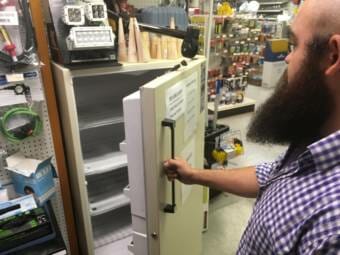
This bait freezer contains absolutely nothing. Like other Juneau stores, managers at Harri Plumbing & Heating say they’ve been out of bait herring for at least several weeks. (Matt Miller/KTOO)

Juneau area sport fishermen are gearing up for this weekend’s Golden North Salmon Derby. But empty shelves in bait freezers all over town have a lot of them asking: Where is the bait herring?

Brian Wallace leads the way down the narrow, steep stairs into his basement and opens the door of his freezer.

“That’s it. That’s the only thing I have left,” he said, as he pulled out a single, small tray of frozen bait herring.

Wallace says the herring are smaller than he likes. He’s also worried about them not staying on the hook.

“To me, the bait, they seem a little mushy,” Wallace said. “The flesh on it, it’s just not solid enough for me to be confident.”

Just a single tray of bait herring
Brian Wallace is saving his one and only tray of bait herring for the first day of Juneau’s Golden North Salmon Derby on Aug. 13. (Photo by Matt Miller/KTOO)

An avid fisherman who goes out as often as he can, Wallace is saving this one little bait tray for the first day of the derby because he can’t find any more in town.

We checked in with a bunch of Juneau stores that usually sell bait herring. All said they were out. Some have been out of stock for months.

“Oh, no! It’s sad to hear that!” said Rachel Stewart, co-owner of Jerry’s Bait in Port Ludlow, Washington. That’s the company that produced and distributed Wallace’s bait.

“We’ve only been able to fulfill orders for our customers,” said Stewart.

In a normal year, the volume of herring Stewart sends to Juneau is enough. But this year, something went wrong in the bait herring supply chain.

“So, everyone else that’s been calling us that normally gets their bait from Canada, we can’t supply them with bait this year because there hasn’t been enough,” she said.

And here’s where it gets complicated. Because it turns out that in Canada, it’s not that they didn’t catch enough herring. It’s that they were the wrong size.
Grant McNeil of Walcan, a wholesaler based on Quadra Island in British Columbia, says they all came in too big. Those big herring are used by commercial fishermen. Sport anglers like a five- to six-inch fish. But McNeil says there just weren’t a lot of those fish this year.

“I was down this year by about 90% in what I was able to put up on trayable bait, which is massive!” McNeil said. “Like 90% down on any specific product is a huge anomaly.”

Jim Kearley, owner of Growler Cove Bait Company based in Victoria, says there’s another issue. He recalls as many as ten companies in the area catching bait herring 25 years ago. Now, he says there are only two.

“In the last probably 10 years, it’s been very difficult for them to catch the correct size,” Kearley said.

So, with no bait herring in town, what can sport anglers do to land that big, winning king or silver?

Derby officials and Alaska Department of Fish and Game biologists suggest a flasher and a hoochie, or a spoon or plug. Maybe add some herring scent. Or maybe you still have an old package of hooligan stuck in the freezer.

Wallace says he might actually use his last tray of herring to catch something else, like a halibut.

“Then I use halibut guts for more bait,” Wallace said. “Works great! Just chop the stomach in half, stick it on there, and it’s a nice, beautiful tasty treat.”

Alaska courts require face coverings regardless of vaccine status

The Dimond Courthouse in Juneau on Feb. 27, 2017. (Photo by Jeremy Hsieh/KTOO)

Face coverings are now required for every visitor to a state courthouse, regardless of vaccination status.

Alaska Supreme Court Chief Justice Daniel Winfree issued the latest order on Tuesday, reversing a previous order relaxing the use of masks in state court facilities. 

Winfree writes that masks are necessary because of increased COVID-19 case counts and the prevalence of the more contagious delta variant throughout the state. Also, he refers to information from the Centers for Disease Control and Prevention which shows that fully vaccinated people can spread the Delta variant just as fast as non-vaccinated people.

Some exceptions to the mask-wearing rule include children under two years of age or someone who has a mental or physical disability that prevents them from wearing a mask.

In addition to masks, courthouses may resume screening visitors for possible infection and making them sign in.

Winfree’s order is in addition to other health precautions ordered by the presiding judge in each region. For example, Juneau Superior Court Judge Amy Mead suspended criminal jury trials and grand jury proceedings until at least the end of August in every major courthouse in Southeast Alaska. That’s because of high case counts and elevated risk levels in communities in the region.

Governor’s veto leaves many Alaskans without access to free legal help

This massive seal of the state of Alaska hangs on April 19, 2018, behind the dais where Alaska Supreme Court justices hear cases in the Boney Courthouse in Anchorage.
The seal of the State of Alaska hangs in the Boney Courthouse in Anchorage. (Photo by Jeremy Hsieh/KTOO)

Among Gov. Mike Dunleavy’s recent budget vetoes was $400,000 for the Alaska Legal Services Corporation, a private, nonprofit organization that provides free civil legal aid to Alaskans. That’s a huge cut in state funding for an organization devoted solely to providing free legal aid to low-income Alaskans.

Nikole Nelson, executive director of Alaska Legal Services Corporation, says the civil justice gap is deep and broad, and it has a big impact on the community.

Private attorneys can cost several hundred dollars an hour. That’s out of reach for many Alaskans.

“There’s just a real lack of knowledge out there about how difficult it is for regular people to get access to civil legal help. And, this is a really complicated time,” Nelson said.

One woman, Rhonda, says her attorney came from Alaska Legal Services Corporation and she’s thankful for the legal help.

“The situation was very hard for me, emotionally,” she said.

Rhonda says her now ex-husband was an alcoholic and drug addict. He frequently became angry, verbally and emotionally abusive and threatened her with weapons.

In one instance, he threatened to shoot Rhonda and their young child when she tried calling 911. She escaped when he turned his back.

“I took that moment to get away from him. I grabbed my jacket and keys and just quickly slipped out, and got in the car and left,” Rhonda said.

He was arrested, but Rhonda says he repeatedly bailed out of jail and violated his conditions of release by contacting her.

A women’s shelter referred her to an attorney at ALSC who quickly drafted a long-term protective order and got it before a judge. Rhonda says the attorney also drew up a will so that if anything happened to her, then her child would be placed in the custody of a trusted and caring friend instead of her ex-husband.

ALSC provides services for people, like Rhonda, who need assistance.

They may need help, for example, escaping their abuser or filing for child support. Or, a senior may need help with a power of attorney, an Alaska Native veteran might need help applying for a land allotment, or a tenant faces eviction. Sometimes those landlord-tenant issues can even be resolved before going to court.

Nelson says all those needs fall disproportionately on people of color.

“About 45% of the individuals that we represent are Alaska Native people,” Nelson said.

Community education is also a big part of Alaska Legal Services Corporation. They run a regular call-in helpline on landlord-tenant issues and hold online clinics focused on pandemic rent relief and the eviction moratorium.

Ryan Fortson says it was satisfying working on tenant and domestic violence cases when he was at Alaska Legal Services Corporation earlier in his career.

“I wanted to get a position where I felt that I could make more of a difference and help people that needed help that couldn’t necessarily afford legal assistance,” Forston said.

Rhonda had a favorable outcome because she had an experienced attorney who knew the law and knew exactly what to do, and there’s research that essentially backs that up. Fortson is now an associate professor at the University of Alaska Anchorage’s Justice Center. In looking at divorce and child custody cases in Palmer a few years ago, he says they discovered that a parent was more likely to get the custody arrangement they sought if they had an attorney and the other parent did not.

“On average, the lawyer is going to be able to have some influence on the court and on the final decision,” Fortson said.

In an opinion piece in the Anchorage Daily News, Gov. Dunleavy responded to critics who called his budget cuts “devastating” or “cruel”. He wrote that he had “put Alaskans first”, and his “highest calling is to Alaskans and Alaskan families”.

But Nelson says that’s exactly who Dunleavy is hurting. In a response also published in the ADN, she says Dunleavy’s veto brought their state funding down to its lowest level in 11 years.

“I think it’s the birthright of Americans. It’s supposed to be that we have liberty and justice for all, not just for those who can afford to pay for it,” Nelson said.

Nelson says they usually have broad bipartisan support in the Legislature. But she doesn’t know if legislators will override the Governor’s vetoes or restore funding during the special session.

“We already turn away one person for everyone that we represent for lack of resources,” Nelson said.

Cases like Rhonda’s with immediate health and safety concerns will still be a priority if the budget cut stands. But Nelson says over 800 additional Alaskans — including other domestic violence survivors, crime victims, parents, tenants, veterans and seniors — will all get turned away.

Site notifications
Update notification options
Subscribe to notifications