Nathaniel Herz, Northern Journal

Above the Yukon River, on Native land, Hilcorp is set to drill for oil this summer

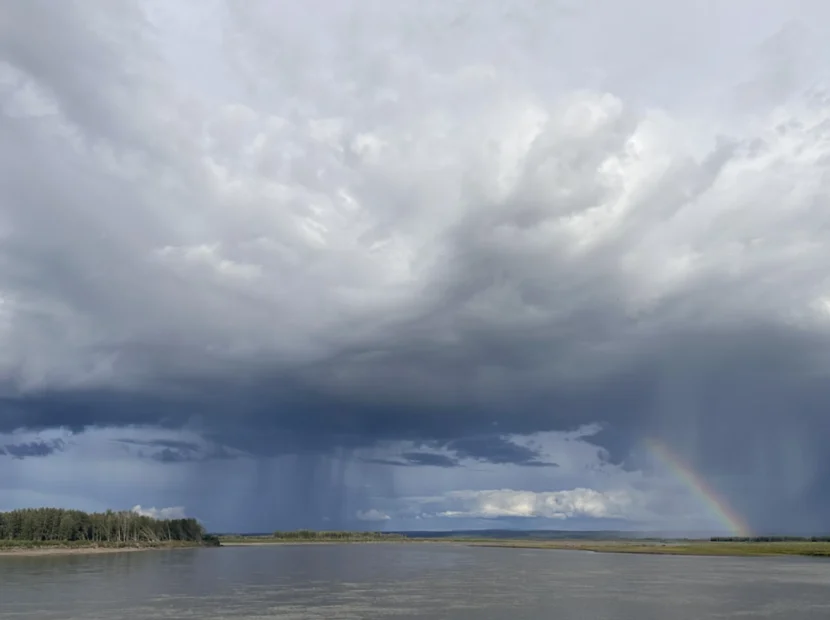
Rain falls along the Yukon River in the Yukon Flats region, where oil company Hilcorp is planning to drill exploration wells this summer. (Bathsheba Demuth)

Later this spring, barges of heavy equipment will pull away from a launch on Alaska’s road system and begin a journey up the Yukon River.

More than 100 miles upstream, a tributary, Birch Creek, branches off.

The equipment’s destination is along that creek, on remote property owned by Alaska Native corporations in a huge basin called the Yukon Flats.

There, an oil company will set up a specially designed rig to drill the basin’s first-ever deep wells, which the landowners hope could lead to the discovery of the state’s next big oil field.

If found, petroleum could create well-paying jobs for Yukon watershed residents and generate big dividend payments for the 20,500 shareholders of Doyon, the for-profit Native corporation for Alaska’s Interior region.

Doyon’s leaders describe the drilling effort as a rare opportunity — one that could deliver a lucrative resource sought from its lands for decades, though never produced.

But the campaign has engendered a broad backlash from tribal governments in the region.

Much of the opposition stems from the track record of the business that will be doing the drilling: Hilcorp, the large, privately held oil company founded by a Texas billionaire, Jeff Hildebrand.

Hilcorp has substantially increased its holdings in Alaska in recent years and now operates the massive Prudhoe Bay field on the state’s North Slope, where it partners with major firms like ExxonMobil and ConocoPhillips.

A Hilcorp drilling rig operates on the shore of Cook Inlet, not far outside Anchorage. The company will use a different rig for its exploratory wells in the Yukon Flats this summer. (Nathaniel Herz/Northern Journal)

But it also has a history of leaks and accidents, prompting fears from Yukon watershed residents about the risks of its new drilling program.

“We’ve seen it so many times, that these big corporations come in and they take and take. They say they’re going to reinvest and it never happens,” said Rhonda Pitka, chief of the tribal government in Beaver, a Yukon River village some 20 miles downstream of the Birch Creek confluence. “What will we end up with at the end of all this?”

Whether the Yukon Flats will support commercial fossil fuel production remains highly uncertain, and likely won’t be known for years. More exploratory drilling will almost certainly be needed to better define a deposit even if Hilcorp finds evidence of petroleum this summer, and the infrastructure to extract and move it to market would require an array of environmental permits.

Even at this early stage, opponents are aggressively fighting the drilling plans. At a meeting last month, Interior Alaska’s consortium of 42 tribal governments, Tanana Chiefs Conference, approved a resolution against oil development by Hilcorp in the Yukon Flats, saying it’s too risky for the “ecologically and culturally significant region.”

But leaders of Birch Creek, the tiny Indigenous community closest to the drilling sites, have endorsed the effort, saying it could produce desperately needed jobs.

Birch Creek’s Native village corporation also owns some of the land where the drilling will take place, and like Doyon, it stands to benefit from a discovery.

“Without the economic activity this exploration project could create, Birch Creek and the other Yukon Flats villages may simply cease to exist, and our way of life will be lost forever,” the community’s tribal government said in a 2020 resolution endorsing the program. Birch Creek’s population is now just 30 people, and its school closed more than two decades ago because it had too few students, according to the state of Alaska.

The support from Birch Creek has given Doyon and Hilcorp the “social license to operate in that area,” Doyon’s chief executive, Aaron Schutt, said in an interview.

If oil is found, Doyon’s agreements with Hilcorp would require the company to hire shareholders and local residents, he added.
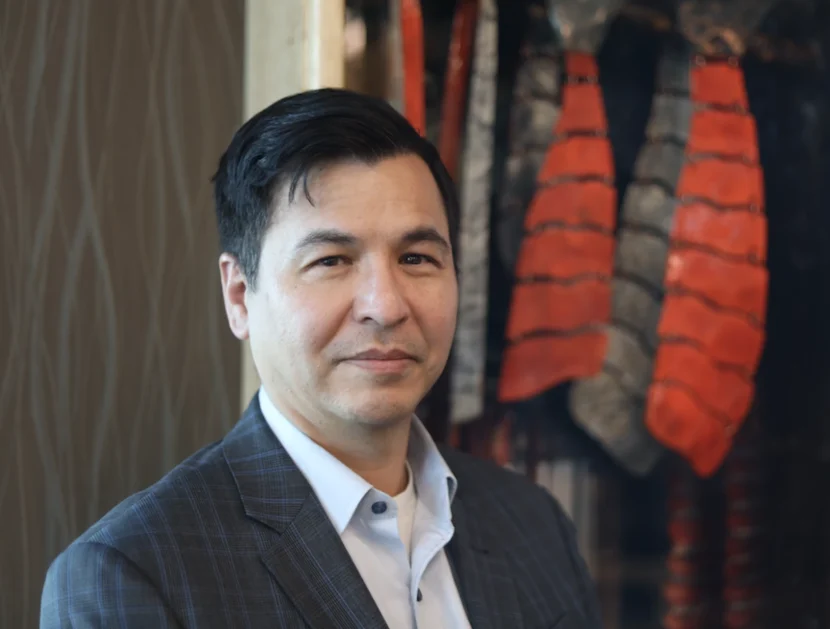
Aaron Schutt, Doyon’s chief executive, stands in his Anchorage office. (Nathaniel Herz/Northern Journal)

Schutt said that Doyon’s early leaders, a half-century ago, chose to claim land in the Yukon Flats specifically because of its potential to yield oil and gas.

“We can’t re-select. We can’t undo those deals that were done by our leaders 50 years ago,” he said. “We’re stuck with the hand we were dealt from 1972 to 1975. And we have to balance all of these various constituencies and opportunities and concerns, and do the best job that we can.”

Birch Creek leaders, through a Doyon official, declined to comment. Hilcorp released its own prepared statement saying it’s “excited to work with Doyon and community stakeholders to advance this meaningful exploration project in the Yukon Flats.”

“Together, we are developing a tailored program to responsibly evaluate the region’s energy and resource potential,” said spokesman Matt Shuckerow.

A geologic enigma

The Yukon Flats basin covers more than 10,000 square miles, bounded by the Brooks Range mountains to the north and the White Mountains to the south. The Yukon River sweeps across from east to west, and the trans-Alaska pipeline snakes over the land from north to south.

The basin began forming at least 60 million years ago, according to Marwan Wartes, a veteran geologist with the Alaska Department of Natural Resources.

It’s still sinking today, making it difficult to study. Often, petroleum-rich regions of the state have experienced uplift, producing rocky outcroppings that give glimpses of their geologic histories — but those clues aren’t present in the flats, Wartes said.
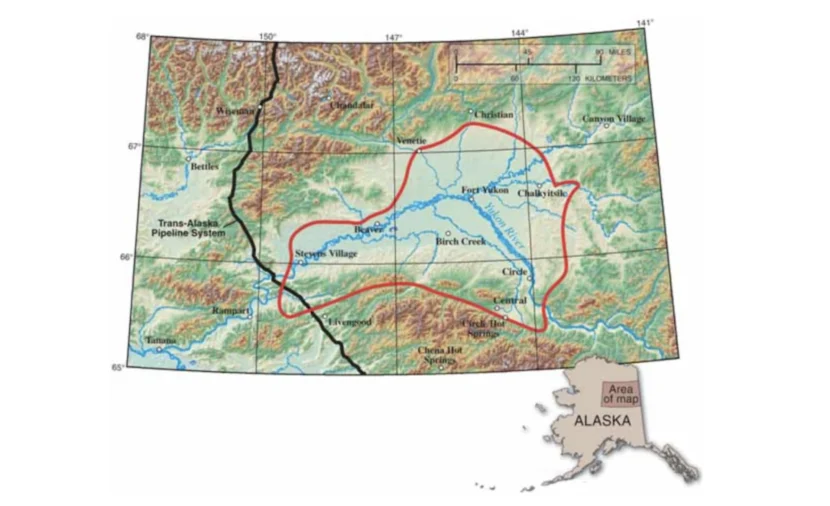
A United States Geological Survey map of the Yukon Flats. (USGS)

Experts suspect that the area contains sedimentary deposits that could produce natural gas, or even oil. But no one has drilled deep wells to confirm those theories, so the flats’ subsurface remains something of a geologic enigma.

“When I look at the whole map of Alaska, it always catches my eye, and I always am frustrated that we know so little about it — because it’s mostly burying itself,” Wartes said. “It is a mystery, and I think most geologists would agree to that.”

Today, the region, home to the Yukon Flats National Wildlife Refuge, is important habitat for as many as 2 million migratory ducks, as well as several species of fish. Its salmon and moose have long sustained the region’s Native people, who now live primarily in seven Indigenous villages within or near the refuge.

For nearly two centuries, the Yukon Flats have also been the source of global commodities — starting in the mid-1800s with furs, and continuing with the 1893 discovery of gold in Birch Creek.

The region has never produced oil; nearly all of Alaska’s petroleum comes from the other side of the Brooks Range, on the North Slope.

But Doyon and oil companies have long eyed the flats for its potential, dating back to the years after the 1971 Alaska Native Claims Settlement Act. That federal legislation terminated Indigenous land claims in the state by transferring some 10% of Alaska’s land to newly formed, Native-owned corporations — which, with certain limitations, could choose the land that they wanted.

Doyon, owned by Alaska Natives with ties to the Interior region, became the state’s largest private landowner.

Working at the time with smaller Indigenous-owned corporations connected to the region’s villages, Schutt said, Doyon selected additional land in the Yukon Flats, hoping that it would yield petroleum. The idea was to capture areas with oil potential while also leaving room for the region’s residents to continue their subsistence-based lifestyles.
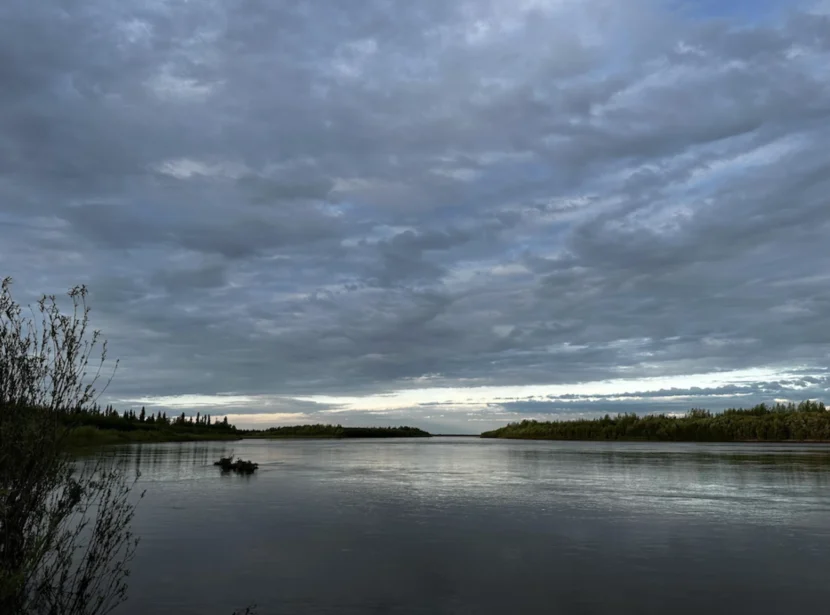
A view of the Yukon River near the village of Beaver. (Bathsheba Demuth)

Doyon formalized that strategy, Schutt said, in agreements with five village corporations. A 1974 agreement with Beaver’s Indigenous-owned corporation refers to the “potential for oil and gas” in the area around the village, “the development of which would benefit all of the shareholders of Doyon.”

Pitka, Beaver’s current tribal chief, said that oil was not the driving force behind the village’s participation in the Doyon agreement.

“The village corporations picked land for subsistence,” Pitka said. “People were living on the land.”

In the years after the land deals, major oil companies prospected for oil in the Yukon Flats; Exxon even signed an exploration agreement with Doyon. But Exxon pulled out of the region after its major 1989 oil spill near Valdez.

Studies continued, however.

Doyon contractors have collected hundreds of sediment and soil samples throughout the basin. The corporation has also conducted seismic testing, and it collaborated with federal and state agencies that drilled a research well to a moderate depth in 2004. The United States Geological Survey has estimated that the Yukon Flats contain 173 million barrels of oil, with a smaller chance of as much as 600 million barrels.

“This has been a basin that’s been on everyone’s radar as having potential for a long, long time,” said Wartes.

Hilcorp’s involvement began in 2019, when it signed an exploration agreement with Doyon covering some 2,500 square miles of the Native corporation’s land.

Since then, Hilcorp has flown airborne surveys to gather geologic data, and it’s also drilled more than a dozen shallow test wells. Last year, it narrowed its focus, signing oil and gas leases with Doyon that cover 94 square miles near Birch Creek.

This kind of remote oil and gas exploration work, known as wildcatting, is not Hilcorp’s specialty; the company is better known for buying aging oil fields and making them more productive.

“They must see something that really captivates them, because there’s no shortage of oil on the North Slope,” said Phil Wight, an energy and environmental historian at the University of Alaska Fairbanks.

Even Schutt, the Doyon chief executive, said he’s not sure exactly what’s driving Hilcorp’s interest.

“I actually don’t know the answer to that,” he said. “It’s still kind of a mystery.”

A big upside for Doyon

This summer, Hilcorp plans to drill two exploration wells on separate sites.

The company has not publicly announced its plans, but some details have trickled into public view through documents submitted to the state. Hilcorp’s drilling effort requires an array of permits, among them a contingency plan that includes how the company would respond to a blowout.

The locations of the company’s two planned wells are 10 and 15 miles, respectively, from the Yukon River and the village of Birch Creek, according to the permitting documents. The sites will be supported by a worker camp staffed 24 hours a day.

The area is along a lower branch of Birch Creek and is accessible only by barge, helicopter or skiff, depending on water levels. Schutt said the work will leave a light footprint.

“If there’s no further development, those lands will be indistinguishable from the lands next door in 10 years,” he said.
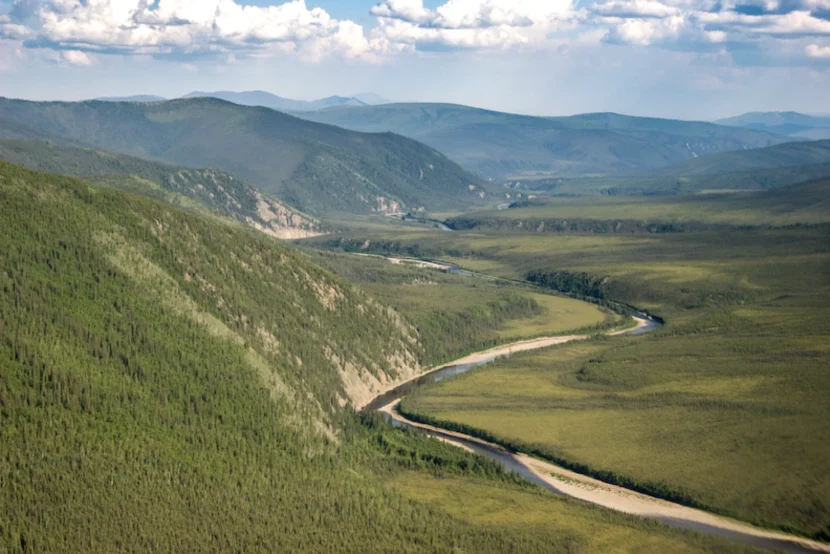
A stretch of Birch Creek above where Hilcorp’s summer wells are planned. (Craig McCaa/BLM Alaska)

Opponents of the plan have focused their efforts on a pending Hilcorp request to state land managers to pump water from Birch Creek and a nearby lake for its drilling operation.

The company says it will take a maximum of half of one cubic foot per second from the creek, which it describes as 0.05% of its flow. Ten different tribal groups have objected, according to their comment letters released by regulators in response to a Northern Journal public records request.

Allowing Hilcorp’s proposed withdrawal “would degrade water quality and jeopardize the ecological integrity of Birch Creek,” said one comment letter, from the Yukon River Inter-Tribal Watershed Council.

“We, the Indigenous Tribes and First Nations from the headwaters to the mouth of the Yukon River, urge the department to join us and put all of our future generations first,” the letter said.

If Hilcorp finds oil, the discovery would likely be just the start of more intense environmental battles to come.

Given the large cost of building a new oil field, construction would only make financial sense if it contained at least 200 million barrels of oil, according to Doyon’s estimates. Tying a development into the trans-Alaska pipeline would entail crossing federal land and require environmental permits that would face stiff opposition.

But for Doyon, the effort is worthwhile because of its big upside, according to Schutt. The company is already invested in the oil and gas industry; it owns a drilling subsidiary that maintains some of the largest rigs on the North Slope.

A new field in the Yukon Flats could produce a “massive royalty check” each year, much of which would be shared with Alaska’s other Native corporations under federal law, according to Schutt. Doyon’s subsidiaries would be in line for contracts to work on the development, he added, and Yukon Flats villages likely could save money by tapping into newly available natural gas for heating.

“It would economically support the whole subregion and Doyon for generations,” he said. “Those are the types of opportunities that don’t come along very often for us.”

Nathaniel Herz welcomes tips at natherz@gmail.com or (907) 793-0312. This article was originally published in Northern Journal, a newsletter from Herz. Subscribe at this link.
Big fight looms at Board of Fish meeting over Prince William Sound trawl bycatch

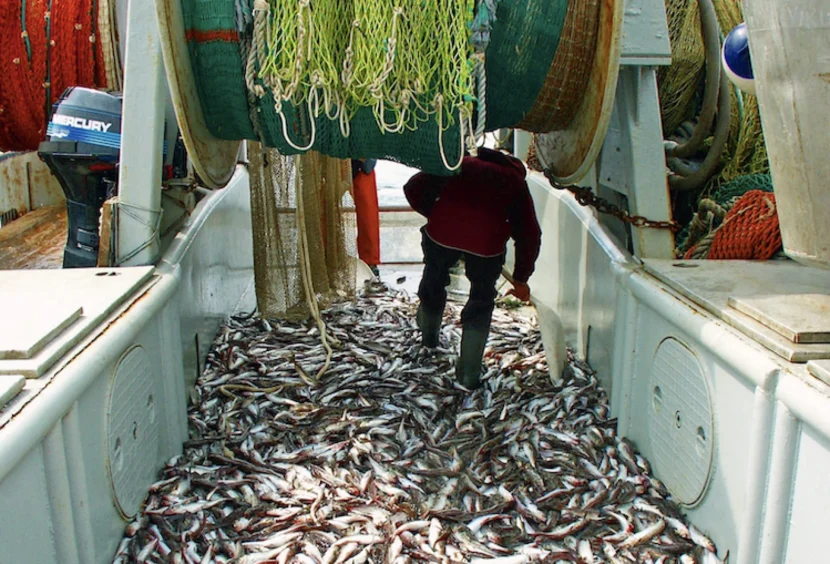
Trawl-caught pollock harvested during an Alaska research survey. (Photo by David Csepp/National Marine Fisheries Service)

For years, conservationists, tribes and fishermen have feuded over bycatch of salmon in the huge pollock harvest in the remote Bering Sea off Alaska.

Now, a new bycatch fight has erupted over a much smaller pollock fishery not far from urban Alaska, in the waters of Prince William Sound, east of Anchorage.

This week, the state Board of Fisheries is considering four proposals by a local tribal government and an Alaska sportsmen’s group that could place sharp restrictions on, or even close down, Prince Williams Sound’s annual pollock trawl harvest.

Supporters of the proposals cite state data that show the roughly 15 participating boats, most of which come from Kodiak Island, unintentionally scoop up some 900 king salmon and 900 rockfish each year in their wide-mouth trawl nets. And they say that subsistence harvests of those fish need protection.

Only a few dozen people still live in the Prince William Sound village of Chenega, whose tribal government submitted three of the proposals, according to Boyd Selanoff, a member of the tribal council. Roughly 50% of Chenega households harvest salmon and 90% eat it, according to state subsistence surveys, and the community has no grocery store, meaning that residents have nowhere to shop to replace subsistence species, he added.

“The language is disappearing. The culture is disappearing, the subsistence traditions and education are disappearing,” Selanoff said in a phone interview. “One of the main sources of life in Prince William Sound — for all of us, not just Chenega — is a healthy fish stock.”

Chenega’s proposals, along with a separate proposal from the Alaska Outdoor Council to bar king salmon trawl bycatch in the Sound, have drawn an array of allies. They include conservation group SalmonState, tourism businesses, an Anchorage sporting goods store and dozens of members of the public.

But they face opposition from the Dunleavy administration, whose Department of Fish and Game says it has the legal tools to manage the pollock harvest sustainably.

Trawl fishermen and their representatives also object, citing the income they’d lose at a time when the industry is already struggling and state data shows far more rockfish are accidentally harvested by hook-and-line commercial fishermen targeting halibut.

They also cite research indicating that pollock can feed on juvenile salmon as evidence that limiting trawl harvests could backfire — by allowing pollock populations to grow.

“The people down in Chenega, I can understand where they’re coming from. I can understand the emotion of it all — they’re living in an isolated community, and you have all these boats coming into there,” said Paddy O’Donnell, board president of the Alaska Whitefish Trawlers Association and skipper of the Kodiak-based F/V Caravelle. But, he added: “It’s not going to do anything for those communities. It’s just a feel-good measure.”

A trawl vessel sits at the dock in Kodiak this summer. (Photo by Nathaniel Herz/Northern Journal)

At stake in the debate is a yearly pollock harvest worth a total of roughly $1 million, according to the fish and game department.

That’s not especially large for the overall trawl industry — the Bering Sea pollock fishery is some 400 times larger, by weight. But O’Donnell and other trawlers say that the Prince William Sound harvest is an important one for the Kodiak fleet because it comes at the beginning of the season, after trawl businesses have made substantial investments in yearly startup costs without a chance to recoup them.

Early in the Prince William Sound fishery’s history, vessels would deliver their catch to be processed locally, in the town of Cordova, O’Donnell said. Fishermen would still be happy to sell their pollock to a local processor, he added, but because none are currently buying, it’s hauled back to Kodiak and sold to processing plants there.

Of the four proposals targeting the fishery, one of them, from Chenega’s tribal government, would close it altogether. Another Chenega proposal would require the trawlers to have electronic cameras or human observers monitoring their catch, to make sure that no bycatch is thrown overboard but is instead brought back to a processing plant to be counted.

“If there’s nothing to hide, like they say, why won’t you put an observer on your boat?” Selanoff said. “I’m a fisherman, and we all lie to each other.”

A third Chenega proposal would limit overall bycatch to a specific number of pounds to be set by the fish and game department, rather than limiting it to a percentage of the overall pollock harvest.

The last proposal, from the Alaska Outdoor Council, would allow pollock fishing in Prince William Sound only if king salmon bycatch is completely eliminated and if trawlers can ensure their fishing gear doesn’t touch the sea floor.

Sea floor contact has become a major subject of controversy in the Bering Sea bycatch debate, as managers have acknowledged recently that “midwater” trawl gear there can sometimes be dragged along the ocean bottom — potentially crushing species like crab or harming important habitat.

The trawlers say that this practice does not happen in Prince William Sound, because the fishing grounds there are much rockier than the Bering Sea’s and would risk damage or loss to their trawl gear, which can cost $200,000 or more.

They also say that throwing rockfish bycatch overboard to avoid being counted by regulators would be impractical — it would take too long to find them among pollock packed in their big trawl nets, and because rockfish float, they would be easily detected, said O’Donnell, the skipper.

“Any plane flying over or anyone in a boat transiting along there’s going to see all these rockfish floating,” he said. “That has never happened.”

Selanoff said that people have, in fact, witnessed “little floating red dots all over Prince William Sound.”

Statewide, managers say that there’s a “growing level of concern” about rockfish, which they describe as “vulnerable to overharvest” and as requiring long recovery periods.

Advocates on both sides of the debate have helped fill the Board of Fish’s pre-meeting materials with more than 1,000 pages of testimony.

The board’s meeting began Tuesday in Cordova. It is scheduled to run through Dec. 16.

Nathaniel Herz welcomes tips at natherz@gmail.com or (907) 793-0312. This article was originally published in Northern Journal, a newsletter from Herz. Subscribe at this link.
What happened to those king salmon caught as bycatch?

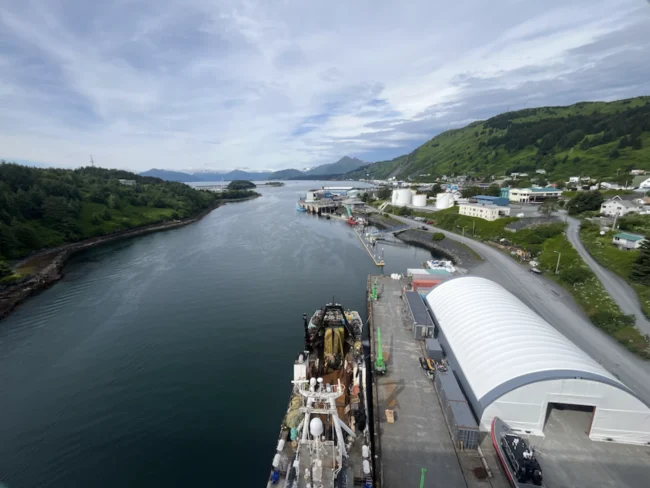
A trawl vessel sits at the dock in Kodiak in July. (Photo by Nathaniel Herz/Northern Journal)

Northern Journal last week published a story on how Kodiak-based pollock trawlers unintentionally caught 2,000 king salmon — forcing the closure of a major Gulf of Alaska fishery.

Afterward, a number of readers responded with similar questions: What happened to those salmon? Were they sold? Donated? Thrown back into the water?

The short answer, according to a federal management official: The salmon were “discarded.”

Some additional context: Salmon bycatch is “prohibited from entering commerce,” Josh Keaton, a top management official at the National Marine Fisheries Service, said in a brief call Friday.

“Nobody gets paid,” he said. “The fishermen can’t take them home.”

The salmon caught by the trawlers were small, he said — four pounds, on average, compared to the 10 pounds that the smallest recreationally harvested salmon weigh.

When bycatch is of “marketable size” and suitable for food quality, Kodiak seafood companies will often process the fish and donate them to an Alaska nonprofit group, SeaShare, Keaton added. But in this case, they were probably too small, and also sat in containers for two days as independent fisheries observers took genetic samples of each one, he said.

Meanwhile, the fallout from the closure of the central Gulf of Alaska pollock fishery, in response to the salmon bycatch, continues. The Kodiak Daily Mirror reported Thursday that one of the city’s processing companies, OBI Seafoods, is laying off some 50 workers, with an executive telling the newspaper that remaining workers would see “significantly fewer hours,” as well.

The closure strands about $9 million of raw pollock in the Gulf of Alaska, which would have been processed into $50 million or more of headed and gutted fish, fillets, meal and oil, according to a preliminary analysis by Garrett Evridge, an Alaska fisheries economist.

The state and local government will also lose hundreds of thousands of dollars in fisheries tax revenue, according to Evridge’s analysis.

Nathaniel Herz welcomes tips at natherz@gmail.com or (907) 793-0312This article was originally published in Northern Journal, a newsletter from Herz. Subscribe at this link.
Peter Pan creditors, investors feud over sale of Alaska seafood company assets to May

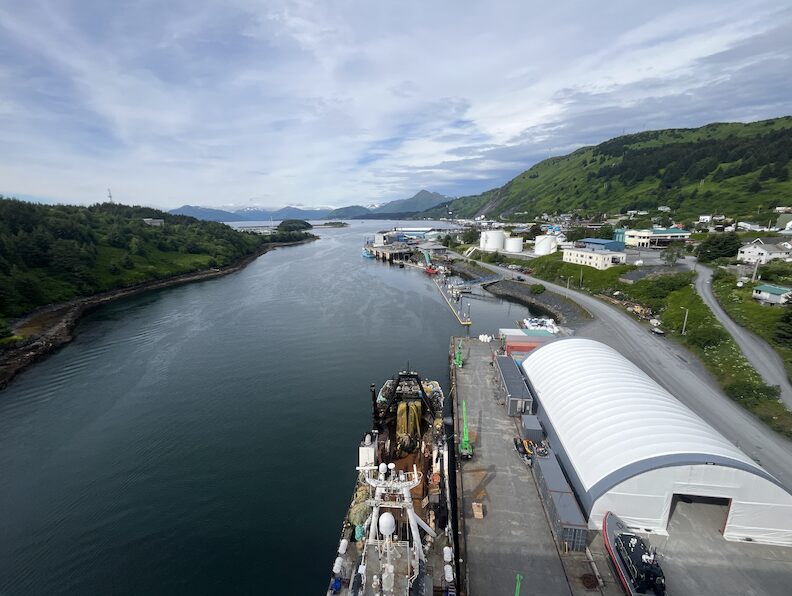
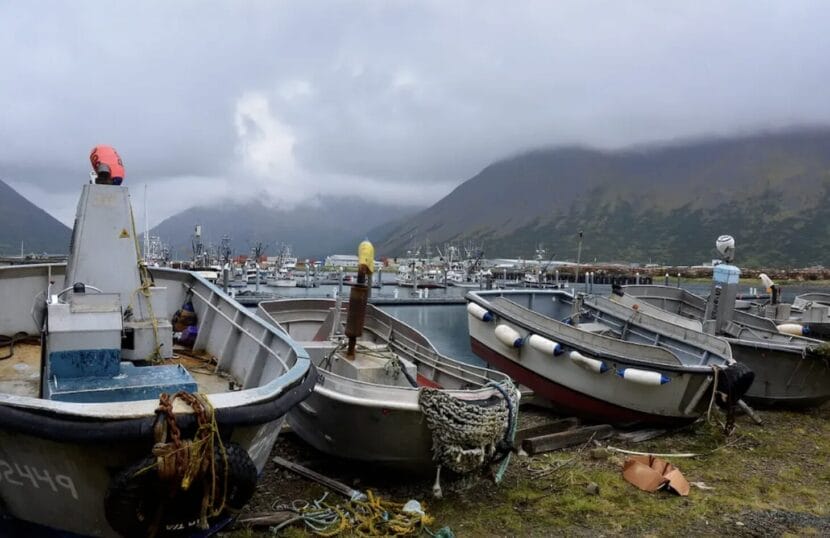
Skiffs sit on shore in the Southwest Alaska fishing town of King Cove. (Photo by James Brooks)

An array of businesses, fishing companies and investors are objecting to a pending proposal to sell the assets of a struggling Alaska seafood company to Rodger May — one of the original investors in the company before it entered a bankruptcy-like process called receivership.

The financial firm that’s overseeing Peter Pan Seafood’s receivership proposed last week to sell the company’s three processing plants and an array of other assets to May, an entrepreneur and fish trader who narrowly outbid another processing company, Silver Bay Seafoods, in an auction.

A hearing on the proposal is set for Thursday in a Seattle courtroom, where a judge will consider the wide-ranging objections filed in court last week by opponents of the sale.

Those opponents include the investors who originally partnered with May to buy Peter Pan from a Japanese seafood conglomerate in 2020.

The investors — including affiliates of Los Angeles-based Renewable Resources Group and Anchorage-based McKinley Management — split with May in their filing, calling him an “insider whose inequitable conduct has both depressed the market for, and eroded the value of, Peter Pan’s assets.”

Read some of filings in the receivership case from the investors, fishing companies and Silver Bay Seafoods.

They say that Silver Bay is a better fit to buy the assets given opposition by the “Alaskan fishing community” to May’s continued involvement in Peter Pan.

They also argue that May shouldn’t be allowed to apply $12 million in credit to his bid based on money he loaned Peter Pan. That’s because another businessman, Los Angeles-based John Ketcham, also loaned $10 million to the company last year on the condition that he would be repaid before May, according to the investors’ filing, which Ketcham also signed onto.

Ketcham has teamed up with Silver Bay and wants to use his loan as credit to buy one of Peter Pan’s three plants, in the remote Alaska Peninsula area called Port Moller.

May didn’t respond to a request for comment this week.

Nathaniel Herz welcomes tips at natherz@gmail.com or (907) 793-0312. This article was originally published in Northern Journal, a newsletter from Herz. Subscribe at this link.
Alaska’s embattled economic development agency signs contracts with seven law firms

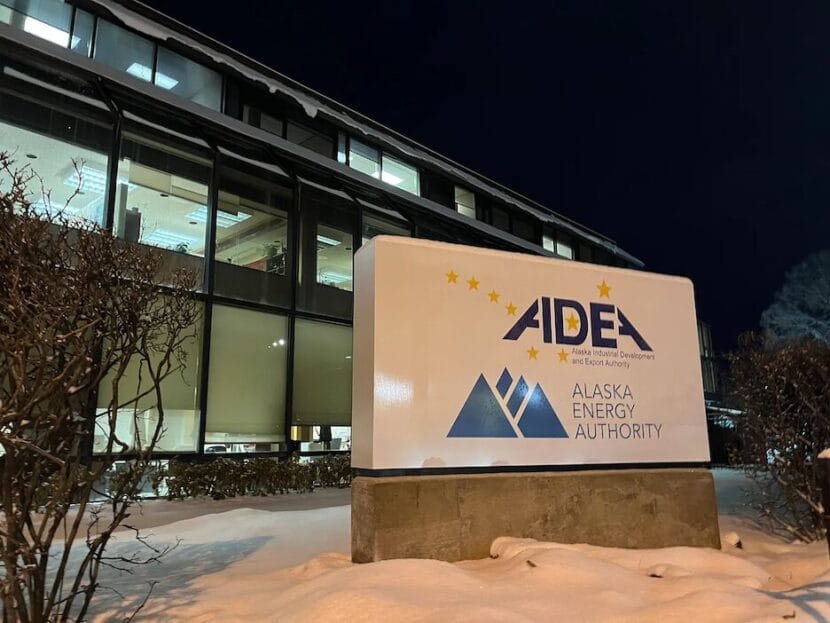
The Anchorage headquarters of the Alaska Industrial Development and Export Authority, shares space with a sister agency, the Alaska Energy Authority. (Photo by Nathaniel Herz)

Alaska’s embattled economic development agency has signed new contracts with seven law firms — reflecting what its leader says is a desire to handle its legal issues more quickly, and independently from the executive branch.

The Alaska Industrial Development and Export Authority, or AIDEA, is pushing an array of controversial projects across the state, from oil leasing in the Arctic National Wildlife Refuge to proposed roads through wild areas in the northwest and southcentral regions of the state.

It chose all seven law firms earlier this year, according to copies of their contracts obtained by Northern Journal through a routine public records request.

The firms AIDEA selected include two run by Alaska attorneys who have worked for the state before — Peter Caltagirone, a former legal advisor at the state Department of Natural Resources, and Craig Richards, the former attorney general who has another legal contract with Republican Gov. Mike Dunleavy’s office.

The other firms include Minnesota-based Dorsey & Whitney, Anchorage-based Birch Horton Bittner & Cherot, Washington, D.C.-based Van Ness Feldman, Texas-based Haynes and Boone, and California-based Nossaman. All seven contracts are open-ended, without specific assigned tasks, with caps ranging from $100,000 to $985,000.

The firms won’t be paid unless AIDEA authorizes specific work or billing, said AIDEA’s executive director, Randy Ruaro.

Ruaro, a former chief of staff to Dunleavy, said AIDEA has long used outside attorneys hired under contracts. What’s new, he added, is having the firms selected in advance — which he said will allow his agency to get legal help more quickly than if it has to go through the state’s procurement process each time an issue comes up.

“What we’ve done is kind of create this stable of attorneys who are ready at will if we have an assignment for them, that they can jump on right away,” Ruaro said in an interview.

Ruaro added that agencies like his should also be “entitled to their own legal counsel” when they encounter conflicts with other state agencies represented by the Department of Law.

In a two-and-a-half-page prepared statement released with the contracts, Ruaro said that legal services have been “particularly vital” for his agency in the past two years.

Two oil companies that it loaned money to “fell behind on payments” to AIDEA amid state cuts to tax credit payments, requiring the agency to negotiate and draft financial agreements, Ruaro said.

AIDEA has also filed and intervened in federal lawsuits involving Arctic Refuge oil leases it owned — which were canceled by the Biden administration last year — and a Northwest Alaska mining road project. And it also had to review and draft commercial agreements on new infrastructure projects on the North Slope and at Anchorage’s international airport, Ruaro said.

The seven legal contracts raise questions, said Anchorage Democratic state Sen. Matt Claman, though without further information, it’s hard to say if they’re appropriate, he added.

“I’d like to know more,” said Claman, an attorney who chairs the Senate’s judiciary committee.

It’s common for an entity like AIDEA to have independent counsel separate from the executive branch, Claman said. But, he added, “if I were a partner in a major law firm, I would be saying, ‘Can’t we provide all their independent counsel needs from this one firm?’”

Nathaniel Herz welcomes tips at natherz@gmail.com or (907) 793-0312. This article was originally published in Northern Journal, a newsletter from Herz. Subscribe at this link.
Biden administration rejects top Inslee choice for Alaska fish commission, reappoints trawl ally

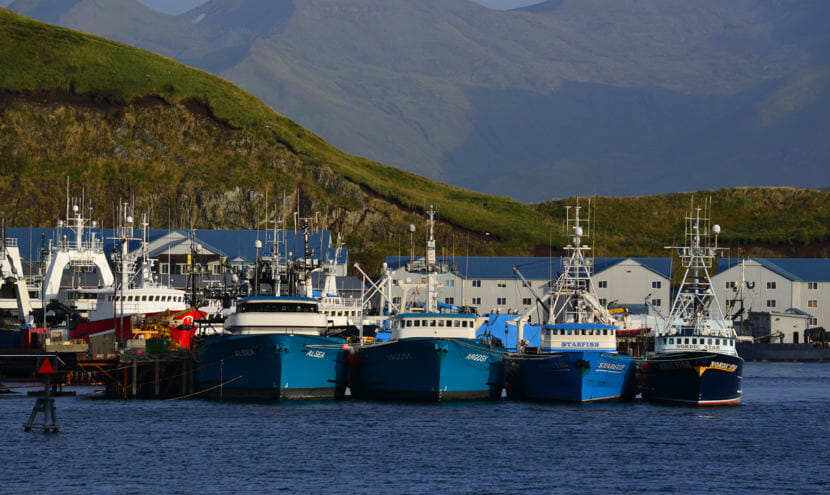
Fishing trawlers lined up in Dutch Harbor, on Sep. 24, 2013, in Unalaska, Alaska.
Fishing trawlers lined up in Dutch Harbor, on Sep. 24, 2013, in Unalaska, Alaska.(Creative Commons photo by James Brooks)

The Biden administration has rejected a nominee for a key Alaska fisheries management post who could have tipped decisions toward the interests of tribes and conservation groups and away from the priorities of the large-boat, Seattle-based trawl industry.

U.S. Commerce Secretary Gina Raimondo skipped over the top choice of Washington Democratic Gov. Jay Inslee, conservation advocate Becca Robbins Gisclair, and instead reappointed the last-ranked nominee on a slate of four candidates that Inslee offered: Anne Vanderhoeven, a trawl industry employee who has served on the panel for several years.

Raimondo’s choice for the open North Pacific Fishery Management Council seat, which was confirmed Tuesday by Inslee’s natural resources advisor Ruth Musgrave, comes after what advocates describe as weeks of intense lobbying by supporters of both Gisclair and Vanderhoeven.

The council regulates lucrative commercial fisheries for pollock, cod and other species off Alaska’s coast. It’s been the site of polarized, emotional debate in recent years over the trawl industry’s unintended harvest — known as bycatch — of chum and king salmon that spawn in the Yukon and Kuskokwim rivers in Western Alaska.

Populations of Yukon and Kuskokwim salmon have crashed in recent years, and while scientists largely attribute the declines to warming ocean temperatures, tribal advocates have also pushed the council to tighten bycatch limits on trawlers.

Of the council’s 11 voting positions, seven are nominated from ranked slates of candidates advanced by governors — five from Alaska and two from Washington — and four are top fisheries regulators from Alaska, Washington, Oregon and the federal government.

Four current members work in or have financial ties to the trawl industry, including Vanderhoeven, who is director of government affairs at Seattle-based Arctic Storm Management Group.

Typically, the commerce secretary defers to governors and appoints the top choice from the slate.

But advocates from Alaska tribes and conservation groups said that Vanderhoeven’s allies were pushing Raimondo — herself a former governor — to skip over Gisclair and Inslee’s two other higher-ranked nominees.

Gisclair has worked directly with Yukon residents, tribes and conservation advocates and now works as senior director for Arctic programs at the nonprofit Ocean Conservancy. One trawl official had said that if she was appointed, she would make his industry “squirm for a while.”

Vanderhoeven’s reappointment is “so upsetting,” said Eva Burk, who holds an Alaska Native tribal seat on an advisory panel to the North Pacific Council.

“You can’t just have a trawl sector-dominated council,” Burk said. “It’s just not going to start to get balance back into our different fisheries if we don’t put some diversity in the decisionmaking.”

The appointment of Vanderhoeven has not yet been formally announced by the National Marine Fisheries Service — the branch of Raimondo’s department that works with the North Pacific Council — and Raimondo herself has not offered any explanation for why she skipped over Gisclair. Two other appointments to the council from slates advanced by Alaska Republican Gov. Mike Dunleavy are pending from Raimondo, as well.

A Seattle-based spokeswoman for the fisheries service, Marjorie Mooney-Seus, said “we expect to be making an announcement soon and don’t have any further details to share at this time.”

A spokesman for Inslee, Mike Faulk, declined to comment, as did representatives from the two leading trawl industry trade groups, the At-Sea Processors Association and United Catcher Boats.

Advocates who have been calling on the North Pacific Council to reduce bycatch said they were deeply disappointed with Raimondo’s decision.

SalmonState, a Juneau-based conservation group, called Vanderhoeven’s reappointment a “gut punch” to Alaskans and Indigenous people.

“We were hoping a strong, independent, conservation-minded voice would be added to the council,” the group’s executive director, Tim Bristol, said in a prepared statement. “Instead, we get pro-trawl business as usual.”

Not all Alaskans, however, had taken sides in the fight over the open Washington council seat.

The City of Unalaska, in the Aleutian Islands, remained neutral, and Frank Kelty, a former mayor who now works as a fisheries consultant to the municipality, noted that revenue from trawl-caught fish like pollock supports community services in multiple coastal Alaska communities.

“It’s our bread and butter right now,” he said.

Kelty also said that Gisclair could still end up filling a Washington seat on the North Pacific Council because of the death earlier this year of Kenny Down, the state’s gubernatorial nominee.

Down was a longtime advocate for tribal and other non-trawl interests — his obituary described the council as being “stacked with trawler-biased members” — and his wife, Shannon, said Tuesday that her husband made it very clear, including directly to Inslee, that he wanted to be replaced by someone with a similar point of view.

“He was making calls when he was in bed, trying to fight for his life,” Shannon Down said, adding that her husband shared his desire directly with Inslee. “This was his dying wish.”

Nathaniel Herz welcomes tips at natherz@gmail.com or (907) 793-0312. This article was originally published in Northern Journal, a newsletter from Herz. Subscribe at this link.
Site notifications
Update notification options
Subscribe to notifications