Rhonda McBride

Thursday, July 1st: Cracking the code of stereotypes

The stereotypes for Blacks have long been a code for racism. Some of it’s blatant. Some of it is subtle but damaging, just the same.

In this Thursday’s weekly program, members of the Black Awareness Association of Juneau look at examples of stereotyping and talk about about how to deal with it.

Sherry Patterson leads the discussion and is joined by Kay Smith, as well as Kelly, Christina Michele and Michael Patterson.

Listen to the program:

(Please note: This program originally aired on September 9, 2020.)

The Black Awareness Association’s program, Culture Rich Conversations, airs at 3:00 p.m. every Thursday, on KTOO Juneau 104.3, online at ktoo.org, and repeated at 4:00 p.m. on KRNN 102.7.


Wednesday June 30th: Fourth of July, Douglas style. Methodist Church BBQ. Juneau Police Chief on fireworks. First Friday round-up.

The Douglas Independence Day parade starts at 3:00 p.m. Photo courtesy of the Douglas July 4th Committee.


From parades to soap box derbies to bands on the beach, Douglas’ homegrown July 4th celebration is sure to draw big crowds this holiday weekend. On this Wednesday’s Juneau Afternoon, the Douglas July 4th Committee will roll out their plans for a weekend full of fun.

Sharon Kelly and Maggie Swanson came on Juneau Afternoon to share some of the history of the Douglas July 4th Celebration that goes back more than a century.

Also:

  • One of the biggest barbecues of the year. A tradition that goes back more than forty years, thanks to the Douglas Community United Methodist Church
  • Juneau Police Chief Ed Mercer talks about fireworks safety.
  • And July’s First Friday arts round-up.

Sheli DeLaney is your host for this Wednesday’s Juneau Afternoon, live at 3:00 p.m. on KTOO Juneau 104.3, online at ktoo.org, and repeated at 4:00 p.m. on KRNN 102.7.

Listen to the entire show:

Part 1. July 4th, Douglas Style. Guests: Maggie Swanson and Sharon Kelly. 

Part 2. Douglas Community United Methodist Church BBQ.  Guests: Debra Gerrish and Claudette Curtis.

Part 3.  July 4th Fireworks and Public Safety. Guest: Juneau Police Chief Ed Mercer. 

Part 4. First Friday Arts Round-up. Guest: Nancy DeCherney, Juneau Arts and Humanities Council. 

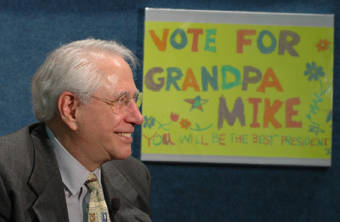
Remembering former Alaska Sen. Mike Gravel

Alaska's former U.S. Sen. Mike Gravel died on Saturday, June 26, 2021, at his home in California. (Photo courtesy Lynne Mosier)
Alaska’s former U.S. Sen. Mike Gravel died on Saturday, June 26, 2021, at his home in California. (Photo courtesy of Lynne Mosier)

Throughout his 12 years as Alaska’s U.S. Senator, Mike Gravel relished stirring controversy, but he died quietly at his home in Seaside, California, on Saturday at the age of 91, surrounded by family.
Gravel, who served from 1969 to 1981 has been described as quixotic, quirky and charismatic.

Gravel made a brief splash in the national headlines when he announced his bid for the U.S. presidency in 2019. He said he entered the race after a couple of teenagers asked him to run.  But, it wasn’t his first bid for the office.  

During his 2006 campaign for the presidency, one of his ads called “Rock” went viral on social media. It featured a stern-faced Gravel, who stood next to a pond and stared silently into the camera for about a minute, picked up a rock, hefted it into the water and then walked away without so much as a word.

“It was a metaphor for human life,” Gravel said in a 2017 interview. “You decide what you want to do in life, then you go ahead and do it. That causes ripples. You go ahead to your demise, and the ripples continue to have an effect on society.”

So, what ripples did Gravel’s political career set in motion?

During his 1968 bid for the U.S. Senate, he changed the way campaigns were run in Alaska forever.

Weeks before the Democratic primary, he rolled out a black-and-white film biography called “Man for Alaska” – a strategic slingshot that knocked out a political Goliath, Sen. Ernest Gruening, who had also served as Alaska’s territorial governor.

Gravel, who had a classic Hollywood “tall, dark, and handsome” magnetism, was filmed traveling across the state, surrounded by Alaska Natives.

In the final weeks of the primary race, the film aired repeatedly on Alaska TV stations — hand-carried by campaign workers, who flew to remote communities across the state. In most cases, the entire village turned out to watch.

“People really enjoyed the film,” said Irene Rowan, one of the campaign staffers who traveled the state. “You have to remember at the time there were no television or radio stations in rural Alaska or movie theaters in the villages.”

Rowan said she was part of a team of women, led by Gravel’s first wife, who went door to door at each stop.

Prior to Gravel, statewide campaigns focused almost exclusively on Alaska’s cities. Gravel was the first to court the state’s rural vote so widely, and the film became a turning point in his campaign. Within days of its release, Gravel, who had lagged in the polls, catapulted into the lead.

It would be the first of many times Gravel would defy conventional wisdom.

“I was very much a maverick,” he would later say of himself. “In my case, it was natural. I really didn’t have to do anything but be myself.”

Gravel said he did things differently, “I did not genuflect to authority. I questioned authority.”

Perhaps the best example of that personality trait: His efforts to put the Pentagon Papers in the congressional record on June 29, 1971. Gravel died just days away from the 50th anniversary of his dramatic midnight reading from top-secret documents, which revealed the U.S. government had systematically lied to the American people about the Vietnam War.

(Photo courtesy U.S. Senate)
(Photo courtesy of U.S. Senate)

After Gravel was shut down for trying to read the Papers on the Senate floor, he used a subcommittee he chaired to make the report public. He intended to read all 4,000 pages of the report. Grainy film of the hearing shows an overwrought Gravel, who wiped his brow with a handkerchief and occasionally choked up in tears. Although he only managed to read a small portion of the report, he did enter the entire document into the record, which made it available to the public and the media.

Gravel said he received the Pentagon Papers from a Washington Post reporter, but there is no mention of him in “The Post,” a recent movie about the newspaper’s efforts to bring them to light.

At the time, Gravel’s actions reinforced his reputation as a showboat among his colleagues. He had also been ridiculed for some of his big ideas – such as a plan to build a domed city near Denali, which Gravel claimed the media distorted. He said his idea was inspired by large tents to shelter crowds at the Winter Olympics, a concept he said was very doable.

“We could cover hundreds of acres at the base of Mt. McKinley,” Gravel said, “by stretching a large, large tent.”

“We could control the climate so that we could truly enjoy a winter wonderland,” he said.

Gravel also proposed a train system to Denali, which used mag-lev, or magnetic levitation technology.

While most of Gravel’s big ideas fell by the wayside, one of them did hit the mark.

Tim Bradner, a longtime Alaska natural resources writer, says it was Gravel who came up with a way to rescue the Trans-Alaska Pipeline from the environmental lawsuits that stalled its construction. He pushed for Congress to pass a law that declared the pipeline in compliance with NEPA, the National Environmental Policy Act.

“Nobody ever thought of doing anything like this before. It’s so out of the box. People thought, here’s another Gravel shoot-from-the-hip, pie-in-the-sky thing,” Bradner said. 

But he said Gravel, who usually sought the political spotlight, ran a stealth campaign to sell his idea to senators. He made effective use of lawyers and energy experts to make his case.

It was not a surprise that Republican Sen. Ted Stevens fought the measure. He and Gravel were often at odds, but Stevens later voted for the legislation.

“Once there were 40 votes behind this strategy, the White House put its support behind it,” Bradner said. “It was quite a dramatic event when it happened. History tells us it was a 50-50 vote in the U.S. Senate. Vice President Spiro Agnew at the request of the White House cast the deciding vote.”

It was what Bradner calls a “classic Gravelian moment,” that eventually faded into history, because Gravel lost his bid for a third term in the Senate and left the state to launch other national political initiatives.

Gravel supporters say he never got credit for legislation that helped to build the state, such as his fight for the Alaska Native Claims Settlement Act, as well as his efforts to secure funding for the Alaska Marine Highway and other infrastructure projects such as early satellite communications.

Gravel’s family says he spent his last years working on what he called a “citizen’s amendment to the Constitution,” which he said was necessary to give the American people more direct legislative power.

Even as a state legislator, Gravel worked to get lawmakers more engaged with their constituents, especially in rural communities.

He served in the State House from 1963 to 1966, and in that short period of time rose to become Speaker of the House.

Bradner, who followed Gravel’s career closely, believes he may have been the first Speaker to conduct field hearings in rural Alaska.

“It was the first time that many urban legislators had been to a rural village,” Bradner said. “It had the effect of energizing rural political awareness.”

Gravel’s last visit to Alaska was in 2017 when he was invited to speak on the 40th anniversary of the pipeline.

Gravel said he hoped he would be remembered for his role in the pipeline, but also as “a person who tried to stir the pot, so people would question authority.”

“And if I have any advice to young people, it’s to question authority, because it may not be the right thing,” Gravel said. “Follow your bliss, if you want to be happy.”

Friday June 25th: Grummet Wetlands dedication. The sounds of Whiskey Class. Senior sales tax rebate. Juneau Audubon Society birdwatch.  


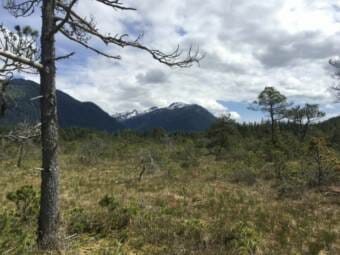
The Grummett Wetlands is a key wildlife corridor on Douglas Island.

Through the work of the Southeast Alaska Land Trust, some prized wetlands north of Douglas are now permanently protected,

On  Friday’s Juneau Afternoon, the story of the Grummett Wetlands,  once used extensively for subsistence by the L’eeneidí Clan of the Tlingit Áak’w Kwáan, later a homestead and now preserve.

Guests: Jordan Tanguay and Pat Harris, Southeast Alaska Lands Trust.

Also,  on Friday:

Liz Snyder and Patrick Troll say their group, Whiskey Class, got its start at the Alaska Folk Festival.
  • Whiskey Class has a new recording project in the works. KXLL’s Music Director ChandreBOOM will talk with Liz Snyder and Patrick Troll about their vision for the album and play a few tunes from their upcoming album, starting with Can’t Sleep on my Feet,  I Just Rule and I’m Afraid.
  • A rebate for low-income seniors on Juneau City and Borough sales taxes.  Erin Russell, Revenue Officer for the City and Borough of Juneau, explains how to apply for this benefit.
  • The Juneau Audubon Society introduces us to three feathered friends this week: Chestnut-backed Chickadees, American Dippers and Barn Swallows. Brenda Wright says two of these bids are with us all year-round.


In the summer months, Juneau Afternoon airs at 3:00 p.m. on KTOO Juneau 104.3, online at ktoo.org, and repeated at 4:00 p.m. on KRNN 102.7.

Thursday, June 23rd: Black lawyers and bridging the justice gap

Even though African Americans make up 13 percent of the population, the American Bar Association says only 5 percent of its lawyers are black.

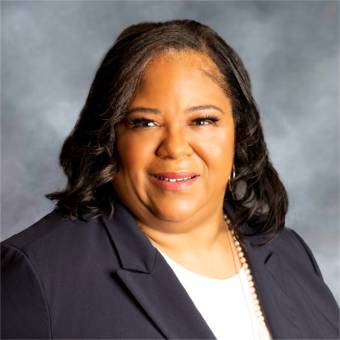
Lori Colbert is a lifelong Alaskan. She is the 2020 winner of the Alaska Bar Association’s Brian P. Timber’s pro bono award.

Lori Colbert, who practices family law in Anchorage, says there are even fewer attorneys who are women of color.

In this Thursday’s weekly conversation with the Black Awareness Association of Juneau, Colbert talks about the double whammy of gender and race in the legal profession. Co-hosts Sherry Patterson and Kay Smith also ask Colbert to weigh in on Thurgood Marshall, Ruth Bader Ginsburg, Brown versus the Board of Education, and the current racial climate.

Listen to the program:

(Note:  This program originally aired on September 24, 2021.)  

Tune in at 3:00 p.m. on KTOO Juneau 104.3, online at ktoo.org, and repeated at 4:00 p.m. on KRNN 102.7.

Wednesday, June 23rd: Mixing it up with Arias Hoyle. Serving seniors in Southeast Alaska.  

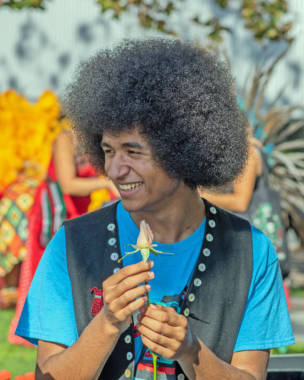
Arias Hoyle says he began speaking Tlingit in middle school, and it seemed perfectly natural to incorporate it into his music.

Arias Hoyle is not quite 20-years-old, yet he already has a long list of music videos and recordings to his credit.

He goes by the name, Air Jazz — and on this Wednesday’s Juneau Afternoon, he talks with KXLL’s music director, ChandreBOOM, about how his rap and hip hop music have a unique ingredient in the mix: his Tlingit heritage.

Also on this program: Meeting the needs of seniors in these challenging times. Catholic Community Service says there are lots of ways you can help.

Eileen Hosey, a case manager for Southeast Senior Services, says a little help can go a long ways in helping a senior maintain their independence.

Listen to the entire show:

Part 1. ChandraBOOM’s conversation with Arias Hoyle.

Part 2. Southeast Senior Services. Guests: Erin Youngstrom and Eileen Hosey.

Catch some conversation on Juneau Afternoon, live at 3:00 p.m. on KTOO Juneau 104.3, online at ktoo.org, and repeated at 4:00 p.m. on KRNN 102.7.

Site notifications
Update notification options
Subscribe to notifications