Rosemarie Alexander

Utility study recommends rate increase

DOT map shows a section of the work to be done in 2015 from Main St. to 10th St. CBJ will also install a new water main.

The Alaska Department of Transportation will resurface Egan Drive from Main Street to 10th Street next year.

It’s a good time to put a new water main along the same route.

The Main Street water main, a Glacier Highway pressurized main, and a sewer lift station are the first of a decade’s worth of water and sewer improvements Juneau needs.

CBJ Public Works Director Kirk Duncan says about a quarter of the city and borough’s water and wastewater system will be replaced over the next ten years.

“We have (about) 275 million dollars in assets for water and wastewater in the city and borough of Juneau.  A lot of them were installed in the 80s using federal money from Clean Water Act and the Drinking Water Act and those assets are coming due.  We’re estimating it’s going to take about 72 million dollars over the next ten years to bring the assets back into good working order,” Duncan says.

A CBJ utility rate study, underway for several months, recommends paying for that work with CBJ sales tax revenue, cruise ship passenger fees, a revenue bond, and a customer rate increase.

“The rates would go up 9 and a half percent each year for the next five years for both water and wastewater and then 5 percent per year for the last five years of the rate study,” Duncan says.

The current study covers the city and borough’s utility needs through 2024.  Customers rates would go up July 1 of this year.

Duncan and a consultant from Seattle-area Financial Consulting Solutions Group will present the funding suggestions Monday at a meeting of the Juneau Assembly’s Committee of the Whole in Assembly chambers at 6 p.m.

On Tuesday, the public can weigh in on rate study proposals at a meeting from 6 to 8 p.m. at Mendenhall Valley Library, and on Wednesday at Hangar Ballroom in Merchants’ Wharf, from 7 to 9 p.m.

(Note of full disclosure:  Kirk Duncan is also a member of the KTOO Board of Directors).

Channel 2 News returns to Southeast

KTUUChannel 2 News will soon be back on the air in Southeast Alaska.  Rural cable subscribers from Valdez to the North Slope will also once again see NBC programming, just in time for the Olympic games.

After months of wrangling, Anchorage NBC affiliate and cable provider GCI have reached a carriage agreement that puts the station back on KATH in Juneau and KSCT in Sitka. The two Southeast stations and Anchorage CBS affiliate KTVA were purchased by GCI last year.

KTUU President and General Manager Andy MacLeod says he’s glad Channel 2 News will return to the  Southeast airwaves.

In November,  GCI  dropped the KTUU signal on its rural cable system, leaving about 7,000 households without access to NBC programming, except what was carried on ARCS, the state-operated channel.

In December, GCI removed KTUU’s flagship news program, Channel 2 News, from the Sitka and Juneau  stations, affecting both cable and satellite subscribers. GCI temporarily replaced the Channel 2 newscasts with a program called One America News.

The KTUU signal was restored Thursday in rural Alsaka.  GCI says Channel 2 News will back on the airwaves in Southeast within a few days.

While the two companies had agreed on rates in December, the dispute centered on what would happen if KTUU ever acquired another station.

MacLeod says the station is satisfied on that front.

What we got is working with GCI, and they got the same thing.  We got a provision that allows us to build our business into the future, unrestrained. So, that’s a significant thing.

McCleod says the agreement comes at a good time for Southeast viewers who want to watch the winter Olympics, carried exclusively by NBC. KTUU  has two news reporters in Sochi, Russia, following Alaska’s Olympic athletes.

The negotiations  between GCI and KTUU began when GCI bought the three television stations.  GCI spokesman David Morris says it is characteristic of disputes across the nation between cable and content providers.

“So, will this happen again in Alaska? We sure hope not, we’re trying to figure ways out to make it not happen. But the way it’s set up right now, if you don’t have a company, whoever your provider is, who says no to some of these demands, then things will spiral completely out of control,” Morris says. 

The new agreement covers about three years, so Alaskans shouldn’t expect any disruptions to NBC programming through at least 2017.

GCI recently announced subsidiary Denali Media Holdings is buying three CBS affiliates in Southeast: KXLJ in Juneau, KTNL in Sitka and KUBD in Ketchikan. The stations are owned by  Ketchikan TV of Evergreen, Colo.  The purchase must still be approved by the Federal Communications Commission.


Legislation would reinstate medevac membership programs

Airlift Northwest has added a Turbo Commander to the Southeast Alaska fleet, for access to communities where the Lear Jet can't land. Photo by Dick Isett.
Airlift Northwest has added a Turbo Commander to the Southeast Alaska fleet, for access to communities where the Lear Jet can’t land. Photo by Dick Isett.

Airlift Northwest could bring back its popular membership program under legislation introduced in the Alaska House and Senate.

The state’s Division of Insurance last November told the company to discontinue its AirCare membership, because it no longer met the letter of Alaska law.

That prompted complaints to Southeast Alaska legislators, and Rep. Cathy Munoz started working on legislation to allow air ambulance membership programs in the state.  Several Southeast legislators have signed on to the bill.

Airlift Northwest started the Alaska AirCare program in 2008. Nearly all of the more than 32-hundred members are in Southeast, a third of them in Juneau.

An emergency medical flight from Southeast Alaska to Seattle or Anchorage can cost $100,000 or more.

Karla Hart purchased her membership about four years ago, when she learned about the program through her doctor’s office.  She says she did some research and figured it was a no brainer:

A hundred bucks to not have to worry if I’ll have a financial hardship if I need a medevac?

A number of Hart’s family and friends are also AirCare members, and so far no one has had to use it.

It’s peace of mind, she says.

AirCare is purchased by household; one membership covers everyone in living in a home.  The cost is $100 a year.

It’s considered a supplement to other health care insurance.

Airlift Northwest executive director Chris Martin says the company has always been clear that AirCare is not an insurance program.

“In most medical situations, insurance is billed and then there’s a co-pay.  What an AirCare membership guarantees you is that you have no out of pocket expenses or no co-pay.  So we bill the insurance, we take what the insurance reimburses us and you as our AirCare member do not see a bill for any further services,” she explains.

The AirCare program operates in Washington state as a non-profit, and was allowed to operate as a non-profit in Alaska  under an exemption.

Acting Insurance Director Marty Hester says Airlift Northwest was no longer considered a non-profit when the company restructured under the University of Washington Medical School.

“The program they were offering was a transfer of risk and that is the definition of insurance, when a risk in transferred from one person to another,” he says.

House Bill 300 and Senate Bill 159 should correct the problem.  The legislation allows air ambulance providers to offer membership programs like AirCare, and permits the insurance division to adopt regulations covering such programs.

Rep. Munoz’s office worked with Hester on the legislation, but he would not comment on the bill.

She says she heard from a lot of constituents when they found out their supplemental plan was no longer good.

“The legislation will re-establish the opportunity for companies like Air Lift Northwest to provide membership service to residents that wish to have that extra coverage for emergency transport,” Munoz says.

She says more than 1,300 Juneau residents have an AirCare membership and many are senior citizens.

 Certainly we live in an area that is somewhat isolated and people, especially seniors and people facing difficult health situations, want this added assurance that they can get out safely and at a reasonable cost,” Munoz says.

According to Airlift Northwest’s Martin, Alaska is the only state in the U.S. that does not allow medevac services to offer a supplemental membership program to help defray the cost of an emergency medical flight.

Juneau teachers, school board ratify contract

JEA and the district have been negotiating for a year.  Teachers even picketed school board meetings and threatened a strike. File photo.
JEA and the district have been negotiating for a year. Teachers even picketed school board meetings and threatened a strike. File photo.

Juneau teachers finally have a contract with the school district.

Both the Board of Education and members of Juneau Education Association have ratified an agreement that gives teachers a two-year contract for this school year and the next.

The agreement shifts funds from a health trust to salaries, giving $1,447  to each teacher.  Salaries also will increase 1.5 percent, retroactive to Jan. 10th.  Teachers will get an additional 1 percent next year.

Under the agreement, the school district will increase its contribution to health insurance in both years.  It also calls for an increase in the amount each teacher gets for professional development.  While teachers will have fewer personal leave days, more of those days will be paid leave.

JEA has about 360 members, but the agreement will be extended to all  school district employees, more than 650.   Superintendent Glen Gelbrich last year declined a raise.

The cost of the two-year agreement is just over $1. 9 million.

Assembly, BRH board to discuss severance packages

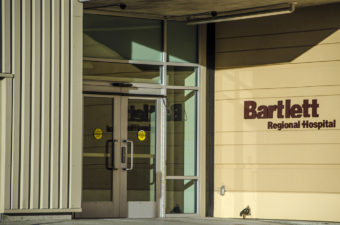
Bartlett Regional Hospital emergency entrance. (Photo by Heather Bryant/KTOO)

A special Assembly meeting is set for Wednesday to take up questions on severance packages given to Bartlett Regional Hospital officials who quit last fall amid what’s been called “a culture of fear” at the hospital.

The public learned last month that about $300,000 in severance pay went to the former Bartlett CEO, CFO, and personnel director.

In mid-September, personnel director Norma Adams resigned.  The hospital did not replace her; instead, city and borough human resources director Mila Cosgrove took over Bartlett personnel responsibilities.

About a week later, Chief Operating Officer Chris Harff resigned, after just 13 months on the job.  She said the city-owned hospital was “not a good fit” for her expertise.

When Harff left, Chief Financial Officer Ken Brough became interim CEO.  He quit in November.   Both were subject of a personnel investigation.

Assembly member Karen Crane is liaison to the hospital board. She told her colleagues at last week’s Assembly meeting that she’s not been able to give them much information because personnel issues were discussed in executive session.

At that meeting, Juneau resident Mark Stopha said the Assembly should investigate the severance pay matter and make sure it doesn’t happen again.

Many in town feel like we’ve been swindled.

Assembly member Randy Wanamaker said he already had a list of questions for a public meeting on the issue.

 I think that meeting should be as open as possible and an absolute minimum be allowed to be in executive session.  I know we have sensitive matters, but there are public funds. 

Bartlett Regional Hospital is owned and operated by the City and Borough of Juneau.  Members of the Bartlett Board of Directors are appointed by the Assembly

Crane says the desire is to keep Wednesday’s meeting as open as possible, but when confidential personnel matters come up, the doors will close.

The special Assembly meeting with the hospital board is at 5:30 p.m. in Assembly chambers.


Next step for HD 32 nominees: Interviews with Gov. Parnell

Tongass Democrats' chairman Nancy Courtney & Juneau Sen. Dennis Egan lead nominees Jesse Kiehl, Catherine Reardon & Sam Kito III to Court House Plaza to meet with reporters.
Tongass Democrats’ chairman Nancy Courtney & Juneau Sen. Dennis Egan lead nominees Jesse Kiehl, Catherine Reardon & Sam Kito III (obscured) to Court House Plaza to meet with reporters.

The Democrats nominated to fill Juneau’s vacant state House seat say they would caucus with Democrats and run for election if appointed.

Tongass Democrats on Monday submitted three names to the governor,   Jesse Kiehl, Sam Kito III, and Catherine Reardon, to fill the House District 32 seat vacated last month by Juneau Rep.  Beth Kerttula.

Nine Democrats – all from Juneau — applied for the seat, which represents downtown Juneau and Douglas, Petersburg, Gustavus, Skagway and Tenakee Springs.

The finalists were chosen after public interviews over the weekend.

Former Juneau Mayor Bruce Botelho chaired the selection committee. He says everyone who applied represented mainstream Democratic values.

We did a very extensive vetting process, both in the form of questionnaires, background checks and interviews with each of the candidates.  It was a very difficult selection process in the sense that we had strong candidates.

All three of the finalists are familiar with the legislative process.

Kiehl is an aide to Juneau Sen. Dennis Egan. Before that he worked for former Sen. Kim Elton. Kiehl also is serving his first term on the Juneau Assembly.

In my case I can guarantee I’ll be on a ballot this fall.  My Assembly term is up and if I’m appointed to the House I’ll run for re-election there.

Kito and Reardon also said they would run for election to the seat. Thanks to redistricting, House District 32 will become House District 33 this fall.  Its geography will change as well, encompassing downtown Juneau, Douglas, Haines and Skagway.

Sam Kito IIIKito is a civil engineer, who’s been working in recent years as a lobbyist.  He says that would not affect his opinions as a legislator.

 I’m fully committed as a Democratic candidate for the appointment and don’t have any concerns at all about my background as a lobbyist getting in the way of my ability to be a legislator.

Reardon has been a division director in the Alaska Department of Commerce and now works as a legislative aide for Anchorage Democratic Rep. Andrew Josephson.

She says she shares most of the views and values Kerttula represented in the legislature.

I would continue her style of trying to bring consensus of working well with people across the aisle and different regions of the state.

Different personalities, different backgrounds, different strengths.  Botelho said the three were selected because of what Tongass Democrats perceived as their ability to somewhat fill Kerttula’s shoes.

Five years ago, former Juneau Mayor Dennis Egan was appointed to fill the Senate seat vacated by Sen. Kim Elton.  Egan delivered the nominees’ names to Gov. Sean Parnell yesterday.

They’ll be doing their own internal checks of the three candidates, and the governor said that he has every intention of appointing specifically from the list that was submitted by Tongass Democrats today.

Sticking to the list is important to Democrats.  The capital city was without Senate representation for 49 days in the 2009 session, when then-Gov. Sarah Palin refused to appoint the Democrats’ nominee to Elton’s seat.

Kerttula was the only name on the list then. Palin set up her own nomination process and each appointment she made was rejected by Senate Democrats.  On the very last day of the session, Egan was appointed and confirmed.

Egan said Parnell brought that up when he took him the list of nominees to fill Kerttula’s seat.

He doesn’t want a debacle like the last time.

 Gov. Parnell’s office says the Democrats on the current list will be evaluated on competence, character and their history in the district. He will personally interview the nominees.

The governor has 30 days to fill a legislative seat once it has been vacated. Kerttula resigned on Jan. 24th to take a position at Stanford University’s Center for Ocean Solutions. A Parnell spokeswoman says he will make his decision by the deadline.


Site notifications
Update notification options
Subscribe to notifications