Rosemarie Alexander

Tongass Democrats nominate Kiehl, Kito, and Reardon for Kerttula’s vacant seat

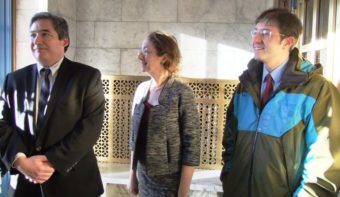
Sam Kito III, Catherine Reardon & Jesse Kiehl take questions from reporters Monday morning in capitol entry way.

Tongass Democrats have nominated Jesse Kiehl, Sam Kito III, and Catherine Reardon to fill former Rep. Beth Kerttula’s vacant House District 32 seat.

The three were chosen after public interviews over the weekend. Nine Juneau Democrats applied to fill the seat.

All three nominees say they will seek a full term if appointed.

Juneau Sen. Dennis Egan took the nominees’ names to Gov. Sean Parnell this morning.  The governor has 30 days to fill a vacancy in the legislature within 30 days of that vacancy.

Kerttula resigned Jan. 24 after accepting a position at Stanford University.

This is a developing story.  Check back for updates.

Food Policy Council seeks food security for Alaska

Juneau Community Garden. File photo.

How secure is Alaska’s food system? How much local food is being produced in various regions of the state? What would it take to make food production easier here?

These are some of the questions the Alaska Food Policy Council hopes to answer in a series of town hall meetings around the state.

The organization is dedicated to increasing local food production.

Darren Snyder is a council member and University of Alaska Cooperative Extension Agent.

He says the council’s vision is to promote a healthy and secure food system that feeds all Alaskans.

And each one of us are part of that vision.  So the Food Policy Council is attempting to have each person who sees themselves  as part of the overall Alaska food systems be able to weigh in and contribute what they think would help to improve that system,” Snyder says.

AFPC-townhall-JuneausmallThe first town hall meeting was in Nome on Friday.  The second is Monday evening  in Juneau.

Just how much food is grown in Juneau and other parts of Southeast Alaska?

Researcher Lia Heifetz has done a baseline study of domesticated food production in the Juneau region.  It’s no surprise the small operations are unable to make a living at growing local food.

There’s a high demand for local foods, but right now there’s not enough produced to meet those demands.

Heifetz says Haines would be the most promising place to grow more food in Southeast.

She says the goal of her study was to come up with things that would help increase the capacity of those attempting to produce crops in the region.

Recommendations are based on a survey of growers, who said a network could reduce the costs of producing food.

“Things like equipment shares, cooperative buying to buy amendments and things needed to produce food,” she says.  “Some examples of added infrastructure are things that could be included in the umbrella term food hub, which could be anything from a commercial kitchen to a shared storage facility and  a center for education and creation of value-added products.”

Heifetz’s study was done for the Cooperative Extension, Southeast Conference, and Sheinberg Associates.

The Juneau Town Meeting of the Alaska Food Policy Council is Monday from 6:30 to 8:30  p.m. in Juneau Douglas High School Commons.


USDA helps bring water and sewer to rural Alaska

A crew works on a sewer system in a rural Alaska village. Photo courtesy USDA Rural Development.

The Undersecretary of USDA Rural Development says the time is now to get rural Alaska communities on water and sewer systems.

Patrice Kunesh has been in Alaska this week, visiting Bethel, Quinihagak and Kwethluk  as well as Anchorage and Juneau.

Western and Interior Alaska are part of the USDA’s StrikeForce initiative where the agency helps fund housing, energy, water and sewer, and agriculture projects in poor, rural communities.

Kunesh saw some of the projects in action and said she also realized the tremendous needs in many rural Alaska villages, like Kwethluk.

“Half of the village has now been hooked up to the water and waste system and they’re doing really quite well.  The other half of the village is still using has honey pots. I think it’s about a two-year process to install and get these homes capable of supporting the wastewater sanitation system,” she said.

The money for the new systems come from USDA’s Rural Alaska Village Grant Program.  It also funds Laundromats, called washaterias.

Kunesh says as water and sewer go into villages, some operation and maintenance jobs are created.

Jim Nordlund is Alaska State Director for USDA Rural Development. He said 75 percent of the funds are federal, with a 25 percent state match.

We’ve been lucky to continue to have approximately 30 million dollars appropriated each year, especially in an era where EPA funding has dropped off significantly.

The Kasaan Water Treatment Plant, built in 2012, was a partnership of Kasaan, USDA, Alaska Native Tribal Health Consortium, and state of Alaska. Photo courtesy USDA.

Over the last five years, Nordlund said, the agency has funded water and sewer projects in Hoonah, Kake, Kasaan, Thorne Bay, Ketchikan, Saxman and Metlakatla.

“The situation is always a little different, frankly better, not as dire as in Western and Interior Alaska, but still needs a lot of attention. These are small communities, they don’t have a lot of resources to pay for systems and we’re there to help,” Nordlund said.

The USDA designated Southeast Alaska a StrikeForce Zone last year.

The USDA officials were in Juneau on Thursday for the Innovation Summit, sponsored by the Juneau Economic Development Council.

While in Bethel, Kunesh announced a $718,656 grant to public radio and television, Bethel Broadcasting, Inc. to help expand television channels into villages in the region as well as continue radio and television broadcasts in Yupik.

Taku River Tlingit sue to stop Tulsequah Mine

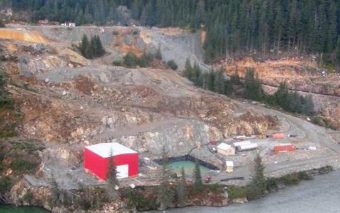
Water treatment plant at Tulsequah. It operated for a few months to treat acid rock drainage, but Chieftain shut it down due to the high costs.  Photo courtesy Chieftain Metals.
Water treatment plant at Tulsequah. It operated for a few months to treat acid rock drainage, but Chieftain shut it down due to the high costs. Photo courtesy Chieftain Metals.

The Taku River Tlingit First Nation has filed suit in the Supreme Court of British Columbia to stop the Tulsequah Chief Mine.

For years, the old mine at the headwaters of Southeast Alaska’s most prolific salmon stream has been an issue for Native groups, commercial fishermen and others on both sides of the border.

Now the Tlingit First Nation says British Columbia authorities failed to consult with them, and believe that voids the mine’s environmental permit.


Precedent

In 2004, the Supreme Court of Canada ordered the British Columbia government  to consult with the Taku River Tlingit First Nation on decisions surrounding the Tulsequah Chief Mine.

The Taku River watershed in northwestern B.C. and Southeast Alaska is the Tlingit’s traditional territory.

 “The consultation is an ongoing obligation.”

Randy Christensen is a lawyer for Ecojustice Canada, the donor-funded  environmental law firm handling the case.

He says the obligation is clearly spelled out in the 2004 decision.

 “At the end of the day the Supreme Court of Canada declared that our client was owed a duty of consultation and accommodation on this project.”

At the time, Redfern Resources owned the mine. The company went bankrupt in 2009 and Chieftain Metals picked up the property and environmental permits.

Substantially started

In the current lawsuit, the Taku River Tlingit allege they were never consulted about a government decision that the Tulsequah was “substantially started.”

Under the B.C. environmental process, once a mine is approved, the owners have a limited amount of time to get mobilized. In this case, 10 years.

Substantially started does not mean mining. Though Chieftain Metals says it’s ready to mine the Tulsequah, in reality the company is still looking for financing.  But in June 2012, the B.C. Environmental Assessment Office declared the mine was substantially started.

Christensen says the First Nation wants the B.C. Supreme Court to declare that Chieftain Metal’s environmental permit has expired.

“Without an environment assessment certificate, they can’t proceed with any on-the-ground construction of this project, so what we’re seeking from the court would be an order that the environmental certificate has expired. That would halt activities on the ground,” Christensen says.

Such a declaration would void all Tulsequah permits.

“My primary feeling is one of relief,” says  Chantelle Hart, a member of Children of the Taku. The society is not party to the lawsuit, but members are all Tlingit born in the Taku River watershed.

I’m glad the lawsuit is now out because at least it’s another firm very clear stance that shows that Taku River people are not going to allow Chieftain into the territory.

Hart says Chieftain Metals has ignored her people.

The transboundary group Rivers Without Borders says the same goes for the B.C. Ministry of Environment. Chris Zimmer is Alaska spokesman for the international group.

The clear implication here is if this lawsuit is successful, the mine is dead in the water and will have to go back to environmental assessment, because it can’t proceed without that certificate.

Chieftain Metals did not return calls for this story.  In its year-end financial report  to the Ontario Securities Commission the company acknowledged the lawsuit, stating the “Corporation believes the petition is without merit.”

Chieftain Metals’ stock closed Monday at 28 cents a share  on the Toronto Stock Exchange.

Nine apply to fill Kerttula’s term

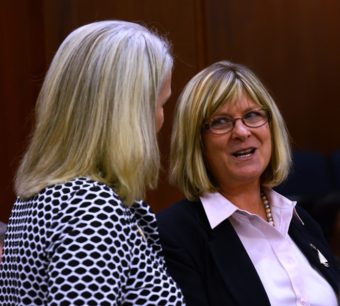
Rep. Cathy Munoz, R-Juneau, and Rep. Beth Kerttula, D-Juneau, talk on the House floor just after she resigned on Monday.
Rep. Cathy Munoz, R-Juneau, and Rep. Beth Kerttula, D-Juneau, talk on the House floor just after Kerttula resigned last week.

Nine Juneau Democrats have applied to fill Rep. Beth Kerttula’s House District 32 seat.

Tongass Democrats’ on Tuesday morning released the names.  Bruce Botelho chairs the selection committee.

We have reached to all parts of the current district to solicit names and encourage people to apply.  And indeed our selection committee has a representative from Petersburg.

Kerttula resigned last week to accept a position at Stanford University. The person selected would finish out her term.

A questionnaire has gone out to all nine candidates and they will be interviewed over the weekend. Botelho says the questions cover topics important to Alaska and the district, including economic development.

“Education, of course, is going to be a major theme of this session, but it’s always been a concern to the electorate and to us,” Botelho says. “We’re looking at issues of labor relations, health care, discussions about our fiscal future as a state.  So topics generally that we hope will help get a better sense of the candidates and how they would approach the issues.” 

Botelho says the goal is to get a list of three to Gov. Sean Parnell by Tuesday.

About the candidates:

Over the past nine years, Ken Alper has worked for House Democrats, including Kerttula.  He and his wife Jill Ramiel, own Silverbow Inn and Bakery in downtown Juneau.

Nancy Barnes worked in the Alaska House and Senate for 26 years, before she took her current job as executive assistant to the president and CEO of Huna Totem Corporation. She’s on the boards of the Alaska Federation of Natives and Sealaska Heritage Institute.

James Betts owns Betts Boat Repair in Juneau. He’s state leader for the Knights of Columbus, a Catholic fraternal and charitable organization. Betts has lived in Juneau for 27 years.

Sara Hannan is a lifelong Alaskan and has lived in Juneau for 25 years.  For the past 18 years, she’s taught in the Juneau School District.  She currently teaches at Juneau Douglas High School, and has been a negotiator for the Juneau Education Association.

Sam Kito III is a civil engineer and also has been a legislative lobbyist.  He was born in Anchorage, lived in Fairbanks, and has worked on transportation projects throughout the state.  He’s been in Juneau for 18 years.

Tim Lamkin has worked as a legislative aide for 17 years, currently for Kodiak Sen. Gary Stevens.  Lamkin is aide to the Senate Education Committee.  During the tourist season, Lamkin says he talks a lot about Alaska’s mining history.

Jesse Kiehl is serving his first term on the Juneau Assembly.  He also works for Juneau Sen. Dennis Egan, and before that for former Juneau Sen. Kim Elton. Kiehl was born in Anchorage and has lived in Juneau for the last 15 years.

Kim Metcalfe is a business agent for the Alaska State Employees Association.  She’s also a lifelong Juneau resident.  Metcalfe chaired Juneau Democrats for a decade, when Kerttula’s district covered only Juneau. She has been a delegate twice to the National Democratic Convention.

Catherine Reardon is a legislative aide for Anchorage Rep. Andrew Josephson. Before working in the legislature, she was director of the Commerce Department’s Division of Occupational Licensing, (now Corporations, Business, and Professional Licensing).  Reardon has been vice chair of the Alaska Democratic Party.

Juneau Assembly halts cell phone towers until plan in place

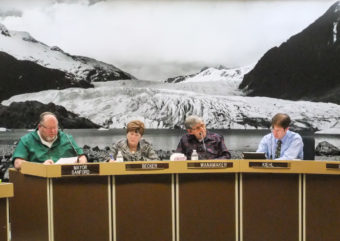
Noting the photo behind Assembly members, North Douglas resident Gene Randall compared a cellphone tower on Spuhn Island to a fictitious one at the Mendenhall Glacier. (Photo by Rosemarie Alexander/KTOO)

The Juneau Assembly has placed a moratorium on cell phone towers while it works on a wireless communications master plan.

The moratorium is prompted by complaints from North Douglas Highway and Fritz Cove Road residents who say a cell phone tower on Spuhn Island keeps them awake at night and is blight on Juneau views. The 300-foot tower within the airport flight path has a flashing red light at the top of the tower and two steady red lights lower down at night, and a flashing strobe during the day.

North Douglas resident Gene Randall brought his concerns to the Assembly nearly five months ago, and says he’s still waiting for a reply.

“Imagine, if you will, a strobing, 155-foot cell tower on the signature view of the Mendenhall Glacier. It would be unacceptable. Juneau has a huge vested interest and financial interest in protecting view shed.”

The tower was approved by the Juneau Planning Commission in 2012. Deputy city manager Rob Steedle told the Assembly their options are limited, short of moving the tower.

“We have no standing, the appeal period is over, we don’t have any options at this time.”

Jon and Lesley Lyman live at the end of Fritz Cove Road, closest to the Sphun Island tower. Jon Lyman said he also doubts the city has any recourse, but said CBJ should be prepared for Verizon Wireless, which has moved into Alaska. He noted the Verizon television ads that pinpoint its network across the U.S.

“It’s like a bloodstain across the Lower 48.”

Lyman said his research indicates Verizon’s plans for Juneau call for 51 cell phone towers.

“Fifty-one. If we don’t have either a moratorium or a program in the city to site these things properly and see to it that people are well-noticed and know what’s going on, then you’re going to have a replication of this over and over again.”

Assembly member Kate Troll seized the idea of a moratorium and Karen Crane put it into a motion.

“That we do not consider any further cellphone applications while we are engaged in developing an ordinance and revising a master plan, so that we’re looking at least until May before we would consider any other cell phone applications. Unless as Miss Troll indicated, they dealt with a health, life, safety issue.”

The vote on Crane’s motion was 5 to 4, with Assembly members Jerry Nankervis, Carlton Smith, Randy Wanamaker, and Mayor Merrill Sanford voting against it.

Nankervis said he didn’t want to close the door on businesses coming into Juneau.

City Attorney Amy Mead said she thought such a moratorium would withstand a challenge in court, because it is short and the CBJ is developing a communications plan.

Beginning this week, the Community Development Department is working on a Wireless Communications Ordinance and Plan. CDD Director Hal Hart said a draft will go before the Planning Commission next month and the Assembly will be voting on an ordinance in late May. He promised there would be plenty of opportunities for public input.

The Assembly also directed the city manager to come up with options for the controversial Spuhn Island tower.

Site notifications
Update notification options
Subscribe to notifications