Fifty-one Alaskans were diagnosed with HIV in 2012, and for more than half, the virus had already developed into AIDS.
Sunday is World AIDS Day, an annual observance to increase awareness and prevention. HIV is immunodeficiency virus, which attacks the immune system and leads to AIDS, or acquired immunodeficiency syndrome. There is no cure, though both can be controlled by medication.
World AIDS Day will be observed in Juneau on Sunday, beginning at 4 p.m. at McPhetre’s Hall, then move to Cathedral Park.
Phoebe Rohrbacher calls it a remembrance and celebration. Rohrbacher is Southeast Services Coordinator for the Four A’s, or Alaskan AIDS Assistance Association.
“It will be an event to remember those who have died in Alaska and worldwide as a result of AIDS, and to remember those who are living with the virus currently.”
Rohrbacher says names of Alaskans who have died of AIDS will be read at the candle light vigil at Cathedral Park.
December first is World AIDS Day. The annual observance started in 1988 to increase awareness and prevention of the disease.
The United Nations estimates that more than 35 million people worldwide were living with HIV in 2012. About 70 percent were in Sub-Saharan Africa, compared to 4 percent in North America.
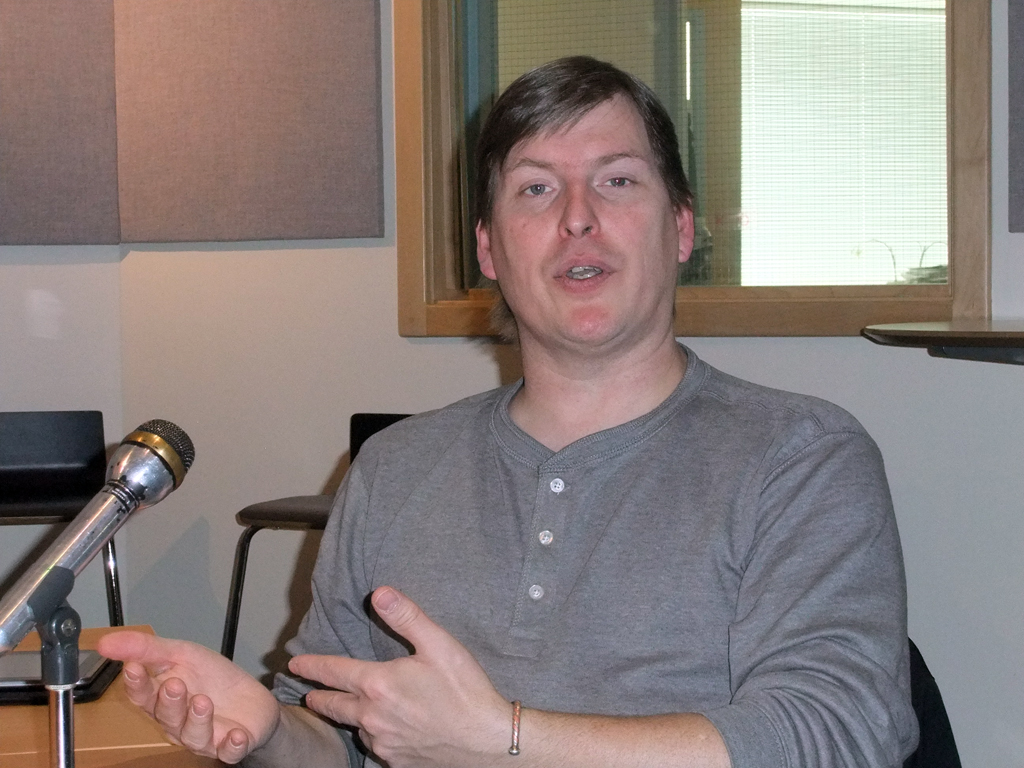
Aldwyn McCuistion (Photo by Rosemarie Alexander/KTOO)
Aldwyn McCuistion is living with AIDS.
“I’m just not going to let it get me down.”
The 47-year-old Juneau man was first diagnosed with HIV in 1999.
“It was my own fault, pure and simple. I was promiscuous and should have paid more attention to things.”
HIV stands for human immunodeficiency virus that attacks certain immune system cells, called CD4, or T cells (white blood cells). It can destroy so many cells that the body can no longer fight infections or disease, leading to AIDS, or acquired immunodeficiency syndrome.
Dr. Beth Saltonstall is medical director for HIV/AIDS Clinical Services at the Alaska Native Tribal Health Consortium.
“AIDS is not a separate disease, it’s the end result of having chronic HIV infection.”
The state requires that all HIV and AIDS diagnoses be reported to Public Health. That’s 1,482 over the last 30 years. Of the 51 HIV cases reported last year, 35 percent already had a diagnosis of AIDS.
“So we are diagnosing people late. That’s the thing that worries me the most, that people are positive, they don’t know they’re positive and they’re unwittingly passing the virus to others,” Saltonstall says
Alaska statistics track those nationwide. According to state Epidemiology, men who have sex with men remain at greatest risk for exposure to HIV.
Of the 51 Alaska HIV cases last year, “66 percent were male, which means a third of them were female. That’s more than we used to see back in the earlier days. You know it used to be totally male dominate,” Saltonstall says. “So we’re seeing more women, heterosexual transmission.”
Of the 1,482 HIV cases reported from 1982 –2012:
1,187 (80%) were male
817 (55%) were white
1,079 (73%) were initially diagnosed in Alaska; of those, 750 (70%) were diagnosed in the Anchorage/Matanuska-Susitna area
Men who have sex with men (MSM) was the most frequent exposure category at 49%
The median age was 34 years (range: <1–75 years)
1,023 (69%) had a diagnosis of acquired immune deficiency syndrome (AIDS); of those, 551 (54%) are not known to have died.
Most of the Alaska cases reported last year were in the Anchorage and the Matanuska-Susitna area. But it is a statewide problem. Southeast Alaska accounts for about 5 percent of the cases since 1982.
Phoebe Rohrbacher is Southeast Services Coordinator for the Alaskan AIDS Assistance Association, or Four A’s, with headquarters in Anchorage.
The statewide organization helps clients with rent, transportation, medical needs, medications, substance abuse and mental health counseling.
It all begins with the test, which Rohrbacher can administer at her Juneau office.
“It’s a mouth swab and it’s the HIV rapid test and it takes only 20 minutes to get the results,” Rohrbacher says.
Heather Davis is Director of the statewide Four A’s program. She says Alaska is considered a low incidence state for HIV/AIDS, which means it gets less funding for prevention. The majority of money flows from the federal government to the state and drives testing, focused on high-risk populations.
Much of Rohrbacher’s time is spent talking about the disease and prevention. The statewide Four A’s program teaches classes, distributes condoms, and offers a syringe exchange.
Intravenous drug users that share needles are very susceptible to HIV, because of the blood that stays in the syringe.
“You can pass it on through four bodily fluids, blood, semen, breast milk and vagina fluids. So a woman who’s pregnant can pass it on to her baby in utero or through breast feeding, if the baby’s born HIV negative.”
Rohrbacher says more and more babies are being born without the disease to HIV positive mothers, due to medication that can prevent transmission to the baby.
According to Davis, one in five people who have HIV are unaware of it because they don’t have symptoms.
“When you’re sleeping with someone you’re sleeping with everybody that they ever slept with, and so that’s why it’s so important to get a test.”
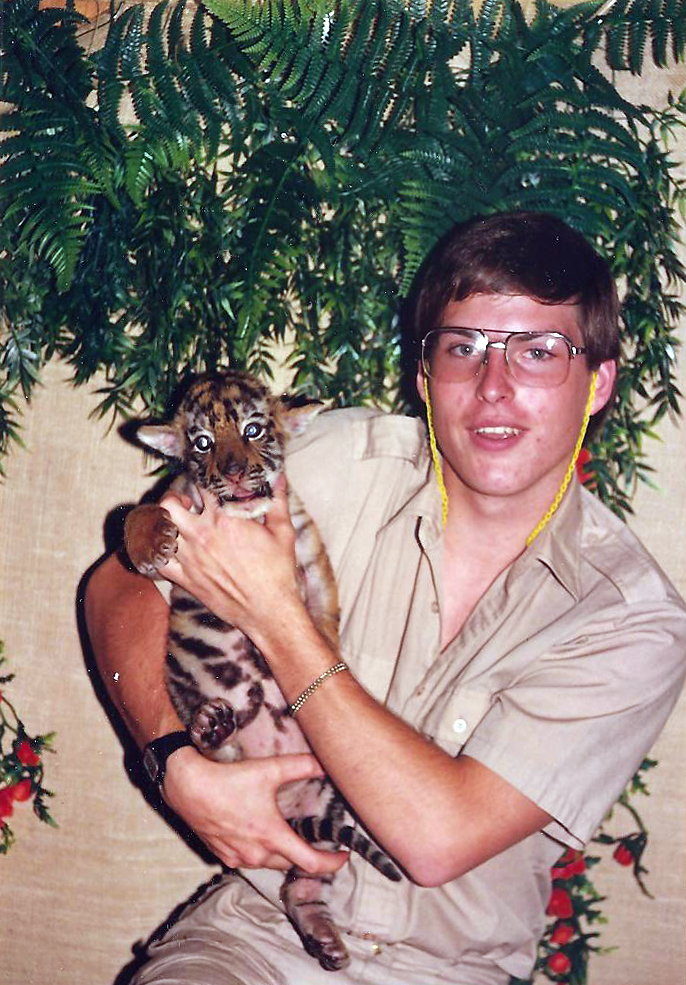
After Aldwyn McCuistion graduated from high school, he traveled throughout the Lower 48 for a few years. One of his favorite jobs was as a trainer for wild cats. Here he is with Tige.
Dr. Saltonstall says testing is absolutely imperative, even for people who don’t think they are at risk.
“The CDC has recommended that everybody between the ages of 13 to 64 be offered to know their HIV status at least once.”
Aldwyn McCuistion didn’t know he had HIV until a cold developed into a more serious infection his body couldn’t fight. Now he is living with AIDS, but he’s not dying from it. It is controlled by medication.
“I know we’re all going to die sooner or later, but I’m not going to die any sooner than anybody else because of this, as far as I believe anyway. And right now, I’m only on one medication.”
When he was first diagnosed, he took 14 medications a day. And 30 years ago, when someone received an HIV-positive diagnosis, it was a death notice.
Dr. Saltonstall says HIV/AIDS research is now focused on a vaccine and cure. She believes at some point the disease will be conquered.
Juneau Police say a juvenile brown bear was hit and killed by a car early Tuesday morning on Glacier Highway in the Lemon Creek area. Lt. Dave Campbell says the accident happened near Tyler Rental in the 5200 block. He says the driver was not cited, no one was injured and the car had minor damage.
Alaska Fish and Game wildlife biologist Ryan Scott examined the young male and said it appeared to be 2 to 4 years old. The bear weighed about 300 pounds, and based on the amount of fat in its stomach, Scott says, it was in pretty good condition.
“We didn’t do a full necropsy on him but we did examine the stomach contents and it was full of plastic and human food and things like that, candy wrappers, stuff like that. It’s another reminder to all of us that even right now we still have bears active in Juneau,” Scott says. “I know it’s late, everybody knows it’s late, but they’re not going to go away if they continue to get food.”
Scott says he’s had plenty of reports of black bears still out and about in the Mendenhall Valley and the downtown area. While it’s unusual to have brown bears in the more populated parts of Juneau, they are more prevalent out the road. He doesn’t think the brown bear killed on Tuesday was the same brown bear seen along the Mendenhall River in mid-November.
Channel 2 News has been carried on KATH and KCST for a decade.
The television station known statewide as Channel 2 will stay on the air in Juneau and Sitka through Dec. 6th, while the station and GCI Cable continue to negotiate carriage terms.
Channel 2 is the Anchorage NBC affiliate, KTUU, seen in Juneau on KATH and in Sitka on KSCT.
It was expected KTUU News would be taken off the Southeast stations Friday night if a deal wasn’t reached.
Now both companies say substantial progress toward a long-term agreement has been made, with the deadline extended to Dec. 6.
The two sides have been negotiating KTUU’s carriage on cable throughout the state since September. On November 8th, GCI pulled KTUU off cable in 21 rural Alaska communities, from Barrow to Skagway.
“We’ve heard from folks from rural Alaska as likely GCI has, who are upset about this, who want their programming back, who really just want to have access to a local news source that they’ve watched for years and years,” says KTUU Marketing Director Brad Hillwig.
He says the rural issue is back on the table as the companies look for a comprehensive agreement.
“The two sides are reporting substantial progress in talks on an overall agreement that would resolve issues in rural Alaska, Southeast Alaska and Anchorage for an extended period of time.”
KATH and KSCT television stations have been purchased by GCI. The Federal Communications Commission last month approved the license transfer to the cable company. At the time, GCI said Sitka and Juneau viewers would not see any changes in the short-term. But Channel 2 was still negotiating to keep its news on the stations.
If a long-term agreement is not reached, GCI Corporate Services Vice President David Morris says only Channel 2 News would be pulled from the Southeast stations.
He says the financial terms of carrying KTUU on the statewide cable has been one of the main sticking points.
“One of the sticking points also that we have is they’re wanting an exclusive arrangement to be the only NBC provider everywhere in Alaska outside of Juneau and Fairbanks,” Morris says.
If the two sides can reach a comprehensive agreement, Channel 2 News would remain on the Southeast stations, and about 7,000 rural cable subscribers would once again receive Channel 2 News and NBC programming.
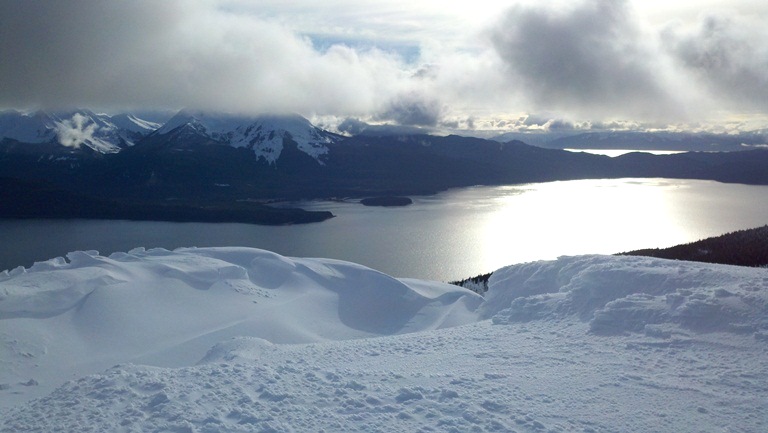
Who can beat this view? Eaglecrest, March 2, 2013. Photo by Rosemarie Alexander / KTOO.
Voting in the Elite 8 Ski Town Throwdown competition ended at 11 p.m. Thursday and Juneau’s Eaglecrest Ski Area beat Revelstoke Mountain Resort by 73 votes.
Eaglecrest is now the Great White North champion and goes on to the Final Four.
Eaglecrest on Tuesday beat Red Mountain Ski Resort by more than 200 votes in the Sweet 16 round of Powder Magazine contest. In the first two rounds, Eaglecrest knocked out two other large British Columbia ski resorts, Whistler/Blackcomb and Mt. Washington.
Eaglecrest Marketing Director Jeffra Clough says the Powder Magazine contest has two more rounds.
“Voting for the Final 4 round will be December 2nd and 3rd and Eaglecrest will be up against the Big East champion, which will be either Mt. Bohemia, Michigan, or Mad River Glen, Vermont,” Clough says.
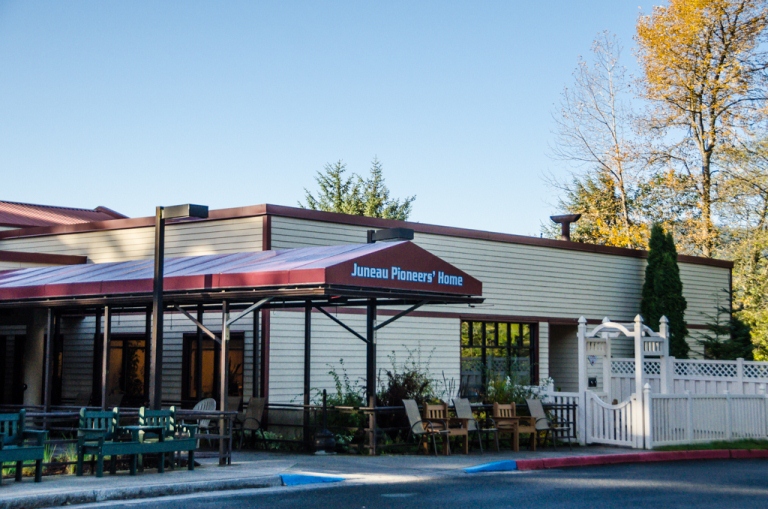
The Pioneer Home is the only assisted living facility for senior citizens in Juneau. Photo by Heather Bryant / KTOO.
The vision for an assisted living center in Juneau is expanding to include a new senior center, independent living and a social service non-profit center on one campus.
First, supporters of the idea are asking the Juneau Assembly to assist in a city-wide survey to quantify senior housing needs.
Previous surveys have indicated a need, but the size of that need is unclear, says Sioux Douglas, co-chair of a task force organized to tackle the issue.
“We want enough data that it tells us what housing and services seniors in Juneau need now and will need in the future. We want to look at the outlying communities, at least in northern Southeast, so that elders who need to come to Juneau for housing and services can do that,” Douglas says.
She says the survey also would answer how big a place to build.
“How many units? How many people? What’s it going to look like? What services do they want the most?”
Douglas hopes the survey will be underway by early next year, since Juneau is behind the curve in planning for what’s being called the “silver tsunami.” People age 65 and over are the fastest growing segment of Alaska’s population.
Planning for that population is one reason Douglas believes the Assembly should help fund the needs assessment, estimated to cost $40,000 to $50,000.
Other groups are interested in the data: An organization called United Human Services would likely co-locate a social service non-profit center on a senior campus.
Joan O’Keefe is Executive Director of SAIL, or Southeast Alaska Independent Living. She says UHS is modeled after other multi-tenant centers in the U.S. and Canada, where non-profits share facilities, such as a board and conference rooms.
SAIL and four other non-profits are currently “proving the model” in a leased space on Hospital Drive.
SAIL is considered an ADRC, or Aging and Disability Resource Center.
“Aging and Disability Resource Centers are part of a federal effort to help people more easily access the long-term services and supports that are available in their communities,” O’Keefe says. “That might include transportation, or assistive technology, or in-home care. ADRCs are designed to connect seniors and people with disabilities and caregivers with long-term services and supports of their choice.”
O’Keefe believes Juneau’s ADRC would logically be located on a senior campus, as well as a non-profit center under the United Human Services umbrella.
Douglas says the vision is to build one campus – typical of centers across the nation – which would include a senior activities center, an assisted living home, apartments for independent seniors, an ADRC, and a center for other non-profits.
NOTE: Updated to correct the last name of Sioux Plummer, her former name, to Sioux Douglas. We regret the error.
Close
Update notification options
Subscribe to notifications
Subscribe
Get notifications about news related to the topics you care about. You can unsubscribe anytime.