Scott Burton, KTOO

This reimagined Juneau McMansion’s entryway won an award for most innovative design

This remodeled entryway won Bauer/Clifton Interiors a first place prize for most innovative design at the 17th Annual Northwest Design Awards in Seattle. (Photo courtesy Bauer/Clifton Interiors)

A Juneau McMansion’s redesigned entryway was recently celebrated at the 17th Annual Northwest Design Awards in Seattle. Juneau’s Bauer/Clifton Interiors took first place for most innovative design for their work. The entire home’s remodel was inspired by something you might not expect.

If you’ve been to Salt, the Hangar Ballroom, downtown McGivney’s or driven by the downtown Blockbuster remodel, you’ve seen work by Bauer/Clifton Interiors. Their office is downtown, and just inside the door is a wall-mounted image of the design that won the award.

“We’re looking down in the center of an entryway in a home here in Juneau,” said Jeremy Bauer, one of the firm’s principal designers, standing in front of the picture.

The new entryway was part of a remodel of what they call an ’80s McMansion in the valley.
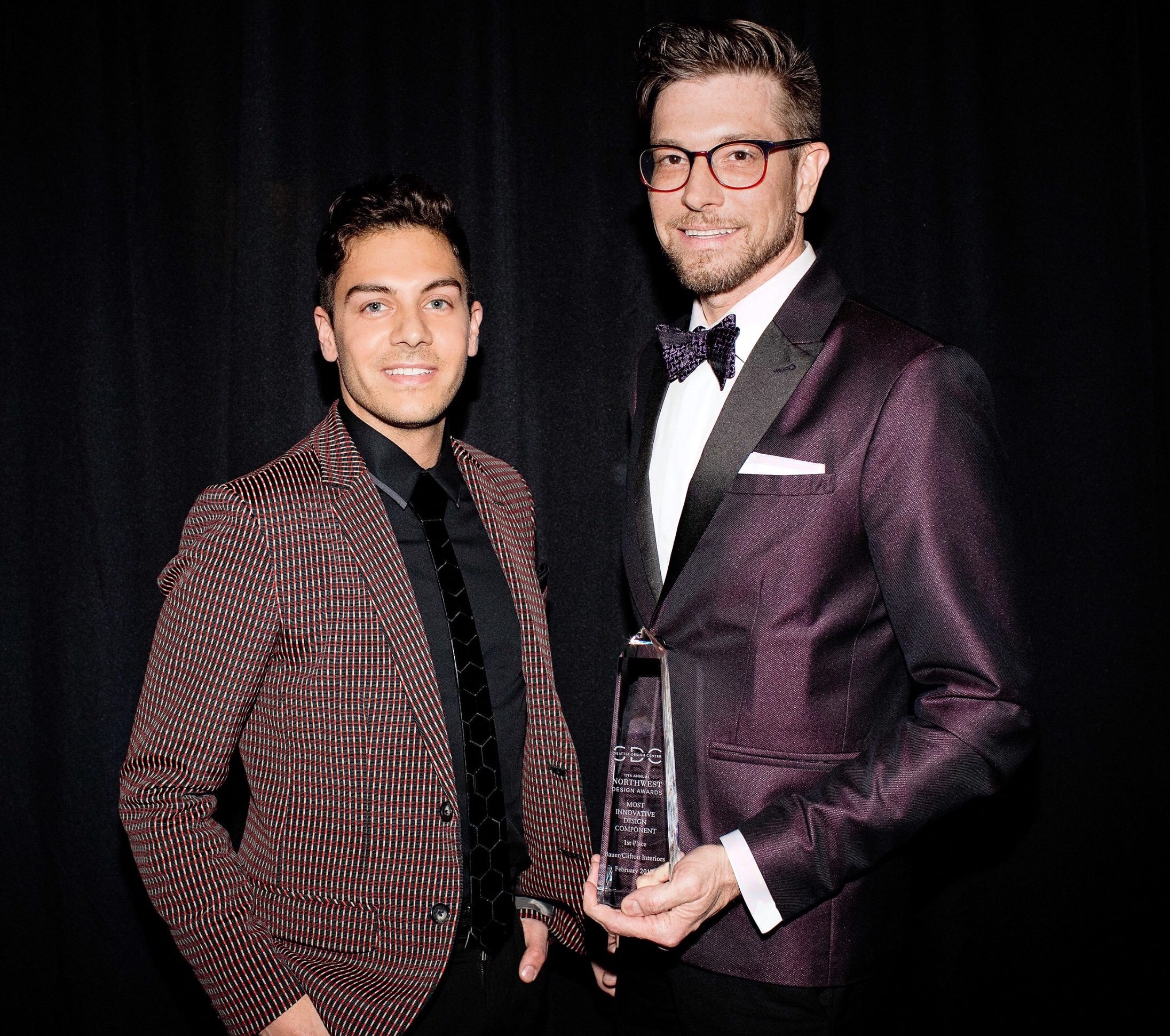
Jason Clifton, left, and Jeremy Bauer hold their award at the 17 Annual Northwest Design Awards Gala in Seattle. (Photo courtesy Bauer/Clifton Interiors)

“And you can see that the round shape is a very prominent form in this entry here with the circular staircase coming up on one side. Definitely, you can see the challenge of laying a wood floor in straight patterns there — that we’d lose the essence, the importance of the circle,” said Bauer.

Thinking in circles was just one of the design’s considerations. Jason Clifton, the firm’s other principal designer, said the clients’ needs were a priority.

“We found that they have some really strong ties to family homesteads in the countryside — as do each of us. And so we were able to share those experiences, bond over those experiences, and come up with a plan to establish more of a farmhouse chic design,” said Clifton.

And what is farmhouse chic?
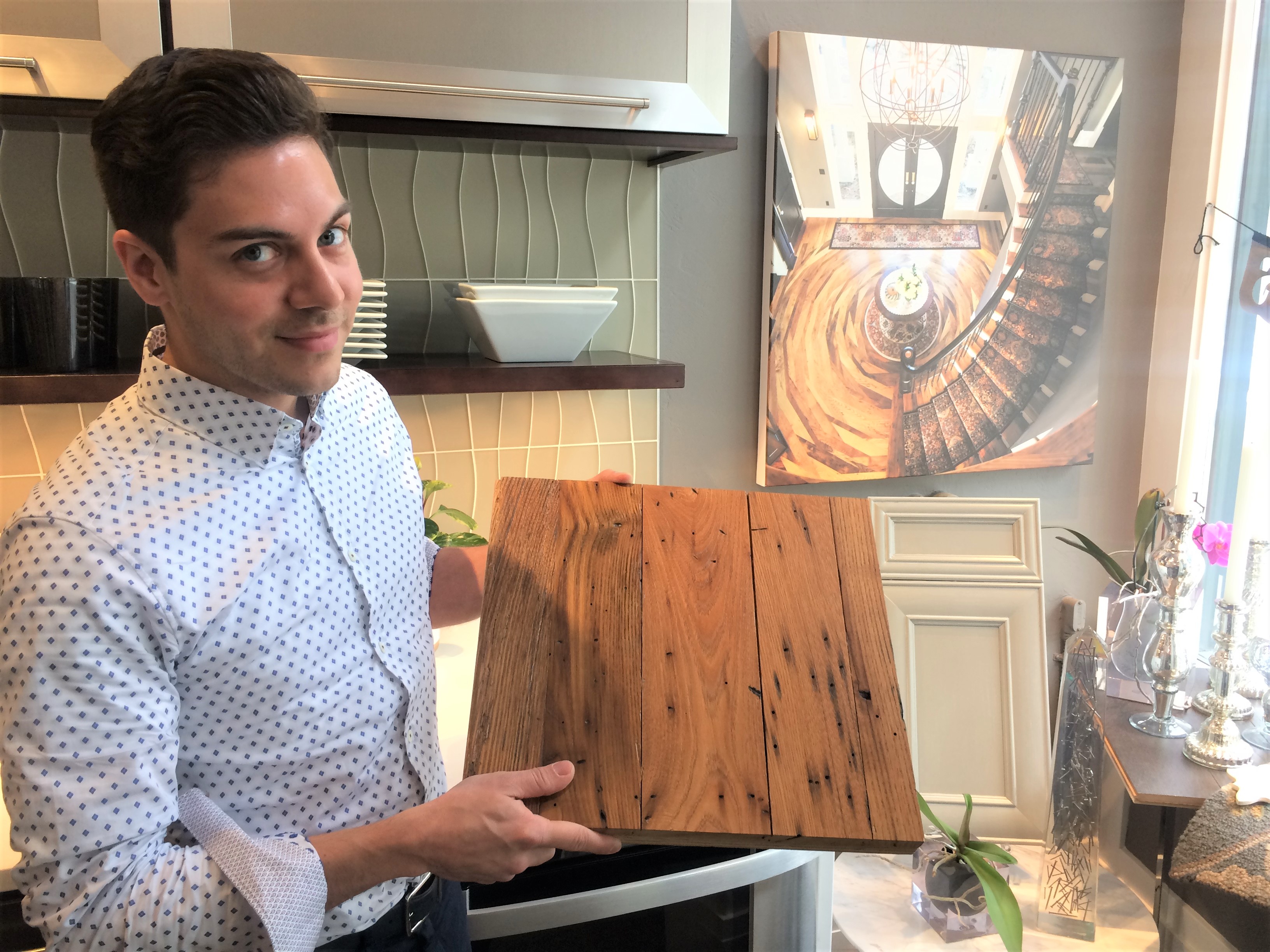
Jason Clifton holds a sample of the wood used for the entryway floor. The 150-year-old American chestnut was salvaged from a farmhouse in West Virginia. (Photo by Scott Burton/KTOO)

“It’s a nice blend of some more historical pieces, heirlooms, antique furnishings, intermixed with the modern amenities of a brand new home.”

But the biggest influence for the entryway might surprise you.

“Looking at the bottom of a woven basket,” said Bauer. “It was something that the owner collected and was very fond of and we had one of them that we took as an inspirational piece that we had laying here on our island in our studio. That was the piece that we turned over and looked at, and it was when the light went off and went, ‘OK, let’s try doing this — let’s try creating a woven wood floor,’” said Bauer.

With farmhouse chic in mind, the designers found reclaimed 150-year-old American chestnut wood flooring from an old farm in West Virginia. The reuse factor is something the designers like, too.
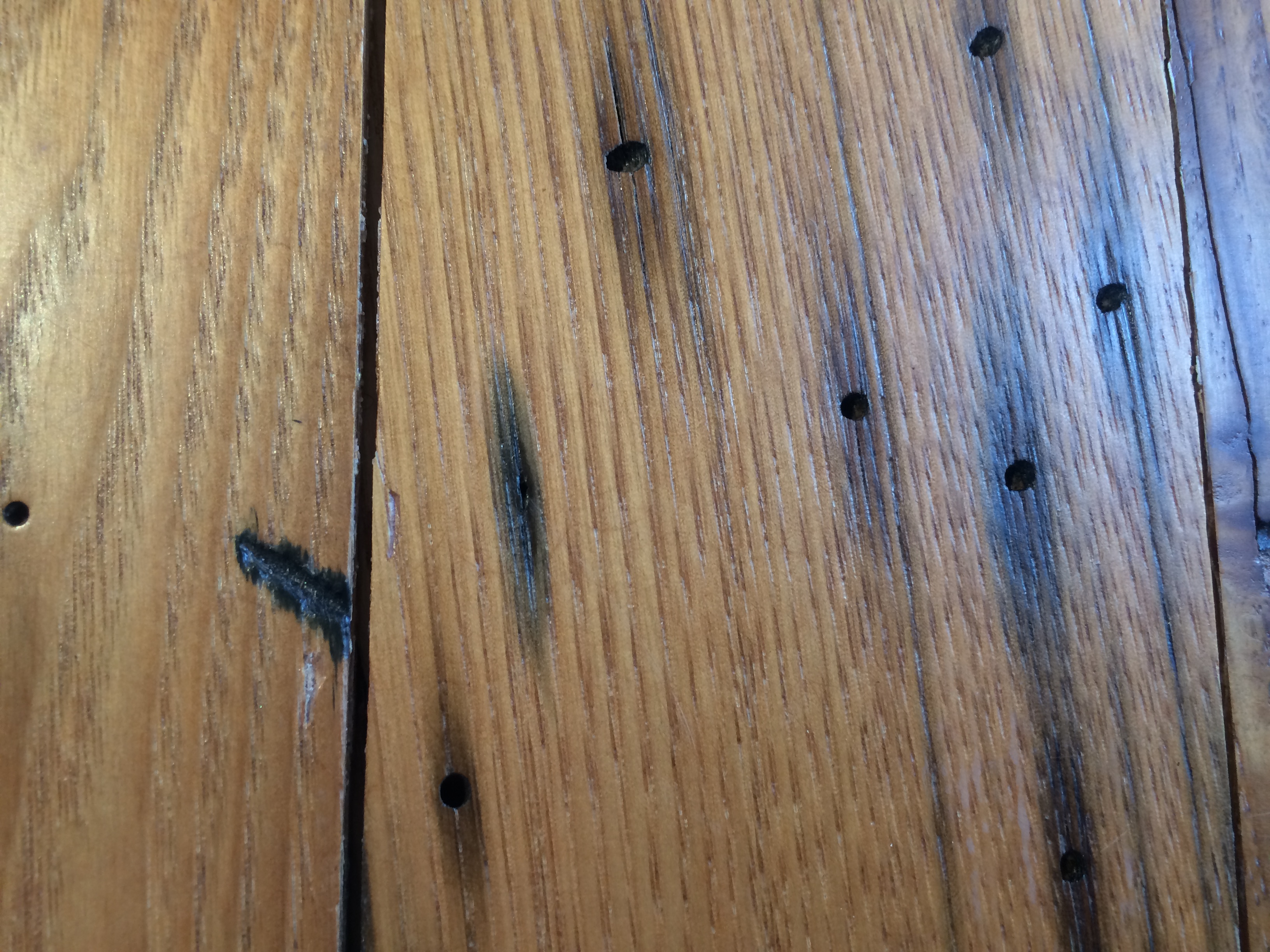
A close up of the American chestnut and its imperfections. (Photo by Scott Burton/KTOO)

“We see that pile of trash getting bigger and bigger out there,” said Bauer, “and I think that is something in the forefront of our minds — instead of something being thrown away can we reuse it and give it new life?”

And it looks cool too.

“And so the product itself isn’t perfect, by any means, so it has quite a bit of character,” said Clifton.

Clifton holds up a sample of the tan wood that’s full of tarnished black holes made by nails and insects.

The planks’ colors vary from light to dark brown, and their widths vary too. This added an additional challenge.

“Each and every one of those planks was laid out individually within CAD (computer aided design) with the dimensions, the angle cuts, the direction, everything pre-planned here within our office before installation was even considered.”

If you didn’t know a basket was its reference, one might also guess kaleidoscope or mandala or beehive. Even though weaving and basketry are several millennia old, they’re still inspiring innovation.

As a professional courtesy, the duo won’t disclose who the homeowner is.

Know what “greige” means?

Listen here:
Statewide Poetry Out Loud finals Tuesday

Now in its twelfth year, Poetry Out Loud is a national program that encourages high school students to learn about poetry through memorization, performance, and competition. Throughout the school year students have been practicing and competing and now it’s down to 10 finalists.

This video is of Juneau’s Briannah Letter reciting David Kirby’s “Broken Promises” at last year’s Poetry Out Loud statewide finals. This year’s competition is at 5 p.m. Tuesday.

Among this year’s state finalists is Elissa Koyuk, a senior at Juneau Douglas High School. She’ll compete against the other finalists Tuesday @360 in the KTOO building. The competition begins at 5 p.m., is open to the public and will also be streamed live at 360North.org. If Koyuk wins, she’ll have the opportunity to travel to Washington D.C. in April for the National finals.

Poetry our Loud in Alaska is a collaboration between the Alaska State Council on the Arts and the Juneau Arts and Humanities Council. 360 North co-produces the television and web streaming coverage.

Winners announced for Wearable Art ‘Renaissance’

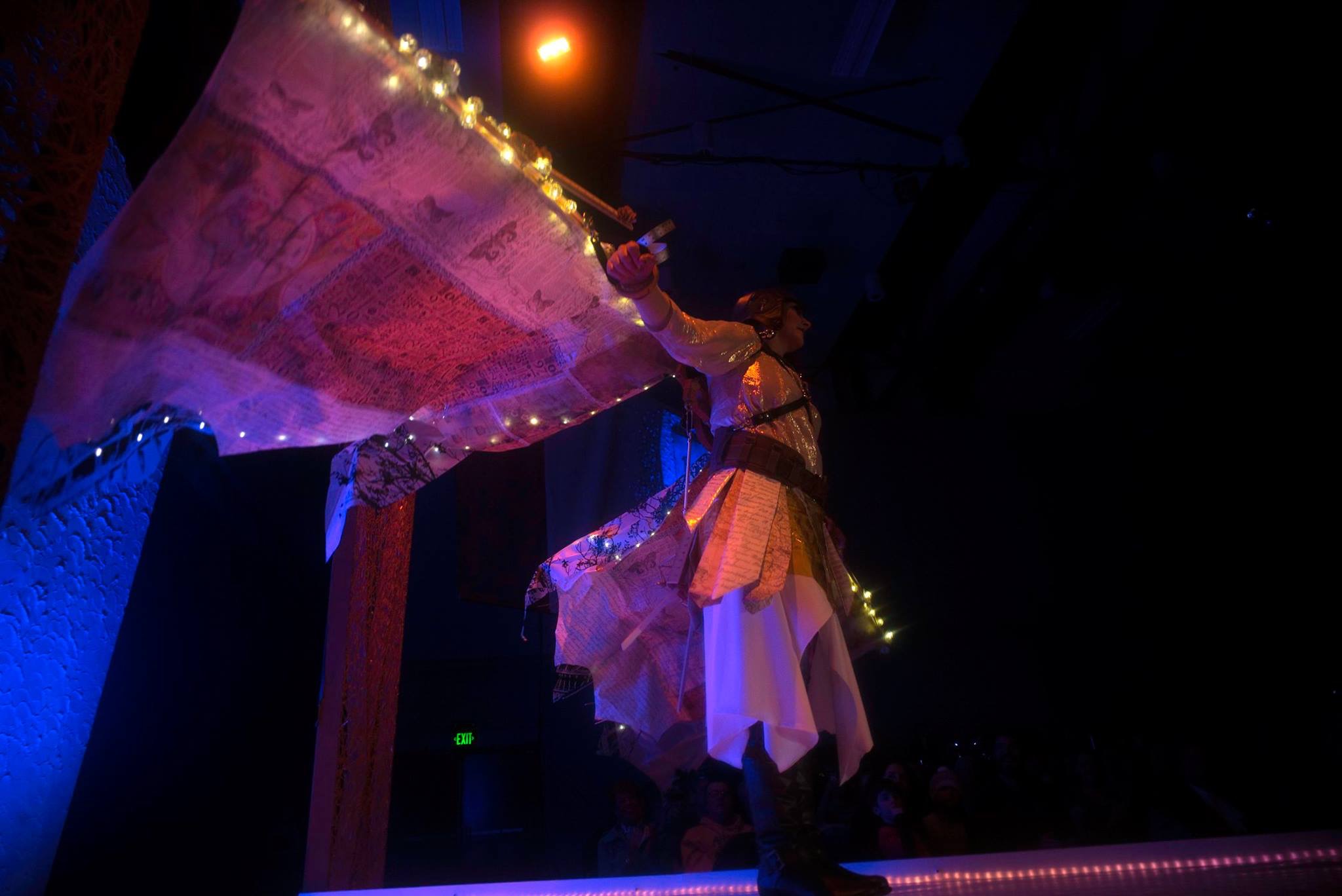
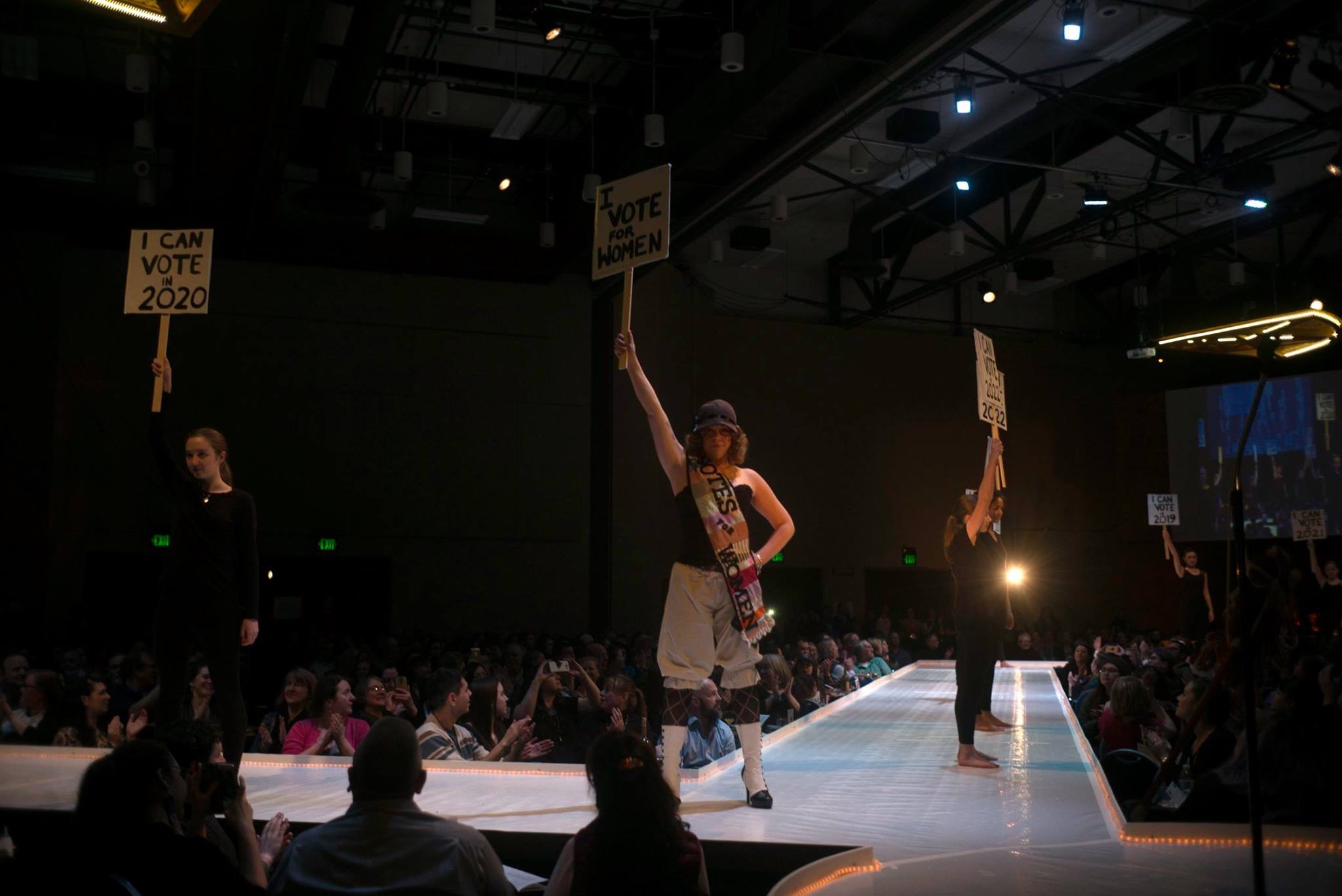
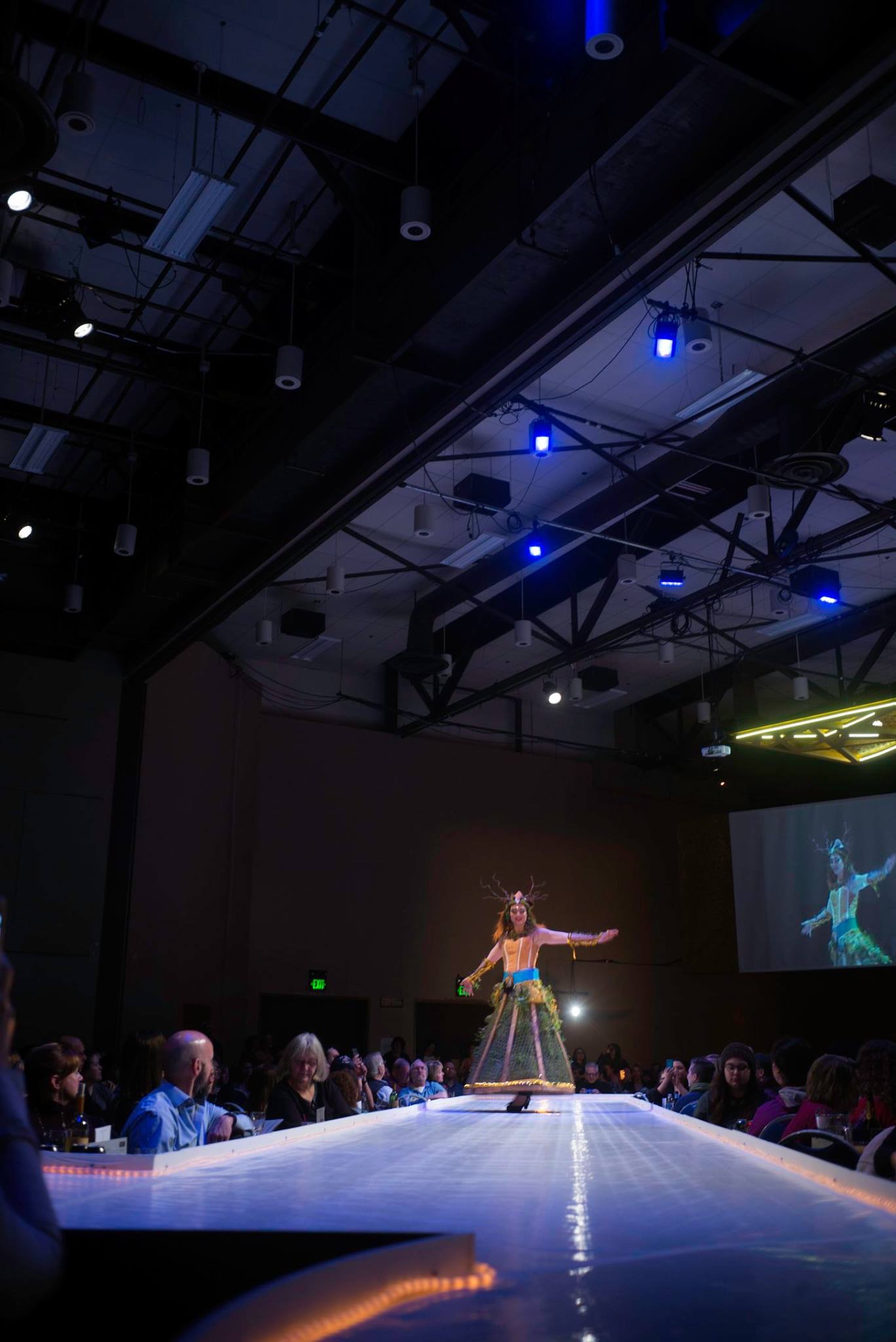
Wearable Art entrants are known for innovation, creativity, repurposing materials and for social commentary.

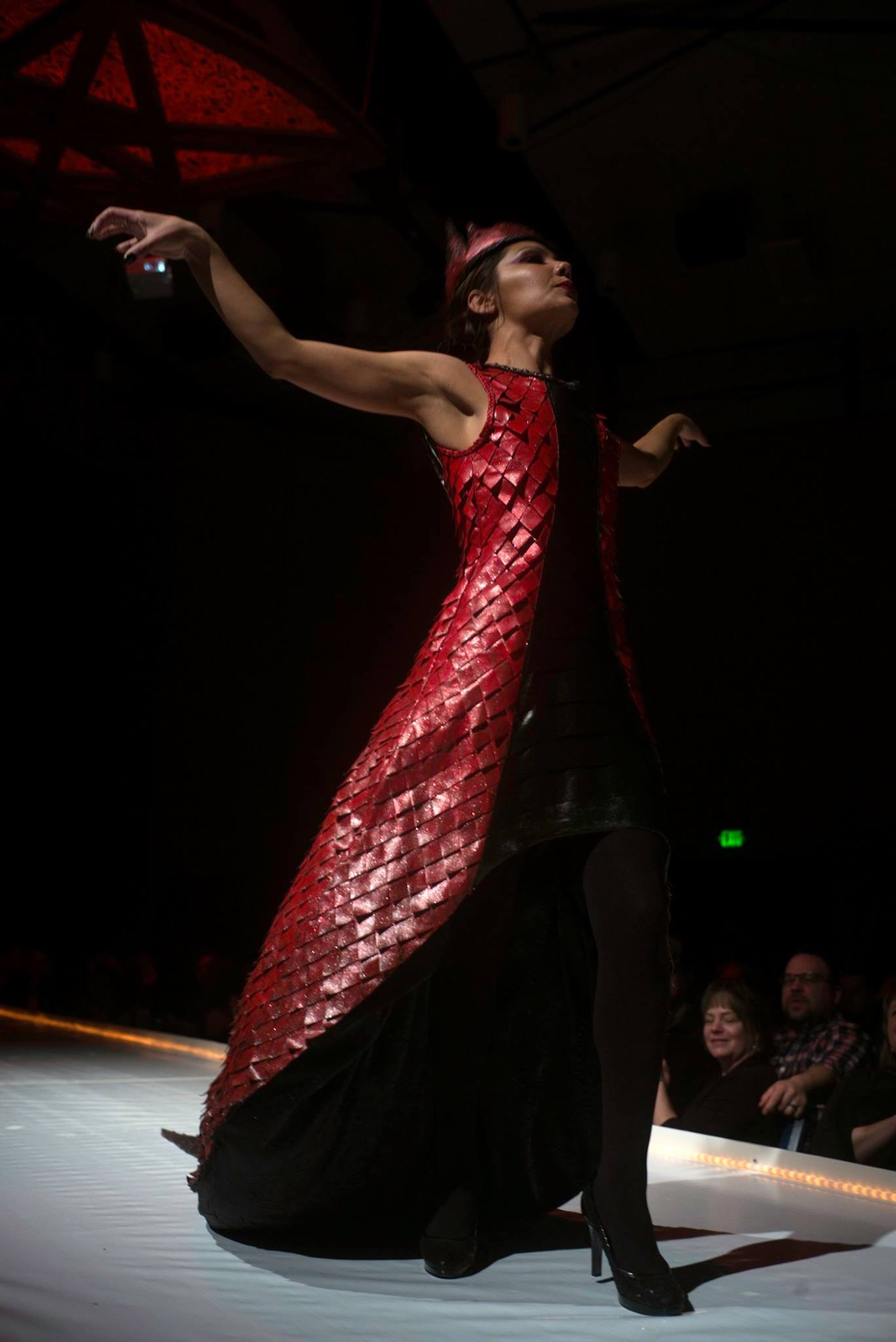
Sarah Sjostedt models “Food Security” by Deena McDougal and Jake Musslewhite at Wearable Art 2017. (Photo courtesy John Hutchins)

This year was no exception.

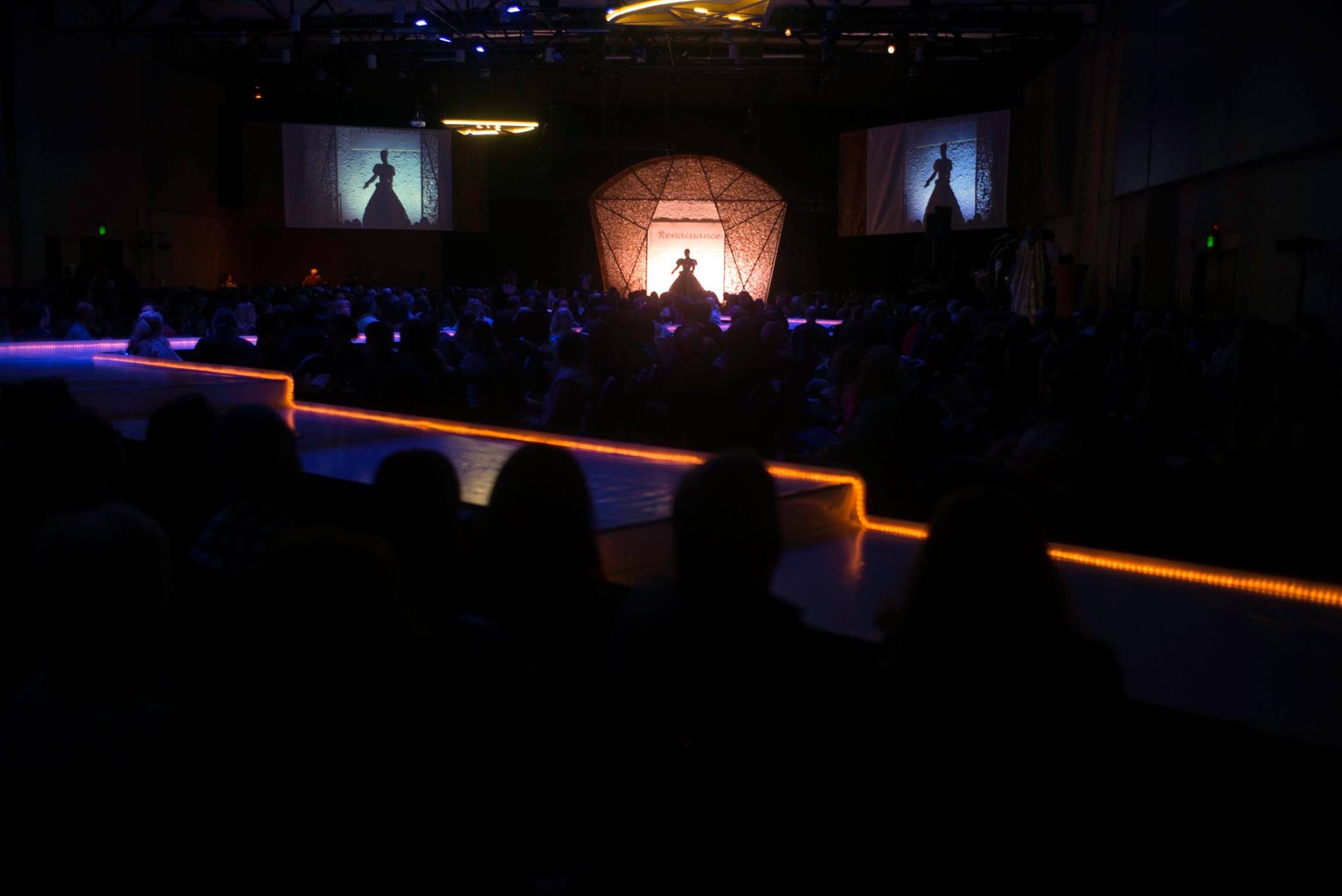
The 2017 show “Renaissance” took place Saturday and Sunday at Centennial Hall.

Models walked 29 entries down the runway as part of the annual fundraiser for the Juneau Arts and Humanities Council.

Materials included tin can lids, glass beads, duct tape, guitar and violin strings, bottle tops, flowers, chicken wire, lace, recycled copper fuel line, corn husks, fur, and vinyl records to name a few.

Emcees were actor Allison Holtkamp and actor-playwright Frank Henry Kaash Katasse.

Listen to a few audio highlights from the event here:

Amy Romme models one side of “Royal Divergence” at Wearable Art 2017. It was a two-person piece she and artist Jessica Hood collaborated on.
Amy Romme models one side of “Royal Divergence” at Wearable Art 2017. It was a two-person piece she and artist Jessica Hood collaborated on. (Photo courtesy John Hutchins)

Winners were chosen by a group of jurors who scored four categories: construction, innovation, overall presentation, and what they call the “wow” factor.

The juror’s first place award, or Best of Show, went to “Church of the Wild,” by artist Lauralye Miko and modeled by Amy George.

“A Lid-dle Un-can-ny,” by artist and model Michelle Morris, won juror’s second place and the people’s choice award.
“Battling Potted Land,” by artist and model Angela Ecklund won, the juror’s third-place award.

You can watch the broadcast of the event on 360 North at 8 p.m. Thursday.

Red Carpet Concert: ‘Listen’ from ‘They Don’t Talk Back’

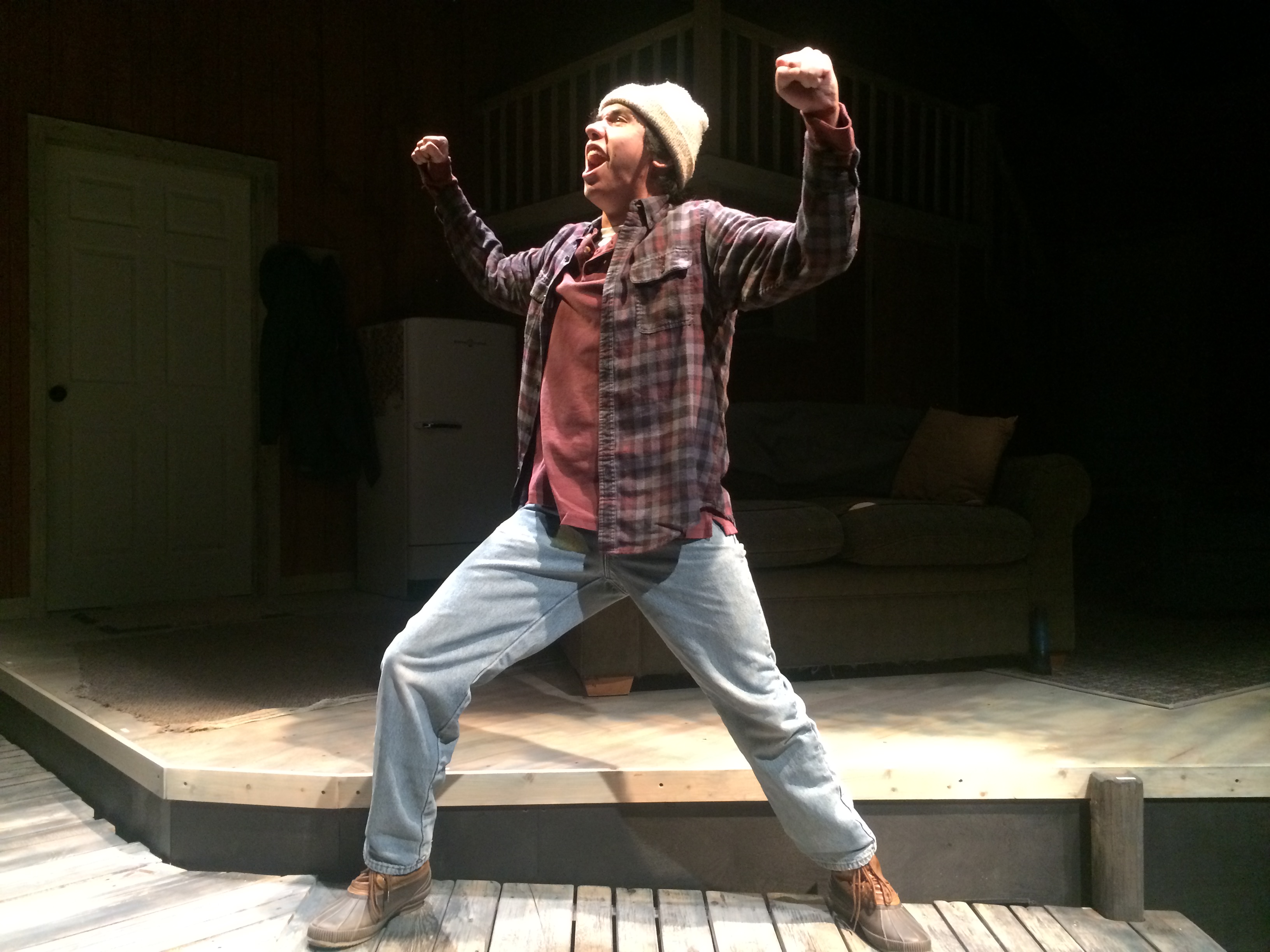
“They Don’t Talk Back” is in its second weekend at Perseverance Theatre. The play follows an urban Tlingit teenager who goes to live with his grandparents and cousin in a village in Southeast Alaska. As the play follows the teen’s challenges (among other story lines), it often breaks into songs or monologues–what Juneau-based playwright Frank Henry Kaash Katasse calls interludes.

One of those interludes is a rap by the teen called “Listen.” This recording of it is the latest entry in KTOO Arts’ Red Carpet Concert video series. Here’s Skyler Ray-Benson Davis performing “Listen.”

Click here for KTOO’s preview of the play.

‘They Don’t Talk Back’ comes home to Southeast with Perseverance Theatre premiere

“They Don’t Talk Back” opens at Perseverance Theatre tonight (Friday, Jan. 27). Among other themes, it’s a play about family, identity, colonization and cultural preservation. It features three generations of Tlingit men in Southeast Alaska facing change. And it’s also a love story.

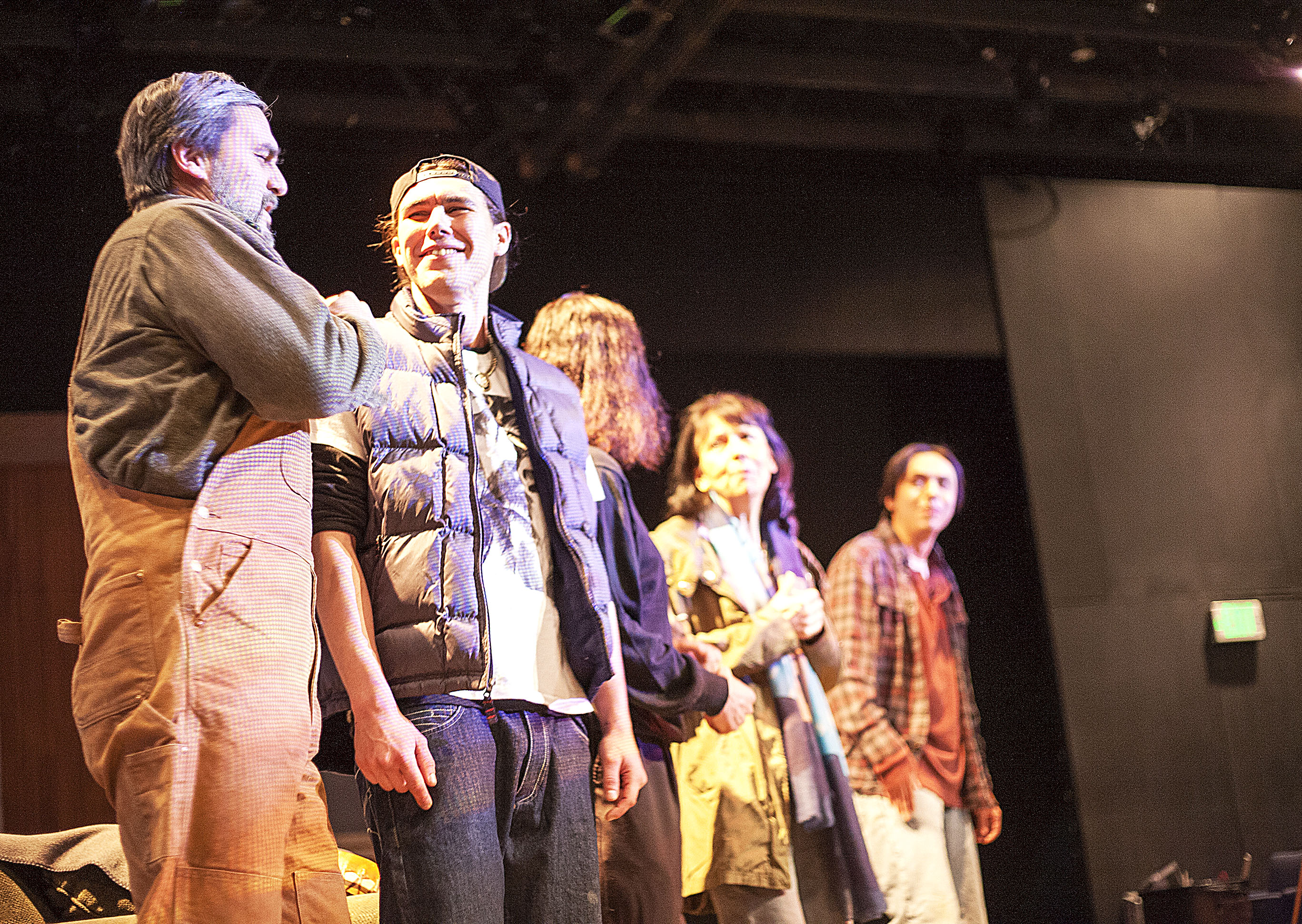
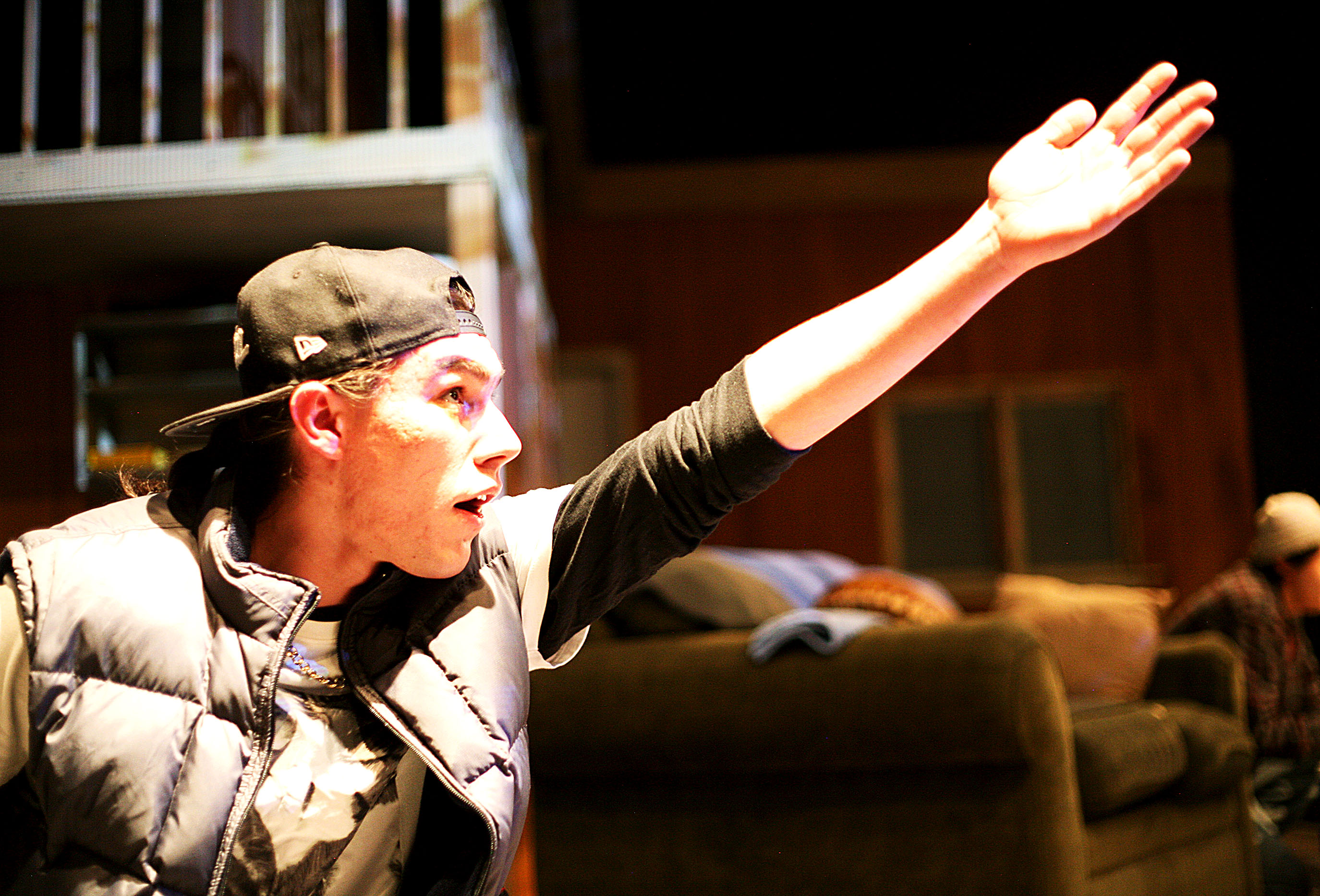
Jake Waid, left, and Skyler Ray-Benson Davis talk briefly during a technical rehearsal Tuesday, January 24, 2017, for "They Don't Talk Back," at the Perseverance Theatre, Douglas, Alaska. (Photo by Tripp J Crouse/KTOO)
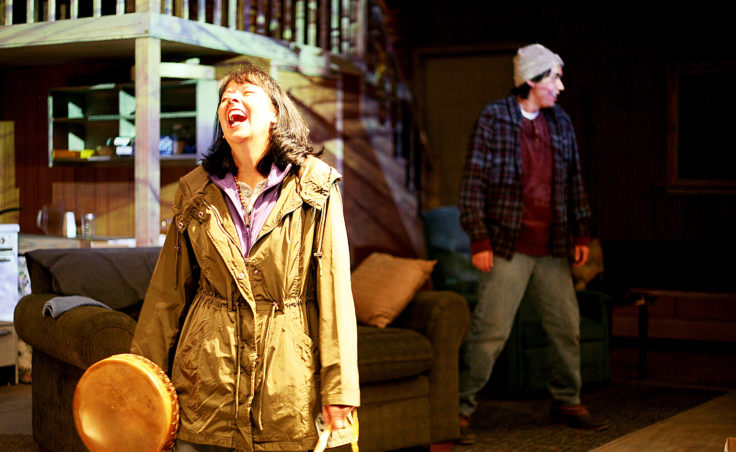
Jake Waid, left, and Skyler Ray-Benson Davis talk briefly during a technical rehearsal Tuesday, Jan. 24, for “They Don’t Talk Back,” at the Perseverance Theatre, Douglas, Alaska. Behind them is Brian Westcott, Diane E. Benson and Kholan Studi. (Photo by Tripp J Crouse/KTOO)

The diversity of themes is supported by a diverse cast and director composed of Tlingit, Cherokee, Athabascan, Yup’ik and Choctaw people.

Tonight’s opening at 7:30 is part of what is being described as a rolling world premiere that began in California, and is in collaboration with Native Voices at the Autry and La Jolla Playhouse.

It’s also a homecoming for the playwright, Juneau theater artist Frank Henry Kaash Katasse.

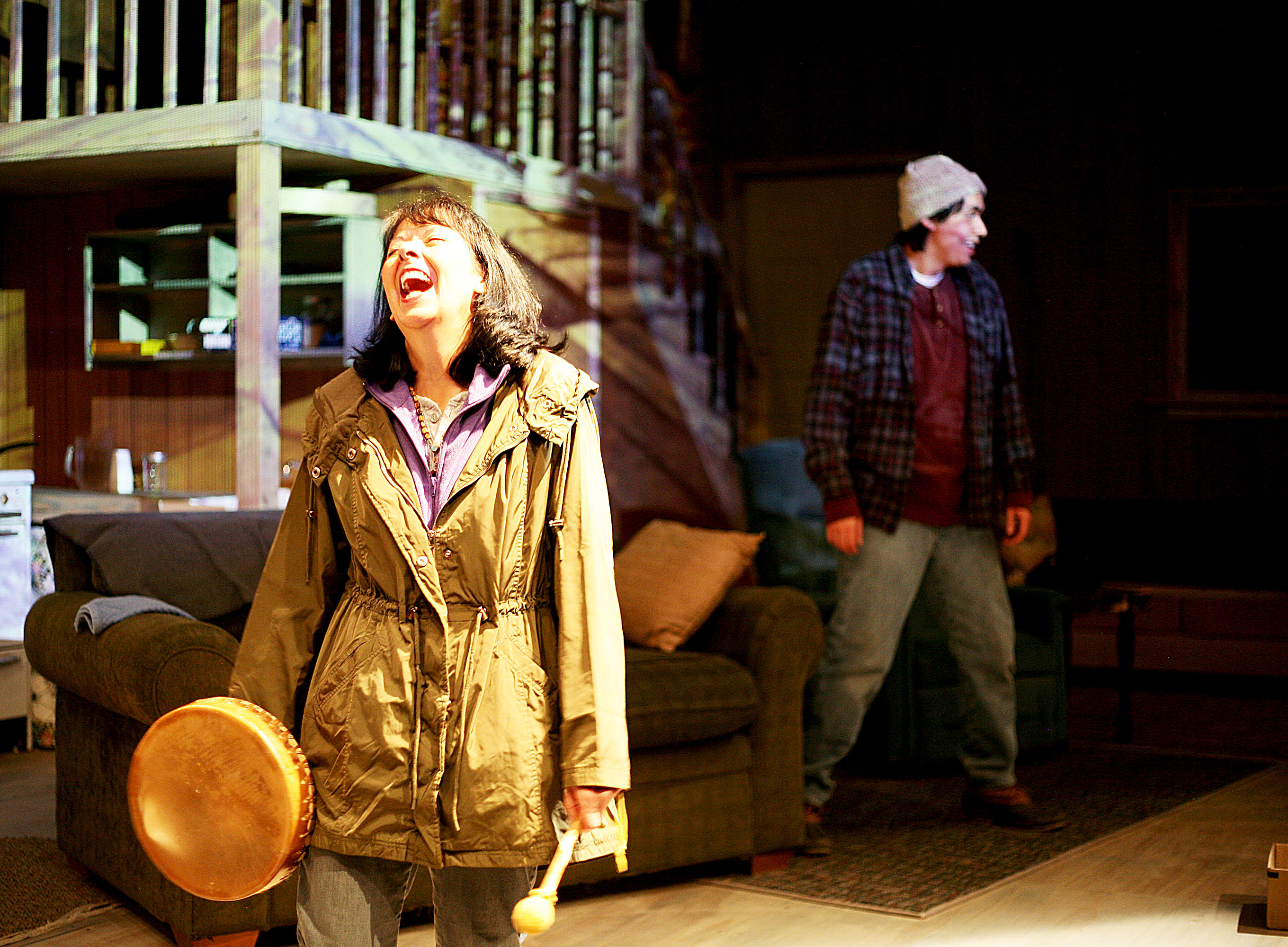
The play opens with Paul Senior on a second floor balcony of a modest home with mismatched and worn furniture.

Paul Senior, played by Juneau actor and Tlingit Jake Waid, is a gruff fisherman who wears Carhart overalls and is the patriarch of the story. He’s reciting a poem in Tlingit that playwright Frank Henry Kaash Katasse would call one of the play’s interludes — poems, songs and monologues woven throughout the play’s story line.

Ironically, Katasse wrote the interludes during interludes.

“I worked at KTOO for quite some time and I’d finish work at 4:30 and my wife finished work at 5. So, sometimes I’d have a half an hour before I had to go pick her up,” Katasse said. “So what do you do for a half an hour? You can dink around on your phone, or you can work.”

Listen to the story and clips from the play here:

Katasse hadn’t written a full-length play before, and he wasn’t trying to at the time.

“My intention was to write things that were inspiring me,” Katasse said. “One of the monologues I wrote was because I wanted an audition piece as an actor … As a matter of fact all the parts are parts I would love to act.”

Katasse also is an accomplished actor — readers may have seen him in Perseverance’s “Chicago,” or “Our Voices Will Be Heard” among others.

He’s also the board president of the Juneau Douglas Little Theatre.

And what inspired the 30-minute writing sessions?

“It was rainy one day so I write this monologue about rain and how it refreshes you,” Katasse said.

The rain interlude is now performed by actor Brian Wescott who is Athabascan and Yup’ik, and plays both a minister and Paul Senior’s son, who is a Desert Storm veteran. He’s also the estranged father of Nick, played by Skyler Ray-Benson Davis, who is Tlingit.

“After a while I had this short story about a young man (who eventually became Nick) going to live with his grandparents,” Katasse said.

He thinks the short story was called “City Boy.”

“Then I realized I could take this story and weave it through the rest of these interludes,” he said. “I could tie this story to all these different characters.”

Nick’s counterpart is his raised-in-the-village cousin Edward, played by Kholan Studi.

Katasse said both Tlingit characters represent parts of himself.

“Back in the day it was very affordable to take your family and go tour Southeast Alaska on the ferry,” Katasse said. “We would do that when I was little. And my dad was a commercial fisherman so sometimes he’d be fishing out of Petersburg, or Wrangell, or Sitka. And we’d go meet him there on the ferry.”

“So I have these vivid memories of us being little in some of these communities, and some of the experiences I had from being the city boy from the big town of Juneau,” he said.

Nick is sent to live with his grandparents, Paul Senior and Linda (played by Diane E. Benson, who is Tlingit), and Edward in the village while his mother awaits trial for drug-related charges in Juneau.

The following scene exemplifies Nick’s angst.

“Hey cousin, want to grab the skiff and go check on the crab pots?” Edward asks.

“No, I don’t want to check the f—ing crab pots, cousin! I’m sick of this place. Maybe dad had the right idea — get as far away from you as possible — get away before I end up as f—ed up as you!” answers Nick.

Drama like this is often balanced with comedy, and a diverse selection of music including a church song.

Katasse brought jazz musician and friend Ed Littlefield onto the team as a composer and Tlingit Language Consultant.

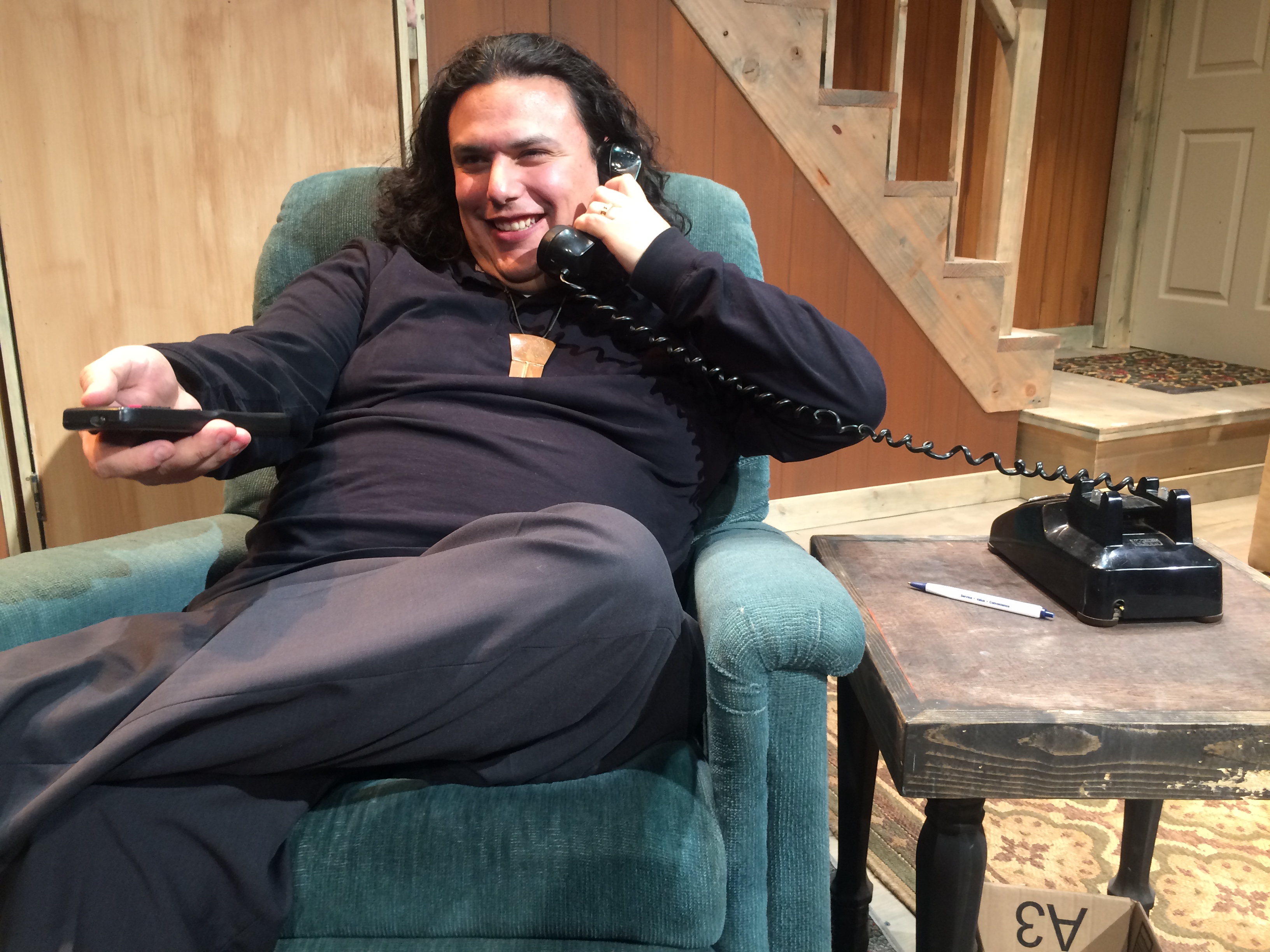
Playwright Frank Henry Kaash Katasse posses in Paul Senior’s easy chair after the show. (Photo by Scott Burton/KTOO)

“One of the reasons you break into a song during a musical is that the character reaches an emotional boiling point, and the best way to express that is through song,” Katasse said. At one point Nick raps — another one of Katasse’s interludes. (Clink on the audio player above to hear it).

Beyond coming of age the cousins experience, and change everyone faces, it’s also a love story between the grandparents. Paul Senior and Linda play the kind of long-time in-love lovers to which many aspire.


Site notifications
Update notification options
Subscribe to notifications