Shayne Nuesca

Director of Content Strategy, KTOO

I know you’re busy and I want to take the work out of getting information. I’m here to make sure we’re listening to you — through our website, social media and everywhere else on digital. What questions have come up after our reporting?
Alaska’s only b-girl claims her spot on the world stage

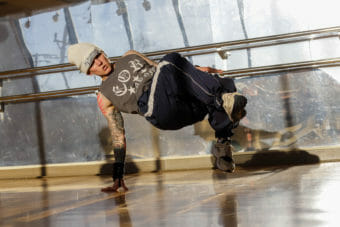
Bri “Snap1” Pritchard practices at the Fairview Recreational Center in Anchorage. She is hoping to earn a spot on the first-ever U.S. Olympic team for breaking, which makes its debut in the 2024 Olympics in Paris. (Photo by Jeff Chen/Alaska Public Media)

Alaska is not what you might picture when you think of breaking. But it’s been the backdrop for b-boys and b-girls who’ve taken the art form from recreational centers to world stages.

Bri Pritchard is a b-girl from Anchorage. Also known as Snap1, she started breaking when she was 17. She’s 30 now and an Olympic hopeful.

Pritchard says she usually wakes up every day at 4 a.m. and trains alone on a mat in a spare room in her house. It’s similar to how she started.

“I would watch the kids when I was 17 in high school, and then I would go home and go practice in my garage or watch YouTube videos,” she said.

Eventually, she joined other dancers at the Spenard Recreational Center. There was a small fee to use the facilities, but the informal, peer-to-peer lessons were essentially free.

Pritchard sits in the spare room at her home in Anchorage, where she does most of her training. (Photo by Shayne Nuesca/KTOO)

In those days, Pritchard says teenagers were swept-up by MTV’s America’s Best Dance Crew and emulated dance routines they saw online.

“There would be kids there — younger, older, just dancing, practicing for hours,” Pritchard said.

She says the group she practiced with would spend whole days at the rec center, oftentimes back-to-back. They’d clean up the dance room when the facilities closed, go outside to play basketball at night, and then head back in when the rec center opened in the morning.

In Anchorage, the dance groups, or crews, were mainly separated by high school. They would visit one another’s schools during lunch hours to stack their skills up against each other, and an audience would gather in a common area to watch. But the rec was where they could scope out the competition.

“So every time you went to the rec center, it was kind of like you had something to prove all the time,” she said.

Back then, Pritchard was the only female in her crew, Elements of Rhythm. She was also the only competitive b-girl in Anchorage’s male-dominated hip-hop and dance community.

“So I had to get the power moves. I had to get the blow-ups. I had to get the freezes because that’s what they were doing,” she said.

Her crew participated in competitions, called jams, in Anchorage and Fairbanks. For a lot of people, this was where the real competition was at. It included a group of Anchorage b-boys from the scene’s first-generation, the Illaskan Assassins.

“They were our heroes,” Pritchard said. “And then we started practicing, and then we were out to beat them.”

The Illaskan Assassins were known for cultivating the hip-hop community in Anchorage. They traveled to national events and became fairly well-known outside of Alaska. This was a course Pritchard and her crew would end up following.

She competed regularly within Alaska, but Pritchard says it didn’t click for her that she could make something out of breaking until she went out of state. She says she wanted to use dance as a way to meet new people and see new places.

“Because if you’ve lived here long enough, you know that we’re isolated here in Alaska,” she said. “And it’s a great place to live, but there is just so much more out there in the rest of the world.”

Now it’s taken her all over the map — winning competitions in Nevada, Florida and Arizona, and to jams in Europe.


View this post on Instagram


A post shared by Bri Pritchard? (@snap1flooristas)


When Pritchard isn’t competing, she’s a helicopter mechanic with the Alaska Army National Guard. She was deployed to Iraq last year, along with her husband.

If breaking and military life sound like the complete opposite of each other, that’s because they are. And she says when she first met her husband through the military, she had to dismantle the images he had of hip-hop culture through stereotypical and sometimes violent depictions in popular media.

“And eventually, when I did ease him into it, and then he met the people, and then he got to actually see the culture for what it was, it really changed him,” she said.

Pritchard goes through her military uniforms in her closet. She has been in the Alaska Army National Guard since she was 19 years old. (Photo by Shayne Nuesca/KTOO)

Pritchard says there are different lessons to learn from each part of her life. On the military side, she says people can learn discipline and that can be applied to her work ethic as an athlete. And through hip-hop, people can learn how to be open-minded and free-spirited. She wants to be a bridge between the two lifestyles.

“My job does not suffer just because I spend a lot of time on my passion,” she said. “My passion also doesn’t suffer because of the amount of time that I work.”

When she was deployed, she practiced her sets in a workout room and shared her progress on social media. She even competed in two virtual competitions. She returned to Alaska after one year of deployment but quickly went on the road again and won first place at her first competition back in the circuit. It was a step toward her ultimate dream: the Olympics.

Pritchard played hockey and softball growing up. She thought of going to the Olympics with those sports, but as she became more involved in breaking, she let go of her childhood ambitions.

“So needless to say, when they announced that breaking was going to be in the Olympics, I was obviously over the moon because a dream of mine that was basically nonexistent — dead, if you will, because it wasn’t possible — is now possible again,” she said.

The 2024 Olympics will be held in Paris. It’s the first time athletes will compete in breaking at the games. In order to get on Team USA, breakers need to rack up enough points or win first or second place at nationals. Pritchard has a real chance; she’s ranked No. 2 in the country for her division.

It hasn’t been easy pursuing her goal to get on the national team. She still works full-time and competes on the weekends. She has a sponsorship, but she’s been funding most of her trips herself. She’s also a full-time student and currently pursuing a bachelor’s degree in kinesiology.

Pritchard’s other uniforms, tracksuits for b-girl competitions, hang opposite of her military uniforms. (Photo by Shayne Nuesca/KTOO)

Beyond an Olympic medal, she’s hoping getting on Team USA’s roster will inspire a new generation of b-girls and b-boys in Alaska. The scene she grew up with has dwindled. People have moved on, jams are now few and far between and the rec center doesn’t have the same groups of kids battling each other.

But Pritchard and her original crew have tried to revive the community. They’ve organized events on their own, and they’ve spent time teaching kids how to break. And one of her old crew members — another accomplished breaker, Jeremy “B-Boy Ives” Viray — recently took up ownership of a dance studio in Anchorage.

Pritchard sits on her mat at home and talks about the plans she has beyond the Olympics. The sun beams in through the window and lights up the room. There’s an auspicious glow around her. It’s as if the light sparks her energy. She says she’s not afraid of getting older. B-boys and b-girls are still at their prime well into their 30s, and sometimes even their 40s. The older they get, the more they understand their bodies and come into their own.

Pritchard’s practice mat includes logos of her crews, motivational quotes and training drills from her mentor. (Photo by Shayne Nuesca/KTOO)

In 2018, she joined a new team called Flooristas, an all-female crew. And she says even though she’s grateful for her start with b-boys, she’s thrilled to finally be alongside other b-girls who understand the female body and its motions.

This is a new era in her life, and there’s a fire to it, an eagerness. She and her husband are getting ready to leave Alaska. She has plans to keep competing for at least another 15 years, and after that, she’ll coach.  And while she’s called “Alaska’s only b-girl,” there’s hope she isn’t the last.

Where to find the latest information on Alaska wildfires

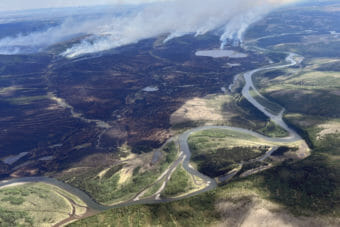
There have been over 200 wildfires in Alaska so far this year. As of Tuesday, there are currently 85 active fires in the state. Below are resources for finding the latest information on wildfires in Alaska and how to report a fire to the Division of Forestry and emergency officials.

Alaska wildfire map

How to report a fire

To report a wildfire, call the Division of Forestry information line at 907-356-5511, 1-800-237-3633 or call 911.

Alaska wildfire resources

When to expect results for Alaska’s special primary election

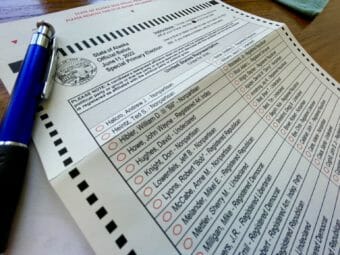
The ballot for the U.S. House special election. (Photo by Liz Ruskin/Alaska Public Media)

Saturday is the last day to turn in ballots for Alaska’s special primary election for U.S. House. 

Forty-eight candidates are running to serve the remainder of late Rep. Don Young’s term.

Ballots must be postmarked on or before June 11 to be counted. Alternatively, voters can drop off their ballots at absentee and early voting locations.

The special primary will decide which four candidates get on the ballot for the special general election. That will be held on Aug. 16, the same day as the regular primary election.
The Alaska Division of Elections says they expect to publish unofficial results for the special primary Saturday night. The results will be posted on KTOO’s elections page once we receive them.

The final ballot count for the special primary will be on June 21. Elections officials expect to certify the results on June 25.

Unlike the special primary, the special general election in August won’t be by mail. Voters who want to vote by mail will need to apply to receive an absentee ballot for the special general and regular primary elections. 

The winner of the special general election will serve until January 2023 — the remainder of Young’s term. Afterward, the winner of the regular general election in November will serve for 2 years. 

How Filipinos in Alaska can vote in the Philippines’ national elections

Workers with the Special Ballot Reception and Custody Group receive ballots at the Philippine Consulate General office in San Francisco. (Photo from the Republic of the Philippines, Philippine Consulate General, San Francisco)

The overseas voting period for the Philippine national elections ends May 9. 

Overseas Filipinos who registered to vote by Oct. 14, 2021 are eligible to vote in this election. If you did not register to vote by that date, you are ineligible to vote in this election.

There are two ways to vote from overseas: by mail and in person at your region’s consulate office. For Filipinos in Alaska, that office is in San Francisco.

If you plan to vote by mail, you should have received your ballot. 

If you are in Alaska and haven’t received your ballot, you can check to see if the consulate general in San Francisco has you listed as one of the voters with incomplete address information. The consulate general’s office also has a list of people whose voting packets were returned to sender.

If your name is on either list, you’re asked to email the consulate’s office so they can send you your voting packet. 

When you complete your ballot, you’re required to write your name on the ballot envelope and sign it. The ballot envelope then needs to be sealed with the paper seal included with your voting packet.

Each voting packet comes with postage stamps, but the consulate has advised voters to add one more USPS stamp before sending completed packets to the consulate. The consulate also said voters can send packets with only the stamps provided, and it would pay for postage due for any packets they receive that don’t have enough stamps.

Ballots must be returned to the Philippine Consulate General’s office in San Francisco by 4 a.m. Pacific Time on May 9. 


This story is part of KTOO’s participation in the America Amplified initiative to use community engagement to inform and strengthen our journalism. America Amplified is a public media initiative funded by the Corporation for Public Broadcasting.


Filipinos in Alaska

Are you voting in the Philippine national elections? We’d like to hear from you. Tell us your story or let us know how we can help.

Name(Required)

Alaska Airlines lifts mask requirement

Travelers head into the terminal of Juneau International Airport on May 15, 2020.
Masked travelers head into the terminal of Juneau International Airport on May 15, 2020. Alaska Airlines previously required passengers wear masks in response to the COVID-19 pandemic and CDC recommendations. (Photo by Jeremy Hsieh/KTOO)

Alaska Airlines announced Monday it is ending its mask requirement.

In a press release, the airline said that – effective immediately – masks are optional on Alaska Airlines flights and in airports across the country.

The decision to lift the requirement came after a federal judge overturned the Centers for Disease Control and Prevention’s mask mandate for airplanes and other transportation.

Last week, the federal transportation mask mandate was extended through May 3rd so that health officials could further study the new omicron variant of COVID-19. Monday’s decision makes that extension irrelevant.

In March, the CEOs of the country’s major airlines had signed a request to President Joe Biden to drop the mandate. And the governors of 21 states, including Alaska Gov. Mike Dunleavy, sued the federal government over the mandate.

Alaska Airlines had a mask requirement for passengers for two years. The company’s press release specifically addresses passengers who had been banned from flying on the airline for refusing to wear a mask, like Alaska Sen. Lora Reinbold. It said that some guests whose “behavior was particularly egregious” would remain banned even after the mask policy ended.

This story has been updated with additional information.

Sharing stories for Filipinos in Alaska

Independence Day
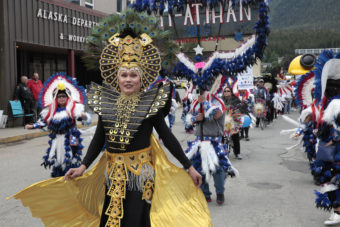
Members of Filipino Community, Inc. dance during the Independence Day parade on July 4, 2016, in Juneau. (Photo by Rashah McChesney/KTOO)

For hundreds of years, Filipinos have made their marks in communities across Alaska but have largely been excluded from its history — and especially in news media. KTOO is changing that.

We are working with America Amplified, a national collective of public media organizations bringing visibility to underrepresented communities. Through this program, we’re leveling up our community engagement work and focusing on sharing stories for people, not just about them.

So far, we’ve met community leaders from Juneau and Anchorage who shared their experiences living in Alaska and their knowledge about Filipino cultures and history in the state. And we’ve learned a lot.

In March, we talked with a small group about media representation of Filipinos in general, what they hoped to see, what news organizations get wrong and what we don’t know about.

We’re also paying close attention to the upcoming national elections in the Philippines, which impact Filipino migrant workers in Alaska and other Alaskans who will be voting in those elections overseas. We learned that these members of the Filipino community are most often overlooked, so we want to help keep them informed about the issues they care about. That means you’ll be seeing news from the Philippines right here on our website.

Another part of our conversations that stood out was about the nuances of Filipino identity and the importance of also centering different cultures within that identity — from Ilocano to Tagalog, Visayan to Kapampangan, to Indigenous Filipinos and Filipinos with Alaska Native ancestry. And in our first story for America Amplified, we shared a look into the creation of a “Molly of Denali” episode that focused on the Kapampangan heritage of a Filipino Athabascan character.

We are still in the early stages of this work. And while one project sparked this new approach to community engagement, this is work we will continue to do with everyone we serve in Juneau and beyond.


America Amplified

KTOO is amplifying the voices of Filipinos in Alaska. We want to hear from you. What stories would you like to share or learn more about?

Name(Required)
Site notifications
Update notification options
Subscribe to notifications