A recent transplant to Juneau from Iowa, Tripp J Crouse has more than 13 years of journalism and newspaper experience, and was previously the social media editor for the Quad-City Times of Davenport, Iowa, from April 2013 to July 2016.
Two people needed rescuing from Gold Creek near Cope Park around midnight on Saturday.
Juneau Police Department responded to a call about a man and woman needing help. Police arrived on the scene first, and called Capital City Fire/Rescue.
Assistant Fire Chief Chad Cameron says the creek and fencing made it difficult to reach the people.
“We actually had to use ropes, pulley systems and a ladder to get down to the creek there to get to the first patient,” he said. “Then from that patient, we walked upstream a little bit from going down the dirt embankment and walked to the creek.”
Cameron says the two people were unconscious and unresponsive.
Emergency personnel were able to wake them and they were transported to Bartlett Regional Hospital for further evaluation.
Cameron did not know their ages, but estimated they were about middle age.
It was also unclear whether the two incidents were related.
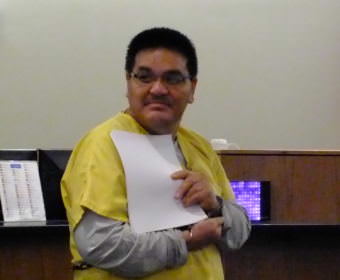
David Evenson, 52, was previously scheduled to go to trial in the death of 56-year-old Aaron Monette last summer. Police found the victim lying unconscious at the downtown bus terminal. He was transported to Harborview Medical Center in Seattle, where he died.
Evenson changed his plea in April, pleading guilty to criminally negligent homicide. A manslaughter charge was dropped in the plea deal.
During proceedings Friday, the prosecution and the defense noted that Monette likely had a pre-existing aneurysm, which could have contributed to his death.
Pallenberg gave Evenson an opportunity to speak before sentencing.
“I feel really bad the gentleman, Mr. Monette, had died and I absolutely never intended for that situation to happen,” he said.
Pallenberg accepted the agreement in court Friday morning. He sentenced Evenson to six years, of which three years are suspended.
The judge noted that Department of Corrections would determine how the defendant serves his time, which could include prison, electronic monitoring or other options.
Evenson also will spend up to 10 years on probation. He is required to seek treatment for anger management and substance abuse.
Pallenberg granted Assistant District Attorney Amy Paige 90 days to investigate whether to seek restitution.
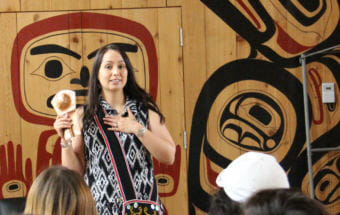
Mique’l Dangeli teaches students how to bake salmon fins. Dangeli moved to British Columbia to teach Tsimshian culture in her ancestors’ traditional territory, but faces an immigration fight to live and work in Canada. (Photo courtesy Mique’l Dangeli)
When the homelands of indigenous groups straddle the border between U.S. and Canada, traveling back-and-forth becomes an immigration issue. You might think the countries would have similar policies, but it isn’t that easy.
One U.S.-born Tsimshian teacher is caught in the mess, fighting to legally stay and work in her ancestral homeland in British Columbia.
Mique’l Dangeli teaches the Tsimshian language — Sm’algya̱x — to children and adults, including at a school in Kitsumkalumm, British Columbia.
Now, she’s fighting to stay. Her post-graduate work visa expired July 1 – along with her ability to legally work in Canada.
She applied for Canadian citizenship – but was denied – twice. The first time, she hadn’t taken a required English exam. Her frustration boiled over while talking to an immigration representative:
“‘The Canadian government as well as the American government have forced, over a 200-year timespan, our people to speak English through physical, emotional, spiritual and sexual abuse,’” she said. “‘I have to take an English exam to continue to teach Sm’algyax here?’”
“And she said, ‘I’m sorry. … I don’t make the rules, I’m sorry. This is what you have to do.’”
Still, Dangeli took the $500 exam. Then she says Canadian immigration denied her the second time. It’s complicated, but she says it has to do with her husband’s immigration status.
Canada views her husband as a landed immigrant. His nation, the Nisga’a, gave up their First Nations status cards in favor of Nisga’a status cards, which were to offer the same rights as First Nations members. But they don’t. And because of his status, he can’t sponsor Mique’l into the country.
“Now we’re both, both our rights, to be here be in B.C. and our peoples’ traditional territory is being called into question,” Dangeli said.
Canadian immigration officials did not return a request for comment by this story’s deadline.
Her situation isn’t unique. She says indigenous people such as Gwich’in, Haida, Tlingit and Coast Salish also face issues crossing the border.
“It’s just that it doesn’t get all the media attention that all the other border issues do. I’ve always felt that the northern border between U.S. and B.C. in particular, the U.S. and also the Yukon are completely ignored because of all the focus on Mexico-U.S. border.”
Mique’l Dangeli teaches seventh- through ninth-grade students at the Northwest Community College longhouse in Terrace, British Columbia. (Photo courtesy Mique’l Dangeli)
Dangeli grew up on the Annette Island Indian Reserve in Metlakatla, Alaska. The Ph.D. in Northwest Coast Native art history moved to British Columbia to focus on teaching Sm’algya̱x in the traditional Tsimshian territory.
“With my education and my work history regardless of who I am in terms of being a Tsimshian woman, it’s not good enough within the Canadian system,” she said.
She even gave up a tenure track position at the University of Alaska Southeast to do so.
She’s talking about the Jay Treaty, which was signed in 1795 and allowed Natives to trade and travel across the border of U.S. and Canada, then a British territory. But Canada does not recognize the treaty.
Dangeli says First Nations status holders from Canada can live and work in the U.S., but Canada doesn’t reciprocate with U.S.-born Natives.
“Canada is exporting indigenous people to the U.S., not importing us.”
Mique’l Dangeli teaches primary students to read “Brown Bear, Brown Bear, What do You See” in Sm’algyax. (Photo courtesy Mique’l Dangeli)
In the meantime, Dangeli’s school in British Columbia is on summer break. She’ll travel back to Metlakatla to visit friends and family. And Canada issued her a visitor’s extension through part of July.
Canada’s asymmetrical polices don’t surprise Damien Lee. He’s an associate fellow at Yellowhead Institute, a First Nations public policy center in Toronto.
“The irony is that if Canada exists because of First Nations permission, yet First Nations are being denied permission by Canada to exercise their current political jurisdiction. To me that’s mind blowing.”
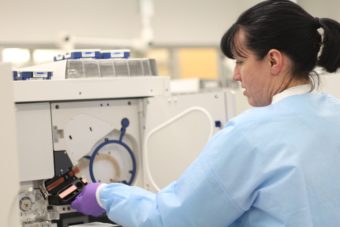
“Leaving evidence untested is like leaving a crime scene without investigating,” Walker said in a news release from his office. “We can and will do better.”
House Bill 31 requires an annual audit of unsubmitted and untested sexual assault kits. The measure aims to curtail the accumulation of the kits, as authorities address the backlog.
Anchorage Democrat Rep. Geran Tarr introduced the bill.
At about 10 p.m. with help from the Craig and Klawock police departments, Alaska State Troopers executed a search warrant, according to a troopers press release.
Authorities arrested Gae Yates, 58, of Klawock and Armetta Barden, 60, of Seattle for second-degree misconduct involving a controlled substance.
Items seized include more than 56 grams of heroin, which had an estimated street value of over $56,000; multiple digital scales; and electronics and cash.
The investigation is ongoing and more charges are possible.
Police arrested a man accused of punching his ex-girlfriend in the head and stealing her car.
The 23 year old female victim told police dispatch Wednesday afternoon that Asma Fifita, 30, stole her phone, keys and silver 2016 Dodge Journey from the 3400 block of Foster Avenue in Douglas.
According to police, Fifita attempted to take the woman’s phone as she was giving him a ride. He punched her in the head multiple times and she stopped the car and got out.
Police say Fifita then got into the driver’s seat and drove away with the car and the cell phone.
Police later found the suspect at a residence in the 3200 block of Bresee Street in the Valley.
Juneau police arrested Fifita on felony charges of criminal mischief, robbery and vehicle theft. He was also arrested on a misdemeanor assault charge.
Police Lt. Krag Campbell said the cell phone was broken, but he did not know whether it was returned to its owner.
Online records show Fifita is being held without bail in Lemon Creek Correctional Center.
His arraignment was scheduled for Friday.
Close
Update notification options
Subscribe to notifications
Subscribe
Get notifications about news related to the topics you care about. You can unsubscribe anytime.