Yvonne Krumrey

Justice & Culture Reporter, KTOO

"Through my reporting and series Tongass Voices and Lingít Word of the Week, I tell stories about people who have shaped -- and continue to shape -- the landscape of this place we live."

Juneau’s new ballot processing center is up and running

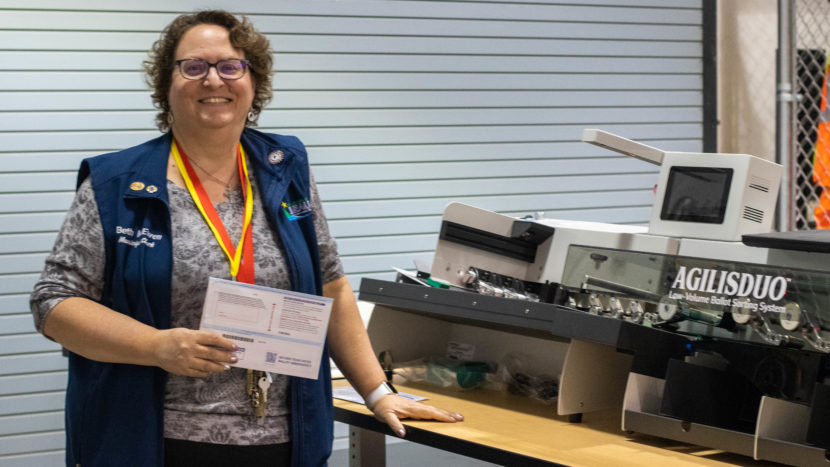
Beth McEwen, Municupal Clerk, leads visitors on a tour of Juneau’s new ballot counting center on Sept. 12, 2022. (Photo by Paige Sparks/KTOO)

For the past two municipal elections, Juneau’s city clerk had to fly to Anchorage with all of the city’s ballots to use the vote-counting equipment there. 

Now, just in time for the local election on Oct. 4, Juneau has opened its own ballot processing center. Ballots were mailed on Tuesday.

“It’s all being done in house versus having to have our staff travel up there and the expense of sending everything,” said Jessica DeBartolow, who works in the clerk’s office. “So it’s a little easier just to do it here.”

On Monday, City Clerk Beth McEwen gave tours of the facility off Thane Road, near the Rock Dump. 

Now that the ballots have been sent out, visitors will have to put their phones or other recording equipment into a locker. There are security cameras trained on everything in the room. And in the waiting room, there’s a screen with all the feeds from those cameras. 
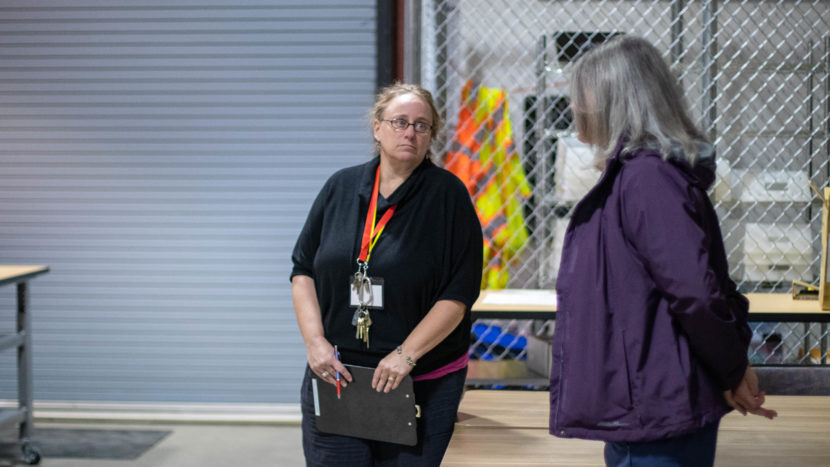
Deputy Clerk Diane Cathcart escorts visitors on a tour of Juneau’s new ballot counting center on Sept. 12, 2022. (Photo by Paige Sparks/KTOO)

Every part of the process, from envelope opening to counting the vote, is recorded so the public can watch.

“Anybody who is coming to observe the process, if they’re sitting out here, they can watch the security cameras and what all the election workers are doing inside,” McEwen said. 

The cameras serve the same purpose as in-person poll monitors in traditional elections.  

The center will have a screen dedicated to the adjudication process, which happens when there is an issue with a ballot that needs human eyes — like if someone filled in two bubbles and crossed out one. 

“We’re going to be having a really big screen TV so that anyone sitting out in our entry area here can actually see that adjudication taking place in real time,” McEwen said. 

Juneau’s first by-mail election, in 2020, had record turnout. Eleven thousand ballots were returned, which was more than 40% of registered voters. The city decided then that it would be worth opening its own ballot processing center. 

Early voting starts on Sept. 19. Once the ballot processing starts, anyone interested in observing can contact the city clerk’s office. The city is still looking for election workers, as well
New session of Juneau’s only trauma support group for LGBTQ people starts this month

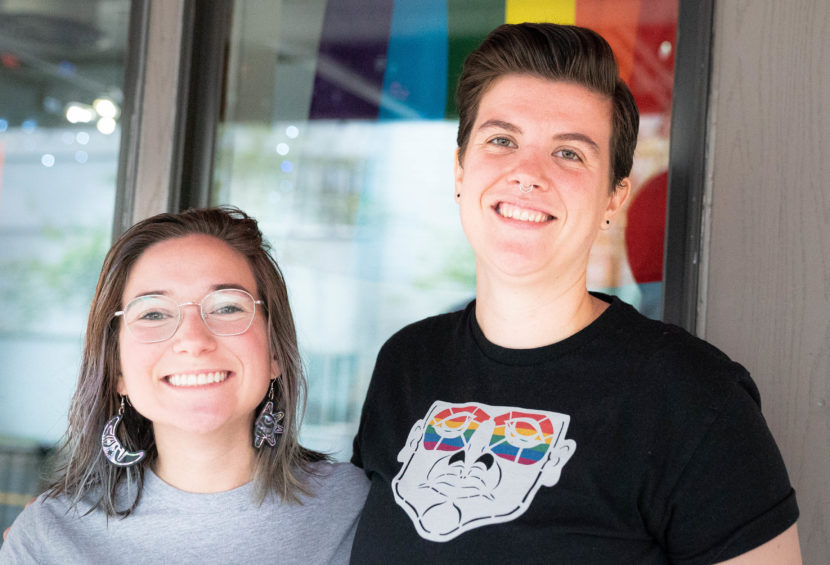
Chloey Cavanaugh (left) and Meryl Connelly-Chew (right) facilitate Spectrum for AWARE – an LGBTQ trauma support group in Juneau on Sept. 1, 2022 (Photo by Paige Sparks/KTOO)

LGBTQ people experience domestic and sexual violence at higher rates than heterosexual and cisgender people. On top of that, queer people of color, people with disabilities and bisexual and transgender people are more likely to experience violence of any kind in their lives. 

One key difference is that they are less likely to recognize it as abuse. 

“It doesn’t fit the stereotypical image of a cis-man physically abusing a cis-woman, which is often in people’s perception of what domestic violence looks like,” said Meryl Connelly-Chew from Juneau’s domestic violence support organization, AWARE.

That’s why AWARE is hosting Spectrum – the only queer-specific support group that serves people in Juneau who’ve experienced trauma. 

Connelly-Chew says the group discussion focuses on the effects of trauma – not the traumatic experiences themselves. 

“[We] do this because we’re queer people who have experienced, you know, various traumas in our own lives,” Connelly-Chew said. “I think it’s what makes it work so well.” 

“We’re kind of discussing it together and learning with people and learning from people in a way that isn’t necessarily giving advice, but it’s just sharing our different lived experiences, and what that’s been like being in this community,” said Chloey Cavanaugh, the other facilitator of the group. 

Connelly-Chew said some of the most common hang-ups new group members have are about belonging. 

“I often get asked like, ‘am I queer enough for this queer space? Is my trauma, like, bad enough for this trauma support group?’,” they said. “I get asked that, almost, from everyone who calls.”

Cavanaugh says Spectrum prioritizes confidentiality and safety because Juneau is a small city. 

“You’re going into a space where we’re all committed to confidentiality, and uplifting each other, and you know who’s gonna be there,” she said. 

Spectrum is a free, in-person program that lasts 12 weeks, starting Sept. 29. 

For more information, call 907-586-4902 or email Connelly-Chew at merylc@awareak.org.

More heavy rains expected for Juneau, in an already record-breaking wet year

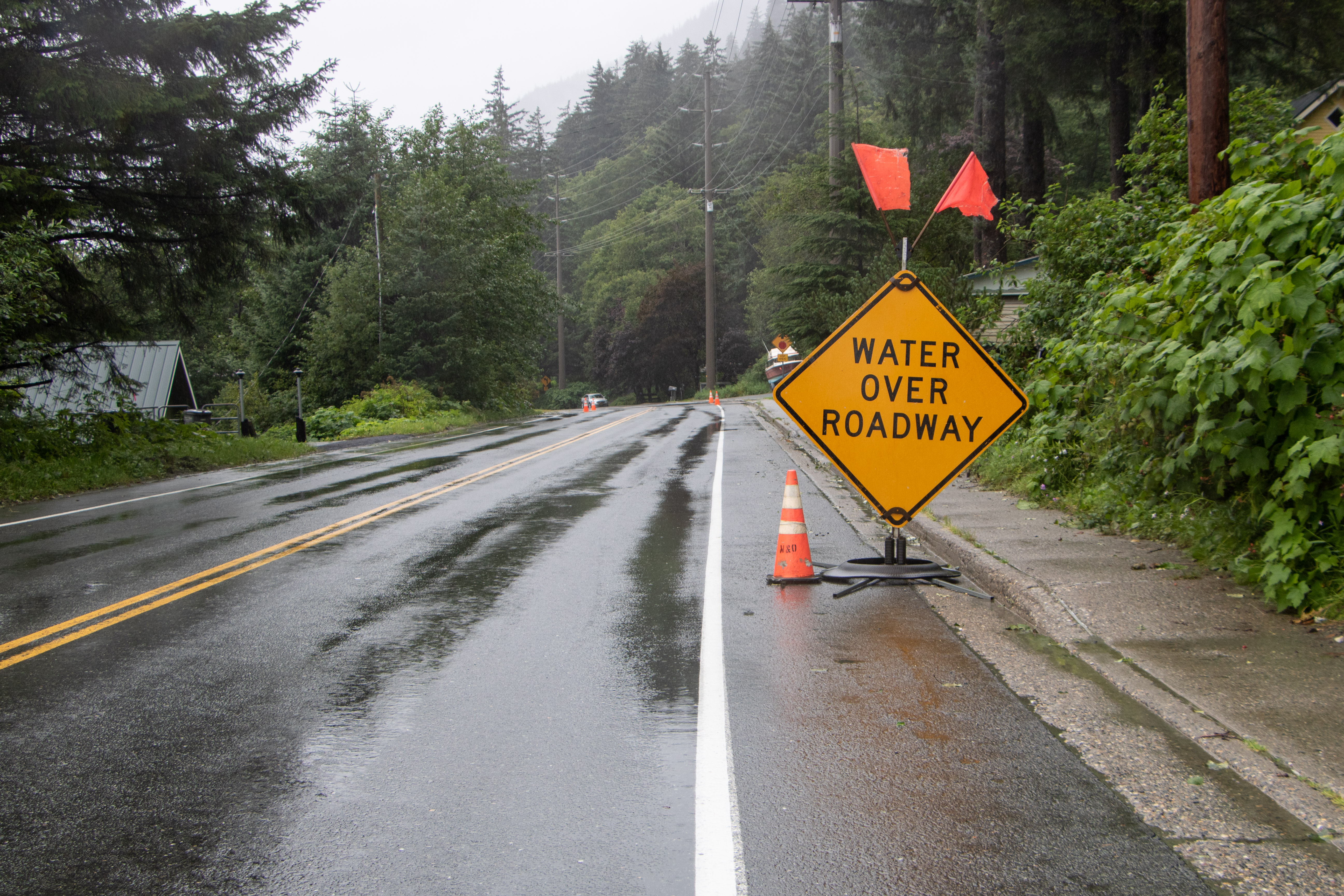
Water over roadway sign on Glacier Highway on August 13, 2021 in Juneau Alaska. (Photo by Lyndsey Brollini/KTOO)

Headed into Labor Day weekend, the National Weather Service is predicting multiple heavy rain events.

National Weather Service Meteorologist Edward Liske says the system will start up near Yakutat and reach Juneau on Friday. The heaviest rainfall in Juneau is expected Friday and Saturday. 

“It looks like we’re looking at around, oh, three to maybe four inches of rain total,” Liske said.

The rain may continue into next week.

“And then finally we dry out, possibly, toward mid next week,” Liske said.

He said flooding is not expected at this time, but rivers and creeks will rise, and residents may see water pooling in low lying areas or roads. 

These wide bands of rain are known as atmospheric rivers, and Liske says they are common in Juneau.

“It’s basically a river of moisture in the atmosphere from the tropics or subtropics that is being directed right into our area,” he said. “And that, combined with our high terrain, is just ringing all that moisture out as rain on top of us. And that’s what’s given us the high rain rates and the heavy rainfall.”

The term “atmospheric river” is a newer term to describe this weather event, Liske said. Southeast Alaskans may remember it being called a “pineapple express” in the past. 

To date, 2022 has beaten the previous rainfall record (from 2015) by two inches. Nearly 54  inches of precipitation has been recorded at the airport since January 1st.

This year had record-setting winter precipitation. And even though Juneau had a rather dry May and June, the whole year has remained ahead of pace. 

“It’s been a wet year still,” Liske said.

Monday was a record breaking rainfall day of 2.28 inches, beating the previous record (2009) for Aug. 29 by nearly a full inch. 

Juneau Police are collecting DNA samples from people with certain past convictions

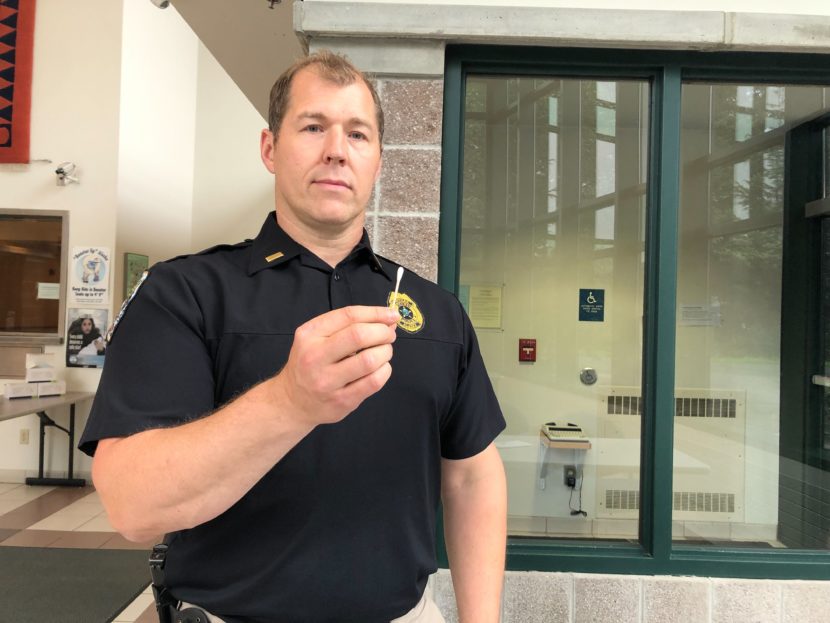
Lt. Krag Campbell with the Juneau Police Department holding a DNA collection kit on Aug. 26, 2022. (Photo by Yvonne Krumrey/KTOO)

During interactions with the police, people in Juneau with prior convictions could be asked to provide a DNA sample.

“They do a cheek swab, is typically how that’s done,” said Lt. Krag Campbell from the Juneau Police Department. “We try to minimize any interruption in the person’s day. And we can collect that very quickly and let the person go on about their business.”

It’s part of a broader effort to help Gov. Mike Dunleavy make good on a plan announced last year to reduce the backlog of missing DNA evidence across the state.

That announcement came after the Anchorage Daily News reported that many police departments were not collecting DNA samples they were required to after arrests for certain crimes — and some departments did not even know they should have been.

There were more than 20,000 missing samples at the time of Dunleavy’s announcement. The state says that has made it harder to solve violent crimes like sexual assault.

The DNA collection requirement, which was introduced in 1995, at first required police to collect samples from anyone convicted of a crime against a person. The list of qualifying offenses has expanded since then, and now police are supposed to collect samples after arrests — not just convictions — for felonies and some misdemeanors.

That has caused the ACLU of Alaska to raise privacy concerns.

“Our DNA can reveal some of the most personal and private information that we have,” said the ACLU’s Megan Edge. “There’s a growing risk that the information being collected and is being used against us, or without our consent.”

Edge also said that DNA should be obtained “in the least obtrusive means possible.”

Austin McDaniel, a spokesperson from the state’s Department of Public Safety, says the department first wants to collect samples from people with a qualifying conviction — that’s just under half of the backlog. The rest are people with qualifying arrests.

As of July 4, law enforcement had collected 1,318 samples, according to the department.

McDaniel said the department has flagged people they want to collect DNA samples from, and their names could come up through a records check during any kind of contact with police, including traffic stops.

“If that individual was to have contact with law enforcement, for any other purpose, [flags] would alert that law enforcement officer, that that person did lawfully owe DNA, and that officer would need to work to collect that DNA at that time,” McDaniel said.

Campbell from the Juneau Police Department said that giving a sample is mandatory for people who’ve been convicted of qualifying offenses. If someone refuses, Juneau police report that to the state, which may pursue charges.

In January, the state asked law enforcement across Alaska to participate. Campbell says that at this time, Juneau Police are only using the state’s flagged files to know if someone owes DNA.

But McDaniel says state troopers are working more actively to collect samples.

“The Alaska State Troopers are proactively seeking individuals that owe DNA with a qualifying conviction, and our focus is currently on individuals that were convicted of a violent crime or sex offense,” he said.

Megan Edge says the ACLU of Alaska is monitoring the issue, and that people can reach out to them if they have concerns.

Site notifications
Update notification options
Subscribe to notifications