Arts & Culture

Sitka Tlingit elder Isabella Brady passes away at 88

Tlingit elder Isabella Brady passed away early Wednesday, April 11th at the Alaska Native Medical Center in Anchorage, after suffering a fall in her Sitka home on Monday.

At the time of her death Brady was the president of the Alaska Native Sisterhood Camp No. 4, and a national advocate for Native issues.

Brady was born in Sitka in 1924, into the Raven Kik.sadi clan. She graduated from Sheldon Jackson School in 1942, began attending Jamestown College in North Dakota, but then interrupted her education to join the Navy at age 19.

The cultural prejudices and discrimination she experienced in her youth would continue to inform her advocacy as an adult. In her lobbying efforts before the Sitka School Board and other legislative bodies, Brady often recounted stories of her own struggle to arrive at school every day, sometimes running a gauntlet of anti-Native sentiment in white neighborhoods.

Her grandfather, Peter Simpson, encouraged her to pursue her education. After the war, she completed college on the GI Bill, earning a BA in Social Studies, and returned to Sitka where she married William Brady in 1950. The couple had five children.

When William Brady was hospitalized for tuberculosis in the late 1950s, Isabella supported her family by taking a job teaching at Mt. Edgecumbe High School in Sitka. She taught US History, World History, Alaskan History, Civics, PE, Health, and coached basketball and volleyball.

Following her career at Mt. Edgecumbe, Brady would go on in 1974 to write the grant establishing the Sitka Native Education Program, which integrates cultural studies into the standard district curriculum, and has been a model for many similar projects nationwide.

Brady would later serve a long tenure on the board of trustees of Sheldon Jackson College. She eventually became a Presbyterian elder, and a board member for the Native American Consulting Committee of the Presbyterian Church. She also served as a board member for the American Association of Retired Persons, and the state’s Native Education Board.

Isabella Brady was 88 years old. She is survived by 17 grandchildren and 8 great-grandchildren. Many of her family were present when she died.

Memorial services are pending in Sitka. But, her long-time friend Jean Arnold says, “No building is big enough.”

Festival celebrates Buddy Tabor, Barb Kalen

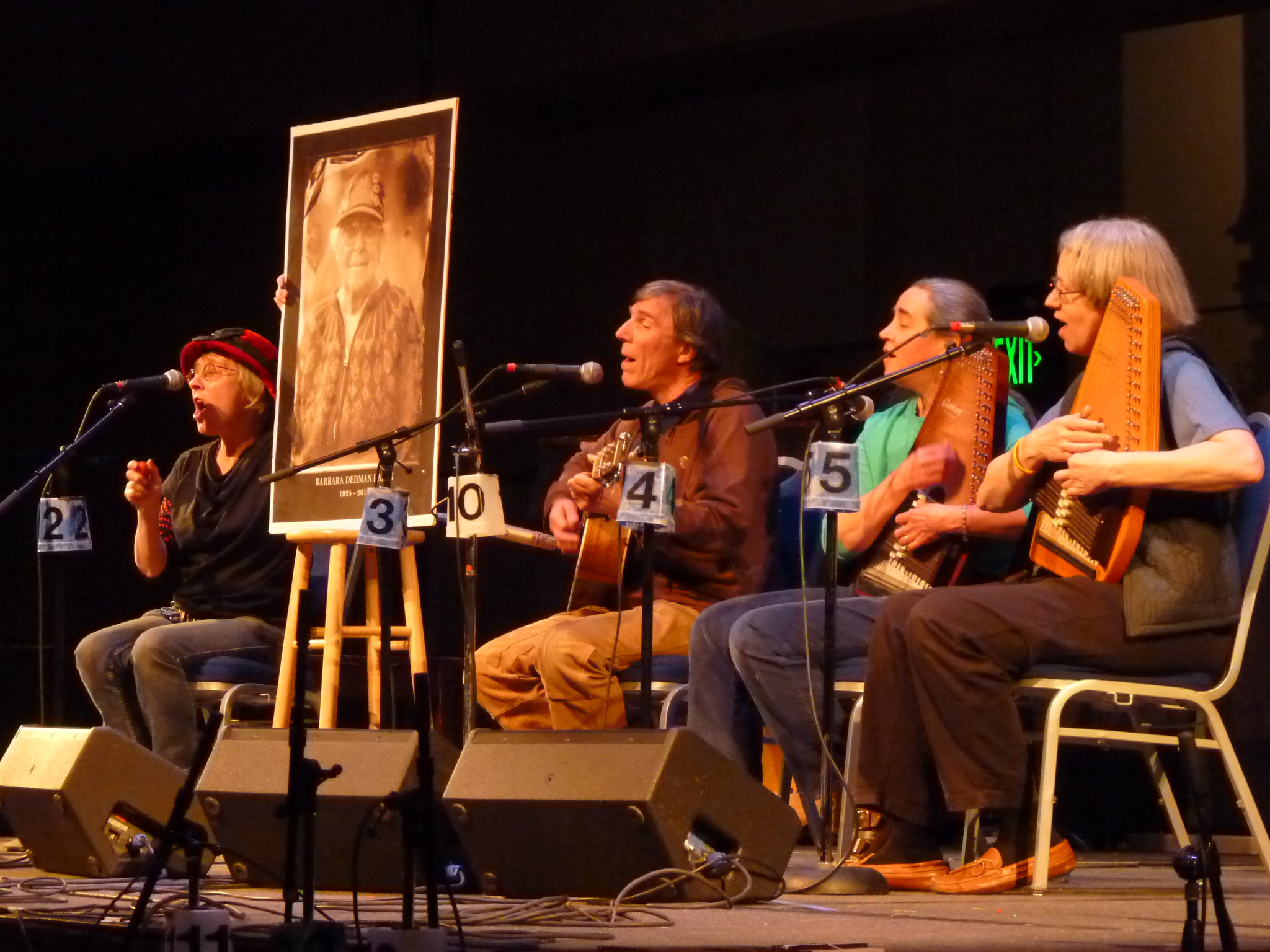
Colette Costa and Hootenanny in Heaven choir sing "Just a closer walk with thee," one of Buddy Tabor's favorite hymns.
Southeast Alaska lost two well-known and much-loved acoustic musicians during the past year.

Juneau’s Buddy Tabor and Skagway’s Barb Kalen sang, strummed and put together musical events during their many years in the region.

Friends sing and play during a Barb Kalen tribute.

Both were celebrated at the Alaska Folk Festival, a seven-day series of concerts held last week in the Capital City. Here’s a taste of the sound of their tributes.


JDHS Theatre selected for International Fringe Festival

The Juneau Douglas High School Drama Department has been selected to perform next year at the prestigious International Fringe Theatre Festival in Edinburgh, Scotland.

JDHS also has been voted one of the best high school theatre programs in the U.S. by the American High School Theatre Festival.

High school theatre groups must be nominated by a college theatre program to begin the application process. Theatre Department Director Micaela Moore says she doesn’t know who recommended JDHS, but she was notified last September, which began the formal application process. In December a panel of judges from the American High School Theatre Festival selected JDHS to attend the 2013 festival.

Moore says between 20 and 30 “hard working” theatre students will participate.

“You know it needs to be the kids who have been working hard in the department and who are the committed members of our team,” she says.

The JDHS program has a year to prepare and raise funds. Moore estimates it will cost $6,000 per student for travel and the festival.

“Different colleges, different professional groups, and then high schools who have been accepted for this honor, perform their plays every night and they get feedback, I believe, from judges. It’s a two-week program and the kids get to go to a lot of workshops, too,” she says.

Moore doesn’t know yet what play the students will perform. She expects to select a large ensemble where a lot of characters have big parts, but minimal set requirements, because the theatre group will have to ship the set and props.

She says the students will be at the International Fringe Theatre Festival for about two weeks in August 2013. The cost includes air fare, housing, meals, the workshops and some travel in Great Britain that will take the students to professional theatre performances in London.

Moore hopes the theatre students will be able to raise most of the funds from their shows. The next JDHS play is a modern version of Cole Porter’s Kiss Me Kate. It begins February 10th.

Thomas calls for more cooperation between tribes and ANCs

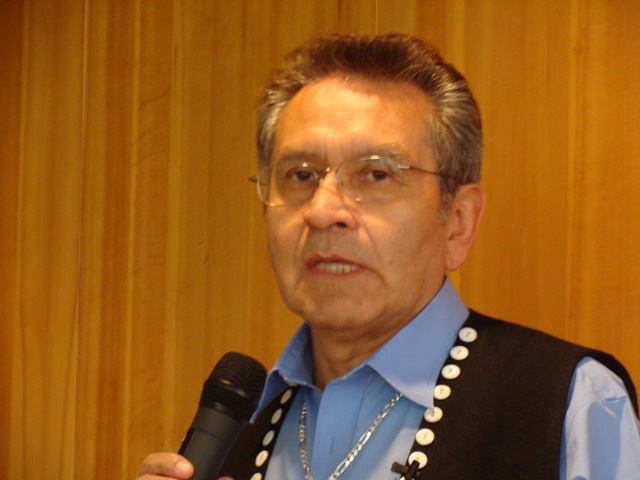
Ed Thomas. Click to enlarge. (Photo by Casey Kelly/KTOO)

Rural Alaska’s economic and social problems require greater cooperation between Native Corporations and federally recognized tribes, says Tlingit and Haida Central Council President Ed Thomas.

“We have very weak rural economies, we have high cost of energy that leads to high cost of living, higher cost of survival in our communities,” he says.

Thomas says past conflicts between Native tribes and corporations have largely risen from the belief by some that the Alaska Native Claims Settlement Act was a termination policy. That is, an act designed to make Native people assimilate into American society.

“Some of those folks that were anti-ANCSA felt that, well if we get rid of ANCSA then the land probably would go to the tribes,” says Thomas. “That really is very far-fetched, if not impossible.”

For one thing, Thomas says there’s no political will to take land from ANCSA corporations and give them to tribes. For another, corporate land is very different from tribal land, which is usually locked up in some sort of trust.

Subsistence is another issue that has divided tribes and corporations. ANCSA basically extinguished Alaska Native hunting and fishing rights, which Congress tried to address with the Alaska National Interest Lands Conservation Act. But Thomas says there are still those who think doing away with ANCSA is the way to restore full subsistence rights.

“While I generally agree that we can probably get rid of that one provision and it would improve things. I don’t agree that you have to throw everything out in order to accomplish that issue with subsistence,” he says.

Rather than debate the merits of the 30- and 40-year-old laws, Thomas says tribes and corporations should work together to accomplish what’s best for Native communities. It won’t always be easy, he says, but it’s essential for those communities to survive.

“We are a broad state, we have a lot of differences geographically and culturally, and lifestyle. So, it’s in our best interest to try to find areas of commonality and agree upon it. And where we disagree, agree to disagree and move on,” he says.

Thomas spoke yesterday (Thursday) at Sealaska Heritage Institute’s annual Native American Heritage Month lecture series.

The Tlingit and Haida Central Council is the sovereign tribal government for more than 27-thousand Southeast Alaska Natives worldwide.

New director hired for Alaska State Council on the Arts

The Alaska State Council on the Arts has hired a new executive director. Shannon Daut of Denver takes over from the retiring Char Fox in January.

The 37-year old Daut is currently the deputy Director of the Western States Arts Federation, a thirteen state western regional arts organization. She’s worked there for the last twelve years. Her education and preferred medium includes rhetoric and film, but her experience with the Federation includes a wide range of artistic disciplines. Some of her work as deputy director included cultural policy and technology.

Daut’s hiring marked the end of three month national search, according to a release issued by the Council.

The Alaska State Council on the Arts operates under the state Department of Education, is funded by the Legislature, National Endowment for the Arts, and Rasmusen Foundation, and councilmembers are picked by the Governor.

Char Fox’s official retirement date is February 1, 2012.

Site notifications
Update notification options
Subscribe to notifications