National News

Former FDIC Chair: Don’t Call It A Housing Recovery Yet

Most economists say the U.S. housing market is recovering at last. But one banking expert who grappled with the colossal housing bust during the Great Recession says it’s too soon to celebrate.

Despite a recent upturn in sales and prices, “the housing market is still very weak,” said Sheila Bair, who headed the Federal Deposit Insurance Corp. from 2006 to 2011. Bair, speaking at a Washington “economic summit” organized by The Atlantic magazine, warned homeowners that “we need more experience and data to know if it’s really turned around.”

Bair said lenders may be sitting on huge numbers of foreclosed upon houses that have been held back from the market. As housing prices start to perk up, that hidden inventory may come flooding into the market – and pushing prices back down, she said.

Moreover, millions of homeowners are “under water,” i.e., they still owe more on mortgages than they could get by selling their homes. As soon as they can sell at prices high enough to pay off old loans, they’ll put their properties on the market— and again drive down prices, she said.

And there could be another worry: prices for all sorts of assets may already be too high now because interest rates have been held too low for too long by the Federal Reserve, she said.

The Fed policy makers have had good intentions, but their low-interest-rate efforts have not revived the economy.

“We are not getting new lending and new jobs out of this,” Bair said. However, we do have “the risk of asset bubbles developing… well, they’ve already developed,” she said.


Read original article

Former FDIC Chair: Don’t Call It A Housing Recovery Yet

Co-Founder Of Khmer Rouge Dies; Ieng Sary Escapes Judgment For Genocide

Ieng Sary.
Ieng Sary.

The death of Ieng Sary, co-founder of the Khmer Rouge that ruled Cambodia from 1975 to 1979 and killed an estimated 1.7 million of that nation’s people in the process, has dashed the hopes “among survivors and court prosecutors that he would ever be punished for his alleged war crimes,” The Associated Press writes.

The 87-year-old former foreign minister’s death was announced Thursday by the Extraordinary Chambers in the Courts of Cambodia for the Prosecution of Crimes Committed during the Period of Democratic Kampuchea (Extraordinary Chambers or ECCC). That “Cambodian court with international participation” was created in 2005. Ieng Sary and several other former Khmer Rouge leaders were arrested in 2007. It wasn’t until 2011 that his trial began. It was still underway when he was hospitalized on March 4. According to the AP, the cause of his death “was not immediately known, but he had suffered from high blood pressure and heart problems.”

The court’s website lays out the charges against Ieng Sary:

— “Crimes against humanity (murder, extermination, enslavement, deportation imprisonment, torture, persecution on political, racial, and religious grounds and other inhumane acts).”

— “Genocide, by killing members of the groups of Vietnamese and Cham.”

— “Grave breaches of the Geneva Conventions of 1949 (willful killing, torture or inhumane treatment, willfully causing great suffering or serious injury to body or health, willfully depriving a prisoner of war or civilian the rights of fair and regular trial, unlawful deportation or unlawful confinement of a civilian).”

CNN calls him one of the Khmer Rouge’s “infamous leaders.” The BBC adds that Ieng Sary was known as “Brother Number Three” in the Khmer Rouge. His brother-in-law, Pol Pot, was “Brother Number One.” And according to the BBC:

“As foreign minister, Ieng Sary was said to have been responsible for convincing many educated Cambodians who had fled the Khmer Rouge to return to help rebuild the country.

“Many were then tortured and executed as part of the purge of intellectuals.”

“Brother Number Two,” Nuon Chea, is deputy secretary of the Communist Party of Kampuchea (the Khmer Rouge). He trial continues.


Read original article

Co-Founder Of Khmer Rouge Dies; Ieng Sary Escapes Judgment For Genocide

Google Will Pay $7 Million To Settle Street View Data Capturing Case

The camera mounted on a Google Street View car used to photograph whole streets obscures part of the U.S. Internet giant's logo. Daniel Mihailescu/AFP/Getty Images
The camera mounted on a Google Street View car used to photograph whole streets obscures part of the U.S. Internet giant’s logo. Daniel Mihailescu/AFP/Getty Images

Google has agreed to pay a $7 million fine to settle claims from 37 states and the District of Columbia that the search giant improperly collected data from unsecured wireless networks across the United States using its “Street View” vehicles.

As we’ve reported, Google raised eyebrows back in 2010 when it revealed it had slurped 600 gigabytes of personal data including emails and passwords, using the vehicles the company uses to photograph streets for its mapping applications.

“Under the terms of the agreement, Google has agreed to secure and destroy the information it improperly collected, launch an employee training program to ensure its employees understand how to protect consumers and their information, conduct a national advertising campaign to educate consumers on how to protect their private information, and pay a $7 million fine to the states involved,” New York Attorney General Eric Schneiderman said in a statement.

Google has faced investigations in Europe over the same thing. Britain found Google violated the law and asked Google to delete the data. Google, however, revealed two years later in 2012, that it had not yet deleted the data it collected in Europe, Australia and the United States.

Bloomberg reports on today’s development:

“Google said the information about network identification was collected for use in future location services and that the company’s executives were unaware the vehicles were gathering other data, according to Jepsen’s statement.

“The company has disabled or removed equipment and software that allowed the vehicles to collect information about wireless networks and data being sent over them, and agreed not to use the vehicles to gather additional data without permission.

“Google, operator of the world’s largest search engine, has been grappling with scrutiny by government officials around the world over how it handles private information. The Federal Communications Commission fined Google $25,000 last year for not cooperating with an investigation into the company’s collection of the data.”

An FCC report in 2012 found that the snooping was not accidental.


Read original article

Google Will Pay $7 Million To Settle Street View Data Capturing Case

Justice’s Voting Rights Unit Suffers ‘Deep Ideological Polarization’ Says Watchdog

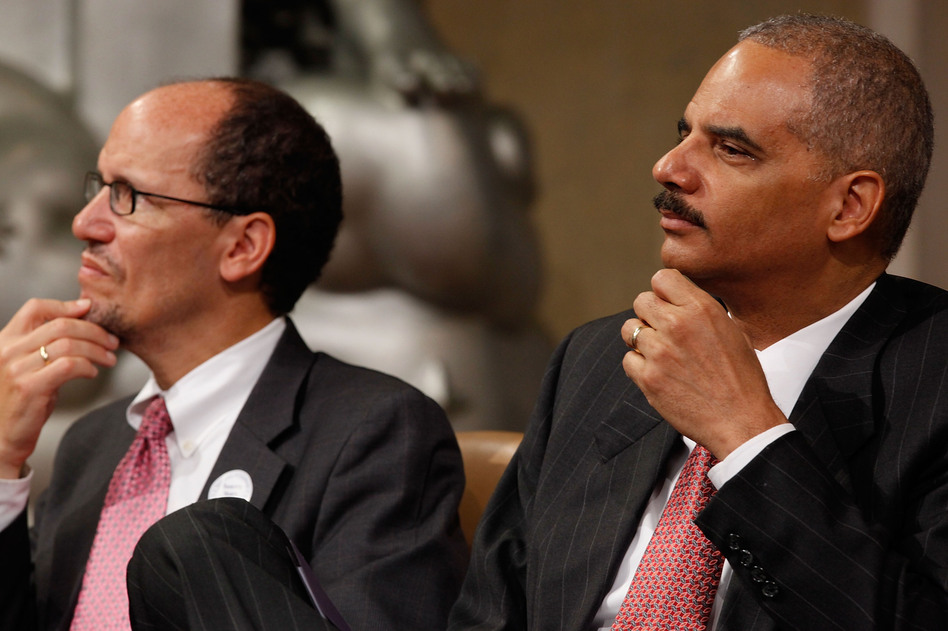
Attorney General Eric Holder (R) and Assistant Attorney General for the Civil Rights Division Thomas Perez in 2010 in Washington, D.C. Chip Somodevilla/Getty Images

The Justice Department’s voting rights unit suffers from “deep ideological polarization” and a “disappointing lack of professionalism” including leaks of sensitive case information, harassment and mistreatment among colleagues who have political differences, department watchdogs concluded Tuesday.

Inspector General Michael Horowitz said he found “insufficient” evidence to support the most damaging claims Congressmen asked him to investigate: that leaders in the Bush and Obama administrations refused to enforce voting laws on behalf of a particular group of voters, favoring African Americans or whites, or that they had made decisions about cases “in a discriminatory manner.”

But the review of more than 100,000 documents and 135 witnesses, including Attorney General Eric Holder, exposed deep fissures within the unit for the past dozen years that gave rise to perceptions of politicized and partial behavior by lawyers there. Horowitz said he would share his 258-page report with the Deputy Attorney General, who has the power to refer employees for further investigation and possible discipline.

By far, the inspector general said, the most “troubling” incidents in the report describe harassment within the voting rights unit, which spanned both the Bush and the Obama administrations. In 2005, during a sensitive review of Georgia’s voter identification law, lawyers there turned on each other.

The report said one team member described a colleague as a “hand-picked Vichyite,” comparing the voting section to Vichy-controlled France during the Nazi occupation, and another team member accessed the colleague’s document directory and shared a memo without permission.

The following year, when the Bush Justice Department brought a controversial “reverse discrimination” case against black defendants who allegedly abridged white voters’ rights, some career staff members harassed an African American intern who volunteered to travel to Mississippi to work on the trial as a “token.” The intern told investigators the treatment angered and insulted him.

The inspector general report said people in the office at the time also made a series of anonymous Internet postings “on widely read liberal web sites.” Those postings sometimes included racist commentary and described one apparently Republican lawyer in the unit as living in a neighborhood where “everyone wears a white sheet.” The report said the other remarks ranged from “petty and juvenile personal attacks to highly offensive and threatening statements.” Others retaliated, the report said, by leaking sensitive case material to lawyers and interest groups outside the Justice Department who shared their political views.

But watchdogs also criticized the treatment of section chief Christopher Coates, after the Obama administration had taken over at the Justice Department. New leaders in the civil rights unit raised concerns about his performance and his willingness to follow their enforcement priorities, with some deeming him “hostile” to traditional cases protecting minority voters. The Inspector General said Coates had previously received “outstanding” performance marks and a cash bonus for his work there during the last year of the Bush administration.

New, Democratic department leaders met with Attorney General Holder in April 2009 to discuss their concerns about Coates, the report said. They later explored ways to remove Coates but were told department regulations would not allow it for at least six months. For the next several months, the report said, a “Sensitive Working Group” reviewing voting rights issues excluded Coates from meetings. One lawyer there described the projects as “cloak and dagger.” Coates reached out to Assistant Attorney General Thomas Perez after he was confirmed by the Senate in October 2009, and requested a transfer to Charleston, South Carolina, where he finished the final 18 months of his career before retiring.

The IG report emerged as the work of the voting rights section occupies a prominent spot on the national stage. The U.S. Supreme Court is considering a constitutional challenge to the 1965 Voting Rights Act. Just last year, states including Arizona, South Carolina and Texas squared off in court against the U.S. Justice Department over whether new legislative boundaries and voter I.D. laws discriminated against minorities.

“It is precisely because of the political sensitivity of the Voting Section’s cases that it is essential that division leaders and…managers be particularly vigilant to ensure that enforcement decisions – and the processes used to arrive at them — are, and appear to be, based solely on the merits and free from improper partisan and racial considerations,” Horowitz concluded.

Perez, who is in charge of civil rights, responded that he’s taken steps to improve “the atmosphere and professional culture” within the unit. Perez said most of the staff mistreatment took place between 2004 and 2007, during the Bush administration, and that he’d named a new leader for the unit two years ago. But Perez wrote the Inspector General that he’d do more moving forward to foster a collegial work environment and to crack down on politically motivated leaks about voting rights cases.

Perez has recently captured his own headlines as a top candidate to become President Obama’s new Secretary of Labor. The new inspector general report said Perez was not personally involved in one of the most contentious incidents – involving a decision to drop charges against a defendant affiliated with the New Black Panther Party for allegedly intimidating Philadelphia voters on Election Day 2008. But the report criticizes Perez for testimony before the U.S. Civil Rights Commission “that did not reflect the entire story,” with watchdogs concluding that Perez should have asked his colleagues for more details about the episode. Perez testified the department’s political leadership was not “involved” in deliberations about the case and its handling but emails and other materials indicate two political appointees gave advice and one performed edits. Perez told watchdogs in an interview that he didn’t think that meant “involvement”.

Inspector General Horowitz said many of the employees mentioned in the report had since left the Justice Department, shielding them from disciplinary action. But he urged the Attorney General and his deputy to try to address the culture within the unit, which he said had sometimes hurt its ability to function.

Lawmakers are already weighing in with their thoughts. Virginia Republican Rep. Frank Wolf, who helped initiate the review, said the unit had become a “rat’s nest of unacceptable and unprofessional actions, and even outright threats.” Wolf said the Attorney General bears responsibility for the problems and he called on Holder to appoint an outside panel to look at the “systematic dysfunction” in the unit. The Inspector General is scheduled to testify before Wolf’s House Appropriations panel Thursday.

 

Read original article

Justice’s Voting Rights Unit Suffers ‘Deep Ideological Polarization’ Says Watchdog

Labor Relations Board Will Take Recess Appointment Decision To Supreme Court

The National Labor Relations Board says it will ask the Supreme Court to review a lower court decision that invalidated three of President Obama’s recess appointments, casting a legal cloud over more than 1,000 board actions over the past year.

In a blockbuster January ruling, three judges on the U.S. Court of Appeals for the D.C. Circuit said the Obama administration overstepped its authority by bypassing the Senate in early 2012 and installing three members of the NLRB during “pro forma” sessions. The White House says Obama has made 26 such appointments, and his predecessor President George W. Bush made 141 over eight years in office.

The ruling from the lower court sent lawyers for business groups into high gear, challenging not only decisions from the labor board, but also the Consumer Financial Protection Bureau, whose leader Richard Cordray was recess appointed the same day. The U.S. Chamber of Commerce, which backs some of the challenges, said the D.C. Circuit court decision properly upheld the system of constitutional checks and balances.

Chamber CEO and president Thomas J. Donohue said he’s pleased the government will ask the Supreme Court to weigh in. “The government’s decision to seek Supreme Court review is an important step toward resolving the tremendous uncertainty created by the controversial recess appointments,” Donohue said in a written statement.

The issue is playing out in federal courts all over the country, where the Obama administration has argued presidential practice dating all the way back to George Washington supports the Justice Department arguments. The lower court ruling, government lawyers wrote in a March 8th brief to a federal appeals court based in Virginia, is “wrong as a matter of constitutional text, history and purpose. They conflict with the conclusions of every other court of appeals to address such challenges. And they would throw out nearly two centuries of long-accepted Executive Branch practice.”

The government’s petition to the Supreme Court is due at the end of April.


Read original article

Labor Relations Board Will Take Recess Appointment Decision To Supreme Court

Steubenville Rape Trial Begins

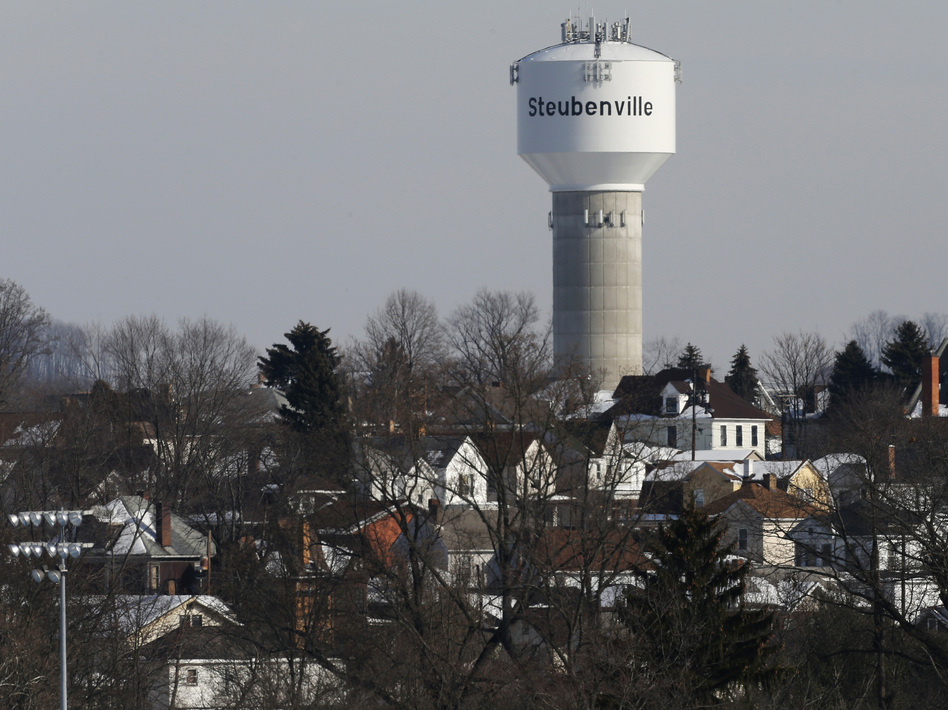
Steubenville, Ohio. Jason Cohn /Reuters /Landov

The case has already been “tried” in the social media, as The New York Times writes.

But Wednesday in Steubenville, Ohio, a real court will be the setting as two high school football players in a town that’s obsessed with high school football go on trial for the alleged rape of a 16-year-old girl last summer.

It’s a case, as All Things Considered has reported, that has caused turmoil in Steubenville — where “accusations, recriminations and threats” have been flying in recent months as critics of the town’s football culture charged that players have been allowed to get out of control and supporters of the team have tried to blame the accuser.

It’s also a case that has attracted attention around the world, as The Plain Dealer‘s editorial board writes, “for what it says about small-town insularity, the link between partying and sexual violence among young people and how social media can turn up the volume — for good and ill.”

As we reported back in January, what happened in Steubenville became a national and international story “after a photo and video that are alleged to have been taken on the night in question were posted on the Internet.”

On the eve of the trial, ABC News’ 20/20 rolled out a story that looks like a preview of how the defense will try to make the case that the girl was — at least at some point during a night of partying with the players — “playing along.” Her civil attorney, 20/20 reports, calls that characterization “bizarre.”

For those just catching up on this story, The Atlantic Wire this morning offers a “who’s-who” look at all those involved.


Read original article

Steubenville Rape Trial Begins

Site notifications
Update notification options
Subscribe to notifications