National News

Nuclear Waste Seeping From 6 Containers In Washington

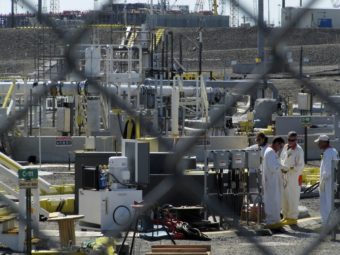
Workers at the Hanford Nuclear Reservation near Richland, Wash., in 2010. Shannon Dininny/AP

The number of underground containers seeping nuclear waste has increased to six from one at the Hanford Nuclear Reservation near Richland, Wash.

On his twitter account, Gov. Jay Inslee said he received the news during a meeting with Secretary of Energy Stephen Chu. Inslee called the news “disturbing.”

“News of six leaking tanks at Hanford raises serious questions about [the] integrity of all single tanks,” Inslee said on Twitter. “But there are no immediate health risks.”

As Korva reported last week, the Department of Energy said one single-shell tank was losing between 150 to 300 gallons of radioactive waste each year.

Korva added:

“Hanford has been in existence since the 1940s, when the site was used to prepare plutonium for bombs. As NPR’s Martin Kaste tells our Newscast Desk, federal officials have spent many years and billions of dollars cleaning up the reservation, including efforts to protect the nearby Columbia River. There are 177 tanks holding nuclear waste at the Hanford site; Gov. Inslee says 149 are single shelled, like the leaking one. Worse, they’ve outlived their 20-year life expectancy.”

Earlier today, the Northwest News Network reported that Washington Attorney General Bob Ferguson said new litigation concerning the reservation is more likely now.


Read original article

Nuclear Waste Seeping From 6 Containers In Washington

Storm Buries Kansas, Missouri As It Heads East

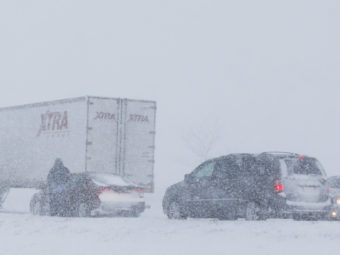
Snowy scene along I-35 near Kansas City on Thursday. Orlin Wagner/Associated Press
Scene along I-35 near Kansas City on Thursday. Orlin Wagner/Associated Press

The biggest winter storm this season is causing delays and cancellations, and has brought traffic to a near-standstill in the Plains and Midwest, but it’s providing much-needed relief for drought-stricken farmers.

Winter Storm Q has dumped up to 17 inches of windswept snow in parts of Kansas and Missouri and is expected to extend its reach well into the Midwest on Friday.

Sharon Watson, a spokeswoman for the Kansas Division of Emergency Management, says major highways have been reopened, but police are still checking for any drivers who might be in trouble.

Teams from the Kansas National Guard are also patrolling state highways.

Frank Morris of member station KCUR reports from Kansas City, Mo., that the storm has “triggered dozens and dozens of accidents in Iowa, Nebraska, Oklahoma and Missouri, and shut down a 200-mile stretch of I-70.”

In parts of Kansas City, stuck cars, trucks and buses rendered the streets impassible even to snowplows, Morris says.

Seth Jones, driving an orange dump truck with a huge blade out from, had to step down to push cars by hand because he couldn’t get through.

“The bus is in the way and cars [are] in the way,” he told Morris.

Jimmy Jackson had been trying for two hours to get into work, only to find it closed once he finally made it.

“So, I’m on my way back to the house now,” he said.

The Associated Press reports:

Northern Oklahoma saw more than 13 inches, while Missouri’s biggest snow total was 10 inches, shared by the Kansas City metropolitan area. But in Kansas, 17 inches of snow fell in Hays and nearly the same amounts in a handful of other cities. Farther east in Topeka, 3 inches of snow fell in only 30 minutes …

But Weather Underground meteorologist Jeff Masters says the storm will “put a noticeable dent in the Great Drought of 2012-2013 over the Midwest.”

According to Masters:

A second storm due to move through the region on Monday will provide a bit of additional help. The twin storms promise to drop more than an inch of rain (or liquid equivalent rain, for regions like Kansas and Nebraska getting heavy snow). Many areas of the drought region should enjoy their wettest day in months on Thursday.


Read original article

Storm Buries Kansas, Missouri As It Heads East

Sept. 11 Trial Judge Gives Defense Attorneys Access To ‘Camp 7’

This image reviewed by the U.S. military shows the front gate of "Camp Six" detention facility of the Joint Detention Group at the US Naval Station in Guantanamo Bay, Cuba. Jim Watson/AFP/Getty Images
This image reviewed by the U.S. military shows the front gate of “Camp Six” detention facility of the Joint Detention Group at the US Naval Station in Guantanamo Bay, Cuba. Jim Watson/AFP/Getty Images

Defense attorneys in the trial of the five men accused of orchestrating the terror attacks on September 11th will get to see for the first time where their clients are incarcerated.

The army judge presiding over the trial at Guantanamo Bay said today he will allow the lawyers to visit a secret section of the prison.

It’s known as Camp 7 and it’s nestled in the crevice of a hill at Guantanamo Bay. It is considered so secret that that the only time outsiders see it is on approach to the airfield at the naval base.

Even then, military officials won’t confirm that’s where detainees like the alleged Sept. 11 mastermind, Khalid Sheikh Mohammed and his co-defendants are being held.

All because, officials say, even the location of the Camp 7 is classified.

So, it was a little surprising today when Col. James Pohl the judge presiding over the 9/11 case said he would allow the defense to see Camp 7 up close.

He said that three members of each 9/11 defense team could visit this secret section of the camp one time for no more than 12 straight hours.

As the details of the visit are worked out, defense attorneys say the judge’s ruling gives them a rare opportunity to spend time with the clients outside the confines of a courtroom or an interview room.

And that, according to Khalid Sheikh Mohammed’s lawyer, David Nevin, is critical in death penalty cases.

“It is a duty of a capital defender to develop a relationship of trust through an interactive dialogue with the client,” Nevin said. “That’s the standard of care, that’s how you begin.”

The defense had asked the judge for even more access to their clients. They wanted to spend 48 hours — including overnights — in prison with their clients. And to do that once every six months.

The prosecution objected saying it would be too disruptive for the detention center. The judge agreed.

The defense also wanted to interview guards. The judge said no to that too.


Read original article

Sept. 11 Trial Judge Gives Defense Attorneys Access To ‘Camp 7’

TV Ratings Agency Nielsen Will Begin Measuring Online Streaming

Nielsen, the company that provides television ratings, is catching up with the times: It said that in the fall, it would begin including online streaming in its ratings.
That is it will begin counting those people who watch TV shows using services such as Hulu and Netflix.

According to Wired, Nielsen said its job is to “measure video content however consumers access it.”

The New York Times reports:

“The change, Nielsen said in a statement, was necessary to ‘more completely reflect media consumption.’ It comes nearly two years after Nielsen said it was thinking about redefining the term ‘TV household’ to include those that stream shows. The industry’s collective sense of urgency has increased as new Web services like Aereo have allowed people to watch TV channels, ads and all, without a cable subscription or an antenna.

“The new definition ‘will include those households who are receiving broadband Internet and putting it onto a television set,’ said Pat McDonough, the senior vice president for insights and analysis at Nielsen. Currently a ‘television set’ is the flat-screen kind, but in the future a tablet computer like an iPad could also be considered a TV set.”

The Los Angeles Times reports Nielsen is reacting to industry pressure.

“It is imperative for us that Nielsen as soon as possible incorporate these new forms of distribution into the overall measurement system,” CBS Chief Research Officer David Poltrack told the LA Times.

CBS News reports that, in the past, 99 percent of homes watched television through traditional means — through an antenna or cable or satellite. But, now, 4.2 percent of homes have cut the cord, if you will. The new definition of “TV household,” reports CBS, will “add roughly 160 homes to Nielsen’s current sample of 23,000 houses nationwide with meters monitoring viewing habits.”


Read original article

TV Ratings Agency Nielsen Will Begin Measuring Online Streaming

Which Is The Most Miserable U.S. City? Detroit.

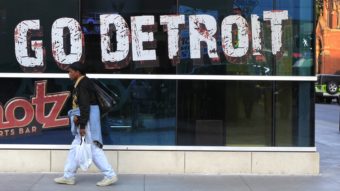
A pedestrian walks in downtown Detroit on Oct. 24, 2012. Carlos Osorio/AP

orbes magazine is out with its latest ranking of “Most Miserable Cities” in the U.S. and of 20 metropolitan areas listed, Detroit is on top.
The list takes into account the Misery Index, created by economist Arthur Okun, which combines the unemployment rate and the rate of inflation. Forbes factors in additional city data, including violent crime; foreclosures; income and property taxes; home prices; and even weather and commuting times. This year, the magazine also added in how people feel about quality of life in their home towns. Only the 200 most populous metropolitan areas were judged.

There are several reasons for Detroit’s ranking, according to the Forbes index, and it seems to be linked to a vicious money cycle. Tax revenue is shrinking, which has led to large cuts in the city’s workforce. Services are reduced, including the number of police officers. That’s been coupled with a rise in violent crime, which Forbes says is the worst in the country. People are leaving the city, and tax collections are falling. Detroit’s debt rating is junk level. And just this week, a team of experts declared that Detroit is in a fiscal emergency, says Reuters. That means Michigan Gov. Rick Snyder may consider appointing an emergency financial manager to get a handle on the city’s troubled finances. Mayor David Bing and city council members could lose some powers.

Bing agreed his city has challenges but added “With all due respect to the data in this report, Detroit is in the midst of a transformation,” according to the Detroit Free Press. He says his administration is working on public safety and urban blight, among other issues.

Three of the top miserable cities are from Michigan, including number two on the list, Flint. Another three cities are from Illinois, indicating the financial struggles plaguing the Rust Belt. Surprisingly, two big cities are on the list: New York and Chicago. Forbes says it’s hard for low income people to live there; commuting times are long for workers and thousands of people are moving out. Winters are brutal in Chicago while New York’s income tax rates are the highest in the country.

Here is the full list:

1. Detroit, Mich.
2. Flint, Mich.
3. Rockford, Ill.
4. Chicago, Ill.
5. Modesto, Calif.
6. Vallejo, Calif.
7. Warren, Mich.
8. Stockton, Calif.
9. Lake County, Ill.
10. New York, N.Y.
11. Toledo, Ohio
12. St. Louis, Mo.
13. Camden, N.J.
14. Milwaukee, Wisc.
15. Atlantic City, N.J.
16. Atlanta, Ga.
17. Cleveland, Ohio
18. Poughkeepsie, N.Y.
19. Gary, Ind.
20. Youngstown, Ohio


Read original article

Which Is The Most Miserable U.S. City? Detroit.

One In Three Fish Sold At Restaurants And Grocery Stores Is Mislabeled

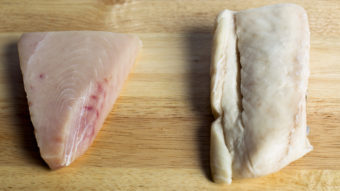
Escolar, right, is often substituted for more expensive Albacore tuna (left), a report on mislabeled seafood found. Yoon S. Byun/Boston Globe via Getty Images

There are so many fish in the sea. But from a diner’s viewpoint, peering down at a sliver of white fish atop a bed of sushi rice, a lot of them look the same.

Now a report from the ocean conservation group Oceana confirms that there’s a pretty decent chance that fish on the plate or on ice in the seafood case is not what it’s labeled to be. That means that seafood wallet cards designed by conservation groups to help steer consumers towards sustainable choices may not be doing much good.

Between 2010 and 2012, Oceana took 1,215 seafood samples from 674 retail outlets in 21 states. When they tested the DNA, they found that 33 percent were mislabeled. Sushi vendors and grocery stores were the most likely outlets to sell mislabeled food, though Oceana says the fraud can happen before it reaches them.

Earlier investigations by Oceana and the Boston Globe revealed that seafood mislabeling is common in cities like New York and Boston, where people eat a lot of fish. But the report out Thursday shows it’s happening across the country, and is as bad or worse in places like Texas and Colorado. Some 49 percent of the retail outlets sampled in Austin and Houston sold mislabeled seafood, while 36 percent in Colorado did so.

So what’s the big deal with fish sold under a pseudonym? Well, for one, it’s often just a form of swindling – a cheap fish like tilapia sold as red snapper. But Oceana says the practice also can put consumers at health risk when species like king mackerel, which is high in mercury, or escolar, which contains a naturally occurring toxin than can cause gastrointestinal problems, are marketed as grouper and white tuna, respectively.

Oceana’s also concerned that substituting cheaper, easier-to-find fish for rarer, more valuable ones gives consumers a distorted sense of the market. Of the fish types most heavily sampled by Oceana, those sold as snapper and tuna had the highest mislabeling rates — 87 and 59 percent. Only seven of the 120 samples of red snapper purchased nationwide were actually red snapper, the report found.

“The majority of fraud is various fish standing in for snapper – it’s used as catch-all name for all kinds of white fleshed fish,” says Oceana senior scientist Kimberly Warner. “But there are real conservation concerns when you slip in things in place of the real thing. People think snapper must be doing great because it’s everywhere, but it’s overfished.”

Consumers using wallet cards from groups like the Monterey Bay Aquarium and NRDC could end up buying exactly the species they’re trying to avoid, Warner says, because mislabeling is so prevalent.

One reason mislabeling has gotten so rampant is that the U.S. now imports 90 percent of its seafood and less than 2 percent is inspected for fraud. That means would-be fraudsters have a lot new options for substitutions.The Food and Drug Administration regularly updates its list of seafood approved for sale – in 2012 alone, 19 new species were added to the list, including cornetfish, sampa and claresse.

So what’s the government or a consumer to do about all this? Oceana would like to see an international traceability system where retailers would be required to tell consumers where and when a fish was caught and what gear was used. Requirements like these would help the industry — one of the least transparent in the food system — more accountable.

The National Fisheries Institute argues that the problem is one of enforcement — the FDA needs to do a better job of enforcing laws that are already on the books to discourage fraud. And they encourage consumers to seek out retailers through the Better Seafood Board.


See Original Story

One In Three Fish Sold At Restaurants And Grocery Stores Is Mislabeled

Site notifications
Update notification options
Subscribe to notifications