Syndicated

Sitka CG aviator faces uncertain future after hearing

The hearing into a Coast Guard pilot’s alleged negligence is over. The Article 32 proceeding essentially wrapped up Friday afternoon in Juneau after the last round of testimony by witnesses. Lt. Lance Leone is the only survivor of last year’s fatal Coast Guard helicopter crash off the coast of Washington State. In addition to the previous accusations of negligence and dereliction of duty, Leone is also being investigated for another dereliction count because he allegedly failed to adequately question the pilot of the flight. The aircraft, known as CG-6017, was a helicopter being transported to its new station in Sitka.

“When the natives had pulled him out, they said ‘Those stupid wires!'”

That’s how Ellen Leone describes the first words that her husband Lance heard when he was rescued by Quillayute tribemembers in a skiff in July of last year, moments after his H-60 helicopter ran into a set of the power lines and crashed. Leone said her husband didn’t know that they had struck the wires. His helicopter crashed and he didn’t know why.

Those wires to James Island were actually owned and operated by the Coast Guard to power nearby marine aids-to-navigation.
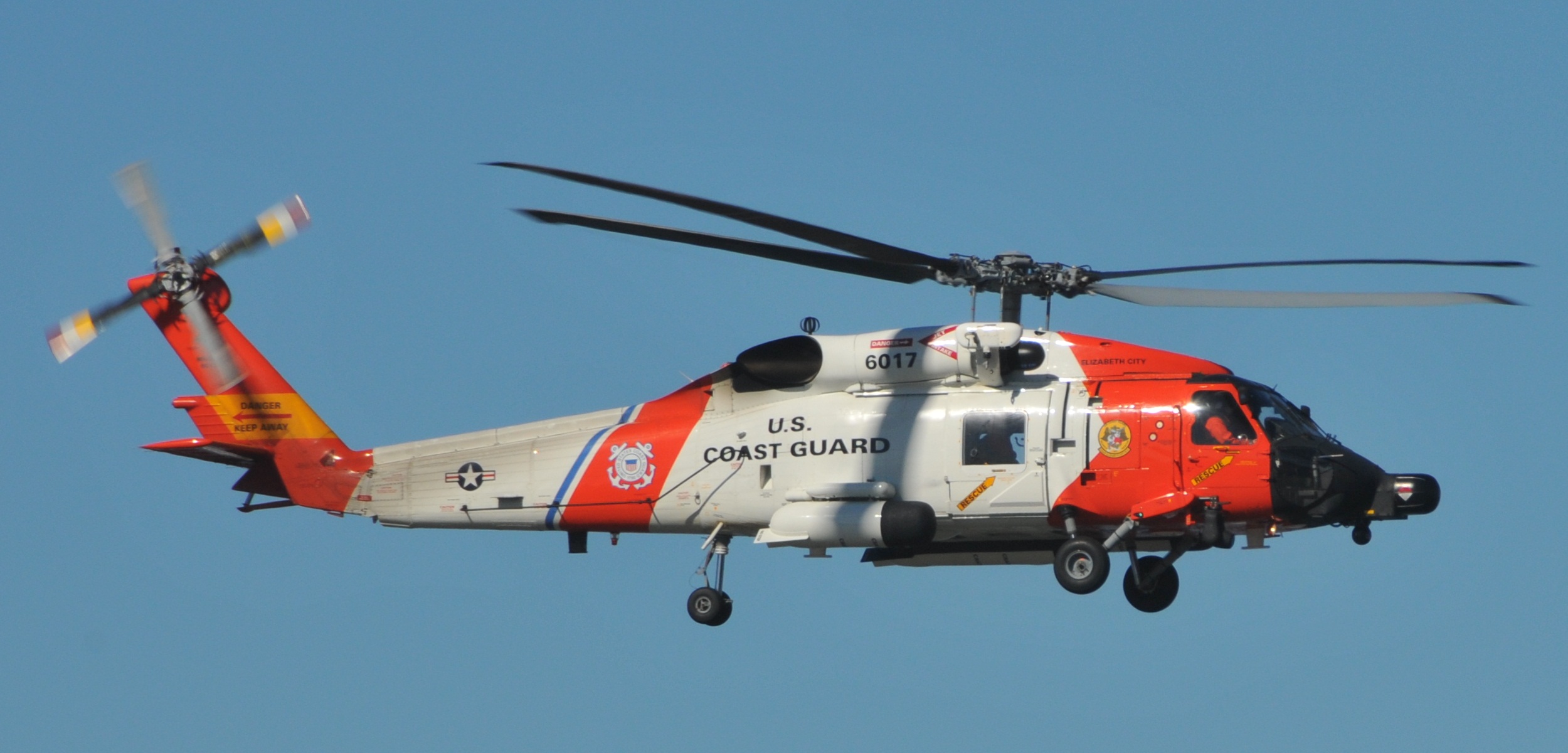
CG-6017 as the newer MH-60T model. As the pilot-in-command, Lt. Sean Krueger would sit on the right side of the cockpit and the co-pilot Lt. Lance Leone would sit on the left. Aviation Maintenence Technicians Adam Hoke and Brett Banks would sit in the mid-section of the aircraft. Photo copyright by Jeff Solberg.

Leone was the co-pilot while the pilot at the controls was Lieutenant Sean Krueger. He was killed in the crash along with Aviation Maintenance Technicians Adam Hoke and Brett Banks.

During the conclusion of Friday’s hearing, Master Chief William Johnson, commander of the Quillayute Boat Station near La Push before he retired, testified that he inquired higher up at least a year before the crash about the maintenance of the lines and poor condition of warning balls. He never got a response. Robert Van Haastert, a Federal Aviation Administration obstruction evaluation supervisor, said that he would’ve recommended better warning measures had he been called to evaluate the site. At least three other H-60 pilots that Leone served with in Sitka and Elizabeth City, North Carolina vouched to his skills and professionalism.

Attorneys in the case did not comment outside of the courtroom, but Leone’s civilian defense attorney John M. Smith said during the hearing’s closing arguments that the power lines were implicated in at least two other accidents. “The U.S. Coast Guard set a trap that was spring-loaded and that had already worked twice before,” said Smith.

Coast Guard Lieutenant Stanley Fields, Government counsel in the case, said Leone showed no reasonable duty of care as navigator and co-pilot of that flight.

Ellen Leone disputes that.

“I’m very proud of my husband and the career he has had in the Coast Guard,” said Leone.

“He’s done a great job doing his duty and, unfortunately, this was a tragic accident that occurred that nobody could’ve forseen.” Leone hopes that the U.S. Government will see their mistake after the hearing.

Pat Coyle believes Leone certainly would’ve called out the wires if he had seen them, especially if he thought his own life was in danger. Coyle also had a dim view of the evidence brought up by the Government.

“No matter what neglience, I don’t think the crime fits the punishment,” said Coyle, a commercial medical airlift pilot. While based in Sitka last year, he befriended a young Coast Guard aviator, a fellow rotorhead. At first, he didn’t know that he was the sole survivor of CG-6017.

“I just know that it’s got to jolt your confidence when something like that happens to you.”

So Coyle took up him for a spin in his Super Cub on floats.

“As a matter of fact, the next flight I let him sit in the front seat of the airplane,” said Coyle. “He did a pretty good job.”

There are two children in the Leone family, and Ellen says she’s due with another boy in April. She’s thankful for the support that they’ve received from around the country. It’s included Juneau-based Coast Guardsmen and women who took leave to attend the hearing, still dressed in winter dress or tropical blues, rank insignia and nameplates clearly visible. They declined to go on tape or have their names used, but they said they knew Leone or served with him at previous billets.

One person in particular was a civilian who had traveled all the way from Florida.

“I am here to support Lance and their family, and to let them know there are many, many people out there who support them,” said Kyla Krueger, mother of three children and wife of Lieutenant Sean Krueger, the pilot in command during that fateful flight.

“Somehow, good will come from this situation.”

Krueger also said this was a chance to hear everything first-hand, since the Coast Guard didn’t really tell her much about the crash.

“I am still just trying to process what I learned though the media prior to now, and what I’m learning as what they’re claiming to be fact and what they’re claiming to be opinion,” said Krueger.

Her husband used to wear his wedding band on a chain around his neck. She now wears it after adding her own band and engagement ring – her hand going up to touch it when she talks about Sean; how they met while he was at the Academy or about how he was picked for a pilot exchange with the Royal Navy.

There has been much speculation — but no real definitive explanation offered — that one reason that Leone was not charged with Krueger’s death is because Krueger was just as responsible. He was at the controls and some of the testimony centered on his low overflight of a Coast Guard 47-foot motor lifeboat in tribute moments before the crash. There was also an accusation by prosecutors that he was flying too low to begin with, even though cruising at 250-feet off the deck is considered standard practice in Alaska’s poor weather. Kyla Krueger says some of that was not easy to hear at first, but…

“I trust in that my husband did his job to the best of his ability everyday,” said Krueger. “In this particular case, he was still doing his job and he was doing something he loved to do until they hit that wire.”

Ellen Leone is also confident that her husband did his job well. But she suspects that the whole proceeding will have a chilling effect on other service members. She thinks that her husband is being prosecuted because he was the sole survivor in the last of a series of accidents in the previous year – some of them fatal – suffered by Coast Guard H-60’s, H-65’s, and a C-130 aircraft.

“It doesn’t bode well to other pilots in the Coast Guard to say ‘If you survive an accident, no matter what you did or didn’t do, (then) watch out!’ because they might come after you,” said Leone.

Captain Andrew Norris, the investigating officer during the hearing, said he’ll consider an additional charge of dereliction of duty against Leone. Norris was already investigating Leone for one count of dereliction for failing to navigate the helicopter to avoid hazards. Leone is also charged with destruction of government property, and negligently causing the deaths of Hoke and Banks.

The new dereliction charge is for not following proper Crew Resource Management procedures. It follows testimony Thursday from Leone’s commanding officer, Air Station Sitka Commander Doug Cameron, who suggested Leone may have been reluctant to question Krueger as the helicopter’s pilot-in-command. Cameron speculated that Leone deferred to Krueger, because of rank and experience.

It’s impossible to predict what the investigating officer’s recommendations will be and whether Rear Admiral Thomas Ostebo, the convening authority in the case, will call for a court martial, discipline Leone administratively, or just drop the charges. That could be several months away.

But the far future? Flying friend Pat Coyle doesn’t need a crystal ball or tea leaves. That’s much easier to figure out.

“His flying career is by no means over,” said Coyle. “This is a bump in the road.”

Captain Norris was expected to accept a piece of written testimony and any other further briefings on Monday before drafting his recommendations for Rear Admiral Thomas Ostebo.

Previous stories, with the more recent at the top:
Helo pilot, CG await report on charges

Additional charge to be considered against Leone

Helo hearing: visibility of power line hazard markers questioned

Article 32 hearing continues on chopper crash

Hearing set for Coast Guard helo crash survivor

Coast Guard charges helo crash survivor in crewmates’ deaths

CG-6017’s loss brought together Coast Guard “family”

Sitka ballfield named for fallen Coast Guardsman

Memorial mourns lost USCG crew
Vigil, memorials planned as CG crash is investigated

Lost Sitka crewmembers remembered by colleagues

CBJ gets 25 applications for city manager job

The City and Borough of Juneau has received 25 applications from people interested in replacing outgoing City Manager Rod Swope, who’s retiring at the end of March.

CBJ Human Resources Director Mila Cosgrove wasn’t surprised by the number of applicants. But the number from out-of-state was a little surprising, given that advertising for the position was limited to Alaska.

“I think that people are interested in the opportunity of coming to Juneau and the job market is still pretty soft down south,” says Cosgrove.

In late October, the Assembly decided on an expedited search for Swope’s replacement. The application deadline closed on December 1st, and the assembly’s self-imposed timeline calls for offering the job to someone by January 30th.

City Manager and City Attorney are the only positions hired by the assembly. But Cosgrove says she’s there to provide support if members request it.

“As a general rule, my office will collect the applications and do some level of screening for qualifications and checking references and that type of thing,” Cosgrove says. “The assembly, at least with the last city manager process we did was very hands on in terms of wanting to interview and select the candidates. I would imagine that will be the case this time as well.”

Deputy Mayor David Stone says the Assembly is looking for a person who has good management experience with a municipal budget as large, or larger than Juneau’s.

“And of course we’re unique in that we have some enterprise boards – hospital, the airport; we’re unusual even for the state of Alaska. We’re one of the very few that owns an airport,” Stone says. “I think we’re looking for strong leadership skills. Because this is a strong manager form of government, the manager’s really the CEO.”

Stone says it’s likely that the list will be pared down significantly at tonight’s Committee of the Whole meeting.

“I think we want to make it manageable. So I’m assuming we’re going to whittle it down to four or five, maybe a few more than that. But I doubt that we’d go much higher than that,” he says.

Stone says the finalists will be invited to come to Juneau for a series of in-person interviews. Those will likely take place in mid-January.

Among the applicants is current Deputy City Manager Kim Kiefer, who served as interim manager in 2009 when Swope took a six-month sabbatical.

Below is the list of all the applicants.

Bill Allen
Ginger Blaisdell
Bruce Carlile
Todd Crossett
Buddy Custard
William Durham
Scott Hahn
Jay Henry
Tecumshea Holmes
Mustafa Iflazoglu
Gail Jones
Kim Kiefer
Alan Lanning
William Lee
Christine Pomeroy
Eugene Rehfeld
John Schempf
Ronald Schmucker
George Shirk
Harry Staven
Thomas Steele
Eric Strahl
Jeffery Tubb
Stephen Vincent
Ron Wild

Additional charge to be considered against Leone

The investigating officer for a hearing into last year’s fatal Coast Guard helicopter crash off the coast of Washington State says he’ll consider an additional charge of dereliction of duty against the crash’s sole survivor, Lieutenant Lance Leone.

Captain Andrew Norris is leading the Article 32 hearing, taking place this week in a courtroom at the Juneau Federal Building.

Norris was already investigating Leone for one count of dereliction for failing to navigate the helicopter to avoid hazards. Leone is also charged with destruction of government property, and negligently causing the deaths of two of his crewmates.

The new dereliction charge is for not following proper Crew Resource Management procedures. It follows testimony yesterday (Thursday) from Leone’s commanding officer, Air Station Sitka Commander Doug Cameron, who suggested Leone may have been reluctant to question the helicopter’s pilot-in-command, Lieutenant Sean Krueger. Cameron speculated that Leone deferred to Krueger, because of rank and experience.

Krueger died in the crash, but Leone is only being charged in the deaths of Aviation Maintenance Technicians Adam Hoke and Brett Banks.

The Article 32 hearing – similar to a grand jury proceeding in civilian court – began on Wednesday and is expected to wrap up today (Friday).

Norris will then make a recommendation to Rear Admiral Thomas Ostebo, commander of the 17th Coast Guard District in Alaska. Ostebo will decide whether to drop the charges, pursue discipline internally, or through a court martial.

Helo hearing: visibility of power line hazard markers questioned

Lance Leone (Photo courtesy US Coast Guard)

A hearing looking into the cause of a July 2010 helicopter crash moves into the third and possibly the final day on Friday.

Coast Guard Lieutenant Lance Leone is being charged with dereliction of duty, destruction of government property, and negligently causing the deaths of two of his crewmates, Aviation Maintenance Technicians Adam Hoke and Brett Banks. An Article 32 hearing — a military version of a grand jury proceeding — has revealed more details about how the H-60 crashed off of La Push, Washington.

The second day Thursday included more testimony from lead crash investigator Captain Timothy Heitsch, including questions posed by the hearing’s investigating officer. Captain Andrew Norris is essentially the single grand juror in the case. He’ll either recommend dismissal of the charges, internal discipline, or referral to a court martial.

Heitsch, also an H-60 pilot, reviewed his panel’s findings about apparent discrepancies in Leone’s radio communication to a flight service station, occasional use of a non-standard phrase or passing over a checklist in the cockpit, spending too much time troubleshooting a malfunctioning radio, allowing his crewmate and aircraft pilot Lieutenant Sean Krueger to allegedly fly through a wildlife refuge, and not questioning Krueger’s maneuvers that led to the crash.

Heitsch was also asked to draw the power lines that the helicopter hit when it crashed. They spanned 1900-feet, from a height of 36-feet on the mainland to 190-feet on James Island. The lines were used by the Coast Guard to power their own nearby marine aids-to-navigation. Heitsch drew aviation hazard marker balls at the far lower end of the wire span suggesting that they had already slid down, nearly out-of-sight of any nearby aircraft. Counsel for the Government repeatedly pointed out that — at the highest point — the power lines were still 10-feet lower than Federal Aviation Administration guidelines for marking or lighting hazards. Leone’s counsel asserted that those very same lines were the subject of a lawsuit over whether they contributed to another pilot’s death decades ago.

Testimony also touched on the sectionals, or Visual Flight Rules (VFR) navigation maps used by aviators. Heitsch, Norris, and counsels for both sides had both the Canadian and American maps of La Push opened up on the witness stand – trying to determine if markings for the power lines were accurate.

“Where is James Island on this map?” asked Norris.

“I think it’s this small dot,” was one response.

After Heitsch’s testimony, Bosuns Mate Second Class Kenneth Compton testified that on the day of the crash, an H-60 turned toward his 47-foot motor lifeboat and passed a hundred feet overhead before heading into the wires.

Then, Leone’s defense brought in his commanding officer, intended to counter Heitsch, the Government’s own primary witness. Commander Doug Cameron of Air Station Sitka described how it made sense for Leone and Krueger to do the ferry flight; Take down an H-60J model to Astoria, and return with a newer H-60T model. Krueger was very familiar with the ‘J’ and flying in Alaska, while Leone was more familiar with the ‘T’.

The publically-stated top speed for an H-60 is about 183-knots. But Heitsch stated Wednesday that Krueger and Leone exceeded the normal maximum operational airspeed of 125-knots for most of the flight. Go much higher than that without good reason for too long, and it’s hard on the aircraft.

Cameron acknowledged that the aircraft could’ve been trimmed out and the “couplers,” or a rudimentary autopilot, may have been set at 125. But it could’ve constantly varied between 119- and 133-knots simply because of aircraft performance and wind.

And on the issue of fly-bys of a Coast Guard boat, Cameron says they’re not unusual. They’re actually traditional. Like a friendly waggling of wings to a buddy or service mate. Cameron also says flying through wildlife refuges at low altitude in Alaska is not only common, it’s sometimes necessary – whether to repair an aid-to-navigation or use a low-level route to escape poor weather and dropping visibility. Cameron also referred to accident board’s findings about the lingo and radio coms as ‘nitpicking’ and suggested that a non-verbal acknowledgement of a checklist completion was possible. Cameron also said he spent two hours on a recent flight himself troubleshooting a radio.

Part of the Government’s case involving neglect is the allegation that Leone did not fulfill some of his duties as co-pilot, essentially not questioning the pilot-in-command (Krueger) for his decisions and maneuvers. But Cameron – an experienced H-60 pilot himself — suggested that a more-complicated crew dynamic may have been at play in the cockpit that day. First, Leone and Krueger apparently went to the academy together with Krueger two years ahead. Also, Leone had just arrived in Sitka from Elizabeth City, North Carolina where they did things differently – flew much higher along the shoreline for example. He was now brand-new in a challenging environment where low-level flying was sometimes necessary, while his mentor Krueger already had a strong, solid reputation as a good Alaska pilot. Cameron called it a perfect set-up for Excessive Professional Courtesy. The junior officer was still learning and may’ve yielded to the senior officer’s experience on that flight. At the same time, yanking the controls away from a fellow pilot is almost never done.

The highlight of Cameron’s testimony came, though, when he described getting a copy of the accident report and was asked whether he preferred charges against Leone. He ultimately decided against it. But Rear Admiral Thomas Ostebo, the new commander of the 17th District in Alaska, apparently didn’t like that. Ostebo told his subordinate that he was too close to Leone and had lost his objectivity. According to Cameron’s view of one encounter, it was a ‘classic discussion’ with the high-intensity Ostebo. Cameron was asked to type up his reasons for the Commandant of the Coast Guard, who was expected to soon visit Alaska. Then this past September, Leone’s orders to train and requalify for the H-60 were cancelled. He was charged in connection with the crash by another officer in District command.

Defense and prosecution also argued over the differences in airspeed indicators in both models of the aircraft. A speed of 125-knots is in a different location on a slightly-smaller airspeed indicator for the ‘T’ model. Defense contended that both Krueger and Leone were used to the ‘J’ model’s indicator and that’s why their speed exceeded 125. Government counsel essentially argued that if that were true — if their visual ‘muscle memory’ were in play — then they’d really be flying slower, not faster in the ‘T’.

The final bit of testimony Thursday came from a Coast Guard officer asked to examine navigation map data loaded into the H-60’s on-board computer. The officer theorized the digital versions loaded into the computer were the newest available, even though they were based on the original paper sectionals for La Push which did not appear to have been updated for at least 12-years. But a recent updating may not have been necessary if the landmarks and obstructions did not change.

At least a half-day of testimony is expected on Friday, possibly with more explanation of the 200-foot minimum for marking aviation hazards. Then, the investigating officer, Captain Andrew Norris, will consider the testimony and evidence before submitting his recommendations to Rear Admiral Thomas Ostebo.

Ship’s return pushes million-passenger mark

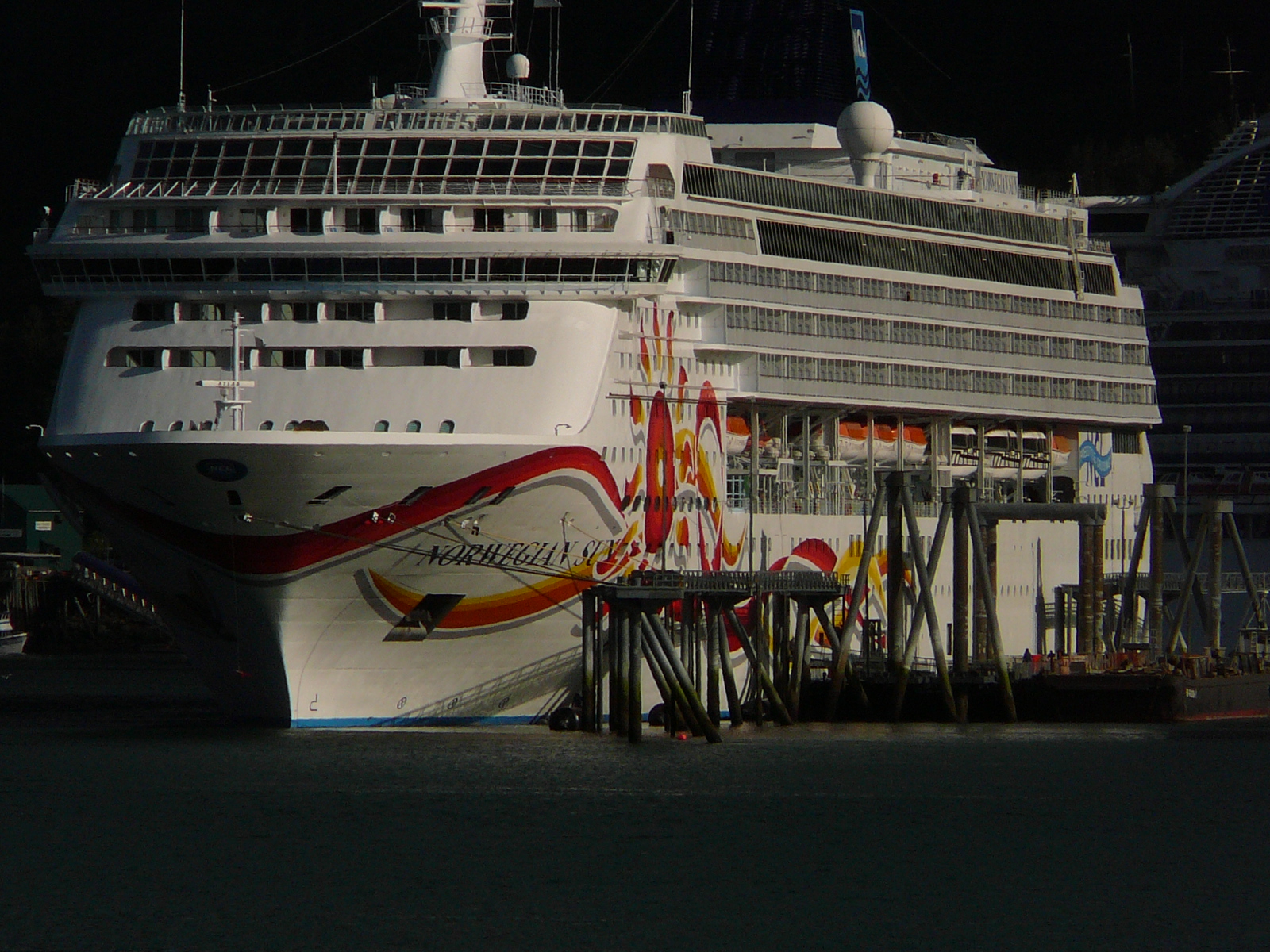
Norwegian Cruise Line says it will sail another ship in Alaska waters.

Company officials this week announced plans to return the Norwegian Sun to northern service two seasons from now. It last sailed here in 2009.

The Sun will sail from Vancouver to Whittier and back beginning in May of 2013.

The Norwegian Sun, in an earlier port call in Juneau

Northbound cruises will stop at Ketchikan, Juneau, Skagway, Glacier Bay and the Hubbard Glacier near Yakutat. Southbound itineraries will be similar, adding Hoonah’s Icy Strait Point and Tracy Arm south of Juneau, and skipping Glacier Bay.

Crane Gladding of Norwegian Cruise Line says each week-long trip will carry about 2,000 passengers. That adds up to around 40,000 for the season.

“We really feel like the time is right. And it really feels like with the cooperation of the government and the folks in Alaska that we’ve really seen a lot of improvement in the demand for the overall product,” Gladding says.

He says better marketing and improvements in docks and shoreside facilities helped his company decide to return. So did a reduction in the voter-approved cruise ship passenger fee, which dropped from $50 to about $25 dollars this last season.

Governor Sean Parnell and the Legislature credit that change for bringing more ships to the state. So does Ron Peck, of the Alaska Travel Industry Association.

“By reducing the liability on the head tax, I absolutely believe that had an impact on cruise executives decisions and that’s great news for Alaska,” Peck says.

Industry critics disagree on the reason the Sun is leaving the Baltic Sea for Alaska.

Chip Thoma, of Responsible Cruising in Alaska, says international politics, not tax cuts, are bringing ships back to the state.

“A lot of these ships from Alaska and from the Caribbean went on to Europe thinking they would do well in the Mediterranean. And of course the Arab Spring came and that was just a debacle. So all those ships are coming back to this part of the world and that’s what I attribute all of the interest in Alaska again,” Thoma says.

Norwegian already sails two larger ships on roundtrips through the Inside Passage. The Sun sailed a similar route in 2009, its last Alaska season.

Its new itinerary is one way, dropping passengers off or picking them up in Whittier, the nearest cruise port to Anchorage.

John Binkley, of the Alaska Cruise Association, says that boosts passengers’ economic impact.

“Those people then will be getting on or off the ships in Southcentral Alaska. Many of them will travel then all the way up into the Interior and other parts of Alaska and be spending more money and more time in Alaska,” Binkley says.

Industry figures show cruise capacity peaked at just over a million passengers in 2007. It stayed about the same for two seasons, then dropped to about 880,000 for last and this year.

Next year, Princess will add a seventh ship to its Alaska fleet. And Holland-America is juggling vessels to carry more passengers. That will bring total cruise capacity up to about 950,000.

The Norwegian Sun’s 2013 addition raises passenger counts another 40,000, almost reaching the historic million-cruiser high of the last decade.

Binkley says other deployment announcements could come in the next few months.

“Most of the companies have them finalized now. And then it’s just a question of what their strategy is and when they release those to the public and when they start selling those,” he says.

Alaska cruises can run from the hundreds to the thousands of dollars, depending on the choice of cabin and other amenities.

Norwegian Cruise Line’s Gladding says the Sun’s fares also depend on timing.

“There’s also great opportunities to sail in May, early June and September that offer an affordable price. So I think prices will start at about $699 per person and kind of go up from there as you get into peak times,” Gladding says.

Capacity estimates are based on two people in each stateroom. Actual numbers can be higher or lower, depending on the number of children and others along for the ride.

ACMP initiative sponsors eager to collect signatures

The group behind a citizens’ initiative to re-establish an Alaska Coastal Management Program plans to have signature gatherers in every corner of the state.

Lt. Governor Mead Treadwell approved the Alaska Sea Party’s initiative application yesterday. Organizers expect to receive petition packets in about a week, and will need 25,875 signatures to put the measure on next year’s statewide ballot.

Lead Sponsor, Juneau Mayor Bruce Botelho says the group wants that many signatures before the start of the legislative session on January 17th. That would give lawmakers an opportunity to adopt “substantially similar” legislation instead of putting the issue to a vote.

“We are organized. We await the booklets and we will have a presence in every district in the state,” Botelho says.

He declined to say how “substantially similar” any potential legislation would need to be to meet the group’s approval. But he said the initiative language would “set a benchmark.” Botelho said the Sea Party will likely spend about 150-thousand dollars on the petition gathering effort.

The Alaska Coastal Management Program provided one-stop state and federal permitting for developers seeking to build projects along Alaska’s vast coastline. It also gave local communities input during the permitting process.

Without it, initiative co-sponsor, Kodiak Island Borough Mayor Jerome Selby, says more communities will resort to litigation.

“If we don’t have a coastal zone program, we then have react to a decision that has already been made. And as everyone knows, that’s a much more difficult task to try to change a decision that has been made and finalized by the federal government. And realistically about the only effective way of doing that is through lawsuit,” says Selby.

The coastal management program shut down this summer after legislators and the Parnell administration failed to reach an agreement to reauthorize it during the regular and special legislative sessions.

The governor’s office says it will not introduce a bill to re-establish the program, and in an e-mail pointed to a permitting office within the Department of Natural Resources that “allows communities to weigh in numerous times for each project under review.”

Site notifications
Update notification options
Subscribe to notifications