A giant drill rig operated by Royal Dutch Shell undocked Monday morning from Terminal 5 in Seattle. The Polar Pioneer is headed for Dutch Harbor. It’s expected to arrive in 12 days.
According to the Coast Guard, 24 arrests were made as tugboats moved the rig out of port. A group of so-called “kayaktivists” formed a blockade in an attempt to stop the rig from departing. It’s been docked in Seattle for the last month.
According to the Houston Chronicle, Shell obtained two permits from the Environmental Protection Agency last week that will allow the company to discharge fluids from it’s rigs. The oil giant is awaiting authorization of four remaining permits before it can begin exploratory drilling operations in the Beaufort and Chukchi Seas this summer.
As the Polar Pioneer pulled out of Seattle, officials from Unalaska met with Shell’s Marine Operations team this morning. According to Unalaska City Mayor Shirley Marquardt, staff from the Department of Ports and Harbors as well as marine pilots, members of the Unalaska Police Department and the city Manager were in attendance. Marquardt says this is the third meeting the oil company has hosted to outline their operations with local officials.
The International Maritime Organization’s Marine Safety Committee is in the middle of its 95th session in London this week. Included on the committee’s agenda is the adoption of five recommended “areas to be avoided” in the Aleutian Chain. The shipping buffer zones come in anticipation of increased mariner shipping traffic in the region.

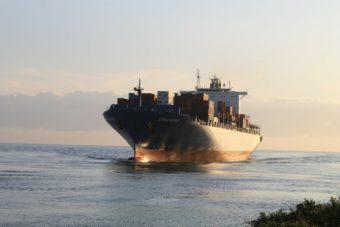
The new zones apply to ships 400 gross tons and heavier – the kind of ships that make trans-oceanic voyages through the Bering Sea and the North Pacific.
(Stock photo courtesy Pixabay)
Leslie Pearson is a project manager for the Aleutian Islands risk Assessment and a management consultant. She said the zones are meant to dampen environmental damage in the event of an accident or spill.
“Well certainly the projection of future development in Alaska and long the west coast helped as far as being a driver for these, but also past accidents,” said Pearson. “I mean we learn from history perhaps it’s better to be offshore than close into shore.”
The zones come from recommendations made by the US Coast Guard. They are based on similar “Areas To Be Avoided” established around the Northern Hawaiian Islands.
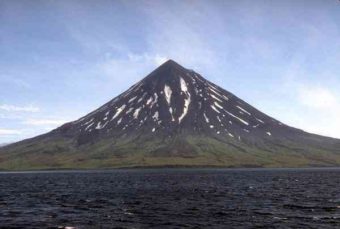
Those in the Aleutians extend 50 nautical miles from shore on islands at the tip of the Alaska Peninsula as well as Unalaska, Unimak, Adak, Atka, Kiska and Attu islands. But there are also passages outlined in-between each zone.
“One of the things that probably wasn’t taken into affect in Hawaii was when you get the winter storms, many mariners need to seek refuge in Bering straits where you have calmer weather than what you would see in the Pacific ocean and that was the reason for keeping the passage ways open so that way mariners can use them for storm avoidance,” explained Pearson.
In March, the International Maritime Organization approved the designations, but final approval falls to the IMO’s Marine Safety Committee.
“One of the things about going through the IMO process is it will actually put these ar eas to be avoided on charts – both international and domestic charts,” said Pearson.
Even though the areas will show up on maps and charts, they are only voluntary.
“Whether its voluntary or mandatory, people tend to adhere to them and insurance companies recognize these as well,” said PEarson. “So, if an operator is deviating from something that’s on the books, whether it’s recommended or mandatory, they do take notice.”
Under the IMO, the Coast Guard can still make the buffer zones mandatory. Once the IMO’s Marine Safety Committee gives their final approval, NOAA has six months to add the areas to charts.
Pollock ‘B’ Season opened Friday in the Aleutian Islands and Eastern Bering Seas Region.

Mary Furness is a Fisheries Resource Specialist with the National Marine Fisheries Service in Juneau.
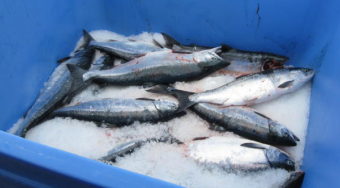
“The total allowable catch is up for the Bering Sea Pollock fishery this year, about 43,000 metric tons and the allocation is divided by the A season which gets 40% and the B season gets 60%,” she said.
(Photo courtesy of NOAA)
According to Furness, there are about 19,000 more metric tons of Pollock available for harvest in this year’s B season.
Pollock numbers have been up in recent years. Last year’s was the second largest biomass estimate on record since scientists started surveying the fish in 1982. But harvest levels for groundfish are not allowed to surpass 2 million metric tons, regardless of increased assessments.
Furness said federal managers expect the Pollock B Season to wrap up by early to mid-October.
Bishop David, Orthodox Church in America, Diocese of Alaska. (Photo courtesy of GANP/Dimitrios Panagos)
Alaska’s Orthodox Bishop, David Mahaffey was in Unalaska last week. He has held his post in Alaska for just over a year. He said in that time, he’s placed more focus on work with the Regional Alcohol and Drug Abuse Counselor Training Program, or RADACT, to address issues of substance and alcohol abuse and domestic violence.
“They’re doing more with our seminarians so that when they graduate,” he said. “When they go back to villages, they are better equipped to deal with people with these issues. I have petitioned the governor to have more VPSO’s in the villages.”
But Bishop David said it’s unclear how successful that petition may be in light of cuts to the state’s budget.
Bishop David said there was something particularly special about his visit to the cathedral in Unalaska, one of the oldest in the country. A chapel in the church is dedicated to St. Innocent, who served as the first Orthodox bishops in the state beginning in 1840.
“When I came here and walked in the doors of this cathedral, the feeling that I had of just the overwhelming presence of St. Innocent and that was to me so spiritually uplifting,” he said. “I would have been happy to not do anything else, but stand in the church all day. This cathedral has that effect on me.”
Bishop David came to Alaska from Pennsylvania first in 2012. He still grapples with the distance.
“I heard something the other day… a man was telling a story about a man who wanted to be a missionary but his wife didn’t want to go where he wanted to go and he kept saying ‘well, I either pick her for a wife or I go to this country to be a missionary,’” explained the Bishop. “He said it wasn’t until her realized he wasn’t picking between the woman and the country, he was picking between the woman and God and I kind of thought ‘yes, that’s what I was doing. I was saying Pennsylvania or Alaska when I should have been saying ‘Pennsylvania or God?’” he said.
Bishop David said he doesn’t regret his decision. He was in Unalaska to mark the Feast of the Ascension. In Russian Orthodox tradition, the celebration takes place 40 days after Easter.
Bishop David also made visits to other Aleutian chain communities including Adak and Nikolski.
A diagram of the proposed upgrades includes wider crane rails (black dotted line), new piling and reshaping (blue shaded area) and larger vessels that might use the facility (outlined in water). (Courtesy: City of Unalaska)
Unalaska is preparing to spend tens of millions of dollars to upgrade the aging Port of Dutch Harbor. The hope is to serve bigger ships and more of them — but the companies that use the dock right now aren’t so sure that big changes are needed.
On Wednesday night, Unalaska’s city council chambers were full of the dock workers, fuelers and cargo companies that have worked in Dutch Harbor for 25 years, exporting seafood and importing freight.
They were there to weigh in as the city gets ready to remodel the port for the future. The $44 million plan involves replacing rotten pilings under the dock that serves container ships, barges and catcher-processors — and adding anything new that those companies want to see.
That might include a setup for a bigger cargo crane — one to reach further across wider ships. The current crane is on 50-gauge rails, meaning spaced 50 feet apart. Some ports, including Anchorage, have upped that to 100 feet.
Marion Davis is a vice president for Horizon Lines, the main domestic shipper in Dutch Harbor. They own the current crane, and Davis called into Wednesday’s meeting to say the 50-foot spacing works just fine.
“A lot of ports are huge ports. So they might have six, eight, ten lanes of trucks underneath the crane. Therefore, you need the room underneath the crane. Dutch will never have that,” he said. “So a 50-gage crane should be sufficient no matter what you do.”
He did suggest bringing in a new 50-gage crane built for a wider reach. But that’s not part of the city’s project — any new cranes would have to come from the users, like Horizon.
They were the city’s official shipping partner when the dock was first built. But that contract fell apart a few years ago. In March, the city council voted not to seek a new one — from Horizon, or anyone else.
Horizon still gets a guaranteed spot for their weekly mail and grocery delivery, according to a recent letter from the city. But otherwise, the dock space is up for grabs.
That means power is an open question, too. Right now, the port runs mostly on diesel — but Doug Leggett, the president of the International Longshore and Warehouse Union in Unalaska, asked if the city’s electrical grid could handle more ships or cranes plugging in.
“I’ve spent plenty of time watching and breathing that exhaust, and I think most of us don’t realize how much pollution they pump into town when they’re sitting there,” he said. “The wind’s blowing, and you don’t see it, but it’s a lot.”
Other dock workers brought up cosmetic issues — like bad drainage, bumpy concrete and safety issues that need repairing. And they talked about the best spot for a new warehouse that barges and seafood companies could share.
All that helps the companies at the dock right now — but much of the plan still centers on the idea that more, bigger traffic is on the way. Longshoremen like Jeff Hancock were skeptical.
“I mean, you’ve got an outline of a gigantic, large, 1,200-foot vessel there at the dock,” he said, indicating a concept drawing showing different sizes of ships. “In what realistic thinking would we ever have a vessel of that size here, that we needed … to work the number of containers that that would be? … In what reality would we ever need that much capacity at this port?”
“No ice in the Arctic,” answered Dennis Robinson, a longshoreman and former city councilor.
Robinson is talking about the biggest unknown in upgrading Dutch Harbor: Will melting Arctic ice — and more Arctic infrastructure — really create that much demand from new shipping companies?
If it will, they didn’t show up on Wednesday to say so. But city ports director Peggy McLaughlin says she heard enough to move the designs forward — and to keep working on a funding plan. She needs to break ground by 2017 for permitting reasons.
“We’re building and replacing a deteriorating facility for the current users,” she said after Wednesday’s meeting. “And there certainly are users that are being turned away because of timing issues and dock schedules that will be able to utilize this proposed design.”
For now, the port’s oldest tenants will drive that design — and McLaughlin hopes it’ll leave room for those waiting in the wings.
The city and PND Engineers are taking public comment on the preliminary designs through May 29, and will hold a follow-up public meeting later this summer. You can catch a rebroadcast of Wednesday’s planning meeting on Channel 8 this Sunday, May 3 at 5 p.m.
About a thousand people are expected to disembark from the 781-foot Crystal Symphony cruise ship in Unalaska this weekend — the most the town has ever seen. (Photo courtesy Crystal Cruises)
Unalaska will get a big population boost this weekend, with the first cruise ship of what’s shaping up to be a busy summer.
On Sunday, the 781-foot Crystal Symphony will tie up at the Coast Guard dock and offload the most passengers Unalaska has ever seen — around a thousand people, as many as a quarter of the town’s residents.
Normally, the state ferry marks the start of summer in the Aleutians. But this year, the aging ferry Tustumena is in shipyard for repairs — its first scheduled stop in Unalaska is now May 23. And state budget cuts could mean fewer sailings overall after that.
Unalaska visitor’s bureau director Cathy Jordan says a shorter ferry season will have a big impact on the Aleutian Chain — for tourists and residents alike.
“A lot of people like to come out on the ferry, stay for a day or two, maybe fly back on [PenAir], or they’ll take the ferry back the same day,” Jordan says. “But also important for the Chain is for the smaller communities that get on the ferry along the way and come out here and shop, and then bring goods back to their hometown. And that also impacts our businesses.”
But she’s hoping more cruise ships might help fill the gap. 2015 will be Unalaska’s longest, busiest cruise season ever — the Crystal Symphony is the first of eight ships with scheduled stops. One, in September, will bring 2,000 passengers to town.
“I’m a little concerned about how we’re going to be able to accommodate that many people on the island for that amount of time,” Jordan says. “They don’t always all disembark, so hopefully we’ll be able to scatter them throughout the island at one time. You know, our tourist destinations can’t hold but 150, 200 people. So we’ll try to keep them busy with some other alternatives.”
She’s calling in extra buses and working with the town’s few restaurants and museums to organize special events. She’ll also have volunteers on hand to help guide explorers. Jordan says that small-town feel is one advantage Unalaska has over bigger ports.
“I’ve seen many people stop and talk to cruise ship passengers and give directions, or give an idea of what to do next,” she says. “Or even when we have a group of birders in from a cruise ship, they’ll ask, ‘Where can I find this bird?’ And I’ve seen local people [say] ‘Oh, go down this road and take a right,’ you know, so it’s really great.”
Of course, Unalaska’s main draw is as a fuel stop. It’s the first big port of call for ships crossing the Pacific from Asia.
The Crystal Symphony is one of those. It’s en route from Tokyo to Vancouver, with stops in Kodiak, Seward and Ketchikan after it leaves the Aleutians.
Close
Update notification options
Subscribe to notifications
Subscribe
Get notifications about news related to the topics you care about. You can unsubscribe anytime.